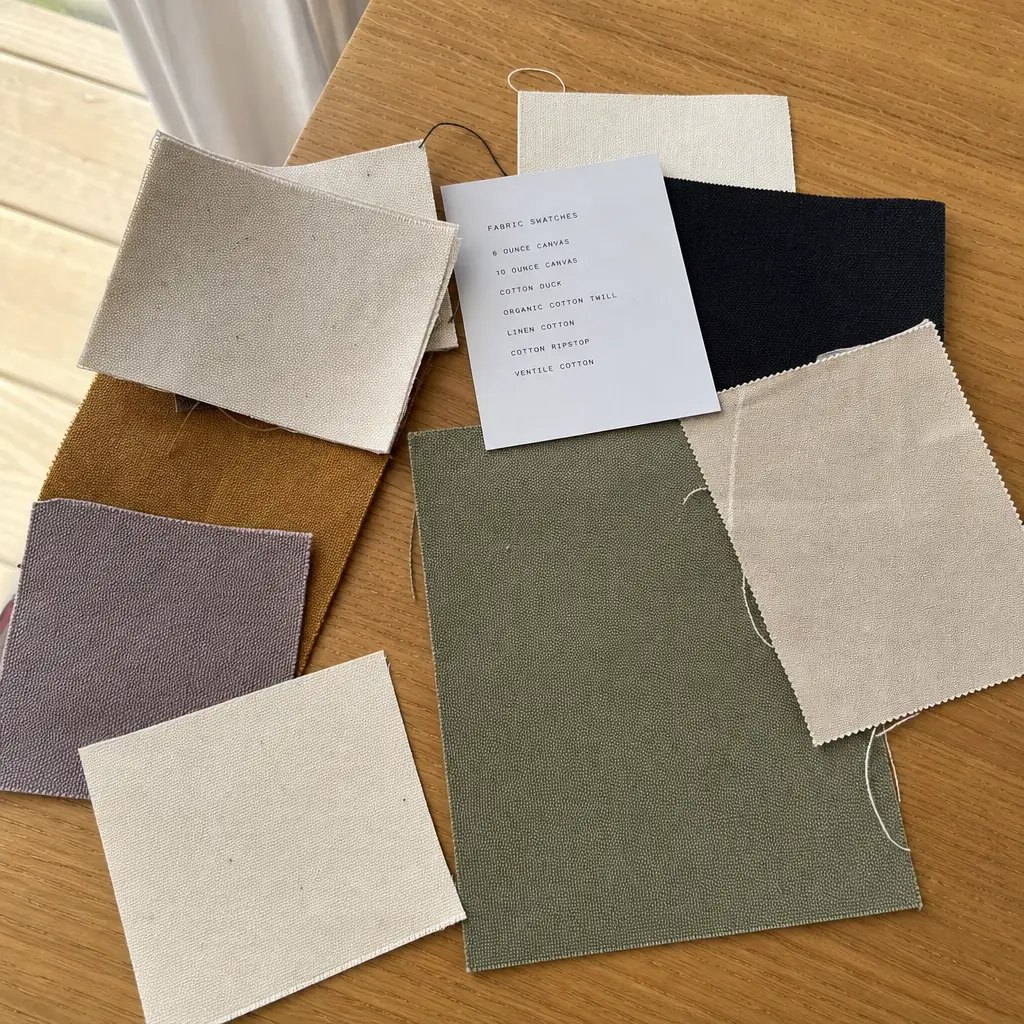
Why fabric weight matters for bakery pouches
For artisan bakeries, a drawstring pouch is rarely just a dust cover. It often sits between product, shelf, and customer perception. That means fabric weight changes more than hand feel; it changes how the pouch hangs, whether it wrinkles around a bread tin or cookie set, and how the packaging reads at retail. If the cloth is too light, the pouch can look temporary or cheap. If it is too heavy, you may spend extra on fabric and freight without getting a better customer experience.
The right GSM depends on what the pouch carries and how long it stays in circulation. A pouch holding loaves, cookie assortments, or branded gift sets needs enough body to keep its shape after filling. Buyers usually get better sourcing results when they define the product use first, then choose the fabric weight. That keeps supplier quotes comparable and avoids the common mistake of pricing a pouch by size alone.
- Light products: favor 100–120 GSM when the pouch is disposable or short-life promotional packaging.
- Mixed bakery gift sets: 140–180 GSM is the safest middle ground for most brand programs.
- Premium retail or reusable packaging: 200+ GSM gives structure, but only if the fill size and cord system still work smoothly.
How to choose GSM without overbuying
Most procurement teams should start by mapping the heaviest product the pouch must handle. A pouch for a single sourdough loaf does not need the same fabric as one for jars, biscuits, and a card insert. The right GSM should support the product shape, not just the weight. In practice, buyers should specify the finished use case, fill weight, and whether the pouch will be reused by the customer after purchase.
If the goal is a retail-ready pouch that feels substantial in hand, 140–180 GSM usually offers the best balance of cost and appearance. It is thick enough to hide the contents better than light fabric and still flexible enough for a drawstring closure. For premium bakery sets, 200–240 GSM can work well, but only if the bag opening, cord length, and seam allowance are adjusted so customers can still open and close it comfortably.
- Use 100–120 GSM for low-cost promotional wrappers, event giveaways, and light dry goods.
- Use 140–180 GSM for most branded bakery pouches sold with cookies, bread, tea, or gift items.
- Use 200–240 GSM only when the pouch is part of the product value and not just a cost center.
Print method, fabric, and artwork limits
For artisan bakery branding, the print method matters as much as the cloth. Screen print is usually the cleanest route for simple logos, bakery names, ingredient icons, or one-color seasonal artwork. It works well on cotton because the print sits clearly on the fabric and is cost-effective for repeated orders. Buyers should still verify line thickness, registration, and whether the artwork stays legible after folding and packing.
When the artwork is more detailed, buyers may need heat transfer or digital print, but those options should be chosen deliberately. They can support gradients and multicolor graphics, yet they may alter the hand feel and add risk if the pouch is washed or reused often. The safest rule is simple: if the artwork must be durable and the design is clean, screen print usually wins. If the design is complex and the order is short, a different method may be justified.
- Set print size in millimeters, not vague language like “medium logo.”
- Ask for strike-off approval on the exact fabric color and GSM you plan to order.
- If the logo includes fine text, request a real pre-production sample before approving bulk.
Supplier routes and what each one changes
A factory quote and a sourcing-agency quote can look similar on paper but behave very differently in production. Direct factories usually give buyers better visibility into fabric purchase, sewing control, and print setup. That is useful when repeat orders matter and the buyer wants tight spec control. Trading companies or sourcing agents can help consolidate different product lines, but buyers should not let convenience hide where the actual production risk sits.
The cleanest comparison is not just unit price. It is quote completeness. A lower quote that excludes inner packing, testing, carton marks, or post-print inspection can cost more once the order lands. Procurement teams should compare supplier options on the same basis: fabric weight, stitch standard, print method, packing method, and what happens if a sample fails approval.
- Direct factory: better for stable programs and lower long-run cost control.
- Trading route: useful when you need mixed SKUs or faster vendor matching.
- Either route: require written confirmation of GSM, print method, and export packing before placing the PO.
Comparing supplier options on real buying criteria
Buyers often lose time because suppliers quote the same pouch in different ways. One includes fabric and printing only. Another includes sewing, packing, and carton labels. A third uses a GSM estimate instead of a measured fabric weight. That makes it hard to tell whether a higher price is actually worse or simply more complete. The easiest fix is to force each supplier to quote against the same use case and same acceptance points.
For artisan bakery programs, compare suppliers by how well they understand shape retention, logo clarity, and reuse. A pouch that looks fine as a flat sample may collapse when filled with a round loaf or mixed cookies. Ask for production photos of the seam finish, cord channel, and packed cartons. Those are often more useful than a polished sales sheet because they show whether the supplier has real control over the output.
- Do not compare quotes that use different fabric weights or different finished sizes.
- Request a breakdown of fabric, print, sewing, packing, and carton cost when possible.
- Prefer suppliers who can explain sampling risk in practical terms, not only promise a low MOQ.
Buyer checklist for RFQ accuracy
An RFQ for cotton drawstring pouches gets better quotes when it reads like a production brief, not a shopping list. The buyer should define the pouch’s use, expected fill, logo placement, and whether the bag will be reused. Those details help suppliers estimate fabric body, sewing time, and print setup more accurately. They also reduce the chance of receiving a quote that looks competitive but misses the actual specification.
When procurement teams send a vague RFQ, the production team on the factory side fills in the gaps with assumptions. That is where mistakes start. The fabric may be too light for the intended product, the cord may be too short for easy opening, or the print area may be sized incorrectly for the artwork. A clearer RFQ usually saves more money than aggressive negotiation because it prevents rework, sample churn, and hidden change orders.
- State finished pouch size and the maximum product size it must hold.
- Specify fabric GSM, cotton color, cord type, and whether shrinkage is acceptable.
- Include print file format, print area, and the number of colors.
- Add carton pack count, labeling needs, and destination country if packing requirements matter.
- Mention the target launch date so the factory can plan fabric booking and printing slots.
Sample approval and the checks that matter
For bakery packaging, sample approval should be more than a visual signoff. The sample needs to show how the pouch behaves when filled, tied, stacked, and unpacked. Buyers should test the pouch with the actual product or a realistic substitute. A pouch that photographs well can still fail if the opening is awkward, the seams twist, or the print shifts after folding. That is why sample approval should include both a flat sample and a filled-use test.
The most useful checks are simple and practical. Measure the finished size, inspect the stitch density, pull the cords several times, and confirm the print sits where the buyer expected. If the pouch is part of a retail set, check whether the folded size fits the planned carton or display box. Approving the sample only by image is too risky when repeat orders, reorders, and seasonal launches are involved.
- Test the pouch with the actual loaf, cookie pack, jar, or gift set.
- Inspect one sample for fabric consistency and another for finishing and print placement.
- Approve with measured tolerances, not just “looks good” language.
Packing, carton load, and freight impact
Packing is a real cost driver, especially for importers and distributors. Cotton pouches can be deceptively light, but they take cube space fast if the packing method is sloppy. Bulk packing with controlled inner bag counts usually gives better freight efficiency than over-retail packing every pouch. At the same time, the buyer should not cut packing too aggressively, because fabric can pick up moisture, dust, and friction damage during transit.
The best packing spec balances protection and density. For export, buyers usually need a clear carton count, carton size, gross weight limit, and whether the factory uses inner polybags, moisture barriers, or simple bulk stacking. If the order goes to a humid market or sits in a warehouse before retail distribution, moisture protection matters. A low unit price can disappear quickly if cartons arrive wrinkled, dirty, or short-counted.
- Ask for carton dimensions before you compare freight quotes.
- Define whether cartons must survive retail distribution or only port-to-warehouse transit.
- Require outer carton marks that match the PO and the SKU list.
Lead time, MOQ logic, and landed-cost traps
Lead time for cotton drawstring pouches is usually driven by fabric availability, printing queue, sewing capacity, and packing requirements. When buyers ask only for a total delivery date, they miss the real schedule risk. A factory can often sew quickly, but if the right fabric color is not stocked or the print setup is not approved, the order slows down. The better approach is to split the timeline into sample stage, material booking, production, inspection, and shipment.
MOQ should be understood in the same way. It may be driven by fabric color, print setup, or the minimum sewing batch the line needs to run efficiently. If a brand wants several bakery SKUs in different pouch colors, the quote may change more than expected because each color creates a new production run. Buyers should compare landed cost, not just unit cost, because freight, carton cube, and packing density often decide the real budget outcome.
- Ask whether MOQ is by color, size, or artwork.
- Separate sample lead time from bulk lead time in the quotation.
- Compare landed cost with carton cube, not only FOB unit price.
What a usable quote should include
A useful factory quote should let a buyer compare suppliers without guessing. It should state the finished dimensions, fabric GSM, print method, cord details, packing method, and sample lead time. If any of those are missing, the buyer is really comparing assumptions, not offers. For procurement teams, that creates false savings and makes internal approval harder because the finance team cannot see what is actually included.
For artisan bakery packaging, the quote should also reveal how the supplier handles practical issues: shrinkage, logo placement, carton counts, and pre-shipment evidence. The best suppliers are usually the ones who can write a quote that leaves no room for interpretation. That does not always mean the lowest price, but it often means the least risk in production and the fewest surprises at receiving.
- Finished size and allowable tolerance
- Fabric GSM and cotton color
- Print method, color count, and print area
- MOQ, sample lead time, and bulk lead time
- Packing method, carton size, and carton count
- Inspection standard or photo evidence before shipment
Specification comparison for buyers
| Spec decision | Recommended option | When it fits | Buyer risk to check |
|---|---|---|---|
| Fabric weight | 140–180 GSM cotton | Best balance for bakery gift packs, retail sets, and reusable packaging that must feel substantial without pushing freight too high | Thin cloth can wrinkle and show fill lines; overly heavy cloth raises cost and may reduce pouch flexibility |
| Lightweight cost-sensitive build | 100–120 GSM cotton | Best for inner wrapping, short-life promo use, or low-cost seasonal bundles where the pouch carries light items only | Check for transparency, seam puckering, and weak cord channels after washing or repeated opening |
| Premium retail feel | 200–240 GSM cotton | Fits higher-ticket bakery gifting, subscription boxes, and reusable keep-forever packaging | Confirm that bulk, stitch density, and cord length still open easily when filled with bread, cookies, or jar sets |
| Print method | 1–2 color screen print | Good for clean bakery logos, simple ingredient marks, and repeat orders with stable artwork | Fine lines may fill in; small text needs test prints before production approval |
| Print method for detailed artwork | Heat transfer or digital print on selected styles | Fits short runs with gradients, multiple colors, or seasonal graphics | Verify wash resistance, hand feel, and whether print area will crack on folded pouches |
| Supplier route | Direct factory with sampling and in-house QC | Best for controlled specs, repeat orders, and lower unit cost at scale | Require proof of fabric GSM, seam standard, and packing method; avoid quotes that omit finishing details |
| Supplier route | Trading company or sourcing agent | Useful when buyers need mixed bag categories, consolidated shipments, or faster vendor matching | Risk of markup and spec drift; ask who controls fabric purchase, print approval, and final inspection |
| MOQ approach | Color-based MOQ with one print setup per artwork | Works for brands testing a new pouch size or seasonal bakery line | Check whether MOQ is by color, style, or printed design; one misunderstanding can double sample and setup cost |
| Packing method | Bulk pack with counted inner polybags and carton labels | Good for distributors and importers optimizing cube and warehouse receiving | Make sure count accuracy, carton weight, and moisture protection match the destination climate |
Buyer checklist before sampling
- Confirm finished size, fabric GSM, cord type, and seam allowance before requesting quotes.
- State fill weight and product shape, not only pouch dimensions, so suppliers can judge fabric body and drawstring strength.
- Send one logo file in vector format and specify print size, placement, and acceptable color tolerance.
- Request sample photos of fabric, stitching, cord channel, and final packed carton before mass production.
- Define carton pack count, inner bag count, carton marks, and whether hang tags or retail inserts are required.
- Ask for lead time broken into sample approval, fabric booking, printing, sewing, inspection, and shipment.
Factory quote questions to send
- What GSM is the quoted fabric, and is that the finished fabric weight after dyeing and shrinking or only the greige base?
- Which print method is included, how many colors are priced, and what is the setup charge per artwork?
- Is MOQ based on pouch size, fabric color, or printed design, and what changes if we split the order across colors?
- What seam style, cord thickness, and stitching density are included in the base quote?
- How are pouches packed for export, and what carton size and gross weight should we use for landed-cost calculation?
- What QC photos or pre-shipment evidence can you provide before final balance payment?
Quality-control points to confirm
- Fabric GSM tolerance should be defined before production, with buyer acceptance set around the target weight range and no visible thin spots in the body panel.
- Stitching should hold the pouch shape when filled; inspect side seams, bottom corners, and cord-channel reinforcement for skipped stitches.
- Drawstring movement should be smooth with no twisting, snagging, or uneven cord exits after repeated open-close cycles.
- Print placement should stay centered within the agreed tolerance, and ink should not crack on light folding during packing.
- Finished pouches should match approved size within a practical tolerance, with special attention to shrinkage after washing or steam exposure if relevant.
- Cartons should arrive dry, clean, and count-accurate, with inner packing that prevents rubbing and moisture exposure during ocean transit.