Why durability testing matters more than the lowest pouch price
Cotton drawstring pouches look simple. That is exactly why they are easy to under-specify. For eco apparel brands, the pouch may act as packaging, a gift sleeve, garment protection, and a reusable customer item all at once. It is pulled closed by packers, stacked in cartons, opened by retailers, handled by customers, and sometimes kept for storage after the garment is removed.
A low unit price loses value quickly if the pouch fails in normal handling. Split seams create repacking work. A tight drawstring channel slows packing. Ink rub-off can mark a pale T-shirt. A musty carton can stop a shipment from being released. None of these issues is obvious from a neat factory photo of an empty pouch on a table.
The most common weak points are fabric stability, seam integrity, drawcord function, and decoration wear. A pouch can look clean and balanced when flat, then fail once it is filled with the real product and cinched under tension. This is why B2B buyers should make durability checks part of the RFQ, sample approval, pre-production sign-off, and final inspection.
Durability does not mean choosing the heaviest fabric every time. A scarf sleeve, sock pouch, underwear set, sweatshirt bundle, and premium gift pouch each need different construction choices. The goal is to match GSM, seam allowance, cord size, channel width, and print method to the real use case. Once those inputs are clear, suppliers quote against the same expectations instead of filling in the gaps themselves.
- Define whether the pouch is primary presentation packaging, secondary protection, reusable storage, or a promotional insert.
- State the real filled weight in grams and product shape, not only the pouch dimensions.
- Test drawstring action, seam strength, print wear, and packing condition before bulk approval.
- Compare suppliers on risk-adjusted landed cost, not only ex-works unit price.
Start with the product load, use case, and fit requirement
Many pouch problems begin with a vague request such as “20 x 30 cm cotton drawstring pouch.” That size alone does not tell the factory whether the pouch will hold socks, a folded T-shirt, underwear, babywear, cosmetics, jewelry cards, a scarf, or a heavier apparel bundle. The same flat pouch behaves differently depending on weight, thickness, corners, compression, and opening frequency.
Map the handling path before asking for price. Will the pouch be filled at the apparel factory, packed inside an export carton, opened by a retailer, displayed on a shelf, repacked, and then reused by the consumer? Or will it be a light e-commerce insert placed inside a mailer? Retail-handled pouches need stronger channel construction and tighter visual control than one-time protective sleeves.
Fit is not only finished width and finished height. The top drawstring channel, bottom seam allowance, bulky cord, and fabric thickness all reduce usable internal space. A pouch that looks large enough when empty may become tight when the cord is pulled. The extra pressure usually shows up at the channel openings and bottom corners.
For fit-sensitive programs, record the product’s folded width, folded height, thickness, and target fill line below the drawstring channel. If the brand intends to describe the pouch as reusable, the construction must support that claim. Cotton content alone does not make a pouch reusable; repeated opening, closing, storage, and handling are the real test.
- Classify the pouch as protective packaging, retail presentation, gift pouch, reusable storage, or promotional packaging.
- Record product weight, folded dimensions, thickness, and hard edges that may stress seams.
- Confirm usable internal dimensions after seam allowance and channel height are considered.
- Avoid reusability language unless fabric, seams, cord, and print can tolerate repeated handling.
Specify cotton fabric by GSM, weave, finish, and tolerance
Fabric selection is the base of pouch durability, but GSM by itself is not enough. For most cotton drawstring pouches used by eco apparel brands, 120–160 GSM is a practical working range. Around 120 GSM suits light accessories, low-weight inserts, and cost-sensitive programs. Around 140 GSM often gives a balanced hand feel, better opacity, and cleaner print behavior. Around 160 GSM adds body for heavier folded goods or more premium presentation, although it can increase material cost and carton volume.
Two cotton fabrics with the same GSM can perform very differently. Weave density, yarn regularity, finishing, and shrinkage all matter. A tighter 140 GSM fabric may sew and print more cleanly than a loose 150 GSM fabric. Loose construction can stretch during cutting, distort under sewing tension, produce wavy side seams, or soften logo edges after printing.
Write the GSM tolerance into the specification. Many commercial discussions use ±5% to ±10%, depending on mill capability and finishing, but the supplier should confirm what they can actually control. Without a tolerance, the bulk fabric may feel lighter than the approved sample, and the buyer has little leverage unless the order fails another stated requirement.
Natural and unbleached cotton also need visual standards. Seed specks and small shade variation may fit an eco aesthetic. Oil marks, mildew, dirt, chemical odor, holes, or excessive slubs should not. If the pouch touches white, cream, or pastel garments, cleanliness and odor control deserve extra attention because the packaging becomes part of the product experience.
- Use 120 GSM for light accessory pouches and flexible insert packaging.
- Use 140 GSM for many retail apparel pouches requiring balanced feel and print clarity.
- Use 160 GSM for heavier garment bundles or more substantial presentation.
- Define GSM tolerance, shade tolerance, acceptable specks, and unacceptable contamination.
- Approve fabric by swatch, bulk pre-production sample, and retained standard.
Control seams, channel construction, and drawcord performance
The first functional failure is often not a torn fabric panel. It is a weak top channel, loose backtack, slipping knot, side seam opening, or bottom corner failure. These areas take the stress when the pouch is filled, cinched, lifted, or handled again and again. A sample can look tidy and still be risky if the seam allowance is too narrow or sewing tension varies across production.
Specify seam construction in plain, measurable terms. For many apparel pouches, lockstitch with consistent tension and secure backtack is common. Seam allowance should be defined, often in the 5–8 mm range depending on pouch size and fabric weight. Stitch density should match the approved sample. Very long stitches can reduce seam security; very tight stitching can pucker lighter cotton.
The top drawstring channel needs close review. A double-turn top hem usually gives a cleaner enclosed edge than a single fold and helps reduce raw-edge problems. The channel must also suit the cord. If it is too tight, the cord jams and users pull harder. If it is too wide and poorly controlled, the top twists, collapses, or looks untidy after packing.
Drawcord specification should cover material, diameter or width, finished length, color, knot type, and end finish. Cotton braided cord supports a natural presentation, but it still needs knot security and reasonable abrasion resistance. Self-fabric cords can look coordinated, yet they may be bulkier and should be checked carefully for smooth movement inside the channel.
- Specify seam allowance, stitch type, stitch density, thread color, and backtack method.
- Use a double-turn top hem for repeat-use or retail-handled pouches where feasible.
- Confirm channel width works with the actual cord, not a substitute sampling cord.
- Test open-close action repeatedly and inspect side openings after the test.
- Define cord length so it closes easily without tangling during packing.
Use practical durability tests that match the intended use
A useful cotton drawstring pouches durability testing checklist does not need laboratory equipment for every program. It does need to be repeatable. The buyer and supplier should agree what will be tested, how many units will be checked, and what counts as failure. For apparel packaging, the checks should imitate real handling: filling, closing, opening, folding, stacking, and moderate pulling.
Begin with a fit-and-fill test. Put the actual product bundle into the pouch, close the drawcord completely, and watch the stress points. Does the top close without force? Does the product push into the channel area? Do the corners strain? If the pouch is tight at sample stage, it will not become easier during bulk packing. Adjust the size or construction before production starts.
Next, run an open-close cycle check. For a light insert pouch, 10–20 cycles may reveal obvious jamming, fraying, knot slip, or loose thread problems. For a pouch marketed as reusable or used in retail handling, 30–50 cycles on approval samples is more useful. The aim is not to destroy the pouch; it is to catch weak channels, inconsistent stitching, or poor cord selection early.
For heavier garment pouches, add a short static load check using the intended filled weight or a defined equivalent. Hold or hang the pouch by the cords for an agreed period, then inspect the channel openings, cord surface, knots, side seams, and bottom seam. Avoid dramatic overload tests unless the pouch will actually be used that way. Testing should reflect real risk, not create artificial failure.
- Fit test with the real garment bundle, not only tissue paper or empty samples.
- Run 10–20 open-close cycles for light-use pouches and 30–50 cycles for reusable or retail-handled pouches.
- Use the intended filled weight for static load checks on heavier pouches.
- Record pass/fail criteria for cord slip, seam opening, tearing, and channel distortion.
- Retest after any fabric, cord, sewing, or print process change.
Choose branding methods by wear performance and garment safety
Decoration is the part customers notice first, and it is also a frequent source of complaints. A logo can look sharp in a factory photo but crack after folding, rub off during carton transit, or transfer to a pale garment if the ink is under-cured. Artwork approval and durability approval are not the same step.
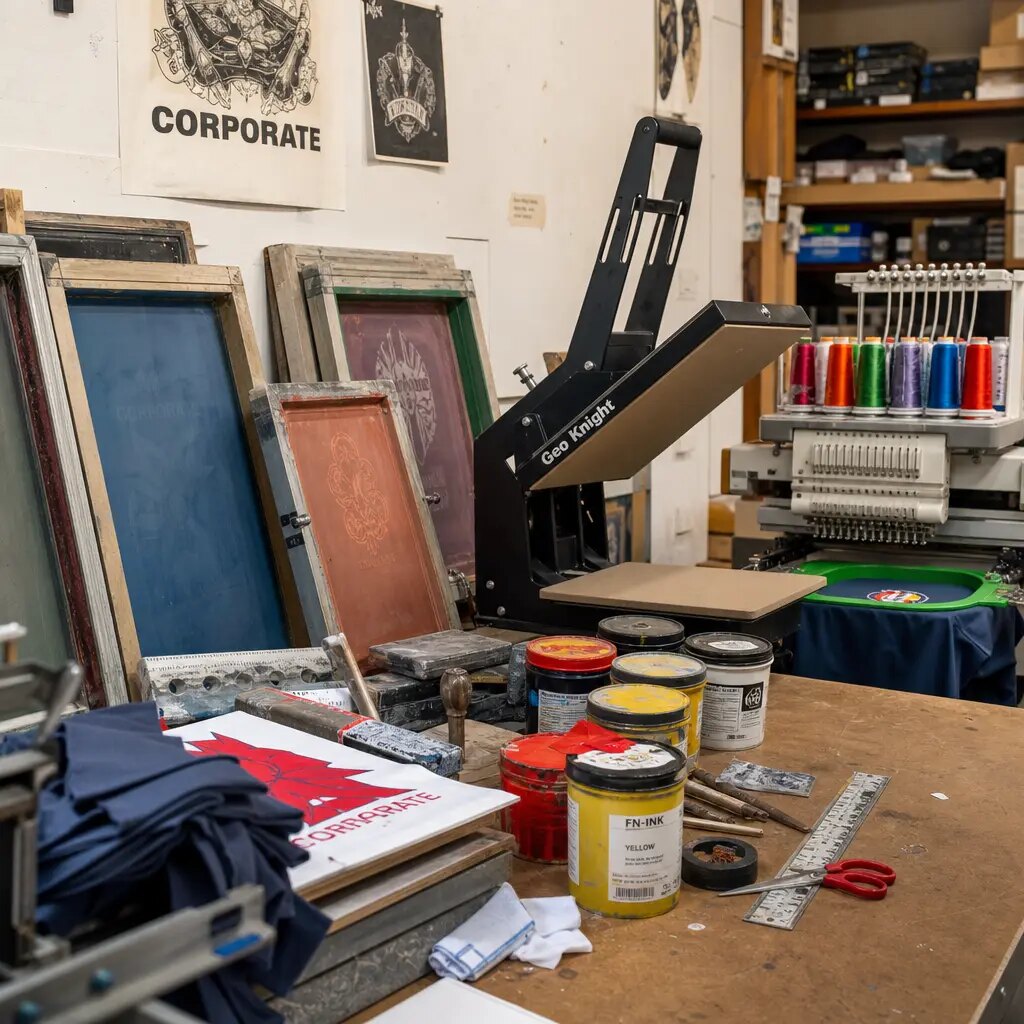
Screen printing is often a practical choice for simple one- or two-color logos on cotton pouches. It can provide consistent coverage and repeatable placement when mesh, ink, squeegee pressure, and curing are controlled. For repeat programs, document the logo size, print color reference, position from edges, and acceptable registration or placement tolerance.
Heat transfer can work for detailed artwork, small batches, or gradients, but film behavior must be checked on the actual cotton. Fold the printed area. Rub it with a clean dry white cloth. Inspect the edges for lift, cracking, or tackiness. A transfer that performs well on a smooth synthetic surface may behave differently on textured cotton.
Embroidery, woven labels, and sewn patches can create a premium look, but they add their own QC points. Embroidery may pucker 120 GSM fabric. Labels can be crooked, loosely attached, or rough on the inside. If the pouch touches delicate garments, inspect the reverse side for loose threads, backing, adhesive residue, or any color transfer risk.
- Specify logo size, color reference, print method, print position, and print position tolerance.
- Use screen print for simple repeat logos where handling consistency matters.
- Use heat transfer only after fold, rub, and edge-lift testing on the actual fabric.
- Check ink curing and dry rub performance before approving bulk shipment.
- Inspect the inside of labels or embroidery for product contact risk.
Build sample approval around the exact bulk construction
A sample should be approved because it performs the job, not because it resembles the design in a photo. The pre-production sample should use the same bulk fabric, GSM range, cord, thread, seam construction, print method, artwork size, and packing method planned for production. If the supplier uses a substitute component for sampling, document it clearly and request a corrected sample when the difference affects performance.
The sample approval routine should include visual review, measurement, fit, handling, and print checks. Measure finished width and height flat. Confirm top channel height and usable internal depth. Fill the pouch with the actual item, close it, open it, repeat the movement, and inspect stress points. Rub the print with a clean dry cloth and fold the pouch as it will be packed.
A retained approved sample is one of the simplest ways to prevent arguments later. Label it with project name, date, PO number, fabric GSM, color reference, cord specification, seam method, print method, artwork version, print location, and packing instruction. The buyer and supplier should both keep a matching standard.
Do not approve based only on digital images unless risk is very low and the order is small. Photos cannot confirm GSM, hand feel, cord smoothness, odor, inside cleanliness, print curing, or channel performance. For import programs and retail-facing packaging, a physical sample is the safer control point.
- Require pre-production samples made with bulk-intended materials and processes.
- Measure width, height, channel height, cord length, and usable internal depth.
- Perform fill, close, open-close, cord pull, fold, and print rub checks.
- Document all deviations before bulk materials are purchased.
- Retain a labeled approval sample for final inspection and reorders.
Set AQL inspection rules and defect classifications before shipment
Final inspection should be more than counting cartons and looking at the top layer. Cotton drawstring pouches should be checked through a defined sampling plan, often using an AQL-based approach agreed between buyer and supplier. Many consumer goods buyers use different limits for critical, major, and minor defects. The exact AQL level should be chosen by the buyer based on risk, order value, and how the pouch will be used.
Defect classification needs to be written in advance. Critical defects may include contamination, mildew, unsafe sharp objects, severe odor, or anything likely to damage the garment or customer. Major defects may include wrong size beyond tolerance, wrong fabric, wrong logo, seam opening, cord failure, significant print transfer, missing drawcord, or mixed SKU. Minor defects may include small loose threads, slight shade variation within standard, or wrinkles that do not affect presentation.
Measurement checks should cover finished width, finished height, top channel height, cord length, and, where relevant, usable internal depth. The inspection report should state the tolerance used, sample size, number of failures, and carton locations. Functional checks should include open-close cycles, moderate cord pull, knot security, seam stress points, and print rub on sampled units.
If functional failures appear across cartons, do not release shipment simply because the pouches look acceptable. A clean-looking pouch that cannot close smoothly or hold the intended product will still create field complaints. Depending on severity and frequency, require sorting, rework, replacement, or reinspection before shipment.
- Agree AQL level, sample size, and defect classification before production starts.
- Separate critical, major, and minor defects in the inspection checklist.
- Include measurement, seam, cord, print, cleanliness, odor, packing, and carton checks.
- Record carton numbers for defects so rework can target affected lots.
- Require reinspection after functional rework when defects are material.
Use the RFQ to remove hidden cost and quality assumptions
Cotton drawstring pouch quotes can look comparable until the specification is unpacked. One supplier may quote 120 GSM fabric while another assumes 140 GSM. One may include screen printing and setup while another excludes screen charges. One may flat pack in counted bundles while another uses loose bulk packing that creates extra receiving work. A strong RFQ makes every bidder price the same product.
Include finished size, usable internal depth, fabric GSM and tolerance, weave, finish, color, cord type, cord size, channel construction, seam allowance, print method, artwork dimensions, print position, quantity by SKU, sample requirement, packing method, carton marks, inspection expectation, and lead time by stage. Ask suppliers to list assumptions and exclusions instead of hiding them in the price.
Separate the commercial quote into base pouch, decoration, labels, individual or bundle packing, export cartons, sample fee, screen or setup charge, and any special handling. Request carton dimensions, pieces per carton, and gross weight early. These numbers affect freight cost, warehouse planning, and landed-cost comparison.
Ask how production is controlled. Printing, cutting, sewing, and packing may be handled in-house or subcontracted. Subcontracting is not automatically a problem, but it does require stronger approval samples and inspection discipline. If production is split across workshops, the supplier should explain how fabric, thread, stitch density, and print placement remain consistent.
- Make all suppliers quote the same GSM, size, cord, channel, print, and packing format.
- Request itemized pricing instead of one vague all-in number.
- Ask what changes increase MOQ, cost, setup, or lead time.
- Confirm carton dimensions and gross weight before supplier selection.
- Ask whether printing, sewing, or packing is subcontracted and how QC is controlled.
Control packing, moisture, carton marks, and repeat-order drift
Packing can decide whether good pouches arrive in usable condition. Cotton can absorb moisture, odor, and dust during production, storage, or transit. A well-sewn pouch may still be rejected if it arrives crushed, stained, musty, or mixed with another SKU. Packing requirements belong in the purchase order and the inspection checklist, not in a casual email after production.
Flat packing in counted bundles is usually efficient for bulk pouches. Bundle quantities such as 25, 50, or 100 pieces should be agreed based on pouch size and warehouse handling. Premium programs may use paper bands or inner bags, but pouches must be dry before sealing. Sealing damp cotton in an inner bag can create odor or mildew risk.
Carton marks should identify PO number, SKU, pouch size, color, print version, quantity, carton number, and destination information if required. Mixed sizes or logo versions should not be packed together unless the carton label and packing list make separation clear. Accurate carton dimensions and gross weight help buyers estimate freight and plan receiving.
Repeat orders deserve the same discipline as first orders. Fabric lots, cord suppliers, thread, ink, sewing operators, and subcontractors can change quietly. Before each reorder, ask the supplier to confirm whether materials and construction match the retained approved sample. If any major component changes, request a revised pre-production sample and repeat the key durability checks.
- Specify flat packing, bundle count, inner protection, carton quantity, and carton mark format.
- Ensure pouches are dry, clean, and odor-free before sealing inner bags or export cartons.
- Use clear SKU separation to prevent warehouse sorting errors.
- Compare repeat-order samples against the retained approved standard.
- Track recurring defects by PO and require corrective action when drift appears.
Specification comparison for buyers
| Spec decision | Recommended option | When it fits | Buyer risk to check |
|---|---|---|---|
| Fabric weight | 120–160 GSM cotton for most apparel pouches; confirm agreed tolerance, commonly ±5% to ±10% depending on mill and finish | 120 GSM for light accessories and inserts, 140 GSM for balanced retail feel, 160 GSM for heavier folded garments or premium presentation | Quoted GSM may not match bulk. Require swatch, retained approved sample, and incoming GSM checks before cutting. |
| Finished size tolerance | Agree a flat measurement tolerance before production, often ±5 mm for small pouches and ±8–10 mm for larger cut-and-sew pouches | Needed when pouches must fit folded tees, underwear sets, socks, scarves, or gift bundles without over-stressing the closure | If only nominal size is listed, usable depth can shrink due to seam allowance, top channel height, drawcord bulk, and product thickness. |
| Fabric construction | Plain weave cotton with stable warp/weft balance, clean surface, and defined acceptable natural specks for unbleached goods | Best for predictable sewing, consistent finished size, and sharper screen print or label placement | Loose weave may stretch during cutting, cause wavy seams, reduce print definition, or allow seam slippage under load. |
| Cord type | Cotton braided cord or self-fabric drawcord; specify diameter/width, finished length, knot/end finish, and color | Fits eco-positioned packaging where visible plastic reduction and natural hand feel matter | Thin cords can fray or pull through knots; oversized cords can jam in the channel and pucker the top hem. |
| Channel construction | Double-turn top hem with secure backtack or bar tack at opening stress points; channel clearance should exceed cord thickness | Recommended for repeat-use pouches, retail handling, and products opened and closed multiple times | Narrow or single-fold channels can twist, split, jam, or unravel after repeated pull cycles. |
| Side and bottom seams | Lockstitch with consistent tension, secure backtack, and seam allowance defined in the tech pack, commonly 5–8 mm depending on size and fabric | Fits most garment pouch programs carrying folded apparel, accessory bundles, or gift sets | Narrow seam allowance, skipped stitches, loose tension, or weak backtacks can lead to seam opening or product loss. |
| Print method | Screen print for simple one- or two-color logos; heat transfer only after fold, rub, and edge-lift tests on actual cotton | Screen print is practical for repeat orders, consistent brand color, and cotton handling performance | Under-cured ink can transfer to garments; transfer films can crack or peel; embroidery can pucker lighter fabric. |
| MOQ route | Stock fabric + standard size + standard cord + one-color print for lower MOQ and lower sampling risk | Useful for pilot launches, seasonal packaging tests, and brands consolidating multiple SKUs into one pouch size | Custom dyed fabric, custom cord color, labels, individual packing, and multi-color printing often increase MOQ and lead time. |
| QC standard | AQL-based visual inspection plus functional seam, cord pull, open-close cycle, print rub, measurement, and packing checks | Appropriate for importers and apparel brands needing repeatable acceptance criteria and supplier accountability | Appearance-only inspection can miss failures that show up during filling, retail handling, e-commerce packing, or customer reuse. |
Buyer checklist before sampling
- Define the pouch use case: garment protection, gift packaging, retail presentation, reusable storage, laundry pouch, or promotional insert.
- Specify the actual packed product: item name, folded dimensions, thickness, approximate weight in grams, and any hard trims, zippers, tags, or corners that may stress seams.
- Confirm finished width, finished height, usable internal depth, top channel height, seam allowance, fabric GSM, fabric color, cord length, cord diameter or width, thread color, and print placement before quoting.
- Set measurable tolerances: GSM tolerance, finished size tolerance, print position tolerance, shade tolerance, cord length tolerance, and acceptable natural cotton specks for unbleached goods.
- Request a pre-production sample made with the exact bulk fabric, cord, thread, channel construction, print method, artwork size, and packing style.
- Test the sample with the real product: fill, close, open, repeat open-close cycles, apply moderate cord pull, fold as packed, rub the print, and inspect seams after handling.
- Define simple durability checks by use case: for light pouches use repeated open-close and print rub; for heavier garments add a short static load test at the intended filled weight.
- Require written acceptance criteria for seam opening, skipped stitches, cord pull-out, knot slip, print transfer, cracking, dirt marks, odor, measurement variance, carton count errors, and mixed SKU risk.
- Keep a retained approved sample labeled with date, PO number, fabric GSM, shade reference, cord spec, seam construction, print reference, and packing instruction.
- Ask the supplier to quote base pouch cost, decoration, labels, inner packing, export carton, sample fee, screen or setup charge, and freight-relevant carton data separately.
Factory quote questions to send
- What exact cotton fabric is included: GSM, weave, color, finish, yarn description if available, finished width, and normal GSM tolerance?
- Is the quoted fabric greige, bleached, dyed, washed, or unbleached natural cotton, and what shade variation or seed-speck level should the buyer expect?
- Can you provide a swatch and a previous production sample showing the same hand feel, weave density, sewing behavior, and print behavior as the quoted pouch?
- What finished size tolerance do you recommend for this pouch, and is the pouch measured flat before ironing, after ironing, or after packing?
- What usable internal depth remains after the top drawstring channel and bottom seam allowance are deducted from the finished height?
- What cord type, diameter or width, finished length, knot style, end finish, and color are included in the quotation?
- How wide is the drawstring channel, how many turns are used in the top hem, and are channel openings backtacked, bar-tacked, or otherwise reinforced?
- What seam allowance, stitch type, stitch density, thread type, and thread color are included for side seams, bottom seams, and top hems?
- Which print method is included, and what are the setup cost, color limit, artwork size tolerance, print position tolerance, ink type, and curing process?
- How do you test print rubbing, ink transfer, cracking, peeling, or edge lift on cotton before bulk shipment?
Quality-control points to confirm
- Fabric GSM matches the approved range and retained sample, with no excessive slubs, holes, weak yarn bands, contamination, oil marks, mildew, or thin spots.
- Fabric shade, hand feel, odor, and natural cotton speck level match the approved sample and agreed brand presentation standard.
- Finished width, finished height, top channel height, usable internal depth, and cord length stay within the agreed measurement tolerance.
- Cutting is straight with grain direction controlled well enough to avoid twisted pouches, diagonal side seams, and distorted logo placement.
- Side seams and bottom seams use the approved stitch type, seam allowance, stitch density, thread color, and backtack method.
- Top channels are straight, evenly folded, sufficiently wide for the cord, and free from twisting, puckering, skipped stitches, loose thread ends, and raw edges.
- Cord moves smoothly through the channel after repeated open-close cycles and does not jam, fray, break, or cut into the cotton.
- Knots or end finishes prevent cord slip-back during filling, closing, opening, carton packing, and unpacking.
- Channel openings, side seam intersections, bottom corners, and drawcord stress points hold under the agreed functional pull and load checks.
- Print color, size, edge sharpness, registration, position, and alignment match the artwork file and retained approved sample.