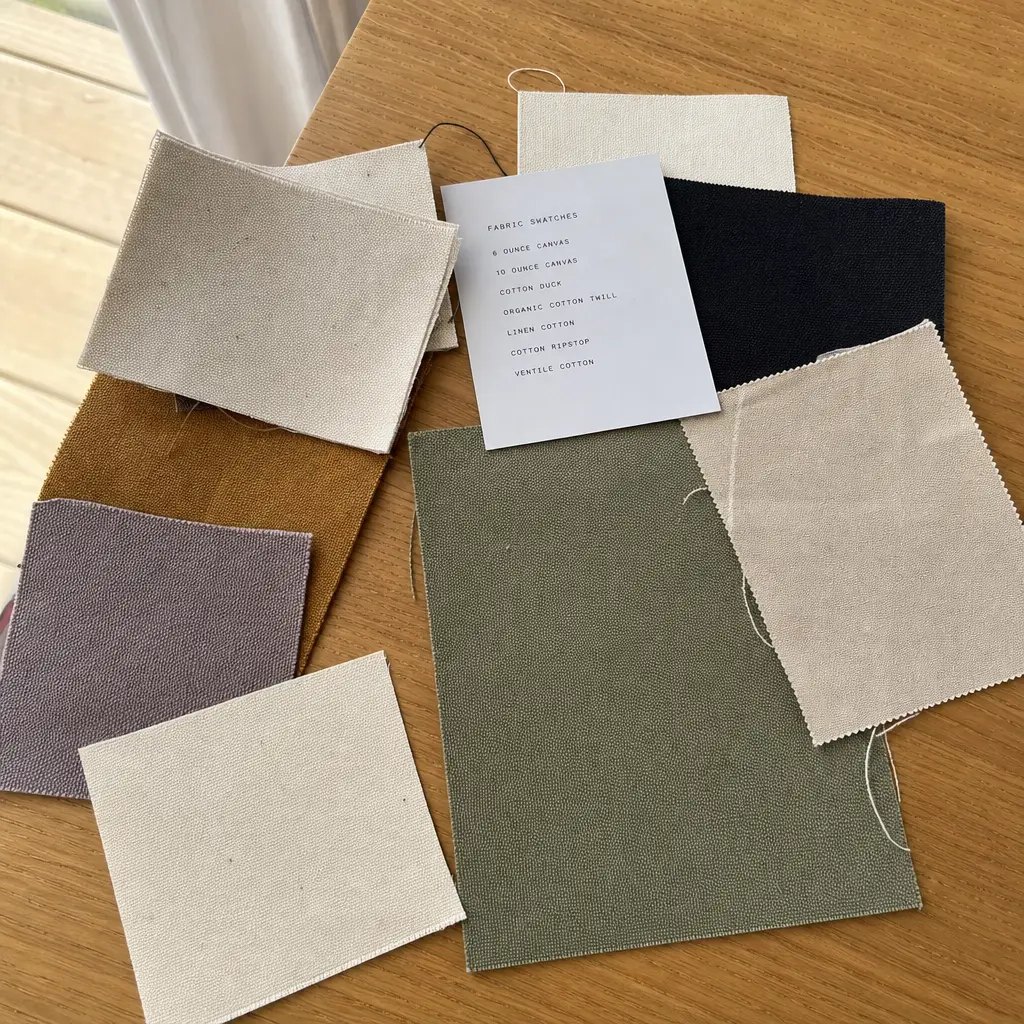
Define the durability problem before choosing the pouch
For wellness studios, cotton drawstring pouches are often used for more than one quiet unboxing moment. They may hold essential oils, facial tools, herbal sachets, yoga accessories, retail gift sets, membership kits, or refill products. The buyer problem is not only whether the pouch looks natural. It is whether the fabric, seams, cord, and print still look acceptable after staff handling, retail display, customer reuse, and warehouse packing.
A useful durability checklist starts with the actual use case. A pouch for a dried lavender sachet can be lighter and simpler than a pouch carrying a glass roller bottle and instruction card. A retail pouch that hangs on a peg, sits in a gift set, and is opened many times needs stronger top-channel stitching than a one-time promotional sleeve. When RFQs do not state the load, product dimensions, and expected handling, suppliers quote different constructions while appearing to offer the same item.
- State the maximum filled weight per pouch, including product, insert card, and any inner packaging.
- List the product shape because glass bottles, tins, and stones stress corners differently from flat textiles.
- Define whether the pouch is disposable presentation packaging, reusable storage, or retail packaging with repeated opening.
- Clarify whether customers may wash or steam the pouch, even if washing is not the primary use.
- Separate visual acceptance from structural acceptance; a pretty pouch can still fail at the channel seam.
Choose fabric GSM by load and brand position
Cotton drawstring pouches for wellness studios usually sit between 120 GSM and 220 GSM. Below 120 GSM, the pouch can be cost-effective for very light sachets or sample packets, but it may feel too thin for a paid retail product. In the 140-180 GSM range, buyers get a better balance of drape, strength, print surface, and freight efficiency. At 200 GSM and above, the pouch feels more substantial and resists corner stress better, but it may add stiffness, bulk, and cost.
Do not select GSM only from a supplier's catalog photo. Natural cotton changes appearance with weave, yarn count, finishing, and bleaching. A 160 GSM tight plain weave can feel stronger than a loosely woven heavier fabric. For a wellness brand, unbleached cotton often gives the right natural look, but shade variation and cotton seed flecks should be treated as normal unless a cleaner bleached or dyed fabric is specified.
- Use 120-140 GSM for small dry samples, jewelry cards, or single-use gift packaging where weight is low.
- Use 150-180 GSM for most spa, yoga, skincare, and herbal retail pouches needing good handfeel and reliable seams.
- Use 200-220 GSM for heavier gift kits, stones, candles, travel-size bottles, or repeated-use member kits.
- Request fabric swatches in the intended GSM and finish before confirming artwork colors.
- Set shade tolerance for natural cotton using physical swatches, not screen images.
Build seam strength into the specification
The most common failure point on cotton drawstring pouches is not the fabric center panel. It is the side seam near the drawstring channel, the bottom corners, or the channel opening where the cord applies repeated friction. If the pouch is quoted only as a size and fabric weight, the supplier may choose a low-cost sewing setup that looks fine during photo approval but opens after loading.
For durable wellness studio orders, specify lockstitch side seams, consistent stitch density, adequate seam allowance, and back-tacking at stress points. A stitch density around 8-10 stitches per inch is a practical starting point for many cotton pouch styles, but the correct setting depends on fabric thickness and needle choice. Too few stitches weaken the seam; too many stitches can perforate light cotton and create a tear line.
- Require back-tacking at drawstring channel ends and top openings where cord tension is highest.
- Confirm bottom corners are fully closed with no skipped stitches or loose thread tails.
- Keep seam allowance consistent so bulk pouches do not lose usable space or split under load.
- Avoid overly tight stitching on light fabric because needle cuts can weaken the cotton.
- Inspect inside seams as carefully as the outside face, especially on natural cotton where loose threads are visible.
Match drawstring cord to pouch size
Cord choice affects durability, user feel, and brand perception. Cotton cord is the usual fit for wellness packaging because it supports a natural product story and avoids the shiny look of many synthetic cords. For small pouches, a 3 mm cord may be enough. For medium and larger retail pouches, 4-5 mm cord is easier to grip and less likely to cut into the fabric channel under load.
The cord must also run smoothly through the channel. A channel that is too narrow causes friction, puckering, and uneven closing. A cord that is too soft may fray or collapse, while a cord that is too stiff can distort the pouch top. For double-drawstring pouches, cord length and balance matter because uneven cords make the pouch look defective even when the sewing is technically acceptable.
- Use single drawstring for lower-cost small pouches and simple sample packaging.
- Use double drawstring when the pouch is larger, sold as retail packaging, or opened often by customers.
- Specify cord diameter, material, color, length, and end treatment in the RFQ.
- Test whether the cord can be pulled firmly without tearing the channel or slipping out.
- Reject bulk lots with twisted cords, uneven paired cords, heavy fraying, or blocked channel movement.
Select print method with durability in mind
Wellness brands often use fine logos, botanical icons, muted colors, and small typography. The print method should be chosen around artwork, fabric surface, wash exposure, and rub resistance. Screen printing is usually the most stable and economical choice for simple one- to three-color logos on cotton pouches. It gives good opacity and repeatability when the ink is cured correctly.
Heat transfer can handle gradients, photographic artwork, or very small multi-color details, but it needs careful testing on cotton texture. Transfers can lift at the edges if the adhesive, pressure, temperature, or dwell time is wrong. Digital print may suit short runs or complex artwork, but the buyer should confirm colorfastness and handfeel. For durability testing, the print should be folded, rubbed, and lightly washed or damp-wiped before bulk approval.
- Choose screen print for simple wellness logos, solid icons, and repeat bulk orders.
- Use heat transfer only after checking edge adhesion, flexibility, and fabric compatibility.
- Avoid placing print too close to seams or drawstring channels where folding and friction are high.
- Approve print size in millimeters and position from pouch edges, not only by visual mockup.
- Compare production samples under consistent light because natural cotton changes perceived ink color.
Use samples to approve performance, not just appearance
A photo sample can confirm general shape and logo placement, but it cannot prove durability. For cotton drawstring pouches, the pre-production sample should be treated as a working test piece. Fill it with the intended product weight, open and close it repeatedly, pull the cord, rub the print, and measure the usable internal space. This catches problems before the factory cuts bulk fabric or prints hundreds of panels.
Sample approval should include both a golden sample and written tolerances. If the buyer only writes 'approved' by email, the factory may reproduce the general look while changing fabric batch, cord thickness, or sewing details to meet production efficiency. A better approval record lists fabric GSM, size tolerance, seam standard, cord detail, print method, packing method, and defect limits.
- Keep one signed or sealed approval sample with the buyer and one with the factory.
- Measure width, height, channel depth, and usable inner height before approving the sample.
- Load the sample with the real product or a weight substitute for at least several handling cycles.
- Perform dry rub and damp rub on the printed area before accepting the artwork process.
- Record any approved variation, such as natural cotton flecks, slight shade movement, or minor slub marks.
Set practical durability test thresholds
Durability testing for cotton drawstring pouches does not need to be over-engineered, but it should be specific. The goal is to define what is acceptable before goods arrive. For many wellness studio orders, practical factory-level checks include seam pull, cord pull, repeated open-close cycles, print rub, light wash or damp wipe, and carton compression review. These tests are simple enough for supplier QC and third-party inspection teams to repeat.
The thresholds should reflect the product use. A pouch used for a one-time sachet gift does not need the same cycle testing as a member kit pouch intended for reuse. However, every pouch should survive normal filling, closing, transport, and customer handling without seam opening, cord failure, or major print damage. If the supplier cannot state how they test these points, the buyer should include the method in the purchase order or inspection checklist.
- Cord pull: moderate firm pulling should not tear the channel, loosen stitches, or release cord ends.
- Open-close cycle: repeated closing should not create seam splitting, channel distortion, or severe cord fuzzing.
- Seam load: filled pouch should be lifted and handled without bottom corner opening or visible stitch stress.
- Print rub: logo should not smear, flake, or transfer heavily after dry and light damp rubbing.
- Wash or wipe: if reuse is claimed, test for shrinkage, print change, and cord deformation after gentle cleaning.
Understand MOQ and cost drivers
MOQ for cotton drawstring pouches is driven by fabric availability, cutting efficiency, sewing line setup, print setup, and packing complexity. A supplier may accept a small order if fabric is in stock and the pouch is plain, but the unit cost rises quickly when the order includes multiple sizes, several print artworks, custom dyeing, or special cord colors. Buyers comparing quotes should look at the assumptions behind the price, not just the final unit number.
The largest cost differences usually come from fabric GSM, pouch size, print coverage, number of print colors, cord type, and packing method. A small change from 140 GSM to 180 GSM may improve durability, but it also changes material consumption and carton weight. A logo printed on one side in one color is very different from two-sided multi-color artwork with tight registration. The RFQ should force suppliers to quote the same construction so the comparison is real.
- Consolidate fabric color across pouch sizes to improve MOQ efficiency and reduce shade variation.
- Group artworks by print color and position when possible to reduce setup cost.
- Expect higher unit cost for small runs with custom-dyed fabric, custom cord, or multiple SKU packing.
- Request price breaks at realistic quantities such as 500, 1000, 3000, and 5000 pieces per size or artwork.
- Separate sample cost, mold or screen cost, unit cost, packing cost, and freight basis in the quote.
Control packing before it affects landed cost
Packing is a durability issue because poor carton handling can damage cotton pouches before they reach the studio or distributor. Over-compressed cartons create hard creases across printed logos. Loose packing can lead to shifting, dirt marks, and crushed corners. For natural cotton, moisture control also matters because the fabric can absorb odor or humidity during storage and sea freight.
A good packing plan includes pieces per inner polybag, pieces per carton, carton dimensions, gross weight, net weight, carton marks, and SKU separation. Retail buyers should also decide whether pouches need individual polybags, paper bands, barcode labels, or bulk packing. Individual packing improves cleanliness and receiving control but adds cost and packaging waste. Bulk packing reduces material use but needs cleaner carton liners and better warehouse handling.
- Use flat packing for most cotton drawstring pouches to reduce wrinkles and improve carton efficiency.
- Avoid excessive compression when screen prints or transfers are not fully cured or may crease.
- Separate mixed sizes and artworks with clear inner labels to prevent receiving and allocation errors.
- Use carton liners or inner polybags where humidity, dust, or long storage is expected.
- Request carton dimensions early so freight forwarders can estimate volume weight and pallet planning.
Protect lead time with approval gates
Lead time problems usually come from late approvals, not only factory capacity. Cotton drawstring pouch production requires artwork confirmation, sample making, material booking, cutting, printing, sewing, trimming, QC, packing, and export handover. If the buyer changes fabric GSM, logo size, or packing after sample approval, the factory may need to restart part of the process. That can affect both schedule and cost.
A practical schedule separates sample lead time from bulk production lead time. For example, a supplier may need several days for a plain sample and longer for printed or dyed fabric samples. Bulk production timing should start only after sample approval, deposit or payment terms, artwork file confirmation, and material confirmation. For seasonal wellness launches, subscription kits, or retail resets, approval buffers should be treated as part of the purchase plan.
- Approve artwork file format, print size, Pantone or target color, and print position before sampling.
- Do not release bulk cutting until fabric GSM, shade, and pouch dimensions are approved.
- Build time for one sample revision if the pouch carries a retail product or premium wellness kit.
- Confirm inspection date and shipment booking before production finishes, not after cartons are packed.
- Track the critical path: fabric availability, print curing, sewing capacity, QC, and export documentation.
Specification comparison for buyers
| Spec decision | Recommended option | When it fits | Buyer risk to check |
|---|---|---|---|
| Fabric weight | 140-180 GSM cotton for most wellness retail pouches; 200 GSM for heavier product kits | 140 GSM suits light samples, sachets, and small gifts; 180-200 GSM handles bottles, candles, stones, or bundled retail sets | Too-light fabric can tear at the cord channel; too-heavy fabric may feel stiff and increase freight cube |
| Cotton type | Natural unbleached cotton for earthy wellness branding; bleached cotton when print color accuracy matters | Natural cotton fits yoga, spa, herbal, and refill programs; bleached cotton supports pastel or fine-line artwork | Natural cotton has shade variation by lot; buyer should approve acceptable shade tolerance before bulk cutting |
| Seam construction | Lockstitch side seams with back-tacking at channel ends and 8-10 stitches per inch | Best for pouches opened repeatedly in studios, retail shops, and subscription kits | Loose stitch density or missing back-tack causes side seam opening near the drawstring tunnel |
| Drawstring cord | Cotton cord 3-5 mm, matching or natural, with knotted ends or secured tips | 3 mm fits small cosmetic or sample pouches; 5 mm gives better grip for larger yoga or spa kits | Thin cord cuts into fabric under load; synthetic cord may conflict with natural-brand positioning |
| Print method | Screen print for solid logos; heat transfer only for high-detail artwork after wash and rub testing | Screen print is stable for repeat bulk orders and simple wellness marks; transfer works for gradients or small batch art | Ink cracking, poor curing, or transfer edge lift appears after cord friction, folding, or warm wash tests |
| Closure style | Single or double drawstring depending on pouch size and handling frequency | Single cord keeps cost lower for small giveaway pouches; double cord improves opening control on retail packaging | Double cord adds labor and must be checked for equal length, smooth running, and no twisting in the tunnel |
| MOQ logic | Consolidate sizes and fabric color to meet fabric dyeing, cutting, and print setup efficiency | Useful when a wellness buyer needs several pouch sizes for oils, towels, gift cards, and starter kits | Splitting many colors or artworks below efficient quantity raises unit cost and may create shade inconsistency |
| Packing method | Flat packed in export cartons with size labels, carton marks, and moisture protection | Best for importers and distributors receiving mixed SKUs for retail allocation or studio chain replenishment | Over-compressed cartons can crease printed logos; poor SKU marking causes receiving errors and repacking labor |
Buyer checklist before sampling
- Define product load per pouch in grams and confirm the pouch will hold that weight for repeated opening, closing, and handling.
- Choose fabric GSM based on contents, not only handfeel; request swatches at 140, 180, and 200 GSM if the fill weight is not final.
- Specify finished size, usable inside space, and drawstring channel width because the top hem reduces practical packing volume.
- Approve cotton shade tolerance with a physical swatch, especially for natural unbleached cotton where seed flecks and tone variation are normal.
- Set stitch density, back-tack position, and seam allowance requirements before sampling so the factory does not optimize only for appearance.
- Run cord pull, seam load, rub, and wash checks on pre-production samples before authorizing bulk fabric cutting.
- Match print method to artwork and use conditions; screen print simple logos and test heat transfer details before accepting them for repeat-use pouches.
- Require a packing plan by SKU, carton quantity, carton dimensions, gross weight, net weight, and carton marks before issuing the purchase order.
- Compare quotes using the same fabric GSM, pouch size, print coverage, cord type, packing method, and inspection standard.
- Build approval time into the schedule for artwork proof, sample revision, bulk material booking, production, QC, and export packing.
Factory quote questions to send
- What fabric GSM and cotton construction are included in the quote, and can you provide swatches from current bulk stock or the intended mill lot?
- Is the finished size measured outside seam to outside seam, and what tolerance do you apply for width, height, and drawstring channel depth?
- What stitch density, seam allowance, and back-tacking method will be used at the side seams and channel openings?
- What cord diameter, material, color, and end finishing are included, and has the cord been pull-tested after sewing into the pouch?
- Which print method is quoted, how many colors or positions are included, and what curing or adhesion test is performed before packing?
- What is the MOQ for each size, color, and artwork, and what unit price changes if we consolidate artworks or increase order quantity?
- How many pre-production samples are included, what sample lead time applies, and are revisions charged separately?
- What carton quantity, carton size, gross weight, and packing layout are assumed in the quote?
- What inspection standard do you support before shipment, and can you share the defect classification for seam, cord, print, stain, and size issues?
- What production lead time starts after which approvals: deposit, artwork confirmation, sample approval, or bulk material confirmation?
Quality-control points to confirm
- Fabric GSM should be checked with a cutter and scale or verified against approved swatch; random handfeel is not enough for production acceptance.
- Finished size should remain within agreed tolerance after sewing and pressing, with special attention to usable inner height below the drawstring channel.
- Side seams and bottom corners should show no skipped stitches, open seams, needle cuts, loose threads, or weak back-tacks.
- Drawstring should slide smoothly without catching, twisting, fraying, or pulling through the channel under normal force.
- Cord channel openings should not tear after repeated open-close cycles and moderate pull testing.
- Print should pass dry rub, light wet rub, folding, and basic adhesion checks according to the selected ink or transfer method.
- Natural cotton shade, seed flecks, and slubs should match the approved tolerance sample, not only a digital photo.
- Pouches should be clean, odor-free, and free from oil marks, dirt, mildew, excessive lint, or visible ironing shine.
- Packing should separate sizes and artworks clearly, with carton marks matching the packing list and purchase order.
- Export cartons should hold shape after loading and include inner polybag or liner protection when humidity exposure is likely.