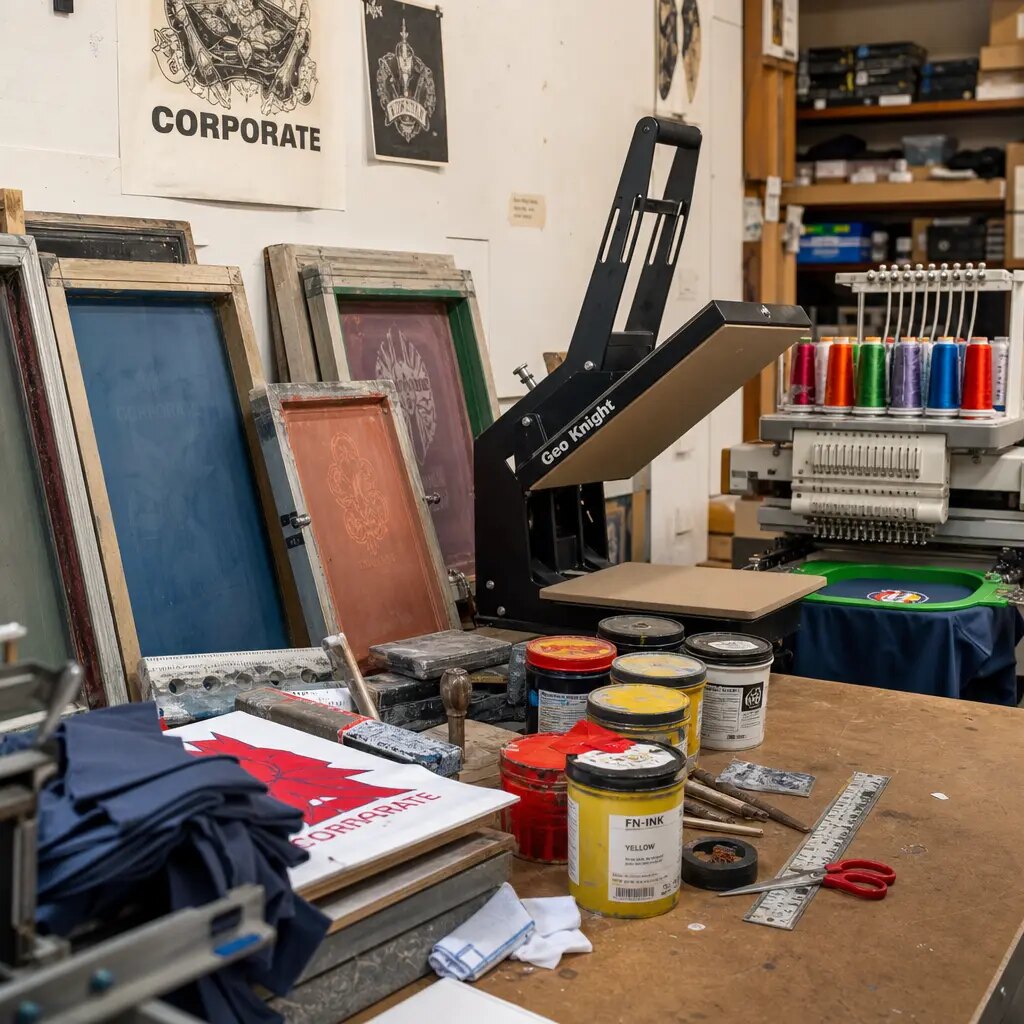
Why print proofing matters more for craft fair pouches
Cotton drawstring pouches used at craft fairs are often small, low-cost, and ordered in several sizes. That combination makes buyers underestimate the proofing work. A 2 mm print shift on a large tote may be acceptable, but the same shift on a 10 x 15 cm pouch can make a logo look off-center. If the pouch is used for jewelry, soap, candles, ceramics, or small gift sets, the pouch becomes part of the retail presentation, not only transport packaging.
The main buying problem is not choosing cotton versus another material. It is making sure the approved logo, fabric, drawcord, and packed SKU are exactly what the sales team expects to receive before a craft fair deadline. Print proofing should catch practical production risks: cotton texture swallowing fine lines, drawcord channels reducing visible print space, dyed fabric changing ink color, and mixed carton packing creating receiving errors.
- Treat small pouch artwork as retail packaging artwork, not as a casual giveaway imprint.
- Approve print size on the actual pouch size, not only on a PDF layout.
- Build the proofing schedule around the event date, including transit and warehouse receiving time.
- Use finished pouch measurements for artwork centering because sewing changes the visible panel area.
Start the RFQ with finished pouch use, not only dimensions
A good RFQ for cotton drawstring pouches should explain what the pouch will hold and how it will be handed to customers. A pouch for a 60 g soap bar does not need the same fabric, seam strength, or drawcord as a pouch for a ceramic ornament. For craft fair programs, buyers often order multiple sizes under one branding system. The factory needs to know which sizes are product-fit critical and which are general merchandise pouches.
State both finished size and usable internal size. Finished size is the flat sewn dimension. Usable internal size is the space below the drawcord channel and inside the seams. If the product is rigid, thick, or boxed, the pouch needs extra allowance. Cotton fabric and sewing tolerance also reduce real usable space. For small pouches, even 5 mm can decide whether staff can pack quickly at the booth.
- Example RFQ wording: finished size 12 x 17 cm, usable internal height minimum 14 cm below drawcord channel.
- Include product size and thickness if the pouch must fit a specific item.
- Identify whether the pouch is for direct resale, gift-with-purchase, refill packaging, or event booth packaging.
- List all size versions in one table so the factory can plan fabric yield and print screens correctly.
Choose fabric GSM based on print clarity and product feel
For most cotton drawstring pouches used at craft fairs, 5 oz to 6 oz cotton, roughly 140-170 GSM, gives a practical balance of print surface, hand feel, and cost. Lighter cotton can work for very simple packaging or sample giveaways, but it may become transparent, wrinkle heavily, or stretch during printing. Heavier canvas gives a more premium feel, but it increases material cost, carton weight, and may close less neatly on very small pouch sizes.
Natural unbleached cotton is common because it fits handmade, organic, and artisan positioning. However, natural cotton has shade variation. If a brand requires a cleaner white or exact color background, the RFQ should specify bleached cotton or dyed cotton with a lab dip. Dyed cotton adds approval steps and may affect logo color. Dark pouch colors often require an underbase or different print method to keep the logo readable.
- Light use or sample insert: 3 oz to 4 oz cotton may be acceptable if transparency is not a concern.
- General craft fair retail packaging: 5 oz to 6 oz cotton is usually the safest starting point.
- Premium reusable pouch: 7 oz to 8 oz cotton or canvas can work, but test closing performance.
- Dyed cotton orders should include shade tolerance and colorfastness expectations in the purchase order.
Match the print method to the artwork before approving price
Screen printing is usually the most reliable method for cotton drawstring pouches when the logo is one or two solid colors. It gives good coverage, a controllable hand feel, and efficient unit cost after setup. For craft fair pouches, many brands use a simple wordmark, maker logo, or small emblem. These designs should be converted to vector artwork and sized to the pouch panel before screens are made.
Heat transfer can reproduce complex or multi-color artwork, but the film edge and hand feel must be acceptable. It is not always the best choice for a rustic cotton pouch. Digital print is useful for samples, short runs, or artwork with gradients, but buyers should not assume the digital sample will match bulk screen print exactly. If the order has QR codes, fine lines, or small text, run an actual scan and readability test on the printed pouch sample.
- Use screen print for solid logos, simple icons, and repeat bulk orders.
- Use heat transfer only after approving film feel, edge visibility, and wash or rub resistance if relevant.
- Use digital print for short trial runs, but define whether bulk production will use the same method.
- Keep minimum line thickness realistic; fine strokes can break on cotton texture.
Proof artwork on the pouch panel, not only on a flat layout
A print proof must show the logo on the real printable area. Cotton drawstring pouches lose visible space at the side seams, bottom seam, and top drawcord channel. If the artwork is centered on the cut fabric panel before sewing, it may appear high, low, or uneven after the pouch is assembled. The proof should define placement from finished edges, such as logo center 65 mm from bottom seam and 60 mm from left finished side seam.
For small craft fair pouches, artwork scale is a common mistake. A logo that looks balanced on a computer screen may dominate the pouch or sit too close to the gathered top. Buyers should approve actual print width and height in millimeters. If multiple pouch sizes use the same logo, decide whether the logo stays the same physical size across all pouches or scales by pouch size. Both approaches can be correct, but they should not be left to factory judgment.
- Define logo width, logo height, and position from finished edges.
- Mark no-print areas near the drawcord channel and side seam.
- For mixed pouch sizes, provide a separate placement guide for each size.
- Photograph the sample flat and filled, because the print can look different when the pouch is gathered.
Use physical samples to lock fabric, sewing, and print together
A fabric swatch and a print strike-off are useful, but they do not replace a full pre-production pouch when the order is event-critical. The full sample shows how the cotton behaves during cutting, printing, sewing, and drawstring closing. It also reveals whether the logo is distorted by seam tension, whether the drawcord feels suitable, and whether the product fits inside the finished pouch.
For repeat orders with an unchanged specification, a photo proof plus retained approved sample may be enough. For new sizes, dyed fabric, new artwork, small text, or product-fit packaging, a physical sample is the safer route. The buyer and factory should each keep one signed or sealed approved sample. During production inspection, the inspector compares bulk goods against that sample instead of interpreting a vague artwork file.
- Sample should use the same fabric weight, color, drawcord, thread, print ink, and packing method as bulk.
- Approve sample under normal light and also under the type of light used in retail or fair booths if color is sensitive.
- Test product insertion and closing speed, especially for high-volume booth packing.
- Record any approved deviation, such as natural cotton shade variation, before mass production starts.
Understand MOQ and cost drivers before comparing supplier quotes
Cotton drawstring pouch quotes can look inconsistent because suppliers build MOQ and price around different bottlenecks. One factory may base MOQ on fabric roll consumption. Another may base it on screen setup, dye lot, or sewing line efficiency. A quote for 5,000 pieces in one size and one print color is not directly comparable with 5,000 pieces split across five sizes, three pouch colors, and six logo versions.
For craft fair programs, the cleanest cost structure usually comes from reducing unnecessary variation. Keeping the same natural cotton, drawcord, thread color, and one-color print across several sizes can improve production efficiency. The buyer can still create useful assortment by size without creating too many setup charges. When comparing quotes, separate the true unit pouch cost from one-time setup costs, sample fees, special packing charges, and inland logistics.
- Major cost drivers include fabric GSM, pouch size, fabric color, print colors, print area, drawcord type, sewing complexity, packing version count, and inspection level.
- MOQ may increase when each size or color requires separate cutting, printing, and packing control.
- Screen charges should be listed separately if the buyer may reorder the same artwork.
- Very low unit prices can hide thinner fabric, smaller finished size, single drawstring construction, or simplified packing.
Set acceptance criteria for print and sewing before bulk production
Acceptance criteria should be measurable. Instead of saying the print must be good, define what is acceptable: logo position tolerance, maximum color deviation, no broken letters, no heavy ink bleeding, and no visible stains on the print face. For many cotton pouch orders, a practical logo position tolerance is plus or minus 3 mm to 5 mm depending on pouch size and printing process. Very small pouches or border artwork may require tighter control, but tighter tolerance can increase rejection risk and cost.
Sewing criteria should include finished size tolerance, seam strength, drawstring movement, and overall appearance. Cotton pouches are sewn products, so minor variation is normal. The goal is to remove defects that affect use, retail presentation, or packing accuracy. If the pouch is sold as part of a retail product, the standard should be higher than for a free booth giveaway.
- Reject pouches with unreadable logos, missing print areas, severe ghosting, heavy ink smears, or print transfer onto the back panel.
- Reject drawcord channels that block smooth closing or tear during normal pull testing.
- Separate critical defects, major defects, and minor defects so inspection decisions are not subjective.
- For QR codes or care symbols, test readability on actual printed cotton, not only on the artwork file.
Plan packing by booth, store, or distributor receiving needs
Packing is often where a well-produced pouch order becomes difficult to use. Craft fair orders may need to be split by event team, store location, product category, or distributor warehouse. If all pouch sizes and print versions are mixed in plain cartons, the buyer pays later in sorting labor and event preparation delays. The packing plan should be part of the quotation, not a last-minute warehouse instruction.
Carton planning also affects freight and damage risk. Cotton pouches are soft, but over-compression can create deep creases through printed logos. Very heavy cartons are harder to handle and more likely to arrive damaged. For small pouches, buyers should specify inner counts by bundle, polybag, paper band, or master carton count. If plastic reduction is important, paper bands or bulk inner cartons can be discussed, but the cartons still need moisture protection for ocean shipping.
- Use separate inner packs for each SKU, size, fabric color, and print version.
- Carton labels should show PO number, SKU, size, print version, quantity, gross weight, net weight, and carton number.
- Avoid random mixed cartons unless the receiving warehouse has agreed to that method.
- Approve carton dimensions and weight before shipment for landed-cost and warehouse handling estimates.
Protect the schedule with milestone approvals
Craft fair timing is unforgiving. The event date does not move because a print proof was late or a fabric shade needed reapproval. Build the lead time from milestones, not only from a single production promise. A realistic timeline includes artwork review, sample making, sample shipping, buyer approval, fabric booking, cutting, printing, curing, sewing, trimming, inspection, packing, export documentation, and freight.
The highest schedule risks are usually artwork revisions, dyed fabric approval, late deposit, unclear carton assortment, and delayed sample feedback. If the buyer needs pouches for a fixed event, leave a decision deadline for each approval. When time is short, simplify the specification: natural cotton, one print color, standard drawcord, standard carton packing, and fewer SKU versions. Complexity is manageable, but only when the calendar allows it.
- Artwork approval should happen before screen making or digital print setup.
- Sample approval should happen before bulk cutting when size fit or logo placement is critical.
- Packing list approval should happen before final packing, not after goods are sealed in cartons.
- Inspection should be scheduled when goods are finished but before cartons leave the factory.
Specification comparison for buyers
| Spec decision | Recommended option | When it fits | Buyer risk to check |
|---|---|---|---|
| Fabric weight | 5 oz to 6 oz cotton, approximately 140-170 GSM | Most craft fair packaging, jewelry, candles, soap bars, stationery, and small handmade goods | Very light cotton may show product edges, distort during print, or feel too promotional for retail resale |
| Fabric color | Natural unbleached cotton for simple one-color prints; dyed cotton only after lab dip approval | Natural or rustic craft fair branding, low MOQ programs, and faster sampling | Dyed fabric can change logo contrast and may require colorfastness testing before packing with light-colored goods |
| Print method | Screen print for solid logos; heat transfer only for detailed multi-color artwork; digital print for short sample runs | Screen print works best for repeat bulk orders with clear brand marks | Fine lines can fill in on cotton texture, and heat transfer can feel plastic if the film area is too large |
| Pouch construction | Double drawstring with folded top channel and overlocked inner seams | Retail buyers who need a clean opening and reusable pouch feel | Single drawstring saves cost but can look less balanced and may not close evenly on heavier contents |
| Size tolerance | Approve finished size tolerance of plus or minus 5 mm for small pouches and plus or minus 10 mm for larger pouches | Normal cotton cutting and sewing production where dimensional consistency matters for product fit | If the buyer only gives flat artwork size and not usable internal size, packed products may not fit after seam allowance |
| Logo placement | Center logo from finished pouch edges, not from cut panel edges; define distance from bottom seam and drawcord channel | Orders with front logo, small emblem, QR code, or maker branding | Artwork may sit too high and disappear when the top is gathered if placement is measured before sewing |
| MOQ logic | Consolidate one fabric, one drawcord, and one print color across sizes where possible | Distributors and brands ordering mixed pouch sizes for craft fair kits | Too many colorways and print versions create setup charges, material leftovers, and packing errors |
| Packing method | Pack by size and print version, with inner polybag or paper band count, carton mark, and carton weight limit | Importers shipping to fair teams, retail stores, or third-party logistics warehouses | Mixed cartons without clear version labels cause picking errors and delay event preparation |
Buyer checklist before sampling
- Define finished pouch size, usable internal size, fabric GSM, drawstring type, seam construction, and logo placement from finished edges.
- Send vector artwork with Pantone or CMYK target, minimum line thickness, actual logo print size, and any required white underbase for dark fabric.
- Approve a physical pre-production sample before bulk cutting when the order uses dyed fabric, tight product fit, QR code, fine-line artwork, or retail resale packaging.
- Set measurable print acceptance criteria: position tolerance, color tolerance, ink coverage, registration, hand feel, and wash or rub resistance if required.
- Require the supplier quote to separate fabric, sewing, printing setup, print run cost, packing, carton, inland freight, sample fee, and mold or screen charges where applicable.
- Specify carton assortment by SKU, size, color, and print version; avoid mixed cartons unless the distribution plan requires it.
- Confirm whether the MOQ is based on fabric purchase, dye lot, screen setup, sewing line efficiency, or packing version count.
- Keep one approved sample at the buyer side and one sealed sample at the factory for production comparison.
- Review lead time by milestones: artwork confirmation, fabric booking, sample production, sample approval, bulk cutting, printing, sewing, inspection, and export booking.
- State whether pouches will touch food, cosmetics, jewelry, candles, or dyed goods so the factory can flag material, odor, color migration, and packing risks.
Factory quote questions to send
- What cotton fabric weight and actual GSM will be used, and is the quoted fabric greige, washed, bleached, or dyed?
- Is the pouch size quoted as cut size or finished size, and what size tolerance will you apply after sewing?
- Which print method is included in the price, and what is the maximum printable area for the selected pouch size?
- Are screen setup charges, color change charges, and artwork adjustment charges included or quoted separately?
- What is the MOQ for this pouch based on: fabric roll, print setup, dye lot, sewing production, or packing version?
- Can you produce a physical pre-production sample using the same fabric, drawcord, thread, ink, and packing as bulk production?
- What lead time applies after artwork approval and sample approval, and which step is most likely to affect schedule?
- How will you pack mixed sizes or mixed print versions, and what carton labels will be used for receiving accuracy?
- What inspection standard will you use for print defects, stitching defects, stains, loose threads, and size tolerance?
- Can you provide carton dimensions, gross weight, net weight, pieces per carton, and HS code guidance for landed-cost comparison?
Quality-control points to confirm
- Finished pouch size measured flat after sewing, not before stitching.
- Logo position measured from finished side seams, bottom seam, and drawcord channel.
- Ink coverage checked for pinholes, broken lines, uneven pressure, ghosting, and color mismatch against approved sample.
- Drawstring pull tested on both sides to confirm smooth closing without seam tearing or channel blockage.
- Seams inspected for skipped stitches, loose threads, needle holes, puckering, and poor overlock trimming.
- Fabric checked for stains, slubs beyond agreed tolerance, odor, shade variation, and visible weaving defects on logo area.
- Carton assortment verified against purchase order by SKU, size, print version, and quantity.
- Packing compression checked so pouches are not permanently creased across the printed logo.