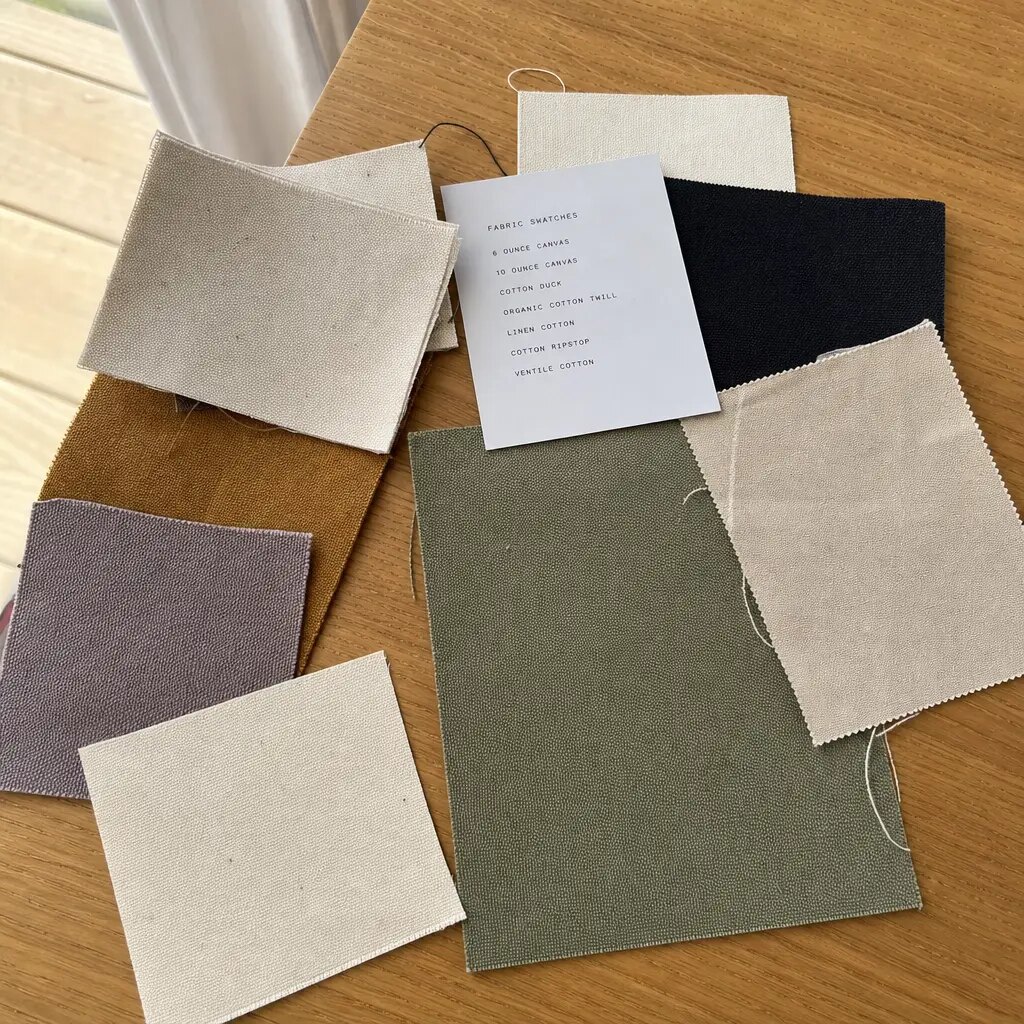
Start with the pouch job, not the fabric catalog
A cotton drawstring pouch for a coffee roaster can do several jobs. It might hold cupping spoons after an event. It might wrap a sealed retail coffee bag for a holiday gift set. It might protect a hand grinder in a merch bundle, or carry tasting cards in a subscription box. In product photos, those pouches may look almost identical. In procurement, they are not the same product.
This is where many RFQs become hard to compare. If a request only says “natural cotton drawstring pouch with logo,” one supplier may quote 140 GSM muslin, another may quote 280 GSM canvas, and a third may include a heavier cord, double drawstring, or individual packing. The cheapest quote may simply be thinner fabric, looser sewing, smaller cord, or a packing method that will not work for your kitting team.
The first question should be practical: what must the pouch hold, protect, present, and survive? A pouch that carries a folded voucher at a trade show does not need the same structure as a pouch holding a ceramic cup. A pouch placed inside a premium gift box needs better trimming and cleanliness than a giveaway pouch handed out by the hundreds. A reusable accessory pouch needs stronger seams and a closure that feels good after repeated use.
Coffee roasters should also separate cotton presentation packaging from coffee barrier packaging. Cotton is breathable. It should not be treated as a freshness pack for roasted coffee because it does not provide the oxygen, aroma, or moisture barrier expected from proper coffee packaging. If the pouch contains coffee, the coffee should normally be sealed first in a suitable coffee bag. The cotton pouch then becomes the outer brand layer: tactile, reusable, and giftable.
A good sourcing brief connects the product use to measurable specifications. If the pouch is packed on a kitting line, size tolerance and carton organization matter. If it is sold as merch, fabric handfeel, logo durability, odor, and trimming matter. If it is a subscription insert, cost and compact packing may matter more. The clearer the job, the easier the material choice becomes.
- Weak RFQ: “Cotton pouch, natural color, logo print, quote best price.”
- Stronger RFQ: “8 oz natural cotton canvas drawstring pouch, finished size 18 x 24 cm, usable internal height minimum 20 cm, double cotton cord, one-color screen print 8 x 6 cm centered on front, finished-size tolerance +/-0.5 cm, bulk packed 50 pieces per inner bag.”
- Procurement goal: make supplier quotes comparable by defining fabric, construction, print, size tolerance, packing, and inspection standard before price comparison.
Choose fabric weight by use case, not by habit
GSM is useful, but it is not the whole story. A pouch made from 150 GSM open muslin can feel very different from a tighter 150 GSM cotton fabric. Likewise, an 8 oz canvas and a 10 oz canvas may both look sturdy, yet behave differently at the drawstring channel. Buyers should use GSM together with weave, yarn thickness, finish, sewing method, and the expected contents.
For many coffee-roaster programs, 8 oz cotton canvas, usually around 260 to 280 GSM, is a practical benchmark. It has enough structure for accessory kits, sealed coffee gift packs, cupping tools, and reusable branded pouches, but it is not as bulky as heavy tool canvas. It also tends to support bold screen-printed logos better than very open muslin because the fabric face is more stable.
Lightweight cotton, around 135 to 170 GSM, has its place. It is useful for tasting cards, event giveaways, vouchers, and very light sample kits where unit cost and freight volume matter. The trade-off is presentation. It can wrinkle quickly, collapse when empty, show darker contents, and feel more disposable. If the marketing team expects a pouch that customers will keep, lightweight muslin should be approved early with a real sample rather than introduced later as a cost-saving substitute.
A mid-weight option, roughly 200 to 240 GSM, can work when the pouch needs more body than muslin but cannot justify 8 oz canvas. This range is often worth sampling for subscription inserts or modest accessory kits. It may still collapse around small metal parts or ceramic items, so a filled sample is important.
Heavy canvas, roughly 340 to 400 GSM, belongs in a different category. It gives a premium and more protective handfeel for hand grinders, metal tools, tampers, cups, or higher-value bundles. It also adds sewing bulk, channel thickness, carton weight, and sometimes a stiffer closure. On small pouch sizes, heavy fabric can make the top opening feel crowded. Do not approve it from a flat swatch alone; test the full pouch with the real contents.
- 135 to 170 GSM: economical for giveaways, paper inserts, vouchers, and short-term promotions.
- 200 to 240 GSM: mid-range choice when the pouch needs some structure but cost and carton volume are tight.
- 260 to 300 GSM: strong all-round range for branded coffee pouches, accessories, and gift presentation.
- 340 to 400 GSM: premium or tool-pouch range; check closure smoothness, seam bulk, and carton weight.
- Quote requirement: request fabric construction, target GSM, GSM tolerance, and confirmation that sample fabric matches the intended bulk route.
Specify the cotton construction and finish clearly
“Cotton” is not a complete purchasing spec. Coffee roasters may see supplier descriptions such as cotton, muslin, calico, canvas, plain weave, twill, washed cotton, or brushed cotton. These words are not always used consistently, especially across markets. A B2B RFQ should ask for the actual fabric construction and measured weight instead of relying on broad names.
Muslin and light plain cotton can be suitable for simple packaging or promotional distribution. Canvas gives more body and a stronger retail feel. Twill can look smoother and more refined, although it may not be the most economical route for a basic drawstring pouch. Washed cotton may feel softer, but washing can affect dimensions and variation. Brushed or softened finishes can improve handfeel while also increasing lint risk, which matters if the pouch will be packed with paper cards, cups, or brewing tools.
Natural cotton often contains flecks, seed particles, and shade variation. For many coffee brands, that appearance is part of the appeal: warm, tactile, and less sterile than bright white packaging. But natural flecks can interfere with very fine artwork, pale ink, or small type. Bleached fabric gives a cleaner print background, but it shows dirt, sewing oil, carton dust, and handling marks more easily. The right choice depends on brand style and inspection expectations.
Be careful with sustainability wording. “Organic cotton,” “recycled cotton,” and “eco cotton” are not interchangeable terms. If the program requires certified organic cotton or recycled content, ask for relevant documentation before placing the order. If certification is not required, avoid vague claims and focus on physical specifications: fabric type, weight, color, finish, tolerance, and approved sample.
Repeat orders need their own discipline. Natural cotton canvas from one fabric lot can differ from another in shade, stiffness, slub level, and print behavior. If replenishment orders must match a previous run, keep a sealed sample and state that the next bulk order should be checked against it. If normal natural variation is acceptable, say so. Silence creates avoidable disputes.
- Ask whether the fabric is muslin, plain cotton, canvas, twill, washed cotton, brushed cotton, or a blend.
- Define target GSM and tolerance; do not accept “medium thickness” as a buying specification.
- Clarify whether flecks, slubs, and natural shade variation are acceptable and where they become defects.
- For certified materials, request documents before PO approval, not after production is complete.
- Keep a sealed fabric and finished-pouch sample for repeat-order matching.
Pick natural, bleached, black, or custom dyed cotton with the risk visible
Natural cotton is usually the simplest and most forgiving route for cotton drawstring pouches for coffee roasters. It fits common coffee brand cues: craft, origin, warmth, and reusable presentation. It also avoids lab dip rounds and some dye-related delays. That does not mean natural cotton is perfectly uniform. Buyers should expect reasonable variation in shade and fleck level unless a tighter standard is negotiated, sampled, and priced.
Bleached white cotton has a different role. It gives stronger contrast for bright logos, fine black artwork, or minimalist retail systems. It can look sharp inside a gift box. It also demands stricter cleanliness control. White fabric reveals dust, oil marks, loose fibers, carton dirt, and handling stains more clearly than natural cotton. If the pouch will sit next to premium coffee bags or accessories, write stain rejection and packing cleanliness into the PO.
Black cotton and other dark dyed fabrics can look premium, especially for roasters already using black coffee bags, matte labels, or high-end brewing gear. The risk is color control. Dark fabric may vary by dye lot, and poor dye fixation can rub onto white cards, pale boxes, ceramic cups, or light-colored merchandise. Ask about dry and wet rubbing/crocking risk. For custom colors, request lab dips before bulk fabric production and agree on the shade standard.
Custom dyed cotton should earn its place. It may require higher MOQ, longer lead time, separate fabric minimums, and more approval work. It also needs repeat-order control. The second order should not be judged from memory; it should be compared with the approved shade sample. For smaller roasters, natural cotton with a strong one-color print or a sewn label often delivers better reliability than a low-volume custom dye route.
The color decision is therefore not only aesthetic. It affects sampling, lead time, QC, repeatability, and dispute risk. A beautiful color that cannot be repeated or that rubs onto inserts will create more trouble than a simpler fabric route approved correctly.
- Natural cotton: lower complexity and strong fit for craft coffee branding; define acceptable variation.
- Bleached white: clean and high-contrast, but requires tighter stain, dust, and handling controls.
- Black dyed cotton: premium look; confirm shade consistency and rubbing/crocking behavior.
- Custom dyed cotton: use lab dips, shade tolerance, and realistic lead-time planning.
- PO language: state whether bulk must match a swatch, lab dip, or sealed sample, and define acceptable variation.
Match branding method to artwork, fabric texture, and repeatability
Most coffee roaster pouch artwork works well with screen printing. Bold one-color logos, roaster marks, simple origin graphics, icons, and line art are good candidates. Screen print is usually efficient at bulk quantities and gives a natural look on cotton canvas. It also works well for repeat orders when the same logo size and placement are standardized across multiple pouch sizes.
The weak point is detail. Fine serif text, tasting-note lists, delicate origin maps, QR codes, and small certification icons can lose clarity on textured cotton. Large blocks of ink may stiffen the pouch face and can show uneven coverage on coarse or heavily slubbed fabric. Ask the supplier to review the artwork at actual size and flag minimum line thickness, small-text size, and ink-coverage concerns before the strike-off. A digital mockup cannot show how ink behaves on woven cotton.
Heat transfer may be useful for complex multicolor graphics, gradients, or smaller orders where multiple screens are inefficient. It should not be approved from a photo alone. Handle the sample. Look for a visible film edge, glossy patch, stiff handfeel, lifting corners, cracking after flexing, or poor adhesion after rubbing. Transfers can be suitable, but only when the finished look and durability are acceptable for the brand.
Sewn labels, woven labels, and side tabs are strong options when the main pouch face should stay clean or the artwork is too detailed for direct printing. A small side label can feel premium and repeatable. Embroidery can work for simple marks, but it may pucker lightweight cotton and can be too heavy for small pouches. It also changes the cost structure.
For procurement, the best branding method is not the most decorative one. It is the method that makes the logo legible, keeps the pouch feeling right, can be inspected clearly, and can be repeated without surprise.
- Use screen print for bold logos, simple graphics, and repeat production in one to three colors.
- Use heat transfer only after checking film edge, handfeel, adhesion, cracking, and flex behavior.
- Use sewn labels for subtle premium branding or artwork too detailed for direct print.
- Avoid very small text, fine QR codes, and heavy ink blocks unless tested on actual fabric.
- RFQ details: include vector artwork, print size, color references, placement measurements, print side, and expected durability.
Engineer the drawstring, channel, seams, and bottom
Construction is where a cotton pouch starts to feel either retail-ready or cheap. Two pouches made from the same 8 oz canvas can behave very differently if one has a narrow channel, short cord, weak stitching, poor trimming, or a bottom seam that strains when filled. Buyers should not leave these choices entirely to factory default.
The drawstring channel must suit both the fabric and the cord. A channel of about 2.5 to 3.5 cm is a practical range for many small to medium cotton canvas pouches, but the correct dimension depends on pouch size, fabric thickness, and cord diameter. Too narrow, and the cord catches. Too wide, and the channel eats usable height and may look bulky. Always check the internal height below the channel after sewing, especially if the pouch must fit a sealed coffee bag, filter pack, or tool.
Single drawstring construction is economical and can be fine for event kits, simple inserts, or light utility pouches. Double drawstring construction closes from both sides and usually gives better presentation for gift sets, retail merch, and reusable accessory pouches. Cotton cord supports a natural material story. Polyester cord may offer more consistent diameter and fray resistance. Neither is automatically correct; specify the choice.
Seams matter most when the contents are heavy, hard, or angular. A hand grinder, tamper, metal scoop, or ceramic cup creates stress in different places than a paper tasting card. Tell the supplier the approximate content weight, dimensions, and hard-edge points. Ask whether they recommend wider seam allowance, stronger stitch density, back-tacking, French seam, overlock plus lockstitch, a side gusset, or boxed bottom construction.
Small details affect the user experience. Cord ends can be knotted, folded, wrapped, stitched, taped, or heat cut if the cord material allows it. Cord length should be long enough to open the pouch easily, but not so long that it tangles in packing or looks messy on shelf. The approved sample should lock these details down.
- Channel: specify width and test smooth closure on the filled pouch, not only on the empty sample.
- Cord: define material, diameter, color, length, knot style, and end finish.
- Seams: inspect for straight sewing, secure back-tacking, no open seams, and no skipped stitches.
- Heavy contents: provide approximate weight and dimensions, then ask for reinforcement recommendations.
- Bottom: confirm flat bottom, side gusset, boxed bottom, or simple seam based on how the contents sit.
Build the size specification around real fit
Finished pouch size is one of the easiest areas to get wrong. A supplier may think in cutting dimensions, while the buyer assumes the quoted size is the finished bag. Cotton can shrink. Seams consume width. The drawstring channel consumes height. Once the product is inside, thickness changes everything. For procurement, specify finished width and finished height, then separately define usable internal height below the drawstring channel.
Coffee products are not flat. A sealed 250 g or 340 g coffee bag has thickness, side gussets, and a top seal. A grinder accessory may have hard edges. A filter pack may be broad and light. A ceramic cup may require space for protective material. The pouch should be tested with the real contents or a dimensionally accurate substitute. A flat ruler measurement proves only the flat measurement.
The filled sample should be reviewed from the front, side, and top. This quickly shows whether the logo distorts, whether the seams are strained, whether the top closes cleanly, and whether the pouch still looks good in a gift box or on a retail display. If the pouch will be inserted into a rigid box, measure the filled pouch, not only the empty one. A pouch can fit the product and still be too bulky for the box cavity.
Tolerances need to be realistic. Cut-and-sewn cotton pouches cannot be controlled like molded plastic parts. For small and medium pouches, +/-0.5 cm is often a workable starting point. For larger pouches, +/-1.0 cm may be more practical. If one dimension is critical, such as fitting into a box insert or kitting fixture, mark it as critical-to-quality and inspect it separately.
Photos help avoid confusion. Approve ruler photos showing finished width, total height, channel width, logo placement, and cord length. Keep those images with the sealed sample and PO. When bulk arrives, inspection can then compare against an objective record rather than a memory of what looked acceptable during sampling.
- Specify finished width, finished height, and usable height below the channel.
- Provide product dimensions, filled thickness, and approximate weight with the RFQ.
- Approve fit using real coffee bags, tools, filters, cups, or gift components before bulk production.
- Use ruler photos to lock size, logo placement, channel width, and cord length.
- Mark any box-fit or kitting-line dimension as critical-to-quality.
Control MOQ and price by standardizing the platform
MOQ is not driven only by total quantity. A 5,000-piece program can be efficient if all pouches share one fabric, one cord, one print method, and two sizes. The same total quantity can become complicated if it is split across six sizes, four artwork versions, two fabric colors, custom cords, and several packing methods. Each split adds setup, cutting waste, print alignment work, inspection complexity, and risk of mixed cartons.
Coffee roasters can often reduce unit cost by standardizing the base material. One natural 8 oz canvas, one natural or black cord, and one one-color logo can support accessory pouches, gift pouches, subscription inserts, and event kits across several sizes. Seasonal programs can still feel distinct through labels, hangtags, inserts, or sleeve design while keeping the pouch platform stable.
Ask for price breaks by size and total program volume. Useful levels may include 1,000, 3,000, 5,000, and 10,000 pieces, depending on the supplier and material route. More important than the breakpoints are the assumptions behind them. Does each size need its own MOQ? Does each artwork count separately? Can multiple pouch sizes share one fabric lot? Does custom dye trigger a separate fabric minimum? Does individual packing add meaningful labor?
Packing can change both cost and operations. Heavy canvas packed in individual polybags increases material use and carton volume. Bulk flat packing is cheaper and compact, but it may not protect retail merchandise from dust and handling marks. For kitting operations, inner bundles of 25, 50, or 100 pieces may be more useful than loose cartons. If there are multiple SKUs, carton labels and inner pack labels matter.
The best quote is not always the lowest first number. It is the quote that makes cost drivers visible. Once you know the impact of dyeing, two-sided print, sewn labels, cord changes, individual packing, and size splits, you can simplify the spec without damaging the customer experience.
- Standardize fabric, cord, print method, and logo size wherever possible.
- Ask whether mixed sizes can share one fabric lot and production schedule.
- Request price breaks by finished size and total program quantity.
- Separate costs for custom dye, two-sided print, sewn labels, and individual packing.
- Define pack counts and carton labels to prevent receiving and kitting errors.
Use samples as production controls, not decoration
Sampling should move from material confirmation to production confirmation. A fabric swatch can show weight, shade, and handfeel, but it does not prove fit, closure function, print appearance, stitching quality, or packing behavior. A production-ready sample should use the intended fabric or a confirmed equivalent, actual cord, actual branding method, actual finished size, and proposed construction.
For natural cotton with a simple one-color logo, a sensible sample path may include fabric swatch, print strike-off, pre-production sample, and sealed approval sample. For dyed fabric, add lab dip approval before bulk dyeing. For detailed artwork, approve a printed panel or strike-off before sewing full samples. For heavy contents, add a fit and load review using the real product or an accurate dummy.
Revision comments should be measurable. “Make the logo nicer” will not help a production team. “Move logo 10 mm lower,” “increase channel width from 2.0 cm to 3.0 cm,” “cord length should be 6 cm longer per side,” or “finished width must be 18 cm +/-0.5 cm” gives the factory a clear instruction. Ruler photos are especially useful for size, channel, and print placement changes.
Both buyer and supplier should keep a sealed approval sample. This becomes the benchmark for bulk fabric, color, logo, stitching, cord, trimming, and packing. If a repeat order is placed later, the same sample or a newly approved replacement should be used for matching. Without a sealed reference, production can drift quietly: fabric becomes lighter, cord shade changes, logo placement moves, or packing changes.
Do not rush from a digital mockup to bulk cutting. Cotton pouches are simple products, but the visible surface, handfeel, and closure are all customer-facing. A small sampling delay is usually easier to manage than receiving thousands of pouches that do not fit, do not close smoothly, or do not match the brand expectation.
- Do not approve bulk based only on a digital mockup or fabric swatch.
- Test samples empty, filled, opened, closed, folded, and packed as they will be used.
- Use lab dips for dyed fabric and strike-offs for printed logos.
- Write measurable revision comments and keep ruler photos.
- Retain sealed samples for bulk inspection and repeat orders.
Write QC standards into the PO and inspect against them
Cotton drawstring pouches are sometimes treated as simple packaging, but coffee roasters using them for gifts, accessories, or merch need a clearer inspection standard. If the PO only lists quantity and price, the factory may apply a basic pass/fail view that misses loose threads, inconsistent logo placement, uneven cords, strong odor, lint, or dirty packing. The PO should state what will be checked and what tolerance applies.
Fabric QC should cover GSM, color, defects, and cleanliness. Natural cotton may have small flecks or minor slubs, but visible holes, oil marks, heavy stains, open slubs, severe weaving bars, and major shade variation should be rejected. Dyed fabrics should be checked for shade consistency and potential crocking. Bleached white pouches need closer review for dust, marks, and carton dirt. If the pouch sits inside a gift box, inside cleanliness affects the customer experience.
Sewing QC should include finished size, seam security, stitch consistency, channel construction, cord function, and cord-end finishing. Inspectors should open and close enough pieces to catch rough pulling, catching, twisting, or uneven double-cord closure. Top-channel openings should be clean and symmetrical. Side and bottom seams should not show skipped stitches, broken threads, open seams, weak back-tacking, or puckering that affects appearance or function.
Print QC should compare bulk against the approved strike-off or sealed sample. Check color, registration, placement, opacity, smudging, edge sharpness, cracking, transfer lifting, and ink transfer caused by over-compressed packing. A centered logo tolerance of around +/-3 mm may be suitable for many small and medium pouches if agreed, but the correct limit depends on the logo size and design.
Packing QC is often where good products become operational problems. Mixed sizes, wrong carton counts, missing SKU labels, and over-compressed cartons can slow receiving and kitting. Confirm pieces per inner pack, carton quantity, carton marks, gross weight, and separation of variants. If pouches will be stored in humid conditions or shipped by ocean freight, discuss moisture control and avoid packing damp goods. Final inspection should compare bulk with the sealed sample and written specification, not a vague idea of “good quality.”
- Inspection areas: fabric, size, stitching, drawstring, print, cleanliness, odor, packing, and carton labeling.
- Typical tolerances: GSM +/-5%, finished size +/-0.5 cm to +/-1.0 cm depending on size, centered logo placement about +/-3 mm if agreed.
- Reject major defects: holes, stains, oil marks, open seams, skipped stitches, severe shade variation, strong odor, and print transfer.
- Check operational details: correct SKU separation, carton count, carton marks, and packing-list accuracy.
- Use the sealed approval sample as the inspection benchmark for every bulk and repeat order.
Specification comparison for buyers
| Spec decision | Recommended option | When it fits | Buyer risk to check |
|---|---|---|---|
| General retail and accessory pouch fabric | 8 oz cotton canvas, typically about 260 to 280 GSM; write an agreed GSM tolerance, often +/-5% | Good all-round starting point for coffee accessories, sealed coffee gift sets, cupping tools, subscription add-ons, and reusable branded pouches | GSM alone can mislead. If the weave is loose, print edges may look rough and seams may grin; confirm construction and approved swatch, not only weight. |
| Low-cost promotional pouch fabric | 4 to 5 oz plain cotton or muslin, roughly 135 to 170 GSM | Event giveaways, tasting cards, paper vouchers, light sample kits, and short-term campaigns where unit cost matters most | May feel thin, wrinkle quickly, show contents, distort large logos, and look too disposable for paid merch or premium coffee gifts. |
| Mid-range branded pouch fabric | 6 to 7 oz cotton, roughly 200 to 240 GSM | Budget-sensitive programs needing more body than muslin but less cost and carton volume than 8 oz canvas | Can still collapse around small metal or ceramic accessories; approve a filled sample before bulk cutting. |
| Premium or tool pouch fabric | 10 to 12 oz canvas, roughly 340 to 400 GSM | Hand grinders, ceramic cups, tampers, metal tools, premium merch bundles, and higher-value retail presentation | Heavier fabric can make the top channel bulky and harder to close; check needle size, seam allowance, channel width, drawstring pull, and carton weight. |
| Fabric color route | Natural cotton for lower complexity; dyed black or custom dyed only when the brand value justifies extra control | Natural cotton suits craft coffee branding, origin-led gifts, and easier repeat production | Dyed fabric adds shade approval, possible crocking, longer lead time, and greater dispute risk; request lab dips and rub test comments. |
| Print method | Screen print for bold one- to three-color logos; heat transfer only when artwork complexity requires it | Screen print is usually efficient for coffee roaster logos, icons, and simple line art on cotton canvas | Large ink coverage can stiffen fabric; small text can fill in on coarse weave; transfer films can crack, peel, or show edges if poorly controlled. |
| Closure construction | Double drawstring for retail presentation; single drawstring for economical utility use | Double cord closes evenly for gift pouches and merch; single cord works for event kits and simple inserts | Cord diameter, cord length, knot security, and channel width must match the pouch size and fabric thickness. |
| Size and fit approval | Specify finished size, usable internal height, channel width, and tolerance; test with real contents | Critical for sealed 250 g or 340 g coffee bags, tools, filter packs, cups, and gift bundles | Flat dimensions can be misleading; filled products need allowance for thickness, gussets, and closure draw-in. |
| Cleanliness and safety controls | Write trimming, lint control, odor control, and needle-fragment prevention into the PO and QC checklist | Important for pouches packed with coffee tools, paper tasting cards, ceramics, merch, or gift-box components | Factories may treat pouches as low-grade packaging unless retail cleanliness standards are written and inspected. |
Buyer checklist before sampling
- Define the pouch role: outer presentation for a sealed coffee bag, accessory pouch, hand grinder pouch, cupping spoon pouch, filter pouch, sample kit, subscription insert, retail merchandise pouch, gift set component, or event giveaway.
- Confirm whether the pouch will contact coffee directly. If aroma, oxygen, moisture, or grease barrier protection is required, cotton should be used only as an outer layer over a sealed coffee package.
- Provide intended contents with approximate dimensions, filled thickness, weight, and any hard edges so the supplier can evaluate fabric weight, seam strength, channel width, and bottom construction.
- Specify finished pouch size in centimeters or inches, including width, full height, usable internal height below the drawstring channel, bottom style, and finished-size tolerance.
- State fabric construction and weight together, for example: natural cotton canvas, 8 oz, approximately 260 to 280 GSM, GSM tolerance +/-5% unless otherwise agreed.
- Clarify fabric color route: natural, bleached, yarn-dyed, piece-dyed, black dyed, custom dyed, washed, organic cotton, recycled cotton blend, or certified material requiring documentation.
- Attach final vector logo artwork with actual print size, placement from pouch edges, print colors, Pantone or brand reference, color count, and one-side or two-side print requirement.
- Ask the supplier to recommend the print method based on fabric texture, artwork line thickness, color count, ink coverage, order quantity, and expected durability.
- Define closure details: single or double drawstring, cord material, cord diameter, cord color, cord length, knot style, cord-end finish, and whether plastic aglets, metal tips, or synthetic cords are prohibited.
- List sample stages: fabric swatch, lab dip for dyed fabric, print strike-off, fit sample, pre-production sample, revised sample if needed, and sealed approval sample for bulk reference.
Factory quote questions to send
- What exact fabric construction are you quoting: muslin, plain weave cotton, canvas, twill, brushed cotton, washed cotton, or blended fabric, and what tested GSM range will bulk follow?
- Is the quoted fabric natural greige cotton, bleached cotton, finished natural cotton, piece-dyed cotton, black dyed cotton, custom dyed fabric, washed fabric, or certified cotton?
- What GSM tolerance and shrinkage behavior are assumed, and can you provide a fabric swatch from the same fabric route intended for bulk production?
- For dyed fabric, will you provide lab dips before bulk dyeing, what shade tolerance do you use, and can you comment on dry and wet rubbing/crocking risk?
- What is the MOQ by finished size, fabric color, cord color, print design, and packing method, and can multiple pouch sizes share one fabric purchase?
- Which print method are you recommending for this artwork, and what minimum line thickness, small-text size, and maximum ink coverage do you consider safe on this fabric?
- How does the unit price change if we print one side instead of two, reduce from two colors to one, standardize one logo size, or change from custom dyed fabric to natural cotton?
- What channel width, cord diameter, cord material, cord length, and knot/end finish are included in the quote?
- For heavier contents, what seam allowance, stitch density, reinforcement, or bottom construction do you recommend, and what approximate load has the sample construction been evaluated against?
- Does the sample charge include fabric swatch, lab dip if applicable, print strike-off, pre-production sample, and one revised sample after written comments?
Quality-control points to confirm
- Fabric weight should match the approved specification and written tolerance, commonly +/-5% for cotton canvas unless the buyer and supplier agree otherwise.
- Finished size should follow the approved tolerance, commonly +/-0.5 cm for small and medium pouches and +/-1.0 cm for larger pouches, with tighter control only where operationally necessary.
- Usable internal height below the drawstring channel should be checked when the pouch must fit a sealed coffee bag, grinder part, cup, filter pack, or gift-box insert.
- Print placement should remain within written tolerance, often +/-3 mm for centered front logos on small and medium pouches, unless the design requires a different limit.
- Print color should be checked against the approved strike-off, Pantone reference, or buyer-approved sample, allowing for realistic background variation on natural cotton.
- Print surface should be free from heavy smudging, pinholes in solid areas, poor registration, cracking, transfer lifting, obvious film edges, and ink transfer caused by over-compressed packing.
- Fabric should not show visible holes, oil marks, heavy stains, open slubs, severe weaving bars, major shade variation within one shipment, or strong chemical odor.
- Side seams, bottom seams, and top-channel stitching should be straight and secure, with no open seams, skipped stitches, broken threads, weak back-tacking, or puckering that affects appearance or function.
- Drawstring should pull smoothly without catching; double cords should close evenly from both sides, and cord length should match the approved sample within the agreed tolerance.
- Cord ends should be finished according to the approved sample: knotted, folded, wrapped, stitched, taped, or heat cut only when the cord material allows it.