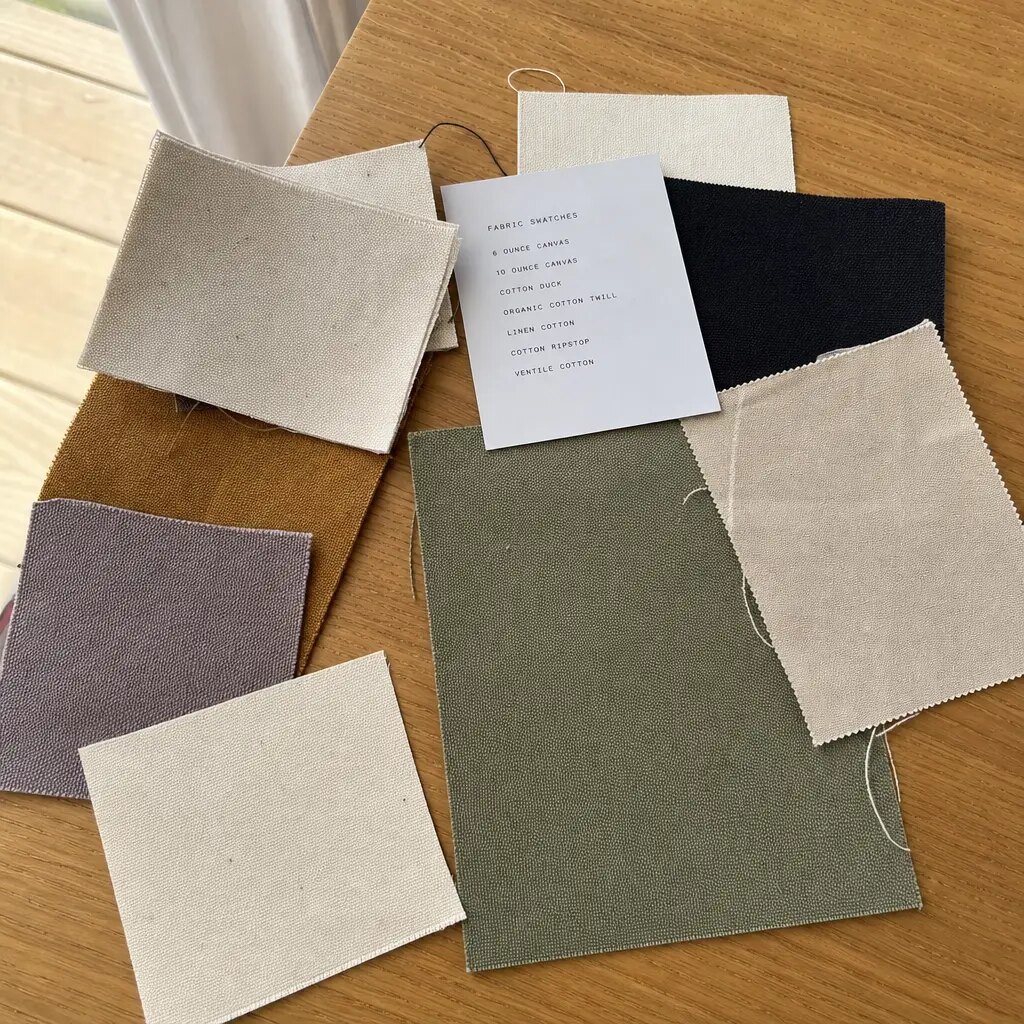
Start with the pouch job, not the catalog name
Cotton drawstring pouches for coffee roasters are often described as simple packaging, but in a procurement program they can behave like several products at once. One order may support retail gift sets, subscription welcome kits, brew tool bundles, seasonal blend launches, event giveaways, and café merchandise. The same basic pouch shape can be acceptable in one role and under-specified in another. That is why a fabric weight guide should begin with the use case, not with a generic GSM recommendation.
The most useful question is not, "What GSM is best?" It is, "What will the pouch carry, how will it be handled, and what does the buyer expect the customer to feel?" A tasting card sleeve needs a clean logo and low cost. A pouch holding a ceramic cup or metal brewing accessory needs stronger seams, better body, and a drawstring that works without fighting the fabric. A holiday gift pouch may need to look reusable on a retail table, while an e-commerce insert only needs to arrive clean and folded without creasing the print.
For B2B buyers, the specification should describe the loaded pouch. List the contents, approximate weight, size, thickness, and edge profile. A 200 gsm pouch can perform well for paper filters and cards, but may look strained around a rigid box with square corners. A 280 gsm canvas pouch can look premium, but it may be too bulky if thousands of units need to be packed into a tight warehouse program or shipped by air for a launch.
The right fabric weight is a balance between handfeel, print surface, seam strength, closure movement, packing volume, and landed cost. It should be approved with the real product or a dummy load of similar weight and shape. Empty samples are useful for comparing cloth, but they do not show whether the pouch gathers cleanly, whether the logo remains visible when filled, or whether the casing pulls unevenly after repeated opening.
- Define the pouch by loaded contents, not by empty size alone.
- Separate internal kitting pouches from customer-facing retail or gift pouches.
- Review GSM together with pouch size, product weight, gusset, drawstring, and print coverage.
- Approve the final specification with a loaded sample before bulk production.
- Treat fabric weight as a cost and performance decision, not only a branding decision.
GSM ranges that make sense for coffee roaster programs
GSM means grams per square meter of fabric. It is a fabric weight measurement, not a complete quality grade. Two 200 gsm cotton fabrics can feel different if one is a soft plain weave and the other is a tighter canvas. Still, GSM is a practical starting point for quote comparison because it affects fabric consumption, handfeel, print clarity, carton weight, and closure behavior.
For light insert pouches, 140-170 gsm cotton is often suitable. This range works for drip bag sleeves, tasting notes, coupons, filter samples, and event giveaways where the pouch is not expected to carry much load. It folds compactly and usually supports lower unit cost. The tradeoff is a softer body, more transparency, and a more promotional handfeel. On larger pouches, this range can look limp and may allow the contents to show through, especially in natural cotton.
For most coffee roaster retail and gift uses, 180-220 gsm is the practical middle range. It gives better opacity and structure while still closing smoothly through the top casing. This range is often appropriate for sampler kits, small brew accessories, subscription welcome packs, and reusable branded pouches. It is also easier to pack and ship than heavy canvas, which matters when the order quantity is several thousand units.
For premium or larger-format programs, 240-300 gsm canvas cotton can be justified. It is useful for higher-value gift sets, larger pouches, merchandise, café retail, and items that need a stronger reusable impression. The buyer should check whether the pouch top still gathers neatly. Heavy fabric with a narrow casing or thick cord can create high friction, poor closure, and a stiff mouth that does not feel as refined as the fabric itself.
Above 300 gsm, the pouch may become closer to a small canvas bag than a soft drawstring pouch. That can be appropriate in selected merchandise programs, but it should not be chosen automatically. Heavier fabric increases material cost, sewing effort, packed volume, and carton gross weight. If the pouch is not carrying weight or creating visible retail value, the extra GSM may be spending money where the customer will not notice it.
- 140-170 gsm: best for flat inserts, cards, light samples, and cost-sensitive giveaways.
- 180-220 gsm: best starting range for most coffee roaster gift, retail, and subscription pouches.
- 240-300 gsm: use for premium handfeel, larger sizes, heavier accessories, and reusable presentation.
- Consider 300 gsm and above only when the pouch is intentionally merchandise-like.
- Ask for GSM tolerance in writing; +/-5% is a common practical target, but the agreed tolerance should be stated on the PO.
Size, load, and gusset change the fabric decision
A fabric that works in a small pouch may fail visually in a large pouch. A 12 x 15 cm cotton pouch in 160 gsm can feel neat when holding tasting cards, while a 30 x 40 cm pouch in the same fabric may collapse around the contents and make the logo sit unevenly. Larger panels show more fabric softness, wrinkles, transparency, and seam distortion. For that reason, pouch size and GSM should be quoted together.
Product load is equally important. Coffee-related contents can be surprisingly varied: filter papers, enamel pins, scoops, glass jars, brewing tools, mugs, retail boxes, or small bags of beans. Rigid edges and dense objects stress seams more than soft paper inserts. If the pouch is expected to hold a mug, a grinder accessory, or a boxed gift set, the buyer should request a loaded test and inspect seam grin, bottom stress, and drawstring exit points.
Gussets add another variable. A flat pouch is simple, efficient, and usually lower cost. A bottom gusset or side gusset can improve capacity and help the pouch sit better when filled, but it changes cutting, sewing, measurement, and tolerance. A gusseted pouch may need heavier fabric to hold shape, or it may need a different size than expected because the opened depth consumes part of the flat width.
Finished dimensions must be defined clearly. Buyers should state whether the pouch is measured flat, whether the top hem is included in height, and how the gusset is measured. Cotton fabric can shift during cutting, sewing, pressing, and packing. A realistic tolerance prevents disputes, but the tolerance should match the pouch size and the product fit. If a retail insert barely fits, a normal sewn-textile variation can become a functional defect.
The safest approach is to provide the factory with the product dimensions and ask for a pouch size recommendation, then verify it physically. A pouch that looks efficient on a spreadsheet may be hard to load on a packing line. A pouch that is generously sized may look loose and low-value. The final size should support quick loading, clean closure, and the desired retail appearance.
- For small pouches, +/-5 mm finished-size tolerance may be practical; larger pouches often need a wider agreed tolerance.
- For gusseted pouches, specify flat width, finished height, gusset depth, and measurement method.
- Load test rigid or dense contents before approving fabric weight.
- Check whether the logo is still visible and centered when the pouch is filled.
- Do not finalize pouch size from the product dimensions alone; allow space for loading, drawstring closure, and fabric thickness.
Natural, bleached, and dyed cotton buying risks
Natural unbleached cotton is popular with coffee roasters because it fits craft, organic, kraft-paper, and low-processing brand systems. It is also often a practical sourcing route because stock natural fabric may support lower MOQ and faster production than custom-dyed fabric. But natural cotton is not a pure white or perfectly uniform material. Seed flecks, cream tone variation, small slubs, and minor weave irregularities are part of the look.
That natural variation can be a feature when the artwork is simple and dark. A black or dark brown one-color logo usually prints clearly enough on natural cotton if the artwork is not too fine. Problems appear when teams expect pale inks, tight brand color matching, tiny text, or a very clean premium cosmetic surface. The buyer should define whether natural flecks are acceptable and approve a representative swatch from the fabric lot whenever appearance matters.
Bleached cotton provides a cleaner base for bright logos, pale colors, and finer artwork. It can make the pouch look more polished and less rustic. The tradeoff is that bleaching may add processing cost, MOQ, and lead time depending on the supplier's fabric stock. Buyers should ask whether the quote uses stock bleached fabric or fabric prepared specifically for the order. That distinction affects repeatability and reorder timing.
Dyed cotton can make the pouch feel more like merchandise. Black, charcoal, navy, olive, and coffee-brown tones are common directions for premium roaster packaging. With dyed fabric, procurement should add shade approval and colorfastness checks. Dark cotton can show lint, dust, crease marks, rubbing, and inconsistent shade between lots. If the drawstring is also dyed or color matched, the cord may not match the body fabric exactly unless the supplier has controlled both components.
For repeat programs, keep approved fabric swatches. Screenshots and digital mockups are not enough for fabric color control. A repeat order described as natural, black, or olive can still vary if the mill lot changes. The purchase order should reference the approved sample or swatch and state whether commercial shade variation is acceptable or whether tighter approval is required.
- Natural cotton: approve fleck level, cream tone, slubs, and acceptable shade variation.
- Bleached cotton: use when a cleaner logo base matters, but confirm stock status and MOQ.
- Dyed cotton: require swatch or lab dip approval and rubbing checks before bulk shipment.
- Dark dyed pouches need extra attention to lint, shade mixing, and print opacity.
- For reorders, reference an approved physical swatch rather than relying on color names.
Fabric construction: plain weave, canvas, and what the RFQ must say
The phrase "cotton pouch" is not specific enough for B2B sourcing. A supplier may interpret it as lightweight muslin, plain weave cotton, cotton canvas, cotton twill, or a blended construction unless the buyer defines the fabric. GSM helps, but it does not describe weave tightness, handfeel, finishing, shrinkage, or print surface. A reliable RFQ should state both fabric type and target GSM.
Plain weave cotton is usually softer, more flexible, and easier to fold. It can be a good fit for smaller and mid-weight coffee roaster pouches where the priority is cost control, simple branding, and smooth closure. It also packs more efficiently than heavier canvas. At lighter weights, however, plain weave may show transparency and may not provide the body needed for premium retail presentation.
Cotton canvas is generally firmer and more structured. It is useful for reusable pouches, larger formats, gift packaging, and heavier accessories. Canvas can support a stronger perceived value, but it can also make the top casing bulkier. If the casing is too narrow or the cord is too thick, the pouch may not close cleanly. Buyers should review the relationship between fabric weight, casing width, cord diameter, and drawstring style.
Sewing construction should be included in the RFQ because factories may use different defaults. Important details include seam allowance, stitch density, top hem width, casing width, thread color, internal seam finish, and reinforcement at drawstring exits. For a very light insert pouch, simple construction may be sufficient. For a reusable retail pouch, a narrow seam allowance or loose thread trimming can make the whole item feel low grade.
If the pouch needs to be washed by end users, that should be disclosed. Many packaging pouches are not designed or tested as washable textile products. Washing can cause shrinkage, print change, cord distortion, and fabric wrinkling. If washability is required, the buyer should request wash testing and define acceptable post-wash size and appearance. If washability is not required, avoid implying it in customer-facing claims.
- Write the fabric as cotton type plus GSM, such as 200 gsm plain weave cotton or 260 gsm cotton canvas.
- Ask whether the fabric is 100% cotton or a cotton blend if fiber content matters for labeling or claims.
- Specify top casing width and cord diameter together.
- Include seam allowance, stitch density target, thread color, and internal finish in the sample review.
- Do not claim washable or reusable performance unless the pouch has been tested for that use.
Printing choices for roaster logos and seasonal artwork
Screen printing is usually the best value for cotton drawstring pouches when the artwork is one or two colors. Many coffee roaster marks are well suited to this method: wordmarks, simple icons, badge graphics, and bold line art. Screen print can work on natural, bleached, and dyed cotton, but the result depends on fabric texture, ink opacity, artwork detail, and curing quality.
Artwork should be reviewed at final print size. A logo that looks sharp on a PDF can lose detail on woven fabric. Fine reverse text may fill in. Thin lines may break over canvas texture. Natural cotton flecks can interrupt small details. Buyers should ask the factory for a minimum line width and minimum text height recommendation for the selected fabric. For critical artwork, a printed strike-off on actual fabric is better than a mockup.
Print position is another common issue. On a drawstring pouch, the top casing gathers and changes the visual field. A logo placed too high may disappear into folds when closed. A logo placed too low may look unbalanced when the pouch is filled. The RFQ should state the print size and position from the top edge or casing seam, plus side-to-side centering tolerance. If the pouch has a gusset, the buyer should confirm whether artwork stays on the front panel only.
Heat transfer and digital print can be useful for short runs, gradients, multi-color seasonal campaigns, or collaborations where screen setup is inefficient. The risks are different from screen print. Transfers may have a visible edge or a slightly stiff hand. Poor adhesion can lift after folding. Digital print can vary with pretreatment and fabric base. Buyers should fold, rub, and flex the printed area during sample approval.
Embroidery can work on heavier cotton or canvas for premium merchandise, but it is not the default answer for coffee packaging. It adds cost, may distort lighter fabric, and can create backing or thread texture inside the pouch. It is best reserved for simple marks on thicker cloth where the tactile branding is worth the cost.
- Use screen print for most one-color and two-color roaster pouch programs.
- Request strike-offs for fine text, large coverage, reverse artwork, or exact brand color needs.
- Define print position with measurements from top casing, side seams, and centerline.
- For heat transfer, test edge lifting, cracking, and handfeel after folding.
- For dyed fabric, check print opacity and contrast against the approved fabric shade.
Quote comparison and MOQ control
The lowest unit price is often the quote with the most assumptions hidden inside it. One supplier may be pricing stock natural cotton, standard cord, single-color print, and bulk packing. Another may include custom dyed fabric, double drawstring, Pantone-matched print, individual bags, barcode labels, and stricter inspection. Unless the RFQ controls the variables, the prices are not comparable.
MOQ can apply in several ways. A factory may set MOQ by total order, size, fabric color, cord color, artwork version, print method, or packing style. A 5,000-piece order split into five artwork versions may not behave like one 5,000-piece SKU. Seasonal blends, multiple café locations, and assorted gift kits can increase setup time and reduce production efficiency. Buyers should request pricing by SKU and by total quantity so the cost of assortment is visible.
A complete quote should separate unit price from development and order adders. Sampling, courier cost, print screen charges, transfer setup, lab dips, custom dyeing, upgraded cords, hangtags, barcode labels, individual polybags, export carton requirements, and inspection charges can all affect landed cost. When these items are missing, they often reappear after sample approval when the timeline is tighter.
For recurring roaster programs, standardization usually produces better value than changing every detail each season. A buyer might lock a 200 gsm natural cotton pouch, a standard cord, and a consistent carton pack, then change the one-color logo or hangtag for campaigns. That keeps material sourcing and sewing stable while still giving marketing room to vary the presentation.
The quote should also state what is locked for reorders. If the supplier may use equivalent fabric from another lot, that should be understood. If the buyer needs the same shade, cord, and handfeel, the PO should reference an approved swatch and sample. Repeatability is a specification issue, not just a relationship issue.
- Compare quotes only after aligning size, GSM, fabric type, fabric color, cord, print, construction, and packing.
- Ask whether MOQ is per order, per SKU, per fabric color, per print design, or per packing method.
- Request separate line items for sampling, print setup, dyeing, labels, packing, and other adders.
- Ask for price breaks by total order quantity and by SKU quantity.
- For replenishment, document which materials are stock standards and which require fresh approval.
Pre-production samples that actually reduce risk
A useful pre-production sample proves the production route, not just the visual idea. For cotton drawstring pouches, the sample should confirm fabric weight, fabric color, handfeel, opacity, cutting, sewing, drawstring movement, print quality, and loaded appearance. A photo of an empty pouch is not enough for a customer-facing retail or gift program.
The sample should be made from the actual or representative bulk fabric, actual cord, actual print method, and intended construction. Early development samples made from substitute cloth can help narrow decisions, but final approval should not rely on substitute materials when the fabric weight or print result is important. If the factory cannot make the sample from actual material, the buyer should understand what may change in bulk.
Sample review should be physical and functional. Place the intended product inside, or use a dummy load with the same weight, volume, and edge profile. Open and close the pouch repeatedly. Check whether the cord moves smoothly and whether the top gathers evenly. Look at the logo when the pouch is filled, not only when flat. Inspect inside seams, corners, drawstring exits, and thread trimming.
Print approval should include simple handling checks. Rub the print with a dry white cloth. Fold the printed area. Flex it near the edge of the artwork. For transfers, check whether any edge lifts or cracks. For screen print, look for poor cure, smudging, pinholes, and uneven coverage. These checks are not a substitute for a laboratory test when one is required, but they catch obvious production risks before bulk.
Documentation matters. Once approved, keep a sealed sample or a signed sample record with measurements, fabric swatch, cord detail, artwork version, print position, packing instruction, and PO number. If a dispute occurs during inspection, the approved sample becomes the practical standard.
- Approve the final sample only after checking it empty, filled, opened, closed, folded, and handled.
- Measure finished size using the method that will be used during inspection.
- Photograph the sample with ruler, print close-up, cord close-up, casing close-up, and inside seam view.
- Keep the approved sample tied to artwork version, fabric swatch, and PO number.
- Do not allow bulk cutting until fabric, cord, print, construction, and packing are approved.
QC tolerances and defect definitions for the PO
Quality control should be written into the purchase order in concrete terms. Phrases such as "good quality" or "standard tolerance" leave too much room for disagreement. A better PO defines finished size tolerance, GSM tolerance, print position tolerance, shade standard, construction requirements, drawstring function, packing count, and defect categories. The goal is to make inspection repeatable.
Finished size is a frequent dispute area because sewn cotton is flexible. The buyer should state whether the pouch is measured flat, pressed, unpressed, before washing, after washing, or with the gusset opened. The top casing should be included or excluded consistently. The sample approval record and final inspection should use the same method. If the contents require a tight fit, test the lower end of the tolerance, not only the ideal sample.
GSM should be controlled with an agreed tolerance. A common practical approach is to allow a small percentage variation, such as +/-5%, but the exact tolerance should be confirmed with the supplier and the fabric route. A buyer should not reject normal natural cotton flecks if they approved natural cotton, but they can reject shade mixing, holes, stains, odor, mildew, or slubs beyond the approved standard.
Print defects should be classified clearly. Major defects may include off-center logo placement beyond tolerance, wrong print color, serious smudging, poor adhesion, transfer lifting, heavy bleeding, or unreadable artwork. Minor variation may include very small texture-related pinholes on natural fabric if they do not affect the brand mark. For Pantone references, specify whether the target is coated, uncoated, fabric swatch, or approved strike-off, because ink on cotton will not look identical to ink on paper.
Construction defects should focus on performance and appearance. Inspect skipped stitches, open seams, seam grin under load, loose threads, twisted panels, uneven casing, trapped cord, weak knots, frayed cord ends, and inconsistent cord length. For heavier gift pouches, drawstring exit points may need reinforcement. If bartacks are required, they should be shown on the sample and listed on the PO.
If your company uses AQL inspection, assign critical, major, and minor defects for this product before production. Critical defects might include contamination, mildew, unsafe foreign objects, or completely wrong material. Major defects may include wrong size, wrong print, open seams, missing cord, severe stains, or incorrect packing. Minor defects may include trim threads or small cosmetic variation within the approved natural standard.
- Use the same measurement method for sample approval, inline inspection, and final inspection.
- State GSM tolerance, finished-size tolerance, and print-position tolerance on the PO.
- Define acceptable natural cotton variation separately from defects such as stains, holes, odor, or shade mixing.
- Check drawstring operation on a sample quantity from each inspected lot.
- Classify defects before inspection so acceptance decisions are not improvised at shipment time.
Packing, carton planning, and freight effects
Packing is part of the product specification for B2B buyers. Cotton drawstring pouches may be low-value per unit, but a messy packing plan can create receiving delays, recounting labor, mixed SKU errors, and fulfillment problems. The buyer should decide whether the pouches are bulk packed for internal kitting, packed by retail set, individually bagged, or labeled for direct warehouse receiving.
A practical packing instruction states units per inner bag, inner bags per carton, total units per carton, carton mark format, SKU separation, PO number, artwork code, size, color, and barcode requirements if needed. If the order includes several café locations or seasonal artwork versions, single-SKU cartons are often worth specifying. If mixed cartons are unavoidable, the carton label and packing list must make the mix obvious.
Moisture and odor control should not be ignored. Cotton can absorb moisture and smell during storage and transit. Export cartons should be clean and dry, and inner protection such as a PE bag or equivalent moisture barrier may be appropriate. For natural cotton, mildew, musty odor, and oil marks are serious defects because the pouch may be placed near food-adjacent retail items even if it is not direct food contact packaging.
Fabric weight affects freight and storage. Moving from 160 gsm to 280 gsm increases fabric consumption and packed carton weight. Heavy canvas also creates thicker folded edges and bulkier casing areas, reducing pieces per carton. If a seasonal promotion is late and airfreight becomes necessary, the extra GSM can materially affect freight cost. Buyers should request estimated carton dimensions, carton count, and gross weight before finalizing the specification.
Compressed packing can reduce volume, but it may create hard creases across printed logos. If retail presentation matters, ask the supplier to avoid folding directly through the print or to confirm whether creasing will relax after unpacking. If the pouches will be kitted immediately, bulk packing with organized inner counts may be more efficient than individual polybags. If the pouches are sold individually, retail packaging should be quoted from the start.
- Specify units per inner bag, inner bags per carton, and total carton quantity by SKU.
- Set a carton gross weight limit if your warehouse has manual handling rules.
- Require dry inner protection and clean export cartons for natural cotton pouches.
- Ask for estimated carton dimensions, gross weight, and carton count before freight booking.
- Avoid folding or compressing through large printed logos when presentation is important.
Specification comparison for buyers
| Spec decision | Recommended option | When it fits | Buyer risk to check |
|---|---|---|---|
| Light insert or giveaway pouch | 140-170 gsm plain weave cotton | Tasting cards, drip bag sleeves, coupons, small filter samples, low-load event giveaways, and flat accessory inserts | May feel promotional rather than retail grade; higher transparency; logo texture more visible; seams can distort if pouch is oversized |
| Core retail and gift pouch | 180-220 gsm cotton, plain weave or light canvas depending on size | Sampler kits, subscription welcome packs, small coffee accessories, gift cards with inserts, brew tool bundles, and most reusable roaster pouches | For sizes above about 20 x 30 cm, body may still feel soft; approve with loaded sample and finished-size tolerance |
| Premium reusable pouch | 240-300 gsm cotton canvas | Larger pouches, higher-value gift sets, café merchandise, reusable retail packaging, heavier accessories, and programs where handfeel matters | Higher fabric cost, higher carton weight, bulkier folds, possible stiff closure if casing and cord are not sized correctly |
| Natural cotton base | Unbleached cotton with approved shade and fleck standard | Craft, organic, kraft-style, low-processing, and earthy coffee brand systems; simple dark one-color logos | Cream shade, seed flecks, slubs, and lot variation are normal; pale inks and exact color matching are harder |
| Bleached or light dyed cotton base | Bleached cotton or controlled light color fabric | Clean logo base, brighter artwork, fine brand marks, more polished retail presentation | Bleaching or dyeing may change MOQ, lead time, shade approval, and colorfastness requirements |
| Dark dyed cotton base | Black, charcoal, navy, olive, or other dyed cotton with colorfastness checks | Merchandise-led programs, premium gift pouches, strong contrast with white or metallic-look branding | Shade variation, crocking, lint visibility, rubbing marks, and print opacity must be inspected |
| Standard print route | 1-2 color screen print on actual bulk fabric | Most coffee roaster logos, wordmarks, badge graphics, line art, medium to large runs, and cost-controlled replenishment | Check minimum line width, ink cure, pinholes, off-registration, logo position, and rub resistance |
| Short-run or complex artwork route | Heat transfer or digital print after adhesion and fold testing | Seasonal blends, multi-color collaborations, gradients, short campaigns, and lower-quantity artwork changes | Higher unit cost; transfer edge, cracking, lifting, stiff handfeel, or poor adhesion can appear after folding and handling |
| Drawstring construction | Double cotton cord for retail use; single cord for lower-cost promo use | Double cord improves opening and closing for customer-facing pouches; single cord can work for simple inserts | Uneven cord length, weak knots, narrow casing, excessive friction, loose cord ends, or trapped stitching reduce perceived quality |
Buyer checklist before sampling
- Define the pouch role first: retail gift packaging, subscription welcome kit, brew tool bundle, tasting card sleeve, event giveaway, café merchandise, internal kitting, or e-commerce insert.
- List the loaded contents with approximate weight, dimensions, volume, and edge profile; note any rigid corners, sharp packaging edges, ceramic items, or dense metal tools.
- Specify finished pouch size in width x height, plus gusset depth if applicable; state that dimensions are measured flat unless another method is approved.
- Set finished-size tolerance by pouch size, for example +/-5 mm for small pouches and +/-10 mm for larger sewn cotton pouches, if your program can accept those limits.
- Specify fabric as cotton type plus target gsm range, such as 180-200 gsm plain weave cotton or 240-260 gsm cotton canvas, rather than simply writing cotton pouch.
- Ask whether quoted GSM is nominal, tested before sewing, measured after fabric finishing, or taken from the supplier's stock specification; require a reasonable tolerance such as +/-5% unless otherwise agreed.
- Define natural cotton acceptance: cream tone range, seed flecks, slubs, weave variation, and whether the buyer will approve a bulk swatch before production.
- For dyed or bleached fabric, require lab dip or swatch approval, shade tolerance against the approved swatch, and basic rub/colorfastness checks appropriate to the end use.
- State drawstring material, diameter, color, single or double cord, knot style, cord-end treatment, and required smoothness of opening and closing.
- Give artwork files, print size, print position from top casing and side seams, Pantone or approved color reference, print method, and whether exact color match or commercial match is acceptable.
Factory quote questions to send
- What exact fabric construction is quoted: plain weave cotton, canvas, muslin, twill, or another cotton fabric, and what is the nominal GSM?
- What GSM tolerance do you commit to in bulk, and is GSM measured on finished fabric before cutting or referenced from supplier stock data?
- Is the fabric stock greige, stock finished natural cotton, bleached cotton, dyed cotton, or custom-woven/custom-dyed fabric for this order?
- What finished-size tolerance do you apply after cutting and sewing, and how do you measure flat pouches and gusseted pouches during inspection?
- Is shrinkage expected if the pouch is washed, steamed, pressed, or exposed to moisture, and is any pre-shrinking included in the quote?
- Which print method is included, how many colors, what ink or transfer type is used, and what maximum print coverage is included before price changes?
- For the submitted artwork, what minimum line width, minimum text height, and registration tolerance do you recommend on the selected fabric weight?
- For natural cotton, what fleck, slub, and shade variation is considered normal, and can you send a representative swatch from the intended production lot?
- For dyed fabric, can you provide a lab dip or fabric swatch and confirm rubbing/colorfastness checks before bulk packing?
- What drawstring is included: cotton, polyester, blended, braided, twisted, or flat tape; what diameter or width; and how are knots or cord ends finished?
Quality-control points to confirm
- Finished width, height, and gusset depth within approved tolerance, measured using the same flat or opened method stated on the PO and sample approval record
- Fabric GSM within agreed tolerance, with bulk fabric shade, weave, flecks, slubs, and handfeel consistent with the approved swatch or signed sample
- Correct cotton fabric type and color used across all cartons, with no unauthorized substitution between plain weave, canvas, bleached, natural, or dyed fabric
- Logo positioned within approved tolerance from top casing, side seams, bottom edge, and centerline; artwork size matches signed print proof
- Print color visually close to approved strike-off or agreed reference, with no major smudges, ghosting, bleeding, off-registration, ink buildup, or unacceptable pinholes
- Print cure or adhesion acceptable after dry rubbing, folding, and normal drawstring handling; transfers show no lifting, cracking, or peeling at edges
- Top hem and casing straight, consistent, and wide enough for the approved cord diameter, with no trapped stitching or uneven channel resistance
- Drawstring length even by pair, knots secure, cord ends neat, and opening/closing smooth without excessive friction or cord slippage
- Side seams and bottom seams straight and secure, with no skipped stitches, loose threads, seam grin, broken threads, open seams, twisting, or weak stress points
- Stitch density and thread color consistent with approved sample; bartacks or reinforcement present where required at drawstring exits