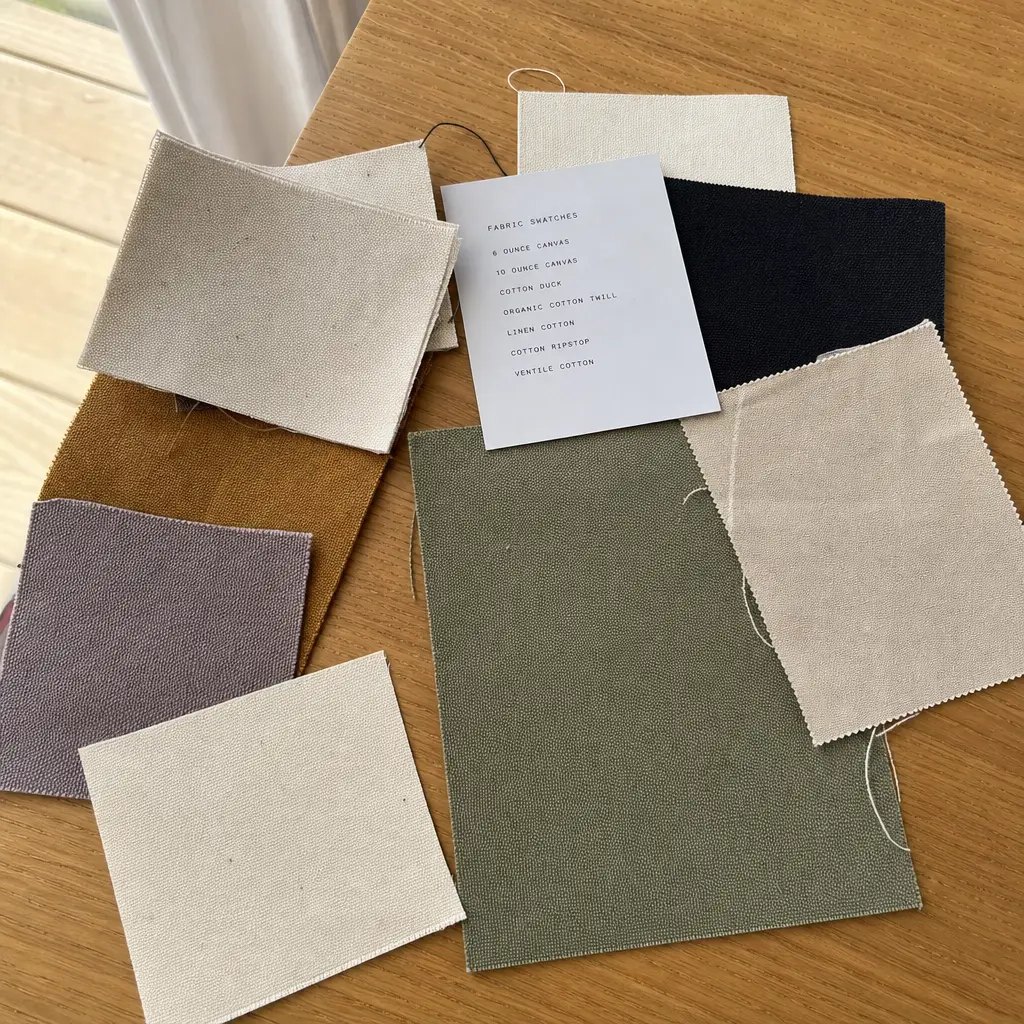
Start With the Event Handling Problem
A cotton drawstring pouch order for a trade show is not just a textile buy. It is a handling plan, a count-control plan, and a delivery-risk plan. The pouch has to look clean in a visitor’s hand, but it also has to move through receiving, storage, and booth restocking without creating avoidable labor. Many event problems happen before the first visitor arrives: cartons are too heavy, labels are vague, logo versions are mixed, or the team spends the night before the show sorting loose bags by hand.
The first procurement question is operational: where will the pouches land, and who will open them? Advance warehouse, show site, 3PL, distributor, office, hotel receiving desk, or a local consolidation point all have different rules. If the booth team only needs ready-to-distribute stock, then carton labels, inner counts, and carton sequencing matter as much as the print itself. If the pouches will be filled on site, fast access matters more than presentation packing. The right packing format depends on the workflow, not on habit.
A stronger purchase order connects the product spec and the packing spec. A vague RFQ can win on unit price and lose on labor, repacking, storage charges, or shipment delays. If the supplier only sees ‘bulk packed in export cartons,’ they will fill in the blanks themselves. Define the pouch, the inner pack, the master carton, and the carton marks as one deliverable so the quote reflects the real job.
- Identify the receiving point before you compare prices.
- Tell the supplier who opens cartons and how the pouches will be used at the event.
- Treat carton marks and inner counts as operational requirements, not admin details.
- Give the factory the event receiving cut-off date, not only the factory ship date.
- Do not compare unit price without comparing the packing method.
Lock the Pouch Specification First
Carton planning only works when the pouch itself is fixed. A 10 x 15 cm jewelry pouch, a 20 x 30 cm literature pouch, and a 30 x 40 cm sample kit pouch do not behave the same in sewing, packing, or freight. Fabric weight changes thickness. Drawcord diameter changes the bulk at the opening. Print method affects folding. Insert cards or barcode labels can add more volume than buyers expect. Before asking how many pieces fit in a carton, freeze the core construction.
For exhibitor use, cotton fabric commonly sits between 135 and 270 GSM, often described as roughly 4 oz to 8 oz depending on weave and finishing. The lower end, around 135-170 GSM, fits light giveaways, cables, and small printed materials. The middle band, 170-220 GSM, is usually the best default for standard trade show use because it balances opacity, hand feel, and carton efficiency. The heavier band, 220-270 GSM, suits premium kits or heavier contents, but it pushes up carton volume and freight cost quickly.
Finished size should be stated after sewing and pressing, measured flat from outside seam to outside seam. Cut size alone is not enough. A common starting point is +/- 5 mm for small pouches, +/- 8 mm for medium pouches, and +/- 10 mm for large pouches, but the exact tolerance should match the pouch and the use case. If the pouch needs to fit a bottle, box, device, or assembled kit, approve the sample with the real contents inside. A ruler is not a fit test.
- Use 135-170 GSM when weight and cost matter more than opacity.
- Use 170-220 GSM for most standard exhibitor giveaways and booth handouts.
- Use 220-270 GSM when the pouch should feel more retail-grade or carry heavier contents.
- State finished size, tolerance, fabric weight, fabric color, and stitch expectations in the RFQ.
- For kit packing, validate the pouch with the actual contents before bulk approval.
Specify Drawcord and Sewing Details
The cord and channel decide whether the pouch feels easy to use or irritating in the booth. The RFQ should state cord material, color, approximate diameter, knot style, channel height, and whether the pouch uses one or two cords. Cotton cord gives a consistent natural look on cotton pouches. Polyester or blended cord can be acceptable when strength, color match, or cost drives the design, but it can look shinier than the body fabric. For many medium cotton pouches, a 3-5 mm cord is common; smaller pouches often need thinner cord, while larger sample pouches may need a stronger line.
The top channel needs enough room for the cord to move freely. A channel that is too tight slows booth packing and can tear at the side seams. A channel that is too loose looks sloppy and can twist during use. Buyers should also confirm how the cord ends are finished. Hand knots, stitched stops, and aglets all behave differently. Natural cotton cord cannot be heat-sealed the way synthetic cord can, so knot security and cord length matter more than buyers often assume.
Sewing specs should be concrete. Ask for stitch density, seam type, thread color, seam allowance, and reinforcement at stress points. On paper, many pouches look equivalent. In hand, they are not. The approved sample should be opened and closed repeatedly, filled with the intended contents, lifted, and gently pulled at the seam and cord exits. The point is not laboratory testing. It is to catch weak construction before thousands of pieces are packed into export cartons.
- Specify cord material, color, diameter, cord length, knot method, and channel height.
- Check whether cord color is natural, dyed-to-match, or a standard available shade.
- Require smooth cord movement through the channel without catching at side seams.
- Use realistic contents for a simple seam and drawcord pull test before bulk approval.
- Reject samples with twisting channels, loose knots, or pull-through risk.
Choose Print Details That Survive Packing
Print quality is judged at the booth, but many failures happen earlier during curing, folding, and packing. Screen printing is usually the practical choice for cotton drawstring pouches with one to three solid logo colors. It works well for event marks, sponsor logos, and straightforward branding while keeping a textile feel. The risk is not the print method itself. The risk is weak control over ink type, cure time, coverage, and placement.
Heat transfer can work when the artwork includes gradients, fine detail, or a high color count that screen printing cannot hold cleanly. It may also improve repeatability across production runs. The trade-off is hand feel and the possibility of visible film edges, especially on natural cotton. Embroidery is possible on heavier cotton, but it can distort smaller panels, add lead time, and increase bulk when the pouch is folded. For most trade show orders, the safest method is the one that suits the artwork and still allows clean folding and stacking.
Artwork should be supplied as vector files with Pantone targets, print dimensions, print position, and orientation. Do not describe placement only as centered. Measure from seams or edges and record the tolerance. A practical print placement range may be +/- 3 mm to +/- 5 mm depending on size and construction. Large ink blocks near the drawstring channel, bottom fold, or side seam deserve extra review because rubbing and compression can mark the logo surface during transit or storage.
Before mass packing, ask for curing and transfer checks. A pouch can look perfect on the print table and still transfer ink if it is stacked too soon or packed too tightly in an inner bag. Request dry rub checks, wet rub checks where relevant, and a stacking-transfer test after curing. If the cartons will travel through hot or humid conditions, allow more curing time and avoid excessive compression in the master cartons.
- Use screen print for solid one to three color logos and event branding.
- Use heat transfer for gradients, fine detail, or high color count artwork.
- Avoid large ink blocks across fold lines, side seams, or the drawstring channel.
- Set print size, placement, Pantone target, and orientation before sampling.
- Check the logo after folding and stacking, not only when the pouch is flat.
Control Variants Before Production
Trade show pouch orders often begin with one simple brief and then expand. A corporate team wants the main event logo. Regional teams request localized branding. Sponsors ask for co-branded versions. Sales wants different sizes for different sample kits. These changes are normal, but they affect setup charges, raw material purchasing, cutting, sewing, packing, and inspection time. Procurement should control variants early instead of letting every stakeholder create a small separate order.
Factories plan in batches. If several versions share the same pouch size, cotton fabric, drawcord, stitch construction, and packing method, the factory may combine fabric purchasing and cutting while treating each logo as a separate print setup. If each version changes the fabric color, cord color, size, print method, and pack-out, then each version behaves like its own order. That pushes up price, increases shade variation risk, and stretches lead time.
The RFQ should list total quantity and quantity by variant. It should also state whether variants may be packed together. For trade show delivery, separate cartons by logo, size, department, or destination are usually safer. Mixed cartons can work when inner bags are clearly labeled and the carton-level packing list shows exact quantities. Without that discipline, the receiving team may have to open every carton just to find the right version. That wastes time exactly where time is expensive.
- Keep the base pouch specification stable wherever brand rules allow it.
- Avoid small changes to cord color, stitch color, or fabric shade unless they matter to the buyer.
- List quantity by size, fabric color, logo version, destination, and pack method.
- Use separate carton sequences for different logo versions or departments when possible.
- If mixed cartons are approved, require inner labels and a carton-level packing breakdown.
Design Inner Packing For Booth Work
Inner packing has a direct effect on labor at the venue. Individual polybags can look neat in a quotation, but they become work when booth staff must open them one by one before a rush of visitors. Someone has to cut the bags open, remove the pouches, dispose of the plastic, and stage stock before the event starts. If the pouches are handed out empty or filled in a back-of-booth area, bulk inner bags of 50 or 100 pieces are usually the better option.
Bulk inner packing still needs discipline. A carton full of loose cotton pouches can gather lint, carton fibers, dust, and wrinkles. Inner bags protect the product and make counts easier. If the booth needs 300 pouches in the morning, staff can pull three inner bags rather than counting loose pieces. For larger pouches, 25 or 50 pieces per inner bag may be more practical because the inner unit remains easy to lift, store, and restock.
Individual packing makes sense when presentation matters, when each pouch carries a card or sample, when barcodes are required, or when the item must stay dust-free until handoff. Paper bands can reduce plastic and improve presentation, but they need testing because soft cotton pouches can slip. Set packing saves event labor, but it increases QC responsibility because every pouch must contain the correct insert or sample. Procurement should ask the supplier to price packing materials and packing labor separately so the cost is visible instead of buried in a vague unit price.
- Use inner bags of 50 or 100 pieces for fast counting and restocking.
- Use smaller inner counts for large or heavy pouches.
- Use individual bags only when presentation, barcode control, or cleanliness requires it.
- Approve paper bands only after checking fit, slippage, and label placement.
- For set packing, approve one complete reference set before bulk shipment.
Build the Master Carton Plan
A master carton plan should balance protection, weight, volume, and receiving speed. Cotton drawstring pouches are flexible, so it is tempting to compress them aggressively. That can work on paper and fail in transit. Over-compression wrinkles the logo, deforms the drawstring channel, bulges the carton, and can even split the box. Under-filled cartons waste freight space and may collapse when stacked. The right carton plan fits the route, the handling team, and the product volume.
For many exhibitor pouch orders, a practical gross weight target is often around 12-18 kg per master carton, subject to customer rules and local handling limits. Small pouches may fit 500-1,000 pieces per carton if weight and compression are acceptable. Medium pouches may fit 200-500 pieces. Larger sample pouches may work better at 100-300 pieces. These are planning ranges, not universal rules. Fabric GSM, drawcord thickness, folding method, inner packing, and carton dimensions all affect the final count.
The supplier should quote pieces per inner bag, pieces per carton, carton dimensions, net weight, gross weight, total carton count, and total CBM before the PO is issued. After sample approval or trial packing, the actual carton plan should be confirmed. If the shipment moves by courier or air freight, dimensional weight can matter as much as actual weight. If it moves by LCL, domestic truck, or a show warehouse, stacking strength, moisture exposure, and label visibility matter more. The carton plan should follow the route instead of a generic export habit.
- Ask for carton dimensions, gross weight, net weight, total carton count, and CBM before PO release.
- Keep carton weight manageable for manual handling and event receiving.
- Avoid bulging cartons, crushed folds, and compressed drawstring channels.
- Confirm board strength and closure method for the planned route.
- Require buyer approval if the factory changes pieces per carton after sample approval.
Make Carton Marks Operational
Carton labels are operating instructions. They keep event materials from being lost, delayed, or opened needlessly. A carton mark for trade show pouches should identify the contents without relying on internal supplier codes. At minimum, it should include PO number, item code or SKU, pouch size, fabric color, logo version, quantity, carton number, total carton count, gross weight, net weight, and destination reference.
Event-specific information may also be required. Advance warehouses and show decorators often want event name, exhibitor name, booth number, delivery window, carrier reference, warehouse code, or a specific label layout. These requirements should be sent early. If labels must be applied at origin, approve them before the cartons are sealed. If a domestic warehouse will relabel the cartons, the origin label still needs enough information to prevent confusion before rework.
Carton sequence matters when multiple variants are involved. ‘Carton 1 of 20’ is not very helpful when the order includes five logo versions. A clearer mark is ‘Logo A, Carton 1 of 6’ with a packing list that maps every sequence to the total order. If cartons are mixed, the label should say ‘Mixed’ and the inner bags should identify each version. Label accuracy should be inspected because a perfect pouch order can still fail commercially if it is routed to the wrong booth, department, or warehouse lane.
- Mark at least one long side and one short side so cartons can be identified when stacked.
- Include event name, exhibitor name, booth or department reference, PO, SKU, and carton sequence where relevant.
- Use separate carton sequences for different logo versions, sizes, departments, or destinations.
- Require inner bag labels if cartons contain mixed sizes, colors, logos, or departments.
- Check carton marks against the PO, packing list, and event receiving instructions during inspection.
Approve Samples and Quote Terms
A pre-production sample should approve more than appearance. It should lock the fabric, finished size, drawcord, stitching, print method, logo placement, fold method, inner packing concept, and carton label format. Buyers sometimes approve a loose desk sample and later receive bulk goods folded differently, packed too tightly, or finished with a different cord. For trade show orders, the sample should answer one question: will this pouch arrive ready for the way the booth team will actually use it?
Sampling should include measurement after sewing and pressing, repeated opening and closing of the drawcord, a basic seam pull with the intended contents, and a review of the natural cotton appearance. If the pouch is printed, check color, opacity, edge sharpness, curing, placement, and hand feel. If the pouch will be used for a kit, approve the sample only after the real contents fit without stressing seams or making the bag look misshapen. If the filled pouch looks awkward, the booth team will feel that immediately.
Quote comparison should go beyond the unit price. Ask for setup charges, sample charges, fabric GSM, print method, number of print colors, drawcord construction, inner packing, pieces per carton, carton dimensions, gross weight, net weight, total cartons, total CBM, label cost, insert cost, inspection support, and estimated freight basis. A lower pouch price can become more expensive after dimensional freight, repacking labor, warehouse handling, or emergency sorting. Procurement should compare cost per delivered usable pouch, not only cost per manufactured pouch.
- Approve a physical pre-production sample for important orders or fixed event dates.
- Measure finished size against the tolerance in the purchase order.
- Approve fold method, inner count, master carton quantity, and carton label layout before bulk packing.
- Compare quotes using total CBM, gross weight, carton count, packing labor, labels, and inspection support.
- Ask how price and lead time change if a second logo version, insert, barcode, or individual bag is added.
Inspect Product Counts and Cartons Together
Cotton pouches are simple products, but they fail in predictable ways. Product defects include stains, mildew odor, oil marks, loose threads, skipped stitches, open seams, twisted drawcord channels, wrong fabric weight, uneven shade, print misalignment, weak opacity, ink transfer, and incorrect size. For trade show exhibitors, packing defects can be just as serious: wrong carton count, short inner bags, mixed logo versions, inaccurate labels, wet cartons, or cartons damaged enough to worry a receiving team.
The inspection plan should define critical, major, and minor defects before the inspector arrives. Critical issues usually include wrong logo, wrong event reference, short shipment, wrong size that prevents use, severe odor, wet cartons, unsafe stains, or carton labels that would route the goods to the wrong place. Major issues may include broken seams, drawcord failure, print outside tolerance, visible ink transfer, wrong inner count, unacceptable shade variation, or carton damage that compromises handling. Minor issues may include trimable thread ends, light wrinkles, or natural cotton specks that fall within the approved appearance range.
Inspection should cover the packed order, not only loose pouches taken from a table. Inspectors should open cartons from different parts of the shipment, verify inner bag counts, measure samples, test drawcords, review print quality, check odor, photograph labels, and match the packing list to carton sequence. If the event timeline is tight, the report should say clearly whether the issue blocks shipment or can be accepted with a documented concession. That documentation helps the receiving team understand any approved deviation before the cartons enter the event chain.
- Check appearance, size, stitching, drawcord function, print quality, print curing, and odor.
- Verify inner bag counts and master carton counts against the approved packing instruction.
- Match carton labels to PO, SKU, event name, logo version, quantity, and carton sequence.
- Perform simple pull tests on seams and drawcord channels using realistic contents where possible.
- Document accepted deviations so the receiving team is not surprised by packing format or count.
Specification comparison for buyers
| Procurement decision | Recommended specification | Use when | Risk to control before PO |
|---|---|---|---|
| Fabric weight | 135-170 GSM for light giveaways; 170-220 GSM for standard exhibitor use; 220-270 GSM for premium kits | The pouch holds brochures, badges, cables, cosmetics, small tools, wellness samples, or branded gifts | Light cotton may be transparent or weak at seams; heavy cotton increases carton volume, gross weight, and freight cost |
| Finished size tolerance | +/- 5 mm for small pouches; +/- 8 mm for medium pouches; +/- 10 mm for large pouches unless a tighter fit is approved by sample | The pouch does not need to fit a rigid product with tight clearance | If the pouch must fit a bottle, box, device, or assembled kit, require a physical fit test with the actual contents |
| Print method | Screen print for one to three solid colors; heat transfer for gradients, fine detail, or high color count; embroidery only for heavier cotton and simple marks | The logo must remain clear after folding, stacking, and booth handling | Under-cured ink can transfer in cartons; thick ink can crack near folds; transfer film edges may look less textile-friendly |
| Drawcord construction | Cotton cord or matching blend, commonly 3-5 mm diameter depending on pouch size, with secure knots and a smooth top channel | The exhibitor wants a reusable, retail-friendly pouch rather than a disposable promo bag | Thin cord can cut into the channel; loose knots can pull through; rough channels slow booth packing and frustrate users |
| Inner packing | Bulk inner bags of 50 or 100 pieces for most giveaways; individual bags only when presentation, barcode, cleanliness, or set packing requires it | Booth teams need fast unpacking, predictable counts, and easy restocking | Individual polybags add labor, plastic waste, carton volume, and more chances for insert or barcode errors |
| Master carton plan | Target 12-18 kg gross weight per carton where practical; confirm pieces per carton, carton dimensions, net weight, gross weight, and CBM | Orders move by courier, air freight, LCL, domestic truck, 3PL, or show warehouse receiving | Overfilled cartons crush pouches and bulge; oversized cartons collapse; heavy cartons slow receiving and event handling |
| Carton marking | Mark PO, SKU, event name, exhibitor or booth reference, size, color, logo version, quantity, carton sequence, gross/net weight, and destination reference | Multiple event materials ship together or cartons go to an advance warehouse, distributor, decorator, or 3PL | Missing carton sequence or vague labels cause partial receipt, misrouting, and unnecessary carton opening |
| Variant strategy | Separate cartons by logo, size, color, or destination unless mixed cartons are explicitly approved with inner labels and carton-level packing lists | Several regions, sponsors, or business units use the same base pouch with different artwork | Too many small variants create setup charges, shade variation, mixed-carton errors, and longer inspection time |
| Pre-shipment QC | Inspect product defects, measurements, drawcord function, print curing, inner counts, carton counts, labels, and carton condition before release | The event date is fixed and replacement production would not arrive in time | A visually acceptable pouch order can still fail commercially if quantities, labels, carton marks, or delivery references are wrong |
Buyer checklist before sampling
- Confirm finished pouch width and height measured flat, outside seam to outside seam, after sewing, pressing, and fabric relaxation.
- State cotton composition, fabric color, fabric weight in GSM or ounces, weave expectation, and whether natural seed specks, slubs, and shade variation are acceptable.
- Define finished size tolerance by pouch size category, and require a physical fit test if the pouch holds rigid or preassembled contents.
- Define drawcord material, color, approximate diameter, knot style, cord length, channel height, and whether cord ends must be secured against pull-through.
- Send final vector artwork with Pantone references, print size, print position measured from pouch edges, logo orientation, and approved print method.
- Specify whether pouches are loose bulk packed, counted into inner bags of 50 or 100, individually bagged, paper banded, set packed with inserts, or barcode labeled.
- Set target master carton quantity, maximum gross weight, carton dimensions if constrained, board strength expectation, and acceptable compression level.
- Provide carton marking instructions including PO number, SKU, event name, exhibitor name, booth or department reference, carton sequence, destination contact, and delivery reference.
- Require one approved pre-production sample showing fabric, drawcord, print, stitch, size, fold method, inner packing, carton label format, and intended contents if relevant.
- Clarify inspection standards for stains, odor, broken stitches, print defects, size tolerance, drawcord function, inner count accuracy, carton count accuracy, and label accuracy.
Factory quote questions to send
- What cotton fabric weight are you quoting in GSM and ounces, and is the fabric natural, bleached, dyed, washed, or untreated?
- What tolerance do you offer for finished width and height, and will inspection measure the pouch flat after sewing and pressing?
- Is the quoted fabric pre-shrunk or washed, and should the buyer expect shrinkage if the pouch is washed after the event?
- What drawcord material, diameter, color, knotting method, channel height, and cord length are included in the unit price?
- Which print method is quoted, how many colors are included, what Pantone matching process will be used, and what is the maximum print area?
- What print position tolerance is included, and how will you control logo placement against side seams, bottom seam, and drawstring channel?
- How will print curing be controlled, and can you perform dry rub, wet rub, stacking transfer, and tape-lift checks before packing?
- How many pieces will be packed per inner polybag, paper band, or retail bag, and how will inner bags be counted and labeled?
- What are the estimated pieces per export carton, carton dimensions, gross weight, net weight, total carton count, and total cubic meters for this order?
- What carton board strength or carton construction will be used, and is the carton suitable for courier, air freight, LCL, warehouse stacking, or show-site handling?
Quality-control points to confirm
- Finished pouch width and height are within the agreed tolerance after sewing, pressing, and normal fabric relaxation.
- Fabric weight, color, weave, opacity, and hand feel are checked against the approved sample, not only against the supplier quotation or fabric invoice.
- Natural cotton seed specks, slubs, and shade variation remain within the approved appearance range for the event brand standard.
- No obvious oil marks, mildew odor, rust stains, dirty fingerprints, water marks, mixed shade panels, or severe cotton contamination.
- Side seams, bottom seams, bar tacks if used, and channel seams show no skipped stitches, broken stitches, open seams, needle damage, or weak thread tension.
- Drawcord material, color, approximate diameter, knotting, length, and pull-through resistance match the approved sample and purchase order.
- Drawcord pulls smoothly through the channel without tearing stitches, bunching at side seams, slipping out, or feeling too tight for repeated booth use.
- Logo print position, size, color, opacity, edge sharpness, curing, registration, and hand feel match the approved sample and artwork file.
- No ink transfer, cracking, scorching, ghosting, pinholes, registration shift, heavy smudging, loose thread nests, twisted channels, or severe untrimmed threads.
- Fold method and stacking method do not create unacceptable creases through the logo or excessive wrinkling before booth distribution.