Start With the Packing Problem, Not the Pouch Alone
For tech startups, cotton drawstring pouches often look like a simple branded accessory until the order reaches packing. The same pouch may need to hold charging cables, onboarding gifts, influencer samples, warranty accessories, or event giveaways. Each use case changes the pouch size, fabric weight, logo method, carton quantity, and receiving process. A good carton packing plan prevents three common problems: pouches that do not fit the product, cartons that are too bulky for freight, and warehouse teams that cannot count or allocate stock quickly.
The RFQ should connect the pouch specification to the carton plan from the beginning. If the buyer only requests cotton drawstring pouches with logo, suppliers may quote different GSM, different carton counts, and different assumptions about inner packing. Those quotes will look cheaper or more expensive for reasons that are not visible on the unit price line. A more useful RFQ states the item going inside, target pouch size, GSM range, print method, pack quantity per inner bundle, pieces per carton target, maximum gross weight, and carton mark requirements.
- For cable kits, allow enough width so cords can be inserted without forcing the pouch mouth.
- For retail inserts, test the pouch inside the final product box before approving carton packing.
- For event distribution, pack by attendee kit quantity, not only by the factory's preferred carton count.
- For distributor orders, keep SKU separation strict so mixed cartons do not create receiving disputes.
Choose Fabric GSM by Function and Carton Impact
Fabric weight is one of the first cost drivers, but it is also a packing driver. A 100 GSM cotton pouch may be fine for a light paper card or sticker set, but it can look weak when paired with a premium hardware product. A 160 GSM pouch feels more substantial, holds its shape better, and hides the contents more effectively, but the order may occupy more carton space and add weight. For startup buyers trying to balance brand feel and freight cost, 120-140 GSM is often the practical middle range for small accessory pouches, while 160-180 GSM works better for premium unboxing or heavier contents.
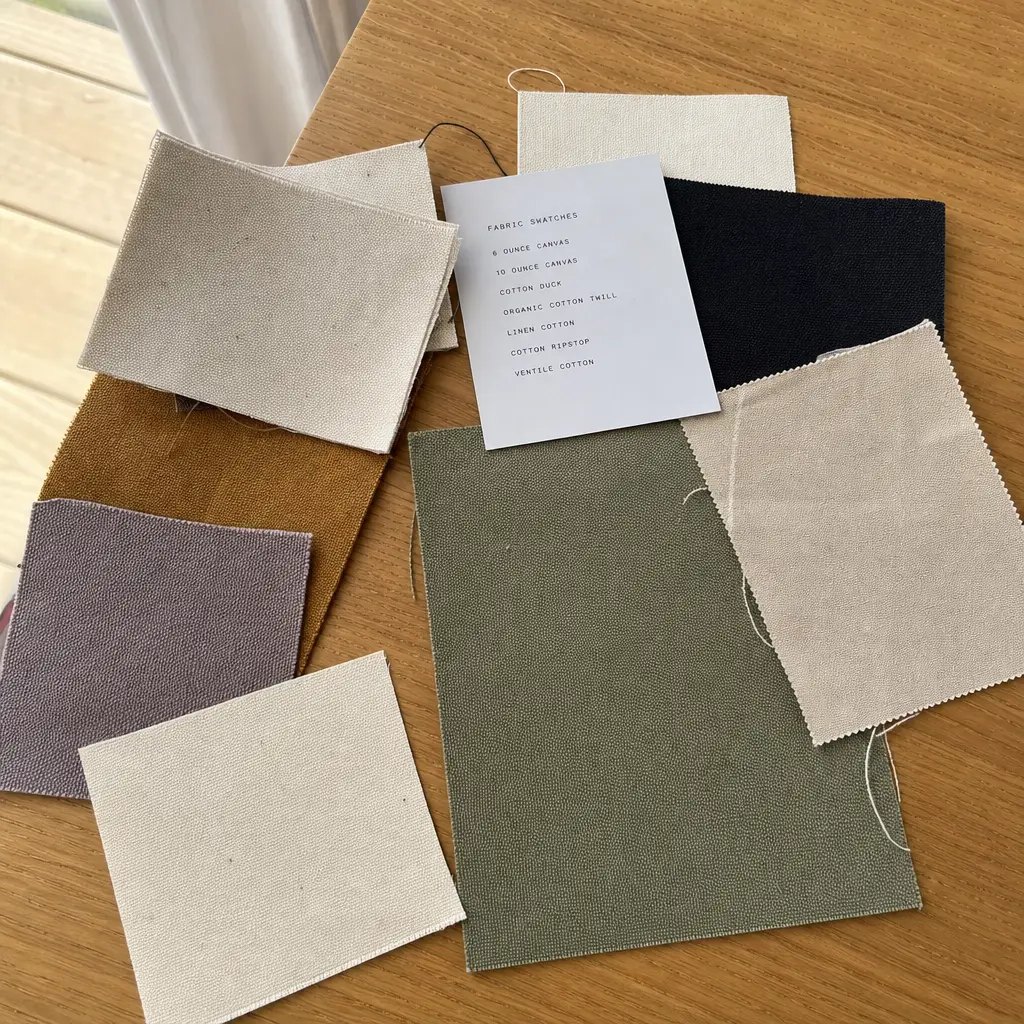
The buyer should avoid approving GSM only from a supplier's written quote. Cotton fabric can feel different depending on weave density, finishing, and shrinkage. A natural cotton pouch may also have visible seed flecks, which can be acceptable for an eco-style product but not for a clean technology brand that expects a uniform surface. If the logo has fine lines, lower GSM fabric may let the ink spread or show uneven coverage. The sample should be made in the actual GSM and fabric color intended for production.
- 100-110 GSM: light promotional use, lower cost, limited opacity, less premium hand-feel.
- 120-140 GSM: common balance for cable pouches, onboarding kits, and tech event giveaways.
- 160-180 GSM: stronger structure for reusable pouches and higher-value product packaging.
- 200 GSM and above: closer to small canvas bag territory, higher freight and sewing cost.
Size the Pouch Around the Usable Inner Space
Flat pouch dimensions can be misleading. A 15 x 20 cm pouch does not provide a full 15 x 20 cm usable storage space after seam allowance, drawstring channel, fabric thickness, and closure are considered. If a startup is packing adapters, cable sets, or small device boxes, the buyer should supply the factory with the actual product dimensions and the desired insertion method. A pouch that technically fits may still slow packing if workers need to force the product through the opening.
For carton planning, pouch size also affects fold method and packing density. Small pouches may be packed flat in bundles of 50, while medium pouches with thicker cords may need smaller bundles to avoid uneven stacks. If the pouch has a printed logo on one side, the factory should align the folding direction so the logo is not heavily creased. When pouches are used for premium launch kits, a slightly larger pouch may improve user experience but reduce pieces per carton, so the landed cost should be compared before final approval.
- Measure product length, width, height, and any sharp corners before confirming pouch size.
- Keep the logo clear of the drawstring channel and heavy fold line when possible.
- Allow a larger mouth opening when warehouse staff must insert products quickly.
- Use inner usable size as the approval point when the pouch holds a fixed retail item.
Match Print Method to Logo Detail and Bulk Risk
Screen printing is usually the most reliable method for cotton drawstring pouches when the artwork has one to three solid colors. It gives a clean result, works well on flat cotton panels, and is easier to control in bulk than many decorative methods. For fine gradients, very small text, or photo-style graphics, heat transfer may be proposed, but buyers should test hand-feel, edge lifting, and durability. Embroidery is possible on heavier cotton or canvas pouches, but it can distort lightweight fabric and increase cost.
The print approval process should include logo size, placement, Pantone reference if needed, and acceptable ink coverage. Natural cotton is not a coated paper surface; very small text may fill in, and light ink on dark fabric may need an underbase. The carton plan matters here because tight packing can create pressure marks before ink is fully cured. The factory should allow enough curing time before bundling, especially for thicker ink layers or large print areas.
- Use screen print for solid startup logos, QR-free branding, and repeat event orders.
- Avoid tiny legal text on rough cotton unless the supplier proves readability on fabric.
- Set logo placement tolerance, such as plus or minus 5 mm from the approved position.
- Request a packed sample after printing to see whether folding damages the logo surface.
Build MOQ Logic That Matches Startup Ordering
Startup orders often split across teams, launch events, investor kits, and retail pilots. A buyer may want 2,000 pouches total, but in three sizes, two fabric colors, and four logo versions. From the factory side, that is not one simple production run. MOQ is affected by fabric procurement, cutting setup, print screens, cord color, packing labels, and carton marks. A supplier can quote a low unit price when everything is identical, but the price changes once the order is divided into many small variants.
The cleanest RFQ separates the base pouch MOQ from customization variables. If all variants share the same pouch size and fabric color, different printed logos may only require extra screen setup and separate packing. If each variant uses a different color or size, cutting and material control become more complex. For procurement teams comparing suppliers, the important question is not only the minimum order quantity but also the minimum per SKU and the cost of SKU separation.
- One size, one fabric color, one print position is the simplest MOQ structure.
- Multiple logo versions may be workable if print setup charges are accepted.
- Different fabric colors can require separate fabric lots and shade control.
- Separate SKU packing should be priced if distributors need clean receiving.
Approve Samples With Production and Packing Checks
A sales sample that looks good on a desk is not enough for cotton drawstring pouches for tech startups carton packing plan decisions. The buyer needs a sample that proves the pouch works with the actual item, the print survives normal handling, and the packing method does not damage the appearance. The sample should be made from the quoted fabric GSM, with the correct drawcord, correct stitching style, and actual logo method. If the factory sends an available sample only to show workmanship, it should not be treated as final approval.
The pre-production sample is the main control point before bulk cutting. It should include measurements, logo placement, drawcord length, seam finish, and a small packing simulation. For example, if the bulk plan is 50 pieces per inner polybag and 500 pieces per carton, the buyer can request a sample bundle or packing photo showing how the pouch folds and stacks. This step catches problems such as bulky knots, logo creasing, tight channels, or pouches that compress unevenly in the carton.
- Fit test: product inserts easily and the drawcord closes without excessive tension.
- Measurement test: flat size and usable inner size match the approved tolerance.
- Print test: logo color, edge sharpness, rub resistance, and placement are acceptable.
- Packing test: bundle count, fold direction, carton layout, and carton mark format are clear.
Set the Carton Packing Plan Before Mass Production
The carton packing plan should be part of the purchase order, not a factory decision made after sewing. For small cotton pouches, a master carton may hold several hundred pieces, but the best quantity depends on fabric GSM, pouch size, cord thickness, inner packing, and freight method. A carton that is too large can fail courier handling or create high dimensional weight. A carton that is too small may increase carton count, warehouse labor, and export handling cost. The practical target is a carton that protects the pouches, can be counted quickly, and stays within a manageable gross weight.
Inner packing deserves attention because it affects receiving accuracy. Loose pouches inside a carton are cheap to pack but slow to count and more exposed to dust. Bundles of 25 or 50 pieces are easier for event agencies, distributors, and 3PL warehouses. Individual polybags improve cleanliness but increase labor, material cost, and plastic concerns. Paper belly bands or kraft sleeves may fit eco-positioned brands, but they must be tested because rough cotton and drawcord knots can make bundles uneven.
- Common inner bundle: 25, 50, or 100 pieces depending on pouch size and warehouse count needs.
- Master carton: 5-ply export carton for international freight and repeated handling.
- Gross weight: keep within a practical handling range, often under 15 kg unless approved.
- Carton marks: PO number, SKU, quantity, carton number, gross weight, net weight, and destination.
Control Quality With Clear Acceptance Criteria
Cotton drawstring pouches have simple construction, but small defects become visible when a startup uses them for product presentation. Common issues include uneven logo placement, loose threads, stains, broken stitches, twisted drawcords, and size variation. The buyer should define which defects are major and which are minor before inspection. For example, a missing drawcord or open side seam is a major defect, while a small natural cotton fleck may be acceptable if agreed in the sample.
AQL inspection should focus on the defects that affect brand presentation and packing reliability. Random cartons should be opened, inner bundle counts verified, and pouch measurements taken from different cartons. Print inspection should include position, color, ink coverage, and smearing. Carton inspection should include carton strength, sealing tape, carton marks, and whether the packed cartons are deformed. For startup orders going directly to events or fulfillment centers, shipment errors can cost more than the pouches themselves.
- Major defect examples: missing cord, open seam, wrong logo, heavy stain, wrong carton quantity.
- Minor defect examples: short loose thread, small fabric slub, slight shade variation within approval limit.
- Measurement tolerance: agree before production, especially for pouches holding fixed-size items.
- Inspection timing: perform final inspection after packing, not only at the sewing line.
Compare Quotes by Landed Cost, Not Unit Price
A low pouch unit price can become expensive when carton packing is poor. Dimensional weight, carton count, inner packing labor, repacking at destination, and receiving errors all affect landed cost. Startup teams often ship pouches by courier or air for launch deadlines, where carton size can matter as much as actual weight. Importers and distributors may use LCL or consolidated sea freight, where carton durability and clear marks reduce warehouse trouble.
A useful supplier quote should show more than the pouch price. It should include fabric GSM, size, print method, MOQ basis, sample cost, setup charge, inner packing, master carton quantity, carton dimensions, gross weight, net weight, CBM, and lead time. If two suppliers quote the same pouch at different carton quantities, the buyer should calculate total cartons, total CBM, total gross weight, and receiving labor before deciding. The cheapest quote is not always the lowest delivered cost.
- Compare total cartons per order, not only pieces per carton.
- Calculate CBM using supplier carton dimensions before freight booking.
- Separate one-time print setup charges from repeat-order unit price.
- Include destination repacking cost if the factory cannot follow the required carton plan.
Plan Lead Time Around Artwork, Samples, and Packing
Lead time risk usually starts before sewing. Artwork confirmation, fabric availability, cord color matching, print screen preparation, sample shipment, and sample comments can consume more days than expected. A simple natural cotton pouch with one-color screen print moves faster than a custom-dyed pouch with multiple logo versions and special retail labels. Startup buyers working toward product launches or conferences should reserve time for sample revision instead of assuming the first sample will pass.
The production schedule should also include packing and inspection. Pouches need to be printed, cured, trimmed, counted, bundled, packed, labeled, and inspected before shipment. If the order has multiple SKUs, the factory needs time to separate cartons and apply correct marks. Buyers should avoid changing carton quantities after bulk production starts because carton dimensions, labels, and warehouse count plans may already be prepared.
- Artwork approval: confirm vector file, logo size, print color, and placement sheet.
- Sample stage: allow time for physical shipment and buyer comments.
- Bulk stage: include cutting, sewing, printing, curing, trimming, and packing.
- Final stage: reserve time for inspection, corrective sorting, carton marking, and export documents.
Specification comparison for buyers
| Spec decision | Recommended option | When it fits | Buyer risk to check |
|---|---|---|---|
| Fabric weight for small tech accessory pouches | 120-140 GSM plain cotton for light cables, cards, small adapters, or welcome kit items | Best when the pouch is a protective dust bag and brand carrier, not a load-bearing bag | Below 100 GSM can look transparent after printing and may deform when packed tightly |
| Fabric weight for premium launch kits | 160-180 GSM cotton or cotton canvas for heavier chargers, power banks, or retail unboxing | Useful when the pouch replaces a paper box insert or will be reused by the end user | Higher GSM increases carton weight and may reduce pieces per carton more than expected |
| Drawcord material | Cotton cord for natural look; polyester cord when lower lint and stronger color matching are needed | Cotton cord fits eco-positioned startup merchandise; polyester cord fits high-volume promotional kits | Cord diameter must pass through the tunnel smoothly after washing and bulk packing compression |
| Printing method | Screen print for one- to three-color logos; heat transfer only for fine gradients or very small text | Screen print is usually the safer bulk choice for startup logos on cotton pouches | Ink cracking, bleed, and logo distortion must be approved on the actual fabric GSM, not only on artwork |
| Pouch size tolerance | Allow plus or minus 5 mm for small pouches and plus or minus 8 mm for medium pouches | Appropriate for cut-and-sew cotton pouches where fabric shrinkage and sewing tension vary | If the pouch holds a device box, inner usable size matters more than flat outside size |
| MOQ structure | Set MOQ by fabric color, pouch size, and print setup rather than total mixed quantity | Works when startups need several department kits or event batches with shared artwork | Too many colors or sizes can trigger separate dyeing, cutting, or print setup charges |
| Inner packing | Bundle 25-50 pieces in a polybag or paper belly band, then place in export carton | Keeps receiving counts fast for 3PLs, event agencies, and distributor warehouses | Loose packing saves material but makes count disputes and carton dust contamination more likely |
| Master carton plan | Use 5-ply export carton, moisture liner when needed, and keep gross weight usually under 15 kg | Suitable for courier, air freight, LCL, or warehouse handling by startup teams | Oversized cartons can crush bottom pouches and increase dimensional-weight freight charges |
Buyer checklist before sampling
- Define the pouch purpose: cable pouch, onboarding kit, retail insert, conference gift, or warranty accessory bag.
- List the exact item dimensions going inside the pouch and confirm usable inner size after drawcord closure.
- Select fabric GSM with a physical reference, not only a description such as thin cotton or premium cotton.
- Approve print on production fabric color and GSM, including logo size, placement, ink hand-feel, and rub resistance.
- Specify drawcord material, cord diameter, cord color, knot method, and whether metal tips are not allowed.
- Set carton quantity, inner bundle quantity, carton size target, gross weight limit, and required carton marks in the RFQ.
- Confirm if retail barcodes, polybags, paper bands, hangtags, or warning labels are required by the destination market.
- Request a pre-production sample after artwork approval and before bulk cutting begins.
- Define AQL level, measurement tolerance, print defect limit, and carton drop or compression expectations.
- Ask for quote separation between pouch unit cost, print setup, sample charge, packing upgrade, and inland freight.
Factory quote questions to send
- What fabric GSM, yarn construction, and shrinkage range are included in your quoted price?
- Is the quoted MOQ based on one pouch size, one fabric color, one logo, and one print position?
- What print method are you quoting, and what is the maximum logo size included before an extra screen or setup charge applies?
- Can you provide a packing plan with pieces per inner bundle, pieces per master carton, carton dimensions, gross weight, and CBM?
- What is the estimated lead time for sample, pre-production sample, bulk production, packing, and final inspection?
- What tolerances do you apply for pouch size, drawcord length, logo placement, and fabric GSM?
- Will carton marks, SKU labels, FNSKU labels, or distributor routing labels be printed by the factory or applied by a third party?
- How do you control color consistency between cotton fabric, drawcord, and printed logo across repeat orders?
- What defects are counted as major for screen print, seam opening, stains, missing cords, and wrong carton quantity?
- Can the quote show optional costs for upgraded carton, moisture protection, individual polybag, paper belly band, and palletization?
Quality-control points to confirm
- Fabric weight checked by GSM cutter or agreed sample comparison before bulk sewing.
- Pouch flat size and usable inner size measured from random cartons after packing compression.
- Logo placement tolerance controlled against an approved print placement sheet.
- Print adhesion tested by dry rub, tape pull where suitable, and light scratch inspection.
- Drawcord length and tunnel opening checked so the pouch closes smoothly without puckering.
- Seam strength checked at side seam, bottom seam, and drawstring channel stress points.
- Stain, oil mark, loose thread, broken stitch, and fabric slub limits defined before inspection.
- Carton count verified by inner bundle count and master carton random weighing.
- Carton marks matched against PO, SKU, destination, gross weight, net weight, and carton number.
- Final packed cartons checked for deformation, moisture exposure, and correct sealing method.