Why carton packing matters for farmers market buyers
For cotton drawstring pouches, carton packing is not just a warehouse detail. It determines whether the receiving team can count quickly, whether retail kits stay sorted by size, and whether the pouches arrive ready for immediate distribution to market stalls, packers, or fulfillment staff. A good packing plan reduces damage, shortens check-in time, and protects your margin by avoiding rework at destination.
Farmers market programs usually move in mixed channels. The same pouch may be used for produce samples, soaps, herbs, baked goods, or branded giveaways. That means the carton pack has to support both shipping and downstream handling. If the carton plan is loose or undefined, the factory will choose the easiest packing method, not the one that fits your receiving workflow.
- Use one packing rule per SKU instead of a single generic instruction for the whole order.
- Decide early whether the receiving team needs size-sorted cartons or mixed cartons by kit.
- Write the carton count into the PO so the factory cannot replace it with its own standard pack.
Start with the pouch spec before you design the carton
Carton packing only works if the pouch spec is stable. For standard cotton drawstring pouches, a practical starting point is natural cotton in the 120-150 gsm range. That weight is usually strong enough for small retail items while still folding flat enough to pack efficiently. If the pouch will carry heavier contents or needs a more premium hand feel, move up to 180 gsm or higher, but expect thicker cartons, lower carton counts, and more freight volume.
The fabric finish matters as much as the GSM. Unwashed cotton can arrive slightly stiff, then relax or shrink after handling, especially in humid transit. A pre-shrunk or washed finish gives more predictable size and better carton fill consistency. If the buyer wants a soft, natural look for artisan market branding, that finish usually reduces complaints about a rough hand feel and helps the pouch sit flatter inside the carton.
- Choose GSM based on contents, not only on target price.
- Confirm whether the fabric is pre-shrunk, washed, or raw natural cotton.
- Ask for size tolerance after sewing, because cotton dimensions move with stitching and finishing.
Choose the print method that survives bulk handling
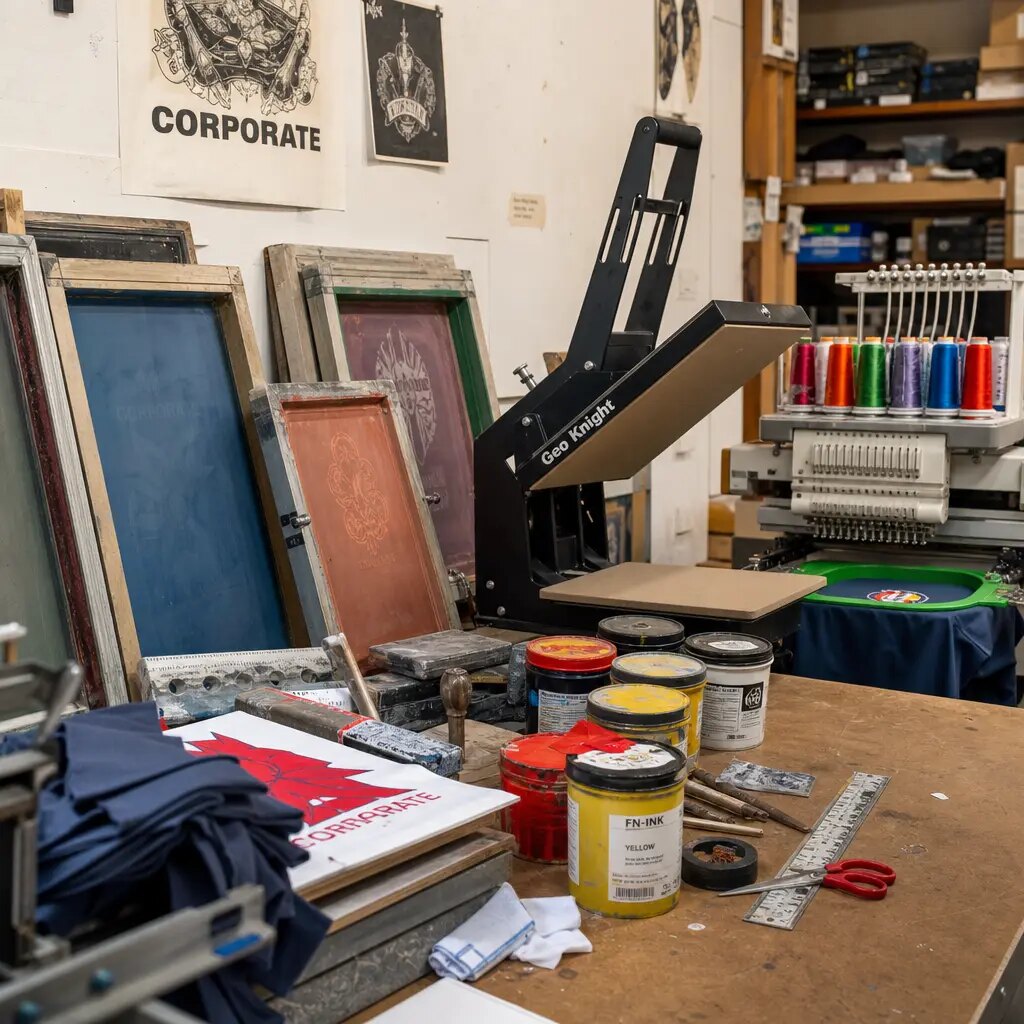
For bulk farmers market orders, screen print remains the most practical branding method on cotton drawstring pouches. It holds up well, stays readable after folding, and is usually easier for a factory to repeat across thousands of units. One or two colors are the most efficient path when the artwork is clean and the order size justifies setup. If the brand needs a more finished look, a woven label or side label can carry the identity without forcing the print to do all the work.
Avoid overcomplicating the artwork if the carton plan depends on fast production. Fine gradients, tiny type, and tight color registration increase rejection risk and make it harder to keep the line moving. For buyers comparing quotes, the real question is not whether the design is attractive on screen. It is whether the print survives folding, carton compression, and repeated retail handling without fading or cracking.
- Use screen print for durable, repeatable branding on bulk cotton pouches.
- Use a side label or woven label when the brand needs cleaner identity without multiple print colors.
- Treat high-detail artwork as a production risk, not just a design choice.
Build the carton pack around how the goods will be received
The right carton pack depends on how the buyer will receive, store, and allocate the pouches. If the goods are going straight to a warehouse, use size-sorted cartons with a count that keeps each case easy to handle by one person. A gross weight target around 12-18 kg per carton is usually practical for manual receiving, though the exact limit should reflect the product size, fabric weight, and destination labor rules. If the goods are going to multiple market locations, carton labels should identify size, color, and SKU clearly enough to split shipments without opening every case.
For smaller pouches, flattened packing is usually the most efficient. Inner polybags or paper wraps can protect the set count and reduce friction damage, but they should not create unnecessary air in the carton. The goal is to create a carton that stacks cleanly, resists crushing, and can be counted from the outside. A carton that looks full but flexes under light pressure is a warning sign that the pack is too loose for export handling.
- Target manual handling first, then maximize carton fill.
- Keep sizes or colors separated if the buyer receives by SKU.
- Use clear carton labels with item code, pack count, and country of origin if required.
Compare sourcing routes before you compare unit price
Two quotes can look similar on unit price and still create very different outcomes. A factory-direct export order usually gives the buyer the most control over carton count, carton art, labels, and bundle logic. That route is strongest when private label consistency matters and when the buyer needs a fixed packing standard across repeat orders. A trading company may be easier for smaller programs, but the carton details can become less transparent unless the packing standard is written down and tied to the approved sample.
Some buyers source from stock programs or domestic converters when speed matters more than exact customization. That route can reduce lead time, but the carton pack may be predetermined and less flexible. For a farmers market program, the best route depends on whether the priority is launch speed, brand control, or lower freight waste. Compare not just the FOB number, but the entire packing and receiving cost profile.
- Factory-direct works best when carton pack, labels, and brand control matter.
- Trading routes can be useful, but only if the carton spec is written into the quote.
- Stock sourcing helps speed, but limits control over pack count and presentation.
Read factory quotes for hidden packing cost drivers
A useful quote should separate fabric, sewing, print setup, packing labor, carton materials, and special handling. If those items are bundled into one line, it becomes impossible to compare suppliers on the same basis. Packing is often where the factory recovers margin quietly, especially when the buyer asks for size sorting, insert cards, or stricter carton labels. The quote should also state whether the carton size is optimized for container loading or for warehouse receiving, because those are not the same objective.
Ask the supplier to show what changes when the order moves from loose packing to retail-ready packing. Even a simple change, such as adding inner bagging or changing the carton count, can shift the labor content materially. For a buyer managing landed cost, the real comparison is not only the factory price per pouch. It is the price per received, countable, undamaged unit after packing, freight, and handling.
- Request a line-item quote that shows packing labor and carton materials separately.
- Compare quote versions for loose pack, inner pack, and case-packed delivery.
- Treat carton size and gross weight as cost inputs, not afterthoughts.
Set QC thresholds before the sample is approved
A pre-production sample should confirm the sewing, print, cord feel, and closure action, but it is not enough by itself. For carton-packed goods, the buyer also needs a packed sample or packed photo set that shows how the final cartons will look when received. That includes carton marks, inner arrangement, and the actual count per case. Without that step, the factory can approve a clean loose sample and then switch to a different pack method when production starts.
Use tolerances that reflect the product size. For small cotton drawstring pouches, a size tolerance around plus or minus 0.5 cm is usually sensible, while larger sizes may allow slightly more movement. Print placement should be centered enough to look intentional, and the cord should draw evenly from both sides. If the fabric shrinks, the buyer should know the expected range before the order is released, not after the first carton is opened at destination.
- Approve both a loose sample and a packed sample.
- Set size, seam, and print tolerances before bulk sewing starts.
- Require carton photos showing label position and actual pack count.
Use the sample stage to catch packing mistakes early
The most expensive carton problems are usually simple ones: the wrong count in each case, mixed sizes in one carton, labels placed on the wrong panel, or cartons packed too tightly to survive transit. Those errors are easy to miss if the sample review focuses only on the pouch itself. A better approval process includes one sewn sample, one printed sample, and one packed sample from the intended production method. The packed sample should be the final reference for carton fit, count, and handling behavior.
If the buyer plans to sell through multiple market channels, sample review should also test how quickly the receiving team can identify the SKU. Open one carton, count the top layer, and confirm the pack can be reclosed without distorting the pouches. If the carton has to be torn open just to verify the count, the packing plan is too fragile for practical use.
- Review one sample for sewing, one for print, and one for carton packing.
- Test whether the carton can be opened and reclosed without damaging the goods.
- Confirm that the receiving team can identify the SKU without opening every carton.
Plan lead time around print, packing, and carton approval
Cotton drawstring pouch orders often look short on paper and then slip in production because the schedule ignores packing approval. The sewing line may be ready before the print screens, carton labels, or inner pack counts are finalized. A realistic schedule separates fabric preparation, sample approval, printing, sewing, packing setup, and final inspection. If any one of those steps is late, the whole order can miss the ship date even if the actual sewing run is fast.
For buyers working against a market launch date, the safest move is to freeze artwork and carton markings before mass production starts. Any late change to the print file, carton count, or label wording can force rework. That risk is especially high when the order includes multiple sizes or mixed cartons. A factory that can start quickly is not enough; the supplier also needs a clean approval chain so the packing team is not guessing on the floor.
- Separate approval milestones for artwork, sample, packing, and carton labels.
- Freeze the carton spec before mass packing begins.
- Expect longer lead times when the order includes multiple sizes or print colors.
Turn the carton plan into a landed-cost comparison
The real sourcing decision is not just which factory quotes the lowest unit price. It is which route gives the lowest landed cost for a usable, countable, undamaged pouch. A lighter fabric can lower the ex-factory number but raise rejection risk if it looks thin in the carton. A thicker fabric can improve retail feel but reduce carton count and increase freight volume. The buyer should compare the full path from factory pack to receiving shelf, not just the price on the quote.
A good RFQ should therefore ask for quote data that supports landed-cost analysis: GSM, size tolerance, print method, packing count, carton dimensions, gross weight, and lead time. When these details are missing, the buyer cannot compare suppliers on the same basis. The result is usually a quote that looks cheap at first and becomes expensive later through repacking, delays, or receiving disputes.
- Compare price per received unit, not only price per sewn pouch.
- Use carton dimensions and gross weight to evaluate freight impact.
- Treat missing packing data as a quote gap, not a minor omission.
Specification comparison for buyers
| Spec decision | Recommended option | When it fits | Buyer risk to check |
|---|---|---|---|
| Fabric weight | 120-150 gsm natural cotton for standard market use; 180 gsm+ for premium or heavier contents | Best when pouches hold soaps, produce samples, herbs, candles, or giveaway kits | Too light a fabric can show contents and crease badly in cartons; too heavy can raise cost and reduce carton count |
| Weave and finish | Plain weave or muslin with a pre-shrunk or washed finish | Useful when buyers want a softer hand feel and fewer complaints about stiffness | Unwashed cotton can shrink and distort print after first handling or humidity exposure |
| Print method | One- or two-color screen print for bulk; woven label or side label for branding detail | Fits repeat orders where color consistency and durability matter more than artwork complexity | Complex artwork or fine gradients can break registration and slow production |
| Carton pack style | Size-sorted, flattened pouches in inner polybags or paper wraps, then export cartons by SKU | Best for warehouse receiving and retail allocation by market stall, region, or channel | Mixed-size cartons create counting errors and slow inbound checks |
| Carton count | Target 12-18 kg gross weight per carton with a count that supports easy manual handling | Works well for importers who unload by hand and need fast receiving | Overpacked cartons are more likely to burst, crush, or fail drop tests |
| Closure detail | Cotton cord or flat drawcord with reinforced eyelets or sewn channel | Good for repeated opening and closing in market use | Weak channel stitching or loose cord tension creates returns and complaints |
| Sourcing route | Factory-direct export order with carton specs written into the PO | Best for buyers who need packaging consistency, private label control, and lower rework risk | If packing requirements stay verbal, factories may default to their own carton standard |
| Sample approval route | Pre-production sample plus packed production sample and carton drop check | Useful when the carton pack must survive cross-dock handling and retail distribution | Approving an unpacked sample only can hide carton weight, fit, and label errors |
| Lead-time structure | Separate fabric, printing, sewing, packing, and carton approval milestones | Best when the launch date is fixed and the buyer needs warning before packing starts | If carton art or pack count is left late, shipment can finish sewing but still miss the delivery window |
Buyer checklist before sampling
- Define the pouch size, fabric GSM, cord type, and whether the order is for retail display, giveaway kits, or produce packaging.
- Set one carton packing rule per SKU: inner pack count, carton count target, gross weight limit, and carton label format.
- Approve artwork location, print colors, and acceptable print shift before bulk.
- Request a pre-production sample and a packed production sample, not only a loose sewing sample.
- Confirm carton dimensions, pallet pattern if needed, and whether cartons can be stacked in warehouse receiving.
- Ask the factory to state shrinkage, seam allowance, and size tolerance in the quote.
- Require photos of the finished carton labels, bundle count, and top-layer arrangement before shipment.
Factory quote questions to send
- What GSM do you recommend for this pouch size and end use, and what is the expected hand feel and opacity at that weight?
- Can you quote the same pouch with three packing options: loose bulk, inner-bag packed, and carton-sorted by size?
- What is your MOQ by size, color, print color count, and carton configuration?
- What is included in your quotation: fabric, sewing, print setup, packing labor, carton, labels, and master carton testing?
- Can you share the carton size, gross weight target, and estimated cartons per 1,000 pieces?
- What sample stages do you provide before bulk, and can you send a packed sample for approval?
- What tolerance do you hold for pouch size, cord length, and print placement?
- How do you protect cartons against crush risk and moisture during export?
- What is the realistic production lead time after artwork approval and deposit?
- Can you confirm whether your carton pack is optimized for warehouse receiving or for retail-ready shelf placement?
Quality-control points to confirm
- Fabric weight matches the approved GSM range and is measured on the production lot, not just on a sample swatch.
- Seams are straight, secure, and free from skipped stitches, loose thread tails, or channel breakdown at the cord opening.
- Pouch size stays within agreed tolerance, and all sizes in the carton are consistent.
- Print color matches the approved sample under daylight, with no major blur, pinholes, or misregistration.
- Cord pull is smooth, both sides close evenly, and the opening does not snag under normal use.
- Carton count, label data, SKU code, and outer mark match the PO and packing list.
- Cartons pass a basic squeeze and drop check without bursting, corner collapse, or bag migration through the case.
- Packed goods stay clean, dry, and separated by size or style so receiving teams can count quickly.