Start With the Selling Use Case
A cotton drawstring pouch is not one product. For a farmers market vendor, it may be a gift pouch for soaps or candles, a reusable retail bag for loose items, a sample pack for seasonally packaged goods, or a branded handout that must look clean on a display table. The use case determines the specification. A pouch used once for presentation can be lighter and simpler. A pouch sold as part of a retail offer, touched repeatedly, or reused by customers needs heavier cloth, tighter stitching, and a clearer compliance file.
The most common sourcing mistake is asking for a "cotton drawstring pouch" without describing the end use. That leads to quotes that are impossible to compare. If the pouch will carry packaged food, sit next to cosmetics, or be handed out at a public event, note that in the RFQ. Food-adjacent use changes what declarations you should request. Retail-facing use changes how much emphasis you should put on appearance, print consistency, and packing presentation. Build the quote around the job the pouch has to do, not around the cheapest catalog photo.
- Retail display bag: prioritize appearance, print clarity, and consistent cord finish.
- Reusable market bag: prioritize fabric weight, seam strength, and repeated-handling durability.
- Gift or sample pack: prioritize low MOQ, fast lead time, and clean branding.
- Food-adjacent use: avoid unclear fabric claims, odor-heavy finishes, and unverified print chemistry.
Turn the Use Case Into a Tight Spec
The useful spec starts with finished size, not a vague bag description. State width, height, and depth if there is gusseting, then add a tolerance in millimeters. For small pouches, a tolerance such as plus or minus 5 mm is a reasonable starting point. For larger formats, plus or minus 10 mm may be acceptable if the bag is not presentation-critical. Make the supplier quote against the same dimensional basis you will inspect against, otherwise one quote will look cheaper only because it assumes a smaller usable pouch.
Fabric language needs the same discipline. "Cotton" can mean a thin muslin, a mid-weight plain weave, or a canvas-style cloth. If the bag needs structure or opacity, ask for the GSM range in writing and require a sample made from the production cloth. A practical starting point for light retail use is often 120 to 140 GSM. A more substantial reusable pouch often starts around 140 to 160 GSM. If the pouch needs to feel premium or hide contents better, move higher and say so in the RFQ. Also specify whether the fabric is bleached, unbleached, dyed, or pre-shrunk, because those choices affect shrinkage, hand feel, and repeatability.
- Write finished size and tolerance in the RFQ, not just a nominal label size.
- Ask for GSM, weave, color, and pre-shrunk status in the written spec.
- State whether the pouch must be opaque, semi-opaque, or purely decorative.
- If the size is retail-critical, require the supplier to measure the approved sample and sign it off.
Choose the Supplier Route Before You Send the RFQ
A compliance checklist only works if the sourcing route matches the risk. A direct sewing factory is usually the best option when you want a repeatable construction, visibility into the line, and a clean path from sample to bulk production. A trading company can still be useful when the order includes labels, inserts, or mixed packaging requirements, but only if the trading company can identify the actual factory and show who owns QC decisions. Otherwise, you are paying for coordination without gaining control.
A general supplier can be acceptable for a small seasonal run, but it increases the risk of fabric substitution, vague packing, or unclear production ownership. A local sample room plus bulk factory model can work well when the design is more complex, but only if the handoff is controlled. Keep the approved sample, the measurement sheet, and the artwork file tied to the actual bulk factory. If the sample room and the bulk factory do not share the same control documents, the sample becomes a marketing object rather than a production reference.
- Use a direct factory when repeatability and document control matter most.
- Use a trading company only when it adds real production coordination, not just markup.
- Use a local sample room if it can hand off a signed spec to the bulk plant.
- Avoid sourcing from a seller who cannot identify the actual production site.
Build the Compliance Pack Before Sample Approval
For B2B buyers, a compliance pack should prove what the product is, where it was made, and which test basis supports the claim. At minimum, ask for fiber content, origin, and factory identity tied to the production site. If your sales channel requires it, add restricted-substance declarations for dyes, inks, or any plastic components. If the pouch will be sold as a reusable consumer item, ask the supplier which tests they can support for shrinkage, colorfastness, and seam performance. Do not accept a generic certificate if the lot, material, or production site does not match the order.
Keep the compliance request proportional to the market. For California sales, ask directly about Prop 65-relevant screening for inks, dyes, and accessory parts. For EU-bound orders, ask how the supplier handles REACH-related substance declarations and whether the statement covers the actual shipment lot. If the pouch is intended for food-adjacent use, ask whether the material and print system are suitable for that environment and whether any odor, coating, or finish needs to be disclosed. The point is not to over-document a simple pouch. The point is to make sure the paperwork supports the exact market you are selling into.
- Ask for fiber content, origin, and factory identity tied to the shipment lot.
- Request restricted-substance declarations when the destination market or retail channel requires them.
- Confirm whether the supplier can support colorfastness, shrinkage, and seam-performance data if needed.
- Make the document scope match the actual use case instead of collecting generic certificates.
Treat Sample Approval as a Production Control Point
A sample is not a courtesy item. It is the physical version of the contract. The pre-production sample should be made from production-intended fabric, the actual cord, and the final decoration method. If the supplier sends a sample in better cloth than the bulk run, the sample is misleading. Ask the supplier to state whether the sample is from stock fabric, a lab dip, or a final production lot. For printed pouches, the sample should use the same print process, the same color count, and the same artwork scale that will be used in mass production.
Set acceptance criteria before the PO is released. Decide what level of print shift is acceptable, what size variation is allowed, and whether the pouch must be checked after any wash, steam, or relaxation step. For reusable pouches, a simple pull test and a quick rub test can reveal whether the seams and decoration will survive normal handling. For a larger order, a top-of-production sample should be approved before the factory continues the line. Keep a signed reference sample, measurement sheet, and photo record so the approved version is not lost when the reorder comes back months later.
- Approve a sample made from production materials, not a substitute cloth.
- Match the print method, artwork size, and color count to the real run.
- Use a top-of-production sample before mass production continues.
- Keep a signed reference sample with measurements and photos.
Lock Decoration, Labels, and Packing Early
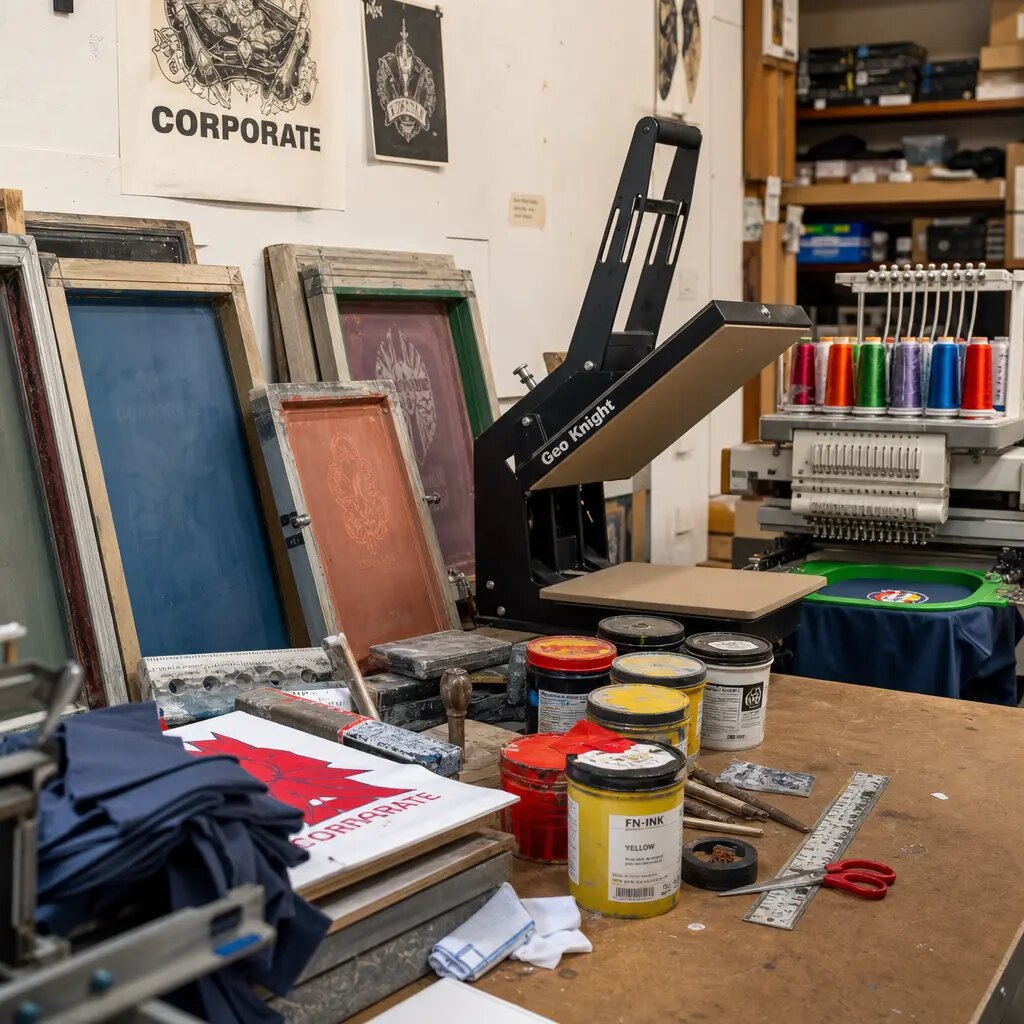
Decoration choice changes both cost and quality risk. Screen print is usually the most practical option for simple logos, short text, and one to two colors. It is repeatable and easy to cost out, provided the artwork is prepared correctly. Woven labels work well when the brand wants a cleaner retail look with less ink coverage. Embroidery can look premium, but on lighter cotton it can distort the pouch body and complicate the seam area. For farmers market use, the best decoration is usually the one that stays readable, holds up to handling, and does not create unnecessary rework.
Packing should be written into the order as a production requirement, not a warehouse preference. State whether the pouches are bulk packed, bundled in sets, or packed individually. Define the carton quantity, carton dimensions if needed for storage, and whether you require barcodes or retailer marks. If the order is moving through a warehouse or retail receiving dock, a missing label or a crushed carton can create real cost. If moisture is a concern in transit, require a dry carton condition and a simple inner pack that protects the textile from warehouse handling. The more specific the packing spec, the fewer arguments you will have after shipment.
- Use screen print for simple, repeatable logo work.
- Use woven labels when you want a cleaner retail finish with less ink risk.
- Use embroidery only if the fabric weight and margin can support it.
- Write pack type, carton quantity, barcode, and carton marks into the PO.
Compare Quotes on Landed Cost, Not Unit Price
A low ex-works price is not a good purchasing decision by itself. The useful number is landed cost, including setup, packing, freight, duty, inspection, domestic transport, and any likely rework. Common quote gaps include screen charges, label costs, carton upgrades, moisture protection, and sample fees. Those items can change the economics fast, especially on small and mid-sized orders. If a quote looks unusually low, ask what is missing before you ask how they achieved the price.
The best comparison is between at least three sourcing routes: direct factory, trading company, and any local or hybrid route you are considering. Then compare the full cost and the failure risk together. A slightly higher unit cost can be the better commercial result if it reduces receiving problems, relabeling, or replacement shipments. This matters for farmers market vendors and small consumer brands because the lost time from one bad delivery can cost more than the savings from a cheaper quote. Put the commercial decision where it belongs: on the total cost to deliver acceptable goods, not on the quote headline.
- Add setup, packing, freight, duty, and inspection before comparing price.
- Ask which items are excluded so you can calculate real landed cost.
- Compare at least three sourcing routes before placing the order.
- Treat quality risk as part of the price, not as a separate afterthought.
Control MOQ and Lead Time With Real Drivers
MOQ should be tied to actual production drivers, not treated as a random factory rule. If the supplier must book a new cotton roll, make custom labels, or cut print screens, the MOQ will rise. If you use stock fabric, one print color, and standard packing, the MOQ can often be lower. Ask the supplier to separate the MOQ drivers: fabric booking, decoration setup, sewing efficiency, and packing labor. That breakdown tells you whether the minimum is rooted in cost or in unwillingness to be flexible.
Lead time should be shown as stages. Separate sample approval, material booking, production, inspection, packing, and dispatch. For a simple cotton drawstring pouch, production after sample approval is often measured in weeks, not days, and custom fabric or multi-color decoration can extend that. A flat lead-time promise is less useful than a stage-by-stage schedule that exposes the bottleneck. If you are supplying a fixed market date, event launch, or seasonal sales window, ask the supplier to confirm the schedule against that deadline in writing and make clear what happens if any stage slips.
- Ask which part of MOQ is driven by fabric, print, or packing setup.
- Separate sample time from mass-production time.
- Expect longer lead times for custom fabric, extra labels, or special packing.
- Build buffer time around seasonal demand and shipping congestion.
Put QC Into Incoming, In-Process, and Final Inspection
Cotton drawstring pouch quality should be checked in stages, not left to a final inspection alone. Incoming fabric should match the approved shade, GSM, and weave before cutting starts. If rolls vary, record that immediately so the production line does not consume the wrong cloth. After cutting, check the dimensions against the approved tolerance, because a small cutting error becomes a bigger finished-size error after stitching. The most common failures are not exotic; they are inconsistent panels, weak corners, loose thread trimming, and a drawcord channel that does not close cleanly.
Decoration and packing need the same discipline. Print placement should stay within the approved tolerance, and the artwork should not bleed, crack early, or shift off-center. Cord length and cord finish should be consistent from pouch to pouch, and the draw action should feel smooth rather than sticky or uneven. At packing, verify count, SKU labels, carton marks, and moisture protection before release. Use an agreed AQL standard for the final lot and record major, minor, and critical defects separately. Keep the approved sample and defect log together so you have a concrete reference for the next order instead of relying on memory or supplier reassurance.
- Check fabric before cutting and not after sewing starts.
- Measure finished dimensions against the approved tolerance, not a general estimate.
- Verify print placement, cord finish, and draw action on production pieces.
- Use AQL on the finished lot and keep retained samples for reorder control.
Control Receiving, Storage, and Reorder Continuity
The buyer's responsibility does not end when the cartons land. At receiving, verify carton count, carton condition, SKU labels, and packing-list accuracy before goods go into stock. A damaged or mislabeled carton can create labor cost even if the pouches inside are acceptable. Cotton also absorbs moisture and odors, so storage matters. Keep the pouches in a dry area, away from direct sunlight, strong odors, and anything that can affect shade or fabric hand feel over time.
Reorder continuity is where many small brands lose consistency. Keep the approved sample, artwork file, measurement sheet, and compliance records together so a reorder does not depend on staff memory. Ask the supplier whether shade continuity is expected across dye lots and whether multiple lots can be mixed. If the order uses local decoration after the pouches are delivered blank, keep the ink reference and curing method on file as well. The goal is simple: the second order should look like the first order unless you deliberately change the spec. That only happens when the buyer keeps a controlled file and the supplier understands that repeatability is part of the job.
- Check carton count, carton condition, and SKU labels at receiving.
- Store cotton pouches dry and away from odors and direct sunlight.
- Keep the approved sample, artwork, and measurement sheet with the reorder file.
- Ask how the supplier handles dye lot continuity and whether lots can be mixed.
Specification comparison for buyers
| Supplier option | What to verify | Commercial advantage | Buyer risk to control |
|---|---|---|---|
| Direct sewing factory | cord material proof, reinforcement close-ups, load-test photos, approved sample tag, and bulk-line first-piece record | Better sample-to-bulk control and faster production feedback | May be weaker on export paperwork or branded packing unless checked early |
| Trading company | Factory name, production photos, trim-source proof, and who owns QC decisions | Can coordinate small mixed orders and extra services | Markup can hide real factory capability and slow defect decisions |
| Specialized bag workshop | cord diameter, eyelet or reinforced channel, bottom corner reinforcement, seam allowance, bar-tack position, and load target | More practical for detailed construction, trims, and repeat programs | Capacity may be limited during peak seasons |
| Low-price general supplier | 6-10 oz cotton canvas, 210D polyester, rPET, or blended cotton with shrinkage and colorfastness expectations set before sampling | Useful for simple promotional runs with loose specs | Material downgrades, weak packing, and vague inspection scope can erase savings |
| Retail-ready supplier | fold direction, cord protection, bundle count, carton compression, moisture bag, and retail label position | Can handle labels, SKU separation, carton marks, and receiving rules | Higher unit cost must be compared against reduced warehouse work |
| Compliance-focused supplier | Fabric records, labeling review, test plan, and production traceability | Safer for retail programs and repeat brand orders | Documentation claims need evidence, not only sales language |
| Local sample room plus bulk factory | Signed sample, bulk factory handoff, first-piece photos, and deviation owner | Good for complex branding before large production | Sample room quality may not match bulk line unless handoff is controlled |
Buyer checklist before sampling
- State finished pouch size, seam allowance, and numeric tolerance in the RFQ. Do not rely on a nominal bag size alone.
- Define the cloth precisely: 100% cotton or blend, weave, GSM, color, and whether it is bleached, unbleached, dyed, or pre-shrunk.
- Specify the drawcord material, diameter, end finish, and channel construction so the supplier cannot substitute a weaker cord or thinner binding.
- Choose one primary decoration method and lock artwork size, placement, color count, and registration tolerance before sample approval.
- Request a compliance pack that matches the destination market, including fiber content, origin, restricted-substance statements, and any required test reports.
- Ask for a pre-production sample made from production-intended materials, plus a top-of-production signoff before mass sewing continues.
- Confirm inner packing, bundle count, carton quantity, carton strength, moisture protection, and any barcode or retail label requirements.
- Set defect rules in advance for stitching, print placement, shade range, thread trimming, and acceptable size variation.
- Clarify lead time by stage: sample, material booking, production, inspection, packing, and dispatch.
- Write the reorder rule for MOQ, dye lot continuity, artwork reuse, and whether any change triggers a new setup charge.
Factory quote questions to send
- Is the quote based on finished size or cut size, and what seam allowance is assumed in the price?
- What is the exact fabric specification: cotton content, weave, GSM, color, and whether the fabric is pre-shrunk?
- What cord type, diameter, and cord-end finish are included, and is the channel folded, stitched, or reinforced?
- Which decoration method is priced, how many colors are included, and is print on one side or both sides?
- What setup charges are separate, such as screens, plates, embroidery digitizing, labels, hangtags, carton artwork, or sample fees?
- What MOQ applies by size, color, and design, and what part of the MOQ is driven by fabric booking versus decoration setup?
- What packing is included: individual polybag, bundle size, inner carton, master carton, desiccant, and outer marks?
- What inspection standard do you use, what AQL target do you quote against, and how do you define major, minor, and critical defects?
- What documents will ship with the goods, and will they reference the production lot or batch number?
- What costs are excluded from the quote, including freight, duties, domestic transport, inspection, storage, and repacking?
Quality-control points to confirm
- Incoming fabric should match the approved shade, GSM, weave, and hand feel, with roll defects recorded before cutting starts.
- Measured GSM should stay within the buyer's agreed tolerance band, and obvious roll-to-roll shade variation should be flagged before the line is released.
- Cut panels should hold the agreed finished dimensions and seam allowance so the completed pouch does not drift outside tolerance.
- Stitching should be even and secure, with no skipped stitches, loose thread tails, seam puckering, or weak corners at the channel opening.
- If reinforcement is used, bar-tacks or extra stitch density should be placed consistently and checked at the same positions on every sample and production lot.
- Cord length, cord finish, and pull action should be consistent from pouch to pouch, with no jamming, fraying, or uneven draw closure.
- Decoration should stay within the approved placement tolerance, with no major registration shift, bleeding, weak coverage, or early cracking.
- Packing count, SKU labels, carton marks, and moisture protection should match the approved packing spec before shipment release.
- Use an agreed inspection standard such as AQL for the final lot, and record major, minor, and critical defects separately.
- Retain an approved sample, a measurement sheet, and a defect log so the reorder is judged against a real reference, not memory.