Why sample approval matters more for wine club pouches
A cotton drawstring pouch for a wine club is not just a soft promotional bag. It passes through a chain of commercial handling: the sewing factory, print room, export packer, importer, fulfillment warehouse, and finally the club member opening a shipment. A small sample error can become a bulk problem quickly. A mouth opening that is only a few millimeters too narrow may slow bottle insertion. A print placed too close to the channel may disappear after tying. A fabric that looked acceptable flat may become too transparent when stretched around dark glass.
Wine clubs also tend to reorder seasonally. The first approved pouch can become the reference for spring releases, holiday gift packs, subscription tiers, tasting kits, and distributor programs. If the first approval is vague, every reorder becomes a negotiation about what was actually approved. Procurement teams should treat the sample as a production control document, not as a mood-board prototype.
The best approval process separates appearance from function. Buyers should approve the look, but also verify whether the pouch can be packed at speed, whether it protects the brand presentation after transit, and whether the factory can reproduce it within written tolerances. This is especially important when multiple bottle shapes are used across a club shipment.
- Approve with actual bottle families whenever possible, not only a supplier's assumed 750 ml bottle.
- Separate size approval, fabric approval, print approval, and packing approval when the first sample uses substitute materials.
- Keep a signed physical sample because photos cannot confirm handfeel, opacity, cord function, odor, or seam strength.
- Add the sample revision number to the purchase order so the supplier, QC inspector, and warehouse reference the same version.
- Record open issues clearly, such as "size approved, fabric shade pending" or "print placement approved, cord diameter pending."
Start with the bottle, then build the pouch size
Many RFQs begin with a flat pouch size such as 15 x 6 inches. That may be a reasonable starting point for a standard 750 ml still wine bottle, but it is not enough for approval. Bordeaux bottles, Burgundy bottles, Riesling bottles, sparkling bottles, and heavier premium glass all behave differently inside a sewn cotton sleeve. The widest point, shoulder slope, capsule height, and base shape affect how easily the bottle enters and how the fabric sits after tying.
For sample development, provide the factory with total bottle height, maximum diameter, shoulder diameter if relevant, neck diameter, and whether the pouch should cover the full bottle or leave part of the neck visible. A pouch designed to tie around the neck may need a different channel position than a pouch intended to hide the bottle completely for a gift reveal. If the wine club inserts a tasting card, coupon, neck tag, or small gift item, that extra piece also needs space.
A good approval test is practical: insert the filled bottle several times, pull the drawcord, lift the bottle as a warehouse operator might, and place the finished pouch into the intended shipper or gift box. If the pouch is too snug, the line will lose time. If it is too loose, the presentation can look sloppy and the logo may not face forward consistently.
- Standard 750 ml still wine pouch starting point: about 15 x 6 inches flat, then adjust after fit testing.
- Wide Burgundy bottle: increase width first; the shoulder and body diameter are usually the limiting points.
- Sparkling or Champagne bottle: request a separate fit sample because diameter, shoulder, and weight differ significantly.
- Tall Riesling-style bottle: check height and tying position so the pouch does not look short after the cord is pulled.
- Gift card or tasting note inside: allow extra width and confirm the insert will not bend, crease, or block bottle insertion.
- Mixed-club shipments: decide early whether one universal pouch is acceptable or whether separate SKUs are needed.
Choose fabric GSM, cotton type, and finishing with cost in mind
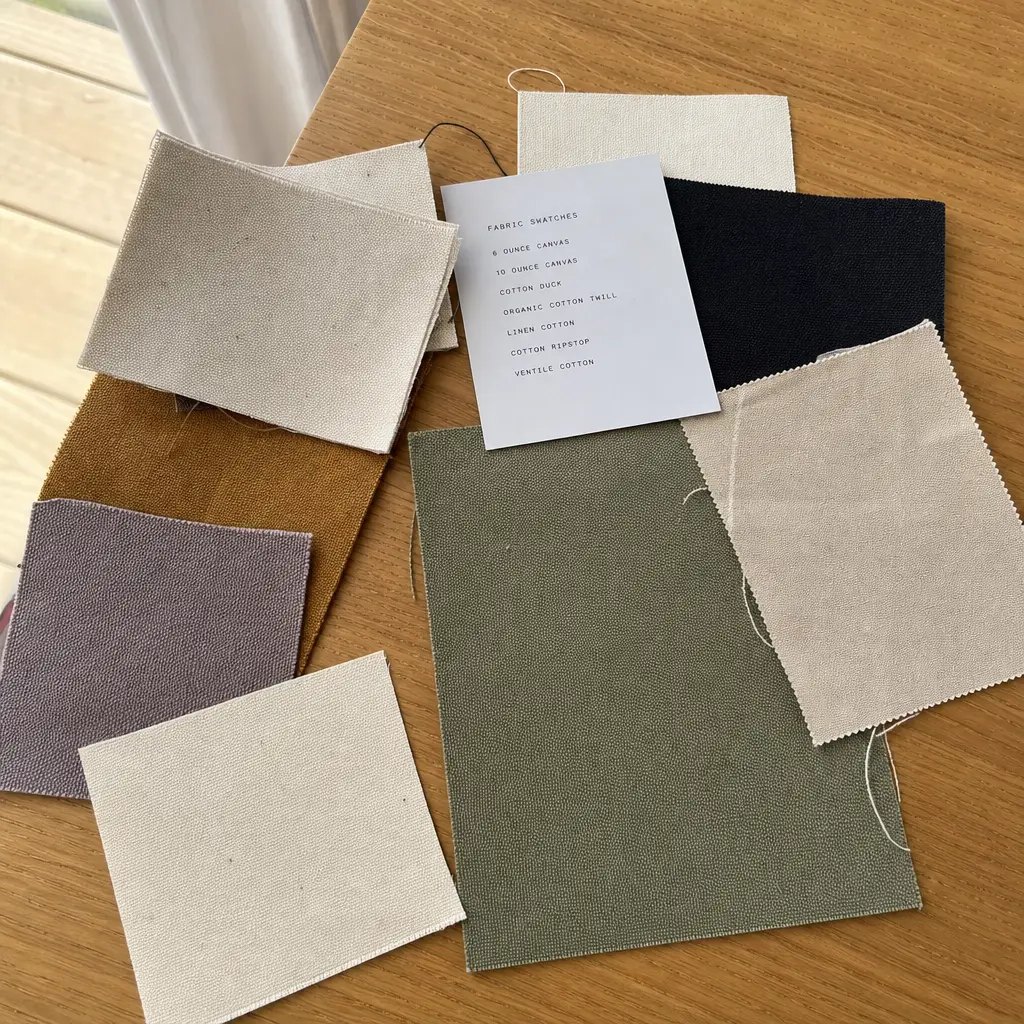
For most cotton drawstring wine pouches, 6 oz to 8 oz cotton canvas is a practical procurement range. In metric terms, that is often about 200 to 270 GSM after finishing, depending on weave, shrinkage, and processing. Lighter cotton can reduce unit cost and freight weight, but it may show the bottle outline, reveal label colors, and wrinkle heavily after compression. Heavier canvas feels more substantial and reusable, but it can increase material cost, carton volume, and difficulty when cinching the mouth.
The sample should state exactly what cotton is being approved. Natural unbleached cotton often includes seed flecks and shade variation, which may be desirable for a craft wine club look. Bleached cotton gives a cleaner background but may need tighter stain control. Dyed cotton can support seasonal branding, but color matching and crocking tests become more important. Organic cotton, recycled cotton blends, or cotton-poly blends may also be possible, but they must be quoted and sampled as specific materials rather than described generally as "cotton."
Finishing affects both appearance and dimensions. Washed cotton can feel softer but may have more variation. Unwashed cotton may shrink if exposed to moisture. A sample made from sample-room stock fabric should not be used to approve bulk shade or shrinkage unless the same fabric roll and finishing route will be used for production.
- 4 oz to 5 oz cotton: economical and light, suitable for event sleeves or lower-cost inserts where premium handfeel is not the priority.
- 6 oz cotton: common balance for wine sleeves where cost, opacity, and reusable feel all matter.
- 8 oz cotton canvas: stronger handfeel for premium club programs, gift packaging, and member-tier packaging.
- 10 oz and above: usually justified only when the pouch is meant to be a long-term reusable gift bag and the closure still works cleanly.
- Natural cotton shade: approve against a real swatch and allow controlled natural variation if seed flecks are acceptable.
- Dyed cotton: request lab dip or strike-off approval and confirm whether cord color is stock, matched, or contrast.
Print approval: make the logo readable after tying
Water-based screen printing is usually a strong option for simple wine club logos, vintage marks, subscription tier icons, and one to three solid-color seasonal designs. It gives a softer hand on cotton than many transfers and can look natural on canvas. However, cotton texture is not a perfectly smooth print surface. Fine serif fonts, thin line illustrations, small reversed text, and light ink on natural cotton need extra attention before bulk approval.
The most common artwork mistake is approving print placement on an empty flat pouch. After a bottle is inserted, the pouch curves, the upper fabric folds, and the drawstring changes the visible area. For many single-bottle pouches, front-center artwork works best below the drawcord channel, often around 80 to 110 mm below the top edge depending on pouch height. The final dimension should be measured from fixed sewing points such as the top edge, bottom edge, side seam, or channel seam.
Color approval should be practical rather than screen-based. A digital rendering is useful for layout, but it cannot confirm ink opacity, cotton absorption, or color shift on natural fabric. If brand color is important, request a print strike-off on the approved fabric, not on a substitute fabric. For multiple seasonal artworks, approve each artwork version or create a written rule for repeat placement and color.
- Use vector artwork for screen print and define Pantone references or physical swatches when color matters.
- Avoid tiny reversed text, narrow outlines, and thin vintage scrollwork unless a strike-off proves readability.
- Large solid ink blocks may feel stiff, show fold marks, or highlight fabric texture more than expected.
- For dark dyed cotton, test ink opacity, edge sharpness, dry rub, and light wet rub before approval.
- For metallic ink, confirm availability, print durability, and whether the effect remains visible on textured cotton.
- For embroidery, confirm backing, thread density, and whether the inside surface could rub against the bottle label or capsule.
Drawcord, channel, and tying performance are production details
The drawcord is a small line item in the quote, but it controls the user experience. Cotton cord supports the natural packaging story and pairs well with cotton canvas. A 4 mm to 6 mm cord is common for wine sleeves, with thicker cord giving a more premium appearance. If the cord is too thin, the pouch may slip open during handling. If it is too thick, the channel can pucker, the mouth may not close neatly, and warehouse staff may spend more time tying each unit.
The channel must be considered together with fabric weight. A narrow channel in heavy canvas can make the cord drag. A wide channel in light muslin can look loose and unfinished. Back-tacking near the channel exits should be clean and strong because those points receive repeated stress when the drawcord is pulled. If a double-cord closure is selected, the pouch may close more symmetrically, but it can also add steps during fulfillment.
Sample approval should include a simple function test. Insert a filled bottle, pull the cord closed, tie it as the warehouse will tie it, untie it, and repeat. Watch for cord fraying, seam stress, channel distortion, and loose thread. The factory should know whether the pouch is decorative only, intended for one shipment, or expected to be reusable by the member.
- Specify cord material separately: cotton cord, cotton rope, polyester cord, ribbon, jute, or blended cord.
- Define cord diameter, cord color, cord length, and whether the closure is single-cord or double-cord.
- Approve cord end treatment: knot, sewn tip, wrapped tip, plastic or metal aglet, heat seal for synthetic cord, or raw cut.
- Confirm channel height and opening size after considering fabric thickness and any expected relaxation or shrinkage.
- Check that the drawcord does not cover the logo, scratch the bottle capsule, or interfere with gift-box closure.
- If the warehouse has a preferred tying method, duplicate that method during sample approval.
MOQ and quote logic: why a fast sample can hide bulk cost
A factory may be able to produce one sample quickly from available cotton and cord, but bulk pricing is driven by different variables. The final unit cost depends on fabric roll availability, dyeing MOQ, print screens, sewing efficiency, cord sourcing, labels, packing, and carton requirements. A sample made from stock natural cotton does not prove that the same price applies to custom dyed fabric or organic cotton.
Procurement teams should compare quotes against the approved specification, not against a short description such as "cotton wine pouch with logo." One supplier may quote a lighter fabric, plain cord, and no inner-bag labeling. Another may include heavier GSM, print strike-off, export cartons, and a realistic packing method. The lower unit price is not always the lower landed cost if the product must later be corrected, repacked, or delayed.
It is also useful to separate MOQs by component. Fabric MOQ may be different from sewing MOQ. Custom cord color may have its own minimum. Print MOQ may change with the number of colors or artwork versions. If a wine club has several seasonal designs, the buyer should ask whether the total order quantity can be combined across artwork versions or whether each design has a separate setup and minimum.
- Fabric MOQ: affected by cotton type, GSM, width, finishing, and whether the shade is stock or dyed to order.
- Print MOQ: affected by screen setup, number of colors, number of artwork versions, and print area.
- Sewing MOQ: affected by pouch size, bottom construction, drawcord insertion, stitch requirements, and production-line setup.
- Cord MOQ: affected by material, diameter, color matching, tipping, and availability of stock colors.
- Packing MOQ: affected by individual bags, inner-bag labels, barcodes, custom carton marks, and palletization rules.
- Reorder MOQ: may be lower if fabric, artwork, cord, and packing remain unchanged and components are still available.
What to inspect on the pre-production sample
A pre-production sample is different from a sales sample. A sales sample demonstrates capability; a pre-production sample freezes the standard for bulk production. It should be made with the same fabric weight, final drawcord, final thread, final print method, approved artwork, and final dimensions planned for the order. If anything is substituted, mark the substitution directly on the approval form so that the buyer does not accidentally approve the wrong attribute.
The review should combine measurement, appearance, and function. Measure the pouch flat, then test it with the filled bottle. Insert the bottle five to ten times, pull the cord, tie the pouch, lift it carefully from the neck area, and inspect the bottom seam and channel exits. This is not a certified load test, but it quickly reveals a narrow mouth, weak back-tack, poor cord choice, or an unsuitable bottom seam.
Buyers should also look for sensory and contamination issues. Natural cotton can absorb odors from storage or packing areas. Oil marks, mildew smell, loose threads, and foreign fibers are easier to correct before bulk production than after cartons arrive at a fulfillment center. If the pouch will enter a food or beverage packing environment, ask the supplier about needle control and metal contamination procedures.
- Flat width and height meet agreed tolerance, such as +/-5 mm width and +/-10 mm height unless another tolerance is approved.
- Mouth opening allows smooth insertion without forcing the bottle shoulder or scraping the label.
- Bottom corners are secure, with no skipped stitches, loose thread nests, or weak back-tacks.
- Drawcord pulls evenly and does not tear the channel, slip out, or fray excessively.
- Print is centered, readable after tying, and matched to the approved artwork version.
- Fabric opacity is acceptable around the actual dark glass bottle and any enclosed insert.
- No strong chemical odor, mildew smell, oil mark, needle damage, visible contamination, or unacceptable cotton slub concentration.
- Stitch density and thread color are consistent with the approved sample and suitable for the fabric weight.
Set written tolerances and defect classifications before bulk inspection
Without written tolerances, sample approval becomes subjective. A buyer may expect every pouch to match the sample exactly, while the factory may consider small variation normal for sewn cotton goods. Cotton fabric can relax, shrink, and move during cutting and sewing, so practical tolerances should be agreed before production. The tolerance should be tight enough to protect function and appearance but realistic enough for fabric and construction.
For wine pouch programs, size tolerance often focuses on flat width, flat height, mouth opening, channel height, and print position. Print color should be controlled by a swatch or approved strike-off, not by a phone photo. Workmanship should be divided into critical, major, and minor defects so inspection results are not debated at the last minute.
A clear defect list is especially useful for natural cotton. Seed flecks and small slubs may be acceptable if they support a natural look, but stains, oil marks, mildew, major weaving defects, and holes should not be accepted as normal cotton character. Buyers should define the difference between natural variation and true defects in the approval record.
- Critical defects: safety contamination, metal fragments, mold, severe odor, wrong material, or any issue that makes the pouch unusable for fulfillment.
- Major defects: wrong size outside tolerance, weak seam, broken cord, unreadable logo, wrong print color, severe stain, mispacked carton, or wrong artwork.
- Minor defects: small loose threads, slight shade variation within range, minor cotton slubs, or small cosmetic issues that do not affect function or brand presentation.
- Measurement points: define top edge, bottom edge, side seam, channel seam, print centerline, and print distance from fixed sewing points.
- Inspection basis: match the signed sample, approved artwork, purchase order, packing specification, and latest revision notes.
- Sampling standard: confirm whether the buyer uses third-party inspection, internal inspection, or supplier final inspection, and state the acceptable quality limit if applicable.
Packing approval prevents creases, shortages, and warehouse delays
Cotton drawstring pouches are usually flat packed, but the folding method still matters. A hard fold through the logo can leave a visible crease. Over-compressed cartons may save freight space but can make natural cotton look crushed when opened at the fulfillment center. Loose cartons reduce compression but increase chargeable volume. Packing approval should balance presentation, carton cube, counting accuracy, and warehouse handling.
For wine club fulfillment, packing should support fast line feeding. Inner bags of 50 or 100 pieces are common, but the correct quantity depends on pouch size, warehouse counting procedures, and carton weight limits. If the buyer prefers reduced plastic, discuss kraft bands, paper wraps, or bulk packing, but also consider moisture protection during ocean freight and storage. Natural cotton absorbs humidity and odors more easily than many synthetic materials.
Carton information should be requested before the order is placed, not after production. Estimated carton size and gross weight affect freight quotes, pallet plans, receiving appointments, and landed-cost calculations. If the fulfillment center requires SKU labels, barcodes, PO numbers, or carton sequencing, those details belong in the packing specification and sample approval record.
- Define pieces per inner bag and whether inner bags need size, color, SKU, PO, or barcode labels.
- Set carton quantity, carton dimensions, and maximum gross weight so cartons are safe for warehouse handling.
- Avoid folding printed areas sharply whenever possible; approve folding direction with a packed sample photo.
- Use carton dimensions that prevent excessive compression but do not create unnecessary freight volume.
- Add desiccant or moisture-control measures when shipping through humid routes, subject to buyer policy.
- Confirm whether cartons need retail labels, fulfillment labels, plain export marks, country-of-origin marks, or pallet labels.
- Request one packed-carton photo or packing sample as part of the final approval record.
Lead time planning after sample approval
Bulk lead time starts only after clear approval of the sample, artwork, fabric, deposit, and packing details. Delays often happen when approval is partial. A buyer may approve the size but not the print color, or approve the artwork but later change the bottle style. Each late change can restart fabric cutting, print screen preparation, cord sourcing, or sample confirmation.
Wine club calendars are often fixed because member shipments, tasting events, holiday gifts, and fulfillment reservations are scheduled in advance. Procurement should work backward from the required warehouse arrival date. The calendar should include sample making, sample transit, buyer review, revisions, bulk material purchasing, production, packing, inspection, export handling, ocean or air transit, customs, and domestic delivery.
Peak season adds risk. Holiday packaging, promotional bags, and gift items can compete for sewing capacity and print-room time. If the pouch is required for a fourth-quarter release, approve artwork and fabric early. When the schedule is tight, buyers can reduce risk by approving fabric swatches and print strike-offs in parallel, but the final pre-production sample should still be clearly signed before bulk production.
- Proto sample: useful for size, fit, and construction; may use substitute materials and should be labeled accordingly.
- Print strike-off: needed when logo detail, color, ink opacity, or print handfeel is important.
- Pre-production sample: final approval sample made as close as possible to the bulk standard.
- Bulk production: should not begin before written approval unless the buyer formally accepts the risk.
- Final inspection: schedule when production is complete or mostly complete and packed cartons are available for review.
- Shipping buffer: allow for vessel changes, customs exams, port delays, delivery appointment issues, and warehouse receiving windows.
- Revision control: every artwork, size, or material change should receive a new date and sample version.
Specification comparison for buyers
| Spec decision | Recommended option | When it fits | Buyer risk to check |
|---|---|---|---|
| Fabric weight | 6 oz to 8 oz cotton canvas, about 200-270 GSM after finishing | Most wine club gift sleeves, member shipments, tasting packs, and reusable single-bottle presentation pouches | Below 180 GSM can look transparent around dark glass and wrinkle heavily; above 300 GSM increases cube, cost, and drawstring stiffness |
| Pouch size for 750ml bottle | Start near 15 x 6 inches flat, then revise after a fit test with the actual bottle family | Standard Bordeaux-style and many Burgundy-style bottles when one pouch holds one bottle | Champagne, sparkling, tall Riesling, and wide Burgundy bottles need separate confirmation; never approve from flat measurement alone |
| Bottle fit allowance | Mouth opening and body width confirmed with filled bottle insertion, not only empty bottle trial | Fulfillment lines inserting hundreds or thousands of bottles per shift | A pouch that fits tightly can slow packing, stress seams, and cause operators to leave the drawcord untied or loosely tied |
| Bottom construction | Flat stitched bottom with reinforced side seam back-tack; boxed bottom only when the pouch must stand more neatly | Low-cost single-bottle sleeves used inside wine club cartons or gift boxes | An empty sample may look clean but the base can strain under a full bottle; approve with repeated filled-bottle handling |
| Drawcord material | Matching cotton cord or natural cotton rope, typically 4-6 mm depending on fabric weight | Premium natural packaging programs where cotton content and reusable feel are important | Cord that is too thin slips open; cord that is too thick puckers the channel and slows line speed |
| Printing method | Water-based screen print for 1-3 solid colors; strike-off required for fine detail, dark fabric, or unusual ink | Club logos, vintage marks, subscription tier icons, seasonal artwork, and simple gift messages | Fine serif fonts, metallic ink, gradients, and large flood prints can lose sharpness on cotton texture without strike-off approval |
| Logo placement | Front center, often 80-110 mm below the mouth channel, finalized after bottle and tying test | Retail-like presentation where the logo should remain visible after the neck is cinched | Artwork placed too high disappears into folds; artwork placed too low can curve around the bottle base or be hidden in a gift box |
| Sampling type | Pre-production sample made with bulk fabric, final cord, final thread, and final print color | Orders where the pouch is visible branded packaging and reorder consistency matters | A proto sample made with substitute fabric is useful for sizing only and should not approve handfeel, shade, shrinkage, or print color |
| Packing method | Flat packed 50-100 pieces per inner bag, with carton size chosen to prevent deep compression lines | Importers, distributors, and fulfillment centers counting pouches into wine packing lines | Over-compressed cartons create persistent creases on natural cotton; loose cartons increase freight volume and landed cost |
Buyer checklist before sampling
- Measure every bottle style the wine club may use, including total height with capsule, maximum diameter, shoulder shape, and punt or base profile.
- Confirm whether one pouch size must fit all wines or whether sparkling, Burgundy, magnum, or half-bottle formats need separate SKUs.
- Approve flat pouch size only after inserting a filled bottle and tying the drawcord exactly as warehouse staff will do in production.
- Record fabric composition, construction, GSM after finishing, color, shrinkage result, and whether the sample is greige, natural, bleached, dyed, washed, organic, recycled, or blended cotton.
- Check opacity by placing the actual dark glass bottle, label, foil, and any insert inside the pouch under normal fulfillment-room lighting.
- Keep at least one signed physical approval sample with the buyer and one with the supplier; provide a duplicate to the inspection company if third-party QC will be used.
- Confirm whether the sample uses production fabric, production cord, production thread, final ink, and production sewing method, not sample-room substitute materials.
- Test logo readability after the bottle is inside the pouch, after the drawstring is pulled tight, and after the pouch is placed inside the shipper or gift box.
- Define acceptable and unacceptable print defects, including pinholes, ink spread, registration shift, ink crocking, stains, ghosting, and uneven coverage around cotton slubs.
- Check seam strength at side seams, bottom corners, and drawcord channel with a filled-bottle handling test, not only by visual review of the empty pouch.
Factory quote questions to send
- Is the quoted fabric 100% cotton, organic cotton, recycled cotton blend, cotton-poly blend, or another construction, and what is the confirmed GSM after finishing?
- Is the quoted fabric natural stock cotton, bleached stock cotton, dyed-to-order cotton, washed cotton, or printed fabric, and what shade variation should we expect between lots?
- Will the pre-production sample be made from bulk fabric and bulk drawcord, or from sample-room substitute materials? If any item is substituted, which approvals remain open?
- What flat size do you recommend for our actual bottle diameter and height, and can you test with a similar filled bottle before sampling?
- Can one pouch size fit our Bordeaux, Burgundy, and sparkling bottles, or do you recommend separate sizes to protect packing speed and appearance?
- Which print method is included in the quote: water-based screen print, pigment print, heat transfer, digital print, embroidery, woven label, or another method?
- How many print colors are included, what is the maximum print area, and what is the cost impact if we add a second-side print, change to metallic ink, or require a print strike-off?
- What MOQ applies separately to the pouch body, fabric dyeing, drawcord color, print setup, labels, inner packing, and carton marks?
- What are the sample lead time, print strike-off lead time, bulk lead time after sample approval, final inspection window, and carton-ready date during peak season?
- What size, print placement, color, and workmanship tolerances will you accept in writing for bulk production and inspection?
Quality-control points to confirm
- Flat size measured before and after bottle insertion, with tolerance written against the signed pre-production sample.
- Mouth opening, channel height, and usable internal width checked with the actual bottle family, not only with a ruler on an empty pouch.
- Fabric GSM verified by cutting and weighing a sample piece or by mill test data, not estimated only from supplier description.
- Fabric shade compared against approved swatch under consistent lighting, especially for natural cotton, bleached cotton, and dyed seasonal colors.
- Drawcord pull test at the channel and knot area to confirm the cord does not snap, slip out, fray excessively, or tear the channel seam.
- Seam strength at side seams, bottom corners, and channel exits tested with a filled bottle and repeated handling.
- Stitch density, skipped stitches, loose threads, back-tack quality, and needle damage checked before packing.
- Print adhesion and crocking checked by dry rub and light wet rub, especially on dyed cotton, dark ink, or large print areas.
- Print placement measured from side seam, bottom edge, and drawcord channel to avoid logo drift across bulk units.
- Print readability checked after the pouch is filled, tied, and placed in the planned shipper or gift box.