1. Start With the Correct Use Case: Cotton Is Usually Secondary Coffee Packaging
Before approving any sample, define what the cotton drawstring pouch is supposed to do. For coffee roasters, cotton pouches are most often used as gift packaging, subscription packaging, retail presentation, promotional merchandise, sample-kit wrapping, or a reusable outer pouch around a sealed coffee bag. They are excellent for brand feel, gifting, and reuse, but they are not the same as a high-barrier coffee bag.
Cotton fabric is breathable. By itself it does not provide the oxygen, moisture, aroma, and light protection needed to preserve roasted coffee freshness. If whole beans or ground coffee will be placed directly inside the pouch, you must treat the project as direct food-contact packaging and evaluate shelf life, contamination, lint, odor, and regulatory requirements. In most roaster applications, the safer and clearer specification is: roasted coffee remains inside a sealed valve bag, sachet, tin, jar, or inner liner, and the cotton pouch is secondary packaging.
This distinction affects every approval decision. A pouch for a sealed 12 oz retail coffee bag mainly needs fit, strength, clean appearance, and low odor. A pouch that directly touches beans needs much stricter controls on fabric finishing, dyes, inks, lint, migration risk, and hygiene. Put the intended use in the RFQ and on the sample approval form so the supplier does not design for the wrong standard.
- Write the use case in one sentence: “cotton pouch for one sealed 12 oz coffee bag” or “direct-contact pouch for roasted beans.”
- Do not claim the cotton pouch preserves freshness unless there is a tested barrier liner or separate primary coffee pack.
- If coffee is direct-contact, ask for food-contact suitability and market-specific compliance before sampling.
- If the pouch is secondary packaging, still control odor, lint, stains, and restricted substances because it sits next to food packaging.
- Test the sample with your actual packed product, not only with loose beans or paper stuffing.
2. Build a Spec Sheet Before Asking for a Sample
A sample is only useful if it can be judged against a written specification. Without a spec sheet, the supplier may send a pouch that looks good but cannot be repeated at scale. Your spec does not need to be complicated, but it should name the fabric, dimensions, branding method, cord, seam construction, packing, and compliance expectations.
For coffee roasters, size should be based on the real product. A sealed coffee bag has thickness, valve position, folded top, and sometimes a tin tie. A pouch that fits an empty mockup may be too tight once filled. Measure the filled coffee pack at its widest and thickest points, then allow enough space for easy insertion and closure without distorting the logo.
Also include your approval tolerances. “Natural cotton pouch, medium size” is not a procurement spec. “Natural cotton drawstring pouch, 160 GSM target, finished size 180 mm W x 260 mm H, tolerance ±5 mm, cotton cord, screen print centered 75 mm below top edge” is much easier to quote, sample, inspect, and reorder.
- Finished flat width, height, gusset if any, and usable internal height below the drawstring channel.
- Fabric type, GSM target or range, weave, color, finish, and certification requirement if any.
- Branding method, artwork file name, print size, print placement, color standard, and label details.
- Drawcord material, diameter, length, end finish, and whether knots, aglets, or no tips are required.
- Seam type, stitch color, reinforcement points, and acceptable seam allowance.
- Packing method, carton labeling, moisture protection, and whether individual retail packing is needed.
3. Fabric Approval: GSM, Weave, Shrinkage, Lint, and Odor
Fabric is the largest driver of pouch performance and perceived value. For coffee gift and retail pouches, buyers often compare 120 GSM, 140 GSM, 160 GSM, and heavier cotton options. Lighter fabric can be economical and soft, but it may show the inner coffee bag, wrinkle more easily, and stress at the drawstring channel. Heavier fabric feels more premium but increases cost, carton weight, and sewing bulk. The best choice depends on pouch size, reuse expectation, and brand positioning rather than a universal GSM rule.
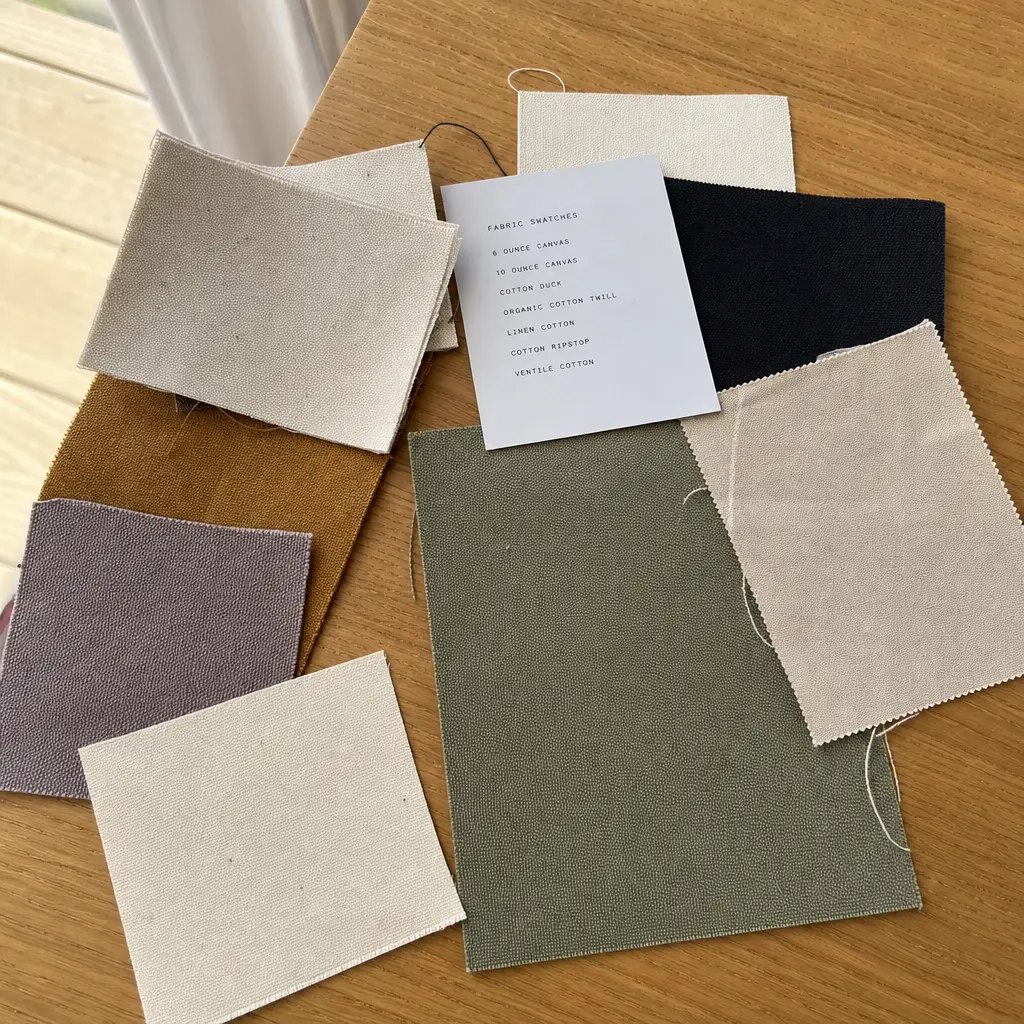
Ask the factory to declare GSM as a range, not a magic number. Textile production has normal variation, so the approval form should state an acceptable range and the measurement method. If you cut a 10 cm x 10 cm swatch to estimate GSM, weigh it accurately and multiply by 100; however, this is a buyer-side spot check, not a replacement for lab measurement. For small samples where cutting is not allowed, compare to a labeled swatch card and supplier certificate.
Coffee roasters should pay special attention to lint and odor. Natural cotton can shed fibers, and brushed or poorly finished fabric can leave lint inside the pouch. In secondary packaging this is mostly a cleanliness and presentation issue; in direct-contact packaging it is much more serious. Odor matters because coffee is aroma-sensitive. A pouch that smells of ink, damp storage, mildew, or chemicals should not be approved until the source is identified.
- Approve fabric from an actual production-like swatch, not only from a catalog photo.
- Check opacity by placing your printed coffee bag inside the pouch under retail lighting.
- Rub the inside with a dark cloth to screen for lint; investigate heavy shedding.
- Seal the pouch in a clean bag for 24 hours and check for trapped odor when reopened.
- Ask whether the fabric is pre-shrunk or whether shrinkage is expected after washing.
- For reusable consumer pouches, request wash-care advice and test shrinkage if washing is part of expected use.
4. Print, Label, and Artwork Approval on Cotton
Branding on cotton behaves differently from branding on paper, film, or labels. Cotton absorbs ink, has texture, and may contain slubs that interrupt fine lines. A perfect digital mockup can become softer, darker, lighter, or less crisp on natural fabric. That is why procurement buyers should approve a printed strike-off on the actual fabric whenever artwork is important.
Screen printing is common for simple logos and spot colors. It can work well on cotton, but the ink system should be selected for the fabric, intended use, and compliance requirements. Avoid broad claims such as “water-based ink makes the pouch compostable” unless the full finished product has been tested and certified for that claim. Instead, ask for the ink type, curing method, safety data sheet if needed, and any restricted-substance test reports relevant to your market.
Woven labels are useful when you want a premium reusable look or when the artwork is too small for clean printing on cotton. They add sewing steps and can create their own defects: crooked placement, frayed edges, loose threads, and scratchy backing. Heat transfers can reproduce complex graphics, but they must be tested for adhesion, edge lifting, handfeel, and cracking on flexible cotton. No method should be approved from photos alone.
- Compare the sample against the final artwork file for spelling, proportions, line weight, and logo orientation.
- Measure print placement from fixed points: top edge, side seam, bottom seam, or centerline.
- Run a dry rub and damp rub screen with a white cloth; request formal testing if transfer is visible or compliance is required.
- Check whether the print area feels stiff, tacky, rough, or noticeably different from the surrounding cotton.
- For woven labels, inspect all four sides for secure stitching and no loose corners.
- Keep one signed printed sample as the color and placement control for bulk production.
5. Color Matching: Use the Right Pantone Language for Textiles
Color matching often creates confusion because buyers use different Pantone systems for different materials. For textile fabric color, Pantone Fashion, Home + Interiors references such as TCX cotton chips or TPG guides are more relevant than paper-based print guides. For printed ink color, PMS coated or uncoated references may still be used as an ink target, but the final appearance on cotton must be approved physically.
Natural cotton also has a base color. A white or cream logo printed on natural cotton will not look the same as the same ink printed on coated paper. Dyed cotton can shift from lot to lot, and undyed cotton can vary from cream to beige depending on fiber and finishing. If exact brand color matters, ask for a lab dip or strike-off before bulk production.
Delta E can be useful when both parties have measurement equipment and agree on illuminant, observer angle, and formula. If you do not have that setup, use a simpler but enforceable standard: visual match to the approved physical sample under D65 daylight, no obvious shade difference within a shipment, and no mixed dye lots without approval. For premium programs, you can specify a target such as Delta E ≤2.0 only when the supplier confirms it can measure and control it.
- Use TCX/TPG or an approved fabric swatch for dyed textile color decisions.
- Use PMS coated/uncoated only as a print-ink reference, then approve the result on cotton.
- Compare color under D65 daylight and, if relevant, under your store or café lighting.
- Avoid approving color from phone photos because camera settings and screens distort shade.
- Mark the approved sample with date, revision, and buyer signature; store it away from sunlight.
- For reorders, ask whether the same fabric mill, dye lot process, and ink formula will be used.
6. Drawcord, Channel, Seam, and Gusset Checks
The drawcord system is where many pouches fail in real use. It includes the cord material, cord diameter, end finish, channel stitching, channel width, and the friction between cord and fabric. A cord that looks attractive may be too thin to grip, too short to tie, or too rough to slide smoothly. A channel that is sewn too narrow can jam; one sewn too wide can look bulky and uneven.
Cotton cord supports a natural brand story and pairs well with cotton fabric, but it may fray if the ends are not controlled. Polyester or blended cords can be strong and smooth, but they may not fit sustainability goals. Metal or plastic aglets can improve appearance, yet they add material complexity and may create noise, scratches, or recycling concerns. Rather than assuming one finish is best, approve the finish based on your retail environment, consumer reuse expectation, and compliance claims.
Seams and gussets should be tested with the actual packed product. A gusset can help the pouch stand and improve filling, but it also adds sewing complexity. A flat pouch may be cheaper and easier to pack, but it may not present well on a shelf. Inspect stitch density, seam allowance, bottom corners, drawstring-channel ends, and any stress point that bears weight when the pouch is lifted.
- Open and close the pouch at least 20 times to check cord smoothness and channel wear.
- Tie the closure as a consumer would; confirm cord length is practical, not just symmetrical.
- Lift the filled pouch by the cord and by the fabric body to observe stress points.
- Check cord ends for fraying after repeated use; approve knots, stitched ends, or tips only after seeing them.
- Inspect gusset symmetry from the front, side, and bottom when the pouch is filled.
- Reject open seams, skipped stitches at stress points, crooked channels, and sharp thread ends inside the pouch.
7. Food-Contact and Food-Adjacent Safety Review
Coffee roasters should separate “food-contact” from “food-adjacent” requirements. If roasted beans or ground coffee directly touch the cotton, the pouch is food-contact packaging and may require more rigorous testing depending on the destination market. If the cotton pouch only holds a sealed coffee bag, it is secondary packaging, but it still should be clean, low-odor, and free from obvious contamination because it is used around food.
Key risk areas include dyes, print inks, finishing chemicals, lint, odor, and storage contamination. Restricted azo dyes, heavy metals in pigments, formaldehyde in finishing, phthalates in certain print systems or components, and general color fastness may be relevant depending on materials and regulations. The buyer should not rely on a generic statement that “cotton is natural.” The complete pouch includes sewing thread, cord, labels, inks, dyes, and any tips or accessories.
Ask suppliers for current test reports that match the material and colors being used. Reports for a different fabric, different ink color, or old production lot may not be enough for your compliance file. If your legal or QA team requires a standard, name it in the PO. If you sell into multiple countries, confirm which requirements apply before approving the sample.
- State whether the pouch has direct contact with beans, contact with a sealed coffee bag, or no food contact.
- Request material declarations for fabric, cord, thread, labels, dyes, inks, and accessories.
- Review test reports for restricted azo dyes, heavy metals, formaldehyde where relevant, and color fastness.
- Reject strong odor even if the pouch is secondary packaging; coffee aroma is part of product quality.
- Inspect internal lint and loose fibers, especially if the pouch may be opened near beans or grinders.
- Do not make compostable, biodegradable, organic, or food-safe claims unless documentation supports the finished pouch and intended use.
8. Sample Approval Workflow: From First Proto to Signed Control Sample
A good approval workflow prevents slow revisions and later disputes. Start with a written RFQ and spec sheet. The supplier can then confirm what is standard, what requires custom development, and what affects MOQ or lead time. Once the first sample arrives, inspect it systematically before giving feedback. Do not approve or reject based only on the first impression.
Use a redline method for revisions. Photograph the sample next to a ruler, mark exact changes, and reference the spec line affected. For example: “Logo center is 8 mm left of center; requirement is centerline ±3 mm” is more useful than “logo looks wrong.” If the sample is close but not ready, ask whether the correction requires a new sample or can be confirmed by a pre-production sample before bulk cutting.
Final approval should be formal. The approved sample becomes the production standard, so it must be labeled and protected. Include the date, version, material choice, artwork file, approved colors, and any deviations accepted by the buyer. Keep one sample with the supplier and one with your team. If you later change cord, label, fabric, or packing, treat that as a new revision.
- RFQ issued with spec sheet, artwork, intended use, target quantity, and destination market.
- Supplier confirms feasibility, MOQ, sample scope, estimated timing, and documents available.
- First sample inspected for fit, fabric, print, cord, seams, odor, cleanliness, and packing.
- Buyer sends marked photos and revision notes tied to measurable spec points.
- Revised sample or pre-production sample is approved before bulk material cutting.
- Signed approval form and reference sample are stored for inspection and reorder control.
9. Bulk QC: Use AQL, Defect Classes, and Clear Acceptance Rules
Professional inspection should not be described only as “check 10% of the goods.” A more reliable approach is AQL sampling using a recognized standard such as ANSI/ASQ Z1.4 or ISO 2859-1. The buyer and supplier agree on inspection level, lot size, sample size, and acceptable quality limits before production. This creates a shared decision rule instead of a subjective argument at shipment time.
Defect classification is just as important as sample size. Critical defects are safety, contamination, or compliance failures and usually have zero tolerance. Major defects affect function, saleability, or brand presentation, such as wrong dimensions, open seams, severe stains, incorrect artwork, or broken drawcords. Minor defects are small workmanship issues that do not materially affect use or saleability, such as a small loose thread that can be trimmed.
Your purchase order should state what happens if inspection fails. Options include factory sorting, rework, replacement, reinspection at supplier cost, discount by agreement, or shipment hold. For cotton drawstring pouches, inspectors should compare against the signed approval sample, not only against a generic checklist. This is especially important for natural fabric shade, logo placement, handfeel, and packing method.
- Set AQL levels in the PO before production; do not negotiate acceptance rules after defects are found.
- Define critical, major, and minor defects with examples specific to your pouch.
- Require the inspector to use the approved sample, spec sheet, artwork, and packing instruction.
- Inspect product function by filling and closing sampled pouches, not only measuring flat units.
- Record defect photos, quantities, carton numbers, and whether defects are random or repeated.
- Hold shipment until rework and reinspection are completed if major defects exceed the agreed AQL.
10. Packing, Shipping, and Reorder Controls
Packing affects both freight cost and final presentation. A pouch that leaves the factory clean can arrive wrinkled, damp, dusty, or compressed if the packing plan is weak. Ask how pouches will be folded or bundled, whether inner moisture protection is needed, and whether cartons will be strong enough for stacking. Avoid exact carton assumptions until the supplier confirms based on your final size, GSM, gusset, cord, label, and packing method.
Individual polybags protect against dust and moisture but may conflict with plastic-reduction goals. Bulk packing reduces packaging but can create creasing and contamination risk if not controlled. Paper bands, tissue, carton liners, or master poly liners may be alternatives depending on the destination, season, and warehouse conditions. Approve one packed sample or packing photo before mass shipment if retail presentation matters.
For reorders, the approved sample is your anchor. Natural cotton, dyed fabric, ink absorption, cord shade, and label yarn can vary between lots. Keep records of supplier, fabric description, color standard, artwork file, inspection result, and any approved deviation. When you reorder, reference the old PO and signed sample, but still request confirmation that materials have not changed.
- Ask for estimated carton size and gross weight after the final sample is approved, not before specs are fixed.
- Confirm bundle count, carton quantity, carton markings, SKU labels, and pallet requirements.
- Protect pouches from moisture, odor, dust, and sharp packing materials during transit.
- Avoid staples or exposed metal fasteners that can snag fabric or create contamination risk.
- Store approved reference samples in sealed bags away from sunlight and café odors.
- For every reorder, confirm fabric source, dye/print method, cord, label, and packing before production starts.
Specification comparison for buyers
| Sample decision | Best procurement choice | What to verify on the physical sample | Approval risk if missed |
|---|---|---|---|
| Coffee packaging role | Use cotton pouch as secondary, gift, retail, subscription, or merchandise packaging | Confirm whether roasted beans are already inside a sealed barrier bag, tin, or valve pouch before placing into cotton | Cotton alone is not an oxygen or moisture barrier and should not be treated as primary freshness packaging for roasted coffee |
| Fabric specification | Natural, dyed, or certified cotton with GSM, weave, and shrinkage declared | Measure dimensions, handfeel, opacity, lint, odor, and GSM against the spec sheet | Approving by feel only can cause weak seams, inconsistent print surface, or reorder variation |
| Certification route | Conventional cotton, organic cotton, recycled content, or certified chain-of-custody only if documentation is available | Ask for transaction certificate, scope certificate, or material declaration when making claims | Unverified sustainability claims create compliance and customer-trust risk |
| Logo application | Screen print for simple spot-color artwork; woven label for premium reusable pouch; transfer only after adhesion testing | Check artwork placement, edge clarity, ink handfeel, crocking, odor, and color under standard light | A logo that looks acceptable in photos may be off-center, stiff, smelly, or poorly bonded on actual cotton |
| Ink and dye safety | Low-odor inks and dyes with relevant test reports for your market and use case | Request test data for restricted azo dyes, heavy metals, formaldehyde where applicable, and color fastness | Food-adjacent packaging can carry odor or restricted-substance risk, especially if pouches directly touch coffee bags or beans |
| Drawcord | Cotton cord for natural look; polyester or blended cord only if brand and end-use allow | Check cord diameter, length, knot security, fraying, channel movement, and tensile performance under realistic fill weight | Weak cord, rough channel stitching, or slipping knots make the pouch fail in retail handling |
| Seam construction | French seam or clean double-stitched construction for reusable or heavier gift packs | Inspect stitch density, seam allowance, skipped stitches, bartacks if specified, and bottom-corner reinforcement | Seams often fail before fabric; visual approval without load testing is not enough |
| Color matching | Use Pantone Fashion, Home + Interiors TCX/TPG or approved fabric swatch for textiles; use PMS coated/uncoated only for print ink references | Compare physical sample under D65 and store an approved control sample; define tolerance such as visual match or agreed Delta E | Screen images and paper references do not reliably predict dyed cotton or ink-on-cotton color |
| Size and fit | Approve using the actual coffee pack, insert, or gift contents | Fill, close, stand, hang, and carton-pack the sample; measure usable internal space, not only flat dimensions | A pouch can meet flat dimensions but still be too tight, too loose, or awkward to close around the product |
Buyer checklist before sampling
- Define the pouch role first: secondary gift pouch, retail presentation bag, subscription insert, accessory pouch, or direct-contact packaging. Do not approve cotton alone as freshness packaging for roasted beans.
- Place the actual sealed coffee bag, canister, sample tube, or gift contents inside the pouch and confirm closure, standing shape, appearance, and usable internal dimensions.
- Verify fabric GSM by certificate and spot check by weighing a known fabric area if you have permission to cut a swatch. Record the method used so reorders are comparable.
- Inspect cotton surface for slubs, holes, excessive lint, oil marks, dye spots, weaving defects, and uneven finishing under bright neutral light.
- Smell the pouch immediately after opening and again after being sealed in a clean bag for 24 hours. Reject or investigate strong ink, solvent, mildew, plastic, or storage odor.
- Measure width, height, drawstring channel depth, gusset, seam allowance, cord length, and logo placement at three points. Record tolerances on the approval form.
- Check artwork against the final file: spelling, logo proportions, line thickness, registration, placement, print handfeel, and whether natural cotton texture changes the visual result.
- For brand colors, compare the sample to the agreed physical standard under D65 daylight. Use TCX/TPG or an approved fabric swatch for textile color; keep the signed sample as the control.
- Perform dry and damp rub checks on printed or dyed areas using a clean white cloth. Any visible transfer should trigger a factory review and, if necessary, formal color fastness testing.
- Pull the drawcord repeatedly through the channel, tie and untie it, and lift the filled pouch by the cord using realistic product weight plus a safety margin agreed with the supplier.
Factory quote questions to send
- Is the pouch intended for direct food contact or secondary packaging only, and what material, dye, ink, and odor-control documentation can you provide for that intended use?
- What exact fabric are you quoting: cotton type, GSM range, weave, yarn count or yarn description, finish, shrinkage expectation, color, and certification status?
- If organic, recycled, fair-trade, or other sustainability claims are requested, which certificates can be linked to this production order, not just to your company profile?
- What print or branding method do you recommend for our artwork, and what are the limitations for fine lines, small text, halftones, gradients, and color count on cotton?
- Can you produce a printed strike-off or pre-production sample on the actual bulk fabric before mass production? If not, what will differ from the final goods?
- Which Pantone or physical color standard should we use for fabric and print matching: TCX/TPG, PMS coated/uncoated for ink reference, or an approved fabric swatch?
- What color tolerance do you normally work to, and can we specify visual approval under D65 or a measured Delta E target when practical?
- What are your standard dimension tolerances for width, height, gusset, drawstring channel, cord length, logo position, and label placement?
- What seam construction, stitch density, seam allowance, and reinforcement method will be used at stress points such as the drawstring channel and bottom corners?
- What is the cord material, diameter, construction, finish, and expected breaking strength? How do you prevent fraying without introducing unsuitable tips or coatings?
Quality-control points to confirm
- Approved sample control: inspector must have the signed reference sample, final spec sheet, artwork file, color standard, and packaging instruction before inspection starts.
- AQL plan: use a recognized sampling standard such as ANSI/ASQ Z1.4 or ISO 2859-1. Define inspection level and AQL limits in the purchase order before production.
- Critical defects: contamination, mold, strong chemical odor, unsafe sharp objects, wrong material for required compliance, restricted-substance failure, or any issue that makes the pouch unsuitable for intended use.
- Major defects: wrong size beyond tolerance, wrong fabric, wrong color, severe print defect, open seam, broken cord, missing label, heavy stains, incorrect packing, or function failure when filled.
- Minor defects: small loose thread, slight crease, tiny slub, mild shade variation within tolerance, or non-functional cosmetic issue that does not affect saleability.
- Fabric checks: verify GSM range, weave, shade, handfeel, lint level, holes, slubs, stains, moisture marks, and odor against approved sample and material declaration.
- Dimension checks: measure width, height, gusset, channel depth, cord length, label position, and logo position on sampled units using consistent flat-measurement method.
- Print checks: confirm artwork, spelling, registration, edge sharpness, ink coverage, placement, color, rub resistance, cracking or peeling where applicable, and odor after curing.
- Sewing checks: inspect stitch density, skipped stitches, seam allowance, loose threads, puckering, raw edges, seam opening, drawstring channel alignment, and bottom-corner reinforcement.
- Functional checks: fill with the intended coffee pack or equivalent weight, close the cord, lift, shake gently, stand on shelf if required, and check that seams and cord remain secure.