Why most pouch RFQs fail before the first quote
Cotton drawstring pouches look simple, so buyers often send an RFQ with only size, logo, and quantity. That is usually enough to collect prices, but not enough to compare them properly. One supplier quotes thin 110 GSM muslin, another quotes 8 oz canvas, one includes double drawcord and export carton marks, and another leaves both out. The spreadsheet looks complete, but the numbers are based on different products.
For eco apparel brands, the risk is bigger because the pouch is often tied to brand presentation, sustainability claims, or a product launch date. If the RFQ is loose, the cheapest quote can become the most expensive after artwork revision, sample remakes, failed fabric claims, or repacking. A useful RFQ narrows that gap early. It gives suppliers the same product definition, so the buyer can compare real cost drivers instead of guesswork.
- The main buying problem is quote inconsistency, not lack of suppliers
- A good RFQ reduces re-quoting, sample loops, and late scope changes
- The pouch should be treated as a sewn packaging item, not just a printed giveaway
Start with the pouch job, not the pouch shape
The first line of the RFQ should explain what the pouch has to do in the supply chain. A pouch used for a folded T-shirt, a jewelry set, or a premium gift card kit will not need the same fabric, seam strength, or presentation standard. When the end use is vague, factories default to their cheapest common construction, which may be too light, too transparent, or too small after sewing.
Describe the product that goes inside, how it will be packed, and whether the pouch is disposable packaging or part of the retail experience. If the pouch is expected to be reused by the consumer, buyers should raise the quality threshold on fabric hand feel, print durability, and cord performance. If it is only a one-time packaging layer for e-commerce fulfillment, the priority may shift to price, carton density, and fast replenishment.
- State insert product dimensions or folded size
- Mention whether the pouch must close fully around the product
- Clarify if the pouch is customer-facing retail packaging or transit packaging
- Note if the pouch is expected to survive repeated opening and reuse
Choose fabric by function and claim exposure
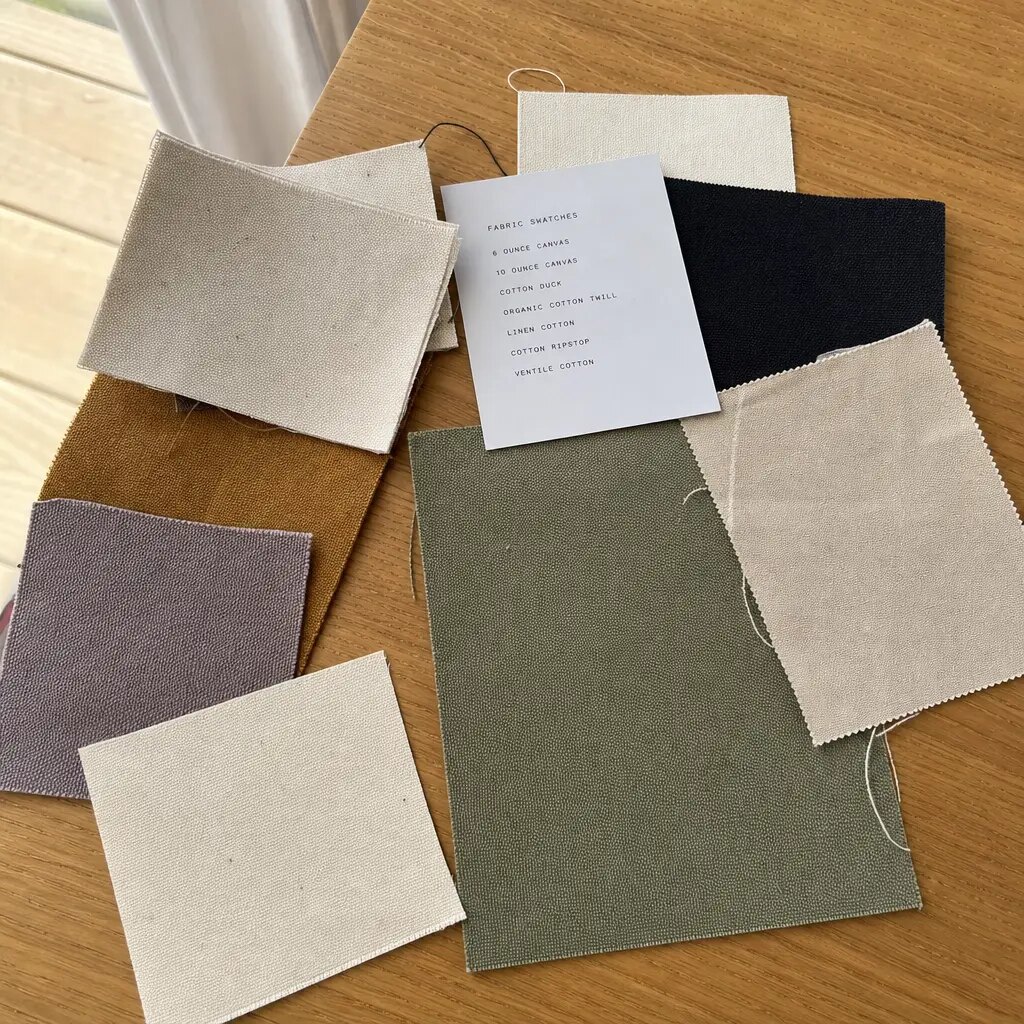
For many eco apparel buyers, the right cotton pouch fabric sits in the 200 to 270 GSM range, roughly 6 oz to 8 oz. That weight gives a better hand feel, holds print more cleanly than very thin muslin, and still keeps the item flexible for flat packing. Lighter options around 120 to 160 GSM can work for low-cost giveaway pouches, but they become more transparent, wrinkle more easily, and feel less substantial when paired with premium apparel.
Organic cotton should be specified only when the brand will actually use that claim in packaging, product copy, or wholesale documentation. Otherwise, conventional cotton often gives better price stability and shorter sourcing lead time. If organic is required, the buyer should request traceability paperwork expectations in the RFQ. A claim without the right documents creates more commercial risk than a plain conventional pouch with accurate positioning.
- 120 to 160 GSM: budget pouches, lighter hand feel, higher show-through risk
- 200 to 270 GSM: common range for branded packaging pouches with better structure
- 300 GSM and above: premium feel, but higher material cost and larger carton volume
- Natural cotton is usually easier to source quickly than custom-dyed shades
- Bleached white gives cleaner print contrast but may feel less natural for some eco brand positioning
Print method changes both cost and complaint rate
Most branded cotton pouches are best quoted in screen print when the logo uses one to three solid colors. Screen print remains the most practical method for bulk runs because it balances setup cost, visual consistency, and reasonable rub performance when the ink system is matched to the fabric. It also gives buyers a stable base for quote comparison because the pricing logic is clearer: number of colors, print area, and artwork complexity.
Problems usually appear when buyers send artwork without naming the visual priority. A fine-line logo, a distressed texture, or a very large flood print can change the correct print method. On dark-dyed cotton, a white underbase may be needed. On premium pouches, embroidery may look stronger but it adds both cost and fabric puckering risk on lighter cloth. The RFQ should show artwork dimensions and state whether visual sharpness, low cost, or soft hand feel matters most.
- Screen print suits simple logos and stable bulk pricing
- Heat transfer suits photo detail but needs heat-process control and durability review
- Embroidery suits small premium logos but raises unit cost and stitch distortion risk
- Print area should be shown in centimeters, not described only as small or centered
- Ask whether the quote includes print strike-off or only digital artwork approval
Write the RFQ so every factory is quoting the same pouch
The most useful RFQ for cotton drawstring pouches is short but specific. It should define finished dimensions, fabric weight, logo method, drawstring construction, packing, and commercial terms in a way that removes room for substitution. If the RFQ leaves open too many assumptions, each supplier fills the gaps differently. That creates low confidence in the prices and forces the buyer into another round of clarifications.
A practical template is one page of core specs plus attachments for artwork and packing marks. Buyers do not need to overbuild it into a technical manual, but they do need to define what cannot change without re-quote approval. The strongest RFQs also separate mandatory requirements from optional quote alternates. That lets a supplier price the exact target pouch while also offering a lower-cost or faster option for comparison.
- Mandatory fields: finished size, fabric GSM, base color, print method, artwork size, drawcord type, packing, Incoterm
- Useful commercial fields: target order quantity, reorder forecast, destination port, required ship window
- Optional alternate requests: quote natural cotton and dyed cotton; quote 1-color and 2-color print; quote single and double drawcord
- Attach artwork in vector format when possible to reduce sampling interpretation errors
Understand MOQ logic before you compare prices
MOQ on cotton drawstring pouches is not just one number. Factories may have one MOQ for the base pouch size, another for custom dyeing, and another for each print design. Buyers often compare two quotes without realizing one supplier assumed a mixed run across sizes while the other assumed a full MOQ per SKU. That difference can make a quote look cheaper until the order is split by colorway or collection.
The best way to control this is to present the quantity structure clearly in the RFQ. Show total order quantity, quantity per size, quantity per print, and whether mixed artwork is allowed under one purchase order. If the order is relatively small, a stock natural fabric and a standard cord color can reduce the effective MOQ and keep the project commercially viable. If the brand insists on custom dye and multiple small SKUs, expect a higher real unit cost even if the quoted headline price looks attractive.
- MOQ usually rises when adding custom dye, multiple sizes, or multiple logo versions
- Sample room capability does not mean bulk line efficiency at low quantities
- Stock fabric programs can reduce risk for launch quantities and early testing
- Ask suppliers to state whether setup charges are embedded or listed separately
- Request price breaks at realistic order tiers, such as 1,000, 3,000, and 5,000 units
Use supplier evidence, not only the sample photo
A clean sample photo proves very little. It shows that a factory can sew one piece and stage it well, but it does not show whether the supplier can repeat fabric weight, keep logo placement stable, or pack thousands of units correctly. For pouches, repeatability matters more than design complexity. The product is simple enough that many suppliers can make it, but not all of them manage consistency at scale.
The RFQ stage should therefore request evidence tied to process control. Buyers should look for bulk production photos of similar pouch types, internal QC checkpoints, typical carton data, and documentation for fabric claims when those claims matter. A supplier who answers commercial details clearly at quote stage is often easier to manage during production than a supplier who focuses only on the lowest unit price.
- Request photos of similar bulk-packed pouches, not only styled samples
- Ask how fabric is sourced and whether GSM is verified incoming or only after issues appear
- Review whether the factory can provide pre-production sample approval before bulk cutting
- If social or material claims matter, ask what documents are available before placing the order
- Compare response quality: clear quote assumptions often indicate fewer execution surprises
Approve the right sample and set measurable acceptance points
One of the most common sourcing mistakes is approving a sample too early and too loosely. A digital mockup is only for artwork direction. A hand-made sample may still use substitute cloth or temporary cord. For bulk control, the meaningful checkpoint is a pre-production sample that matches the intended fabric weight, color, print scale, seam construction, and closure style as closely as possible. That sample becomes the physical reference for inspection and dispute handling.
Buyers should record what they are approving in measurable terms. Instead of saying the pouch looks fine, note the approved finished size, logo distance from the top hem, cord thickness, stitch neatness, and acceptable natural-cotton variation. When these details are written, the factory has a target and the QC team has an objective basis for approval. Without that, almost any defect turns into a subjective argument after goods are produced.
- Approve at least one sewn sample from representative fabric before bulk release
- Measure usable inside capacity, not only flat outer dimensions
- Record print size and placement measurements on the sample approval sheet
- Define whether small natural slubs are acceptable as part of cotton character
- If washing is relevant, test shrinkage on the approved fabric before production
Packing details affect landed cost more than many buyers expect
Because cotton pouches are light and compressible, buyers sometimes treat packing as an afterthought. That is a mistake when the order has multiple sizes, colorways, or destination channels. A poorly defined packing plan creates receiving errors, relabel work, and damaged presentation if the pouches arrive heavily creased or mixed by SKU. For distributor and retail programs, carton logic matters almost as much as the pouch itself.
The RFQ should state whether individual polybags are allowed, whether sizes may be mixed in inner packs, and what carton weight limit is acceptable for warehouse handling. If sustainability policy discourages polybags, that should be stated up front so the supplier can quote paper banding, bulk packing, or other alternatives. Carton dimensions and counts should be requested with the quote because shipping cost and warehouse intake time can materially change the total economics.
- Define unit packing by SKU and whether barcode or size label is needed
- Set carton gross weight limit if your warehouse has handling rules
- Request estimated units per carton and carton dimensions on the quote
- Clarify if spare quantity is required for short shipment protection
- If no polybag is allowed, specify cleanliness standard to avoid dust and transfer marks
Map the lead time from artwork lock to vessel booking
Lead time for custom cotton drawstring pouches is usually less about sewing capacity than about decision timing. Artwork revisions, fabric confirmation, dyed color approvals, and pre-production sample sign-off often consume more days than the actual stitching. Buyers who only ask for one bulk lead time number miss the real schedule risk, which sits in the approval chain before production starts.
A better RFQ asks the supplier to split timing into stages: quote validity, sample lead time, pre-production sample lead time, bulk production after approval, and packing readiness for booking. This exposes where the schedule is fragile. For example, a natural cotton pouch with stock cord and one-color print may move quickly, while the same pouch in custom-dyed black with tight logo color control and multiple SKUs can add significant calendar time even if the sewing minutes per piece are similar.
- Ask for timing from artwork receipt to sample dispatch
- Separate sample approval time from bulk production time
- Custom-dyed fabric usually adds development time and shade approval risk
- Mixed-SKU orders often slow final packing and carton consolidation
- Build time for inspection, booking, and destination compliance paperwork where required
Specification comparison for buyers
| Spec decision | Recommended option | When it fits | Buyer risk to check |
|---|---|---|---|
| Fabric weight | 6 oz to 8 oz cotton, about 200 to 270 GSM | Best for gift-with-purchase pouches, accessory bags, and light apparel packaging that needs a better hand feel than thin muslin | Suppliers may quote lighter cloth and still call it cotton pouch fabric; require GSM tolerance and fabric construction on the quote |
| Cotton type | Conventional cotton for price-sensitive runs; certified organic only when the brand must support a claim | Use conventional when pouch is secondary packaging and claim language is limited; use organic when the pouch is a visible sustainability touchpoint | Organic claims without valid transaction documents create compliance exposure and delayed approvals |
| Fabric color base | Stock natural for lower MOQ and faster sampling; dyed black or brand color only when appearance matters on shelf | Natural fits eco positioning and simpler repeat orders; dyed fabric fits premium launches or dark print artwork | Dyed fabric can introduce shade variation, crocking, and extra lead time for lab dips or bulk dyeing |
| Print method | Screen print for solid art; heat transfer only for photo detail; embroidery only for premium small logos | Screen print is usually the most stable cost/performance choice for bulk pouches | Artwork with fine lines, large flood areas, or metallic effects may fail rub or wash expectations if method is chosen only on price |
| Drawstring material | Self-fabric or cotton cord for eco positioning; polyester cord only when strength and low lint matter more than material story | Cotton cord works for cosmetics, apparel accessories, and gifting; polyester suits repeated opening in heavy-use packs | Mixed-material cords can conflict with sustainability claims and may not match brand trim standards |
| Closure construction | Single-side drawstring for small flat pouches; double drawstring for cleaner closure and better opening balance | Single side saves cost on small jewelry or sock pouches; double side works better for apparel accessory kits and retail sets | Unclear closure construction leads to wrong pattern size, wrong cord length, and quote disputes after sample approval |
| Sizing method | State finished size with tolerance after sewing, for example 15 x 20 cm plus or minus 0.5 cm | Best for any order where inserts, folded garments, or product sets must fit consistently | Some factories quote cut size instead of finished size, which reduces usable internal space |
| Packing route | Flat packed in export cartons with size stickers and carton marks by SKU | Fits importer and distributor orders where receiving speed matters | Without inner pack rules, factories may mix sizes or colors in one carton and create warehouse relabel cost |
| Sampling route | Digital artwork proof plus one sewn pre-production sample from bulk-like fabric before order release | Best when logo size, print position, cord color, and pouch capacity all matter | A photo approval alone misses seam allowance, hand feel, shrinkage, and actual fit around the product |
Buyer checklist before sampling
- State the pouch end use clearly: product packaging, resale item, gift pouch, event giveaway, or accessory organizer
- List finished size, not just approximate dimensions, and include tolerance after sewing
- Specify cotton fabric weight in GSM or oz and indicate whether natural, bleached, dyed, or organic cotton is required
- Define fabric construction if relevant, such as plain weave or canvas, especially for heavier pouches
- Attach artwork with print size, print colors, placement, and the accepted print method if already decided
- Identify drawstring material, color, thickness, and whether the closure is single-side or double-side
- State MOQ by size and artwork version so suppliers do not quote on different assumptions
- Include sample expectations: digital proof, blank material swatch, and one sewn pre-production sample
- Set packing rules including units per polybag if allowed, units per inner carton, units per master carton, and carton weight limit
- Request quote breakdown by pouch cost, print cost, sample charge, carton count, gross weight, and ex-works or FOB term
Factory quote questions to send
- What exact fabric weight and weave are included in your quote, and what is the bulk tolerance for GSM?
- Is the quoted size a finished sewn size or a cut panel size before sewing allowance?
- What print method are you quoting, and how do you handle fine lines, dark fabric, or large solid areas?
- Is your MOQ based on one size and one artwork, or can mixed sizes and mixed prints be combined into one order quantity?
- What is included in the sample stage: digital artwork proof, blank swatch, printed sample, and pre-production sample?
- What drawstring material and diameter are included, and can you match a Pantone cord color if needed?
- What carton packing assumption did you use, and what are the estimated carton dimensions and gross weight per carton?
- What are your lead times for sample approval, bulk production, and booking after final artwork confirmation?
- What testing or internal checks do you perform for print adhesion, seam strength, shrinkage, and colorfastness?
- If fabric is claimed as organic or recycled-content blend, what transaction documents or traceability records can you provide?
Quality-control points to confirm
- Finished size must match approved spec within the stated tolerance after sewing and trimming
- Bulk fabric GSM should remain within agreed tolerance and match the approved hand feel sample
- Print position must be centered or placed to approved measurement tolerance from pouch top and side seams
- Print color should visually match the approved reference within the agreed standard under normal daylight conditions
- Cord length and knot style must match pre-production sample so the pouch closes evenly on both sides
- Seams and drawstring channel stitching must be secure, with no skipped stitches, open seams, or loose thread clusters
- Fabric should be free from major oil marks, mildew smell, holes, slubs beyond approved natural-cotton standard, and visible contamination
- Carton assortment must match packing list exactly by SKU, color, and quantity, with readable external carton marks
- If washing or shrink risk matters, measure shrinkage against approved sample method before bulk packing
- Needle control, metal contamination policy, and final cleanliness standard should match the buyer's product category requirements