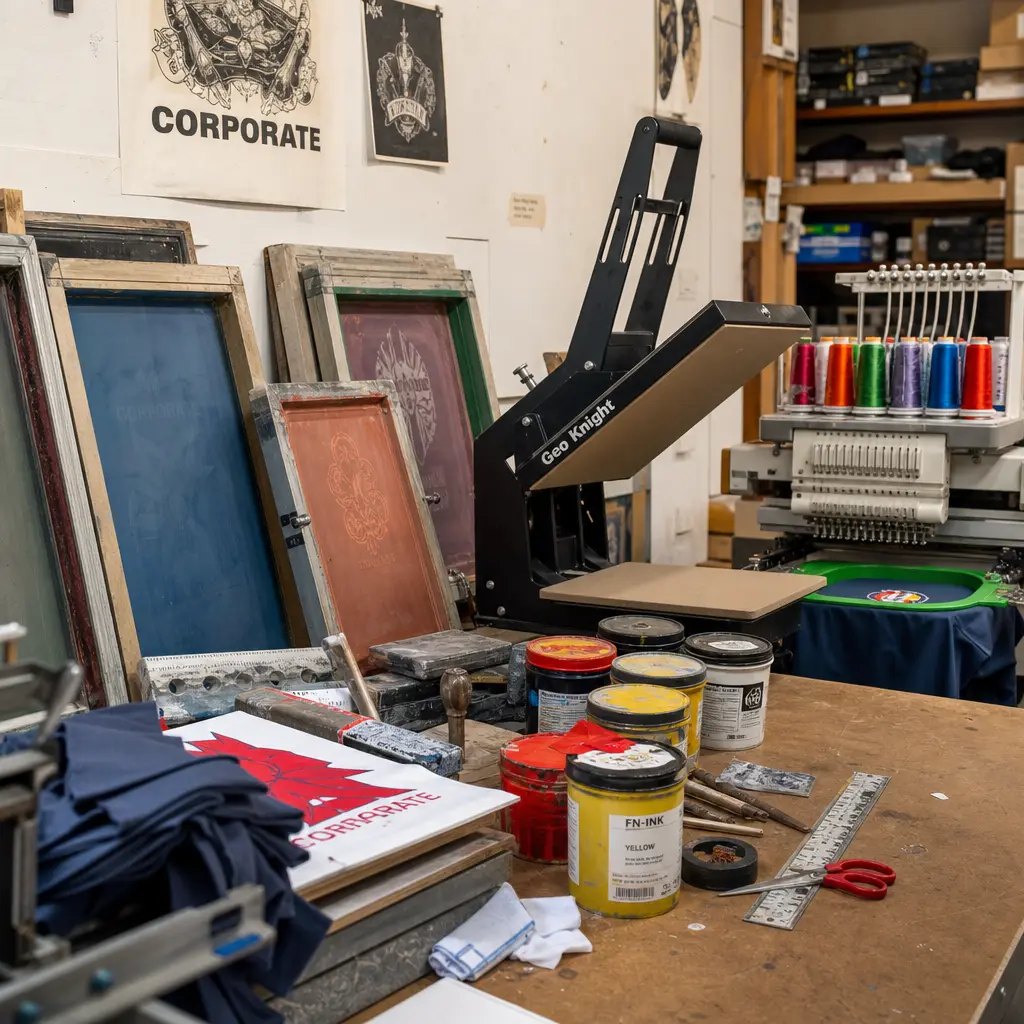
What the Print Proof Must Decide
For a yoga studio, the cotton drawstring pouch is often a small item with a large brand job. It may hold an eye pillow, crystal set, grip socks, membership gift, incense pack, skincare sample, or retreat welcome item. The print proof is where the buyer locks the visual standard before the factory prints hundreds or thousands of pieces. A PDF layout alone is not enough because cotton texture, ink absorption, seam tension, and drawcord placement all change how the artwork looks in real production.
A useful proof should answer four practical questions: does the fabric feel right for the item inside, does the print read clearly at pouch scale, does the logo sit in the correct position after sewing, and can the factory repeat the result in bulk. Procurement teams should treat proof approval as a technical approval, not only a design sign-off. Once screens are made and bulk panels are printed, corrections become expensive and may affect delivery dates.
- Approve finished pouch size, fabric weight, print method, artwork position, drawcord, stitch color, packing, and carton mark together.
- Use the proof to catch production risks: fabric transparency, print bleeding, crooked placement, cord mismatch, shrinkage, and packing creases.
- Keep one approved sample with the buyer and one with the factory so both sides compare bulk goods against the same standard.
Choose Fabric Weight Before Artwork Approval
Most yoga studio cotton drawstring pouches work best in the 6 oz to 8 oz range, roughly 200-270 GSM depending on cotton construction. This gives enough body for retail handling without making a small pouch too rigid. A very light cotton pouch can be acceptable for single-use promotional inserts, but it may show the contents and make screen printing look uneven. A heavier canvas can look premium, but it may not cinch tightly on small sizes and can increase carton weight.
Fabric color also affects the proof. Natural cotton has small seed flecks and shade variation, which many yoga and wellness brands like because it feels less synthetic. The tradeoff is that Pantone colors may look warmer or duller than on coated paper. If the studio requires a sharp black logo, natural cotton is usually safe. If the artwork uses pale beige, sage, blush, or muted gold, the buyer should approve a physical fabric and print proof before confirming bulk production.
- For small jewelry or mala pouches: consider 4 oz to 6 oz cotton if soft drape matters more than structure.
- For eye pillow or gift set pouches: 6 oz to 8 oz cotton gives better opacity and print stability.
- For premium retail packaging: 8 oz to 10 oz canvas may work, but test whether the drawcord closes cleanly.
- For dyed fabric: expect higher MOQ, longer lead time, and more color tolerance discussion than natural cotton.
Match Print Method to Yoga Studio Artwork
Screen printing is usually the most reliable choice for cotton drawstring pouches with a studio logo, short slogan, lotus icon, mandala outline, or event name. It gives clean solid color, predictable cost, and good repeatability across bulk orders. The factory needs vector artwork and should state the number of print colors, print positions, and screen charges. For a one-color logo on natural cotton, screen print is normally more cost-efficient than digital print once the order passes a few hundred pieces.
Digital pigment printing can be useful when the artwork has many colors, gradients, or illustration details. It avoids separate screens for each color, but it needs proofing because color on cotton rarely matches a backlit design file. Heat transfer is sometimes offered for fine detail, but buyers should be careful with hand feel, edge marks, and long-term appearance. For yoga retail products, a print that feels plastic or cracks after handling can damage the perceived value of the pouch.
- Use screen print for solid logos, simple icons, event dates, and repeat wholesale production.
- Use digital print for complex illustrations, many colors, or low-volume art variations.
- Avoid tiny reversed text inside a filled logo unless the factory confirms it can hold detail on the chosen weave.
- Request a rubbed and folded print sample if the pouch will be handled often in a studio shop.
Set Artwork Size and Safe Margins
The most common print proof failure is not color; it is placement. Cotton drawstring pouches are sewn products, so the printable area is not the same as the full fabric face. The top channel, side seams, bottom seam, and drawcord gather all reduce the usable brand area. If the artwork is too high, it can wrinkle under the drawcord channel. If it is too wide, it may bend around side seams or look crooked after the pouch is filled.
For many pouch sizes, a 15-25 mm safety margin from side seams and the top channel is a practical starting point. On very small pouches, the buyer should use a scaled print proof placed on an actual pouch, not only a measurement in the tech pack. A yoga studio logo with thin circular lines or a mandala can look clean on a flat proof but lose balance when the pouch is pulled closed.
- Define print size in millimeters or inches, not as small, medium, or large logo.
- Measure print position from the finished pouch edges, not from raw fabric panel edges.
- Keep critical text away from the drawcord channel and bottom seam.
- For two-sided printing, specify whether both sides use the same placement tolerance.
Use a Proof Standard the Factory Can Repeat
A buyer should know exactly what type of proof is being approved. A digital proof confirms layout, spelling, approximate scale, and print position. A strike-off shows artwork printed on fabric, often before the pouch is sewn. A full pre-production sample shows the final fabric, final print, final drawcord, sewing, and packing method. For retail or franchise yoga studio orders, the full pre-production sample is the safest approval standard.
The proof should be labeled with version number, date, fabric weight, print method, Pantone references, pouch size, and any approved tolerance. This sounds basic, but it prevents confusion when artwork changes during merchandising review. If the buyer approves a photo without confirming the physical proof, the factory may proceed based on visual approval only. That can be acceptable for urgent low-risk giveaways, but not for retail pouches where color, hand feel, and size must match the sales sample.
- Digital proof: useful for layout approval, not enough for color and ink behavior.
- Fabric strike-off: useful for print color and line detail before sewing.
- Pre-production sample: best for final approval because it shows the complete pouch.
- Sealed sample: keep as the comparison standard for inline and final inspection.
Understand Cost Drivers in the Quote
Cotton drawstring pouch quotes can look similar at first glance, but the included assumptions may be very different. Unit cost is affected by fabric weight, pouch size, print area, number of print colors, print sides, drawcord type, packing method, order quantity, and whether the factory uses stock fabric. A low quote may exclude screen charges, sample courier, special labels, individual packing, or carton labeling. Importers should compare quotes line by line before selecting a supplier.
MOQ is also tied to the production route. A stock-size natural cotton pouch with one-color screen print may be possible at a lower MOQ. A custom size, custom dyed cotton, colored drawcord, woven side label, or multiple artwork versions will usually push the MOQ higher because the factory must purchase fabric, prepare materials, and set up production. When a buyer asks for five studio branch logos at 100 pieces each, the factory may price it as five small print runs, not one 500-piece run.
- Separate the pouch base cost from print cost, screen charge, sample charge, packing cost, and freight.
- Confirm whether the quote includes one-side or two-side printing.
- Ask if the MOQ applies per artwork, per color, per size, or total order.
- For multi-location studio chains, group common pouch specs and vary only the print when possible.
Set Practical QC Thresholds
Quality control for cotton pouches should focus on the features that affect appearance, use, and receiving. The buyer should define size tolerance, print placement tolerance, acceptable color variation, seam quality, drawcord function, and packing count. For small pouches, a few millimeters of print shift can be visible, so placement tolerance needs to be realistic but controlled. Many buyers use plus or minus 3-5 mm for print position, depending on pouch size and print complexity.
Print durability should match the product use. A yoga studio pouch may sit in a retail bin, be handled by members, placed in a gym bag, or packed with wellness products. The ink should be cured properly and should not transfer easily under normal dry handling. If the pouch may touch light-colored towels, apparel, or eye pillows, add a basic rub test to the inspection plan. For natural cotton, minor slubs and seed flecks are normal, but oil stains, dirty marks, broken seams, and obvious print defects should not pass.
- Finished size: define acceptable width and height tolerance before bulk production.
- Print placement: measure from fixed finished edges on a flat pouch.
- Print color: compare under consistent light against approved sample, not against a phone photo.
- Seams: reject open seams, skipped stitches, loose channel stitching, and heavy thread contamination.
- Drawcord: test opening and closing several times; knots should not pull through the channel.
Plan Packing Around Receiving and Resale
Packing should be decided before the proof is approved because folding and bagging can affect how the printed pouch arrives. Bulk packing in inner polybags of 50 or 100 pieces is efficient for distributors and studio warehouse teams. Individual polybags protect each pouch but add labor, plastic use, carton volume, and sometimes creases across the print. For retail shelves, a paper belly band or barcode label may be more useful than a plain polybag, but it must be quoted and sampled.
Carton planning matters when the order includes multiple studio locations, event dates, or SKU variations. Carton marks should show item name, size, color, artwork code, quantity, gross weight, net weight, and destination if needed. Mixed cartons create receiving mistakes, especially when natural cotton pouches look similar but carry different prints. If a distributor will repack the pouches into yoga kits, the buyer should request consistent inner bag counts to make warehouse counting faster.
- Use bulk inner bags for wholesale distribution and kit assembly.
- Use individual packing only when the sales channel or cleanliness requirement justifies it.
- Avoid tight folding across heavy print areas if the pouch must look retail-ready on arrival.
- Request carton dimensions and gross weight for freight planning before final order approval.
Control Lead Time Risk
The lead time for custom cotton drawstring pouches starts after the factory has clear artwork, confirmed fabric, approved proof, and deposit or purchase order according to the agreed terms. Delays often come from incomplete artwork files, late Pantone changes, uncertain packing instructions, or buyer approval passing through too many departments. For yoga studios planning a retreat, teacher training, anniversary event, or seasonal retail launch, the print proof schedule should be built into the buying calendar.
A practical schedule includes artwork review, sample making, sample shipping, buyer review, bulk material preparation, printing, sewing, final inspection, packing, and export. If the order uses stock fabric and simple screen print, the route is shorter. If the pouch uses custom dyed fabric, custom cord, woven labels, multiple prints, or retail barcode packing, the schedule needs more buffer. The buyer should also consider public holidays, factory capacity, and freight cutoff dates.
- Freeze artwork before screen making to avoid new screen charges and schedule resets.
- Approve packing details before bulk sewing so labels and cartons are ready on time.
- For event orders, set the required arrival date and work backward through freight and inspection.
- Avoid approving bulk production from low-resolution photos when the order is brand-critical.
Build a Cleaner RFQ for Comparable Quotes
A strong RFQ helps suppliers quote the same product instead of guessing. For a cotton drawstring pouch print proof project, the RFQ should include finished size, fabric weight, fabric color, drawcord type, print method, number of colors, artwork file, print position, order quantity, packing method, delivery terms, inspection requirement, and sample expectation. Without these details, one supplier may quote a thin muslin pouch while another quotes heavier canvas, making the price comparison misleading.
For yoga studio buyers managing multiple locations or retail programs, it is useful to attach an artwork matrix. List each design, quantity, pouch size, print color, and destination. This allows the factory to calculate screen charges, production grouping, and packing correctly. The RFQ should also request photos or documents that show supplier capability, such as previous print detail on cotton fabric, available fabric swatches, stitch examples, and packing references. The goal is not to collect decoration; it is to reduce assumptions before money and time are committed.
- State incoterm clearly, such as EXW, FOB, CIF, DDP, or buyer-arranged freight.
- Include target order quantity and possible reorder quantity because MOQ and unit cost may change.
- Attach vector artwork and specify Pantone colors instead of sending only a JPG or PNG.
- Ask for a quote table with separate cost lines so supplier assumptions are visible.
- Require confirmation that the approved proof becomes the bulk production standard.
Specification comparison for buyers
| Spec decision | Recommended option | When it fits | Buyer risk to check |
|---|---|---|---|
| Fabric weight for yoga accessory pouch | 6 oz to 8 oz cotton canvas, roughly 200-270 GSM | Good balance for eye pillows, mala beads, grip socks, small towels, wellness kits, and retail gift sets | Below 180 GSM may show contents and distort print; above 300 GSM may feel stiff and increase freight for small retail items |
| Logo print method | Screen print for solid one- to three-color artwork | Best for studio logos, simple line icons, event graphics, and repeat wholesale orders | Thin strokes under 0.4 mm, reversed text, and uneven weave can cause ink fill or broken edges |
| Detailed artwork or gradient | Digital pigment print on pre-shrunk cotton sample before bulk approval | Works for illustrated yoga graphics, watercolor-style marks, or multi-color retail collections | Color can look flatter on natural cotton than on screen; require physical proof, not only PDF layout |
| Pouch closure | Single cotton drawcord for low-cost giveaway; double drawcord for retail handling | Single cord fits class welcome kits; double cord feels better for resale and repeated opening | Cord diameter, knot security, and channel stitching must be checked because weak cords fail before fabric does |
| Artwork placement | Center print with 15-25 mm safe margin from side seams and drawcord channel | Suitable for most front-logo pouches and yoga studio merchandise tables | Artwork too close to the channel may wrinkle during printing or disappear when the pouch is filled |
| Sample approval level | Printed pre-production sample using bulk fabric, bulk ink, and final drawcord | Needed for retail, distributor, franchise studio, and paid membership kit programs | A blank sample plus digital proof does not show ink absorption, print hand feel, or fabric shrinkage |
| MOQ logic | 300-500 pieces for simple stock-size screen print; 1,000+ pieces for custom size, dyed fabric, or multiple SKUs | Works for independent studios, regional studio chains, and wholesale wellness bundles | Very low MOQ quotes may use stock fabric only, limited print area, higher unit cost, or mixed production standards |
| Packing format | Flat packed in inner polybags by 50 or 100 pieces, export carton with size and SKU markings | Efficient for importers, studio warehouse receiving, and distributor repacking | Retail-ready individual packing adds labor, carton volume, and possible creasing if pouch is folded too tightly |
| Lead time control | Approve fabric, print proof, packing, and carton marks before bulk print starts | Reduces disputes for seasonal yoga workshops, retreats, opening events, and retail launch dates | Late artwork changes after proof approval usually restart screens, samples, and color matching |
Buyer checklist before sampling
- Define the pouch use: retail item, gift-with-purchase, workshop kit, retreat welcome pack, or distributor stock.
- Specify finished size in width x height after sewing, not fabric cut size.
- State fabric construction and weight, such as natural cotton canvas 6 oz or 8 oz, with acceptable GSM tolerance.
- Send vector artwork with Pantone references and note whether the logo prints on one side or both sides.
- Set a print safe area, usually 15-25 mm from side seams and below the drawcord channel.
- Require a physical printed sample when the pouch is for resale, brand launch, or franchise-wide use.
- Approve drawcord material, cord diameter, knot style, and whether the pouch uses single or double cord.
- Confirm whether natural cotton shade variation is acceptable or whether bleached or dyed fabric is required.
- List packing requirements: bulk pack, individual polybag, paper belly band, barcode label, carton mark, and carton quantity.
- Request quote separation for pouch cost, printing cost, sample cost, packing cost, tooling or screen charge, and freight basis.
Factory quote questions to send
- What fabric weight in oz and GSM are you quoting, and is it stock fabric or made-to-order fabric?
- Is the quoted size the finished pouch size after sewing, and what tolerance applies to width and height?
- Which print method is included in the quote, and how many colors, positions, and sides are included?
- Will the physical proof use the same fabric, drawcord, ink, and curing process as bulk production?
- What is the minimum line thickness and smallest readable text size you recommend for this cotton weave?
- What Pantone matching tolerance do you use on natural cotton, and do you provide a photo only or a shipped proof?
- Are screen charges, sample charges, artwork adjustment fees, and bank charges included or listed separately?
- What MOQ applies if we change pouch size, fabric color, drawcord color, or packing method?
- How many pieces are packed per inner bag and export carton, and what are the estimated carton dimensions and gross weight?
- What is the production lead time after proof approval, and what artwork or material changes would reset that timeline?
Quality-control points to confirm
- Finished size tolerance should be defined before production, commonly plus or minus 5 mm for small cotton pouches unless the design requires tighter control.
- Fabric weight should be checked against the approved GSM or oz specification, not described only as thin, medium, or heavy.
- Print position should be measured from side seams and bottom seam on flat samples before packing begins.
- Pantone color should be judged on the actual cotton fabric under consistent lighting, with realistic tolerance for natural cotton shade.
- Ink curing should pass a basic dry rub and light wet rub test suitable for the product use, especially if pouches contact towels or apparel.
- Drawcord should slide smoothly without tearing the channel seam, and knots should not pull through the opening during normal handling.
- Seams should be clean, without skipped stitches, loose threads, open corners, or needle holes that weaken the top channel.
- Packing count should match inner bag and carton requirements, with mixed SKUs separated clearly to avoid warehouse receiving errors.