Why a Pricing Worksheet Changes Your RFQ Outcome
Most salon chain RFQs for cotton drawstring pouches arrive at factories as a one-line request: “5,000 cotton pouches with logo.” That leaves the factory to fill in the cheapest default specs, and the buyer discovers the tradeoffs only when the shipment lands. A structured pricing worksheet forces both sides to commit to measurable specs before the first quote.
A worksheet also lets you compare three or four factory quotes on the same basis. When one supplier quotes $0.42 and another quotes $0.61, the difference is rarely pure margin. It is usually hidden in fabric GSM, print screen count, cord quality, or packing density. The worksheet makes those variables visible.
For a salon chain with 80 locations, a $0.10 difference per pouch on a 5,000-unit order adds up to $500. That is a small amount relative to the total, but if the cheaper pouch fails at the seam or the cord frays, the cost of returns and brand damage far exceeds the savings. The worksheet helps you evaluate total value, not just unit price.
- Lock fabric weight, print method, and cord spec before requesting unit prices
- Request quotes in the same incoterm (FOB or ex-works) so freight does not distort the comparison
- Add a column for “cost per salon location” to evaluate total landed cost, not just unit price
Fabric Weight and the Real Cost per Pouch
Cotton drawstring pouches for salon chains typically sit between 140 GSM and 280 GSM. The lower end works for single-use shoe bags or disposable kits; the higher end suits retail gift sets where the pouch itself is part of the product. For most salon chains, 200–240 GSM carded cotton hits the sweet spot: substantial enough to feel premium, light enough to keep freight manageable.
A 40 GSM difference changes the fabric cost by roughly 12–18% and the carton weight by a similar margin. On a 5,000-unit order, moving from 200 GSM to 240 GSM can add $0.06–$0.10 per unit in fabric and $120–$180 in sea freight. Your worksheet should show the GSM choice as a line item with its own cost column.
Beyond GSM, the fabric composition matters. Carded cotton is standard, but combed cotton adds $0.05–$0.08 per unit for a smoother surface that prints more cleanly. If the pouch will hold high-value salon products like hair tools or skincare sets, combed cotton may be worth the premium. Organic cotton adds another $0.10–$0.15 per unit and requires a certification chain that not all factories can provide.
- 140–180 GSM: lowest cost, suitable for single-use or internal kit bags
- 200–240 GSM: standard for salon retail, good hand feel without excessive bulk
- 260–280 GSM: premium heavy canvas feel, higher freight cost per carton
Print Method and the Cost-per-Impression Trap
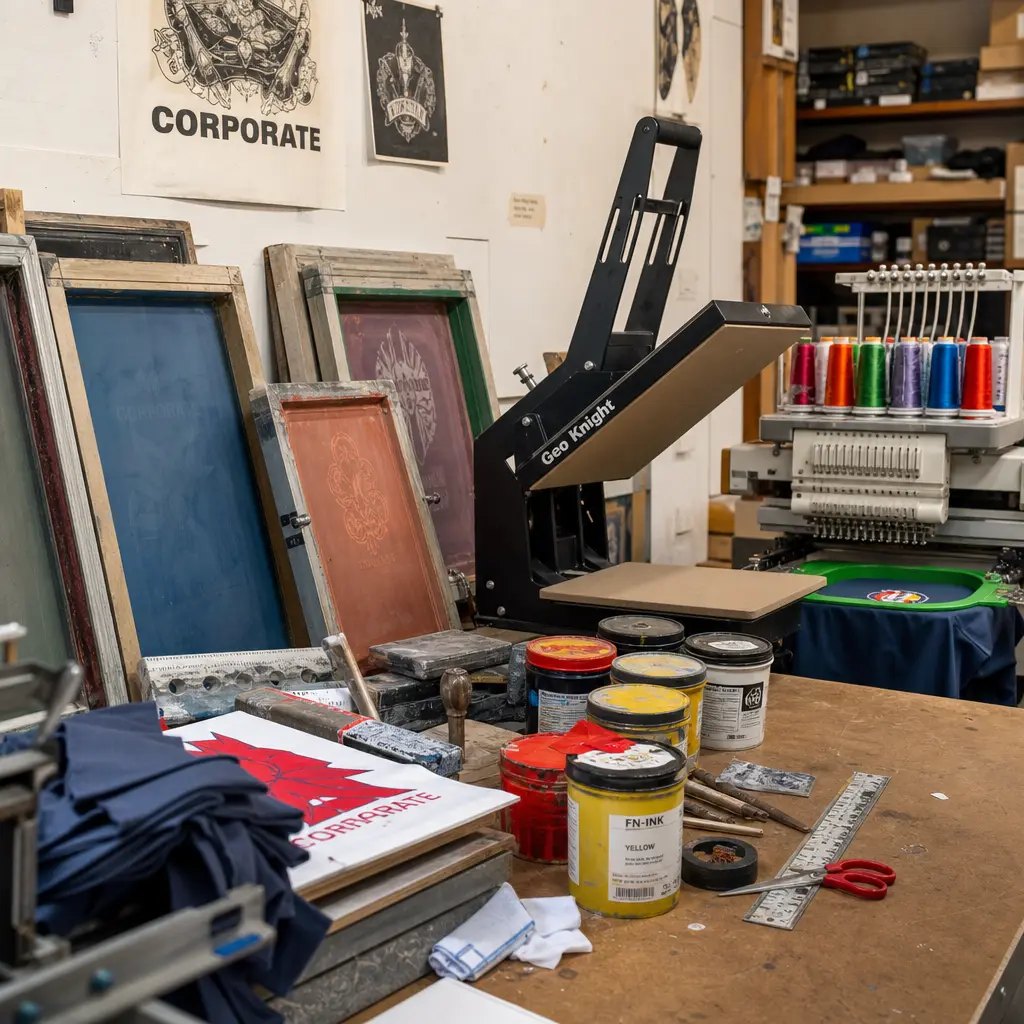
Screen printing dominates cotton pouch decoration because it is durable and cost-effective at volume. But the setup cost per screen (typically $40–$60 per color) hits small orders hard. A one-color logo on 3,000 pouches might carry a $0.05–$0.08 print unit cost after amortizing the screen. The same logo on 1,000 pouches jumps to $0.12–$0.15 because the setup cost spreads over fewer units.
Water-based inks print softer and breathe better on cotton, which salon brands prefer for a natural look. Plastisol inks cost slightly less per impression but sit on top of the fabric and can crack after repeated folding. If the pouch will be folded flat inside a retail box, request a fold-crack test on the PP sample regardless of ink type.
For multi-color logos, each additional screen adds $40–$60 in setup and $0.02–$0.04 per unit in print cost. A four-color logo on 3,000 pouches can add $0.15–$0.20 per unit just for printing. Consider reducing the logo to two colors or using a single-color tonal print to keep costs down. Digital printing is an option for orders under 500 units but costs $0.30–$0.50 per unit for a full-color print.
- One-color water-based screen print: lowest cost, clean look on natural cotton
- Two-color print: adds $0.03–$0.06 per unit plus a second screen setup fee
- Digital print: viable below 500 units, higher per-unit cost but zero setup charge
MOQ Logic and Tiered Pricing That Works for Salon Chains
A salon chain with 80 locations ordering 50 pouches per location needs 4,000 units. That is a comfortable MOQ for most cotton pouch factories. But if the chain wants three color variants, the per-color quantity drops to 1,333 units, which may fall below the factory’s screen-print MOQ. The worksheet should show per-color pricing, not just total order pricing.
Factories often quote tiered pricing at 2,000, 5,000, and 10,000 units. The jump from 2,000 to 5,000 typically saves 15–25% per unit because setup costs amortize and fabric cutting efficiency improves. If your annual forecast is 12,000 units, negotiate a blanket order with quarterly releases at the 10,000-unit price.
Some factories will hold screens for 12 months at no charge, which means repeat orders skip the setup fee. Ask about this upfront. Also ask whether the fabric mill can reserve the same dye lot for repeat orders within 90 days to avoid color variation between batches. A consistent dye lot is critical for salon chains that sell pouches as part of a coordinated retail line.
- Request per-color MOQ and per-color pricing separately
- Ask if the factory will hold screens for repeat orders (most will for 12 months)
- Compare the cost of one 10,000-unit order versus two 5,000-unit releases
Drawcord, Channel, and the Details That Drive Returns
The drawcord is the most handled part of the pouch, and the first point of failure. A matching cotton flat cord 6–8 mm wide with heat-sealed ends costs about $0.02–$0.04 per pouch more than a round polyester cord, but it eliminates the frayed-end returns that plague salon gift sets.
The cord channel itself needs a clean folded-and-stitched finish, not a raw cut edge. If the channel is too narrow (under 12 mm finished width), the cord binds and the end user struggles to close the pouch. Specify a 15 mm finished channel width and test it on the PP sample with the actual cord.
Cord length also matters. A standard 30 cm cord works for most pouches, but if the pouch is deep (over 25 cm), the cord needs to be longer to allow full closure. Add 5 cm to the cord length for every 5 cm of pouch depth beyond 20 cm. The cord should be long enough to tie a secure knot without pulling the pouch opening too tight.
- Cotton flat cord 6–8 mm: premium feel, requires heat-sealed ends
- Round cotton cord 5–6 mm: lower cost, works for lightweight pouches
- Channel width minimum 15 mm finished; test with actual cord before bulk approval
Packing Configuration and Its Effect on Landed Cost
How the pouches are packed inside the carton affects freight cost, creasing, and distribution labor. The standard export pack is 25 pouches per polybag, 4 polybags per carton (100 units). That gives a carton weight around 12–14 kg for 200 GSM pouches, which is efficient for sea freight and manageable for warehouse staff.
If the salon chain distributes directly to individual locations, consider a 10-pouch inner pack. It costs $0.03–$0.05 more per unit in packing labor but eliminates repack work at the distribution center. Your worksheet should have a packing column that shows the cost difference between bulk carton and retail-ready inner packs.
Carton mark requirements are often overlooked. Specify that each carton must have a side mark with the PO number, color code, carton weight, and destination code on two sides. Missing side marks cause receiving delays and chargebacks from 3PL warehouses. Include a carton mark template in the purchase order to avoid ambiguity.
- Bulk pack: 25–50 pouches per polybag, lowest packing cost, requires DC repack
- Retail-ready inner: 10 pouches per branded polybag, higher cost, zero DC labor
- Carton mark requirements: PO number, color code, carton weight, and destination code on two sides
Sample Approval Sequence That Prevents Bulk Surprises
A rushed sample approval is the most expensive shortcut in cotton pouch sourcing. The correct sequence is: lab-dip approval for fabric color, then a pre-production sample with the actual print, cord, and label, then a production sample pulled from the first 5% of bulk. Each stage needs a sign-off before the next begins.
The PP sample should arrive with a spec sheet that lists the actual measured GSM, print dimensions, cord length, and seam strength, not just the requested specs. If the factory cannot provide measured values, they are not measuring, and the bulk will drift.
For the production sample, request 5 pouches pulled from the first cutting batch. Measure each one for color consistency, seam strength, and print alignment. If any pouch deviates from the approved PP sample by more than the agreed tolerance, stop production and request a root cause analysis before proceeding.
- Stage 1: Lab-dip and fabric swatch approval (7–10 days)
- Stage 2: PP sample with all trims and print (10–14 days after lab-dip approval)
- Stage 3: Top-of-production sample pulled from bulk (3–5 days after bulk cutting starts)
Freight, Duty, and the True Landed Cost per Pouch
A $0.45 FOB pouch can land at $0.62 after freight, duty, and handling. The worksheet should include a landed-cost column that accounts for sea freight per carton, customs duty (check the HTS code for cotton bags in your destination country), and local trucking to the warehouse.
Carton optimization is the fastest way to reduce landed cost. If the factory can fit 120 pouches per carton instead of 100 by adjusting the fold, the freight cost per unit drops by roughly 17%. Ask the factory to propose the most efficient carton configuration for a 20-foot or 40-foot container load.
Duty rates vary by destination. In the US, cotton drawstring pouches fall under HTS 6305.20.0010 with a duty rate of 6.6%. In the EU, the rate is around 8%. Check the current rate for your country and include it in the landed cost calculation. Also factor in any free trade agreement benefits if the fabric is sourced from a qualifying country.
- FOB unit price: ex-factory cost including packing
- Sea freight: cost per cubic meter divided by pouches per cubic meter
- Duty: typical 6–12% on cotton bags depending on destination country HTS classification
- Local handling: trucking, warehouse receiving, and palletizing
QC Gates and Acceptance Criteria for Salon Chain Orders
A salon chain cannot afford to open cartons and find 8% of pouches with misaligned prints or frayed cords. Set an AQL of 2.5 Level II for major defects (print misalignment over 3 mm, seam holes, cord channel tears) and 4.0 for minor defects (loose threads, slight color variation within tolerance).
The inspection should happen at two points: inline at 30% completion to catch systemic issues, and final at 100% packing. If the inline inspection fails, the factory reworks before cutting more fabric. That saves 4–6 weeks versus catching defects only at final inspection.
For the inline inspection, check print alignment on 10% of the pouches from the first 30% of production. Measure seam strength on 5 pouches. If more than 2% of pouches have major defects, stop production and request a corrective action plan. For the final inspection, use a random sampling plan based on AQL 2.5 Level II. If the lot fails, the factory must rework at their cost and submit to a second inspection.
- Inline inspection at 30% completion: check print alignment, seam strength, cord finish
- Final inspection at 100% packing: AQL 2.5 Level II for major defects
- Define a clear rework and replacement clause in the purchase order
Building the Worksheet: Line Items Every Salon Buyer Should Include
A usable pricing worksheet has roughly 15–20 line items, not just a unit price cell. Start with fabric (GSM, composition, color), then print (method, colors, dimensions), trims (cord type, cord end finish, label), construction (seam type, stitch count), packing (inner bag, carton configuration, carton mark), and logistics (incoterm, port of loading, estimated freight).
Add a column for notes where the factory can explain any deviation from the spec. If a factory quotes a different GSM because their mill stock is 220 GSM instead of 200 GSM, that note tells you whether the substitution is acceptable or a dealbreaker.
The worksheet should also include a column for the factory's lead time and a column for the estimated landed cost per unit. This allows you to compare quotes on a total cost basis, not just the FOB price. A factory that quotes a slightly higher FOB price but has a shorter lead time and lower freight cost may be the better overall choice.
- Fabric: GSM, composition, color reference, mill source if available
- Print: method, number of colors, print area dimensions, ink type
- Trims: cord material, width, end finish, label type and size
- Construction: seam type, stitch per inch, bottom reinforcement
- Packing: units per inner, units per carton, carton dimensions and weight
- Logistics: incoterm, port of loading, estimated transit time
Specification comparison for buyers
| Spec decision | Recommended option | When it fits | Buyer risk to check |
|---|---|---|---|
| Fabric weight | 200–240 GSM carded cotton | Salon retail kits and gift-with-purchase that need a soft hand feel | Below 180 GSM feels cheap; above 280 GSM adds bulk shipping cost without perceived value gain |
| Print method | Water-based screen print, 1–2 colors | Brand logo on natural cotton; breathable finish preferred by salon brands | Plastisol on light cotton can crack after repeated folding; request a fold-crack test |
| Drawcord material | Matching cotton flat cord, 6–8 mm width | Premium unboxing experience for salon retail | Unfinished cord ends fray within weeks; specify heat-sealed or knotted finish |
| Pouch construction | Double-stitched bottom with reinforced side seams | Pouches that will hold 200–400 g product bundles | Single-needle seams fail at corners under load; ask for seam strength above 8 kg |
| MOQ tier strategy | 3,000–5,000 units per colorway | Mid-size salon chain with 50–150 locations | Below 2,000 units, screen-print setup cost per unit jumps 40–60% |
| Inner label | Cotton twill woven label, 20×40 mm | Brands that want a permanent identity inside the pouch | Printed satin labels can bleed onto product during humid transit |
| Packing unit | 25 pouches per polybag, 100 per export carton | Distribution to multiple salon locations from a central warehouse | Loose packing increases in-transit creasing and repack labor at DC |
| Carton mark | Side mark with PO number, color code, and carton weight | Multi-SKU orders shipped to one consolidation warehouse | Missing side marks cause receiving delays and chargebacks from 3PL |
| Lead time buffer | Factory lead 30–35 days + 7 days QC and consolidation | Seasonal salon promotions with fixed launch dates | Chinese New Year and peak Q3 shipping can add 15–20 days; lock production slot with deposit |
Buyer checklist before sampling
- Confirm fabric GSM with a physical swatch book, not just a spec sheet number
- Request a pre-production sample with the actual drawcord and print, not a similar substitute
- Agree on a color tolerance standard (Pantone textile or lab Delta E ≤ 1.5) before bulk cutting
- Specify seam strength minimum (8 kg for bottom seam) in the purchase order
- Define acceptable creasing level and folding method for carton packing
- Get a carton weight and dimension sheet before shipment to verify freight quotes
- Include a third-party inline inspection at 30% and 80% completion
Factory quote questions to send
- What is the ex-works unit price at 3,000, 5,000, and 10,000 units with the same print design?
- Does the screen-print setup charge cover one color or multiple colors, and is it amortized across repeat orders?
- What is the exact GSM tolerance on the cotton fabric, and can you provide a mill certificate?
- What is the carton configuration (units per inner bag, units per carton, carton dimensions, gross weight)?
- What is the production lead time after PP sample approval, and what is the penalty clause for late shipment?
- Can you provide a cost breakdown separating fabric, print, drawcord, label, labor, and packing?
- What is your defect rate threshold for AQL 2.5 Level II, and do you cover rework costs if the lot fails?
Quality-control points to confirm
- Fabric weight check: cut 5 swatches per dye lot and weigh on a calibrated GSM cutter scale
- Print adhesion: perform a 3M tape test on the print area after 24-hour curing
- Drawcord pull test: cycle the cord 50 times through the channel and check for fraying or channel tear
- Seam strength: use a tensile tester on bottom seam, minimum 8 kg before failure
- Color consistency: measure 3 points per pouch against the approved Pantone reference under D65 light
- Carton drop test: drop a filled carton from 1 meter on 6 faces; no pouch damage or carton rupture