Start With the Bakery Packing Job
A cotton drawstring pouch can play several roles for an artisan bakery. It might be a light muslin sleeve for wrapped cookies, a stronger canvas bag for a holiday gift set, a reusable branded pouch for a jar, or a retail-ready pack for wholesale samples. Lead time planning breaks down when the RFQ says only “cotton drawstring pouch.” That leaves the supplier to guess the product weight, fabric, print method, packing style, and final use. One factory may quote stock 5 oz cotton with a one-color screen print. Another may assume 10 oz canvas, a sewn label, and stricter inspection. The name is the same, but the product and schedule are not.
Build the sourcing brief around the real packing job. Wrapped biscotti, granola, chocolate-coated items, jars, tins, and bakery gift bundles all put different stress on the pouch. The product may be dry, oily, fragile, chilled, or already protected by paper, film, glass, board, or a sealed sleeve. In most bakery programs, cotton is specified as secondary packaging. If the pouch will touch food directly, the buyer needs to state the destination market and required food-contact controls before sampling. That choice affects testing, supplier qualification, documentation, and any claim printed on packaging or used online.
Think about how the pouch moves through the bakery, not only how it looks in a mockup. Who fills it? Is it closed by hand? Does it sit upright in a gift display, lie flat in an e-commerce parcel, or travel to several retail locations? Is the customer expected to reuse it? These details shape fabric weight, drawstring strength, seam construction, logo placement, and carton packing. A pouch used for in-store gifting can accept different creasing and transit risk than one shipped in mixed parcels or distributed to wholesale accounts.
- Include packed product dimensions, filled weight, product corners, grease risk, and humidity exposure.
- State whether filling is manual, by a co-packer, or part of a semi-standard packing line.
- Clarify whether the pouch is for retail sale, in-store gift wrap, wholesale samples, subscription boxes, or bakery merchandise.
- Confirm whether cotton touches food directly or only touches a wrapper, tin, jar, box, or sealed film pack.
- Share current packaging photos and target display references so suppliers can judge fabric body, closure style, and print scale.
Turn Requirements Into a Controlled Spec
Once the job is clear, translate it into a spec that can be quoted, sampled, produced, and inspected. A procurement-ready pouch spec should cover finished flat size, measurement points, fabric weight, fabric construction, color finish, drawstring material, cord diameter or tape width, channel construction, seam construction, print method, print size, print placement, packing unit, carton details, and tolerance. A design mockup helps the brand team, but it does not control cutting, sewing, printing, packing, or QC.
Clear language protects the calendar. When launch dates get tight, teams often approve faster alternatives without fully seeing what changed. Moving from 8 oz canvas to 6 oz cotton may shorten material booking if the lighter fabric is in stock, but it changes hand-feel and shelf presence. Replacing cotton cord with polyester cord may solve availability, yet it may weaken a natural packaging story. Switching from screen print to heat transfer may save fine artwork detail, but it changes hand-feel and adds different adhesion checks.
Define measurements so there is no debate later. State whether width and height are finished flat dimensions. Note whether they are measured before or after pressing. Clarify whether total height includes the drawstring channel. If the pouch has a gusset, define the gusset depth and how it is measured. For rigid jars, boxes, or tins, include product dimensions and weight instead of relying only on flat pouch size. These small details prevent big problems when bulk cartons arrive and bakery staff are packing under deadline pressure.
- Create one master spec sheet per SKU with size, fabric, cord, seam, print, packing, tolerance, and approved sample reference.
- Use millimeters for pouch dimensions and GSM or ounces for fabric weight, then keep units consistent across all quotes.
- Define whether total height includes the drawstring channel and whether tolerance applies after pressing.
- List approved substitutions in advance and require written buyer approval before any material or construction change.
- Separate seasonal artwork from evergreen construction so repeat orders do not restart development.
Choose Fabric Weight With Load Data
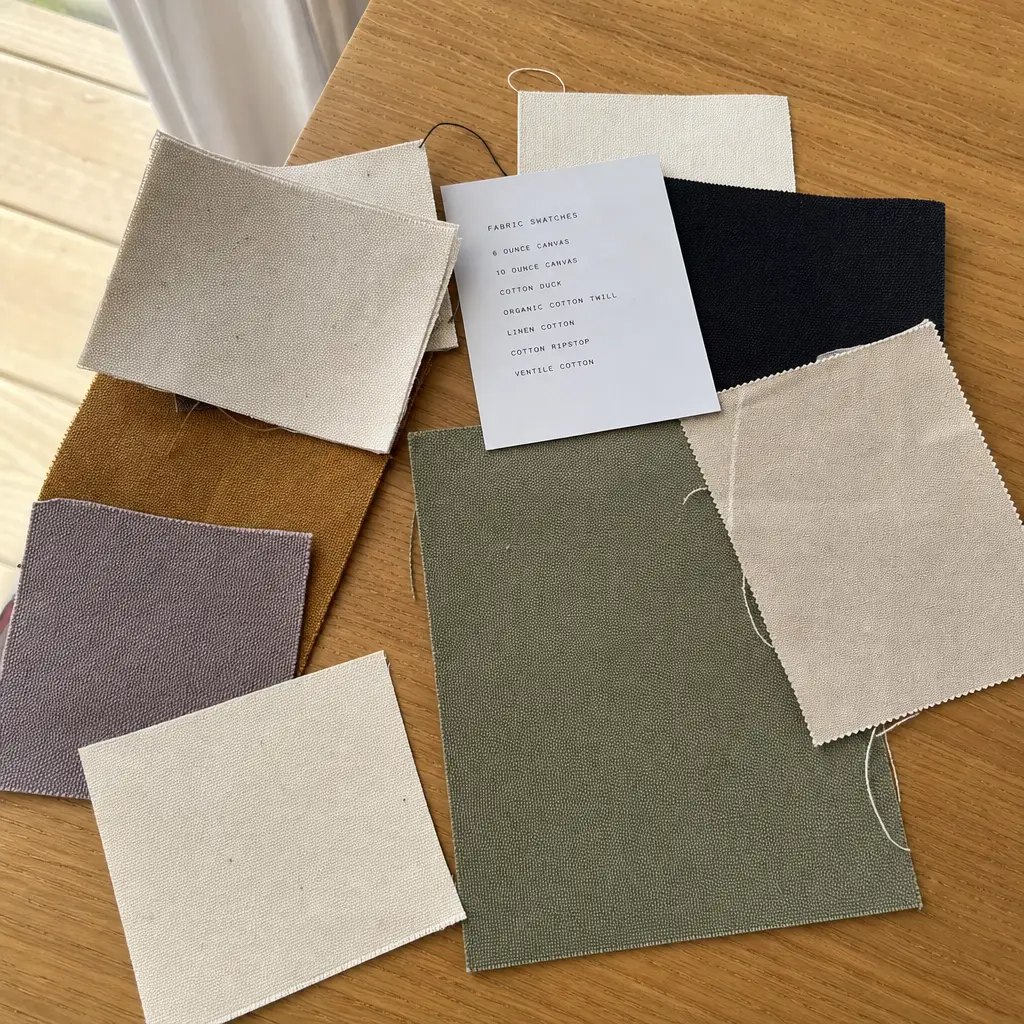
Fabric weight affects cost, lead time, freight, sewing speed, closure comfort, and perceived quality. For small bakery packaging, 5 oz to 6 oz cotton often works for wrapped cookies, tea biscuits, dry samples, seasonal inserts, and lighter campaigns. It folds easily, keeps carton weight down, and is usually quicker to source when stock natural fabric is available. For premium gift sets, small jars, tins, or pouches meant for reuse, 8 oz to 10 oz cotton canvas gives more body and a sturdier hand-feel. The tradeoff is higher material use, more carton volume, thicker gathering at the drawstring, and slower sewing.
Do not compare quotes unless the fabric is defined by weight and construction. “Cotton” may mean plain-weave muslin, heavier canvas, bleached cotton, unbleached cotton, dyed fabric, or a supplier’s stock cloth. A lower unit price may simply mean lighter fabric, lower thread density, leftover material, or a simplified finish. Ask for GSM or ounce weight, weave type, color finish, roll availability, shrinkage expectation, and whether the cloth is stock, greige to be processed, or made to order.
Brand positioning matters too. Natural unbleached cotton gives a rustic bakery look, but it can show seed flecks, slubs, and shade variation. Bleached cotton creates a cleaner print ground, though it may not fit a low-processed visual story. Dyed cotton can align with brand color, but it adds lab dip review, dye lot MOQ, shade tolerance, and schedule risk. Organic or recycled cotton may be appropriate for some programs, but buyers should request the exact certificate or test report they need before making sustainability claims.
- 5 oz cotton: light wrapped dry goods, bakery samples, promotional inserts, and low-bulk seasonal packaging.
- 6 oz cotton: balanced choice for wrapped cookie packs, small gift items, and reusable light packaging.
- 8 oz canvas: stronger hand-feel for premium bakery sets, small jars, tins, and reusable presentation pouches.
- 10 oz canvas: heavier gift packs where structure matters, but confirm closure comfort, seam strength, and freight impact.
- Custom dyed cotton: better brand color alignment, but adds lab dip approval, dye lot minimums, and shade control work.
Plan Size by Filled Testing
Flat pouch size is not the same as usable capacity. A pouch measuring 150 mm by 200 mm may become tight once a wrapped cookie stack, jar, tin, or small box is inside. Cotton has limited stretch. Seams take space. The drawstring needs extra height above the product so it can gather cleanly. A common sourcing mistake is approving a flat sample, then discovering during packing trials that staff must force the item through the opening or leave the closure half open.
Start with the finished bakery product exactly as it will be sold. Measure the widest, deepest, and tallest points after wrapping, boxing, or sleeving. Add clearance for operator handling, product corners, fabric movement, and the closure fold. Small flexible products may only need 15 mm to 25 mm of extra clearance in key areas. Rigid tins, jars, and boxes usually need more because the pouch must wrap around depth, not just cover a flat face. If the product is fragile, the fit should not require pressure that could crack cookies, dent boxes, or damage decoration.
Filled testing also protects the branding. A print that looks centered on a flat pouch may sit too low, distort around corners, or disappear into the drawstring folds after filling. For launch photography, retail displays, and gift sets, approve the pouch while it is filled. If it must stand in a display basket, hang from a peg, slide into a shipper carton, or fit inside a gift box, test that exact scenario before bulk production. The approved filled sample should become a control standard, not just a pretty reference.
- Reserve top height above the product so the drawstring closes without forcing the channel or covering the logo.
- Measure logo placement after filling, gathering, and tying, not only when the pouch lies flat.
- For jars, tins, or boxes, test corner pressure against side seams, bottom corners, and the printed panel.
- If hanging display is required, specify eyelet, hang tag, header card, or hole reinforcement separately.
- Keep photos of the approved filled sample from front, side, closure, and packed-carton positions.
Control Print, Labels, and Artwork Gates
For artisan bakery cotton drawstring pouches, one-color screen printing is often the most practical route. It works well for logos, batch names, simple line art, and seasonal graphics, and it suits the natural look many bakery brands want. Still, it needs setup control and curing checks. Under-cured ink can transfer during rubbing. Too much ink can feel stiff on light cotton. On slubby or open-weave fabric, tiny text, thin rules, and fine QR codes may lose sharpness. Approve artwork at actual size on the selected fabric, not only as a digital proof.
Heat transfer can handle more colors and finer detail, especially at lower quantities, but it may look less integrated with cotton and can leave a visible film edge. It needs fold, rub, and adhesion checks when pouches will be handled often or packed tightly. Embroidery can look premium, but it may distort lighter fabrics and is usually inefficient for small pouches or detailed bakery marks. Woven labels and sewn side labels create a subtle reusable feel, but they add MOQ, color approval, label lead time, and sewing alignment checks.
Artwork readiness is a real lead time gate. A factory cannot prepare reliable screens, transfers, or woven labels from a low-resolution image. Procurement should send vector artwork, Pantone references, print dimensions, placement from top and side edges, and a clear note on whether color matching is approximate or strict. Cotton is not coated paper. Print color will shift with fabric shade and texture. If the bakery needs tight brand color, build strike-off or pre-production sample review into the schedule.
- Send vector artwork with Pantone references, final print size, and placement measured from pouch edges.
- For screen print, define ink color, print area, curing requirement, and acceptable edge sharpness on textured cotton.
- For heat transfer, test adhesion, cracking, film edge visibility, and hand-feel after folding and rubbing.
- For woven labels, define size, fold type, yarn colors, sewing position, MOQ, and placement tolerance.
- Avoid tiny legal text, ingredient-style copy, or QR codes on rough cotton unless a sample proves readability.
Read MOQ and Price Breaks Carefully
MOQ is usually tied to production realities, not just supplier preference. Fabric roll length, cutting yield, dye lot quantity, print setup, cord availability, label MOQ, labor batch size, and packing unit can all set the minimum. A stock natural cotton pouch can often start at a lower MOQ than a custom dyed pouch with special cord and a woven label. If a supplier offers a very low MOQ for a custom spec, ask what makes it possible. It may rely on leftover fabric, manual cutting, substitute trims, limited shade control, or simpler packing.
The lowest MOQ is not always the best buying choice. A smaller first order can reduce inventory exposure for a seasonal bakery launch, but it may bring a higher unit price, less efficient carton packing, and lower production priority during peak periods. A larger order may reduce setup cost per pouch and stabilize material purchasing, but it increases storage cost and the risk of obsolete packaging if the bakery changes its logo, assortment, or seasonal artwork. Compare MOQ options using landed cost, forecast demand, cash flow, storage space, and launch risk together.
Ask suppliers to separate MOQ by component. Stock cotton, custom dyed fabric, cord, woven labels, screen printing, heat transfers, and printed cartons may each have a different minimum. If one component drives the MOQ, the buyer may be able to simplify the design without weakening the program. Stock natural cotton instead of dyed fabric, one-color screen print instead of woven labels, or evergreen pouch construction with a seasonal hang tag can all keep the project more flexible.
- Request price breaks for pilot order quantity, first launch quantity, and forecast annual reorder quantity.
- Separate stock fabric MOQ from custom dye MOQ, special cord MOQ, label MOQ, and print setup rules.
- Confirm whether screens, transfers, label development, and pre-production samples are charged separately.
- Ask whether one fabric lot can support multiple sizes to improve cutting efficiency across bakery SKUs.
- Use evergreen pouch construction and seasonal paper tags when demand is uncertain.
Build the Lead Time Backward
A realistic lead time calendar includes far more than the supplier’s quoted production days. The path starts with specification confirmation and artwork review. Then come sampling, sample courier time, buyer review, internal brand approval, material booking, cutting, printing, sewing, trimming, inspection, packing, export handover, freight, customs, local delivery, and warehouse receiving. If procurement counts only bulk production time, the bakery can miss launch even when the factory meets its stated production window.
For stock natural cotton with simple one-color screen printing, a practical planning range is often about 5 to 7 working days for sampling after final specs and artwork, followed by about 15 to 25 working days for bulk production after sample approval. Treat those as planning ranges, not guarantees. Quantity, pouch size, fabric availability, print complexity, inspection requirements, supplier workload, holidays, and peak season can all change the schedule. Custom dyeing, lab dips, multi-SKU assortments, organic or recycled documentation, retailer approvals, and artwork changes can add one to three weeks or more.
Work backward from the required warehouse arrival date, not the public launch date. Pouches may be needed earlier for packing trials, product photography, sales sample kits, wholesale buyer presentations, retail distribution, or co-packer intake. For holiday bakery programs, the warehouse date may sit several weeks before the first customer-facing promotion. The calendar should call out the final artwork date, final sample comment date, material booking date, inspection date, shipment handover date, and the point where quantity changes begin to threaten delivery.
- Set day zero only after final size, fabric, artwork, quantity, packing, payment terms, and approval route are confirmed.
- Add buyer-side time for sample delivery, sample review, brand approval, and retailer or distributor sign-off.
- Reserve inspection time before shipment, especially for first orders, new suppliers, and tight launch windows.
- Add freight buffer for shipping mode, customs clearance, port or airport congestion, local delivery, and warehouse receiving.
- Do not release bulk cutting before final fit approval unless the buyer accepts documented rework risk.
Use Sampling to Prevent Bulk Surprises
Sampling should remove uncertainty, not just create a presentation photo. A blank fit sample proves fabric hand-feel, finished flat size, usable capacity, drawstring function, seam construction, and product fit. A printed pre-production sample proves logo scale, ink behavior, print placement, label alignment, cord choice, and finished appearance. For bakery packaging, both stages matter. A pouch can look charming when flat and still fail once it is filled, closed, displayed, or packed into cartons.
Sample comments need to be measurable. “Make it more premium” is not a production instruction. A factory can act on directions such as increasing fabric from 6 oz to 8 oz, moving the logo 20 mm lower, widening the drawstring channel by 5 mm, changing cord from 3 mm to 5 mm, increasing seam allowance, or reducing print size to avoid distortion near seams. If the launch date is fixed, the buyer may approve size and fabric first while approving print by photo or express sample later. That can be done, but the risk should be recorded.
After approval, freeze the sample as the control standard. Bulk goods should be inspected against the approved sample and written tolerances, not against an evolving email thread. Keep one approved sample with procurement, one with bakery operations or quality, and one sealed reference sample with the factory when possible. Record the approval date, fabric lot if known, final dimensions, cord type, print size, print placement, seam construction, and packing method. Reorders become much easier when this trail is complete.
- Test samples with the real bakery item or a dummy matching final size, weight, and rigidity.
- Photograph approved samples from front, back, inside seam, drawstring channel, closure, and filled positions.
- Record final flat size, fabric weight, cord type, seam construction, print size, print position, and packing method.
- Approve acceptable natural cotton specks, slubs, shade variation, and hand-feel for unbleached rustic fabrics.
- Keep buyer and factory reference samples for production, inspection, and reorder comparison.
Specify Packing, Cartons, and Moisture Controls
Packing affects landed cost, defect risk, warehouse receiving, and retail readiness. Cotton drawstring pouches are usually flat packed to reduce volume. Small pouches may be packed in inner polybags, paper-banded bundles, kraft sleeves, or store-ready packs depending on the buyer’s plastic policy and warehouse process. If the bakery wants reduced-plastic or plastic-free secondary packing, state it at RFQ stage. Paper bands, tissue, and master-bundle methods can change labor time, moisture protection, carton stability, and inspection handling.
Carton data matters early, not only at shipment. Pieces per carton, carton size, gross weight, and net weight affect freight estimates, pallet planning, storage, and receiving checks. Over-compressed cartons can crease printed panels, especially on heavier canvas or thick screen print. Under-filled cartons can collapse in transit and create dirty or wrinkled pouches. If goods are distributed to multiple bakery locations, wholesalers, or retailers, the buyer may need SKU labels, carton marks, barcode labels, purchase order references, and mixed-SKU separation.
Moisture and odor control deserve attention because cotton sits close to bakery products, even when it is secondary packaging. Cotton can absorb smells and moisture during production, storage, and long transit. For sea freight or humid-season packing, discuss carton strength, inner protection, desiccants if appropriate, and clean storage conditions before packing begins. Confirm that cartons are kept off damp floors, pouches are packed dry, and any plastic-reduction rule does not create mildew risk. Premium gift packaging should arrive clean, neutral-smelling, and easy for bakery staff to handle.
- Request carton dimensions, net weight, and gross weight at quote stage for early freight estimates.
- Specify inner packing quantity, such as 50 pieces per inner bag or 100 pieces per paper-banded bundle.
- Keep printed panels facing consistently if presentation matters during warehouse or bakery unpacking.
- Use moisture protection for sea freight or humid-season packing while confirming plastic-reduction rules early.
- Define carton marks, SKU labels, purchase order references, barcode labels, and mixed-SKU separation before packing starts.
Compare Supplier Quotes on the Same Basis
A useful supplier quote should do more than list a unit price. It should identify exact fabric, fabric availability, print method, number of colors, print area, drawstring material, finished size tolerance, MOQ basis, sample charge, setup charge, production lead time, packing format, carton data, trade term, payment terms, quote validity, and documents included. Without those details, procurement cannot compare suppliers fairly. A cheaper quote may exclude printing, use lighter fabric, omit inner packing, assume EXW while another supplier quotes FOB, or require a longer production window.
For bakery pouch programs, quote comparison should include process visibility. If the supplier has stock fabric, in-house cutting and sewing, and stable printing capacity, the schedule may be easier to control. If dyeing, printing, or sewing is outsourced, the buyer should know where the bottleneck sits and how the supplier manages quality between subcontracted steps. Outsourcing is not automatically a problem. Hidden outsourcing is the risk because it can blur responsibility for color, timing, inspection, and rework.
Good quote discipline also improves reorders. If the first purchase record captures only a unit price, the buyer may not know whether a later change is caused by fabric cost, labor, exchange rate, packing, freight, or artwork. Keep the accepted quote, approved sample record, specification sheet, carton data, and QC criteria together. This gives bakery buyers a cleaner reorder path before seasonal peaks and makes supplier performance easier to review.
- Require fabric weight in oz or GSM and identify whether it is stock, greige-to-dye, custom dyed, or made to order.
- Request separate line items for printing, woven labels, special cord, packing, samples, screens, transfers, and tooling.
- Compare EXW, FOB, CIF, DDP, or other trade terms only after confirming what each includes and excludes.
- Ask for carton quantity, carton dimensions, net weight, and gross weight so landed cost can be estimated early.
- Record quote validity, payment terms, production start conditions, inspection rights, and latest change dates.
Specification comparison for buyers
| Spec decision | Recommended option | When it fits | Buyer risk to check |
|---|---|---|---|
| Bakery use case | Define packed item, sales channel, product weight, handling method, and whether cotton is secondary packaging | Fits wrapped cookies, biscotti, granola sleeves, small jars, tins, gift sets, sample packs, and bakery merchandise | If the use case is vague, suppliers quote different fabrics, sizes, and inspection levels, making price and lead time comparisons unreliable |
| Fabric weight | 5 oz to 6 oz cotton for light wrapped dry goods; 8 oz to 10 oz canvas for premium or reusable gift packaging | Use lighter cotton for small wrapped bakery items and seasonal inserts; use canvas when the pouch must carry weight or hold a premium shape | Very light fabric can show corners and feel low value; heavy canvas raises material cost, freight weight, closure bulk, and sewing time |
| Finished size | Specify finished flat width and height, measurement point, gusset if any, and clearance based on filled product testing | Best for hand-packed bakery programs needing repeatable fit, closure, and logo visibility | Flat size is not filled capacity; approve a filled sample using the real product or a matched dummy |
| Tolerance | Agree realistic tolerances before PO: commonly ±5 mm for small pouches and ±10 mm for larger canvas pouches unless tighter control is priced | Works for most handmade or semi-automatic cut-and-sew cotton pouches | Unstated tolerances create disputes; overly tight tolerances can increase rejects, cost, and production time |
| Print method | One-color screen print for most bakery logos; heat transfer for small multi-color detail; woven or cotton label for subtle reusable branding | Screen print suits natural cotton branding and repeat orders; transfer suits complex artwork; labels reduce ink coverage | Fine text can blur on slubby cotton; transfers may feel less natural; labels add MOQ, sewing alignment checks, and extra approval time |
| Drawstring | Cotton cord or self-fabric tape matched to fabric weight, channel width, and packed load | Cotton cord fits small pouches; wider tape or heavier cord suits canvas bakery gift bags | Thin cord can cut into the channel or feel weak; synthetic cord may conflict with natural packaging claims or brand positioning |
| MOQ | Separate MOQ by fabric, dye lot, print setup, cord, woven label, cutting yield, and packing unit | Stock natural cotton is best for first launches; custom dye, special trims, and labels are better for stable repeat programs | A low MOQ may rely on leftover fabric, manual cutting, limited color control, excluded setup charges, or simplified packing |
| Sampling route | Approve a blank fit sample first, then a printed pre-production sample using final fabric, cord, construction, and print | Useful when product fit, shelf presentation, launch photography, and retail approval matter | Digital proofs do not confirm fit, shrinkage, hand-feel, drawstring function, print adhesion, or placement on filled pouches |
| Packing | Flat pack in agreed inner units, then export cartons with carton marks, SKU labels, piece count, dimensions, and gross/net weight | Flat packing reduces volume for importers, distributors, bakery groups, and seasonal inventory programs | Over-compression creases printed panels; loose cartons collapse; missing carton data blocks freight estimates and warehouse planning |
Buyer checklist before sampling
- Define the exact bakery product going into the pouch, including wrapped dimensions, filled weight, corner sharpness, grease or moisture risk, and whether the item is ambient, chilled, frozen, or shelf-stable dry goods.
- Confirm whether the pouch is secondary packaging around a wrapper, box, tin, jar, or sleeve, or whether direct food-contact requirements must be specified for the destination market before sampling.
- Specify finished flat width and height, usable capacity target, gusset if any, fabric GSM or ounce weight, weave, color finish, drawstring type, channel construction, seam construction, and measurement tolerance.
- State whether fabric must be natural, bleached, dyed, organic cotton, recycled cotton, conventional cotton, or certified material, and list the exact certificates or test documents required before any claim is printed or sold.
- Send final vector artwork with Pantone references, print size, print position measured from edges, print method preference, acceptable logo variation on textured cotton, and barcode or label position requirements.
- Request a blank fit sample and a printed pre-production sample made with final fabric, drawstring, seam construction, print placement, and intended packing method before bulk cutting when the launch date allows.
- Separate supplier sampling time, buyer review time, material booking, bulk production, inspection, packing, freight transit, customs clearance, and warehouse receiving in the launch calendar.
- Require carton dimensions, gross weight, net weight, pieces per inner pack, pieces per export carton, packing method, carton marks, SKU labels, pallet guidance, and mixed-SKU rules in the supplier quote.
- Set written acceptance criteria for size tolerance, stitch density, seam allowance, drawstring function, drawstring pull resistance, print adhesion, print placement, color deviation, stains, odor, mildew risk, loose threads, and metal contamination.
- Confirm whether the quoted MOQ is driven by stock fabric, custom weaving, fabric dyeing, print setup, label MOQ, cord availability, cutting yield, labor efficiency, or carton packing efficiency.
Factory quote questions to send
- Which exact cotton fabric are you quoting: ounce weight or GSM, weave type, natural or bleached finish, dyed color if applicable, shrinkage expectation, roll width, and current stock availability?
- Is the MOQ driven by fabric roll quantity, cutting efficiency, printing setup, dye lot, cord supply, woven label MOQ, labor batch size, or packing unit?
- What finished size tolerance can you hold after cutting, sewing, trimming, and pressing, and is the tolerance measured flat before or after final ironing?
- Which print method is included, how many colors, what print area, what ink or transfer type, and what curing or adhesion checks will be used on cotton?
- Can you make a blank fit sample and a printed pre-production sample with final drawstring, final seam construction, final print placement, and final fabric lot or approved equivalent?
- What is the sample lead time, buyer approval deadline, bulk production lead time after approval, latest final artwork date, and latest quantity change date before delivery is affected?
- Which steps are in-house and which are outsourced, including dyeing, printing, cutting, sewing, trimming, needle control, inspection, and export packing?
- How many pieces are packed per inner bag, paper band, or bundle, how many pieces per export carton, and what are the estimated carton size, net weight, and gross weight?
- What inspection plan is used before packing, including size measurement, stitching, loose threads, stains, odor, drawstring function, print adhesion, print placement, shade variation, and metal contamination control?
- Which documents are included with shipment: commercial invoice, packing list, certificate of origin if needed, bill of lading or airway bill support, material certificates, and test reports if requested?
Quality-control points to confirm
- Measure finished flat width and height against the approved sample and written spec, using agreed tolerances such as ±5 mm for small pouches and ±10 mm for larger pouches unless tighter tolerances are contracted.
- Check usable capacity by filling the pouch with the real bakery product or a matched dummy to confirm the item inserts easily, the drawstring closes, and the logo remains visible after gathering.
- Pull both drawstrings repeatedly to confirm the channel is not too tight, cord ends do not fray, knots or metal tips do not slip, and seams near the opening do not split.
- Inspect stitch density, seam allowance, backstitching, skipped stitches, broken threads, loose thread trimming, needle holes, seam symmetry, and bottom corner strength on both sides of the pouch.
- Check fabric for oil marks, yellowing, excessive slubs beyond the approved sample, dust, lint, mildew odor, moisture marks, panel shade mismatch, and shade variation between cartons.
- Rub the printed logo dry and lightly damp to screen for ink transfer, cracking, weak curing, poor adhesion, thick hand-feel, or heat-transfer edge lifting on textured cotton.
- Confirm print placement by measuring from the top edge, side seam, and drawstring channel because even 5 mm movement is visible on small bakery pouches and launch photography.
- Compare color against the approved Pantone target, lab dip, or signed production sample under consistent lighting while allowing realistic variation for natural unbleached cotton.
- Review carton packing for moisture protection, crushing risk, carton strength, barcode or carton mark accuracy, correct piece count, correct SKU separation, and inner packing consistency.
- Confirm finished goods are free from broken needles, sharp metal fragments, staples inside pouches, strong chemical odor, mildew, pest contamination, and other contamination risks before shipment.