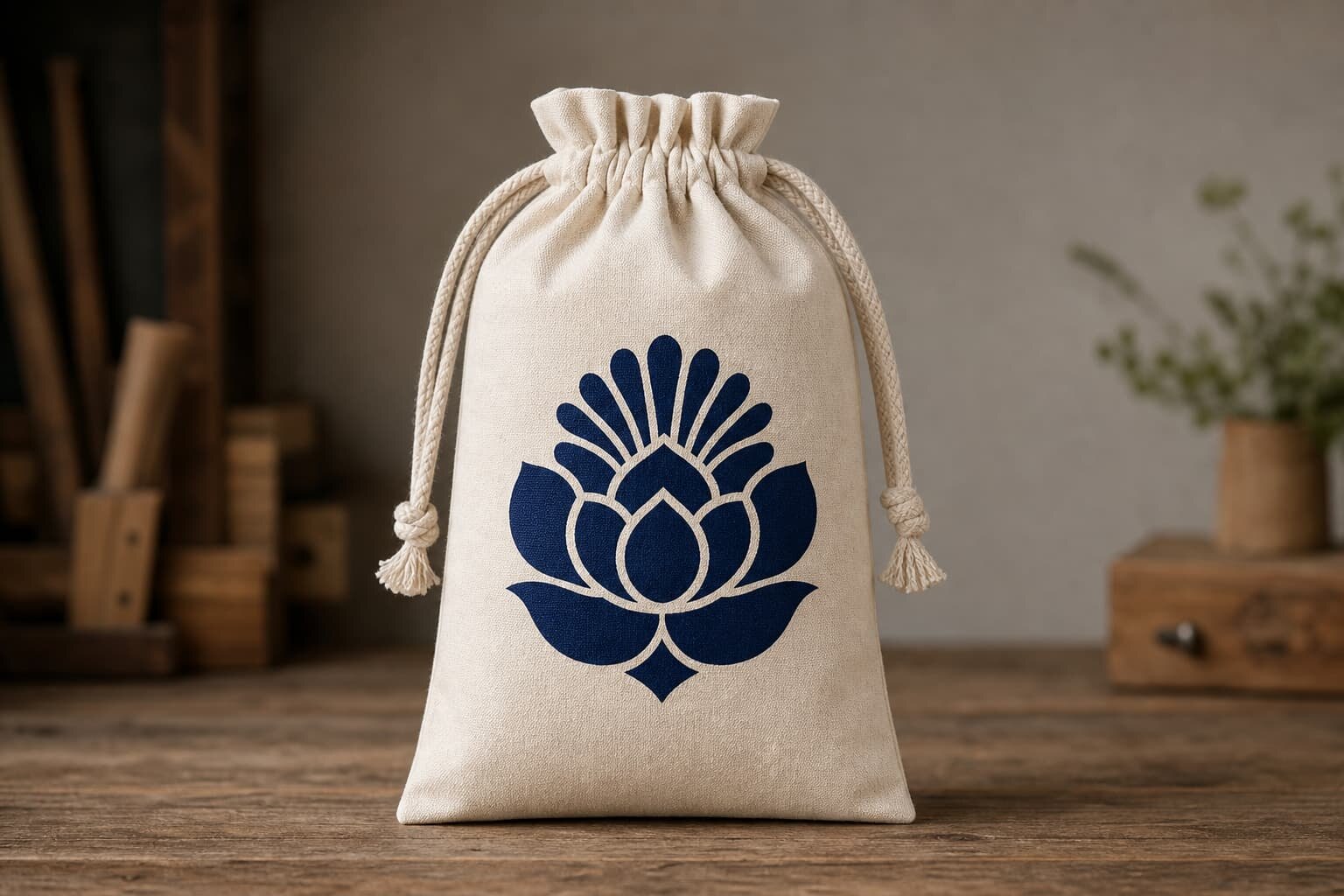
Why Fabric Weight Decides More Than Pouch Thickness
For cotton drawstring pouches, fabric weight is not only a hand-feel decision. It affects seam strength, print sharpness, drawcord performance, carton weight, packing cube, and the buyer's landed cost. A pouch made from 120 GSM cotton and a pouch made from 240 GSM canvas may look similar in a digital proof, but they behave very differently on a filling line and in retail handling.
Many RFQs fail because they only say “cotton pouch, natural color, logo printed.” That leaves the supplier to choose a fabric based on price pressure. One quote may use light muslin, another may use 5 oz cotton, and another may use heavy canvas. The unit prices then look inconsistent, but the buyer is not comparing the same product.
- Use GSM when your team compares international quotes; it is easier to verify than vague terms like thick or premium.
- Use ounces when your existing brand standard is written in cotton bag fabric ounces, but ask the supplier to convert to GSM.
- State whether the pouch must be soft and foldable, structured and reusable, or strong enough for a specific product weight.
- Do not approve fabric weight from a photo. Request a labeled swatch or physical sample.
Common Cotton Pouch Fabric Weights and Their Best Uses
Most cotton drawstring pouches used for retail packaging and promotional kits fall between about 120 GSM and 270 GSM. Lighter fabrics are lower cost, softer, and easier to cinch. Heavier fabrics feel more durable and protect contents better, but they increase fabric cost, shipping weight, and bulk in the carton.
The right weight depends on the item inside. A small jewelry pouch does not need the same fabric as a coffee pouch or tool accessory pouch. If the pouch is part of a premium product presentation, the buyer should also consider opacity. Thin natural cotton can show product shape, color, or printed inserts through the fabric.
- 120-135 GSM: suitable for lightweight dust bags, small gifts, cosmetics samples, or event giveaways.
- 145-170 GSM: a practical standard for many branded cotton drawstring pouches with screen printing.
- 180-200 GSM: better for repeat use, higher perceived value, and medium-weight retail products.
- 230-270 GSM: canvas-style option for heavier contents, structured packaging, or stronger promotional kits.
- Above 270 GSM: possible, but less common for small drawstring pouches because the mouth can become hard to close neatly.
How GSM Changes Printing Results
Print quality is one of the biggest reasons to specify fabric weight clearly. Light cotton can absorb ink unevenly and may not give a solid brand color. Heavy canvas has more texture, so fine lines can break if the artwork is too small. The best print result comes from matching the logo, fabric surface, and print process before sampling.
For most cotton drawstring pouches, screen printing is still the practical choice for simple logos and medium to large quantities. Heat transfer can help with multi-color artwork, gradients, or small MOQ runs, but buyers should check hand feel and wash/rub resistance. Digital printing can work for detailed artwork, but fabric pre-treatment, color control, and MOQ logic vary by factory.
- Screen print: good for solid one to three color logos on 145-270 GSM cotton, but each color adds setup and registration work.
- Heat transfer: useful for complex logos or low MOQ, but check whether the transfer film feels too plastic on soft cotton.
- Digital print: useful for detailed artwork, but request a sample on the exact fabric weight and color.
- Embroidery: works better on 180 GSM and above, but may distort small pouches or light fabric.
- Woven side label: a clean option when print area is small or the buyer wants repeated brand recognition without heavy ink.
Do Not Ignore Drawstring Closure Performance
A cotton pouch can pass a visual inspection and still fail in use if the drawstring channel is poorly matched to the fabric weight. Light fabric can pucker or tear near the channel if the stitching is too close to the edge. Heavy canvas can make the top opening stiff, so the pouch does not cinch tightly around the product.
Buyers should define the drawcord and channel details in the RFQ. Cord diameter, material, color, channel height, and knot style all affect closure performance. For small pouches, a thick round cord may look premium but waste usable internal space. For larger pouches, a thin cord may cut into the fabric or feel cheap.
- For 120-170 GSM pouches, soft cotton cord or flat cotton tape often closes smoothly.
- For 180-270 GSM pouches, test the channel height and cord diameter with real contents inside.
- Ask whether the pouch uses single drawstring, double drawstring, knotted ends, metal tips, plastic stoppers, or sewn cord ends.
- Confirm that the cord color is stock, dyed-to-match, or natural cotton; each option can affect MOQ and lead time.
- Check that the drawcord does not bleed color onto natural cotton during moisture exposure.
MOQ Logic: Why the Same Pouch Has Different Minimums
MOQ for cotton drawstring pouches is not controlled by pouch size alone. Fabric availability, dyeing, print setup, label weaving, cutting efficiency, and packing style all influence the factory's minimum. A natural cotton 5 oz pouch with one-color screen print may have a much easier MOQ than a custom dyed 8 oz canvas pouch with a woven label and individual barcode bag.
When comparing quotes, procurement teams should ask what drives the MOQ. If the supplier has stock natural cotton fabric, the MOQ may be based on cutting and printing efficiency. If the buyer wants a custom Pantone dyed cotton fabric, the MOQ may be driven by dye lot minimums and shade control. If the logo uses several print colors, print setup may become the limiting factor.
- Natural cotton usually has easier MOQ than dyed fabric.
- Stock fabric weight usually has easier MOQ than unusual GSM.
- One-color screen print usually has easier MOQ than multiple-color registration.
- Custom woven labels may have their own MOQ separate from pouch quantity.
- Individual retail packing increases labor time and may raise MOQ or unit cost.
Sample Approval: What Buyers Should Physically Check
A cotton pouch sample is not only for confirming logo appearance. It should prove that the selected fabric weight works with the product, packing method, and brand standard. The buyer should insert the actual product or a weight substitute, close the pouch several times, and check whether the shape, opacity, and seam strength are acceptable.
For repeat programs, approve a pre-production sample made from bulk fabric before mass production. A salesman sample made from leftover fabric may not represent the final GSM, shade, or shrinkage. If the pouch will be washed, dyed, or printed after cutting, the size tolerance should be confirmed after the final process, not before.
- Measure finished width and height flat, then measure usable height below the drawstring channel.
- Weigh the sample if fabric weight is important, but also request a factory GSM test from bulk fabric.
- Rub the printed logo with a dry and slightly damp white cloth to check obvious ink transfer.
- Pull the side seams and bottom seam with product weight inside, not as an empty pouch.
- Check whether the pouch lies flat enough for automated or manual packing.
- Keep one signed approval sample for buyer records and one for factory production reference.
Cost Breakdown Buyers Should Request in the Quote
A low unit price can hide missing details. For cotton drawstring pouches, the buyer should ask the supplier to separate the main cost drivers instead of receiving one vague price. Fabric weight, printing, labels, drawcord, packing, and carton requirements can each change the cost and lead time.
A practical quote should also include export packing data. Freight cost can change the buying decision, especially when moving from 5 oz to 8 oz fabric or from bulk packing to individual polybags. If your team only compares FOB unit price, you may choose a pouch that looks cheaper but lands at a higher total cost.
- Fabric: GSM, width, color, composition, and whether it is stock or custom made.
- Making: cutting, sewing, drawstring insertion, trimming, and inline inspection.
- Branding: screen setup, ink color count, heat transfer cost, embroidery, or woven label.
- Accessories: cord type, stopper, metal tip, hangtag, barcode sticker, or care label.
- Packing: bulk pack, inner bag quantity, individual polybag, retail sleeve, or carton labeling.
- Logistics data: carton size, pieces per carton, gross weight, CBM, and loading quantity estimate.
Packing and Carton Planning for Cotton Pouches
Cotton drawstring pouches look simple, but packing can create quality issues. Natural cotton can absorb moisture and odor during storage or ocean freight. Heavy pouches can compress and wrinkle if packed too tightly. Printed pouches can transfer ink if packed before curing or if the print surface rubs against another pouch under pressure.
The packing plan should match the buyer's distribution route. Bulk packed pouches are lower cost and reduce plastic use, but they require sorting at the buyer's warehouse or filling site. Individual polybags protect clean retail packaging but add labor, material cost, and carton volume. For barcode-controlled retail programs, label position and scan readability should be confirmed before mass packing.
- Use clean inner bags or liners if the pouches are natural cotton and must stay free from dust.
- Confirm whether pouches are folded, flat packed, or bundled by count.
- Avoid over-compression if the pouch has embroidery, thick cord, or shaped gusset.
- Require carton marks that match purchase order, SKU, color, size, and quantity.
- Ask for carton drop strength suitable for export handling when cartons are heavy.
- For humid routes, discuss desiccant and moisture control without making unsupported claims about mildew prevention.
Lead Time Risks Linked to Fabric Weight
Lead time is often quoted too simply. A supplier may say production takes three to four weeks, but that may assume stock natural cotton fabric and a simple one-color print. Custom dyed fabric, unusual GSM, special drawcords, woven labels, or retail packing can extend the timeline before sewing even starts.
Buyers should build the RFQ schedule backward from the required delivery date. Include time for artwork confirmation, sample making, sample shipping, sample comments, bulk material preparation, production, inspection, packing, and export booking. The heavier or more customized the pouch, the more important it is to approve materials early.
- Blank stock fabric sample is usually faster than printed sample using nominated bulk fabric.
- Custom dyed cotton needs shade approval and may require lab dip or strike-off before bulk fabric.
- Multi-color printing needs artwork separation, screen setup, and registration confirmation.
- Woven labels and custom cords can become separate lead time bottlenecks.
- Pre-shipment inspection should be scheduled before final payment and before vessel cut-off pressure.
Acceptance Criteria to Put Into the Purchase Order
A purchase order should not rely on the approved sample alone. It should include measurable acceptance criteria so both buyer and factory know what will be inspected. Cotton is a natural material, so small slubs and seed flecks may be acceptable, but oil stains, holes, major shade variation, poor stitching, and misprinted logos should not be treated as normal variation.
The most useful criteria are the ones inspection teams can verify quickly. Include finished size tolerance, print position tolerance, fabric weight tolerance, seam strength expectation, packing count, carton marks, and acceptable defect limits. If your company uses AQL inspection, state the inspection level and defect classification clearly.
- Finished size tolerance: define acceptable variation in width, height, and gusset if applicable.
- Fabric tolerance: specify accepted GSM range instead of one impossible exact number.
- Print tolerance: define logo position from top edge, side edge, and drawstring channel.
- Stitching: require secure backstitching, no open seams, no skipped stitches, and no loose threads beyond agreed limit.
- Appearance: define acceptable natural cotton flecks versus unacceptable stains, holes, or yarn contamination.
- Packing: require correct quantity per inner bag and carton, correct SKU marking, and no mixed sizes unless approved.
Specification comparison for buyers
| Spec decision | Recommended option | When it fits | Buyer risk to check |
|---|---|---|---|
| Light promotional pouch | 4 oz cotton, about 120-135 GSM | Low-cost giveaways, jewelry dust bags, small cosmetics, event kits where softness matters more than structure | Print may show through, seams can pucker, dark ink may look uneven on loose weave |
| Standard retail accessory pouch | 5 oz cotton, about 145-170 GSM | Most branded packaging pouches for apparel accessories, candles, soaps, stationery, and gift sets | Confirm shrinkage, drawcord tunnel strength, and whether quoted weight is before or after washing |
| Premium reusable pouch | 6 oz cotton, about 180-200 GSM | Products needing better hand feel, repeated opening, stronger seams, or a higher perceived value | Higher carton weight and fabric cost; small pouches may feel bulky at the drawstring channel |
| Structured canvas-style pouch | 8 oz cotton canvas, about 230-270 GSM | Tool kits, premium retail packaging, coffee packs, heavy contents, or pouches that must stand better when filled | Drawstring closure may not cinch tightly; print needs heavier ink deposit or adjusted artwork |
| Fine detail printing | 145-200 GSM tight-weave cotton | Logos with small text, line art, QR codes, hangtag-style branding, or repeat retail programs | Loose yarns and slubs can break fine lines; request printed pre-production sample |
| Washed natural look | Pre-washed 5-6 oz cotton | Lifestyle brands wanting softer hand feel and less shrinkage after consumer use | Color shade and size tolerance can vary; approve size after wash process, not only greige fabric |
| Heavy fill or sharp product edges | 6-8 oz cotton with reinforced seam allowance | Hardware, glass jars, sample bottles, dense gift sets, and export kits handled many times | Do not rely on GSM alone; require seam pull test and content-fit test with real product weight |
Buyer checklist before sampling
- Define pouch use first: dust cover, retail packaging, reusable storage, gift set, or product kit.
- State finished pouch size, not only flat cut size, and confirm tolerance after sewing and washing if applicable.
- Specify fabric weight in GSM or ounces, plus weave type, color, and whether natural cotton slubs are acceptable.
- Match print method to fabric weight, artwork detail, and quantity before comparing unit prices.
- Ask for drawcord material, drawcord diameter, channel height, knot or stopper method, and closure performance.
- Request a physical sample using the nominated fabric weight, print method, cord, and packing style.
- Check seam strength, drawstring channel puckering, print adhesion, odor, stains, and size tolerance before approval.
- Confirm MOQ by fabric color, pouch size, print color count, and packing method, not just by total order quantity.
- Ask suppliers to separate pouch unit price, printing cost, label cost, packing cost, carton data, and export charges.
- Lock carton quantity, carton dimensions, gross weight, and inner packing before freight quotation.
Factory quote questions to send
- What is the actual fabric weight in GSM and ounces, and is it measured before washing, after washing, or after dyeing?
- Is the fabric plain cotton, cotton canvas, recycled cotton blend, organic cotton, or dyed cotton, and what documentation can be supplied if a claim is required?
- What pouch size tolerance can you hold after sewing, and how will the drawstring channel reduce usable internal height?
- Which print method do you recommend for this fabric weight and logo detail, and what print area limit applies near seams and the drawcord tunnel?
- What is the MOQ for this exact fabric weight, color, print method, and packing requirement?
- Can you quote the same pouch in 4 oz, 5 oz, 6 oz, and 8 oz fabric so we can compare landed cost and carton weight?
- What sample lead time applies for blank sample, printed sample, and pre-production sample using bulk fabric?
- What are the carton dimensions, pieces per carton, gross weight, and estimated CBM for the quoted specification?
- Are drawcords cotton, polyester, recycled polyester, or flat tape, and are they color matched or stock color?
- Which quality checks are included before shipment, and can you provide inspection photos of size, print, seam, and packing?
Quality-control points to confirm
- Measure fabric GSM from approved bulk fabric and compare it with the RFQ tolerance before cutting.
- Check finished pouch width, height, bottom gusset if any, and usable internal height below the drawstring channel.
- Pull test side seams, bottom seams, and drawcord tunnel stitching with realistic product weight inside.
- Open and close the pouch repeatedly to confirm the fabric weight does not block smooth cinching.
- Inspect print position, ink coverage, edge sharpness, color, rubbing resistance, and distortion near seams.
- Check drawcord length, cord diameter, knot security, color shade, fraying, and stopper function if used.
- Review natural cotton defects such as seed flecks, slubs, oil marks, yarn contamination, and uneven dyeing.
- Confirm packing count, polybag requirement, carton strength, carton marking, barcode label, and moisture protection.