Start With the Cost Structure, Not the Cheapest Unit Price
For salon chains, a cotton drawstring pouch is often a small line item inside a larger campaign: retail bundles, sample giveaways, holiday kits, franchise launch packs, or professional stylist gifts. Because the item looks simple, many buyers compare only the printed unit price. That creates problems later when one supplier includes fabric, print, sampling, packing, and export carton while another supplier quotes only an unprinted pouch in bulk packaging.
A useful cost breakdown separates the pouch into five cost groups: fabric, construction, decoration, packing, and logistics support. Each group changes with size, GSM, color, artwork complexity, packing style, and order split. When the RFQ is written this way, procurement can compare quotes fairly and the brand team can see which upgrade actually improves the customer experience.
- Base pouch: cotton fabric, cutting, sewing, drawcord, and basic trimming.
- Decoration: screen setup, ink, print labor, print loss, drying time, or digital print charge.
- Development: artwork handling, sample making, print strike-off, courier cost, and revision time.
- Packing: individual bag, paper band, barcode label, carton, dividers, carton marks, and pallet requirement.
- Order handling: MOQ split, design split, inspection support, export documents, and domestic delivery to forwarder.
Fabric GSM Is the First Visible Cost Driver
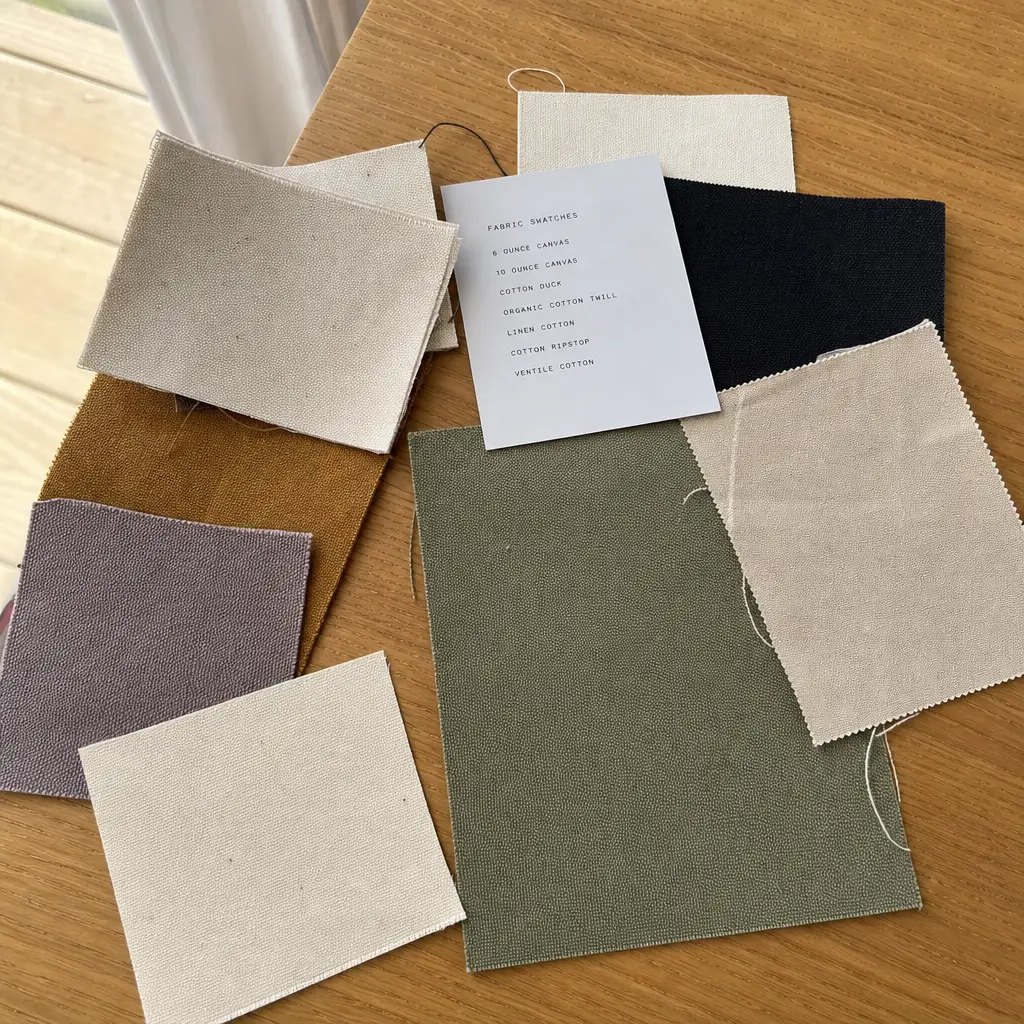
Cotton fabric weight changes both cost and perceived value. For salon giveaways containing sachets or small samples, 4 oz cotton, roughly 135 to 150 GSM, can be acceptable if the pouch is not expected to carry heavy products. For salon retail sets or haircare minis, 5 oz to 6 oz cotton, about 170 to 200 GSM, usually feels more suitable and gives better opacity. Heavier canvas can be used, but it often turns a simple pouch into a premium gift bag with a different price level.
GSM alone is not enough. A tightly woven 170 GSM fabric can print better than a loose 200 GSM fabric. Natural cotton may include seed flecks, shade variation, and small slubs, which many beauty brands accept as part of a natural look. If the salon brand requires a clean luxury appearance, bleached or dyed cotton may be better, but it adds process cost, longer lead time, and color-control risk.
- Use 4 oz cotton for high-volume, low-load sampling campaigns.
- Use 5 oz to 6 oz cotton for most salon retail kits and gift-with-purchase pouches.
- Use 8 oz or heavier only when the pouch must feel structured or carry heavier tools.
- Request fabric photos under natural light and close-up weave photos before sample approval.
- State whether seed flecks and natural shade variation are acceptable.
Size and Capacity Affect Waste More Than Many Buyers Expect
A pouch that is 1 cm taller or wider does not only use slightly more fabric. It may also reduce cutting efficiency across the fabric width, especially when the factory nests many panels together. For a salon chain ordering thousands of pouches, poor size planning can add cost without improving product fit. The most common mistake is specifying the finished pouch based on the flat product dimensions without leaving space for product thickness and drawstring closure.
Procurement should request a size recommendation after sending the exact contents. A pouch for two 100 ml haircare tubes needs different clearance from a pouch for sachets, combs, or a small brush. If the pouch closes too close to the product top, the drawstring channel becomes stressed, the opening looks awkward, and store staff may struggle to pack kits quickly.
- Send product dimensions, product weight, and a photo of the intended set layout.
- Allow extra height above the product so the drawstring can close naturally.
- For bulky contents, test the pouch with real products, not paper templates only.
- Avoid excessive empty space because it increases fabric cost and looks under-filled.
- For multiple kit versions, design around the largest reasonable content set instead of making many near-identical sizes.
Construction Choices That Change Price and Durability
The standard salon-chain pouch normally uses two fabric panels or one folded panel, side seams, an overlocked interior, and a drawcord channel at the top. This is efficient and suitable for most promotional and retail packaging. Upgrades such as French seams, lining, boxed bottom, double drawcords, metal cord ends, or custom labels can improve appearance, but each one adds sewing time and sometimes increases the defect rate.
The drawcord is easy to overlook. Thin polyester cord is cheap and consistent, but it may not match a natural cotton brand position. Cotton cord looks better with natural fabric and feels softer in hand. However, cotton cord can shrink, fray, or shed lint if the quality is poor. For salon chains, the drawcord should be tested with repeated opening and closing because store staff may handle hundreds of pouches during kit assembly.
- Standard inside overlock seams are usually enough for sample and retail gift pouches.
- French seams look cleaner but add labor and may reduce internal capacity slightly.
- A boxed bottom helps standing presentation but increases cutting and sewing complexity.
- Cotton cord is brand-consistent; polyester cord may be cheaper and more stable.
- Set drawcord length so the pouch can be tied after it is filled with real contents.
Printing Cost Depends on Artwork, Not Only Quantity
For most salon logos, screen printing is the cost-effective choice. It works well for one-color or two-color marks, simple taglines, and repeat orders. The cost includes screen setup, ink, print labor, drying, handling, and print loss. If the same logo repeats over several orders, the supplier may be able to reuse the screen for a period, but this should be confirmed in writing because storage rules differ by factory.
Digital print or heat transfer can make sense when the salon chain needs short runs with many store names, seasonal artwork, influencer kit graphics, or full-color designs. The tradeoff is usually higher unit cost and more surface-feel considerations. Small text, fine hairline artwork, pale ink on natural cotton, and low-contrast colors need physical testing, not only a PDF proof.
- For one-color logos, request screen print pricing with print size stated in centimeters.
- For two or more colors, clarify registration tolerance and whether colors touch each other.
- For fine text, set a minimum stroke width and approve an actual print strike-off.
- For dark dyed pouches, confirm whether underbase printing is required.
- For many artwork versions, compare total cost including setup, not only the base pouch price.
MOQ Logic: How Factories Build the Minimum Order
MOQ is not just a sales rule. It usually comes from fabric procurement, dyeing minimums, cutting efficiency, print setup, and packing labor. If the buyer selects stock natural cotton, standard size, and one-color print, MOQ can often be more flexible. If the buyer requires custom dyed cotton, custom cord color, woven labels, individual barcoding, or many artwork splits, MOQ and setup charges move up quickly.
Salon chains often need several artwork versions for regions, sub-brands, or seasonal promotions. A practical way to control MOQ is to keep fabric, size, construction, and cord the same, then split only the print. This allows the factory to cut and sew one bulk production run and manage decoration in smaller batches. It does not remove all setup charges, but it usually reduces waste and simplifies inspection.
- Lowest MOQ route: stock natural cotton, standard cord, standard size, one print color.
- Higher MOQ route: dyed fabric, custom cord, custom label, special packing, or many SKU splits.
- Best consolidation method: same pouch body with different print designs.
- RFQ wording should separate total order quantity from quantity per artwork.
- Quote comparison should show whether MOQ is per size, per fabric color, or per logo design.
Packing Can Add More Cost Than a Fabric Upgrade
Packing is a major cost driver for salon chains because the destination may be a central warehouse, distributor, e-commerce packer, or individual store network. Bulk packing by 50 or 100 pieces per inner bag is usually the lowest-cost option. It works when the buyer or distributor will assemble the final kits later. Individual packing looks cleaner but adds material, labor, volume, and sometimes plastic-reduction concerns.
Retail teams sometimes request individual OPP bags because they appear neat in sample photos. Before approving that choice, compare it with glassine bags, paper belly bands, or simple bulk packing with carton liners. The right answer depends on how the pouch will be handled after arrival. If store staff remove every pouch from an individual bag before filling it, that packing cost becomes waste.
- For warehouse kit assembly, use bulk inner bags and clear carton labels.
- For direct store delivery, consider smaller inner packs to reduce counting errors.
- For premium gifting, compare OPP, glassine, tissue wrap, and paper band options.
- Set carton gross weight limits so cartons are not too heavy for store handling.
- Require carton marks that match PO number, SKU, artwork version, quantity, and destination.
Sample Approval Should Lock the Commercial Spec
A cotton pouch sample is not only for brand appearance. It should lock the commercial specification that the quote is based on. If the sample uses better fabric, thicker cord, sharper print, or nicer packing than the quoted production, the bulk order will disappoint the brand team. The pre-production sample should use bulk-intended fabric, bulk-intended drawcord, final print method, final artwork size, and proposed packing.
For salon chains, sample testing should include real product insertion. Fill the pouch with the actual tubes, jars, sachets, combs, or tools. Open and close it repeatedly. Place the printed pouch next to salon retail packaging under normal store lighting. This catches size, opacity, print contrast, cord function, and lint issues before bulk cutting starts.
- Measure flat finished size and compare it with the tolerance in the PO.
- Weigh a fabric swatch or request a GSM test result from the factory.
- Rub the print lightly with a dry and damp white cloth to screen for obvious ink transfer.
- Pull the drawcord several times to test smoothness and channel stitching.
- Approve the sample with signed comments, not only by email saying looks good.
Lead Time Risks Hidden Inside a Simple Pouch Order
The basic production flow is fabric preparation, cutting, printing, sewing, trimming, inspection, packing, and export handover. For repeat natural cotton pouches with simple printing, production can be relatively straightforward after sample approval. Risk increases when the order uses dyed fabric, multiple artwork versions, individual packing, urgent store allocations, or a shipping window tied to a salon campaign launch.
Buyers should treat artwork approval and sample approval as schedule gates. A delayed logo file or unclear Pantone reference can consume more time than sewing. Peak-season congestion also matters because small pouch orders may be scheduled behind larger bag programs unless the production slot is reserved. The RFQ should request a timeline with milestones, not just a final delivery promise.
- Artwork review: vector file, print size, color reference, and placement confirmed.
- Sample stage: prototype or print strike-off approved before bulk material commitment.
- Material stage: fabric and cord availability confirmed before deposit schedule is set.
- Production stage: cutting, printing, sewing, trimming, and packing dates shown separately.
- Shipping stage: cargo ready date distinguished from arrival date at buyer warehouse.
Quote Data Needed for a Fair Landed-Cost Comparison
A salon chain comparing suppliers should build a quote sheet that goes beyond FOB unit price. Two quotes can look similar at the pouch level but differ sharply after screen charges, sample costs, carton volume, packing labor, SKU separation, and freight are included. Landed cost is especially important for bulky low-value goods because carton utilization can change freight cost per pouch.
The best quote format shows unit cost at target quantity, cost by artwork split, setup charges, sample charges, packing cost, carton quantity, carton measurements, gross weight, production lead time, and payment terms. If the order ships to multiple destinations, add labeling and sorting cost. This data allows procurement to compare the real cost of a central DC shipment versus a store-ready distribution plan.
- Request FOB unit price and EXW price if your forwarder manages pickup.
- Add one-time charges separately: screens, sample, artwork, mold or label setup if any.
- Include carton CBM and gross weight to estimate freight impact.
- Show price breaks at realistic reorder levels, not only the launch quantity.
- Require a validity period for the quote because cotton and freight costs can move.
Specification comparison for buyers
| Spec decision | Recommended option | When it fits | Buyer risk to check |
|---|---|---|---|
| Fabric weight for salon retail sets | 5 oz to 6 oz cotton, about 170 to 200 GSM | Suitable for haircare minis, combs, brushes, sample kits, and counter gifts where the pouch should not look too thin | Very loose weave can distort print edges; request fabric GSM, weave photo, and shrinkage tolerance before bulk approval |
| Fabric weight for lightweight sample giveaways | 4 oz cotton, about 135 to 150 GSM | Works for low-cost sample sachets, travel-size masks, loyalty gifts, and high-volume promotional use | Dark contents may show through natural cotton; test opacity with the real product set before confirming |
| Pouch construction | Single drawcord channel with inside overlock seams | Best cost-performance choice for most salon chains ordering multiple store drops | Uneven channel width can make pulling rough; set channel width and drawcord length in the tech pack |
| Drawcord material | Natural cotton cord, 3 mm to 5 mm diameter | Matches eco-positioned salon brands and feels better than thin polyester cord | Cotton cord can shrink and fray if untreated; review cord end finish and pull-test result |
| Print method for one or two-color salon logos | Screen printing with water-based or pigment ink | Best balance for repeat orders, sharp logo marks, and moderate MOQs | Small text below 1.5 mm stroke width can fill in; approve a physical print strike-off |
| Print method for many SKUs or store names | Digital print or heat transfer depending on artwork | Useful for short runs, regional salon events, influencer kits, or mixed artwork batches | Per-unit cost rises quickly; confirm wash/rub resistance and color consistency across batches |
| MOQ structure | Negotiate by fabric and pouch size, then split print designs | Helps salon chains combine seasonal campaign designs without paying separate fabric setup each time | Some factories quote low MOQ but charge hidden setup fees; require line-item costs for cutting, print screen, and packing |
| Retail-ready packing | Bulk inner polybag by 50 or 100 pieces, then export carton | Lowest cost for salon warehouse or distributor repacking | Creasing and dust contamination increase if cartons are overpacked; define fold method and carton weight limit |
| Premium gift packing | Individual OPP, glassine, or paper band only when needed | Fits holiday kits, franchise opening packs, and direct-to-store merchandising | Packing labor and material can exceed the pouch upgrade cost; compare total packed unit cost, not pouch-only price |
Buyer checklist before sampling
- Define the pouch use case first: sample giveaway, retail gift-with-purchase, holiday kit, franchise opening pack, or e-commerce add-on.
- List the exact contents with dimensions and weight, then add clearance for drawstring closure and hand insertion.
- Specify cotton weight in oz and GSM, not only terms such as thin, premium, or natural cotton.
- Decide whether natural cotton shade variation is acceptable, or whether bleached, dyed, or Pantone-matched fabric is required.
- Provide artwork in vector format with print size, print position, color references, and minimum acceptable logo sharpness.
- Separate pouch cost, print setup, sampling, packing, carton, and inland freight in the quote comparison sheet.
- Request one pre-production sample using bulk fabric, bulk cord, final print method, and final packing.
- Set measurable QC tolerances for size, GSM, print placement, drawcord length, seam strength, and carton quantity.
- Confirm whether the order ships to one DC, multiple salon warehouses, or direct store addresses before pricing packing and labels.
- Record reorder assumptions: same fabric, same size, same logo screen, forecast quantity, and expected replenishment month.
Factory quote questions to send
- What cotton fabric weight are you quoting in oz and GSM, and is it greige, bleached, dyed, or washed?
- Is the quoted fabric already in stock, or does it require weaving, dyeing, or finishing before cutting?
- What are the exact finished pouch dimensions, and what tolerance do you apply after sewing and pressing?
- What drawcord diameter, material, color, and end finish are included in the base price?
- Which print method is included, what is the maximum print area, and how many colors are included?
- Are screen charges, artwork adjustment, print strike-off, and pre-production sample costs included or separate?
- Can the MOQ be split across several artwork versions if size and fabric remain the same?
- What packing method, pieces per inner bag, carton dimensions, carton gross weight, and carton quantity are quoted?
- What is the production lead time after sample approval and deposit, and how does it change during peak season?
- What inspection standard will be used for size, print, stitching, stains, odor, drawcord function, and packing accuracy?
Quality-control points to confirm
- Finished size tolerance: commonly plus or minus 5 mm for small pouches and plus or minus 10 mm for larger pouches, unless a tighter tolerance is agreed.
- Fabric weight tolerance: bulk GSM should normally stay within about plus or minus 5 percent of approved sample fabric.
- Print placement tolerance: set an acceptable shift, commonly within 3 mm to 5 mm depending on pouch size and artwork.
- Logo clarity: no major ink bleeding, missing strokes, heavy pinholes, or visible registration shift on approved viewing distance.
- Seam strength: side seams and drawcord channel should withstand repeated opening and closing without popped stitches.
- Drawcord function: both sides should pull smoothly, with no cord trapped in the seam or too short to tie after filling.
- Cleanliness: reject obvious oil marks, colored thread contamination, mildew odor, excessive lint, or dirt on retail-facing surfaces.
- Packing accuracy: verify pieces per inner bag, carton count, SKU label, store label if applicable, and mixed-design separation.