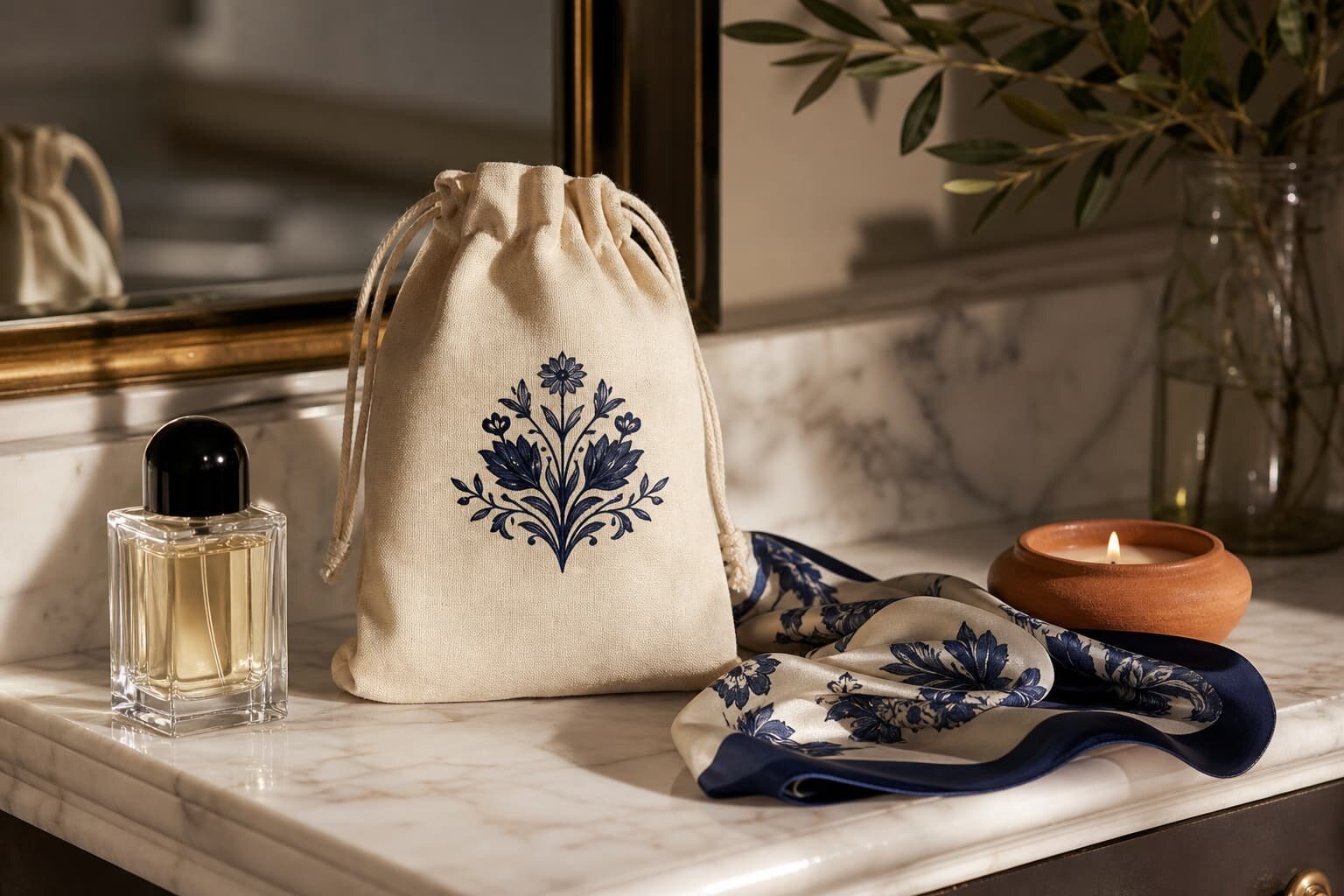
Why Cord Pull Strength Belongs in the RFQ
A cotton drawstring pouch usually fails in a very specific place: the cord still looks acceptable, but the fabric tunnel tears, the side opening splits, or the cord slips inside the channel during packing or consumer use. For a buyer, this is not a small cosmetic issue. It can stop a packing line, damage the retail presentation, or create returns when customers cannot close the pouch properly.
Many RFQs mention pouch size, fabric color, and logo print, but leave the cord performance undefined. The factory then quotes a standard construction based on price, not on your fill weight or reuse expectation. A practical cord pull test guide gives both sides a common language: what is being pulled, in which direction, at what load, for how long, and what counts as failure.
- Use a cord pull test when the pouch holds cosmetics, glass, jewelry, hardware, candles, samples, accessories, or any item with meaningful weight.
- Include the test even for light goods if the pouch is part of reusable brand packaging.
- Do not rely on a closed-pouch photo as proof of performance; it does not show channel strength.
- Treat cord performance as a construction specification, not an afterthought after artwork approval.
Define the Pouch Load Before Choosing Cord
The correct cord is not selected only by appearance. It depends on pouch size, packed item weight, how tightly the pouch must close, and whether the consumer is expected to reuse it. A 10 x 14 cm cotton pouch for a jewelry box does not need the same cord diameter or channel seam strength as a 25 x 35 cm pouch holding a glass bottle, candle, or promotional kit.
Procurement teams should state the expected maximum packed weight and product shape in the RFQ. Sharp corners, rigid boxes, and heavy cylinders put extra stress on the top channel when the pouch is lifted or pulled closed. If the factory only receives dimensions, they may quote a lightweight 2-3 mm cord and standard top fold that looks fine in sampling but stretches or tears in bulk use.
- Light use: small jewelry, soap, cards, sachets, or retail inserts often work with 2.5-3 mm cord and 100-140 GSM cotton.
- Medium use: cosmetics, candles, accessories, and gifting items usually need 3-5 mm cord and 140-180 GSM cotton.
- Heavier use: bottles, tools, kits, or dense promotional packs may need thicker cord, stronger channel stitching, and 180-220 GSM fabric.
- If the pouch will be lifted by the cord, say so clearly; closing a pouch and carrying a pouch are different performance requirements.
Fabric GSM and Channel Strength Work Together
Cotton fabric weight affects how the drawstring channel behaves under load. Very light cotton, such as 80-100 GSM, can be suitable for disposable or low-cost gift packaging, but the channel may distort if the cord is pulled hard. Medium weights from 120-180 GSM are common for branded drawstring pouches because they balance print clarity, sewing speed, closure function, and perceived value.
Heavier cotton is not automatically stronger in the finished pouch. If 220 GSM canvas is folded into a narrow channel, the top becomes bulky and the cord may drag. The factory may reduce seam allowance or change stitch tension to get through production, which can create weak points. The RFQ should connect GSM, channel width, cord diameter, and sewing method instead of treating fabric weight as a standalone decision.
- For 3 mm cord, allow enough channel width so the cord moves smoothly after washing, steaming, or compression.
- For 5 mm cord, check that the tunnel does not become too bulky at side seams and top corners.
- For dyed cotton, confirm colorfastness if white or light cords will rub against the channel.
- For natural cotton, accept realistic seed specks or request a cleaner bleached base if print appearance is critical.
How to Specify a Practical Cord Pull Test
A useful cord pull test should reflect how the pouch will be used, not a laboratory term copied without context. At minimum, define the sample position, pull direction, load, hold time, and failure criteria. For example, the pouch can be filled with the target product weight, the cord pulled outward from the channel opening, and the seam observed for tearing, stitch breakage, or cord slippage.
For many commercial cotton pouches, buyers use a combination of static pull and functional cycle checks. Static pull checks whether the channel and cord can handle short stress. Cycle testing checks whether repeated opening and closing causes loosened stitching, cord fray, or tunnel distortion. The exact load should match the item and risk level; avoid copying a number from another product category without considering pouch size and fabric.
- Define test sample quantity, such as pieces from each size, color, and production line.
- State whether the pouch is tested empty, filled with target product weight, or loaded with a defined test weight.
- Set pull direction: one cord end, both cord ends, vertical lift, side pull, or repeated closure pull.
- List failures: torn fabric, broken stitches, cord detachment, cord disappearing into the channel, severe fraying, or closure not functioning.
- Keep the same method for sample approval, in-line QC, and final inspection.
Cord Construction Choices That Affect Cost and Failure
Cotton cord is common because it matches the natural look of a cotton pouch and accepts dye reasonably well. However, buyers should not approve cord by color alone. Twist density, braid structure, diameter tolerance, fiber shedding, and end finishing all affect performance. A soft loosely twisted cord may feel pleasant but can flatten after repeated pulls, especially in a tight channel.
Polyester cord, blended cord, or waxed cord may be used when a cleaner surface, stronger tensile strength, or brighter color is required. The trade-off is appearance and sometimes sustainability positioning. If the brand message depends on cotton or natural fiber, specify that clearly. If performance is more important than fiber claim, ask the factory to quote options and explain how each one changes pull strength and closure feel.
- Cotton cord: natural hand feel, good for eco-style packaging, but can fray if ends are not controlled.
- Braided polyester cord: stronger and cleaner, but may look less natural against unbleached cotton.
- Flat cotton tape: good branding surface and soft feel, but needs a wider channel and may twist.
- Knotted ends: economical, but knot size must not scratch or catch on the packed product.
- Metal or plastic tips: neat finish, but add cost, MOQ, and compliance questions for some markets.
Print Placement Can Weaken or Distort the Closure
The cord pull issue is often connected to printing. When a logo is placed too close to the top channel, the artwork can disappear into folds when the pouch is closed. If the print layer is thick or poorly cured, repeated gathering near the printed area can cause cracking. This is especially visible on dark ink screen prints, metallic ink, puff print, and some heat transfer films.
For cotton drawstring pouches, screen printing is usually the most practical method for solid logos and simple brand marks. Heat transfer can work for detailed graphics, but buyers should confirm that the film remains flexible when the fabric gathers. Embroidery adds weight and can look premium, but on small pouches it may stiffen the panel and interfere with smooth closure if placed too high.
- Keep the logo below the gathered zone unless the brand accepts distortion when closed.
- Ask for open and closed sample photos so the buyer can see how the print looks in real use.
- For screen print, confirm ink curing and rub resistance before approving shipment.
- For heat transfer, test cracking after repeated opening and closing.
- For embroidery or woven labels, confirm needle holes and label seams do not weaken the side channel.
Sample Approval Should Use Bulk-Like Materials
A common sourcing mistake is approving a drawstring pouch sample made from available stock fabric and substitute cord, then discovering the bulk production feels different. Cord pull performance depends heavily on actual material combinations. If the bulk cord has a slightly larger diameter or the fabric is dyed and shrunk differently, the channel may become tight or the stitching may strain.
The sample approval process should include a visual sample, a functional closure check, and a pull test on the same construction intended for bulk. If exact bulk fabric is not available at first sample stage, mark the sample as construction reference only and require a pre-production sample before mass sewing. This avoids approving a pouch that is attractive but not representative.
- Request sample tags noting fabric GSM, cord diameter, print method, sewing date, and whether materials are final.
- Check pouch dimensions flat, then check usable internal size after the top is gathered.
- Open and close the pouch repeatedly before judging cord smoothness.
- Turn the pouch inside out to inspect seam allowance and channel backtacks.
- Keep one approved sealed sample for buyer reference and one for factory production reference.
MOQ and Quote Logic for Drawstring Pouch Programs
MOQ is not only about the number of pouches. It is driven by fabric purchase quantity, dye lot, cord color, print setup, sewing efficiency, and packing method. A program with one pouch size, one cotton color, one cord color, and one screen print is much easier to quote than five sizes with separate cord colors and small print runs.
If buyers need multiple SKUs, the RFQ should group specifications where possible. Using the same fabric GSM and cord color across sizes can reduce material waste and simplify QC. Changing only the print artwork may still require separate screen setup, but it is usually easier than changing fabric color, cord type, and packing style for each SKU.
- Ask whether MOQ applies per size, per fabric color, per cord color, or per print design.
- Request a price ladder for realistic quantities instead of one target number only.
- Clarify whether sample cost is refundable or separate from bulk pricing.
- Ask if cutting waste changes when moving from small pouches to larger pouches.
- Confirm whether spare cords, labels, or hangtags require separate MOQ.
Lead Time, Packing, and Transit Risks
Lead time for cotton drawstring pouches is affected by fabric readiness, dyeing, printing, sewing capacity, inspection, and packing. A realistic schedule separates sample approval from bulk production. If the buyer changes cord color, print size, or pouch dimensions after approval, the factory may need to remake screens, reorder cord, or adjust sewing folders, which changes timing.
Packing also affects cord condition. Pouches packed too tightly can arrive with crushed channels, cord marks, or distorted knots. Dyed cords may transfer color if humidity is high and packing is poor. For retail or gift programs, the pouch may be a visible part of the product experience, so carton compression and moisture control should be included in the quote discussion.
- Ask for lead time by stage: sampling, material preparation, printing, sewing, QC, and packing.
- Specify whether pouches are flat packed, bundled, individually polybagged, or packed with hangtags.
- Confirm carton count, carton size, gross weight, and whether cords are arranged to avoid tangling.
- Use inner polybags or moisture protection when shipping dyed cotton or long sea freight routes.
- Request packing photos before shipment if the pouch is retail-facing.
Acceptance Criteria for Final Inspection
Final inspection should not only count pieces and check logo color. For drawstring pouches, function matters. The inspector should close and open pieces from different cartons, check cord movement, inspect channel seams, measure finished dimensions, and perform the agreed pull test. If the pouch is tested only flat on a table, many functional defects will be missed.
Acceptance criteria should be clear enough that the factory QC team and third-party inspector make the same decision. Define what is critical, major, and minor. A broken channel stitch or cord trapped inside the tunnel is usually major or critical depending on use. A small loose thread may be minor if it does not affect function, but excessive loose threads near the cord opening can become a functional risk.
- Critical: cord detaches, channel tears, pouch cannot close, wrong material, unsafe sharp tip, or severe color transfer.
- Major: broken stitches at channel, wrong cord diameter, print cracking, large size deviation, or repeated cord jamming.
- Minor: trimable loose thread, slight fabric slub within approved standard, or small packing wrinkle.
- Functional check: open-close cycles and pull test must be performed on random production pieces.
- Documentation: inspection report should include close-up photos of channel openings, cord ends, and failed pieces if any.
Specification comparison for buyers
| Spec decision | Recommended option | When it fits | Buyer risk to check |
|---|---|---|---|
| Cord material | 3-5 mm cotton cord for most reusable pouches | Cosmetics, jewelry, gifts, retail inserts, light accessories | Untwisted or loosely braided cord may flatten, fray, or slip during repeated pulling |
| Fabric weight | 120-180 GSM cotton for small to medium pouches | Brand packaging where hand feel and print clarity matter | Too light may tear near the channel; too heavy may bulk at the cord tunnel |
| Channel construction | Folded top channel with lockstitch and backtack at side openings | Standard two-cord closure pouches and premium single-cord styles | Openings can split if seam allowance, stitch density, or backtack length is not specified |
| Pull test load | Define static pull load plus functional open-close cycles | Orders where pouch will be reused or packed with weighted goods | A one-time visual check does not catch cord slippage or tunnel tearing |
| Print method | Screen print for solid logos; heat transfer only after cord area clearance is confirmed | Brand logos, event packaging, product inserts | Print too close to channel can crack, distort, or be hidden when pouch is gathered |
| Sampling route | Pre-production sample using actual cord, fabric GSM, sewing line, and print method | Any first order, new size, new cord, or heavier fill weight | Approval sample made with substitute cord gives false pull-test results |
| Packing style | Flat packed with cords arranged, not crushed under carton compression | Retail-ready pouches and gift packaging components | Cord memory, creasing, dye transfer, or channel distortion after long transit |
| MOQ logic | Group sizes by same fabric, same cord, same print ink, and similar sewing setup | Multiple pouch sizes for one brand program | Splitting too many colors or sizes can raise setup cost and weaken production consistency |
Buyer checklist before sampling
- Confirm pouch size as usable internal size after sewing, not just cut panel size.
- Specify fabric composition, GSM, weave, color, shrinkage tolerance, and whether cotton must be greige, bleached, dyed, or organic.
- Define cord material, diameter, color, end finish, number of cords, and whether draw is one-sided or two-sided.
- Set a cord pull test load, pull direction, hold time, number of cycles, and pass/fail rules before sampling.
- Require the pull test on actual pre-production materials, not substitute cord or available stock fabric.
- Keep logo artwork away from the cord channel and gathered area unless distortion is accepted.
- State stitch density, seam allowance, backtack position, and reinforcement requirements at channel openings.
- Ask for sample photos showing the pouch open, closed, inside out, cord ends, and channel close-ups.
- Define packing method, carton compression limit, moisture protection, and whether pouches are flat packed or bundled.
- Request quote breakdown by fabric, cord, printing, sewing, packing, sampling, and inland freight or export handling where applicable.
Factory quote questions to send
- What fabric GSM and construction will you use for this pouch size and fill weight?
- What cord material, diameter, braid or twist type, and color matching method are included in the quote?
- What cord pull load and cycle test can your factory perform in-line and before shipment?
- Will the sample use actual bulk fabric, actual cord, and the final print method?
- How will you reinforce the channel openings and prevent tearing during repeated pulling?
- What is the recommended minimum seam allowance and stitch density for this pouch size?
- How close can the logo print be placed to the drawstring channel without distortion after closing?
- What MOQ applies if we need multiple pouch sizes, cord colors, or print colors?
- What is the realistic lead time for sampling, material preparation, printing, sewing, QC, and packing?
- How will pouches be packed to prevent cord tangling, crushing, moisture marks, or color transfer in transit?
Quality-control points to confirm
- Measure finished pouch width and height after sewing and compare against usable-size tolerance.
- Check fabric GSM, hand feel, shade consistency, weave defects, slubs, and shrinkage if washing or steaming is expected.
- Pull each cord from both directions to confirm smooth closure without sticking, twisting, or slipping into the channel.
- Inspect channel openings for backtack length, broken stitches, seam allowance, and loose threads.
- Perform defined cord pull test on production pieces, including static load and repeated open-close cycles.
- Check print registration, ink coverage, curing, rub resistance, and distance from the gathered top edge.
- Confirm cord end finish is consistent and does not fray, shed fibers, or scratch the product packed inside.
- Review packing count, bundle method, carton strength, moisture control, and whether cords are trapped or compressed.