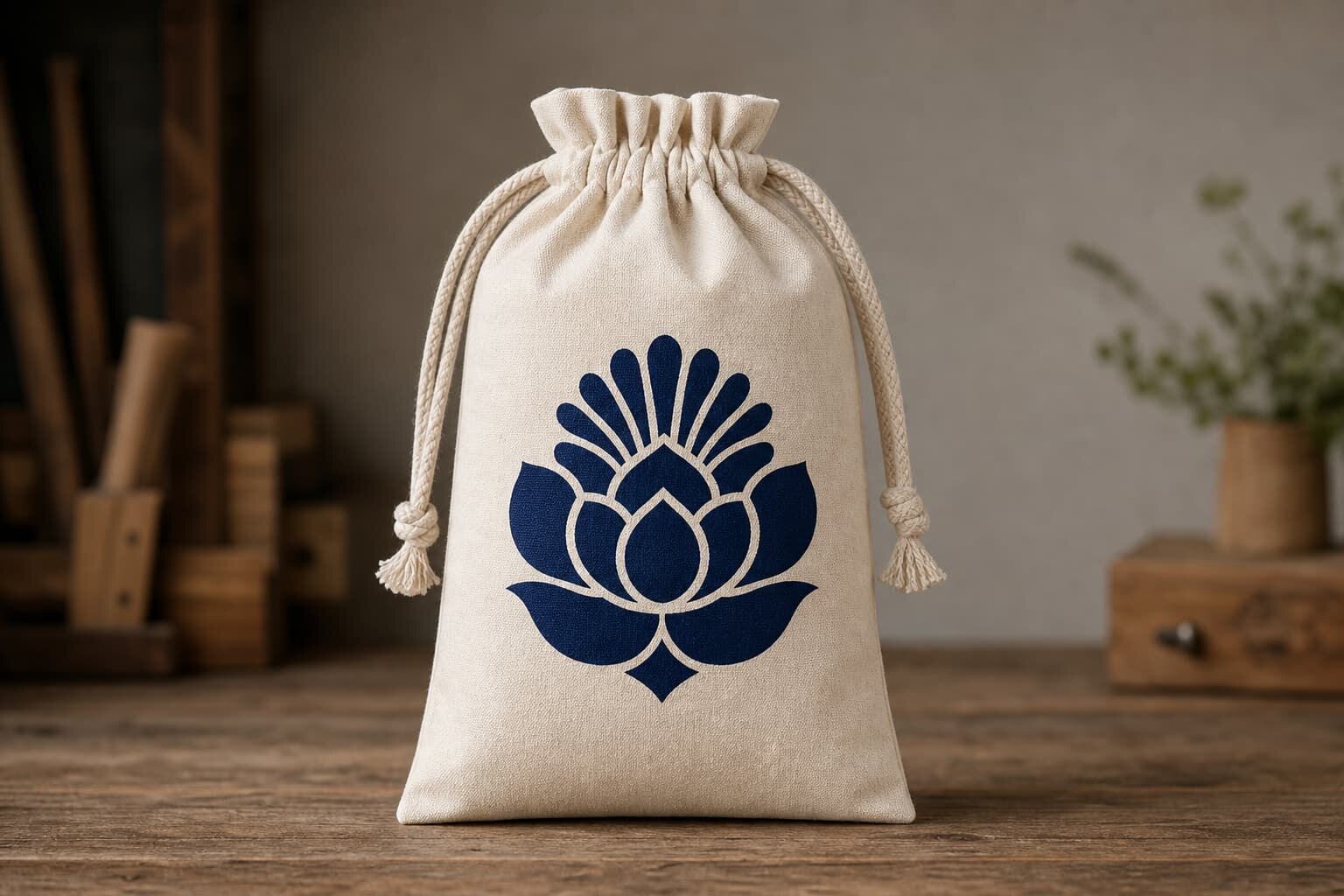
Why Color Proofing Fails on Cotton Pouches
A cotton drawstring pouch looks simple, but color approval is one of the most common causes of sample delays and bulk disputes. The buyer approves a clean PDF artwork, the factory prints on a loose cotton weave, and the final logo appears warmer, duller, darker, or less sharp than expected. The problem is usually not one single mistake. It is a missing color proof process covering fabric shade, ink behavior, cord color, and packed appearance.
Procurement teams should treat the color proof as a controlled production checkpoint, not as a cosmetic sample photo. Cotton absorbs dye and ink differently depending on GSM, yarn, finishing, and whether the fabric is natural, bleached, or dyed. A good RFQ should tell the supplier what must be matched, how it will be checked, and what sample stage must be approved before cutting bulk fabric.
- Do not approve color from a laptop or phone screen without a physical reference.
- Separate body color approval from logo color approval; they are produced by different processes.
- Ask the factory to confirm whether the sample fabric is the same GSM and finish as bulk production.
- Keep color comments measurable: too yellow, too red, too dark, weak coverage, ink bleeding, off-position.
Define the Base Fabric Before You Discuss Color
Color proofing starts with fabric specification. A 4 oz cotton pouch and a 10 oz cotton pouch can use the same Pantone target and still look different because the surface texture, absorbency, and weave density change the perceived color. For drawstring pouches used as jewelry bags, cosmetic packaging, hotel amenity bags, promotional gift packs, or accessory sleeves, common fabric weights usually sit between 4 oz and 10 oz, roughly 135 to 340 GSM depending on local conversion and fabric construction.
If the pouch is natural cotton, the buyer should understand that unbleached cotton is not a fixed white. It can lean cream, beige, yellow, or grey depending on cotton origin and finishing. If the buyer needs a stable brand look across repeat orders, bleached cotton or custom dyed cotton may be easier to control, but it adds MOQ, lead time, and possible color approval rounds.
- 4 oz to 5 oz cotton: light gift packaging, low unit weight, more show-through and softer logo edges.
- 6 oz to 8 oz cotton: common retail and promotional pouch range, better print surface and stronger hand feel.
- 10 oz cotton canvas: premium pouch feel, more structure, higher cost, thicker drawcord channel requirements.
- Natural unbleached cotton: lower dye processing, but shade variation must be accepted in writing.
- Custom dyed cotton: better brand color control, but MOQ is usually driven by dye lot economics.
Choose the Right Color Standard
Many color problems begin because the RFQ says “match our logo color” but attaches only a JPEG. A factory can quote from that file, but it cannot responsibly control bulk color from it. For cotton drawstring pouches, the buyer should provide a Pantone reference, physical swatch, approved previous sample, or color card. For fabric, Pantone TCX or TPX is usually more relevant than coated paper references. For print ink, many factories still work from Pantone C or U as a practical mixing target, but the final approval must be on cotton fabric.
The safest approval package includes a physical reference and a written tolerance. Not every importer needs formal spectrophotometer data, but the approval language should prevent subjective arguments later. If your brand has strict global packaging standards, ask whether the factory can measure Delta E and under which light source. If not, define visual approval using signed samples and lighting conditions.
- For fabric body color: provide Pantone TCX/TPX or a real fabric swatch.
- For printed logo color: provide Pantone C/U plus the final artwork file.
- For natural cotton: provide an approved shade range sample, not only the word “natural.”
- For repeat orders: send the previous production pouch or keep sealed retains with the factory.
- For strict programs: specify light source, observer angle, and acceptable Delta E if your company uses it.
Match Print Method to Artwork and Cotton Surface
Screen printing is often the most practical method for cotton drawstring pouches because it handles solid spot colors well and keeps cost stable for bulk orders. It works best for simple logos, brand names, care icons, and limited-color artwork. The buyer should still request a strike-off on the same fabric GSM because ink coverage on cotton is affected by weave gaps and surface hairiness. A logo that looks sharp on paper can lose edge definition on 5 oz unbleached cotton.
Heat transfer can help with small text, gradients, full-color graphics, or QR codes, but buyers should check film hand feel, edge visibility, and resistance to peeling. Embroidery is possible on heavier cotton or canvas pouches, yet it can distort small pouches and tighten fabric around the stitch area. Woven labels or sewn side labels are useful when the buyer wants repeatable brand color without printing directly onto a variable cotton surface.
- Use screen print for solid one-color or two-color logos with enough line thickness.
- Use heat transfer when fine detail is more important than a soft natural hand feel.
- Use embroidery only after checking fabric puckering and inside thread exposure.
- Use woven labels when logo color consistency matters more than large front branding.
- Avoid very fine reversed text on loose-weave cotton unless the factory proves it by strike-off.
Approve the Right Sample Stages
A sample photo is not a color proof. For a custom cotton drawstring pouch, the useful sequence is lab dip or fabric swatch, print strike-off, pre-production sample, and sealed approval sample. Not every order needs every stage, but skipping all physical proofing is risky if the pouch is part of retail packaging or a branded gift set. The bigger the order quantity and the stricter the brand color, the more disciplined the approval process should be.
The pre-production sample should use the confirmed fabric weight, final body shade, final drawcord, final print method, and actual sewing construction. If the factory uses a substitute fabric only to show size, the sample must be clearly marked as construction sample only. Buyers should not allow a size sample to become the color approval sample unless all materials match bulk production.
- Lab dip: approves custom fabric color before bulk dyeing.
- Fabric swatch: confirms natural or stock fabric shade before cutting.
- Print strike-off: proves ink color, opacity, and edge quality on final fabric.
- Pre-production sample: confirms the complete pouch before bulk production.
- Sealed approval sample: becomes the reference for inspection and dispute control.
Check Color Under Real Use Conditions
Cotton drawstring pouches are often viewed in mixed lighting: warehouse LED, retail shelf lighting, hotel room lighting, daylight at events, or ecommerce photography. A color that looks acceptable under cool daylight may look too yellow under warm light. This matters for natural cotton, cream, beige, black, navy, kraft-style tones, and muted brand colors. Procurement teams should check the proof under at least two conditions before giving written approval.
Also check color after handling. Rub the printed logo with a dry white cloth and then with a lightly damp cloth. Fold the pouch as it will be packed, press it for a short time, and check whether ink transfers to the opposite side. If the pouch will contain cosmetics, candles, accessories, or food-adjacent gift items, ask whether any additional rub, odor, or residue checks are required by your internal policy.
- Compare proof against the color standard in daylight-equivalent light, not only office lighting.
- Photograph the sample for records, but approve the physical sample, not the photo.
- Check print color after full curing or drying, not immediately after printing.
- Fold and stack samples to see whether fresh ink offsets under pressure.
- Smell the sample after packing; strong ink or dye odor can create buyer complaints.
MOQ Logic Behind Color Proof Decisions
Color choices affect MOQ more than many buyers expect. A natural cotton pouch with a one-color print may have a low order threshold because the factory can use available fabric and one print screen. A custom dyed pouch usually needs a minimum dye lot. A multi-SKU program with five pouch sizes and six body colors may look simple on a spreadsheet, but it can create thirty fabric, cutting, and print combinations if not planned carefully.
To control cost, group color decisions where possible. Use the same fabric color across several pouch sizes. Use one drawcord color across a collection. Keep print color consistent when the same logo appears on multiple SKUs. If each distributor or retail channel requests its own shade, ask the factory to quote by color lot and setup, not only by total order quantity. This prevents a misleading low average unit price.
- Ask MOQ per fabric color, not only total order MOQ.
- Ask MOQ per print design and print color count.
- Confirm whether drawcord color is stock or custom dyed.
- Combine sizes under one fabric dye lot when brand color must match.
- Expect higher sampling time when several colors require separate lab dips.
Packing Can Change the Final Color Result
Color approval does not end at the printing table. Cotton pouches are folded, stacked, bundled, compressed into cartons, and sometimes shipped through humid conditions. If ink is not fully cured or if pouches are packed too tightly, logo color can offset onto the back side or onto neighboring pouches. Dark prints on light natural cotton are especially easy to notice. White or metallic prints on dark cotton can show cracking or pressure marks after packing.
The buyer should approve the packing method together with the color proof when the pouch is a visible retail or gift-pack component. Confirm inner polybag quantity, folding direction, whether pouches are individually packed, carton lining, desiccant use, and carton weight. For natural cotton, moisture control is important because humidity can cause odor, mildew risk, carton softening, and color migration from dyed cords or labels.
- Check whether the printed face touches another printed face during packing.
- Use sufficient drying and curing time before bulk packing.
- Avoid over-compressed cartons for heavy canvas pouches with raised prints.
- Confirm individual polybag needs if pouches go directly to retail or fulfillment centers.
- Request carton drop and compression checks for heavy export cartons.
Lead Time Planning for Color Proof Approval
A realistic lead time should separate approval stages from production stages. Buyers often ask for a delivery date but forget to reserve time for lab dips, revised artwork, print strike-offs, courier transit, and internal brand approval. If the buyer takes six days to approve a color proof, the factory cannot usually absorb that delay without affecting the shipment schedule or using overtime.
For planning purposes, ask the supplier to break down the schedule into sampling, fabric preparation, printing, sewing, inspection, packing, and export handover. If the order uses natural stock cotton and a simple one-color screen print, sampling can be faster. If it uses custom dyed fabric, custom cord, special ink, or multiple colorways, the proofing stage should be treated as a real project milestone.
- Build approval time into the purchase order schedule, not only factory production time.
- Ask when bulk fabric will be cut; color changes after cutting can create waste and charges.
- Confirm whether print screens are made before or after final artwork approval.
- Reserve time for one revision round if the logo color or body shade is brand critical.
- Do not release bulk production based on verbal approval; send written approval with sample photos and version codes.
Quote Data Buyers Should Request
A useful quotation for cotton drawstring pouches should show more than unit price. To compare suppliers fairly, buyers need the fabric GSM, pouch size, seam construction, drawcord type, print method, number of print colors, packing method, sample policy, MOQ per color, and lead time assumptions. Without this detail, one supplier may quote 5 oz natural cotton with basic screen print while another quotes 8 oz dyed cotton with a print strike-off and stronger packing. The cheaper quote may not be the same product.
When reviewing quotes, separate cost drivers into material, decoration, labor, packing, sampling, and export handling. Ask which items are included and which are optional. This is especially important for distributors quoting their own customers, because a missing lab dip charge or underestimated MOQ can erase margin once the order becomes real.
- Fabric: composition, GSM, color source, shrinkage range, and finishing.
- Decoration: print method, print size, color count, setup charge, strike-off charge if any.
- Construction: pouch dimensions, seam allowance, drawcord channel, cord material and diameter.
- Packing: pieces per inner bag, pieces per carton, carton size, gross weight, desiccant if used.
- Commercial terms: MOQ by color, sample lead time, bulk lead time, payment terms, validity period.
Specification comparison for buyers
| Spec decision | Recommended option | When it fits | Buyer risk to check |
|---|---|---|---|
| Fabric color proof type | Lab dip for dyed fabric plus pre-production sample | Custom body color, seasonal retail packaging, brand color program | Do not approve from screen photos only; check shade under D65 and store lighting |
| Natural cotton pouch color | Unbleached 5 oz to 8 oz cotton with approved reference sample | Eco packaging, jewelry pouches, gift sets, cosmetic accessories | Natural cotton has lot-to-lot variation; define acceptable cream/yellow tone range |
| Logo print method | Screen print for solid spot colors | Most cotton drawstring pouch logos from 1 to 4 colors | Ink may look duller on coarse cotton; request strike-off on final GSM fabric |
| Fine artwork proof | Heat transfer or woven label if line detail is too small | Small icons, QR codes, fine serif text, multicolor graphics | Transfer film edge, hand feel, and wash/rub performance must be approved |
| Drawcord color | Match to pouch body or approved contrast Pantone | Retail sets where cord color is part of brand appearance | Cord dye lot can differ from body fabric; approve cord swatch separately |
| MOQ planning | Group colors by fabric dye batch and print setup | Multiple pouch sizes or same artwork across several SKUs | Small color splits increase unit cost and may force substitute stock fabric |
| Packing approval | Final sample packed in the intended polybag, carton, and inner quantity | Retail buyers, distributors, marketplace sellers, gift kit packers | Ink offset, cord indentation, and moisture issues may appear only after packed compression |
Buyer checklist before sampling
- Confirm pouch fabric composition, weave, GSM, and whether the body color is natural, bleached, reactive dyed, pigment dyed, or stock fabric.
- Provide Pantone TPX/TCX, physical swatch, previous approved sample, or brand color standard instead of relying on a web image.
- Approve body fabric color, drawcord color, print ink color, label color, and packaging label color as separate items.
- Request a print strike-off on the final fabric GSM before approving mass production artwork.
- Check the color proof under at least two lighting conditions, such as D65 daylight and warm retail lighting.
- Measure logo size, position, print coverage, edge sharpness, and registration against the approved technical drawing.
- Rub the printed area dry and lightly damp to check whether ink transfers onto fingers, tissue, or adjacent fabric.
- Compare the proof against the carton packing method if pouches will be folded, bundled, or compressed for export.
- Define approval status clearly: approved, approved with comments, or rejected and revised.
- Keep one signed sealed sample with the factory and one with the buyer for bulk inspection reference.
Factory quote questions to send
- What fabric GSM, yarn count, and shrinkage range are included in your quotation?
- Is the quoted pouch body made from stock fabric, custom dyed fabric, or natural unbleached cotton?
- What MOQ applies per body color, per print color, per pouch size, and per drawcord color?
- Which print method do you recommend for this artwork on the selected cotton fabric, and why?
- Can you provide a lab dip, print strike-off, and pre-production sample before bulk cutting?
- How many sample revision rounds are included before extra sample charges apply?
- What Pantone or physical standard will your production team use at the printing table?
- Will the drawcord, stitching thread, woven label, hangtag, and carton label be color matched separately?
- What is the estimated lead time for lab dip, sample making, bulk fabric preparation, printing, sewing, and final packing?
- What are your tolerances for pouch size, logo position, color difference, and carton quantity?
Quality-control points to confirm
- Fabric shade consistency between approved proof, cut panels, sewn pouches, and packed goods.
- Logo color accuracy after drying, curing, pressing, and packed compression.
- Print adhesion, dry rub, wet rub, cracking, bleeding, and ink penetration on the selected cotton GSM.
- Drawstring color, cord diameter, knot security, channel width, and pulling smoothness.
- Stitching thread color, seam strength, bottom corner shape, and mouth opening symmetry.
- Pouch size tolerance after sewing and pressing, especially for gift boxes or product inserts.
- Packing moisture control, carton strength, polybag ventilation, and prevention of print offset.
- Bulk inspection comparison against the sealed approved sample, not only against digital artwork.