Why carton planning matters for hotel retail pouches
Cotton drawstring pouches look simple on a quotation sheet, but hotel retail programs often fail at the carton stage. A pouch that is low-cost per unit can become expensive when the carton count is wrong, the gross weight is too high for hotel storeroom handling, or the pouches arrive so compressed that the front print is creased before display. For hotel retail, the carton is not only transport packaging. It affects receiving speed, stockroom space, replenishment, and the first visual impression at the spa counter or gift shop.
The buying problem is usually not whether a factory can sew a cotton pouch. The harder issue is aligning pouch fabric, print, folding method, unit packing, carton strength, and freight mode before the purchase order is placed. If the RFQ only says 'cotton drawstring pouch, logo printed, pack in export carton,' suppliers will fill in the gaps differently. The lowest quote may assume thin cotton, bulk compression, weak cartons, and an unrealistic pcs-per-carton count. A better RFQ makes carton planning part of the product specification.
- Hotel retail cartons are often opened by non-warehouse staff, so carton weight and clear SKU marking matter.
- Pouches used for guest-facing retail need less crushing and cleaner folding than giveaway pouches.
- Mixed hotel programs may include several pouch sizes, which should not be forced into one carton plan without testing.
- Freight cost depends on actual carton volume and gross weight, not the supplier's estimated unit price.
Start with the pouch use, not the carton size
The correct carton plan begins with the product going inside the pouch. A jewelry pouch for a hotel boutique, a spa oil pouch, a slipper pouch, and a welcome gift pouch may all be called cotton drawstring pouches, but their packing behavior is different. Small pouches can be stacked in high counts with little deformation. Larger pouches with thicker cord, hangtags, or paper bands may trap air and reduce carton efficiency. Before talking about carton dimensions, define the finished pouch size, product fit, and display standard.
For hotel retail, the pouch often acts as both packaging and brand item. That means the print panel should face cleanly when opened, and the drawcord should close smoothly after the product is inserted by hotel staff or the factory. If the pouch is shipped empty to the hotel for later filling, bulk packing may be acceptable. If it is shipped pre-packed with retail goods, the carton plan must protect the filled shape and may need dividers, lower stack height, or stronger outer cartons.
- Amenity pouch: usually 120 x 160 mm to 180 x 240 mm, light to medium cotton, high carton count possible.
- Spa retail pouch: often 160 x 220 mm to 250 x 350 mm, better fabric handfeel and cleaner print required.
- Slipper or accessory pouch: larger size, lower carton count, more risk of wrinkling and bulging cartons.
- Gift set pouch: carton planning depends on whether pouches ship empty, flat packed, or already filled.
Fabric GSM changes both presentation and freight cost
For cotton drawstring pouches in hotel retail, 5 oz to 6 oz cotton, roughly 140-170 GSM, is a practical starting range. It gives better opacity than very light cotton, holds a screen print more evenly, and still folds flat enough for efficient cartons. For budget amenity use, some buyers consider 120 GSM cotton, but it can look transparent and may not support a premium hotel retail message. For premium gift or spa pouches, 7 oz to 8 oz cotton provides better body but increases carton weight and can reduce quantity per carton.
GSM is also a carton planning variable. A small increase in fabric weight looks minor on a unit price sheet, but multiplied by several thousand pieces it changes gross weight, carton compression, and freight. Thicker fabric also creates more folded height, especially when the drawcord channel is doubled. A supplier should not quote final pcs per carton only from a spreadsheet. The factory should fold an actual sample, stack a trial quantity, measure carton fill, and then confirm carton dimensions and gross weight.
- 120 GSM cotton: lower cost, suitable for basic dust pouches, weaker retail feel.
- 140-170 GSM cotton: balanced option for most hotel retail drawstring pouches.
- 180-220 GSM cotton: stronger handfeel, better for premium gifts, lower carton efficiency.
- Natural unbleached cotton: buyers should approve acceptable seed flecks and shade variation.
- Dyed cotton: add shade approval, colorfastness expectations, and possible higher MOQ.
Print and branding choices affect folding and carton marks
One-color screen print is usually the most stable option for cotton hotel pouches when order quantities are moderate and the artwork is not too detailed. It works well for resort logos, spa marks, and simple private-label branding. Fine lines, small serif text, and large solid blocks need careful review because cotton texture can break edges or absorb ink unevenly. If the print is placed too close to the fold line, carton compression can create visible creases through the logo area.
Heat transfer can reproduce more detail and multiple colors, but it changes the handfeel and needs testing for adhesion on cotton. Embroidery gives a premium look but adds cost, creates back-side threads, and increases local thickness, which can affect stacking. Woven side labels are useful when the buyer wants subtle branding and a cleaner front panel. Whatever method is used, carton planning should protect the decoration: avoid direct print-to-print pressure if ink may transfer, and define how pouches are folded so the main logo is not crushed at the edge.
- Screen print: cost-efficient, good for simple hotel logos, requires ink coverage approval.
- Heat transfer: better for gradients or detailed marks, must pass adhesion and rub checks.
- Embroidery: premium but slower, thicker, and less carton-efficient for small pouches.
- Woven side label: clean retail appearance, useful when main pouch remains unprinted.
- Hangtag or barcode: include placement and packing method because tags change carton volume.
MOQ logic: why carton planning cannot be separated from production setup
Many buyers request one MOQ for the whole program, but cotton drawstring pouch factories calculate feasibility by fabric color, size, print artwork, and packing method. A hotel group may want 300 pieces each for five properties, three sizes, and two logo colors. That looks like 3,000 pieces total, but production may involve multiple cutting layouts, separate screens, different carton labels, and higher sorting labor. The carton plan becomes more complicated because each SKU needs a reliable count, mark, and warehouse identity.
A realistic MOQ for plain cotton pouches may start lower if fabric is in stock and the factory can combine cutting. Custom dyed cotton, custom cord color, woven labels, individual retail packaging, or multiple print colors usually raise the practical MOQ. If the buyer needs a low first order for hotel retail testing, it is better to simplify the spec than to force many variations. Use one fabric, one cord, one print color, and standard carton dimensions where possible, then expand SKUs after sell-through is proven.
- MOQ per size matters because each size requires separate cutting and folding trials.
- MOQ per print color matters because each color may need a separate screen and setup.
- MOQ per fabric color matters because dye lots and cutting loss cannot always be shared.
- MOQ per packing style matters because bulk, banded, and individually packed goods need different labor.
- Low MOQ programs should reduce variations before negotiating unit price.
Build the carton plan from folding trials and handling limits
A useful carton plan starts with one folded unit measurement, then moves to stack height, inner bundle count, carton fill, and gross weight. For empty cotton pouches, factories commonly bundle 25, 50, or 100 pieces depending on size. Small pouches may be packed 500 pieces per carton, while larger retail pouches may be 100-250 pieces per carton. The correct count depends on fabric GSM, cord thickness, decoration, and whether the pouch has a tag, paper band, or individual bag.
For hotel retail shipments, carton gross weight should usually stay within a manual handling range, often below 15-18 kg unless the buyer's warehouse allows more. Cartons that are too heavy are dropped more often, deform during stacking, and slow hotel receiving. Cartons that are too large may look efficient on a factory floor but become expensive under volumetric freight, especially for courier or air shipment. A balanced carton is square, full without bulging, clearly marked, and easy for hotel staff to count.
- Request actual carton dimensions after sample packing, not only an estimate at quotation stage.
- Require pcs per inner bundle and number of bundles per carton.
- Define carton mark content: item code, size, color, logo version, PO number, carton number, and quantity.
- Use double-wall cartons for heavy pouches, long transit, or high stacking pressure.
- Avoid forcing mixed SKUs into one carton unless each inner pack is clearly separated and labeled.
Packing options for hotel retail: bulk, banded, bagged, or retail-ready
Bulk packing is the most efficient option when the hotel or distributor will fill the pouches later. It reduces packaging cost, carton volume, and plastic use. The tradeoff is presentation: pouches may arrive compressed, with light creasing and some loose threads visible unless the factory trims and bundles carefully. For hotel retail replenishment where staff will steam or arrange the pouches before display, bulk packing can be acceptable.
Individual packing improves cleanliness and presentation but changes the carton calculation. A single polybag or paper sleeve adds thickness and handling labor. Paper belly bands give a more sustainable appearance but can shift during transport unless sized correctly. Hangtags and barcode labels are often necessary for retail shops, but they should be specified in the RFQ because they require extra materials, labor, and carton space. If the goods are going directly to a hotel retail shelf, the buyer should approve a packed sample, not only a loose pouch.
- Bulk bundles: lowest volume, best for empty pouch replenishment.
- Individual polybag: cleaner units, more plastic and more carton volume.
- Paper band: better retail look, needs band fit and glue/tape approval.
- Hangtag plus barcode: useful for retail POS, adds labor and risk of tag bending.
- Retail-ready inner carton: higher packing cost, faster hotel shop receiving.
Sample approval should include a packed sample, not just a sewn pouch
A common mistake is approving a beautiful pre-production pouch and ignoring the packed condition. Cotton pouches change after folding, stacking, and carton compression. The print may crease, the cord may leave marks on the fabric, or the pouch may look too wrinkled for hotel retail. Sample approval should include the loose pouch, the folded unit, the inner bundle, and a photo or physical review of how the bundle sits inside the carton.
The sample stage should also verify usable internal space. A pouch that measures 180 x 240 mm flat does not provide the full height after the drawcord is pulled. The top channel and gathered closure reduce usable height. If the pouch is for a specific product, the factory should test the product or a dummy with the same dimensions. For hotel buyers working with multiple suppliers, send the same product dummy and packing requirement to each factory so quotes are comparable.
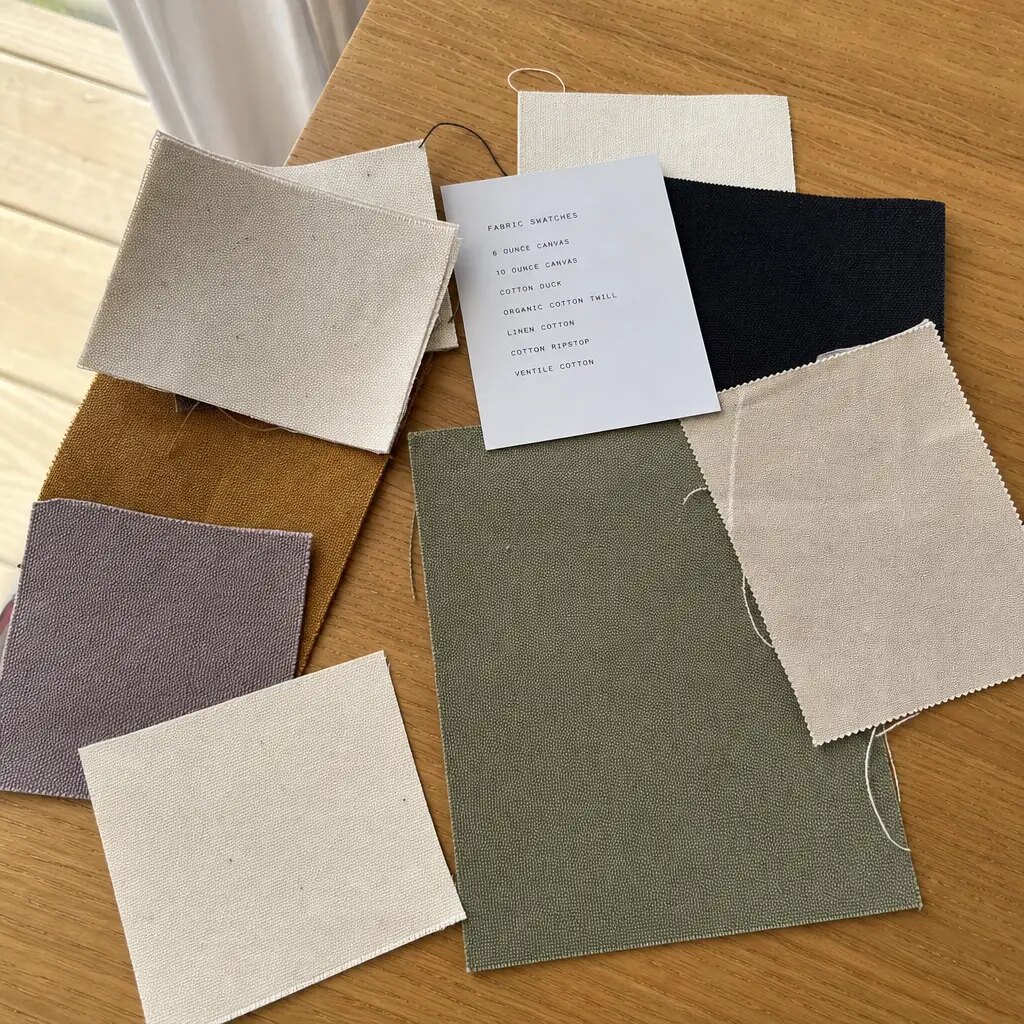
- Approve fabric swatch for GSM, color, texture, and opacity.
- Approve loose pouch for size, seam, cord, print, and handfeel.
- Approve filled pouch if the final product will be inserted before delivery.
- Approve folded pouch to ensure logo placement is not damaged by folds.
- Approve inner bundle and carton packing photo before mass production shipment.
QC thresholds that prevent receiving disputes
Quality control for cotton drawstring pouches should be simple but measurable. The buyer should define size tolerance, print placement tolerance, seam defects, fabric stains, shade variation, and carton quantity accuracy. Without measurable limits, the inspection becomes subjective and disputes happen after the goods arrive. For most cotton pouch orders, a general inspection level with agreed AQL can be used, but critical defects such as wrong logo, wrong size, open seam, severe stain, or incorrect carton quantity should be treated strictly.
Hotel retail buyers should pay special attention to cleanliness and presentation. Natural cotton may have seed flecks, but oil stains, rust marks, dirty cord, and strong odor are not acceptable for guest-facing products. Carton QC is equally important. Random cartons should be opened to verify count, inner bundle quantity, carton marks, and whether the pouches at the bottom are crushed. For mixed-SKU shipments, carton marking errors can cost more than minor sewing defects because the hotel or distributor may allocate stock to the wrong property.
- Size tolerance: define by pouch size; small pouches need tighter control than large bags.
- Print tolerance: specify placement, color reference, edge clarity, and acceptable ink variation.
- Seam quality: no open seams, skipped stitches, loose channel ends, or cord blockage.
- Cleanliness: no oil, mildew, strong odor, rust marks, or dirty handprints.
- Carton accuracy: count, SKU mark, PO reference, and carton number must match packing list.
Lead time and schedule risks for hotel openings and seasonal retail
Lead time for cotton drawstring pouches depends on fabric availability, artwork approval, sample cycles, print workload, sewing capacity, packing complexity, and inspection schedule. A simple stock-fabric, one-color printed pouch can move faster than a custom dyed, tagged, retail-packed program, but buyers should still leave time for sample approval and carton packing confirmation. Hotel opening dates and seasonal retail launches do not leave much room for repacking after arrival.
The most common schedule risks are late artwork, unclear Pantone references, changing pouch size after sample approval, adding barcode labels late, and underestimating carton procurement time. If the buyer needs air shipment for launch quantities and sea shipment for replenishment, carton planning should support both. Air cartons may need smaller dimensions to reduce volumetric cost, while sea cartons may need stronger board and better stacking resistance. The RFQ should state the required delivery window and freight mode before final quote.
- Allow time for artwork review before screen or transfer setup.
- Do not approve mass cutting until pouch size and product fit are confirmed.
- Treat retail tags, barcode labels, and carton marks as production materials with their own approval lead time.
- Plan inspection booking before the factory's proposed completion date.
- For urgent hotel launches, consider a smaller first shipment with simplified packing rather than rushing the full program.
Specification comparison for buyers
| Spec decision | Recommended option | When it fits | Buyer risk to check |
|---|---|---|---|
| Fabric weight for hotel retail pouches | 5 oz to 6 oz cotton, about 140-170 GSM, plain weave | Amenity kits, small spa items, slippers, accessories, welcome gifts where the pouch must look retail-ready but still pack efficiently | Below 120 GSM may look transparent and wrinkle heavily; above 8 oz increases carton weight and can reduce units per carton |
| Pouch construction | Single-layer cotton with double-fold top channel and overlocked or French seam according to budget | Most hotel shop and in-room retail programs needing a clean reusable pouch without heavy structure | Loose seam ends, narrow channel, or cord friction can cause opening difficulty during hotel replenishment |
| Drawcord choice | Natural cotton cord 3-5 mm or flat cotton tape for premium presentation | Natural, wellness, spa, resort, and gift programs where plastic-free appearance matters | Polyester cord may be cheaper and smoother but can conflict with natural cotton positioning; cord length must be consistent |
| Print method | 1-color screen print for 200-3,000 pcs; heat transfer only for detailed multicolor artwork; woven side label for premium low-ink branding | Hotel logo, resort mark, spa brand, or private label retail identity with moderate repeat orders | Thick ink can crack on heavy texture; fine serif fonts may fill in; heat transfer needs wash/rub testing on cotton |
| Unit packing | Bulk packed by carton with 25-50 pcs inner bundles, or individual paper belly band for retail display | Bulk replenishment to hotel storerooms or retail-ready delivery to gift shops | Individual polybags improve cleanliness but add labor, plastic use, and carton volume; paper bands may shift during sea freight |
| Carton size planning | Export carton around 40 x 30 x 30 cm or 45 x 35 x 35 cm, adjusted after actual folded pouch measurement | LCL, courier samples, and mixed-SKU hotel retail shipments where cartons are handled manually | Oversized cartons collapse or create chargeable volume; overloaded cartons deform pouches and wrinkle printed panels |
| Carton unit count | 200-500 pcs per carton depending on pouch size, fabric GSM, cord thickness, and whether individually packed | Small jewelry or amenity pouches may fit high counts; slipper or robe accessory pouches need lower counts | Quoting a unit count before folding trial often causes carton shortage, freight variance, or warehouse repacking |
| MOQ logic | Start from fabric and print setup: often 500-1,000 pcs per size/color is more realistic than a single total order MOQ | Hotel groups ordering several room categories, spa SKUs, or seasonal retail packs | Splitting many sizes or print colors below MOQ raises cutting loss, setup charges, and shade control problems |
Buyer checklist before sampling
- Define the pouch use: in-room amenity, spa retail, gift shop merchandise, slipper packing, robe accessory, jewelry, or welcome set.
- List each pouch finished size in width x height, not only product size; include required usable internal space after drawcord closure.
- Specify cotton fabric weight in GSM or oz, weave, color, and whether natural flecks are acceptable on unbleached cotton.
- Decide whether the drawcord must be cotton, recycled polyester, satin ribbon, or other material before requesting carton estimates.
- Provide artwork file, print size, Pantone reference, placement tolerance, and whether print must pass rub or light wash testing.
- State unit packing method: bulk, paper band, individual polybag, retail tag, barcode sticker, or master carton only.
- Require supplier to submit actual carton dimensions, gross weight, net weight, pcs per carton, and packing photos after sample packing trial.
- Set carton handling limit, typically below 15-18 kg gross weight for manually handled hotel retail cartons.
- Reserve approval step for pre-production sample, carton drop or compression review if shipment is heavy, and final packing layout.
- Align lead time with hotel opening, seasonal retail launch, or replenishment window, including artwork approval and carton material procurement.
Factory quote questions to send
- What fabric weight in GSM and oz are you quoting, and is it stock greige, stock dyed, or custom dyed cotton?
- What is the finished pouch size tolerance after sewing and pressing, and how much internal height is lost after drawcord closure?
- Which seam construction, top channel width, drawcord diameter, and cord end treatment are included in the price?
- Which print method is quoted, how many colors are included, and what is the maximum recommended print area for this fabric weight?
- Is the quoted MOQ per design, per size, per fabric color, or total combined order?
- What unit packing is included: bulk bundles, individual bags, paper bands, hangtags, barcode labels, or carton marks?
- What are the proposed carton dimensions, pcs per carton, gross weight, and net weight based on an actual folded sample?
- Will the cartons use single-wall or double-wall board, and what carton strength is recommended for sea freight or courier shipment?
- What sample timeline applies for blank sample, printed sample, and pre-production sample after artwork confirmation?
- What inspection standard and AQL level can be supported before shipment, and can the factory provide packing photos by carton number?
Quality-control points to confirm
- Fabric weight within agreed tolerance, commonly plus or minus 5 percent from approved sample or GSM specification.
- Finished pouch dimensions within agreed tolerance, usually plus or minus 5 mm for small pouches and plus or minus 8-10 mm for larger drawstring bags.
- Drawcord pulls smoothly through the top channel without seam obstruction, cord breakage, or serious twisting.
- Print placement within agreed tolerance, commonly plus or minus 3-5 mm, with no obvious skew on the front panel.
- Screen print coverage even, with no pinholes, heavy ink ridges, smearing, or visible cracking after normal handling.
- Seams secure at side, bottom, and channel openings; no open seam, skipped stitches, loose thread nests, or fraying cord ends.
- Color and fabric handfeel consistent with approved sample, especially for natural cotton where slubs and seed flecks must be defined.
- Carton count matches packing list, inner bundle quantity is consistent, and carton marks match SKU, size, color, and destination.
- Carton gross weight stays within the buyer's warehouse handling limit and carton shape remains square without bulging.
- Random packed units after compression still present acceptably for hotel retail, without permanent print transfer or heavy creasing.