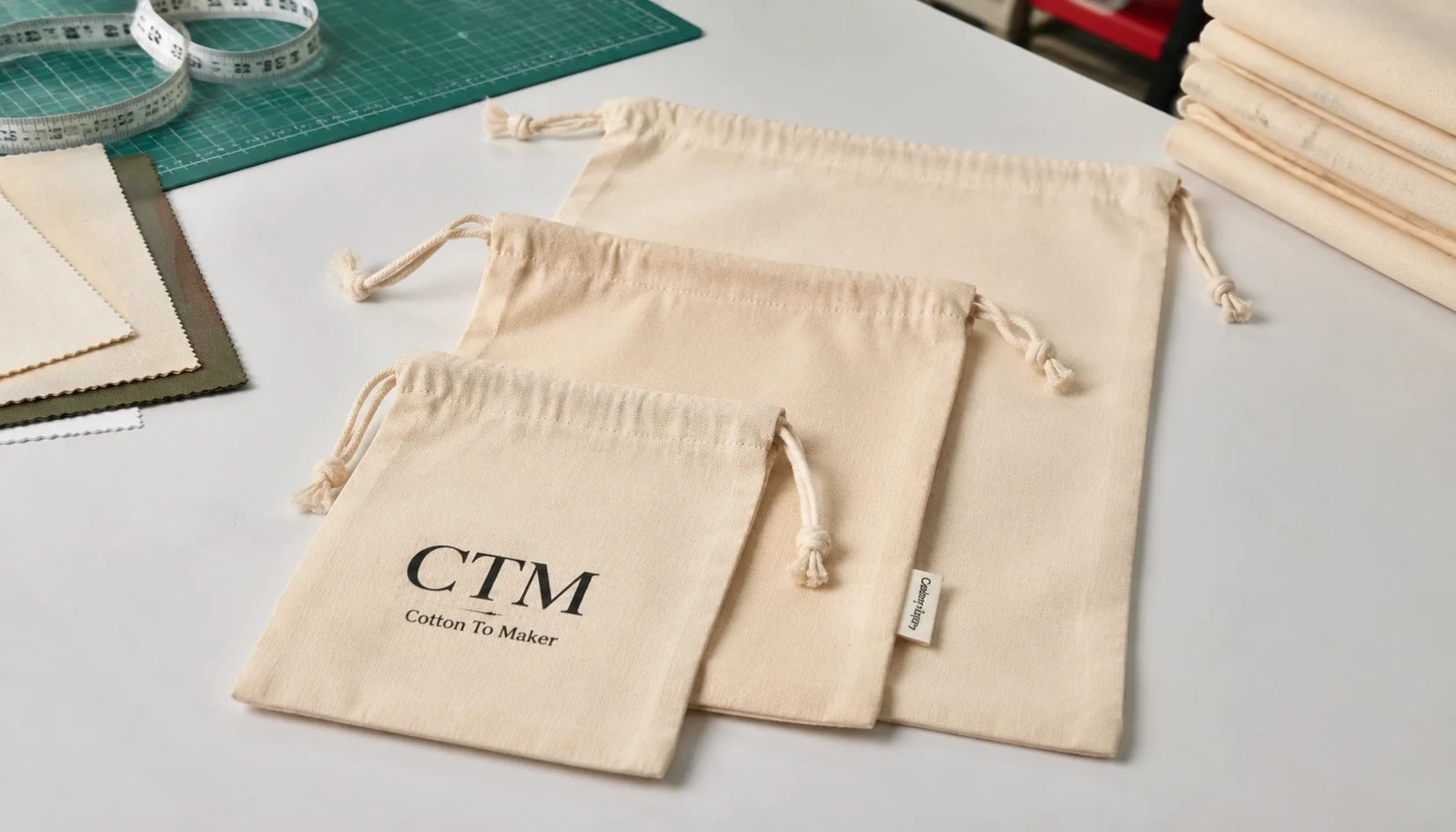
Start the pricing plan with the pouch job, not the lowest unit price
A cotton drawstring pouch for a natural grocer can serve very different jobs: produce bag, reusable bulk-bin pouch, wellness sample pouch, seasonal gift bag, zero-waste starter kit, or private-label accessory. The price changes because each job changes the acceptable fabric weight, stitching strength, print coverage, packing method, and inspection standard. If procurement sends only a size and a quantity, suppliers will fill the missing details with their own assumptions. That is how three quotes can look like they are for the same pouch while actually covering three different products.
For bulk pricing, define the use case before asking for tier prices. A pouch used for dried goods or refill stations should not be quoted like a light promotional giveaway. A pouch holding glass jars or multiple packaged items may need heavier fabric, stronger seams, and a wider cord. A pouch handed out at checkout may prioritize appearance and unit cost. The most useful pricing plan groups specs into good, better, and premium levels while keeping the same artwork and packing assumptions.
- Giveaway or event pouch: 3-4 oz cotton, simple single-color print, bulk packed.
- Standard reusable grocery pouch: 5-6 oz cotton, stronger hem, cotton cord, 1-color screen print.
- Premium gift or retail pouch: 8 oz cotton canvas, higher stitching standard, better cord finish, possible hangtag or set packing.
- Food-contact or produce-adjacent use: confirm buyer compliance requirements before choosing coating, ink, dye, or washing process.
Fabric GSM is the first major cost driver buyers can control
Cotton pouch quotes should state fabric weight in oz or GSM. Natural grocer buyers often prefer unbleached cotton because it has a simple, low-dye appearance and fits sustainability messaging, but unbleached does not automatically mean organic, recycled, or certified. A 3 oz cotton pouch may meet a low-cost promotion brief but can feel thin and may show contents through the fabric. A 5 oz or 6 oz fabric, around 150-200 GSM, is a safer baseline for reusable pouches that need to look credible in a retail environment.
Heavier fabric raises the fabric cost and may also increase cutting effort, sewing time, carton weight, and freight. On small pouches, an 8 oz or 10 oz fabric can become stiff and reduce the neatness of the drawstring closure. The factory should quote the fabric that matches the finished size and expected fill weight, not just the most common fabric in stock. If a buyer compares a 3 oz quote with a 6 oz quote, the cheaper offer is not a saving; it is a different product.
- 3 oz cotton: low-cost promotional use; risk of transparency and weaker handfeel.
- 4 oz cotton: acceptable for lightweight samples or event kits with simple contents.
- 5-6 oz cotton: common balance for reusable natural cotton drawstring pouches.
- 8 oz canvas: better structure for gift bags, heavier contents, and premium appearance.
- 10 oz canvas and above: durable but may be too rigid for small pouch sizes and raises freight.
Size, construction, and drawstring details change factory efficiency
Finished pouch size should be written as width by height after sewing, not the flat cut panel size. Buyers also need to state whether the drawstring closure is single-cord or double-cord, whether cords are cotton or polyester, whether the cord color is natural or dyed, and whether the ends are knotted, heat sealed, metal tipped, or left plain. Natural grocers usually choose cotton cord for a consistent material story, but polyester cord may slide more smoothly and reduce fraying in some constructions.
Construction affects both price and failure rate. A basic pouch may use side seams and a folded top hem. Better quality pouches use neat top stitching, even drawstring channels, secured cord openings, and reinforced seam ends. If the pouch will carry loose produce, packaged goods, or small glass containers, seam strength is more important than saving a fraction of a cent in sewing time. The pricing plan should specify the construction level so suppliers quote the same workmanship.
- Common small sizes: 10 x 15 cm, 13 x 18 cm, 15 x 20 cm for samples, wellness items, and small gifts.
- Medium sizes: 20 x 30 cm, 25 x 35 cm for produce, refills, or multi-item kits.
- Large sizes: 30 x 40 cm and above for bundled retail packs or bulkier merchandise.
- State whether measurement tolerance is plus/minus 0.5 cm for small pouches or plus/minus 1 cm for larger pouches.
- For heavier contents, specify reinforced seams or a higher stitch density rather than relying only on thicker fabric.
Print method is where many bulk quotes stop being comparable
Most cotton drawstring pouch bulk orders for natural grocers use screen printing because it is stable, economical, and suitable for simple logos or campaign artwork. A one-color water-based screen print on natural cotton is usually the cleanest starting point. The quote changes when the design uses multiple colors, large ink coverage, fine reverse text, tight registration, two-side printing, or a print area close to seams and drawstring channels.
Digital print can be useful for short runs, multi-color artwork, or designs that change frequently, but it may not be the most economical route for high-volume bulk programs. Heat transfer can handle detailed artwork but may feel less integrated with natural cotton and needs testing for cracking or edge lifting. Buyers should provide vector artwork, print size, Pantone or reference color, and placement distance from edges. A factory cannot accurately price print cost from a small JPG pasted in an email.
- Lowest-risk option: 1-color screen print, one side, moderate coverage, placed below the drawstring channel.
- Higher-cost option: 2-4 color screen print with registration requirements.
- Short-run option: digital print for changing artwork or many small artwork versions.
- Retail appearance option: woven label or sewn side label, often combined with a small front print.
- Avoid placing detailed artwork across seams, folds, or drawstring openings.
Build MOQ tiers around real production logic
MOQ is not only a supplier rule. It comes from fabric sourcing, cutting efficiency, print screen setup, sewing line changeover, packing labor, and export carton handling. A factory may accept a small order, but the unit price will absorb more setup time. A useful bulk pricing plan separates base MOQ, efficient MOQ, and program MOQ. Base MOQ gets the job made; efficient MOQ gives a more stable unit price; program MOQ supports multi-store or distributor replenishment.
For natural grocer programs, the mistake is mixing too many variables into one order and expecting the same bulk price. Five pouch sizes, six artwork versions, two cord colors, and three packing methods may look like one combined volume to the buyer, but it behaves like many small production lots inside the factory. If the procurement goal is lower bulk pricing, standardize fabric, cord, print method, and packing first, then allow controlled size or artwork variation.
- Quote quantity by each finished size, not only total program quantity.
- Break out artwork versions because print setup and handling change by design.
- Use carton-full quantities where possible to reduce leftover packing inefficiency.
- Consider annual volume pricing only when release quantities, artwork stability, and delivery schedule are clear.
- If combining several SKUs, ask whether the factory can share fabric purchase while still pricing each SKU accurately.
Read supplier quotes by cost components, not just unit price
A clean quote for cotton drawstring pouches should show what is included. The same unit price can mean very different things depending on whether it includes fabric inspection, sample charge, print screen charge, individual packing, carton labeling, inner bags, export cartons, local trucking, or inspection support. Procurement teams should request a quote summary that lists material, printing, packing, MOQ, lead time, payment term, and Incoterm in one place.
Landed cost matters more than ex-factory unit cost for importers and distributors. A slightly higher unit price with better carton density and fewer production risks can be cheaper after freight, inspection, and receiving. Natural cotton pouches are not extremely heavy, but bulky packing, individual polybags, hangtags, and low carton quantities can increase CBM. The quote should include carton dimensions, gross weight, net weight, pieces per carton, and total CBM at the quoted quantity.
- Separate one-time charges: sample fee, screen charge, mold or label setup, courier cost.
- Separate variable charges: fabric, cord, sewing, printing, packing, carton, labeling.
- List Incoterm clearly: EXW, FOB, CIF, DDP, or another agreed basis.
- Capture logistics data: carton size, pieces per carton, gross weight, net weight, total cartons, total CBM.
- Do not compare a bulk-packed FOB quote with an individually packed DDP quote as if they are equal.
Use samples to approve the cost level before production is locked
A pre-production sample is not only for the logo. It confirms the fabric weight, natural cotton color, shrinkage behavior, pouch dimensions, drawstring function, stitching, print position, ink feel, and packing concept. For a low-risk reorder, a retained approved sample may be enough. For a new natural grocer program, the buyer should approve a physical sample using the same fabric and print method planned for mass production.
Sample review should have measurable acceptance points. Comments such as better quality or more natural look are hard to translate into production. Instead, mark the required finished size, print area, print distance from top edge, cord length, seam finish, and fabric handfeel. If the approved sample uses 6 oz fabric but the purchase order only says natural cotton pouch, a later price dispute or quality dispute becomes likely.
- Measure finished size flat, with the drawstring relaxed.
- Compare fabric opacity by placing standard printed packaging or a dark object inside the pouch.
- Rub the print after curing to check smudging, cracking, or poor adhesion.
- Pull the drawstring several times to confirm smooth opening and closing.
- Keep one approved sample at the buyer office and one sealed reference sample at the factory.
Packing decisions affect cost, sustainability review, and receiving speed
Natural grocer buyers often want reduced plastic, but packing still has to protect natural cotton from dust, moisture, and warehouse handling. Bulk packing in an inner polybag inside an export carton is common for wholesale distribution. Paper banding, kraft sleeves, or grouped sets can support a lower-plastic presentation, but they add labor and need crush and moisture consideration. Individual polybags are clean and scannable but may conflict with sustainability goals and increase packing cost.
Retail buyers should define the receiving method early. If the pouches go to a central warehouse, carton labels and SKU separation matter most. If they go directly to stores or are packed into kits, inner pack quantity and store-ready grouping may save downstream labor. If the pouch is sold as a retail item, hangtags, barcode labels, and shelf presentation need to be quoted from the beginning. Adding these after price approval changes both unit cost and lead time.
- Bulk pack: lowest labor cost and simplest for giveaways or central kitting.
- Inner pack by 25, 50, or 100 pieces: easier counting and store allocation.
- Individual polybag: cleaner receiving but higher material use and volume.
- Paper band or kraft sleeve: better presentation but must be tested for shipping durability.
- Carton labels should include item number, size, color, quantity, PO number, carton count, and destination if required.
Lead time planning should include approvals, not only sewing days
The quoted production lead time usually starts after sample approval, deposit, artwork confirmation, and material availability. Buyers sometimes count from the first inquiry date, while factories count from the date all production data is complete. For seasonal natural grocer campaigns, this difference can create missed launch windows. A realistic schedule includes artwork check, sample making, sample courier time, buyer review, material booking, cutting, printing, sewing, packing, inspection, and freight booking.
Schedule risk increases when the order uses organic cotton, custom-dyed cord, multiple artwork versions, special packing, or strict retailer labeling. Natural cotton fabric is usually easier to source than dyed fabric, but GSM availability still matters. If the buyer needs a specific launch date, the RFQ should state the required warehouse arrival date and preferred shipping method. The factory can then work backward and identify which choices are safe and which create delay risk.
- Artwork and technical review: allow time for file correction and placement confirmation.
- Sample making: faster for standard fabric and simple print; longer for custom materials or labels.
- Sample courier and approval: often underestimated in buying calendars.
- Bulk production: depends on quantity, number of SKUs, print complexity, and packing method.
- Inspection and shipping: reserve time for corrective action if carton count, print, or packing fails inspection.
Set QC thresholds that match the price tier and the end use
A low-cost promotional pouch does not need the same cosmetic standard as a retail gift pouch, but it still must open, close, hold contents, and present the brand cleanly. Quality control should focus on failures that affect function, appearance, and receiving accuracy. For cotton pouches, common defects include size variation, twisted or short cords, skipped stitches, weak seams, crooked print, ink stains, fabric holes, severe slubs, odor, and wrong carton quantities.
Procurement should define major and minor defects before inspection. A missing cord, open seam, wrong size, wrong print, or mildew odor should be treated as major. A small loose thread may be minor if it does not affect use or appearance. Natural cotton can have slight color variation and slubs; the sample should show the accepted range. This avoids rejecting normal natural fabric character while still protecting the buyer from poor production.
- Critical defects: contamination, mildew, unsafe foreign matter, or incorrect product that cannot be used.
- Major defects: open seams, missing drawstring, wrong artwork, print smearing, severe size error, incorrect packing quantity.
- Minor defects: small loose thread, minor natural cotton slub, slight stitch variation within approved standard.
- Function test: open and close the pouch several times and lightly pull seams and cord ends.
- Packing audit: verify carton quantity, SKU separation, labeling, and total carton count against the packing list.
Specification comparison for buyers
| Spec decision | Recommended option | When it fits | Buyer risk to check |
|---|---|---|---|
| Fabric weight | 5 oz or 6 oz cotton, approximately 150-200 GSM | Good balance for natural grocer bulk programs where the pouch must feel reusable but still pack efficiently | Very light 3 oz fabric can look transparent; heavy 10 oz canvas may raise freight and make small pouches stiff |
| Cotton type | Natural unbleached cotton for standard pricing; organic cotton only when brand positioning requires it | Natural grocers often prefer the raw cotton appearance, and it avoids dye cost and color approval issues | Organic cotton requires certificate verification and may need longer fabric lead time; do not compare it directly with standard cotton quotes |
| Pouch construction | Double-fold top hem with cotton cord drawstring and side-seam lockstitch | Suitable for produce kits, wellness samples, bulk-bin promotions, gift sets, or loyalty merchandise | Loose drawstring channels, short cords, or weak bartacks can cause returns even if fabric looks acceptable |
| Print method | 1-color water-based screen print for most bulk runs | Best when the artwork is a store logo, simple product message, or natural grocer campaign mark | Fine reverse text, heavy ink coverage, or multi-color artwork can change pricing and print reject rate |
| MOQ plan | Start from a factory-efficient MOQ by size and print design, then tier pricing at higher carton-full quantities | Works for buyers who need a realistic price ladder rather than one low teaser price | Mixing many sizes, artwork versions, and ship-to locations can make the real MOQ higher than expected |
| Sample approval | Pre-production sample using confirmed fabric GSM, cord, print color, pouch size, and packing method | Necessary before mass cutting when the order will be displayed, resold, or distributed across many stores | Photo approval alone may miss handfeel, shrinkage, print cracking, and drawstring function |
| Packing method | Bulk packed by size in export cartons with inner polybag or paper banding based on retailer requirement | Keeps carton handling simple and protects natural cotton from dust during sea or truck transit | Individual polybags add labor, material, volume, and sustainability review; unclear packing causes quote gaps |
| Supplier quote basis | Request itemized quote by size, GSM, print colors, packing, carton quantity, Incoterm, and lead time | Allows procurement to compare factory quotes on the same assumptions instead of only unit price | A low unit price may exclude sample cost, screen charge, carton labeling, inspection support, or local delivery |
Buyer checklist before sampling
- Define pouch use before requesting pricing: produce bag, gift pouch, bulk-bin kit, wellness set, or promotional giveaway.
- List each pouch size in finished dimensions, not flat fabric cut size, and state whether tolerance is plus/minus 0.5 cm or 1 cm.
- Choose target fabric weight in GSM or oz; do not describe the material only as thin, medium, or premium.
- State whether standard natural cotton, organic cotton, recycled cotton, or dyed cotton is required.
- Attach vector artwork and specify print size, print location, ink color, and whether printing is one side or two sides.
- Separate quantities by size and artwork version so the factory can calculate cutting, printing, and packing efficiency.
- Decide whether pouches are bulk packed, individually packed, grouped in sets, or packed for direct retail shelf display.
- Provide destination country, Incoterm, delivery deadline, and any routing or carton label requirements.
- Approve a physical pre-production sample before fabric cutting for large or repeat retail programs.
- Reserve time for fabric availability, print screen setup, sample review, mass production, inspection, and freight booking.
Factory quote questions to send
- What fabric GSM and cotton type are included in the quoted unit price?
- Is the pouch size quoted as finished size after sewing, and what dimensional tolerance applies?
- Are cotton cords included, and what cord diameter, length, and color are used?
- Does the price include one-side or two-side printing, how many colors, and are screen charges separate?
- What is the MOQ by pouch size and by artwork version, and how does the unit price change at higher quantities?
- Is sampling charged separately, and will the sample use the same fabric and print method as production?
- What packing method is included: bulk pack, inner bag, individual polybag, paper band, hangtag, or retail set packing?
- How many pieces per export carton, what are the carton dimensions, gross weight, and estimated CBM?
- What lead time is required after sample approval and deposit, and what part of the schedule is most sensitive?
- Which inspection points can the factory support before shipment, and can photos or video of bulk packing be provided?
Quality-control points to confirm
- Finished pouch dimensions within agreed tolerance, measured flat after sewing and drawstring insertion.
- Fabric weight verified against approved sample or purchase specification, with no unexpected transparency for natural cotton.
- Drawstring channel opens smoothly and cord length is consistent across the lot.
- Side seams, bottom seams, and top hem stitching are secure, with no skipped stitches, loose threads, or seam slippage.
- Print position, print size, ink color, opacity, and curing match the approved sample.
- No major stains, oil marks, mildew odor, insect contamination, or excessive fabric slubs on visible panels.
- Packing quantity per inner pack and export carton matches the packing list and buyer instruction.
- Carton markings, SKU labels, and country-of-origin labeling follow the buyer’s receiving requirements.
- Random pull test confirms cord and seam strength are suitable for the intended fill weight.
- Moisture control is appropriate for natural cotton, especially for sea freight or humid storage conditions.