1. Build the pricing plan around the startup use case
A cotton drawstring pouch can look like a small line item, but for a tech startup it often sits inside a higher-value workflow. It may hold a charger, cable set, beta device accessory, employee onboarding item, investor-event gift, conference giveaway, or warehouse kitting component. The correct price plan starts with that end use, not with a generic pouch description.
For launch kits and VC event giveaways, presentation matters because the pouch is part of the first impression. For device accessory packaging, fit, dust protection, and cord closure matter more than decorative detail. For onboarding swag, consistency across reorders is often more valuable than a one-time low price. For warehouse kitting, carton count accuracy and barcode discipline may matter more than premium finishing.
Before asking for quotes, decide whether the pouch is a disposable event wrapper, a reusable branded item, or a functional component in a fulfillment process. That choice drives fabric weight, print method, packing, inspection, and order quantity.
A useful cotton drawstring pouches bulk pricing plan for tech startups should answer four questions: what pouch are we standardizing, how many do we need by quarter, what costs are one-time versus repeated, and what does it cost to receive usable goods at the final warehouse?
- Map the pouch to a real program: launch kit, accessory pack, onboarding, event, or kitting.
- Separate presentation needs from functional needs.
- Plan by quarterly or annual demand, not only the first order.
- Treat setup fees, samples, inspection, and freight as part of the price plan.
2. Fix the specification before comparing prices
Most bad pouch comparisons start with loose specifications. “Natural cotton drawstring pouch with logo” is not enough for procurement. Two suppliers can quote that phrase while using different fabric weights, stitching standards, cords, packing methods, and print assumptions.
Start with finished size. A 100 x 150 mm pouch for earbuds or adapters prices differently from a 200 x 300 mm pouch for onboarding merchandise. If the item must fit a device accessory, measure the usable internal space after the drawcord channel and seam allowance, not just the outside dimensions.
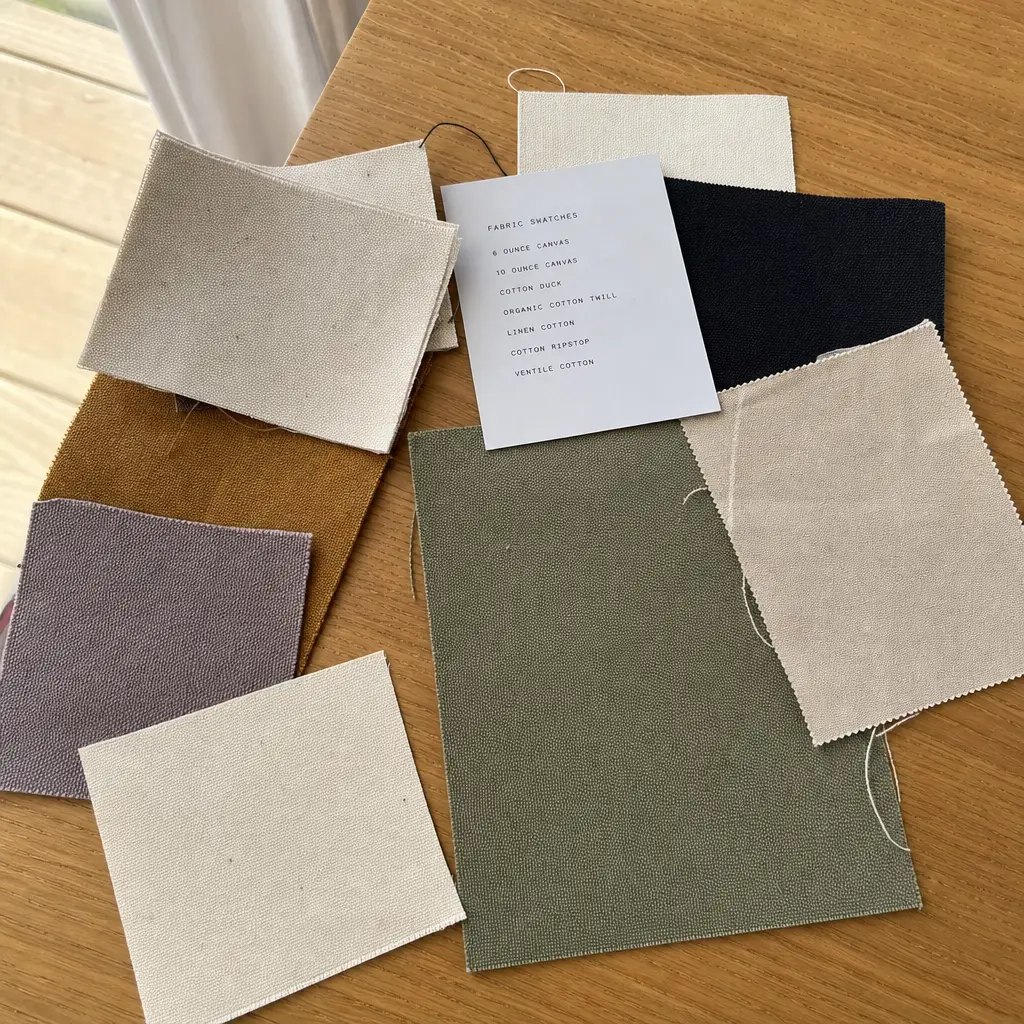
Fabric weight is the next major cost driver. Many startup programs use cotton in the 120–140 GSM range. Around 120 GSM can work for lightweight accessories and event giveaways. Around 130–140 GSM gives a fuller hand feel and better opacity for launch kits or premium onboarding packs. Heavier is not automatically better; it adds material cost and may increase shipping weight.
The RFQ should state cotton composition, GSM, color, weave if relevant, drawcord type, print method, finished-size tolerance, and packing format. Once that spec is fixed, quantity-tier quotes become meaningful instead of decorative.
- Quote by finished size, not only nominal size.
- Use 120–140 GSM as a practical planning range for many startup pouches.
- Confirm whether GSM is raw fabric or finished pouch basis.
- State size tolerance in millimeters before sampling.
3. Use real quantity tiers, not one blended unit price
For pricing-focused sourcing, ask every supplier for the same quantity breaks. At minimum, request 500, 1,000, 3,000, and 5,000+ pieces. Those tiers let a startup compare a pilot order, a launch order, an operating order, and a multi-quarter reorder plan.
The table below is an illustrative planning model, not a supplier quote. It assumes a standard small-to-medium cotton pouch, approximately 120–140 GSM, one-color print, natural cord, and bulk carton packing. Actual prices change with size, fabric, print area, destination, freight mode, and supplier terms.
| Quantity | Example use | Cost behavior | Procurement note | | --- | --- | --- | --- | | 500 pcs | Pilot launch, small VC event, beta-user gift | Highest unit cost because setup is spread over fewer pieces | Ask if sample and setup charges make the pilot uneconomical | | 1,000 pcs | Conference giveaway, small onboarding run | First practical bulk tier for many programs | Confirm MOQ is not per logo, per color, or per cord variant | | 3,000 pcs | recurring kits, warehouse kitting, multi-event supply | Better setup absorption and more stable production planning | Request reorder price validity and carton-count discipline | | 5,000+ pcs | multi-quarter rollout or distributor support | Stronger unit economics if the spec stays unchanged | Check storage, cash flow, and forecast risk before overbuying |
The important detail is setup allocation. A $120 screen setup adds $0.24 per pouch at 500 pieces, $0.12 at 1,000 pieces, $0.04 at 3,000 pieces, and $0.024 at 5,000 pieces. That is why the cheapest pilot is often not the cheapest annual plan.
If the startup expects several small campaigns, standardizing one pouch and ordering a larger neutral inventory can be cheaper than creating several small logo or color variants.
- Request price breaks at 500, 1,000, 3,000, and 5,000+ pieces.
- Separate setup fees from unit price.
- Model annual usage before choosing the first order size.
- Avoid splitting volume into too many small variants.
4. Understand the unit cost drivers
The pouch unit price is built from several small decisions. Fabric weight affects cotton consumption. Finished size affects cutting yield. Cord material and diameter affect both cost and closure feel. Print size and color count affect setup, labor, and rejection risk. Packing format affects labor time and carton volume.
For a simple tech-startup pouch, a one-color screen print or small woven label is usually easier to control than complex multi-color artwork. Screen printing fits bold logos and simple brand marks. Woven labels can look cleaner for reusable pouches, but they add label setup and sewing steps.
A practical cost-driver view helps buyers decide what to simplify. If the pouch is used inside a launch box, a cleaner fabric and sharper logo may justify a higher unit cost. If it is a mass event giveaway, reducing print area, using one standard size, and bulk packing may matter more.
| Cost driver | Lower-cost choice | Higher-cost choice | Buyer decision | | --- | --- | --- | --- | | Fabric | 120 GSM natural cotton | 140 GSM+ or dyed fabric | Balance hand feel against budget | | Decoration | 1-color screen print | multi-color print or woven label | Keep artwork simple for repeat orders | | Cord | standard cotton cord | custom color or specialty finish | Custom cords can raise MOQ | | Packing | bulk carton pack | individual bag, barcode, insert card | Add retail packing only if needed | | Variants | one logo and one size | many logos, colors, or sizes | Variants reduce volume leverage |
- Do not approve a lower price unless the spec is unchanged.
- Use simple artwork when reordering matters.
- Treat packing labor as a real unit-cost driver.
- Ask suppliers to itemize cost drivers instead of hiding them in one number.
5. Calculate landed cost with a simple model
A startup that compares only factory unit price can choose the wrong supplier. Landed cost includes the pouch, decoration setup, packing, cartons, inspection, inland movement, export handling, freight, duty or tax assumptions where applicable, and delivery to the warehouse or fulfillment partner.
Use a common landed-cost worksheet for all quotes. If one supplier quotes ex-works and another quotes FOB, normalize them before ranking. If one includes individual polybags and another bulk packs, adjust the model so the comparison reflects the same receiving condition.
Here is a simple example for planning only: 3,000 cotton pouches at $0.55 FOB, $120 screen setup, $90 sample and courier allocation, $180 inspection allocation, and $450 freight and receiving allowance. Goods cost is $1,650. Added costs are $840. Total planning cost is $2,490, or $0.83 per landed pouch. At 1,000 pieces with the same $840 added costs and a $0.68 FOB unit price, the landed estimate becomes $1,520 total, or $1.52 per pouch.
That example shows why quantity changes the true price even when the pouch spec stays the same. Fixed or semi-fixed costs can dominate smaller orders. For startups, the right decision is not always the largest order; it is the order size that balances cash flow, storage, event timing, and reorder certainty.
- Convert every quote to the same incoterm and destination.
- Add setup, sample, inspection, freight, and receiving allowances.
- Calculate landed cost per usable pouch, not only factory unit price.
- Use the same model for pilot, launch, and reorder volumes.
6. Control MOQ by limiting variants
MOQ is usually driven by production setup, not by the supplier’s mood. Fabric color, cord color, print version, label type, pouch size, and packing format can each create a separate minimum. A supplier may accept 3,000 pieces total, but only if they are one fabric, one logo, one cord, and one carton format.
Tech startups often create unnecessary MOQ pressure by making every campaign different. One pouch for launch kits, another for onboarding, another for conference giveaways, and another for investor events can divide volume into inefficient batches. The result is higher cost, more leftover stock, and more chances for shade or print variation.
A better approach is to standardize the pouch and vary the insert, card, outer box, or kitting configuration. For example, the same natural cotton pouch can hold a charging cable at a product launch, a welcome card in an employee kit, or a small giveaway at a developer event. The pouch remains consistent while the program message changes.
Ask suppliers to state MOQ by line item. If the quote says 5,000 pieces, confirm whether that means 5,000 total, 5,000 per fabric color, or 5,000 per print design. This one question prevents many pricing surprises.
- Standardize one size, one fabric, one cord, and one print position where possible.
- Ask whether MOQ is total order or per SKU.
- Use cards, inserts, or kit contents to create campaign variation.
- Avoid custom cord colors unless volume supports them.
7. Approve samples that represent bulk production
A sample should not be treated as a souvenir. It is the production standard that the factory, buyer, and inspector can reference. For cotton drawstring pouches, ask for a pre-production sample made with the intended bulk fabric, final cord, final dimensions, and actual decoration method.
Review the sample with the item it will carry. Put the cable, adapter, badge, device accessory, card, or onboarding item inside and test closure, fit, visibility, and hand feel. A pouch can meet the stated size and still feel wrong if the drawcord channel steals too much usable space or the fabric is too thin for the contents.
Check print placement under normal light. Confirm logo size, distance from the bottom seam, distance from side seams, color density, and edge sharpness. If the brand mark has fine lines, ask the supplier whether those lines are above the minimum safe thickness for cotton texture.
Keep the approved sample record tied to the purchase order. Save photos, measurements, artwork files, and written approval. If a later bulk lot drifts, the approved sample gives procurement a concrete basis for correction rather than a subjective complaint.
- Approve a true pre-production sample, not only a generic reference pouch.
- Test the sample with the actual kit item.
- Document measurements, cord, print, and fabric approval.
- Request bulk material photos before cutting starts.
8. Specify packing for the warehouse, not just the factory
Packing can change both landed cost and receiving accuracy. Bulk carton packing is usually the most efficient option when pouches go to a warehouse or kitting center. Individual polybags, barcode labels, hangtags, and insert cards may be useful, but they add labor, material, volume, and inspection points.
For startup fulfillment, carton labels often matter more than decorative packaging. A receiving team may need PO number, SKU, pouch size, color, artwork version, carton number, total carton count, and pieces per carton. If those details are missing, inbound handling slows down and shortage disputes become harder to resolve.
Ask for carton dimensions, gross weight, net weight, pieces per carton, and whether pouches are bundled inside. If cartons are too large, counts can become inconsistent and freight volume can rise. If cartons are too weak, pouches may arrive crushed, dirty, or distorted.
If pouches will be kitted with devices, cables, apparel, or printed materials, align the carton count with the kitting batch size. For example, cartons of 250 or 500 may be easier for a fulfillment center than irregular counts that require extra counting and reconciliation.
- Use bulk packing unless retail presentation is required.
- Specify carton marks in the PO.
- Match carton counts to warehouse or kitting workflow.
- Ask for carton dimensions and weights before freight booking.
9. Inspect the details that cause real claims
Cotton drawstring pouch defects are usually simple but costly when discovered late. Common problems include wrong size, loose stitching, frayed cords, stained fabric, off-center print, shade variation, incorrect carton count, and mixed artwork. A basic QC plan catches these before the goods enter a launch or event schedule.
Use the approved sample as the benchmark. Inspectors should measure finished width and height, check drawcord movement, pull the seams lightly, review print placement, and count cartons against the packing list. If the pouch will hold a specific item, include a fit check in the inspection instruction.
For many wholesale orders, General Inspection Level II with AQL 2.5 for major defects and AQL 4.0 for minor defects is a practical starting point. Buyers with strict brand requirements can set tighter limits. Major defects may include open seams, wrong artwork, severe stains, unusable cord, or incorrect size. Minor defects may include small thread tails, slight print density variation, or minor wrinkles within the approved range.
Do not leave carton count to trust. Count shortages can erase the savings from a low unit price, especially when the pouches are allocated to kits one-for-one.
- Measure size from multiple cartons, not one bundle.
- Check seam strength, cord movement, stains, and print placement.
- Verify carton counts against the packing list.
- Define major and minor defects before production finishes.
10. Compare suppliers on repeatability, not only first price
The best supplier for a startup pouch program is not always the lowest first quote. A stronger supplier can hold fabric consistency, repeat print placement, pack cartons accurately, communicate lead-time milestones, and quote future tiers clearly. Those capabilities reduce hidden work for procurement.
When comparing suppliers, build a matrix with unit price, setup fee, sample fee, MOQ logic, GSM, size tolerance, print method, packing, carton data, lead time, incoterm, inspection support, and reorder validity. This keeps the decision grounded in usable facts rather than sales language.
Ask where the work is done. Some suppliers control fabric sourcing, cutting, sewing, printing, and packing in one facility or close network. Others outsource major steps. Outsourcing is not automatically a problem, but the buyer should know who controls quality and who is responsible if the bulk lot differs from the approved sample.
For tech startups, speed matters, but uncontrolled speed creates risk. A supplier that can provide a realistic schedule, production photos, packing data, and pre-shipment inspection support is often more useful than a supplier promising the fastest ship date with vague specifications.
A good final award decision should state the approved spec, pricing tier, setup cost, incoterm, sample reference, QC standard, packing format, carton marks, and target delivery date. That turns the pouch from a small merch purchase into a repeatable procurement item.
- Score suppliers on documentation and repeatability.
- Do not compare ex-works and delivered prices without normalization.
- Ask who controls sewing, printing, and packing.
- Award the order against a written spec, not a chat summary.
Specification comparison for buyers
| Planning quantity | Illustrative FOB goods cost per pouch | Setup allocation per pouch | Illustrative landed cost per pouch |
|---|---|---|---|
| 500 pcs | $0.78–$1.25 | $0.12–$0.30 if setup is $60–$150 | $1.05–$1.75 after estimated packing, inspection, and freight allowance |
| 1,000 pcs | $0.58–$0.95 | $0.06–$0.15 if setup is $60–$150 | $0.78–$1.30 after estimated packing, inspection, and freight allowance |
| 3,000 pcs | $0.42–$0.72 | $0.02–$0.05 if setup is $60–$150 | $0.56–$0.98 after estimated packing, inspection, and freight allowance |
| 5,000+ pcs | $0.36–$0.62 | $0.01–$0.03 if setup is $60–$150 | $0.48–$0.86 after estimated packing, inspection, and freight allowance |
| Material | 6-10 oz cotton canvas, 210D polyester, rPET, or blended cotton with shrinkage and colorfastness expectations set before sampling | Before price comparison | Different cloth weights, backing, or certification claims make quotes hard to compare |
| Construction | cord diameter, eyelet or reinforced channel, bottom corner reinforcement, seam allowance, bar-tack position, and load target | Before sampling | Weak stress points create returns and failed inspections |
| Decoration | screen print, transfer, embroidery, woven label, or drawstring tag tested against folding and abrasion | Before artwork approval | The wrong method can crack, bleed, pucker, or fail on the chosen fabric |
| MOQ | Base MOQ plus change drivers | During quote review | Custom colors, trims, and packing can change minimums |
Buyer checklist before sampling
- Define the startup use case first: launch kit, device accessory pouch, employee onboarding pack, VC event giveaway, warehouse kitting component, or retail-adjacent packaging.
- Confirm finished pouch size, usable internal space, gusset if any, expected load weight, and finished-size tolerance in millimeters.
- Specify cotton composition, fabric GSM, weave, color, shrinkage expectation, and whether the quoted GSM is raw fabric or finished pouch basis.
- Send vector artwork and define logo size, print location, Pantone or brand color reference, minimum line thickness, and acceptable placement tolerance.
- Ask for quantity-tier pricing at 500, 1,000, 3,000, and 5,000+ pieces, with setup charges shown separately from unit price.
- Request a physical pre-production sample made from bulk fabric, bulk cord, final dimensions, and the final print or label method.
- Agree packing format before production: bulk pack, inner bundles, individual polybags, barcodes, hangtags, insert cards, carton marks, and units per carton.
- Record QC checkpoints for GSM, finished size, seam strength, skipped stitches, drawcord pull, print adhesion, stains, shade variation, carton count, and carton labels.
- Request commercial terms in writing: unit price, setup fee, sample charge, packing fee, inspection cost if any, incoterm, payment terms, and quote validity period.
- Ask for pre-shipment photos showing finished pouches, close-up workmanship, print placement, carton labels, packed cartons, and the final packing configuration.
Factory quote questions to send
- What exact fabric GSM are you quoting, and is that GSM measured on raw cloth, washed cloth, or finished pouch output?
- What finished-size tolerance do you accept for width, height, and drawcord channel, and what shrinkage allowance is included?
- Is the MOQ based on total quantity, fabric color, print setup, cord color, label type, packing format, or each SKU variant?
- Can you quote the same pouch at 500, 1,000, 3,000, and 5,000+ pieces with unit price, setup cost, and packing cost separated?
- Which decoration method is included, how many colors are covered, and what are the setup charges per color, side, or print location?
- What cord diameter, cord material, knot method, cut-end finish, and cord-length tolerance are included in the quote?
- What are the carton dimensions, pieces per carton, gross weight, net weight, and carton-mark format for this specification?
- What lead time applies to sample development, sample revision, bulk production, packing, inspection, and dispatch after approval?
- Can you quote ex-works, FOB, and delivered-to-warehouse options, or clearly state which incoterm your price uses?
- Who performs final inspection, what inspection level or AQL do you use, and can the buyer or third party inspect before shipment?
Quality-control points to confirm
- Fabric GSM should match the approved specification within the supplier’s stated tolerance, and the hand feel should remain consistent across the production lot.
- Finished width, height, drawcord channel, and gusset if applicable should be measured against the approved tolerance using a random sample from different bundles or cartons.
- For typical wholesale orders, inspect at least 32 units when the lot is under 3,200 pieces and at least 50 units when the lot is above that volume, unless a stricter inspection plan is agreed.
- AQL guidance for many bulk pouch orders can be General Inspection Level II with AQL 2.5 for major defects and AQL 4.0 for minor defects, unless the buyer sets stricter requirements.
- Seams should be straight, secure, and free from skipped stitches, seam openings, uneven hems, loose thread tails over 5 mm, and obvious puckering.
- Drawcord should move smoothly, close evenly, and show no fraying at cut ends or knots; cord length should match the approved sample within the agreed tolerance.
- Print or label placement should match the approved artwork, with consistent color density, edge sharpness, no visible cracking after normal handling, and no upside-down or off-center branding.
- Surface fabric should be checked for stains, oil marks, broken yarns, holes, heavy slubs outside the approved appearance range, and obvious shade variation between bundles.
- Carton counts should be verified against the packing list, with no mixed artwork, mixed size, or mixed color in the same carton unless approved in writing.
- If shrinkage matters to the product fit, test a washed or stress-handled sample and reject or rework lots that exceed the approved shrinkage limit.