Start With the Museum Shop Use Case
A bulk cotton drawstring pouch order should start with the retail job the pouch must perform. Museum shops use pouches in several ways: as a sellable branded item, as packaging for jewelry or small ceramics, as a book or postcard bundle wrap, as a member gift, or as packaging tied to a temporary exhibition. Each use case changes the specification. A keepsake pouch needs better hand feel and decoration durability. A gift-with-purchase pouch may need lower cost and fast packing. A pouch for fragile items may need stronger seams, a heavier fabric, or a gusset.
Procurement teams should write the use case into the RFQ instead of asking only for a cotton drawstring pouch. State the product that will go inside, the target retail price if it is sold separately, whether the pouch must hang on a peg or sit folded on a shelf, and whether the design is permanent museum branding or exhibition-specific artwork. This helps suppliers recommend the right GSM, print method, and packing instead of quoting the cheapest version.
Museum-specific constraints also matter. Some shops avoid plastic retail packaging, some require barcode labels on every sellable unit, and some receiving docks reject cartons without purchase order numbers or delivery appointments. If the pouch uses artwork from an exhibition, confirm internal approval deadlines and licensing restrictions before sampling. A supplier can follow a clear technical file, but it cannot resolve late stakeholder changes or unclear artwork rights.
- Define the pouch role: merchandise, packaging, member gift, donor premium, exhibition item, or gift-with-purchase.
- List the actual contents: postcard set, guidebook, jewelry box, ornament, small ceramic, audio-guide accessory, or mixed bundle.
- Share retail constraints: barcode, hang tag, no plastic packaging, shelf presentation, carton label rules, and launch date.
Fabric Weight, Finish, and Shrinkage
Cotton pouch quality is felt immediately through fabric weight and finish. For many museum shop uses, 140-160 GSM cotton is a practical starting point for lightweight retail packaging and small goods. For a more substantial keepsake pouch, limited-edition merchandise, or packaging for heavier shop items, 180-220 GSM may be more appropriate. Very light cotton can look acceptable in a photo but may sag, wrinkle heavily, or feel disposable when a customer handles it beside books, ceramics, or jewelry.
Finish affects brand presentation. Natural unbleached cotton has seed flecks and a warmer tone, which can suit craft, archaeology, natural history, and sustainability-led ranges. Bleached or dyed cotton creates a cleaner background for modern marks and sharper color contrast. Organic cotton can be a good choice when sustainability is part of the product story, but procurement teams should request certification documents that cover the actual supply chain and transaction. A generic claim in a product listing is not enough for institutional purchasing records.
Shrinkage should be handled before bulk cutting. If the pouch must fit a boxed ornament or a specific publication, a small dimensional change can matter. Ask the supplier what shrinkage they expect for the fabric and whether the pouch will be washed, pre-shrunk, or supplied as sewn. If washable performance is important, agree the wash method and acceptance criteria before sampling. For most museum shop packaging pouches, buyers mainly need stable dimensions, clean appearance, and no unexpected twisting after light handling.
- Request fabric swatches with GSM, weave, finish, color, and fiber content clearly labeled.
- Approve the fabric in physical form; do not approve natural cotton shade from a screen image only.
- For certified organic claims, request the supplier's scope certificate and transaction certificate process before using the claim in retail copy.
Sizing, Construction, and Product Fit
Flat pouch dimensions can be misleading. A 20 x 25 cm pouch does not comfortably hold every 20 x 25 cm product because thickness consumes usable space. Measure the real item at its widest, tallest, and thickest points, including retail sleeves, tissue, bubble wrap, or insert cards. For boxed or rigid items, make a paper mockup or ask the supplier to test with a dummy of the same size and weight. Fit should allow the customer or shop associate to insert the item without forcing the seams.
Construction choices should match load and presentation. A simple single-drawcord pouch may be enough for lightweight postcards. A double-drawcord closure feels more balanced for larger gift packaging. A gusset gives volume for boxed goods but adds sewing complexity and can increase MOQ. For heavier items, specify reinforced stress points such as bottom corners and channel ends. The correct load test should be based on the intended contents plus a reasonable handling margin, not on a generic number.
Cord and channel details are often where cheap pouches fail. The cord should move smoothly but not slip so freely that the pouch opens during handling. Cotton cord supports a natural look; polyester cord may be stronger or more color-stable but can change the perceived value. If using dyed or contrast cords, test for rubbing and color transfer, especially against natural cotton. Confirm cord length after cinching so it does not look untidy on the sales floor.
- Provide item dimensions and weight, not only desired pouch dimensions.
- Confirm single or double drawcord, cord material, cord diameter, channel height, and knot or end finish.
- Test sample fit with the actual product, including retail wrap and insert cards.
Decoration Choices for Cotton Pouches
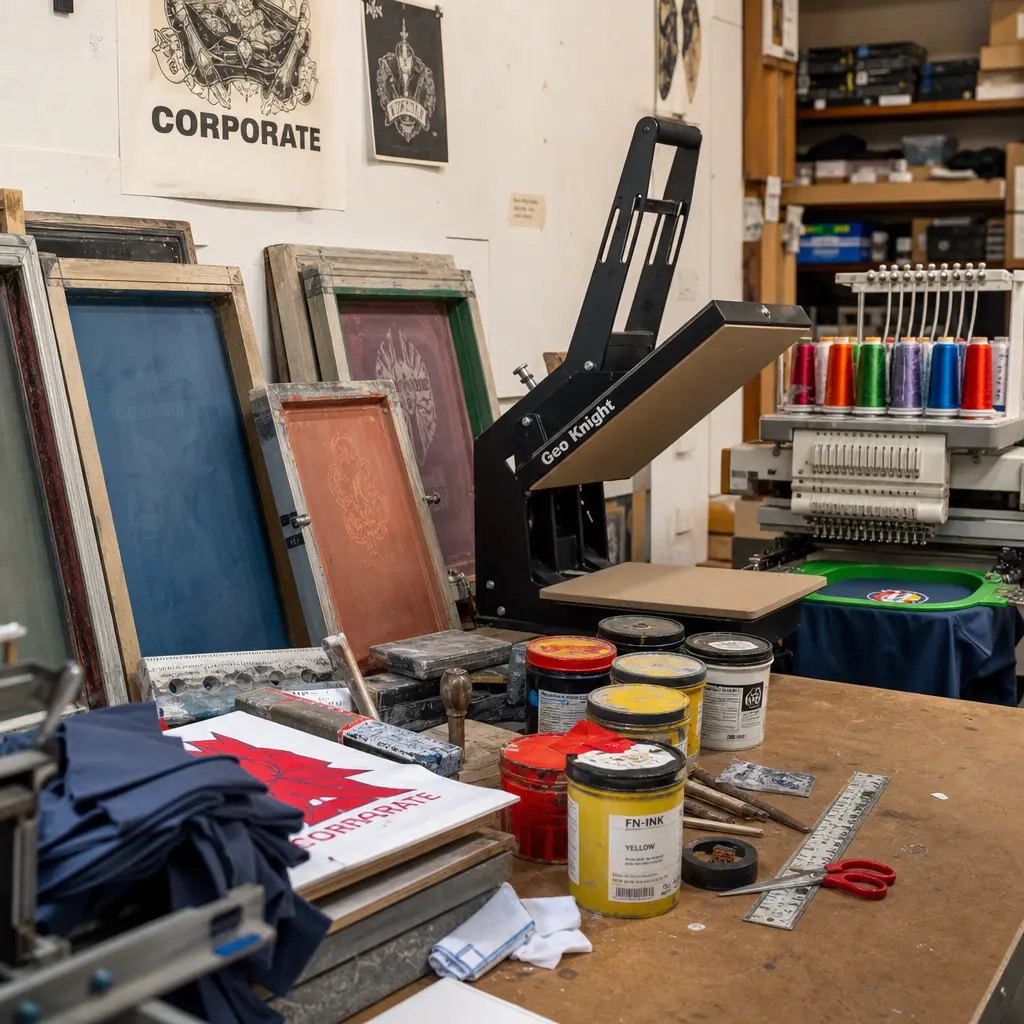
Screen printing is usually the most economical decoration for simple one- or two-color artwork on cotton. It works well for museum names, exhibition titles, line art, and simple icons. Buyers should request a strike-off on the actual or equivalent pouch fabric because ink color and edge sharpness change with fabric texture and shade. Fine text, small copyright lines, and delicate artwork may fill in or break up if the screen setup is not suitable.
Woven labels are often a better choice when the pouch should feel like a keepsake rather than disposable packaging. A small sewn label can carry the museum name, collection mark, or exhibit identity without covering the fabric. Labels are durable and can be useful for repeat programs because the pouch body can remain standard while labels change by collection. The buyer should approve label size, fold type, thread colors, placement, and stitch direction before bulk sewing.
Heat-applied transfers should be treated carefully on cotton. Some digital transfer methods can work for short runs or full-color artwork, but they need adhesion, wash, rub, and hand-feel testing. Sublimation should not be presented as a standard solution for natural cotton because it normally performs best on polyester or specially coated substrates. If a supplier recommends a transfer, ask exactly which process they mean, what fabric it suits, and how it will age with handling.
- Use screen print for simple spot-color logos and exhibition graphics after approving a strike-off.
- Use woven labels for premium, durable branding or when the artwork is too detailed for clean screen printing.
- Use cotton-compatible transfers only after physical testing; avoid assuming sublimation is appropriate for standard cotton.
MOQ, Sampling, and Approval Control
MOQ is not a single number. It may apply per pouch size, per fabric color, per print design, per label design, or per shipment. A supplier may accept 500 pieces total but still require 300 pieces per size or charge separate setup for each artwork. Museum shops often want several designs tied to collections or exhibitions, so this distinction has direct budget impact. Ask suppliers to break out setup charges, decoration charges, and unit prices at several quantity levels.
A pre-production sample is essential for custom work. It should be made with the intended fabric weight, cord, decoration method, label, and packing style. If the supplier can only provide a similar sample at first, use it for capability screening but do not treat it as production approval. The approved sample should be signed off in writing, photographed, and kept as the reference for inspection and future reorders.
Sample fees and refund rules vary by supplier, complexity, and courier cost. Avoid relying on a general threshold such as a fixed order value unless it is written into the quote. Ask whether the sample cost is refundable, credited to the invoice, or non-refundable, and whether courier charges are included. The most useful sampling investment is often a staged approval: swatch first, strike-off or label proof second, complete pre-production sample third.
- Ask for MOQ by size, color, design, label, and reorder, not only MOQ per order.
- Approve physical swatches and decoration tests before approving the complete sample.
- Record sample fee, courier fee, credit rules, and revision costs in the proforma invoice or quote.
Retail Packing and Museum Receiving Rules
Packing is a procurement decision, not an afterthought. Bulk-packed pouches reduce unit cost and may suit gift-with-purchase programs where staff can pull from back stock. Retail-ready packing costs more but can reduce handling inside the museum, especially when every unit needs a hang tag, barcode, price label, or collection card. The right choice depends on staffing, storage, presentation, and sustainability policy.
Museum shops should specify how the pouch must arrive. Requirements may include individual paper bands instead of polybags, barcode labels on the back lower right corner, hang tags attached with cotton string, or no adhesive directly on fabric. If the pouch is sold as packaging around another object, define whether the supplier packs the object, supplies empty pouches only, or packs pouches in sets for internal assembly. Mixed assumptions here create receiving delays and extra labor.
Carton rules are equally important. Institutional receiving teams may require purchase order numbers, SKU numbers, item descriptions, carton counts, gross weight, destination department, and delivery appointments. If multiple designs are ordered, separate cartons by SKU unless the receiving team approves mixed cartons. Ask for carton label proofs and packing photos before shipment. For sea freight or humid routes, discuss moisture protection and carton strength with the forwarder and supplier.
- Specify bulk, retail-ready, or assembly-ready packing before quoting.
- Provide barcode, SKU, PO number, carton label, and delivery appointment requirements early.
- Require separate cartons by SKU when receiving accuracy matters.
Lead Time Around Exhibitions and Shop Resets
The practical timeline for a cotton drawstring pouch order includes more than sewing time. A first order may involve fabric sourcing, swatch approval, artwork cleanup, strike-off, sample production, buyer review, revision, bulk production, inspection, freight, customs, receiving, and merchandising. Supplier production lead times are useful, but museum buyers should build the schedule backward from the date the product must be on the shop floor, not the date it leaves the factory.
Exhibition-linked orders carry extra risk because artwork approval and launch dates are fixed. If the pouch includes an exhibition title, sponsor credit, artist name, object image, or licensed motif, add time for internal review and rights approval. A small text change after sample approval can still require a new screen, label proof, or transfer file. For seasonal peaks and major factory holidays, confirm capacity before placing the order and ask whether material has been reserved.
Freight choice should be made with cost and risk in mind. Air is faster but can be expensive for bulky cotton goods. Sea or consolidated freight may reduce cost but requires more planning and can add variability at port, customs, and local delivery. Use supplier transit estimates only as planning inputs. For firm events, ask the forwarder for current routing options and build a buffer for inspection findings, customs questions, and museum receiving appointment availability.
- Work backward from shop-floor date, not factory completion date.
- Add approval time for exhibition artwork, licensing, sponsor lines, and stakeholder review.
- Separate production ready date, inspection date, ship date, estimated arrival, and receiving date.
Landed Cost and Quote Comparison
The lowest unit price is rarely the full answer. Compare quotes on landed cost: product cost, decoration, packing, sample charges, tooling or setup, inland freight at origin if applicable, international freight, insurance, import duty, taxes, broker fees, local delivery, inspection, and any internal labor needed for tagging or repacking. A pouch that arrives retail-ready at a higher unit price may be cheaper operationally than a lower-cost pouch that requires hours of staff handling.
Be careful with duty and tax statements. Suppliers may offer estimates based on prior shipments, but classification depends on the product, material, country of import, country of origin, and current tariff rules. For the United States, European Union, United Kingdom, Canada, Australia, or any other destination, ask your customs broker or freight forwarder to confirm the classification and duty treatment. Do not build the purchase order around a supplier's informal duty percentage.
Ask each supplier to quote on the same basis. FOB can be useful when you control freight. CIF or DAP can be useful for comparison, but the included and excluded costs must be clear. Some quotes include export carton packing but not retail packing. Some include freight to port but not customs clearance or local delivery. A decision-grade quote shows unit price by quantity, setup charges, sample cost, packing cost, Incoterm, shipment dimensions, gross weight, and validity period.
- Compare landed cost, not only FOB unit price.
- Confirm import classification and duty with a broker; treat supplier duty figures as non-binding estimates.
- Request carton dimensions and gross weight so freight quotes can be checked independently.
Inspection Plan and Supplier Selection
A strong supplier selection process combines capability evidence with inspection discipline. Ask for production photos, sample room capability, fabric storage conditions, trim sourcing, and examples of packing similar to your requirement. The best responses are specific: GSM options, construction recommendations, sample timing, decoration limitations, packing details, and inspection steps. Vague promises such as 'good quality' or 'museum standard' should be translated into measurable criteria.
Inspection criteria should be agreed before the deposit is paid. Define critical, major, and minor defects. Critical defects, such as unsafe contamination, wrong product, unauthorized branding, or severe mold, should generally be zero tolerance. Major defects may include wrong size outside tolerance, poor print, broken seams, wrong cord, wrong label, or incorrect SKU packing. Minor defects may include trim thread ends or slight fold marks within an agreed limit. AQL levels such as major 2.5 and minor 4.0 are common reference points in consumer goods, but the buyer and supplier should agree what fits the order risk.
For museum shops, inspection should also cover retail presentation and receiving accuracy. A technically acceptable pouch can still fail commercially if barcodes are unreadable, hang tags face the wrong direction, cartons mix SKUs, or the shade looks wrong beside other branded merchandise. For important launches, consider third-party inspection after packing and before shipment. For smaller orders, require supplier inspection records, measurement photos, packing photos, and a retained reference sample.
- Select suppliers based on specific answers, physical samples, and documented QC, not only price.
- Agree defect definitions and AQL levels before production begins.
- Inspect retail details: barcode scanability, hang-tag orientation, SKU separation, carton labels, and shade consistency.
Specification comparison for buyers
| Supplier option | What to verify | Commercial advantage | Buyer risk to control |
|---|---|---|---|
| Direct sewing factory | cord material proof, reinforcement close-ups, load-test photos, approved sample tag, and bulk-line first-piece record | Better sample-to-bulk control and faster production feedback | May be weaker on export paperwork or branded packing unless checked early |
| Trading company | Factory name, production photos, trim-source proof, and who owns QC decisions | Can coordinate small mixed orders and extra services | Markup can hide real factory capability and slow defect decisions |
| Specialized bag workshop | cord diameter, eyelet or reinforced channel, bottom corner reinforcement, seam allowance, bar-tack position, and load target | More practical for detailed construction, trims, and repeat programs | Capacity may be limited during peak seasons |
| Low-price general supplier | 6-10 oz cotton canvas, 210D polyester, rPET, or blended cotton with shrinkage and colorfastness expectations set before sampling | Useful for simple promotional runs with loose specs | Material downgrades, weak packing, and vague inspection scope can erase savings |
| Retail-ready supplier | fold direction, cord protection, bundle count, carton compression, moisture bag, and retail label position | Can handle labels, SKU separation, carton marks, and receiving rules | Higher unit cost must be compared against reduced warehouse work |
| Compliance-focused supplier | Fabric records, labeling review, test plan, and production traceability | Safer for retail programs and repeat brand orders | Documentation claims need evidence, not only sales language |
| Local sample room plus bulk factory | Signed sample, bulk factory handoff, first-piece photos, and deviation owner | Good for complex branding before large production | Sample room quality may not match bulk line unless handoff is controlled |
Buyer checklist before sampling
- [Use case] Define whether the pouch is retail merchandise, product packaging, gift-with-purchase, member premium, or exhibition launch packaging. The use case determines fabric weight, finish, packing, and inspection level.
- [Size] Measure the actual item or item bundle, including spine thickness, protective wrap, and hang tag. Add practical clearance for insertion rather than relying only on flat length and width.
- [Fabric] Specify fiber content, GSM, finish, color, and acceptable shade variation. Request a physical swatch from the intended fabric lot before approving the pre-production sample.
- [Construction] Confirm seam allowance, cord type, cord length, channel width, reinforcement points, and whether the pouch must hold books, ceramics, jewelry boxes, postcards, or audio-guide accessories.
- [Print] Choose screen print for simple spot-color art, woven label for durable premium branding, or digital/DTF transfer only after adhesion and hand-feel testing on cotton. Do not assume sublimation is suitable for standard cotton.
- [Artwork] Provide vector artwork, PMS or brand color references where relevant, print placement in millimeters, label position, barcode requirements, and any restrictions on cultural motifs or exhibit marks.
- [Sample] Require a pre-production sample made with the intended fabric, trim, print method, and packing. Approve it in writing and keep one sealed reference sample for receiving and reorders.
- [MOQ] Ask whether MOQ applies per size, per fabric color, per print design, per label design, or per shipment. Confirm reorder MOQ before placing the first purchase order.
- [Packing] Decide between bulk packing and retail-ready packing. Specify fold method, inner pack count, polybag or paper band requirements, hang-tag attachment, barcode/SKU placement, and carton labels.
- [Schedule] Build the timeline backward from the exhibition opening, shop reset, catalog launch, or donor event. Include sample approval, artwork revision, production, inspection, freight, customs, receiving, and internal merchandising time.
Factory quote questions to send
- What is your MOQ for this pouch by size, fabric color, print design, and label design? If we order two museum shop sizes, can you combine fabric purchasing or setup to reduce cost?
- Which cotton fabric weights can you supply for this order, and can you send swatches from the actual or equivalent production fabric? Please state GSM, weave, finish, and expected shrinkage range.
- Can you make a pre-production sample using the intended bulk fabric, cord, stitching, print method, label, and packing? What is the sample charge, courier charge, and estimated sample lead time?
- If a sample fee is refundable or credited, what exact order value or quantity triggers the credit, and will the credit appear on the proforma invoice?
- Which decoration method do you recommend for our artwork: screen print, woven label, embroidery, or cotton-compatible transfer? What are the limitations for fine lines, small text, and color matching?
- For screen print, can you provide a strike-off on the actual pouch fabric before the full sample? For woven labels, can you provide a digital loom proof or physical label sample before sewing?
- What seam construction, cord diameter, channel width, and reinforcement do you recommend for pouches holding our actual product weight? Can you perform a load test based on our target contents?
- Can you quote both bulk packing and retail-ready packing? Include inner pack count, hang tag attachment, barcode sticker placement, carton marks, carton dimensions, and gross weight.
- Can you separate SKUs by carton and print our PO number, item number, barcode number, quantity, and destination on each carton label? Are mixed cartons avoidable?
- What is the production schedule after sample approval: material purchase, cutting, printing, sewing, packing, inspection, and ship date? Please separate ready date from actual ship date.
Quality-control points to confirm
- Approved sample control: seal and label one pre-production sample with date, fabric, print method, cord, label, packing, and buyer approval. Use it as the reference for bulk production and receiving.
- Fabric verification: check GSM, fiber content claim, shade, weave defects, odor, stains, and hand feel against the approved swatch. For cotton certification claims, verify that documents apply to the supplier and transaction, not only to a generic mill.
- Measurement tolerance: define finished length, width, gusset if any, channel height, and cord length. A common pouch tolerance may be around +/-0.5 cm for small and medium sizes, but set tighter or wider limits based on the product fit requirement.
- Seam and stitch quality: inspect for skipped stitches, loose threads, broken stitches, uneven seam allowance, puckering, and weak corners. Confirm seam allowance and stitch density against the agreed construction spec.
- Load testing: set the test weight from the actual contents plus a safety margin. A pouch for postcards may need a different target than one holding a book or ceramic item; do not rely on a generic 1 kg test if the intended item is heavier.
- Drawstring function: cord must pull smoothly, cinch closed without tearing the channel, and resist fraying. Check cord length symmetry, knot security, end finishing, and contrast-cord color transfer.
- Print and label inspection: compare placement, color, clarity, edge sharpness, opacity, and registration against the strike-off or approved sample. Check that fine text remains legible and that label stitching is straight and secure.
- Colorfastness and shrinkage: request tests only when relevant to the use case. For handled retail items, dry and wet rub testing can be useful; for washable pouches, agree a wash method and shrinkage limit before production.
- Packing inspection: verify fold direction, inner pack quantity, barcode placement, hang-tag orientation, SKU separation, carton label content, carton strength, moisture protection if needed, and whether cartons meet museum receiving limits.
- AQL terminology: agree defect classes in writing. Critical defects should generally be zero tolerance; major and minor defects can follow buyer-approved AQL levels such as 2.5 and 4.0, depending on risk and order value.