1. What the supplier audit must prove before you place the order
A cotton drawstring bag looks simple until a wholesale order arrives with thin fabric, twisted cords, weak seams, or a logo that rubs off after one event. The purpose of a supplier audit is not to create paperwork for its own sake. It is to confirm whether the factory understands the bag as a production item: fabric sourcing, cutting tolerance, sewing construction, print curing, packing, and repeatability.
For procurement teams, the key buying problem is comparing suppliers who may quote the same size and logo but manufacture very different bags. One supplier may quote 140 GSM natural cotton with a single cord and bulk packing. Another may quote 220 GSM cotton twill with double drawcord, screen print, individual packing, and export cartons. The unit price difference only makes sense when the construction details are visible.
- Audit the supplier's ability to define specifications, not just accept a picture.
- Check whether the sales team can connect price changes to fabric, print, packing, and MOQ logic.
- Ask for real production samples from previous cotton drawstring bag orders, not only catalogue images.
- Confirm whether the supplier is a trading office, sewing factory, print workshop, or integrated bag manufacturer.
2. Start the audit with the exact bag use case
Before asking for a quote, define what the bag must carry and how long it should last. A cotton drawstring pouch for jewelry packaging does not need the same fabric, seam strength, or drawcord as a cotton drawstring backpack for sports merchandise. Many quotation problems start because the buyer only sends size, logo, and quantity, then expects suppliers to guess the correct quality level.
A good supplier should ask about product weight, retail channel, branding standard, reuse expectation, and packing destination. If the factory quotes immediately without clarifying these points, the price may be based on the cheapest workable version rather than the version your customer expects. This is where supplier audit and RFQ writing overlap.
- For cosmetics or jewelry: check clean sewing, small size tolerance, light to medium GSM, and neat drawcord ends.
- For apparel or footwear: check larger size, stronger bottom seam, 180-270 GSM fabric, and carton crease control.
- For event giveaways: balance low cost with acceptable opacity, fast lead time, and simple one-color printing.
- For retail resale: require better finishing, barcode or hangtag packing, color consistency, and stronger carton specifications.
3. Fabric audit: GSM, weave, shrinkage, and cotton claims
Fabric is usually the largest cost driver in a cotton drawstring bag. For wholesale buyers, the most common range is about 5 oz to 8 oz cotton, roughly 140 GSM to 270 GSM depending on the conversion and weave. Lighter fabric can work for dust bags and low-weight gift packaging. Heavier fabric gives better handfeel and opacity but increases material cost, sewing time, carton weight, and freight volume.
Do not accept the word cotton as a full specification. Ask whether it is plain weave, twill, canvas, muslin, or another construction. Natural unbleached cotton may show seed flecks and shade variation; this is often acceptable for an organic look but must be approved. Dyed cotton requires color standard control and may have higher MOQ because the fabric mill needs a minimum dye lot.
- Common light use: 4-5 oz / about 115-140 GSM for dust bags, light gifts, or low-cost event packaging.
- General wholesale use: 6 oz / about 170 GSM for moderate opacity and practical cost control.
- Premium reusable use: 8 oz / about 220-270 GSM for better structure and stronger perceived value.
- Audit question: can the supplier provide fabric swatches by GSM and explain the cost impact of each option?
4. Organic cotton and certification: check the scope, not just the wording
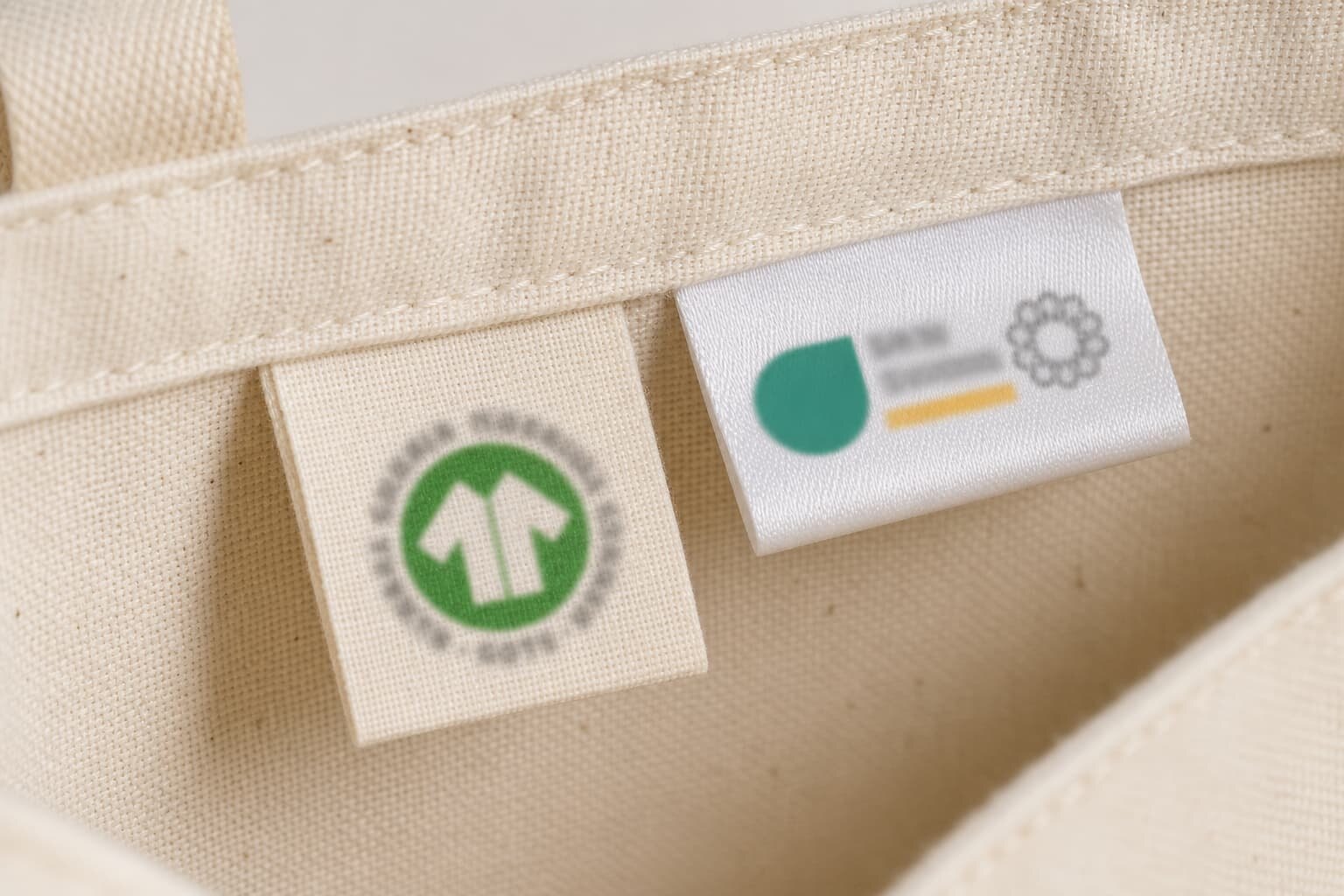
Because this product sits in the Organic Cotton Bags category, many buyers will ask for organic cotton. The audit point is simple: organic cotton as a marketing claim requires traceability. A factory may be able to make bags from organic cotton fabric, but the certification scope must match the claim you intend to print on packaging, labels, ecommerce listings, or retail documents.
If your project only needs a natural cotton look and does not make an organic claim, conventional unbleached cotton may be enough. If your brand requires certified organic cotton, ask early. Certified fabric, transaction documents, approved labeling, and chain-of-custody requirements can affect MOQ, cost, lead time, and supplier selection. Do not wait until final inspection to ask for documents that should have been built into the sourcing plan.
- Ask whether certification covers yarn, fabric, bag manufacturing, printing, or only raw material supply.
- Confirm if certificates are current and issued to the correct entity in the supply chain.
- Do not allow uncertified hangtags or printed claims if your compliance team has not approved them.
- Separate natural cotton color from certified organic cotton; they are not the same purchasing requirement.
5. Construction audit: seams, channel, cords, and size tolerance
The drawstring channel is the working part of the bag. If the channel is too narrow, the cord will jam. If the stitching is weak at the channel opening, the seam can tear when the user pulls the cord. A supplier audit should include actual handling: open and close the sample repeatedly, pull the cord firmly, and check whether the top edge deforms or the cord ends fray.
Finished size also needs control. Buyers often provide only nominal dimensions, but cotton fabric can move during cutting, sewing, washing, and pressing. For most drawstring bags, a practical finished size tolerance may be discussed as plus or minus a few millimeters for small pouches and wider tolerance for large bags. The important point is to state the tolerance before production and measure the approved sample the same way as bulk goods.
- Check side seam type: plain lockstitch, overlock, French seam, or reinforced seam depending on price and use.
- Check bottom corners: square corners are common, but heavy contents may need better seam allowance and backstitching.
- Check top channel width: match it to cord diameter so the cord slides smoothly.
- Check cord choice: round cotton rope, flat cotton tape, polyester cord, or jute cord all change price and user feel.
- Check if a single drawstring or double drawstring is quoted; this affects labor, cord quantity, and closure quality.
6. Logo and decoration audit: choose the method before comparing price
For cotton drawstring bags, screen printing is usually the most practical choice for solid logos, simple text, and one to four spot colors. It gives good cost efficiency at wholesale quantity, but ink curing, fabric absorbency, and artwork line thickness matter. A cheap print quote may skip proper curing time or use an ink system unsuitable for the fabric, causing rubbing, cracking, or dull color.
Heat transfer can handle gradients and small color details, but buyers should check handfeel, edge durability, and whether the film suits cotton fabric. Embroidery gives a premium look for small logos, but it can pucker light fabric and adds cost. Woven labels, side labels, and hangtags are useful when the bag surface should remain plain. The best supplier will not force one method; they will match method to artwork, fabric, quantity, and brand standard.
- Screen print: best for solid artwork, larger runs, and practical unit cost.
- Heat transfer: useful for gradients or full-color logos, but check washing and edge lifting requirements.
- Embroidery: premium but better on heavier cotton; audit puckering and thread color.
- Woven label or side label: good for subtle branding and repeat orders with many bag colors.
- Ask for print position tolerance, Pantone matching method, and whether one-side or two-side printing is included.
7. MOQ audit: understand what the minimum really applies to
MOQ is not only a sales rule. It often comes from fabric purchase minimums, dye lot minimums, print setup time, cutting efficiency, and packing labor. A supplier may accept a low total order quantity if the fabric is in stock and the logo is simple. The same supplier may require a much higher MOQ if you need custom dyed organic cotton, multiple bag sizes, several logo versions, or special retail packing.
For buyers comparing quotes, the audit should uncover the hidden split-MOQ problem. A quote for 10,000 pieces may look attractive until you divide it into five colors, three sizes, and six artworks. Each split creates setup time, material loss, line changeover, and QC complexity. Ask suppliers to quote the order matrix exactly as you plan to buy, not as one idealized bulk run.
- Stock fabric + one logo + bulk packing usually gives the easiest MOQ.
- Custom dyed fabric raises MOQ because dyeing needs a workable batch size.
- Certified organic fabric may depend on mill availability and document requirements.
- Multiple artwork versions create separate print setup and inspection control.
- Retail packing splits may add labor cost even when the bag itself is unchanged.
8. Sample approval workflow: prevent the expensive mistakes early
The pre-production sample is the buyer's main protection. It should show the actual fabric GSM, actual color, actual cord, actual size, actual print method, and actual packing if packing affects the final look. A sample made from substitute fabric can help confirm shape, but it should not be treated as final approval for color, shrinkage, logo result, or handfeel.
For larger wholesale orders, ask the factory to keep a signed duplicate sample. One approved sample stays with the buyer, one stays at the factory, and both are used during production and final inspection. This reduces arguments such as 'the photo looked different' or 'the fabric was similar.' Written approval should include date, revision number, artwork file name, sample comments, and any allowed deviations.
- Review size after the bag is flattened naturally, not stretched.
- Check logo after normal handling and light rubbing, especially on natural cotton.
- Open and close the drawstring at least 20 times to feel cord movement.
- Weigh one finished bag and compare it with expected GSM and size.
- Photograph approved details: top channel, cord knots, seam finish, label, print position, and carton packing.
9. Packing and export audit: avoid damage, odor, and carton problems
Packing is often treated as an afterthought, but cotton bags can absorb moisture, odor, and dust during storage and shipping. Natural cotton also shows creases, stains, and handling marks more clearly than synthetic bags. Your RFQ should define whether bags are bulk packed, bundled, individually polybagged, packed with paper bands, or prepared for retail with barcode labels and hangtags.
Carton details affect landed cost and warehouse handling. Too many pieces per carton can cause severe compression and creasing. Too few pieces can inflate freight volume. Ask for carton dimensions, gross weight, net weight, carton strength, inner liner use, shipping marks, and pallet instructions if needed. Buyers using distribution centers should also check carton weight limits and labeling rules before the factory packs the order.
- Bulk pack: lower cost, suitable for events or repacking, but higher handling and crease risk.
- Individual polybag: cleaner presentation and easier distribution, but adds material and labor cost.
- Paper band or belly band: better plastic reduction option, but needs artwork and packing approval.
- Carton liner or moisture bag: useful for natural cotton in humid seasons or long ocean shipments.
- Shipping marks: confirm PO number, SKU, quantity, carton number, gross weight, and destination if required.
10. Lead time and quote data: compare suppliers on the same basis
A reliable cotton drawstring bag quote should separate the main time drivers: fabric readiness, sample making, sample approval, printing, cutting, sewing, finishing, inspection, packing, and shipment booking. A vague answer such as '20 days production' may be acceptable for a simple repeat order, but it is weak for a first order with custom fabric, multiple logos, or retail packing.
When comparing suppliers, build a quote comparison sheet that includes more than unit price. Put fabric GSM, bag size, print method, number of print colors, MOQ rule, sample cost, setup cost, packing type, carton quantity, carton dimensions, estimated gross weight, production lead time, and payment terms in one table. This exposes quotes that look cheap because they omit important work.
- Ask whether lead time starts after deposit, artwork approval, sample approval, or fabric arrival.
- Confirm whether print screens, films, labels, or packing materials are included in the quoted price.
- Request the finished bag weight and carton CBM to estimate freight more accurately.
- Ask for validity period of the quote if cotton fabric prices or exchange rates are changing.
- Record assumptions in the purchase order so the factory cannot downgrade fabric or packing later.
Specification comparison for buyers
| Spec decision | Recommended option | When it fits | Buyer risk to check |
|---|---|---|---|
| Fabric weight | 5 oz / 140 GSM to 8 oz / 270 GSM cotton | Gift packaging, retail merchandise, event kits, reusable product bags | Too light may become transparent; too heavy may increase freight and make draw closure bulky |
| Fabric type | Unbleached natural cotton or dyed cotton twill/plain weave | Organic look, cosmetics, apparel accessories, food-adjacent packaging | Color shade variation, seed flecks, shrinkage after washing, and certification scope |
| Drawcord | Cotton rope or flat cotton tape matched to bag size | Premium reusable bags and brand packaging where plastic cord is not acceptable | Cord diameter too thick for channel; loose knots; fraying; poor color match |
| Logo printing | Screen print for solid logos; heat transfer for gradients; embroidery for small premium runs | Most wholesale branding programs with simple artwork | Ink bleeding, poor registration, cracking on heavy ink coverage, embroidery puckering |
| MOQ logic | Separate MOQ by fabric stock, dyeing, printing, and packing | Buyers comparing multiple logo versions, colors, or SKUs | Supplier may quote one MOQ but later add surcharges for split colors or mixed artwork |
| Closure construction | Double drawstring with folded top channel and bar tack reinforcement | Retail bags, hotel amenities, footwear, apparel, gifting | Weak channel stitching, uneven opening, cord pulls out during use |
| Packing | Individual polybag or bulk pack with carton liner depending on retail need | Distribution centers, ecommerce kits, promotional packing, export shipments | Carton overloading causes creases; unprotected natural cotton absorbs moisture and odor |
| Sample approval | Pre-production sample in actual fabric, cord, print, and packing | Any custom dyed, organic, retail, or strict brand color project | Approval sample made with substitute fabric gives false handfeel, print result, and shrinkage expectation |
Buyer checklist before sampling
- Confirm the supplier can state fabric composition, weave, GSM or oz, shrinkage expectation, and whether the fabric is greige, bleached, dyed, or washed.
- Ask whether the cotton is conventional, organic, recycled cotton blend, or only described as natural cotton; request certification scope only if you need certified organic claims.
- Check if the quoted MOQ applies per total order, per color, per size, per print design, or per packing version.
- Require bag size tolerance, seam allowance, drawcord length, cord material, top channel width, and finished weight per piece in the quotation or proforma invoice.
- Approve a physical pre-production sample made with actual fabric, actual drawcord, actual print method, and actual packing before bulk cutting.
- Review print artwork size, Pantone references, ink type, print position tolerance, and whether both sides or one side are included.
- Ask for packing details including units per inner pack, carton quantity, carton size, gross weight, net weight, and whether moisture protection is included.
- Verify the supplier has in-line inspection, needle control, metal detection if needed, AQL final inspection process, and retained samples for order comparison.
- Check realistic lead time by separating fabric preparation, printing, sewing, finishing, inspection, and export packing instead of accepting one vague production date.
- Compare quotes using landed cost indicators, not only unit price: fabric GSM, carton volume, packing labor, test requirements, sample fees, and print setup charges all affect total cost.
Factory quote questions to send
- What exact fabric will be used: composition, weave, GSM or oz, color state, shrinkage rate, and roll width?
- Is the quoted cotton fabric in stock, made to order, dyed to order, or dependent on a mill minimum quantity?
- Does your MOQ apply per size, per color, per logo, per print position, or per packing style?
- What drawcord material, diameter or width, color, and length will be used for each bag size?
- Which logo method do you recommend for this artwork and fabric: screen print, heat transfer, digital print, embroidery, woven label, or another method?
- What are your print setup costs, film charges, screen charges, sample fees, and reorder charges?
- Can you provide a pre-production sample using actual bulk fabric and actual logo process before mass production?
- What finished size tolerance, GSM tolerance, print position tolerance, and color tolerance do you accept internally?
- How many pieces per carton, what carton dimensions, and what gross weight should we expect for export packing?
- What production steps drive lead time, and at which stage can we still adjust artwork, packing, or shipping marks?
Quality-control points to confirm
- Measure finished bag width and height flat, including agreed tolerance and drawstring channel consistency.
- Check fabric GSM with a cutter or compare against approved swatch and retained sample when lab equipment is not available.
- Inspect seam strength at side seams, bottom corners, and top channel ends; these are common failure points when users pull the cord hard.
- Confirm drawcord length, knot security, cord color, and smooth movement through the channel.
- Rub test the logo print after curing; check cracking, bleeding, uneven ink deposit, and alignment against artwork approval.
- Check color shade under standard light for dyed bags and cord-to-body matching if tone consistency is important.
- Review loose threads, oil marks, needle holes, fabric slubs beyond approved standard, and uneven top folding.
- Verify carton markings, quantity per carton, inner packing method, moisture protection, and carton strength before shipment.
- Compare bulk goods against the signed pre-production sample, not against a sales photo or email description.
- Keep one approved sample sealed at the supplier and one at the buyer side for dispute control.