Define the Compliance Problem Before You Source
For a tech startup, a cotton drawstring backpack is rarely just a cheap event giveaway. It may carry a conference badge kit, onboarding merchandise, retail bundle, partner gift, or recruiting campaign. The buying risk is not only whether the logo looks good. The bigger risk is choosing a supplier that cannot prove fabric specification, print control, packing consistency, or export readiness before the deadline.
A supplier compliance checklist turns a vague RFQ into a controlled purchase. It separates factories that understand bulk cotton bag production from sellers who only forward catalog photos. The checklist should cover product specification, material evidence, print approval, MOQ logic, sample control, QC thresholds, packing data, and lead time risk. If these items are missing from the quotation stage, they usually become expensive problems after deposit.
- Use one approved spec sheet for all suppliers so quotes are comparable.
- Treat fabric weight, print method, packing, and inspection as quote inputs, not later details.
- Require the supplier to identify what is made in-house and what is outsourced.
- Keep compliance evidence attached to the order file before finance approves deposit.
Build the Backpack Specification Around Real Use
The first decision is how the backpack will be used. A bag for stickers, brochures, and socks can use lighter cotton. A backpack expected to hold a water bottle, hoodie, charger pouch, or small retail kit needs stronger fabric, reinforced corners, and better seam allowance. Many quote gaps come from suppliers pricing a lightweight promotional bag while the buyer imagines a reusable canvas backpack.
For most branded tech events, a finished size around 34 x 42 cm or 35 x 45 cm is common. Natural cotton in 7-10 oz is a practical range for a reusable drawstring backpack. If the order needs a premium hand-feel or heavier load capacity, 10-12 oz canvas can work, but the drawcord channel becomes bulkier and freight volume increases. A buyer should state both target use and target load, not only finished size.
- Light use: 5-6 oz cotton for brochures, small apparel, or low-cost conference handouts.
- Standard use: 7-10 oz cotton canvas for most reusable startup merchandise.
- Premium use: 10-12 oz canvas when the bag needs a firmer body and higher perceived value.
- Load note: define expected contents by weight and shape so the factory can choose seam reinforcement correctly.
Normalize Fabric Weight, Color, and Shrinkage
Cotton bag quotes often use oz, GSM, and plain language in the same email. That creates confusion. A supplier may quote 6 oz cotton while another quotes 8 oz canvas, and the difference is not just cost. The lighter bag may print differently, wrinkle more easily, and fail at the lower corners if used as a backpack. Require actual fabric weight and allow a tolerance, such as plus or minus 5 percent, because fabric finishing affects final measurement.
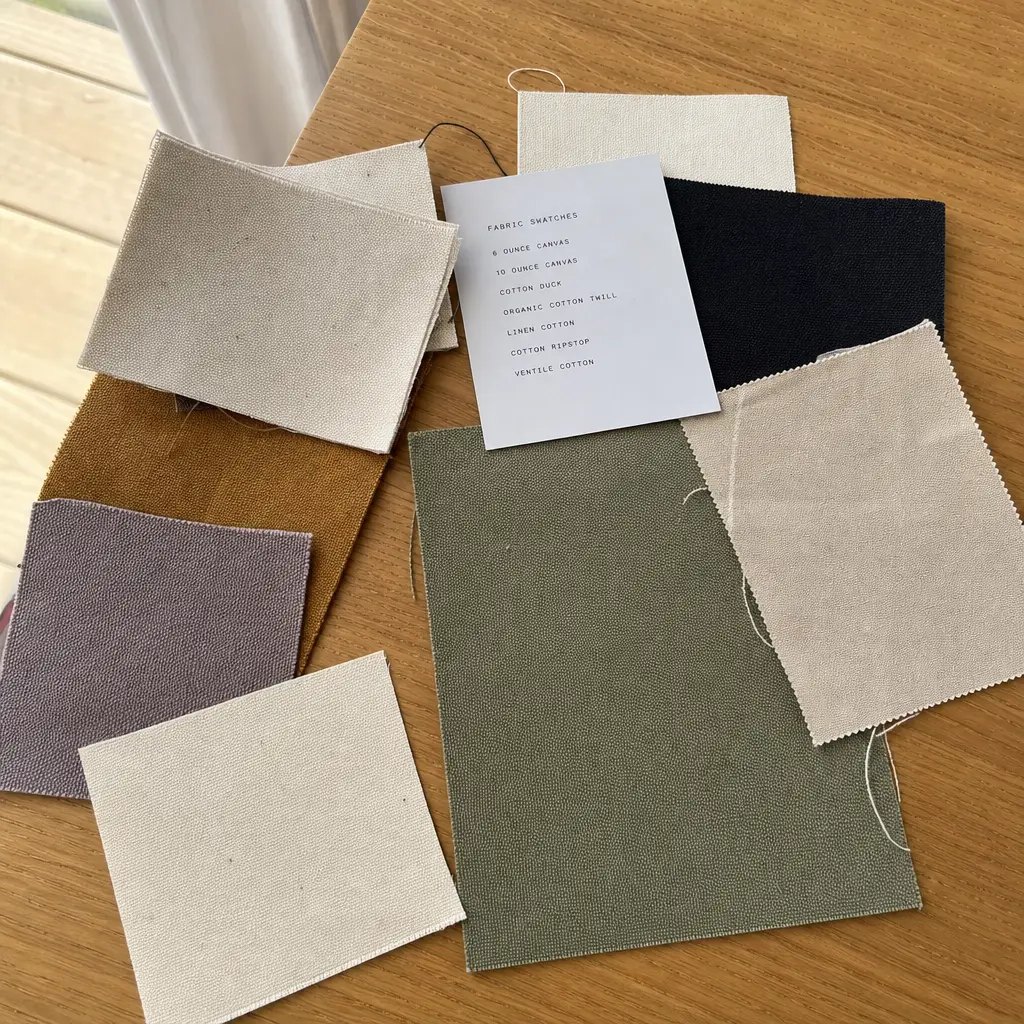
Natural cotton color also needs control. Unbleached cotton can vary from cream to grey-beige depending on yarn, washing, and finishing. White or dyed cotton adds cost and can require higher MOQ because the mill may need to dye a minimum fabric quantity. If your brand color is sensitive, approve fabric swatches under normal light and review how the logo ink sits on that exact shade.
- Quote line should state cotton composition, weave, finish, and GSM or oz.
- Natural cotton should include an acceptable shade range or approved swatch reference.
- Custom dyed fabric should state lab dip approval process and dye lot MOQ.
- Pre-shrunk or washed cotton should be quoted separately because it changes hand-feel and size control.
Match Print Method to Startup Brand Artwork
Screen printing is usually the best choice for solid startup logos, one-color slogans, and QR codes in medium or large quantities. It gives a clean logo at a stable unit cost, but screen setup charges and color separations matter. The RFQ should include vector artwork, Pantone color references, print size, print location, and whether the logo is printed before or after sewing. Printing before sewing can improve consistency on flat panels, while printing after sewing may fit small runs but can be limited by seams and channels.
Digital print or heat transfer can solve complex artwork with gradients or many colors, but it changes the hand-feel and cost structure. Cotton absorbs ink differently than polyester, and a low-quality heat transfer may show a visible edge or crack after flexing. Embroidery or woven labels can look premium, but embroidery on lightweight cotton can pucker the panel. The print method should be approved on the same fabric weight used for production, not on a random sample cloth.
- Screen print: best for solid spot colors, repeat orders, and large front logos.
- Digital print: useful for complex artwork but needs fabric absorption and color testing.
- Heat transfer: works for short runs but needs flex and wash-rub review.
- Woven label: good for subtle branding but requires exact placement and seam allowance.
- Embroidery: use on heavier canvas only after checking puckering around stitches.
Read MOQ Logic Instead of Chasing the Lowest Number
MOQ is not one number. A supplier may accept 300 pieces for stock natural cotton, 500 pieces for screen print, 1,000 pieces for custom cord color, and 3,000 pieces for custom dyed fabric. A low MOQ can be real if the factory has fabric and cords in stock. It becomes risky when the supplier promises custom details below the practical minimum and later substitutes material or delays production.
For tech startups testing an event channel, it is better to separate must-have customization from nice-to-have details. A standard natural cotton backpack with a screen printed logo can keep MOQ and lead time manageable. Custom dyed cotton, branded drawcord tips, retail hangtags, and individual barcode labels may be added when the program moves from pilot order to repeat order. The RFQ should ask suppliers to show price breaks and MOQ triggers instead of forcing one flat quote.
- Base MOQ: stock fabric, standard size, standard cord, one print position.
- Higher MOQ trigger: custom fabric color, custom woven label, custom cord, or retail barcode packing.
- Cost break trigger: screen setup amortized over larger order quantities.
- Risk point: supplier accepts low MOQ but changes GSM or print method without written approval.
Verify Supplier Evidence Before Deposit
Supplier compliance is not only a certificate list. For cotton drawstring backpacks, useful evidence includes factory profile, production photos, material records, print workshop capability, previous inspection format, sample invoice, packing list example, and carton mark example. These documents show whether the supplier handles bulk bag production as a controlled process or treats each order as a one-off job.
If your company needs formal compliance, state the destination market and retail channel. Some buyers need restricted substance declarations, azo-free dye statements, Prop 65 review, CPSIA-related discussion for child-facing promotions, or FSC paper hangtags. Do not assume a supplier can provide every document just because it says export experience. Request sample documents early and check whether the company name, address, product type, and date make sense.
- Factory evidence: business license, factory profile, machine list, and recent production photos.
- Material evidence: fabric composition statement, ink safety declaration, and dye information where relevant.
- Process evidence: in-line inspection records, needle control records, and final inspection report format.
- Export evidence: commercial invoice, packing list, carton marks, and HS code discussion.
- Retail evidence: barcode label capability, hangtag attachment method, and carton routing label support.
Control Sample Approval Like a Production Gate
A sample is not only a sales item. It is the reference for production. For cotton drawstring backpacks, the approved sample should lock fabric weight, fabric shade, finished size, cord thickness, cord color, corner construction, seam type, print color, print size, print position, label placement, and packing style. If the sample is made from substitute fabric because bulk fabric is not ready, that difference must be written down.
Use two approval stages when the order has deadline pressure or retail requirements. A prototype sample confirms shape and artwork. A pre-production sample confirms the final materials and production method. The pre-production sample should be signed, photographed, and measured. One sealed sample should stay with the buyer, one with the factory, and one available for third-party inspection if needed.
- Measure size flat and after drawcord closure to confirm real usability.
- Pull both cords repeatedly to test channel friction and corner strength.
- Rub the logo with dry and slightly damp white cloth to check ink transfer.
- Compare print location from top edge and side edge, not only by eye.
- Approve packing sample if bags will be individually polybagged, folded, tagged, or barcoded.
Set QC Thresholds That Inspectors Can Apply
A vague instruction such as good quality is not usable on the inspection table. The purchase order should define critical, major, and minor defects. Critical defects include unsafe metal contamination, mold, severe odor, wrong product, wrong logo, or prohibited material. Major defects include open seams, broken drawcords, missing labels, major print color deviation, stains on the logo area, or wrong quantity. Minor defects may include small loose threads, light wrinkles, or tiny slubs away from the logo.
AQL levels depend on order value and buyer tolerance, but many importers use general inspection level II with AQL limits agreed before production. For promotional use, buyers sometimes accept a practical standard, but retail buyers normally need tighter cosmetic control. The key is to make the defects measurable. If logo placement tolerance is plus or minus 5 mm, write it. If size tolerance is plus or minus 1 cm, write it. If stains on the print face are not allowed, write it.
- Size tolerance: commonly plus or minus 0.5 cm to 1 cm depending on bag size and fabric behavior.
- Print placement: define top edge, side edge, and centerline tolerance in millimeters.
- Print color: approve Pantone target and acceptable visual tolerance under standard light.
- Seam strength: stress points should not open under reasonable manual pull.
- Carton quantity: every carton count must match packing list and shipping marks.
Specify Packing for Freight, Warehousing, and Retail
Packing is a cost driver and a compliance point. Loose bulk packing is cheaper and uses less plastic, but it may create wrinkles and slower distribution handling. Individual polybags protect the backpacks and simplify kitting, but they add labor, material cost, and sustainability concerns. Retail buyers may need hangtags, barcode stickers, warning labels, carton labels, or mixed SKU carton rules. These details must be in the quote, not discovered after the packing line starts.
Cotton absorbs moisture, so export cartons should be dry, clean, and strong enough for stacking. If goods ship by sea, consider inner liner bags or desiccants where humidity risk is high. Carton dimensions and gross weight matter for landed-cost comparison because bulky backpacks can push air freight and courier cost higher than expected. Ask for CBM per 1,000 pieces at quotation stage and compare suppliers on the same packing method.
- Bulk packing: lowest cost, suitable for event distribution where wrinkles are acceptable.
- Individual polybag: better protection and counting, but more plastic and labor.
- Paper belly band: cleaner presentation but less moisture protection.
- Retail packing: barcode, hangtag, carton label, and routing requirements must be priced.
- Export carton: define carton ply, max gross weight, carton marks, and moisture protection.
Map Lead Time by Production Step
A supplier that says production takes 20 days may be excluding artwork proofing, sample shipping, fabric booking, print screen setup, inspection, carton marking, and freight handover. For startup campaigns tied to launch dates or conferences, those missing steps create the real schedule risk. Build the timeline backward from the in-hand date, not from the factory completion date.
A practical schedule separates sample lead time, buyer approval time, material preparation, cutting, printing, sewing, trimming, QC, packing, inspection, and shipment booking. Cotton fabric availability is often the largest swing factor. Stock natural cotton can move quickly, while custom dyed fabric, organic cotton, or special drawcord colors can extend the schedule. If the launch date cannot move, reduce customization instead of relying on optimistic production promises.
- Artwork proof: allow time for vector cleanup, Pantone review, and print layout confirmation.
- Sample: include factory sample time plus international courier time.
- Material: confirm whether fabric and cords are stock or need mill production.
- Production: separate printing and sewing capacity because one bottleneck can delay the line.
- Shipping: add inspection, booking, customs documents, and destination handling time.
Specification comparison for buyers
| Supplier option | What to verify | Commercial advantage | Buyer risk to control |
|---|---|---|---|
| Direct sewing factory | cord material proof, reinforcement close-ups, load-test photos, approved sample tag, and bulk-line first-piece record | Better sample-to-bulk control and faster production feedback | May be weaker on export paperwork or branded packing unless checked early |
| Trading company | Factory name, production photos, trim-source proof, and who owns QC decisions | Can coordinate small mixed orders and extra services | Markup can hide real factory capability and slow defect decisions |
| Specialized bag workshop | cord diameter, eyelet or reinforced channel, bottom corner reinforcement, seam allowance, bar-tack position, and load target | More practical for detailed construction, trims, and repeat programs | Capacity may be limited during peak seasons |
| Low-price general supplier | 6-10 oz cotton canvas, 210D polyester, rPET, or blended cotton with shrinkage and colorfastness expectations set before sampling | Useful for simple promotional runs with loose specs | Material downgrades, weak packing, and vague inspection scope can erase savings |
| Retail-ready supplier | fold direction, cord protection, bundle count, carton compression, moisture bag, and retail label position | Can handle labels, SKU separation, carton marks, and receiving rules | Higher unit cost must be compared against reduced warehouse work |
| Compliance-focused supplier | Fabric records, labeling review, test plan, and production traceability | Safer for retail programs and repeat brand orders | Documentation claims need evidence, not only sales language |
| Local sample room plus bulk factory | Signed sample, bulk factory handoff, first-piece photos, and deviation owner | Good for complex branding before large production | Sample room quality may not match bulk line unless handoff is controlled |
Buyer checklist before sampling
- Define backpack size in centimeters, including flat width, height, bottom allowance if any, and drawcord length after cinching.
- State fabric type and weight clearly, such as natural cotton 7 oz, cotton canvas 10 oz, or certified organic cotton if required.
- Require supplier to quote actual GSM or oz with tolerance, not only marketing words such as premium cotton or heavy canvas.
- Confirm whether cotton is greige, bleached, dyed, or natural unbleached because shrinkage, print color, and odor can change.
- Specify drawcord material, diameter, color, knot style, and whether cords pass through metal eyelets, stitched channels, or reinforced corners.
- Send artwork in vector format with Pantone references, print size, print position, and maximum acceptable placement tolerance.
- Decide whether print is screen print, digital print, heat transfer, embroidery, woven label, or mixed branding before requesting price.
- Request pre-production sample approval using the same fabric, drawcord, print method, and packing style as mass production.
- Set AQL inspection level, critical defects, major defects, and minor defects before deposit rather than after goods are packed.
- Confirm carton size, carton weight, pieces per carton, inner polybag rules, moisture protection, and carton drop-test expectation.
Factory quote questions to send
- What is the exact fabric composition, construction, and GSM or oz weight for the cotton drawstring backpacks you are quoting?
- Is the fabric in stock or made to order, and what dye lot or natural cotton shade tolerance should we expect?
- What is your MOQ for this backpack size and fabric, and how does MOQ change for custom dyed fabric, custom drawcord, or custom labels?
- Which print method do you recommend for our artwork, and what is the maximum print area before price changes?
- Can you produce a pre-production sample using bulk fabric and bulk print settings before mass production starts?
- What are your normal sewing tolerances for bag size, drawcord length, print placement, and logo color?
- Which compliance documents can you provide for material, ink, factory profile, packing list, and export shipment?
- Do you perform needle detection or metal control, and how do you manage broken needle records in sewing production?
- What is included in your unit price: individual polybag, hangtag, barcode sticker, master carton, moisture bag, or only loose bulk packing?
- What are the carton dimensions, gross weight, net weight, and CBM per 1,000 pieces for the quoted specification?
Quality-control points to confirm
- Measure finished backpack width and height against approved tolerance, commonly plus or minus 0.5 cm for standard sizes and plus or minus 1 cm for larger panels.
- Weigh cut fabric or finished bag to verify that the quoted GSM or oz has not been substituted with a lighter material.
- Check drawcord pull strength by repeated opening and closing, then inspect whether corner stitching or eyelets deform.
- Inspect seam strength at side seams, bottom corners, channel openings, and bar-tacked stress points.
- Review print adhesion, ink coverage, registration, color match, and rubbing resistance on the actual cotton surface.
- Compare print position from top edge, side edge, and centerline against the approved pre-production sample.
- Reject bags with oil stains, weaving holes, broken yarns, severe slubs on logo area, mildew odor, or mixed fabric shades within one carton.
- Confirm each carton has correct quantity, carton marks, barcode or SKU labels if required, moisture protection, and no crushed corners.
- Keep sealed golden samples for fabric, cord, print, label, and packing so inspection disputes are based on physical reference.