Why eco apparel brands get weak backpack quotes
Cotton drawstring backpacks look simple, which is exactly why weak RFQs happen. A buyer may send only the size, logo, quantity, and deadline, then receive prices that seem comparable but are built on very different assumptions. One supplier may quote 140 GSM stock cotton, thin rope, no corner reinforcement, and loose bulk packing. Another may quote 200 GSM cotton, thicker cotton rope, reinforced stress points, and retail-ready labeling. Both offers may say 'cotton drawstring backpack,' but they are not the same product, and the cheapest price may simply be a thinner specification.
For eco apparel brands, procurement has to protect both margin and brand presentation. The bag often sits next to T-shirts, hoodies, socks, or event merchandise, so customers judge it as part of the apparel experience. A flimsy cord, translucent print, crooked logo, or dirty natural cotton surface can make the whole bundle feel less considered. A stronger RFQ does not need to be complicated, but it must be specific enough that suppliers quote the same construction, same packing basis, and same approval path.
The practical goal of a cotton drawstring backpacks for eco apparel brands RFQ template guide is quote comparability. You are not trying to dictate every factory operation. You are trying to remove the vague spaces where suppliers make different cost-saving choices. When GSM, rope, print method, seam reinforcement, label placement, packing, MOQ, and lead time triggers are defined, the quote discussion becomes commercial instead of guesswork.
A useful procurement rule is simple: anything that affects price, durability, claim language, or receiving workflow belongs in the RFQ. Anything left unstated will be filled in by the supplier's default standard, and every supplier's default is different.
- Weak RFQs usually miss GSM, fabric route, rope material, reinforcement, print area, and packing level.
- Natural cotton shade expectations are often unstated, creating avoidable approval disputes.
- Retail labeling, barcode stickers, hangtags, and individual polybags can change cost and lead time.
- MOQ confusion is common when a buyer wants several body colors, several artwork versions, or mixed packing requirements.
- A good RFQ should make low, middle, and premium quote options visible without letting suppliers quietly downgrade the base spec.
Start with the product role, not the bag shape
Before writing the RFQ, decide what the backpack is supposed to do commercially. A cotton drawstring backpack can be a promotional giveaway, a paid merchandise add-on, a garment packaging accessory, a retail store allocation item, or an event kit bag. These roles look similar in a product photo, but they need different cost, durability, and packing decisions. A giveaway may need speed, low cost, and easy bulk counting. A retail add-on needs better stitching, cleaner print, and a handfeel that does not weaken the apparel brand's perceived value.
This product role should be written into the supplier brief. If the bag will be sold, say so. If it will carry folded hoodies, tell the factory the approximate load and size requirement. If it will be inserted into apparel cartons, define fold size and packing sequence. If it will be handled by a third-party logistics warehouse, specify barcode and carton rules early. Suppliers can quote more accurately when they understand how the bag will move after production.
Procurement teams often begin with a target unit price and then ask factories to fit the product into that number. That can work, but only if the buyer also defines non-negotiable quality points. For example, a launch campaign might accept 150 GSM fabric, but still require clean screen print, consistent rope length, and no oil marks. A retail order might accept a standard natural cotton shade, but not accept missing corner reinforcement. The RFQ should separate what is flexible from what must be held.
A strong brief also prevents over-specification. Not every order needs organic cotton, custom-dyed rope, individual polybags, hangtags, and multiple sample rounds. If the product is a short-term campaign item, those requirements may add cost without adding useful value. The best RFQs are not the most expensive RFQs; they are the clearest ones.
- Promotional use: 140-160 GSM, simple one-color print, stock fabric, bulk packing, and clear count control.
- Retail add-on: 180-220 GSM, better rope, cleaner internal seams, reinforced corners, stronger print approval, and tighter cosmetic tolerance.
- Garment bundle use: size compatibility, foldability, fabric cleanliness, and packing integration matter more than decorative trim.
- Event kit use: deadline reliability, carton labeling, and easy on-site distribution may matter more than custom material claims.
- Internal decision: define target price, acceptable quality floor, sustainability claim needs, and shipment deadline before requesting quotes.
Fabric choices: GSM, construction, color, and claim language
Fabric weight is the first specification most buyers think about, but it is not the only fabric decision. For cotton drawstring backpacks, 140-160 GSM is common for lighter promotional or event use. It keeps the bag foldable and cost efficient. Around 180-220 GSM gives more body, better opacity, and a stronger base for print, which is often a better fit for apparel brands selling the bag or bundling it with higher-value garments. Above that range, the bag may feel premium, but sewing bulk, freight weight, and drawstring channel behavior need closer attention.
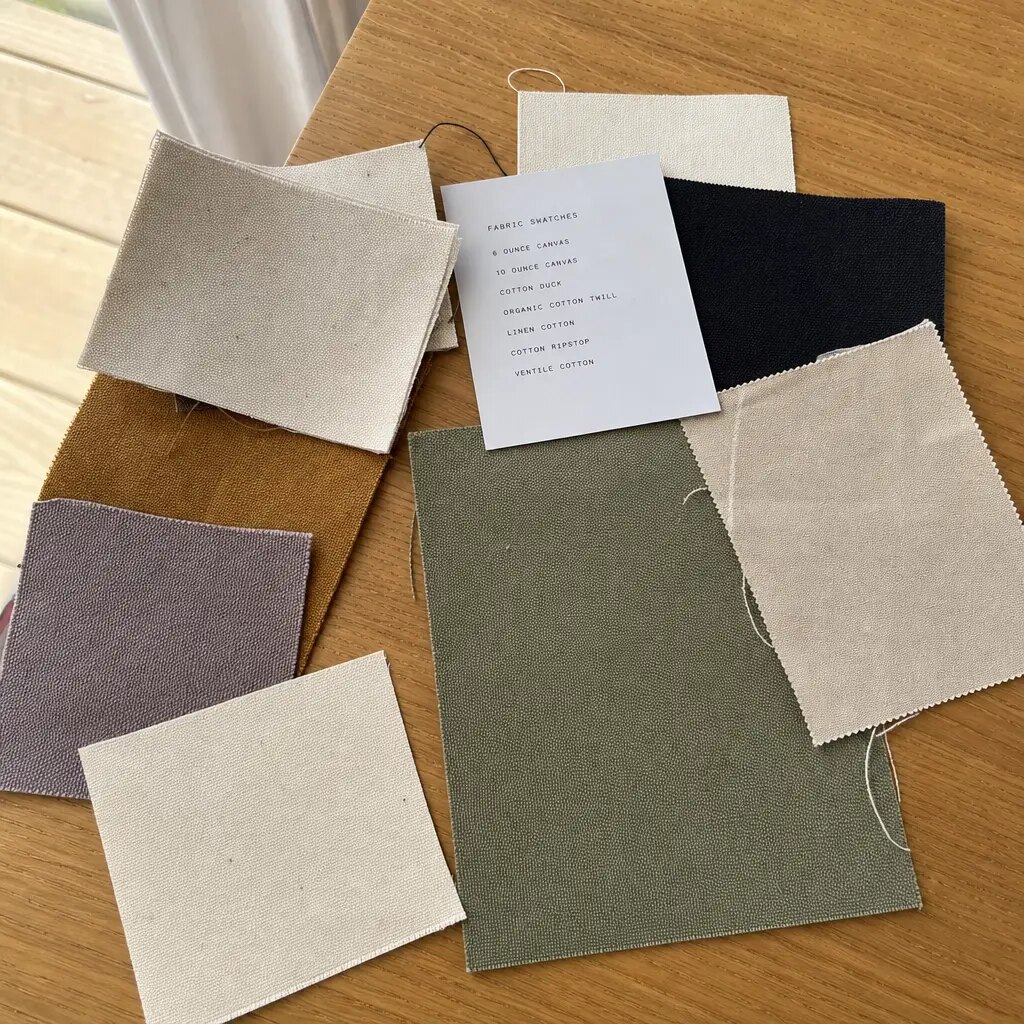
GSM should never stand alone. Ask for composition, weave or fabric construction, finished GSM tolerance, and whether the GSM is measured before or after finishing. A loosely woven 180 GSM fabric can feel less stable than a tighter 160 GSM fabric. Natural cotton can include slubs, seed flecks, or shade variation that some eco brands welcome and others reject. If your brand wants a clean retail look, define acceptable slub level and stain tolerance before production, not after cartons arrive.
Color route affects MOQ and lead time. Stock natural cotton is usually the fastest and most MOQ-friendly option. Stock dyed fabric may work if your palette is flexible. Custom dyeing is better when brand color consistency matters, but it adds lab dip approval, dye lot control, and higher practical MOQ. If matching a body color to apparel fabric, be realistic: cotton canvas or plain-weave bag fabric will not reflect color exactly like jersey, fleece, or rib trim. The RFQ should ask for a commercial tolerance, not an impossible promise.
Sustainability wording also needs discipline. 'Eco,' 'organic,' 'recycled,' and 'natural' are not interchangeable. If you plan to print or sell a claim, request the documentation needed for your market and retailer. If you only need a natural cotton look, say that instead of asking for claim material you do not plan to verify. This keeps the quote cleaner and reduces the risk of vague marketing language entering a purchase order.
- Specify composition: 100% cotton, organic cotton, recycled cotton blend, cotton-poly blend, or another approved material.
- Define GSM target and tolerance, such as 180 GSM +/-5 percent, subject to approved sample and inspection.
- State fabric color route: natural, stock dyed, custom dyed to Pantone, or matched to approved swatch.
- Classify slubs, seed flecks, neps, shade bands, and oil marks as acceptable or defective where relevant.
- For organic or recycled claims, request documentation scope before artwork approval if the claim appears on product, tag, or sales copy.
Construction details that separate a cheap bag from a usable one
The basic body of a cotton drawstring backpack is usually simple: two fabric panels, a folded top channel, side seams, bottom seam, and cords that pass through the channel and anchor near the lower corners. The problems start at the stress points. When the wearer pulls the cords, the lower corners take repeated load. If seam allowance is too narrow, reinforcement is missing, or stitching is inconsistent, the cord can tear through the body even when the fabric itself is acceptable.
A B2B RFQ should define the construction in inspectable language. Ask for folded and stitched top channel width, inside seam finish, lower-corner reinforcement method, seam allowance expectation, and whether bartacks are required. If the bag must carry heavier apparel, ask the supplier how they reinforce the cord entry point and whether they recommend a different fabric weight or panel size. A supplier that can explain this clearly is usually easier to manage than one that only says 'standard quality.'
Rope specification also affects construction. Thick cotton rope looks better and feels more substantial, but it needs a channel wide enough to move smoothly. If the channel is too narrow, the bag puckers and the drawstring action becomes rough. Thin cord saves cost but can feel harsh on shoulders and may look out of proportion on a larger bag. Rope length should be defined after sewing, because a small change in bag height or channel width can change how the finished bag hangs.
Trim choices should be intentional. Metal aglets, plastic tips, woven labels, care labels, and hangtags can support a retail program, but they also add material sourcing steps and defect points. For eco apparel brands, metal or plastic cord tips may conflict with the desired material story. If the default is knotted cotton rope, write that clearly. If no external label is desired, say so; otherwise a supplier may include a generic care label or place a label where it disrupts the artwork.
- Define top-channel fold width and make sure it suits the cord diameter.
- Require reinforced lower-corner cord entry points for retail or repeated-use programs.
- Confirm inside seams: overlocked, folded, bound, or another agreed finish.
- State rope diameter, material, length, color, end finish, and knot method.
- Quote pockets, boxed bottoms, contrast panels, woven labels, and hangtags as separate add-ons so the base price stays comparable.
Print method and artwork controls for cotton fabric
For most eco apparel brand logos, screen printing is the best starting point. It is efficient at volume, works well on cotton, and suits simple one- or two-color artwork. It also gives the product a more natural finish than glossy transfers when the ink system is chosen well. The buyer's RFQ should state print size, location, number of colors, Pantone references, and whether the artwork must be printed with water-based, pigment, plastisol, or another agreed ink type.
Cotton is not a coated, perfectly stable surface. Natural fabric color can affect how inks look. A bright brand color may appear warmer or duller on off-white cotton than it does on a white digital proof. Large solid areas can show fabric texture. Fine lines can fill in if the mesh, ink, or pressure is not suited to the artwork. The RFQ should tell suppliers whether exact Pantone matching is required or whether a commercially acceptable match on cotton is enough. For critical colors, request a strike-off or pre-production print sample.
Heat transfer can be useful, especially for detailed artwork, gradients, small batches, or many print colors. The tradeoff is handfeel, folding behavior, and long-term appearance. A drawstring backpack is often folded, stacked, compressed, and worn against clothing. A low-quality transfer can wrinkle, crack, or peel at edges. If a supplier recommends transfer, ask what transfer type is included and request a folding and adhesion check on the sample.
Placement is another common dispute. 'Centered on front' is not enough for inspection. Define print location from the top seam or top channel and from side seams, then allow a realistic tolerance. Soft sewn goods move during handling, so a tolerance of +/-0.5 cm to +/-1.0 cm is more inspectable than demanding absolute placement. For large graphics, check how the print looks when the bag is loaded, because the drawstring channel and fabric drape can visually change the artwork position.
- Provide vector artwork with final print dimensions, Pantone references, and print color count.
- Define whether screen print, heat transfer, embroidery, or another method is required or open for supplier recommendation.
- State ink opacity expectations, especially for light ink on natural or dyed cotton.
- Use seam reference points for placement, not visual centering alone.
- Request an actual print sample for retail, large artwork, exact color matching, or first-time suppliers.
MOQ and price tiers: how to compare like with like
MOQ for cotton drawstring backpacks is usually driven by material route, color route, trim, and print setup more than by sewing complexity. Stock natural cotton with one artwork can often support lower starting quantities. Custom-dyed fabric, matched cords, special labels, and multiple colorways increase the practical MOQ because the factory must manage dye lots, material waste, setup time, and separate production handling. A buyer should ask for MOQ by total quantity, by body color, by artwork, and by packing method.
Price tiers are more useful than a single quote. Ask suppliers to price the same specification at 1,000, 3,000, 5,000, and 10,000 pieces if those volumes are realistic for your program. The cost curve may reveal that a large drop happens after print setup is spread across more units, or that fabric MOQ is the real threshold. It may also show that a very low-volume trial order needs a stock route, while a replenishment order can justify custom color.
A common procurement mistake is comparing a low MOQ quote against a custom-material quote as if they are competing equally. If one supplier quotes stock natural cotton and another quotes custom Pantone-dyed cotton with matched rope, the higher price is not automatically worse. It may be buying color consistency and brand presentation. The right comparison is to ask each supplier for both routes, where possible: a standard economical option and a brand-matched option with the same size, print, and packing assumptions.
The RFQ should also ask how the factory treats split colorways. For example, a 5,000-piece order may be easy as one body color and one print, but not as five body colors at 1,000 pieces each. Artwork changes can create separate setup charges even when the bag body is identical. If you need multiple SKUs, define the matrix clearly in the RFQ instead of expecting the supplier to infer it.
- Ask for MOQ by total order, body color, rope color, artwork, label, and packing format.
- Request price tiers using the exact same specification and Incoterm basis.
- Separate stock-color pricing from custom-dyed pricing when color matters.
- Clarify whether sample, screen, label, and setup charges are included or separate.
- For multi-SKU programs, provide a quantity matrix by color, artwork, and destination packing requirement.
RFQ cost breakdown and quote comparison table
A strong RFQ does not need the supplier's internal cost sheet, but it should request enough cost structure to explain differences. At minimum, ask suppliers to identify what is included in the unit price and what is charged separately: fabric, sewing, printing, packing, labels, testing, samples, screens, inland freight, documentation, and export carton requirements. This prevents a low first quote from becoming a high final quote after all necessary items are added.
Incoterms must be consistent. Comparing one FOB quote with one EXW quote and one delivered quote creates noise. Choose the basis you need, such as FOB nearest port or FCA factory, and ask every supplier to quote that basis. If you need landed-cost modeling, request carton dimensions, pieces per carton, gross weight, and estimated cube. Cotton drawstring backpacks are light, but packing style can still change freight efficiency, especially when individual polybags, hangtags, and low carton quantities are added.
Quote comparison should include operational assumptions, not only unit price. A slightly higher unit price may be better if it includes correct packing, realistic lead time, a usable sample path, and a supplier inspection process. A lower price may be acceptable for a campaign giveaway if the spec is intentionally lighter and the buyer understands the tradeoff. The problem is not low price; the problem is unidentified compromise.
For procurement teams, a simple side-by-side worksheet can reduce supplier back-and-forth. Use one row for each supplier and columns for GSM, material route, finished size, rope, print method, print area, reinforcement, packing, MOQ, lead time, sample terms, Incoterm, and exclusions. Any blank cell is a follow-up question before the quote is considered comparable.
- Require the same Incoterm, currency, quote validity period, and delivery destination basis across suppliers.
- Ask what is included in the unit price and what is excluded.
- Request add-on prices for individual polybag, hangtag, barcode, custom carton marks, and testing.
- Compare carton quantity, carton dimensions, gross weight, and packing method for freight planning.
- Do not shortlist on unit price until construction, print, packing, and sample assumptions match.
Sample approval path before bulk production
A digital mockup is useful for artwork placement, but it is not a production approval for cotton drawstring backpacks. The major risks are physical: fabric feel, GSM, rope thickness, print opacity, stitch quality, and packing behavior. For first orders, retail programs, custom colors, or unfamiliar suppliers, a pre-production sample should be treated as the minimum approval stage. It should use actual or bulk-equivalent fabric, the intended print method, correct rope, and final construction.
If the body fabric is dyed, add lab dip approval before the pre-production sample. If rope shade must match the body or artwork, request a trim card or rope sample. If organic or recycled claims are involved, review documentation before approving artwork that uses those claims. The sample path should prevent expensive discoveries after bulk materials are cut.
When reviewing the sample, measure it like an inspector. Record finished width, finished height, top-channel width, rope diameter, rope length, print dimensions, print location from seam reference points, label placement, and packing fold. Photograph close-ups of the print edge, inside seams, lower-corner reinforcement, rope ends, and any slubs or shade variation. This documentation becomes the reference for production and inspection.
If timing does not allow courier approval for every stage, use a risk-based approach. Physical approval is strongest for the first pre-production sample. Later top-of-production approval can be handled by photos or video if the approved sample is sealed and the inspection standard is clear. The important point is that the production team, inspector, and buyer all refer to the same approved standard.
- Approve artwork proof before sample making so print size and placement are not guessed.
- Use lab dips for custom-dyed fabric or critical body colors.
- Request a pre-production sample with final fabric, final rope, final print method, and final construction.
- Seal one approved sample and link it to the PO number, artwork version, and inspection standard.
- Ask for top-of-production photos showing front, back, print close-up, inside seam, rope, reinforcement, label, and packing.
Quality control thresholds that matter in final inspection
Final inspection works best when the RFQ and PO already define measurable thresholds. Cotton drawstring backpacks are soft sewn goods, so inspection must allow reasonable variation while rejecting defects that affect appearance, function, or receiving accuracy. Size, print placement, stitch quality, rope function, fabric cleanliness, label accuracy, and carton count are the core checkpoints. For retail programs, cosmetic defects deserve tighter control because the bag will be judged as a finished branded product.
Print defects are among the easiest to see and the hardest to negotiate after production. Define whether small ink specks, pinholes, blurred edges, poor opacity, or registration shift are minor or major defects. A large off-center logo should be a major defect. A tiny natural cotton slub outside the print area may be acceptable if disclosed in the standard. Buyers should be specific enough that an independent inspector can make the same decision the brand would make.
Functional checks should focus on drawstring movement and load-bearing points. The cord should move through the top channel without blocked stitching, severe puckering, or unequal hang. Lower corners should be reinforced and free from skipped stitches or fabric tearing. If the bag will carry apparel bundles, a simple load check with realistic weight can reveal whether corners distort or seams open. This is especially useful when moving from a promotional spec to a retail spec.
Packing inspection is part of quality control, not an administrative detail. Carton count shortages, mixed SKUs, wrong barcode stickers, and incorrect carton marks create warehouse disputes and chargebacks. If individual polybags are used, inspect suffocation warning, ventilation holes, barcode placement, and bag size where required. For bulk packing, check inner bag counts, dust protection, and whether fresh prints are protected from abrasion.
- Define AQL or inspection sampling method if your organization uses one.
- Set measurable tolerances for finished size, print placement, rope length, and carton count.
- Classify critical, major, and minor defects in commercial language before production.
- Inspect stress points, drawstring movement, print durability indicators, and fabric cleanliness.
- Verify carton marks, SKU separation, barcode accuracy, gross weight, and packing count during final inspection.
Packing, labeling, and carton planning for B2B delivery
Packing choices affect unit cost, freight cube, plastic use, warehouse efficiency, and product cleanliness. For many B2B apparel programs, 10-20 pieces per inner polybag and then export carton packing is a practical standard. It protects the bags from dust, keeps counting manageable, and avoids the labor and material cost of individual packing. If the bags are going directly to stores or e-commerce preparation, individual polybags, barcode stickers, hangtags, or size labels may be necessary.
Fresh print needs handling control. Bags should not be stacked too tightly before ink is cured and cooled. Large dark print areas can transfer, scuff, or stick if production rushes packing. The RFQ should ask the supplier to confirm curing method and packing timing, especially for large screen prints or transfer graphics. If the bag fabric is natural cotton, ask how the factory prevents dust, oil marks, and carton rub during packing.
Carton planning should happen before final quote approval. A quote that assumes very large cartons may reduce labor but create handling problems at the buyer's warehouse. A quote that uses small cartons may increase carton count and freight cost. State a maximum gross weight if your warehouse or retailer has one. Ask for estimated carton dimensions, pieces per carton, net weight, gross weight, and carton mark layout. These details help procurement compare landed cost and receiving risk.
Labeling must match the sales channel. A wholesale distributor may only need outer carton marks and SKU labels. A retail program may need barcode stickers, hangtags, country-of-origin labels, fiber content labels, or customer-specific routing labels. If the sustainability story includes material claims, make sure label text matches documentation and approved wording. The RFQ should ask suppliers to quote labeling labor and materials separately if the final requirement is not yet fixed.
- Use bulk inner polybag packing unless individual retail or e-commerce packing is truly needed.
- Define pieces per inner bag, pieces per carton, carton gross weight limit, and carton mark format.
- Request carton dimensions early for freight cube and warehouse planning.
- Specify barcode, hangtag, care label, country-of-origin label, and SKU separation requirements.
- Confirm print curing and cooling before packing to reduce scuffing, sticking, and transfer marks.
Specification comparison for buyers
| Spec decision | Recommended option | When it fits | Buyer risk to check |
|---|---|---|---|
| Fabric weight | 140-160 GSM for promotional or event programs; 180-220 GSM for retail, merchandise, and repeated-use programs | Use lighter fabric when unit cost, foldability, and fast delivery matter most; use heavier fabric when the bag will be sold, bundled with premium apparel, or handled repeatedly | Do not accept GSM alone without tolerance, fabric construction, and sample confirmation. Loose weave fabric can feel weaker than the stated GSM. |
| Cotton material grade | Conventional cotton for cost-sensitive orders; organic cotton only when certification, transaction scope, and claim use are managed correctly | Organic cotton fits brands that already support certified material claims across apparel and accessories; conventional cotton fits promotional programs where the claim is not central | Avoid vague wording such as 'eco cotton' or 'organic available.' If a claim will be printed or sold, request the certificate scope and labeling rules before PO release. |
| Finished size | Define width and height in centimeters, measured flat after sewing, with tolerance such as +/-1 cm | 35 x 40 cm is common for general use; larger sizes may be needed for folded hoodies, footwear boxes, or multi-item bundles | Factories may quote an approximate panel cut size instead of finished size. Confirm the measurement point and whether shrinkage after sewing is included. |
| Bag construction | Single-layer body, folded top drawstring channel, overlocked inside seams, reinforced lower cord entry points, and consistent seam allowance | Best balance for apparel-brand merchandise, gift-with-purchase programs, and retail-friendly reusable bags | Very low quotes may remove reinforcement, narrow the seam allowance, or leave raw internal finishing that weakens load-bearing corners. |
| Cord type | 8-10 mm cotton rope for premium handfeel; 6-8 mm rope for light promotional use; blended or polyester-core rope where consistency is more important than natural feel | Cotton rope supports eco positioning and a softer hand; synthetic-core options can reduce stretch, shade variation, and lot-to-lot inconsistency | Request rope diameter, material, color, end finish, and pull-test expectation. Cord shade and thickness can drift between lots if not sealed at sample stage. |
| Print method | 1-2 color screen print for most logos; heat transfer only for detailed, multicolor, or short-run artwork | Screen print gives strong value at volume and works well for simple brand marks; transfer is useful when artwork complexity would make screen setup inefficient | Screen print may shift on soft fabric and needs placement tolerance. Transfers require adhesion and folding checks because low-grade films can crack or feel stiff. |
| MOQ route | Use stock natural fabric and standard trim for 1,000-2,000 pcs; use custom-dyed fabric, matched cords, or special labels for 3,000+ pcs | Standard routes fit launch orders and seasonal tests; custom material routes fit coordinated apparel collections and brand-color programs | A low MOQ may exclude PMS dyeing, matched ropes, custom labels, retail packing, or testing. Compare the omitted items before treating it as a better offer. |
| Packaging level | 10-20 pcs per inner polybag and export carton for bulk B2B; individual polybag only when retail barcode, cleanliness, or fulfillment workflow requires it | Bulk packing fits distributors, wholesale warehouses, and apparel bundling; individual packing fits store-ready, e-commerce prep, or SKU-level allocation | Over-packing raises labor, plastic use, carton count, and freight cube. Under-packing can create dust marks, print abrasion, counting errors, and warehouse rework. |
| Sample approval path | Artwork approval, lab dip if dyed, pre-production sample in correct fabric and print, top-of-production photo set, and final inspection | This sequence controls the physical risks without adding unnecessary courier rounds to every order | A digital mockup cannot verify GSM, rope feel, seam strength, print opacity, or packing. Keep one sealed approval sample tied to the PO. |
Buyer checklist before sampling
- Define finished bag size in centimeters, measured flat after sewing and before packing, with tolerance for width, height, and top-channel position.
- State target fabric composition, fabric weight in GSM, acceptable GSM tolerance, fabric color route, and whether natural slubs or seed marks are acceptable.
- Specify whether cotton is conventional, organic, recycled blend, or other material, and state what documentation is required if any sustainability claim will be used.
- Define rope material, diameter, length, color, shrinkage expectation, end finish, knot type, and whether metal tips, plastic tips, or heat-cut ends are allowed.
- Attach print artwork as vector files with dimensions, Pantone references, print position from seam reference points, number of colors, and required print method if fixed.
- Confirm print handfeel expectations, ink opacity, whether a white underbase is required, and whether exact color match or commercially acceptable color match applies.
- State seam construction requirements, including inside overlock, top-channel fold width, lower-corner reinforcement, seam allowance, bartack requirements, and whether a boxed bottom is required.
- List all trims and labels, including side label, woven label, care label, hangtag, barcode sticker, recycled-content mark, or country-of-origin label.
- Define packaging format: bulk pack quantity, individual polybag yes or no, inner bag quantity, carton quantity, carton gross weight limit, carton marks, and SKU separation method.
- Request quote breakouts for sample cost, unit price, printing cost, packing cost, label cost, testing cost, inland charges, document fees, and any tooling or screen charges.
Factory quote questions to send
- What exact fabric composition, weave, finished GSM, and GSM tolerance are included in your quote?
- Is the quoted fabric stock greige, stock natural, stock dyed, or custom dyed, and how does that route affect MOQ, lab dips, and lead time?
- What finished bag size, top-channel width, seam allowance, and rope length are included, measured after sewing?
- What rope material, rope diameter, rope color, rope end finish, and lower-corner reinforcement are included in the base price?
- How many print colors, what print area, which print method, and what ink or transfer quality are included in the quoted unit price?
- Does the price include screen setup, artwork handling, strike-off sample, pre-production sample, and courier cost, or are those separate charges?
- What is the MOQ by total order, by body color, by artwork, by rope color, and by packing style?
- Can you quote price tiers at 1,000, 3,000, 5,000, and 10,000 pcs using the same specification and Incoterm basis?
- What packaging is assumed: pieces per inner polybag, pieces per export carton, carton dimensions, gross weight, net weight, and carton mark format?
- What inspection standard do you accept for size tolerance, print placement, stitch defects, shade variation, contamination, rope length, and count shortage?
Quality-control points to confirm
- Finished size tolerance should be defined before production, for example +/-1 cm on width and height for soft sewn bags measured flat after sewing.
- Fabric GSM should be checked from approved bulk fabric or finished bag panels, not only from a supplier declaration or showroom sample.
- Fabric shade should be compared against the approved swatch or lab dip under consistent lighting, with natural cotton slubs classified as acceptable or defective in advance.
- Print color, opacity, edge sharpness, registration, and handfeel should be checked against the approved sample, not only against a digital proof.
- Print placement tolerance should be stated from seam reference points, such as +/-0.5 cm to +/-1.0 cm depending on bag size, fabric movement, and artwork scale.
- The drawstring channel must allow smooth cord movement without puckering, blocked stitching, broken thread, or uneven openings on either side.
- Lower-corner stress points should be reinforced and free from skipped stitches, raw seam exposure, fraying, cord abrasion, or weak bartacks.
- Cord length and diameter should be sampled from bulk production and checked for left-right pair consistency so both sides hang evenly when worn.
- Needle holes, oil marks, loose threads, lint, dirt, fabric contamination, and stains should be included in defect grading because natural cotton shows marks easily.
- Inside seams should be checked for overlock consistency, seam allowance, thread tension, and loose ends that could unravel during repeated use.