1. What this inspection is actually for
For artisan bakeries, a cotton drawstring backpack is usually not a sports bag. It is a retail carrier, a gift item, a staff pack, or a bundled promotion piece that has to look clean, hold a modest load, and survive repeated handling. That matters because many suppliers quote from a stock photo or a blank sample that looks fine empty, then change the fabric or construction when the order moves into production. Your inspection checklist should start with the real use case: what goes inside, how often the bag will be reused, and whether the buyer is selling the bag on its own or using it as a value-added package component.
If the backpack will carry bread, jars, pastry boxes, or mixed bakery merchandise, the quality bar is higher than for a lightweight giveaway. A thin bag that prints well can still fail at the seams or distort at the top channel after a few uses. The buyer should write the use load into the RFQ, because load drives fabric weight, cord spec, and reinforcement. Once the use case is fixed, the rest of the inspection becomes practical: does the sample match the approved material, does the bag close cleanly, does the logo stay sharp, and does the carton arrive ready for distribution?
- State the end use in the RFQ, not just the product name.
- Define the maximum carry load in plain language, such as light promo use or repeated retail use.
- Decide whether the bag is a packaging insert, a retail item, or a gift program item before quoting.
2. Fabric weight and construction choices that change the result
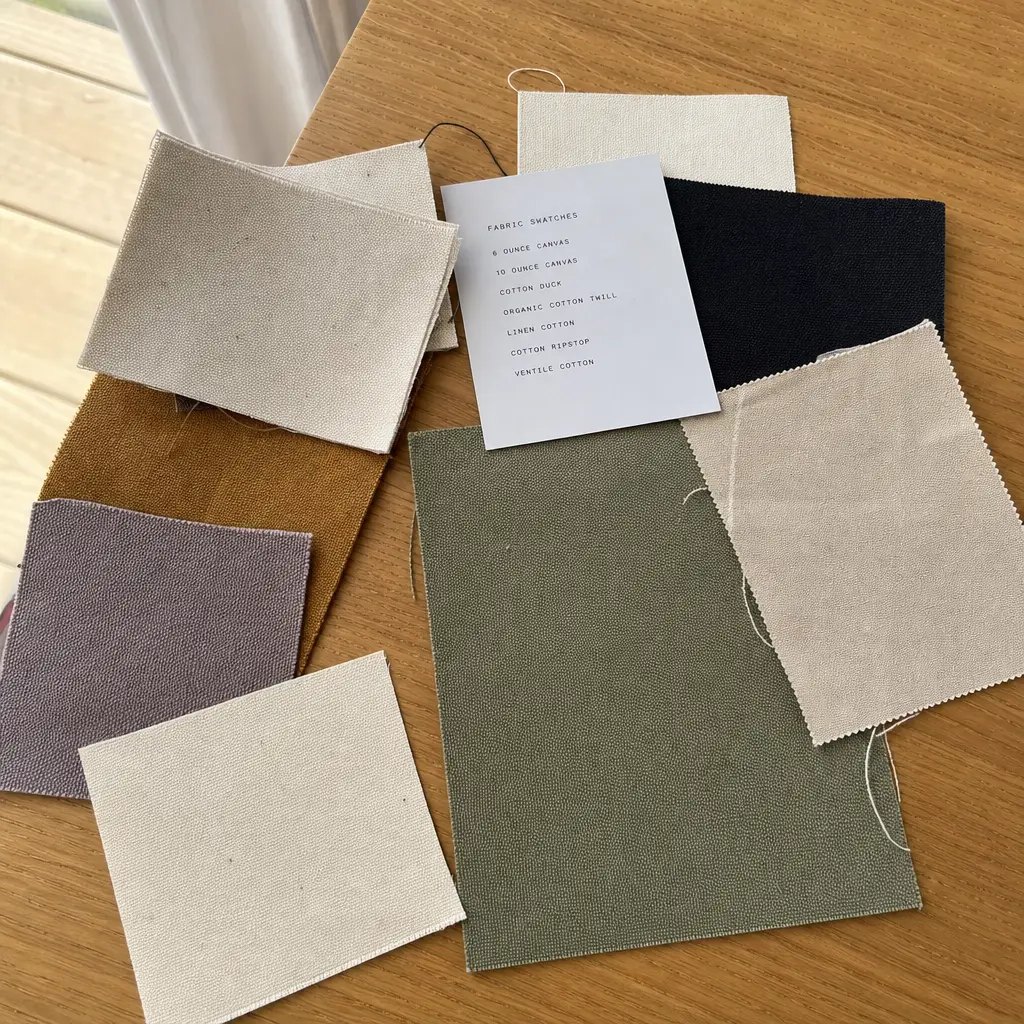
The fastest way to compare bad quotes is to compare GSM before anything else. For a light promotional bag, 120 to 140 GSM cotton can be acceptable if the bag only carries soft goods or a small takeaway. For a more durable bakery retail program, 160 to 220 GSM is the safer range because it gives you better body, cleaner print behavior, and less distortion at the seams. If the bag must carry heavier items or look more premium, some buyers move into heavier cotton canvas, but that increases sewing time, freight weight, and unit cost. The point is not to buy the heaviest fabric. The point is to buy enough fabric to match the use load without wasting margin.
Construction matters just as much as fabric weight. A loose weave in a supposedly heavy fabric can fail faster than a tighter midweight cloth. For inspection, pay attention to the top channel where the cord runs, the bottom seam where the load rests, and the side seams where the bag is pulled open and closed all day. Ask for double stitching or reinforced stitching at the stress points, and make sure the factory states whether the GSM refers to greige, dyed, or finished fabric. If the number is not defined, the quote is not comparable.
- Use 120 to 140 GSM only for light promotional use.
- Use 160 to 220 GSM for premium reusable bakery programs.
- Ask whether the GSM is measured on greige fabric or finished fabric.
- Require reinforced stitching at the bottom seam and top channel.
- If the bag will be washed, ask for pre-shrunk fabric or a shrink tolerance.
3. Print method and branding decisions
The wrong decoration method creates most of the avoidable defects. Screen print is still the best value for larger runs with one or two colors and a broad logo area. It gives good coverage and is usually cheaper than embroidery, but it must be controlled for ink density, registration, and cure quality. Heat transfer can work for small runs or complex art, but it often loses durability when the bag is folded, rubbed, or washed. Embroidery, woven labels, and sewn patches create a more premium feel, but they add setup time and can interfere with cord channels if they are placed badly.
For artisan bakery buyers, logo placement should be driven by use, not by whatever panel is easiest to print. The common failure is putting art too close to the top channel, where the cord movement distorts the print, or too low on the bag, where carton friction rubs it during packing. Lock the approved size, Pantone or closest match, and print area in the sample signoff. If the design has fine text, test it at the actual production size. A logo that looks sharp on a screen can turn mushy on cotton if the weave is too open or the print method is too soft.
- Screen print for 1 to 2 colors and higher volume.
- Heat transfer for small runs when speed matters more than long-term wear.
- Embroidery, woven labels, or patches for premium presentation and low-color artwork.
- Keep branding away from the top channel and other stress areas.
- Approve color, size, and placement on a physical sample, not only a PDF.
4. Compare sourcing routes before you compare prices
A clean supplier comparison starts with the route, not the unit price. A direct factory gives you the best control over fabric, sewing, print, and packing, but it also requires a better tech pack and tighter signoff discipline. A trading company is useful when you need coordination across multiple categories or when your internal team wants one contact who can chase production, yet it can hide who actually owns the factory process. A stock wholesaler or decorator is fast, but it limits your ability to change size, cord, or fabric. For bakery programs, those differences matter more than a small price spread.
The right route depends on whether your order is a one-time promotion or a repeat item. If you are testing a new bakery merch line, a hybrid route can work well: stock body plus custom label or patch. If the bag is part of a retail assortment and must hold up across store replenishment cycles, direct factory production is usually the better long-term option. The inspection checklist should reflect the route you choose. For stock blanks, inspect blank consistency and decoration quality. For custom cut-and-sew, inspect the fabric booking, sample fidelity, and production controls.
- Direct factory: best for control and repeat business.
- Trading company: best when you need sourcing support across multiple items.
- Stock wholesaler: best for speed and lower MOQ, with less control.
- Hybrid route: useful when you need a branded look without full custom tooling.
- Nearshore sewing: useful when speed and sample iteration matter more than freight cost.
5. Inspection thresholds that catch real defects
A useful inspection checklist needs hard acceptance criteria. Start with the fabric itself: GSM, hand feel, color, and weave density should match the approved sample. Then move to size control. Drawstring backpacks often vary too much in height, width, and cord length because factories treat them as soft goods and do not tighten the process. Put a measurement tolerance into the order. For first runs, many buyers use a tighter tolerance on logo placement and cord symmetry than on the bag body, because those details are what customers notice first.
For bulk inspection, separate critical defects from minor ones. A broken seam, a pulled cord channel, a missing label, or a print that is off-position is not a cosmetic issue. It is a reject. Loose threads, slight panel wrinkle, or small fold marks may be minor if they do not affect use or shelf appearance. If your order is for retail, inspect under the same lighting your customer will see in store or on a packing table. Do not approve under one light and ship under another. For a first order, a documented pre-shipment inspection is worth more than a lower unit price.
- Treat seam failure, cord pull-through, and wrong logo placement as critical defects.
- Set a size tolerance before production begins.
- Inspect in the same light conditions the buyer will use for acceptance.
- Use a first-order inspection record that can be repeated on reorders.
- If the order is retail-facing, make appearance defects part of the reject rule.
6. Sample approval should use real materials only
The most common procurement mistake is approving a sample that is not actually production-matched. A factory can make an attractive one-off with a better fabric, a slower print run, or extra hand finishing. That sample is useful as a visual reference, but it is not enough for production approval. Your pre-production sample should use the exact bulk fabric, exact cord, exact label, and exact print method that will be used in the order. If the supplier cannot do that, then the sample is not a true approval sample and should not be treated as one.
The approval pack should include more than a bag in a box. Keep a measured sample sheet, a photo record of the front, back, side, channel, cord end, and carton pack, and a note on any approved deviation. If you need a revision, ask for a new sample after the correction, not a verbal promise that the next batch will be better. For bakery buyers, it is also smart to test how the bag looks with a realistic load inside. Some designs look balanced empty but warp badly once a bread box or heavy product is added.
- Approve only a sample made from the actual bulk material set.
- Keep one sealed golden sample for production reference.
- Record measurement data and photo evidence with the sample signoff.
- Test the bag with a realistic load before final approval.
- Do not move to bulk on verbal corrections alone.
7. Packing and carton rules for retail and distribution
Packing is not an afterthought on a drawstring backpack order. The product is soft, so it creases easily, and printed areas can rub if the packing is loose. If the bag is retail-facing, fold it the same way every time so the logo is visible and the cord is not trapped awkwardly. If the shipment is going into warehouse storage, use a clean master polybag or carton liner when humidity is an issue. Cotton absorbs moisture, and a damp carton can create odor or shade problems even when the product itself is technically correct.
Carton counts should match how the buyer actually receives stock. A large carton may lower freight cost per unit, but it can make warehouse handling harder and increase crease damage. A smaller carton can protect appearance and make receiving easier, but it may raise freight cost a bit. This is a buyer tradeoff, not a factory choice. Put the packing method in the quote request and ask for carton dimensions, gross weight, carton marks, and whether spare pieces are packed separately or mixed into bulk cartons. The product should arrive ready for your warehouse, not ready for another repack step.
- Request a repeatable fold method for retail-facing orders.
- Control humidity risk with liners or desiccant if storage conditions are uncertain.
- Match carton count to warehouse handling, not only freight efficiency.
- Confirm spare pieces, carton labels, and barcode placement in advance.
- Ask for carton dimensions and gross weight on the quote, not after production.
8. Lead time risk sits in the details, not the calendar
A normal custom cotton drawstring backpack program may take 25 to 40 days after sample approval, but that number means little if the factory has not booked fabric or if artwork corrections keep restarting the print file. Sampling often adds another 7 to 14 days depending on how many revisions are needed. Screen printing and embroidery can extend the timeline because each decoration step needs setup, proofing, and cure time. If the order is tied to a bakery launch or seasonal display, do not promise the customer based on a single production estimate. Build in buffer for sample approval, material booking, and freight booking.
The schedule usually slips in the same four places: fabric is not in stock, the logo proof changes, the carton label is wrong, or payment approval lands late. These are manageable risks if you make them visible early. The buyer should ask the factory what they need to start material purchase, what stage locks the decoration file, and what happens if the buyer changes the bag size after sample signoff. If the answer is vague, the lead time is not reliable. A controlled timeline is better than an optimistic one.
- Assume sampling adds 7 to 14 days before bulk starts.
- Build buffer for fabric booking, decoration proofing, and freight.
- Ask what will stop the line if artwork or carton labels are late.
- Treat logo changes after approval as a schedule risk.
- Do not let the launch date depend on a single unbuffered quote.
9. Compare quotes by the same assumptions, not the same headline price
A quote for cotton drawstring backpacks is only useful if the assumptions are the same. Compare the same GSM, same bag size, same print method, same label type, same carton count, and same incoterm. One supplier may quote a lower unit price because the fabric is lighter, the print area is smaller, or the carton pack is looser. Another may add a setup charge that disappears on the third order. For a procurement team, the real question is not which quote is cheapest on paper. It is which quote gives the lowest landed cost at the required quality level.
Break the quote into visible elements: fabric, sewing, decoration, label, packing, carton, inland handling, and freight. That makes it easier to see where a supplier is taking cost out, and whether that cost reduction is safe. On small orders, setup charges can dominate the economics, so the lowest unit price is often not the lowest total cost. On larger orders, freight, carton density, and production yield matter more. When you compare suppliers, use the same quote sheet for every factory and reject quotes that omit the information you need to inspect the product properly.
- Compare quotes only after GSM, size, decoration, and packing are locked.
- Ask for a line-by-line cost breakdown instead of a single unit price.
- Check whether setup charges, sample fees, and carton costs are included.
- Use one quote sheet for every supplier so the numbers stay comparable.
- Treat low prices with missing detail as a risk, not a bargain.
10. Final PO language should prevent silent substitutions
The purchase order should freeze the details that matter in production. If the factory can swap fabric, cord, label, or packing without written approval, then the PO is not controlling quality. State the approved fabric composition and GSM, the exact bag size, the print method, the artwork position, the cord spec, and the packing method. Add the overrun or underrun tolerance, the inspection standard, and the rule for rejecting mixed-shade cartons or wrong-label cartons. That sounds formal, but it is the cheapest way to prevent a production dispute later.
The practical goal is simple: make the bulk order look like the approved sample and arrive in the packing format your team can use immediately. That is what a real buyer checklist does. It turns vague expectations into production rules. For artisan bakery programs, the standard is not luxury. It is consistency. If the bag will sit beside a premium loaf, a pastry box, or a gift basket, the customer notices sloppy seams and weak print immediately. Keep the order tight, keep the sample record clean, and keep the quote comparison honest.
- Freeze the approved fabric, GSM, cord, print, and packing in the PO.
- Write the tolerance for overrun, underrun, and dimensional variation.
- Require written approval for any material substitution.
- Tie bulk release to the approved sample and measurement sheet.
- Use the PO to prevent mixed production, not just to place an order.
Specification comparison for buyers
| Spec decision | Recommended option | When it fits | Buyer risk to check |
|---|---|---|---|
| Direct factory custom cut-and-sew | Best control over fabric, stitching, and packing | 500 to 5,000 pcs with repeat orders and a clear tech pack | Confirm the sewing and print work are not being quietly subcontracted |
| Trading company managing production | Useful when you need one contact for several bags or mixed programs | Multi-SKU orders, split shipments, or buyers who need sourcing support | Ask for the actual factory name, QC owner, and inspection responsibility |
| Stock bag wholesaler with logo print | Fastest route for a simple logo run on fixed blanks | 100 to 500 pcs, short launch window, limited custom detail | Check fabric substitution risk, fixed sizes, and print area limits |
| Domestic decorator on imported blanks | Good for quick logo-only jobs and regional distribution | Small runs, seasonal promotions, and frequent reorder cycles | Verify blank quality, shrink behavior, and print durability after handling |
| Nearshore small-batch sew shop | Best for rapid sample loops and lower transit risk | Pilot runs, market tests, and short lead-time programs | Compare repeatability, material sourcing, and the real price at scale |
| Hybrid route: stock body plus woven label or patch | Good balance of speed and branded presentation | Medium MOQ, premium look, and retail gifting programs | Make sure the label does not interfere with the drawcord channel or stitching |
| Direct factory with in-house print and packing | Best value when you need custom branding and retail-ready cartons | Larger orders, strict packing rules, and export shipments | Confirm the same plant owns sewing, print, inspection, and final packing |
Buyer checklist before sampling
- Define the use case before price shopping: bakery merch, gift-with-purchase, staff kit, or retail resale.
- Lock the fabric composition, finished GSM, and acceptable tolerance in the RFQ.
- Approve the bag size, cord diameter, cord length, and top-channel construction on a tech pack.
- Choose the print method based on quantity, color count, and wash or rub resistance, not only unit price.
- Request the pre-production sample in the exact bulk fabric, exact print method, and final label format.
- Set the load expectation in writing so the factory knows whether the bag is for light gifting or heavier carry.
- Confirm packing count, carton size, master carton marks, and any retail hangtag or barcode needs.
- Ask for the defect standard and the inspection method before deposit or PO release.
- Freeze the overrun or underrun tolerance and the payment milestone tied to sample approval.
- Collect one approved golden sample and one signed measurement sheet before bulk starts.
Factory quote questions to send
- What is the exact fabric composition and finished GSM you will use for bulk production?
- Will the pre-production sample use the same fabric, cord, label, and print method as mass production?
- What is the MOQ by color, by print version, and by label type?
- What are the setup charges for screen print, embroidery, woven labels, or any other decoration method?
- What measurement tolerance do you accept for bag size, cord length, and logo placement?
- How many sample rounds are included before new sampling fees apply?
- What is the production lead time after sample approval and deposit, and what can extend it?
- What packing method, carton count, and gross carton weight will you quote?
- Can you quote EXW, FOB, and delivered terms separately so freight and duty are visible?
- What inspection standard do you use for first orders, and who signs off on final release?
Quality-control points to confirm
- Fabric weight matches the approved GSM and stays within the agreed tolerance.
- Fabric color, hand feel, and weave density match the sealed sample or approved swatch.
- Finished bag dimensions stay within the measurement tolerance on width, height, and strap length.
- Stitching is even, seams are secure, and there are no skipped stitches or open ends.
- Cord length is equal on both sides, moves smoothly through the channel, and does not snag.
- Cord ends are secured so they do not fray, untwist, or pull through the stop points.
- Logo placement, size, and color match the approved artwork and sample.
- Print or embroidery does not crack, bleed, distort, or sit in a stress area near the channel.
- Load testing passes the agreed use weight without seam failure, cord pull-through, or handle distortion.
- No stains, oil marks, loose threads, mildew smell, or mixed-shade cartons are accepted.