1. Start with the campus use case before writing the spec
A university bookstore order is not the same sourcing problem as a generic promotional giveaway. Students may use the same cotton drawstring backpack for orientation week, gym clothes, notebooks, lab supplies, a water bottle, chargers, and the occasional textbook. Bookstore staff may also unpack, restock, scan, fold, and move the bags several times before a student ever buys one. That means durability is not only about whether the bag survives one dramatic pull test. It is about whether the fabric, cord, seams, decoration, and packing remain presentable through normal campus handling.
Procurement teams get better quotes when the brief names the business use case. A retail resale bag should have stronger construction, cleaner finishing, and better packing than a low-cost event bag. A campus department giveaway may tolerate lighter fabric if the budget is tight and the use window is short. A bookstore-branded item that sits next to apparel and drinkware needs a higher perceived value, because students compare the hand feel and logo quality against other licensed merchandise. The spec should explain that context instead of only listing size and color.
The first question is simple: what will the heaviest normal use look like? If the answer is a notebook, a hoodie, and a bottle, the bag can be specified differently than a bag expected to carry multiple course packs or a laptop sleeve. For cotton drawstring backpacks, the load is uneven because the cords pull at the top corners and the contents settle into the lower corners. That is why a durability testing checklist for university bookstores should include seam stress and cord-exit checks, not only fabric weight.
A clear use case also protects the buyer during quote comparison. If Supplier A quotes 8 oz cotton with basic cord tunnels and Supplier B quotes 12 oz canvas with bartacks and retail packing, the two unit prices are not comparable. The lower quote may only look efficient because the missing durability work has been pushed into future defects, returns, or markdowns. Define the use case first, then ask every supplier to quote against the same construction target.
- Separate retail resale, orientation giveaway, department kit, and event stock before requesting prices.
- Name the expected contents and approximate filled weight instead of approving an empty-bag sample only.
- Treat bookstore receiving, backroom handling, shelf display, and student use as part of the same durability requirement.
- Use one written product brief for all suppliers so quote differences reflect real capability, not hidden assumptions.
2. Lock the fabric spec before discussing price
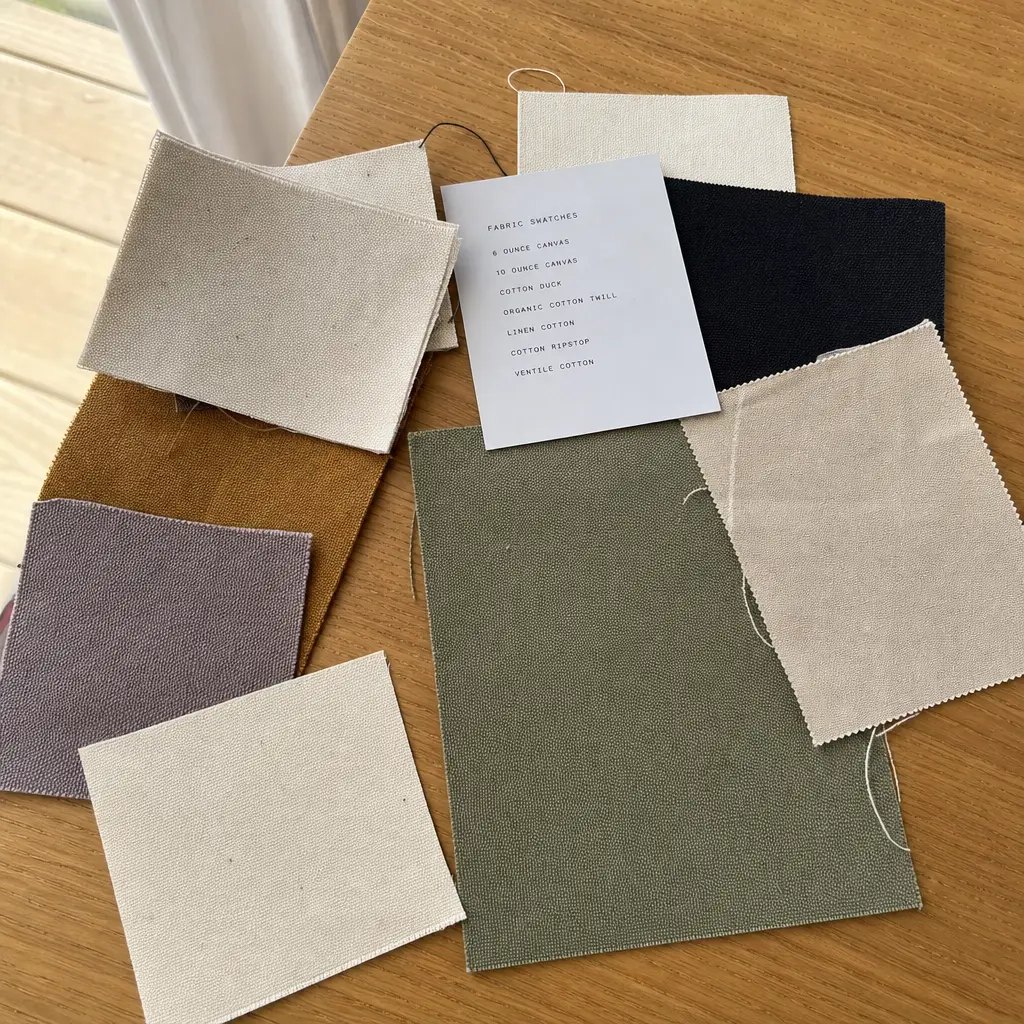
Fabric weight is the first durability signal buyers notice, but it is not enough by itself. A cotton drawstring backpack made from 8 oz or roughly 280 gsm cotton may be acceptable for a short-term promotional handout, yet it often collapses when loaded and can make a printed logo look distorted. For bookstore resale, a more practical range is often 10 oz to 12 oz cotton canvas, roughly 340 to 400 gsm. That range gives the panel enough body to hold shape while still allowing the bag to fold, pack, and sit neatly in a carton.
The fabric description should include construction, not just weight. Plain cotton, canvas, twill, brushed canvas, and recycled cotton blends can behave differently under load, printing, folding, and humidity. Canvas usually gives a stronger retail hand feel and better panel stability. Twill can look more refined but may show directional shade variation if cutting is not controlled. Brushed finishes can feel softer but may collect lint or reduce print sharpness. If a supplier uses the word cotton without naming the structure, the buyer should ask for a swatch and a finished sample before approving the quote.
Shrinkage is another common source of disappointment. Even when a bag is not marketed as washable, cotton can react to finishing, humidity, steam, and handling. If the fabric shrinks after decoration or after the first student use, the printed panel may ripple and the cord tunnel can become tighter. The RFQ should state whether finished dimensions are measured before or after any washing, pressing, or finishing step. If the bookstore expects students to wash the bag, that needs to be stated because it changes the decoration and sewing requirements.
Buyers should also clarify whether the quoted gsm is measured before finishing or on the finished fabric. Two suppliers can both say 10 oz cotton and deliver very different hand feel if one is quoting greige fabric and the other is quoting finished canvas. A simple incoming fabric weight check during production gives procurement a way to catch substitutions early. For repeat bookstore programs, keep a retained swatch from the approved sample and compare new lots against it for shade, thickness, and handle.
- Use 10 oz to 12 oz cotton canvas as a practical starting range for bookstore resale programs.
- Ask whether the quoted fabric weight is greige, finished, or measured on the completed bag panel.
- Confirm fabric construction: plain cotton, canvas, twill, brushed canvas, or blend.
- Set a written tolerance for fabric weight, shade, finished dimensions, and shrinkage.
- Retain an approved swatch so repeat orders can be checked against a physical reference.
3. Reinforce the cord exits, top edge, and lower corners
Most cotton drawstring backpack failures begin where force is concentrated. The cord exits at the top corners, the draw tunnel along the upper edge, and the lower corners all carry more stress than the flat panel. When students pull the cords to close the bag or sling it over one shoulder, the top corners take repeated diagonal force. When books or bottles settle, the bottom corners take point loading. A clean front panel does not matter if the cord tears through the tunnel after a few weeks of normal use.
For bookstore-quality orders, the construction should be stated in plain terms. Double-needle seams are a stronger baseline than a single seam for side and bottom construction. Bartacks or reinforced stitch blocks should be used where cords connect, exit, or change direction. If the design uses metal eyelets, the buyer should confirm the eyelet material, finish, diameter, and whether the surrounding fabric is reinforced. An eyelet can look durable but still fail if it cuts into unsupported cotton under load.
Cord selection deserves its own line in the spec. A 5 to 6 mm cotton rope or similar durable cord usually gives a better balance of strength, comfort, and retail appearance than a very thin cord. Thin cord may reduce cost, but it can dig into the wearer's shoulder and saw into the tunnel over repeated use. A cord that is too thick can make the bag bulky, slow to close, or difficult to fold cleanly. The correct answer depends on fabric weight, tunnel size, and the expected load.
Cord length and symmetry should be checked during inspection because uneven cords make a filled bag hang crooked. The factory should measure finished cord length after threading, not only the cut cord before assembly. If knots, metal tips, heat-sealed ends, or sewn ends are used, they should be consistent and should not scratch the fabric or create pressure marks in the carton. Small trim decisions become visible when the product is packed by the hundreds.
- Require reinforcement at cord exits, bottom corners, and any sewn label or patch areas that carry stress.
- Confirm whether the closure uses a folded tunnel, sewn channel, metal eyelet, or fabric-reinforced opening.
- Use a cord diameter that matches the load target and tunnel size, commonly around 5 to 6 mm for campus retail bags.
- Check cord length after assembly so the bag closes evenly and hangs straight when filled.
- Inspect bartacks, stitch density, skipped stitches, loose threads, and fraying before cartons are sealed.
4. Match decoration to artwork, abrasion, and folded storage
Decoration is where many bookstore programs lose retail value. The logo may look sharp on the first sample, but it still has to survive rubbing, folding, carton pressure, shelf handling, and repeated student use. For simple one- to three-color artwork, screen printing is usually the most controllable and cost-effective option on cotton drawstring backpacks. It works well when the surface is stable, the ink is suitable for cotton, and the print is properly cured before packing.
Artwork complexity changes the decision. Fine lines, gradients, full-color graphics, or photographic designs may push the buyer toward transfer printing or another decoration method. Transfers can produce detailed artwork, but they require tighter control of heat, pressure, adhesion, and post-press cooling. A transfer that looks smooth on day one can crack at fold lines or peel at edges if the bag is compressed in a warm carton. Ask for the actual method, not just the word print.
Embroidery, woven patches, and woven labels can support a premium bookstore item, especially when the bag is sold near apparel or alumni merchandise. These methods can also change how the bag folds and feels. A large embroidered logo may stiffen the front panel, create backing irritation inside the bag, or pucker if the fabric is too light. Woven labels and patches should be positioned so they do not create a weak point in the seam or interfere with the draw cord path.
The quote should name print size, placement tolerance, number of colors, ink or thread references, and whether a white underbase is included on dark fabric. Buyers should also ask about blocking, which happens when printed surfaces stick together under pressure or heat. Folded-storage review is especially important for bookstore inventory because bags may sit in cartons through a semester cycle before being fully sold. A decoration approval should include both a flat appearance check and a post-fold check.
- Use screen printing for simple solid-color logos when consistency and unit cost matter.
- Use transfers cautiously for complex artwork and verify adhesion, fold marks, and edge lift.
- Use woven labels, patches, or embroidery when the retail position justifies higher cost and a different hand feel.
- Confirm print size, placement tolerance, color references, underbase requirements, and curing process.
- Review the decorated sample after folding and carton-like compression, not only when it is freshly printed and flat.
5. Build the RFQ so every supplier quotes the same bag
A strong RFQ prevents false savings. If a buyer sends only artwork and a target quantity, suppliers will fill the missing details with different assumptions. One may quote a light cotton promotional bag, another may include heavier canvas, and another may build in retail packing and barcode labels. The result is a spreadsheet full of prices that appear comparable but represent different products. For procurement, the RFQ should be a control document, not a loose request for ideas.
The spec sheet should include finished size, fabric weight, fabric construction, color, cord type, cord diameter, cord color, seam construction, reinforcement points, decoration method, print size, number of colors, artwork placement, label requirements, packing method, carton quantity, inspection standard, and durability target. If the bookstore has licensed marks or brand guidelines, include those references early because color matching, logo clearance, and approval timing can affect lead time.
Ask suppliers to break out costs where practical. Unit price alone hides setup charges, screen charges, sample charges, barcode label cost, carton upgrade cost, special packing labor, inland freight, and overage or underage tolerance. A supplier that looks cheaper at first may become less attractive if the quote excludes pre-production samples, uses bulk packing instead of retail packing, or requires a higher MOQ for each fabric color.
The RFQ should also request the supplier's proposed production schedule. Sample lead time, buyer approval time, material booking, cutting, sewing, decoration, packing, final inspection, and shipping all sit on the critical path. University bookstore orders are often tied to semester starts, alumni weekends, orientation, graduation, or athletic events. A quote without a timeline is incomplete because a late but cheap bag can miss the selling window.
- Create one RFQ template and require every supplier to answer the same fields.
- Separate product cost, decoration cost, sampling cost, packing cost, and logistics assumptions.
- State MOQ by fabric color, print design, cord color, and packing configuration.
- Ask for lead time by stage, not only a single bulk production estimate.
- Attach artwork files, brand color references, barcode rules, and carton labeling requirements at the start.
6. Approve samples that reveal production risks
The sample process should uncover weak construction before bulk production, not simply produce a nice photograph. A showroom sample is useful for shape and general styling, but it is not enough for a bookstore purchase order. The approval sample should use final fabric, final cord, final decoration, final label, final folding method, and final polybag or carton format. If any element is substituted for sampling, the supplier should mark that exception clearly and provide a plan for confirming the final version.
A practical sample review starts with measurement. Check finished width, height, cord length, print placement, logo size, label position, and packed dimensions against the spec sheet. Then load the bag with realistic bookstore contents. A flat metal weight does not behave like notebooks, a water bottle, and a sweatshirt, so use contents that create uneven pressure. Carry it by the cords, open and close it repeatedly, set it down, pick it up again, and inspect the top corners and bottom seams after handling.
Decoration should be reviewed under normal light and after rubbing. Rub the printed area with a clean dry cloth and inspect for ink transfer, surface cracking, edge lift, or gloss change. Fold the bag the way it will be packed, leave it compressed for a reasonable review period if timing allows, then reopen it and check whether a permanent crease crosses the artwork. For dark fabric with light print, look carefully for coverage, pinholes, and underbase consistency.
Document sample approval in writing. The record should identify the sample date, supplier, fabric, color, dimensions, decoration method, packing method, and any approved deviations. Photos help, but a retained physical sample is better for repeat orders. If the buyer approves a sample with open corrections, those corrections should be listed as conditions for bulk production. Otherwise, a factory may treat the imperfect sample as fully accepted.
- Reject approval samples that do not use final fabric, trim, decoration, and packing unless deviations are documented.
- Measure finished dimensions and placement before doing load and handling checks.
- Test with realistic bookstore contents that create uneven weight, not only a neat laboratory weight.
- Keep one signed or tagged approved sample for comparison during bulk inspection.
- List every correction before production starts, including seam, cord, print, label, and packing changes.
7. Use a repeatable durability testing checklist for university bookstores
Durability testing does not need to be complicated to be useful. The best checklist is one the supplier can repeat and the buyer can understand. For cotton drawstring backpacks, the core checks are static load, open-close cycling, cord pull, seam stress, print rub, packed-fold review, and final visual inspection. The goal is not to turn every bookstore order into a laboratory project. The goal is to compare samples with the same method and catch obvious failures before they become receiving problems.
A practical static load target for bookstore resale is often around 10 kg, provided the buyer treats it as an internal performance requirement rather than a public certification claim. Fill the bag to the agreed load, hang or carry it by the cords for the agreed period, then inspect the top edge, cord exits, side seams, bottom corners, and panel distortion. The pass condition should be specific: no seam opening, no torn fabric, no cord slippage beyond the agreed limit, and no permanent distortion that makes the bag unsellable.
Open-close cycling is just as important because drawstring bags fail through repetition. Ask the factory to open and close the sample 1,000 times or use another agreed cycle count that matches the order value and risk level. After cycling, the cord should still slide, the tunnel should not fray excessively, and the bag should still close evenly. If the cord sheds fibers, binds in the tunnel, or cuts into the fabric, the design needs adjustment before bulk.
Print and packing tests should be included because the bag is a retail product. A dry rub review checks whether ink transfers or scuffs under handling. A fold review checks whether decoration cracks or forms a permanent crease after being packed. A carton compression review can be informal but should mimic the actual packing count and folding direction. These checks belong in the cotton drawstring backpacks durability testing checklist for university bookstores because a structurally sound bag can still be rejected if it arrives looking damaged.
- Static load: fill to the agreed target, commonly around 10 kg for campus retail review, and inspect every stress point.
- Open-close cycle: repeat draw action, then check tunnel wear, cord movement, fraying, and closure symmetry.
- Cord pull: apply controlled force at cord exits and lower attachment points to check tearing or slippage.
- Seam stress: inspect side seams, bottom corners, bartacks, and top edge under and after load.
- Print rub: review dry rubbing, folded storage, cracking, edge lift, color transfer, and gloss change.
- Packed-fold review: fold exactly as bulk will be packed and inspect the front panel after compression.
- Final visual check: separate functional failures from appearance defects so the ship decision is clear.
8. Define QC checkpoints before the goods are packed
Final inspection is important, but it should not be the first time quality is checked. By the time cartons are sealed, correcting fabric, stitching, or decoration problems becomes slower and more expensive. A better plan has checkpoints at incoming fabric, cutting, sewing, decoration, trimming, packing, and final inspection. The buyer does not need to manage every factory detail, but the purchase order should make clear which records or photos the supplier will share.
Incoming fabric inspection should verify weight, shade, defects, and usable width before cutting. Cutting inspection should check panel size and direction, especially if twill or brushed fabric creates visible nap or shade direction. Sewing inspection should happen early in production so skipped stitches, loose tension, weak bartacks, or poor tunnel alignment can be corrected before thousands of bags are made. Decoration approval should occur on production fabric, not on a different test panel.
For final random inspection, define critical, major, and minor defects. Critical defects may include unsafe sharp eyelets, mold, severe contamination, wrong licensed logo, or anything that makes the product unusable. Major defects may include seam failure, wrong fabric, wrong size, badly misaligned print, missing barcode, torn cord tunnel, or carton packing that damages the product. Minor defects may include small loose threads, slight shade variation within tolerance, or small marks outside the display area. This classification helps procurement make consistent decisions instead of negotiating every defect from scratch.
AQL levels can be used if the buyer already works that way, but the important part is agreement before production. The inspection plan should state sample size, acceptance limits, measurement method, and what happens if the batch fails. Rework may be possible for loose threads or label placement. It may not be realistic for weak fabric, poor curing, or wrong construction. The earlier the checkpoint, the more options the buyer has.
- Check fabric before cutting for weight, shade, stains, weaving defects, and moisture issues.
- Inspect early sewing output for stitch tension, bartacks, tunnel alignment, and cord exit strength.
- Approve production decoration before the full lot is printed or transferred.
- Classify defects as critical, major, or minor so acceptance decisions are not improvised.
- Keep retained bulk samples and inspection records for repeat orders and supplier accountability.
9. Pack for bookstore receiving, shelf appearance, and moisture control
Packing is part of product quality for university bookstores. A bag that leaves the factory well made can still arrive with crushed corners, creased artwork, damp cotton, or inconsistent labels. Bookstore teams often receive seasonal stock under time pressure, so the packing method should make counting, scanning, and restocking easy. Flat folding, consistent orientation, and clear carton marks help the receiving team verify the shipment without unnecessary handling.
The polybag decision should be based on retail process and protection needs. Individual polybags can protect against dust, moisture, and handling marks, and they can hold barcode labels consistently. They also add material cost and may not be desired for every campus sustainability policy. If polybags are used, the size should fit without forcing the bag into a tight fold that cuts through the printed panel. If bags are bulk packed, cartons need better internal protection and the top layer should not be exposed to abrasion or moisture.
Carton quantity affects both cost and appearance. Overstuffed cartons may reduce freight volume but can permanently crease printed areas or deform the bag shape. Underfilled cartons waste shipping space and can collapse during stacking. The buyer should approve carton count, carton dimensions, gross weight, carton strength, and any inner liner or moisture-control requirement. Cotton can absorb humidity, so long routes, damp warehouses, or rainy-season shipments may need extra protection.
Barcode and carton labels should be treated as operational details, not afterthoughts. If the bookstore uses SKU labels, the placement should be the same on every unit and should not cover the logo, licensing mark, care label, or front display area. Carton labels should identify style, color, quantity, PO number, and destination if the order is split across locations. Good packing reduces receiving disputes and keeps sellable units looking new.
- Approve fold direction and carton count using a decorated production sample.
- Confirm whether individual polybags are required, optional, or restricted by campus policy.
- Place barcode labels consistently and away from display artwork and cord paths.
- Specify carton strength, moisture protection, carton labels, and split-shipment markings.
- Check a packed sample for crease marks before authorizing full production packing.
10. Compare suppliers by control, documentation, and repeatability
The best supplier for a university bookstore order is not always the lowest headline price. The stronger choice is the supplier that can explain how the bag is made, how it is tested, how deviations are handled, and how the same construction will be repeated next semester. A direct factory may provide better control over fabric, sewing, decoration, and packing for repeat programs. A trading company may be useful when the buyer needs multiple products in one sourcing package. A local decorator may be the right fit for urgent low-volume campus events. Each route can work if responsibilities are clear.
Buyers should compare documentation as closely as they compare samples. A capable supplier should be able to provide fabric details, sample records, production photos if requested, carton information, and internal inspection results. The buyer should ask who owns each step: fabric sourcing, cutting, sewing, printing, packing, labeling, final inspection, and corrective action. When responsibility is split across subcontractors, the quote should still identify who manages quality and who pays for rework if a defect appears.
Repeatability matters for bookstore merchandise because successful items are often reordered. The second order should not drift into lighter fabric, shorter cords, different print placement, or weaker packing because the original spec was vague. Keep the approved sample, RFQ, purchase order, inspection report, and any supplier commitments together. For repeat orders, send the previous approval record back to the supplier and ask them to confirm any changes in fabric source, cord stock, print ink, labor process, or packing material.
A disciplined buying process does not remove every risk, but it makes risk visible before money is committed. When the durability target, sample approval, QC checkpoints, and packing method are all written down, procurement can evaluate suppliers on real performance. That is the practical value of a cotton drawstring backpacks durability testing checklist for university bookstores: it turns a simple-looking bag into a controlled product with measurable expectations.
- Compare direct factories, trading companies, and local decorators by responsibility, not just price.
- Ask who controls fabric, sewing, decoration, packing, inspection, and corrective action.
- Keep approval samples and written specs so repeat orders do not drift.
- Require suppliers to disclose material or process changes before reorders are produced.
- Choose the supplier that can repeat the approved result, document quality, and meet the bookstore delivery window.
Specification comparison for buyers
| Spec decision | Recommended option | When it fits | Buyer risk to check |
|---|---|---|---|
| Fabric weight | 10 oz to 12 oz cotton canvas, about 340 to 400 gsm, with a written tolerance of plus or minus 5 percent | Bookstore resale, semester promotions, orientation kits, and repeat campus programs with moderate to heavy contents | Too-light cloth can sag, distort print registration, show early corner wear, and feel low-value on the retail shelf |
| Fabric construction | Plain canvas or twill cotton with stable finishing, controlled shade, and declared shrinkage allowance | Programs that need consistent hand feel across colors and repeat orders | Uncontrolled shrinkage can shorten the cord tunnel, warp the panel, or shift approved logo placement |
| Cord and closure | 5 to 6 mm cotton rope or equivalent durable cord with reinforced exits, sewn channels, or reinforced tunnels | Daily open-close use by students carrying notebooks, bottles, chargers, and small textbooks | Thin cord can cut into the top edge, slip unevenly, or make the loaded bag uncomfortable to carry |
| Main seam construction | Double-needle seams, neat edge finishing, and bartacks at cord exits and bottom load points | Retail goods expected to survive repeated handling, restocking, and student use | Single-needle seams may pass a quick visual check but fail under load cycling or repeated pulls |
| Decoration method | 1 to 3 color screen print for volume; woven label, patch, or embroidery for premium positioning; transfer only with verified adhesion | Choose based on artwork complexity, abrasion exposure, retail price point, and fold-storage conditions | Heat transfers and heavy ink layers can crack, block, gloss, or show fold lines if cartons are tightly packed |
| Durability test target | 10 kg static load, 1,000 open-close cycles, cord pull review, seam stress check, and print rub review | A practical internal benchmark for university bookstore cotton drawstring backpacks without overengineering the spec | A supplier durability claim is hard to compare if the factory cannot describe the method, load, duration, and pass-fail criteria |
| Sample approval path | Pre-production sample made with final fabric, final cord, final artwork, final label, and final packing fold | Any bookstore resale order, private label program, campus licensed item, or repeat procurement order | A showroom sample can hide bulk fabric substitution, shrinkage, print registration problems, and carton crease marks |
| Packing format | Flat-folded by approved method, size-specific polybag if needed, barcode placement confirmed, carton label standardized | Store-ready replenishment, bookstore backroom receiving, multi-location distribution, and seasonal rush periods | Overstuffed cartons can deform the bags, crease printed panels, slow receiving, and increase visible retail damage |
| Inspection standard | Clear AQL or equivalent acceptance rule with critical, major, and minor defect definitions before production starts | Any order where the buyer needs a repeatable ship, rework, or reject decision | If defect severity is not defined in advance, suppliers and buyers end up negotiating every carton |
Buyer checklist before sampling
- Define the bookstore use case first: retail resale, orientation giveaway, club merchandise, staff kit, or event stock. Each use case needs a different durability target and different packaging level.
- State the expected contents and the approximate filled weight. A bag expected to carry notebooks, a hoodie, and a bottle is a different construction problem from a bag used for flyers and light merchandise.
- Confirm finished size, usable internal capacity, fabric weight in gsm or ounces, fabric construction, finishing method, shrinkage allowance, and acceptable lot-to-lot tolerance in writing.
- Specify cord material, diameter, finished length, color, end finish, draw tension, and the reinforcement method at every load-bearing point.
- Require double-needle sewing or another agreed seam standard at the top edge, side seams, bottom corners, cord exits, and any label attachment points.
- Approve decoration by method, print size, number of colors, placement tolerance, color reference, rub resistance expectation, and folded-storage risk.
- Request a true pre-production sample made from the exact fabric, trim, artwork, label, folding method, polybag, barcode, and carton configuration that will ship.
- Set a practical durability target, such as 10 kg static load, repeated open-close cycling, cord pull review, seam inspection under load, and print rub review.
- Define AQL or inspection expectations for critical, major, and minor defects before production starts, including what triggers rework, hold, or rejection.
- Lock carton quantity, folding orientation, polybag thickness if used, barcode placement, carton marking, moisture protection, and pallet or master carton requirements.
Factory quote questions to send
- What exact fabric weight, weave, yarn count if available, finishing process, shrinkage allowance, and weight tolerance are included in the quote?
- Is the price based on finished gsm or greige fabric gsm, and how do you verify fabric weight during incoming material inspection?
- What fabric width is assumed, and how much cutting waste or yield loss is included in the price?
- What cord material, diameter, finished length, colorfastness expectation, and reinforcement method are included at the cord exits and bottom corners?
- Which seams are double-needle sewn, which stress points are bartacked, and what stitch density range will be used on bulk production?
- Are there any sewing allowances or construction details that change the finished bag size after assembly?
- Is the decoration price based on one color, one location, one print size, or the full artwork set, and what artwork changes trigger a re-quote?
- For screen print or transfer work, what rub, fold, heat, curing, or adhesion checks can be performed before shipment?
- If embroidery, woven patches, or labels are used, what backing, thread, and attachment method are included in the quote?
- What is the MOQ per fabric color, per print design, per cord color, per barcode configuration, and per packing format?
Quality-control points to confirm
- Fabric weight must match the agreed gsm or ounce range within the written supplier tolerance, with no obvious thin spots, slubs, stains, shade panels, or weaving defects in visible areas.
- Finished dimensions should be checked on relaxed bags after sewing and trimming, not only on cut panels, because seam allowance and shrinkage affect usable capacity.
- Seam lines at the top corners, cord tunnels, side seams, bottom corners, and stress points should stay flat under load with no skipped stitches, loose threads, broken needle marks, or puckering that distorts the panel.
- Cord length, cord diameter, pull symmetry, and sliding action should be consistent across the batch so the bag opens smoothly and hangs straight when filled.
- Cord exits, eyelets, sewn channels, or reinforced tunnels should not tear, fray, expose sharp edges, or cut into the fabric during repeated open-close and loaded carry checks.
- Print edges should align to the approved placement, with no cracking, smearing, pinholes, ghosting, color break, blocking, or visible gloss change after dry rub and folded-storage review.
- Ink cure should be confirmed before packing so the printed surface does not offset onto itself or onto adjacent bags in the carton.
- Labels, hangtags, campus marks, licensing marks, and barcode stickers should match the approved sample and should not cover decoration or create extra folds in the retail-facing panel.
- Polybag and carton packing must prevent moisture exposure, corner crush, excessive compression, and permanent crease lines through decorated areas.
- A filled sample should carry expected bookstore contents without cord slippage, seam opening, bottom-corner tearing, or top-edge distortion.