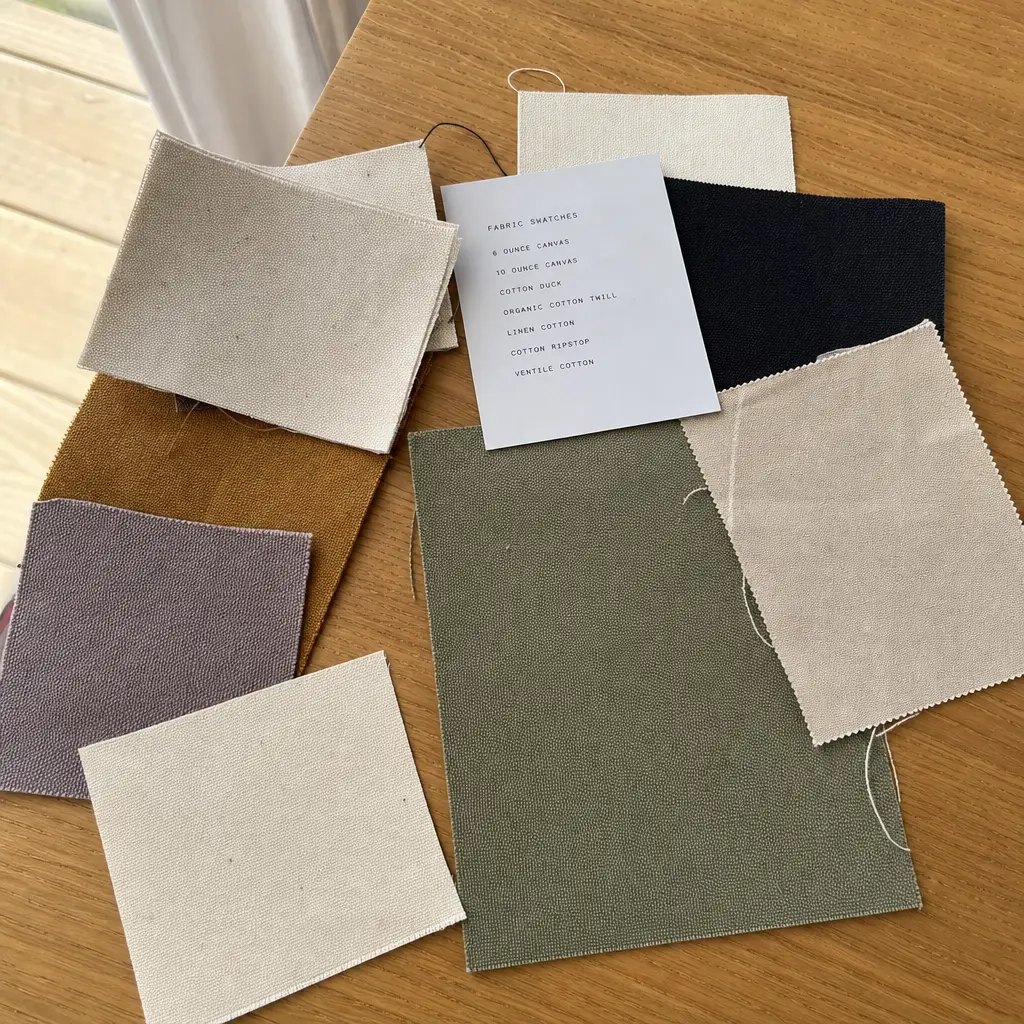
Why print proofing is the main risk
Cotton drawstring backpacks look simple, but university bookstore orders usually carry licensed marks, department logos, sponsor artwork, or orientation program graphics. The bag is also handled differently from a flat tote: the drawcord gathers the top, the body bends when filled, and the front print may wrinkle during packing. A proof that looks acceptable on a flat PDF can look poorly centered once the bag is sewn and closed.
The buying problem is not whether the supplier can print a logo. The problem is whether the approved proof controls the real production variables: fabric shade, GSM, ink coverage, placement reference, cord position, folding method, and bulk inspection standard. A useful RFQ should make the factory quote the bag and the proofing process together, because most disputes start when the buyer approves artwork but not the production conditions.
- Treat artwork approval and production proof approval as separate steps.
- Use the same cotton fabric, color, and GSM for the proof whenever possible.
- Do not approve only from a digital mockup for licensed university graphics.
- Keep one signed physical proof at the factory and one with the buyer or buying office.
Set the base bag specification first
Print accuracy depends on the base bag. A 6 oz cotton backpack and an 8 oz cotton canvas backpack do not hold ink, seams, or folding marks in the same way. A lighter bag is practical for very large orientation programs, but it can look less structured on a retail shelf. An 8 oz fabric, around 270 GSM, is often the better starting point for university bookstore merchandise because it has enough body for screen printing and repeated student use without becoming too bulky.
Finished size should be stated clearly. Many quote sheets show a flat size such as 34 x 42 cm, but buyers should define whether that is the finished sewn size and whether the drawcord channel is included in the height. If the backpack needs to hold folders, hoodies, water bottles, or textbook accessories, the buyer should also think about usable internal height below the drawcord channel, not only overall bag height.
- Common budget choice: 6 oz cotton, about 200 GSM, for event and welcome-pack programs.
- Common retail choice: 8 oz cotton canvas, about 270 GSM, for bookstore resale and alumni ranges.
- Heavy-duty choice: 10 oz cotton canvas, about 340 GSM, only when a firmer bag and higher freight are acceptable.
- Specify natural, bleached, dyed, or organic cotton separately because each affects print appearance and cost.
Choose the print method by artwork type
For most university bookstore cotton drawstring backpacks, screen printing is the safest production method when the artwork is one to three solid colors. It gives a durable result, predictable unit cost at volume, and good coverage on cotton. The quote should identify the number of print colors, whether underbase is needed, and whether the ink will be water-based, discharge, or plastisol-style depending on local production capability and compliance requirements.
DTF transfer, heat transfer, or digital print may fit complex artwork, gradients, small batch personalization, or seasonal designs. These methods can reduce screen setup pressure, but they introduce different proofing risks: transfer edge visibility, hand feel, gloss level, heat press marks, and cracking at fold lines. If the bag will be folded through the print area for retail packing, the buyer should see a folded sample after 24 to 48 hours, not just a fresh print.
- Use screen print for bold school names, mascots, department logos, and repeat SKUs.
- Use transfer methods for many colors, short runs, or graphics that change every semester.
- Avoid very fine lines on coarse cotton because ink spread can close small gaps.
- For dark cotton bags, quote the underbase separately so competing suppliers price the same construction.
Control logo placement with measurements
Visual centering is not enough for drawstring backpacks. The top channel changes the apparent height of the bag, and the lower corners pull inward when the cords are worn as shoulder straps. A print that appears centered on the flat sample may sit too low once the bag is filled. The proof sheet should show the printable window and the exact distance from the top edge, side seams, and bottom seam.
A practical artwork layout should also leave a safety margin around the drawcord channel and side seams. Large prints near the top can be distorted by the gathered cord. Prints too close to the bottom may be affected by seam bulk, corner reinforcement, or the first fold in packing. For bookstore retail, placement consistency matters because bags may hang side by side on pegs or sit stacked near checkout.
- Define print position from the finished top edge to the top of artwork.
- Define left and right placement from sewn side seams, not from the fabric cutting edge.
- Keep a no-print zone near the drawcord channel unless the design intentionally uses that space.
- Approve a placement tolerance, such as plus or minus 5 mm for screen print where the bag size allows it.
Build color approval around cotton reality
University buyers often need school colors to be close to brand standards. Cotton creates a different approval challenge than coated packaging or paper labels. Natural cotton has seed flecks and a warm base tone. Dyed cotton may have shade variation between lots. Even when the ink is mixed to a Pantone reference, the visible result changes with fabric absorbency and ground color.
The proof should include a real ink drawdown or printed strike-off on the selected fabric. For strict licensed programs, buyers should state whether approval is visual under daylight, lightbox, or internal brand review. If multiple bookstore locations or departments share the same order, one person should own final color approval; otherwise, the factory may receive conflicting comments after screens and ink have already been prepared.
- Provide Pantone references but approve against a physical printed fabric sample.
- Expect natural cotton to make bright colors look warmer or slightly muted.
- For repeat orders, send the previous approved sample to the factory for comparison.
- Record whether slight shade variation is acceptable across fabric lots and reorders.
Understand MOQ and cost drivers
MOQ for cotton drawstring backpacks is usually driven by fabric availability, dyeing, printing setup, cord color, labels, and packing style. A supplier may accept a lower total quantity if the buyer uses stock natural cotton and one screen print. The same order becomes harder if it requires custom dyed fabric, several department logos, different cord colors, and individual barcode labels.
When comparing quotes, buyers should separate unit price from setup cost and operational cost. A low unit price may exclude screen charges, sample fees, extra print colors, inner packing, carton marks, or inspection support. For bookstore buying teams, the cleanest comparison is a landed-cost worksheet that includes bag price, print setup, labels, packing, inland freight, ocean or air freight, duties, and receiving labor.
- Main fabric cost drivers: GSM, cotton type, dyeing method, and shrinkage control.
- Main print cost drivers: number of colors, print area, underbase, and setup screens.
- Main sewing cost drivers: reinforced corners, eyelets, lining, zipper pocket, and label insertion.
- Main packing cost drivers: individual polybag, paper band, barcode sticker, mixed carton sorting, and carton strength.
Approve samples in the right order
A good sample process prevents expensive revisions after production starts. The first step can be a blank sample to approve size, fabric, drawcord, construction, and general hand feel. The next step should be a print strike-off or printed panel on actual fabric to approve color and ink behavior. The final step is the pre-production sample: a finished backpack made with approved fabric, approved construction, approved print, approved labels, and proposed packing fold.
Skipping straight to a finished sample can waste time if the artwork or fabric is not ready. Approving only a print panel can also be risky because the final bag may shift the artwork position. For university bookstore programs with a selling season, the sample calendar should be written into the PO timeline. The factory cannot fairly be held to a delivery date if approval comments arrive late or the school licensing office adds another review round.
- Blank sample approval: size, GSM, color, cord, seams, and wearing comfort.
- Print strike-off approval: ink color, opacity, hand feel, fine line clarity, and curing.
- Pre-production sample approval: finished bag, final placement, label, folding, and carton presentation.
- Bulk start approval: written confirmation that no artwork, fabric, or packing changes remain open.
Set QC thresholds before bulk production
Quality control should not be left as a general promise. Cotton drawstring backpacks need measurable acceptance points because small defects become visible in retail. A print slightly off-center may be acceptable for a giveaway but not for bookstore resale. A loose drawcord knot may seem minor until students carry the backpack across campus and the cord pulls out.
Buyers should define critical, major, and minor issues in plain production language. Critical issues include wrong logo, wrong school color family, unsafe metal burrs, or mixed artwork in the wrong cartons. Major issues include noticeable print misplacement, ink cracking, open seams, severe stains, and cord failure. Minor issues include small cotton slubs, slight thread ends, or acceptable natural shade variation if already approved.
- Size tolerance: agree finished width and height tolerance before cutting.
- Print tolerance: define allowable shift, tilt, pinholes, and color variation.
- Seam strength: pull-test side seams, bottom seam, and cord attachment points.
- Appearance standard: reject oil stains, heavy shade bands, broken stitches, and dirty packing.
- Carton audit: verify SKU, design, quantity, PO number, and destination marks before shipment.
Plan packing for bookstore receiving
Packing affects both presentation and cost. Individual polybags keep cotton backpacks clean during ocean freight and warehouse handling, but some universities prefer reduced plastic. Paper bands or bulk packing can work if the cartons stay dry and the bags are not handled many times before sale. The buyer should decide whether the product is going straight to a campus store shelf, a distribution center, an event kit line, or a third-party fulfillment warehouse.
Folding is part of print proofing. If the bag is folded through a heavy ink area, the print may crease or show pressure marks. For screen prints with large solid blocks, the factory should test the approved fold and stacking pressure. Carton quantity should balance freight efficiency with receiving practicality; overly heavy cartons create handling problems, while very small cartons increase shipping and warehouse labor.
- For retail: use consistent folding, clean individual packing, and SKU labels if required.
- For event kits: confirm whether bags arrive flat, bundled, or pre-inserted with materials.
- For mixed artwork: require inner bundles and a carton packing list by design and quantity.
- For sustainability programs: quote paper band, recycled polybag, or bulk carton options separately.
Protect the lead time from approval delays
Lead time for cotton drawstring backpacks should not be quoted as one simple number unless the order is a repeat with approved artwork and stock fabric. A realistic schedule has stages: material confirmation, sample making, sample shipment, buyer review, fabric preparation, printing, sewing, final inspection, packing, export booking, and transit. The production clock usually starts after deposit and final proof approval, not after the first RFQ email.
University bookstore orders often have immovable dates: orientation week, homecoming, graduation, campus store resets, or sponsor events. The highest schedule risk is late artwork approval, not sewing capacity. Buyers can reduce risk by freezing the bag construction before final artwork is ready, approving fabric early, and sending brand guidelines in editable form rather than a low-resolution image.
- Separate sample lead time from bulk production lead time in the PO.
- State the last acceptable ship date and the required arrival date.
- Build extra days for licensing review if school marks require formal approval.
- Avoid changing fabric color after print proof approval because the ink result may need retesting.
Specification comparison for buyers
| Spec decision | Recommended option | When it fits | Buyer risk to check |
|---|---|---|---|
| Fabric weight for bookstore retail use | 8 oz cotton canvas, roughly 270 GSM, pre-shrunk if possible | Good balance for university bookstore resale, orientation kits, and alumni merchandise where the bag must feel more substantial than a giveaway sack | Too light a fabric may wrinkle around the logo and show contents; too heavy can raise freight cost and make the drawcord closure stiff |
| Fabric weight for budget orientation orders | 6 oz cotton, roughly 200 GSM, with reinforced stress points | Large freshman welcome packs, event bundles, or sponsor-funded promotions where unit cost and carton cube matter | Logo opacity, seam strength, and corner pull resistance need stronger approval because the bag will not have much body |
| Print method for one or two solid school colors | Screen print with approved ink drawdown and cured wash/rub test | Best for bold university marks, mascots, block lettering, and bookstore logos in repeat bulk orders | Pantone match can shift on natural cotton; request print on actual bulk fabric, not only on coated paper |
| Print method for gradients or many colors | DTF transfer or heat transfer on smooth cotton surface after heat trial | Useful for complex alumni graphics, seasonal artwork, or small runs with multiple designs | Transfer hand feel, edge shine, cracking after folding, and heat press marks must be approved before production |
| Logo placement control | Factory placement template showing top edge, side seam, bottom seam, and usable print window | Needed when the bookstore wants consistent shelf presentation or multiple departments use the same base bag | Drawcord channel and bag curvature can make centered art look high or low if the measurement point is not defined |
| Drawcord material | Cotton cord for natural look; polyester cord for smoother pull and higher abrasion resistance | Cotton cord suits eco-style bookstore ranges; polyester cord suits repeated student use and darker dyed bags | Cord diameter, colorfastness, knot security, and pull-through at eyelets or corner tabs should be tested |
| Branding beyond front print | Woven side label or inside care label only if retail margin supports it | Useful for bookstore private label ranges, alumni collections, or licensed campus merchandise | Extra labels add sampling rounds and MOQ pressure; incorrect label position can delay licensing approval |
| Packing for retail receiving | Individual folded polybag or paper band plus export carton with SKU, color, quantity, and PO markings | Best when bookstore DCs need clean receiving, fast shelf replenishment, and mixed design control | Over-tight folding can crease the print; mixed SKUs in one carton need a packing map and inner separation |
Buyer checklist before sampling
- Define the finished bag size, not only the flat cutting size; include width, height, bottom shape if any, and tolerance.
- Choose fabric GSM based on retail use: 6 oz for economy events, 8 oz for bookstore retail, and 10 oz only when the buyer accepts heavier closure and freight.
- Send vector artwork with Pantone references, minimum line thickness, and any licensing restrictions for school marks.
- Require the first proof on the actual selected cotton fabric, in the actual ground color, using the intended print method.
- Approve print position from fixed garment-style measurements: top edge, side seam, and bottom seam, not visual centering alone.
- Set color approval rules for natural cotton, dyed cotton, and repeat orders because the same ink will not look identical on every ground shade.
- Define seam and cord strength tests for the sample before signing the production proof.
- Confirm packing method, folding direction, carton markings, and mixed-SKU rules before final quote comparison.
- Request a pre-production sample after all changes, then keep one sealed approval sample at the factory and one with the buyer.
- Require bulk production photos or inline inspection results before shipment if the order includes licensed university artwork.
Factory quote questions to send
- What cotton fabric weight, construction, and shrinkage control are included in your quote?
- Is the quoted size a cutting size or finished size after sewing, pressing, and tolerance?
- Which print method is quoted, and what is the maximum printable area on this backpack size?
- Can you print the proof on the same bulk fabric lot and bag color that will be used for production?
- What Pantone tolerance or visual standard do you use for ink approval on natural or dyed cotton?
- How many artwork colors, screens, films, transfers, or setup charges are included in the unit price?
- What is the MOQ per bag color, print design, and cord color, and what changes if we split the order by campus department?
- What sample types are included: blank sample, strike-off print panel, pre-production sample, or full finished sample?
- What packing method is included in the quote, and what is the carton quantity, gross weight, and carton size?
- What production lead time starts after deposit, artwork approval, fabric approval, or pre-production sample approval?
Quality-control points to confirm
- Finished size tolerance should be agreed before production; many buyers use plus or minus 1 cm for cotton drawstring backpacks, but larger bags may need a wider tolerance.
- Print placement should be checked against a template on at least the first 20 pieces and then by regular inline sampling.
- Ink curing should be verified by rub testing and, where relevant, a light wash or damp cloth test before packing.
- Cotton fabric should be checked for stains, slubs, oil marks, shade bands, and excessive bowing before printing.
- Drawcord channels must open cleanly without loose threads that block cord movement.
- Corner reinforcements, eyelets, or stitched cord tabs must withstand repeated pull testing without tearing the fabric.
- Folding must not place a hard crease directly through heavy ink coverage unless the buyer has approved that presentation.
- Carton labels must match PO, SKU, artwork code, color, quantity, and destination requirements.