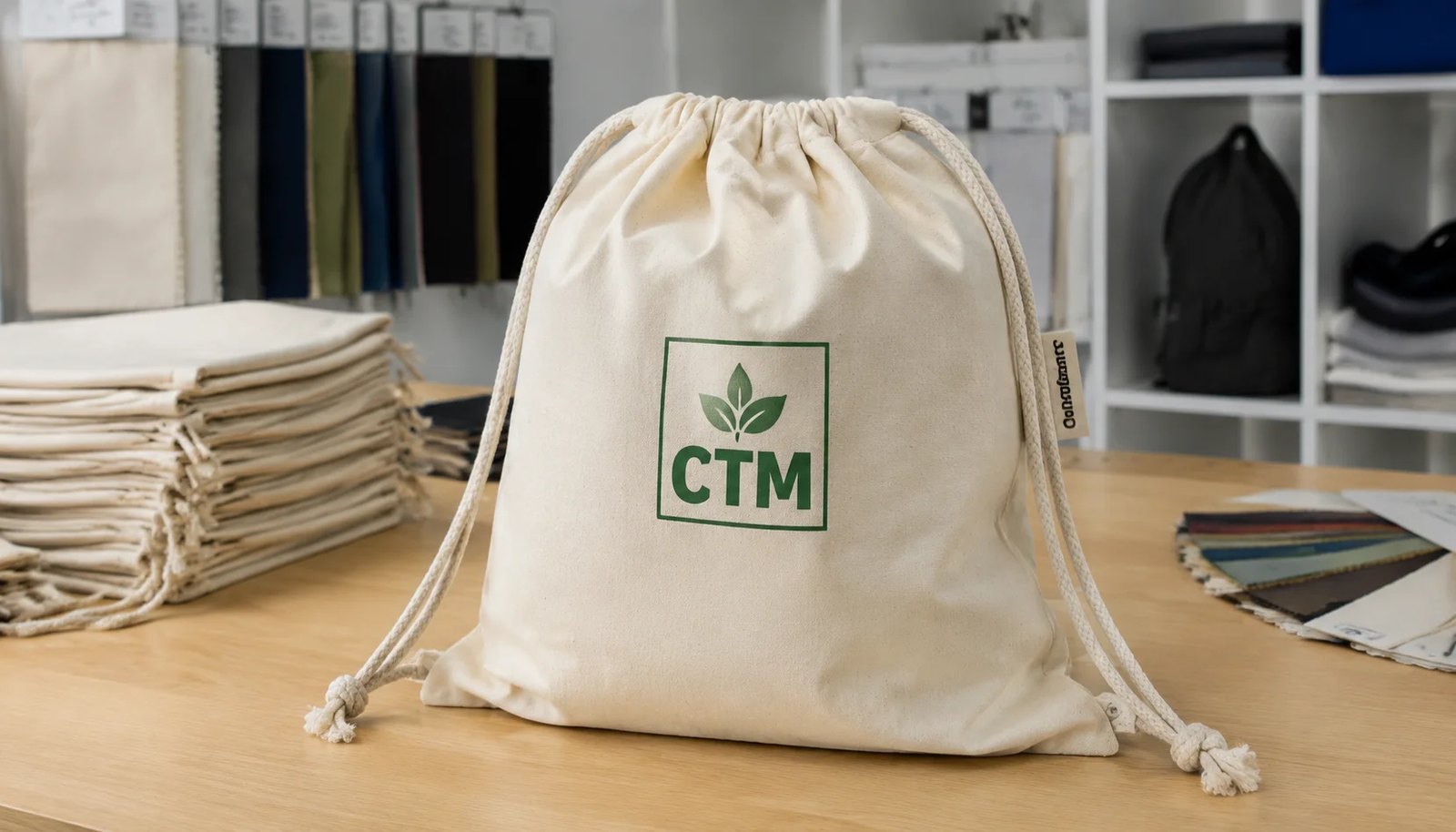
Why natural grocer programs need a tighter RFQ than a standard promo bag
Natural grocer procurement teams often source cotton drawstring backpacks for programs that sit somewhere between promotion, reusable packaging, and low-priced retail merchandise. That makes them different from generic event swag. The bag may be displayed near produce, wellness, pantry, or checkout areas, so buyers usually care about fabric handfeel, visual cleanliness, natural-material presentation, and logo finish more than they would for a one-day giveaway. If the RFQ only says cotton drawstring bag with logo, suppliers will fill in the blanks differently, and the cheapest quote is usually based on the lightest fabric, the simplest sewing, and the lowest print control.
The commercial problem is not just quality variation. It is quote mismatch. One supplier may price a 145 GSM cotton body with thin synthetic cords and a small one-side print. Another may assume 220 GSM canvas, cotton rope, and a larger centered print. Both can claim they quoted a cotton drawstring backpack, but procurement cannot compare the offers fairly. The result is either a bad award decision or a long round of revisions after the first quote set.
For natural grocer programs, several details matter more than they do in general promotional sourcing. Light natural cotton shows dust, stains, and shade variation more easily than darker dyed fabrics. A soft but flimsy fabric may not support a clean print. Thin cords can make the bag feel cheap even if the logo looks fine. If goods move through a distribution center, unclear packing can create warehouse handling issues, repacking cost, or excess plastic use. A stronger RFQ creates one commercial basis so suppliers quote against the same assumptions.
This is why a cotton drawstring backpacks for natural grocers RFQ template guide should do more than list generic product fields. It should define the use case, identify which specifications are fixed, state what quality level the store environment requires, and explain how the buyer will approve samples. The goal is not to overengineer a simple product. The goal is to eliminate the few specification gaps that most often cause wrong pricing, wrong samples, and avoidable production disputes.
- Natural grocer buyers often need a cleaner material story and more shelf-ready presentation than general promo buyers
- Natural cotton surfaces make stains, slubs, shade shifts, and print inconsistency easier to notice
- Store or DC distribution usually requires practical carton limits and accurate labeling, not only a low ex-factory price
- A concise RFQ can still be effective if it tightly controls the handful of specifications that move cost and quality most
Start with the use case before choosing GSM, size, and construction
The right specification starts with how the bag will actually be used. A giveaway at a community event does not need the same fabric weight or finish as a checkout accessory, a loyalty redemption item, or a reusable bag tied to produce and pantry messaging. When buyers skip that use-case definition, they often receive quotes that are technically valid but commercially wrong. The supplier chooses a cost-saving structure because the intended shelf standard was never stated.
For low-cost promotions, 140-170 GSM cotton sheeting can be acceptable if the bag is not expected to carry heavy items and the logo treatment is modest. This range can work for event distribution, seasonal activations, or short-term awareness programs where the product's main job is carrying light items and broadcasting a brand message. The tradeoff is that the fabric may wrinkle more, feel less substantial, and show more print-through or panel distortion if the print area is large.
For programs where the bag will be sold, redeemed through loyalty points, or reused repeatedly in a grocery environment, many buyers move up to 200-280 GSM cotton canvas. Heavier fabric improves body, drape, and perceived value. It also gives the print a more stable surface and usually reduces the overly promotional look that lighter sheeting can create. However, heavier canvas increases fabric cost, can reduce units per carton, and may lead to longer booking times if the fabric color is custom dyed rather than stock natural.
Size should also be defined from the use case rather than copied from a prior bag order. Approximate finished sizes like 35 x 40 cm or 38 x 42 cm are common because they fit a useful range of light grocery items without becoming too large for easy carrying. But the right size depends on what the customer is likely to put inside. If the bag is too small, it becomes symbolic rather than useful. If it is oversized, fabric consumption rises, freight cube increases, and the bag can lose shape when lightly filled.
Construction choices should be equally practical. Most cotton drawstring backpacks use a flat body with a top channel and corner cord anchors. This is usually the best cost-to-utility option. Adding a gusset or boxed corners only makes sense if there is a real need for more volume, easier loading, or a more structured retail feel. In many natural grocer programs, buyer value is improved more by upgrading fabric weight or cord comfort than by adding a gusset that the end user may not notice.
- Event giveaway or low-budget promotion: often 140-170 GSM sheeting with simple flat-body construction
- Paid retail, loyalty reward, or stronger reuse positioning: often 200-280 GSM canvas with better handfeel
- Common finished sizes such as 35 x 40 cm or 38 x 42 cm should still be confirmed against actual intended use
- Upgrade fabric and cord first; only add gussets if the functional case is clear
Build the RFQ around quote-critical fields so suppliers price the same bag
A strong RFQ should remove ambiguity from the fields that most affect price, quality, and repeatability. At minimum, specify finished size, tolerance, fabric type, target GSM, fabric color, print method if already decided, print area, number of print colors, drawcord specification, packing method, MOQ structure, and required delivery term. Without those basics, suppliers are forced to make assumptions, and those assumptions almost always differ.
Buyers should also define what is included in the quote. Does the factory need to include sample cost, screen or setup charges, Pantone matching, carton marking, barcode labels, moisture protection, or destination-specific support? A low initial price can become a misleading price if essential commercial items were excluded. It is better to request a clear cost breakout than to receive a headline unit cost that cannot be compared cleanly across factories.
Natural grocer programs also benefit from one more field: intended presentation level. If the product is for in-store display or paid sale, state that clearly. A supplier who knows the bag will be merchandised to consumers may quote better front-panel selection, cleaner packing, and closer print control. If the same supplier assumes the item is a bulk giveaway, they may choose less selective fabric grading or a more basic pack-out method. The RFQ does not need marketing language, but it should define whether the product is purely promotional or must look retail-ready.
Procurement teams often improve quote quality by adding a short specification table or appendix instead of writing everything into paragraph text. That can include exact dimensions, tolerance, print size, artwork position, cord diameter, inner-pack requirement, and carton weight limit. Structured RFQs help both sides. They reduce interpretation risk for the factory and make it easier for the buyer to compare responses line by line.
A useful RFQ template also states what the buyer wants the supplier to confirm rather than assume. For example: quote based on natural cotton unless otherwise approved; quote MOQ by artwork version; note any changes needed if the requested print area exceeds standard practice; identify any lead-time difference if fabric must be custom dyed. These prompts help surface exceptions early, before the PO stage.
- Required RFQ inputs: size, tolerance, GSM, fabric color, print details, cord spec, packing, MOQ split, and delivery term
- Useful optional inputs: barcode labels, target carton dimensions, gross weight limit, inner-pack count, and sample stage needed
- State whether the quote should be EXW, FOB, or another commercial basis
- Identify whether the order is one SKU or multiple regional or seasonal artwork versions
Fabric and material details that should never be left vague
For cotton drawstring backpacks, the fabric line in the RFQ should do more than say cotton. Procurement should identify whether the expectation is cotton sheeting or cotton canvas, give the GSM target, and clarify whether that target refers to finished fabric. This matters because lighter sheeting and heavier canvas perform differently in print, appearance, and carrying feel. If a supplier has to choose on your behalf, price comparison becomes unreliable immediately.
Color language also needs precision. Many natural grocer programs use natural cotton because it fits the brand aesthetic and can simplify cost versus custom dyeing. But natural is not a perfectly uniform color standard. Slight shade variation is common. Buyers should decide whether that is acceptable and to what extent, especially if repeat orders may arrive across multiple lots. If a brighter or cleaner look is required, bleached fabric may be more consistent visually, but that changes both appearance and commercial assumptions.
If dyed fabric is required, the RFQ should note that lead time and MOQ may change. Custom dyeing typically means fabric booking, dye-lot control, and a higher exposure to shade variation between lots. For a pilot order, many buyers reduce risk by staying with natural fabric and a simple one-color print. If the program proves successful, they can then decide whether a custom fabric color is commercially justified in the next order cycle.
Cord choice deserves similar attention. A cotton rope or braided cotton cord usually aligns better with natural-store presentation than a shiny synthetic cord. Cord diameter affects comfort, appearance, and perceived value. An 8-10 mm cotton rope often feels more substantial than a thin cord and gives the product a more intentional look. Buyers should ask how the cord ends are finished, whether cord lengths are matched, and how the corner anchors are constructed, because these small details influence both quality perception and user experience.
Material discussions should also include what level of natural fabric character is acceptable. Cotton can have mild slubs or texture variation. That may be normal and even visually appropriate, but severe front-panel defects, stains, oil marks, or obvious weaving problems should be excluded. Defining this line in the RFQ helps inspectors and reduces subjective arguments later.
- Specify cotton sheeting versus cotton canvas, not only cotton
- State target GSM and whether the expectation applies to finished fabric weight
- Clarify if natural, bleached, or dyed fabric is required and whether minor shade variation is acceptable
- Define cord material and diameter because comfort and perceived value often depend on it
Print method choices: when screen print is the safest option and when it is not
For most natural grocer programs, screen print is the default method because it balances cost, readability, and production reliability well on cotton. It is especially effective for simple one-color or two-color logos, store names, reusable-bag messages, and clean wellness-oriented graphics. Screen printing also tends to hold its economics at medium and larger volumes, making it easier for procurement to model repeat buys. When executed correctly, it usually offers a better handfeel and stronger rub performance than lower-end transfer alternatives.
That said, screen print is not automatically perfect. Large solid blocks of ink can stiffen the panel, especially on lower-GSM fabric. Heavy ink deposit may crack over time, obscure the natural texture, or create an overly plasticky look that works against a natural grocer aesthetic. Buyers should review artwork with the factory before assuming the design is print-friendly. Sometimes a modest reduction in solid coverage, a line-weight adjustment, or a different logo scale improves both print quality and bulk consistency.
Heat transfer or digital transfer can be useful when the artwork includes multiple colors, gradient detail, or a low-volume test quantity that does not justify screen setup. However, buyers should understand the tradeoffs. Transfer methods may create a visible patch feel, edge line, or heavier hand on the bag face. On natural cotton, that may stand out more than expected. It does not mean transfers are wrong; it means they should be selected because the artwork requires them, not by default.
Print approvals should be handled carefully. If color matters, ask for a strike-off or a printed pre-production sample using the real fabric and real print method. A digital mockup cannot show opacity, edge sharpness, handfeel, or how the ink interacts with the texture of the cloth. Position should also be measurable. Instead of saying centered logo, define print size in centimeters and specify an acceptable placement tolerance, such as plus or minus 1 cm from the approved centerline.
The buyer should also decide whether one-side printing is enough. For many programs it is. Adding a second print side can change cost, registration handling, and throughput. If the rear panel will never be seen in store use, extra decoration may not create proportionate value. A well-specified one-side print often beats an under-controlled two-side concept.
- Screen print usually fits 1-2 color artwork and medium-to-large order volumes best
- Large solid fills require attention because they can stiffen light cotton and increase crack risk
- Transfer methods are better reserved for complex artwork or smaller test runs
- Always approve print based on the actual fabric and actual print method, not only on-screen artwork
MOQ, SKU splits, and pilot-order logic that buyers should clarify early
MOQ discussions often become misleading because suppliers quote one headline minimum while the real operational minimum sits at the fabric-color or artwork level. For example, a factory may say the MOQ is 1,000 pieces, but the order may still require 500 pieces per print design, another minimum for dyed fabric, and an even higher threshold if sizes are mixed. For buyers managing regional grocer banners, seasonal messaging, or test-market pilots, those hidden splits can materially change the project cost.
The RFQ should therefore ask for MOQ in layers: per order, per fabric color, per artwork version, and per size if applicable. This gives procurement a more realistic commercial picture. It also helps when comparing suppliers. One factory may have a lower total MOQ but less flexibility on artwork splits. Another may have a slightly higher total MOQ but better operational efficiency if multiple SKUs share the same base fabric and cord. The right choice depends on the buyer's program structure, not only on the smallest number shown on the quote.
Pilot orders need special discipline. Many buyers design a pilot using premium specifications that look good in theory but become hard to reorder economically. A better pilot spec is one that reflects likely scale-up economics. If the eventual reorder will probably use natural cotton, one-color print, and one standard size, then the pilot should stay close to that model. Otherwise the trial may set expectations around a construction that is too expensive or too operationally complex for a larger rollout.
There is also a sourcing difference between stock natural fabric and custom-dyed or specially booked canvas. Stock natural material can sometimes support quicker pilots and smaller commitments if the factory already has access to standard greige or natural programs. Heavier or custom-dyed fabrics generally need more planning and may carry more MOQ pressure. Buyers should not assume the same MOQ logic applies across all material options.
An RFQ template should make room for optional pricing scenarios. One useful approach is to ask for a base quote on the likely mainstream specification, then request one optional quote for a heavier or upgraded version. That gives the procurement team a clean decision path instead of a mixed set of proposals based on different assumptions.
- Ask MOQ per fabric color, per artwork, and per size rather than relying on one total MOQ number
- Check whether stock natural fabric is available for pilot or repeat orders
- Build pilot specifications around likely reorder economics, not around a one-time premium concept
- Request optional upgraded pricing separately so the base quote stays comparable
Sample approval workflow: how to avoid approving the wrong reference
Sample approval is one of the most important controls in a cotton drawstring backpack buying process because this product looks simple but can vary a lot in handfeel, print appearance, cord comfort, and overall finish. Many disputes begin when the buyer approved a digital rendering or a hand-made showroom sample that did not use real production fabric or production print conditions. A mockup can confirm layout direction, but it cannot confirm whether the actual bag feels retail-ready or promotional-grade.
A safer workflow usually starts with artwork and dimensional confirmation, then moves to a blank or early sample if needed, and then to a printed pre-production sample made in the actual GSM, actual cord, and actual print method. If the product will use natural cotton, review should happen under neutral lighting where shade and print opacity can be judged more fairly. Warm office lighting can make natural fabric look cleaner or yellower than it does in standard conditions.
Procurement teams should inspect the sample physically, not only visually. Measure the finished width and height. Check whether the drawcords are balanced and comfortable. Pull the cords through the channel several times to see if there is snagging or excessive friction. Tug the corner anchors to assess whether reinforcement feels secure. Fold the front panel lightly to see if the print cracks, lifts, or feels overly heavy. These are small tests, but they reveal practical issues early.
For store-oriented programs, compare the sample to actual merchandise environments rather than judging it in isolation. Place it near other reusable bags, pantry accessories, or checkout items your stores carry. Does it feel too thin? Does the natural cotton show too much surface inconsistency? Does the logo look sharp enough at shelf distance? This kind of comparison is often more meaningful than generic language such as premium or eco-friendly.
The approval record should also be controlled. Buyers benefit from documenting which sample was approved, on what date, and against which artwork revision and material spec. If there is a sealed or retained sample, note that too. Clear sample traceability prevents confusion when production starts weeks later and multiple sample versions exist.
- Do not treat a digital mockup as the final production approval for fabric, print, or cord quality
- Require a printed pre-production sample in the actual construction before mass production
- Physically test measurements, cord movement, anchor security, and print behavior on the sample
- Record exactly which sample version and artwork revision were approved
Quality-control standards that fit cotton drawstring backpacks, not generic bag language
Because cotton drawstring backpacks are relatively simple products, buyers sometimes rely on generic inspection language that is too broad to be useful. A better approach is to define a small set of measurable checkpoints that reflect how this item actually fails in production. Typical priorities are finished size, fabric GSM consistency, visible front-panel quality, print position and appearance, drawcord symmetry, seam construction, and packing accuracy. These controls are more practical than overly technical hardware or performance requirements that do not fit the product.
Start with measurement tolerances. Width and height should be checked after sewing and before packing. A common tolerance such as plus or minus 1 cm can work for many programs, but the right number depends on the product's intended use and how tightly artwork needs to align on the panel. Print position should also have a defined tolerance. Without it, a factory may deliver bags that are technically printed but visibly off-center, while still claiming they meet an undefined standard.
For natural cotton, visual defect language matters. Cotton may contain minor slubs or texture variation, especially on natural or less processed fabric. Buyers should decide what is acceptable as natural character and what becomes unacceptable retail-facing defect. Oil marks, mildew smell, severe slubs across the main print area, weaving flaws, obvious stains, or visible needle damage on the front panel should normally be considered unacceptable. Writing this distinction into the quality plan makes inspection more objective.
Seam quality should focus on the stress areas that matter most: side seams, top channel, and cord anchor points. Look for secure back-tacking, no skipped stitches, reasonable stitch consistency, and controlled loose thread tails. Drawcord function should also be inspected. If the channel is too tight, rough, or inconsistently sewn, the user experience suffers even if the bag looks good in a flat inspection. Smooth opening and closing is part of the functional quality of the product.
Odor and packing cleanliness deserve specific attention in natural grocer programs. Goods that arrive with a damp carton smell, mildew risk, or visible dust contamination can create immediate issues near food-adjacent merchandising. Export cartons should be dry, properly sealed, and appropriate for the fabric color. For light natural cotton, lined cartons or equivalent clean handling measures are often a sensible safeguard.
Finally, quality control should not begin only at final inspection. Ask how the supplier checks incoming fabric, in-line printing, and sewing quality before the order reaches final packing. Early control is often what prevents the highest-cost defects from reaching shipment stage.
- Define measurable tolerances for body size and print placement rather than relying on subjective visual approval
- Separate acceptable natural cotton character from unacceptable retail-facing defects
- Focus seam checks on side seams, top channel, and cord anchor reinforcement
- Include odor, cleanliness, and dry-carton requirements because these matter in grocery-adjacent distribution
Packing, carton planning, and warehouse handling details that change landed cost
Packing is one of the easiest areas to overlook because it seems secondary to fabric and print, yet it can materially affect landed cost, labor, and product condition. Individual polybags add labor time, more plastic, and extra carton bulk. For many natural grocer programs, bulk packing in counted inner bundles works better, especially when goods are going to a distribution center that will allocate by carton or by bundle. This approach can lower cost and align better with sustainability preferences, as long as cleanliness is maintained.
Natural cotton still needs protection. Light-colored fabric can pick up dust, moisture, and handling marks more easily than darker dyed products. That is why the RFQ should specify whether export cartons must be lined, whether inner bundles need an extra protective layer, and whether any moisture-control practice is required during loading. The aim is not luxury packaging. It is preserving usable retail condition without spending on unnecessary single-unit wrap.
Carton planning should match internal warehouse realities. If the product uses heavier canvas, carton weight can climb faster than expected. If cartons are too large, DC teams may find them awkward to handle or more prone to crushing. If cartons are too small, carton count rises and handling efficiency falls. Buyers can reduce surprises by asking suppliers to quote units per carton, carton dimensions, and gross weight, then compare freight density and handling implications across factories.
Carton labeling also matters more than many first-time buyers expect. A natural grocer chain distributing by region or campaign may need carton marks that show PO, style, artwork version, quantity, and destination code. If this is not requested early, relabeling costs can appear later. Even simple products benefit from clear carton identity when multiple SKUs or store programs are involved.
A good RFQ therefore treats packing as an operational requirement, not an afterthought. Procurement should define the preferred unitization approach and ask the supplier to highlight any packing assumptions that affect freight, handling, or cleanliness.
- Specify whether units are bulk packed, inner-bundled, paper-banded, or individually polybagged
- Set a carton gross weight limit that fits your DC or warehouse handling standard
- Request quoted carton dimensions and units per carton so freight density can be compared
- For natural cotton, require clean, dry cartons and suitable moisture protection during loading
Lead time planning and landed-cost quote comparison for better sourcing decisions
Lead time on cotton drawstring backpacks is often discussed as one simple number, but the real schedule has several stages, each with different risks. Fabric availability is one of the first variables. If the factory can use stock natural cotton and the artwork is straightforward, development can move relatively quickly. If custom-dyed fabric, larger print coverage, or multiple artwork splits are required, timing expands because fabric booking, dyeing, sample review, and print preparation all add steps.
Sample timing should be separated from bulk timing. A supplier may quote an attractive production lead time while assuming immediate artwork approval and only one sample round. In practice, retailer or brand teams often require internal review, color feedback, packaging confirmation, or revised labeling before bulk can start. Procurement should ask what assumptions sit behind the quoted lead time, including whether the schedule starts from deposit, from artwork approval, or from pre-production sample approval. Those details affect planning far more than the headline number alone.
Delays also tend to occur in a few predictable places. Incomplete artwork files, unclear carton-mark approvals, changes to print size after sampling, and unresolved fabric-color decisions commonly slow a program more than sewing capacity does. That is why strong buyers keep artwork, packaging, and logistics approvals moving in parallel where possible. The more complete the RFQ, the fewer timing resets occur later.
When comparing quotes, unit price should not be viewed alone. Add sample charges, setup or screen costs, units per carton, carton dimensions, estimated gross weight, and any surcharge for multiple SKUs or custom dyeing. A bag that costs slightly more per unit may still be the better buy if it ships more efficiently, needs fewer revisions, and better matches the required quality level. A cheaper bag is not a saving if it fails the intended use case or drives hidden handling cost.
The most reliable quote analysis compares suppliers on one aligned specification first, then allows optional value-engineered alternatives in a second column. That keeps the base comparison clean. If procurement wants a lower-cost option, request it separately: for example, lighter GSM, smaller print, or simplified packing. This prevents a situation where every supplier offers a different interpretation of value engineering and none of the prices are truly comparable.
For teams using a cotton drawstring backpacks for natural grocers RFQ template guide, the end goal is straightforward: create a quote package that helps suppliers price the same bag, helps internal teams approve the same reference, and helps logistics teams receive the same packing standard that was promised during buying.
- Ask for stage-by-stage timing covering sample, material booking, printing, sewing, inspection, and shipment booking
- Confirm what event starts the lead-time clock: PO, deposit, artwork approval, or PPS approval
- Compare quotes on total first-order economics, not only on per-unit FOB price
- Request optional value-engineered versions separately so the main RFQ remains comparable
Specification comparison for buyers
| Spec decision | Recommended option | When it fits | Buyer risk to check |
|---|---|---|---|
| Fabric weight | 140-170 GSM cotton sheeting for low-cost promotions; 200-280 GSM cotton canvas for stronger perceived value and repeat use | Use lighter sheeting for event giveaways, seasonal campaigns, or short-term promotional distribution; use heavier canvas for paid retail, loyalty redemption, or more frequent reuse | Low GSM may wrinkle, show print-through, and feel too light for shelf programs; heavier canvas adds cost, carton weight, and longer fabric booking if custom dyed |
| Cotton type | Standard cotton with documented fabric specification unless a formal organic claim is required | Best for private-label grocer programs where cost control and repeatability matter more than certification claims | Organic wording without transaction documents, labeling review, and claim controls creates compliance and reputational risk |
| Bag size | Approx. 35 x 40 cm or 38 x 42 cm finished size, confirmed with tolerance | Fits light groceries, produce-related promotions, bakery items, and general reusable store use without feeling undersized | Too small reduces utility and reuse value; too large increases fabric usage, print distortion risk, and freight cube |
| Drawcord material | 8-10 mm cotton rope or braided cotton cord with knot finish and balanced left-right length | Supports natural-material positioning and improves comfort versus thin cords | Thin cord can dig into shoulders; mismatched cord lengths create poor appearance; synthetic cord may conflict with natural-store merchandising |
| Print method | 1-2 color screen print for most orders; transfer methods only for complex artwork or low-volume tests | Screen print works well for simple logos, store slogans, and reusable-bag messaging at volume | Large solids can feel heavy or crack if ink deposit is excessive; transfer methods may create a patch feel or visible edge |
| Bottom construction | Standard flat body for most programs; add gusset only if functional need is proven | Best for promotional backpacks, checkout add-ons, and low-complexity reusable programs | Gussets increase sewing time, fabric use, and carton cube; added structure may not improve actual buyer value |
| MOQ structure | MOQ by fabric color, print design, and size variant, not just total pieces | Useful for buyers planning regional art, multiple store banners, or a pilot plus reorder structure | A low headline MOQ may hide high minimums per SKU, causing cost increases after artwork split |
| Individual packing | Bulk packed by counted inner bundles with lined export cartons; avoid single poly unless required | Best for DC distribution, lower landed cost, and reduced plastic use | Loose packing can soil natural cotton if cartons are not lined; single poly adds labor, plastic, and more carton volume |
| Sampling route | Artwork layout approval, then printed pre-production sample in actual GSM, actual cord, and actual print method | Appropriate for buyers who need speed early but still need a reliable production reference | Approving only a digital mockup leaves too much room for errors in handfeel, opacity, rope thickness, and print placement |
Buyer checklist before sampling
- State finished size in centimeters with tolerance for width and height, rather than using vague wording such as standard size
- Specify fabric as cotton sheeting or cotton canvas and include target GSM or oz equivalent, plus whether the target is finished fabric weight
- Clarify whether the fabric is natural, bleached, or dyed, and whether minor shade variation is acceptable on natural cotton
- Define if front and back panels must be selected for cleaner appearance on retail-facing goods
- List drawcord material, diameter, color, construction type, attachment method, and finished length tolerance
- Include print size, print side count, Pantone references, number of colors, artwork placement, and acceptable print position tolerance
- State whether the product is for giveaway, paid retail, loyalty reward, or reusable produce-accessory use, because acceptable construction changes by use case
- Ask for MOQ by fabric color, print design, and size variant rather than a single total-order MOQ
- Require a printed pre-production sample in the actual fabric and actual print method before bulk approval
- Set packing details including units per inner bundle, units per carton, carton gross weight limit, carton labeling format, and any moisture protection requirement
Factory quote questions to send
- What GSM tolerance do you use for this cotton fabric, and how is GSM tested before cutting and during incoming fabric inspection?
- Is the quoted body made from open-width cut panels or tubular construction, and how does that affect side seams, printable area, and front-panel appearance?
- What is the exact drawcord specification, including material, diameter, braid or rope style, colorfastness expectation, and source?
- Does your quote include screen setup, Pantone matching, strike-off or print approval sample, and standard print position control?
- What is the MOQ per fabric color, per artwork version, and per size, not only the total order MOQ?
- What sample stages can you provide: digital mockup, blank sample, printed pre-production sample, shipment sample, or sealed sample retention?
- What stitch density or seam standard do you target on side seams, top channel, and corner cord anchors?
- What AQL level or internal inspection standard do you apply to this item, and what defects are considered major for natural cotton bags?
- How do you protect natural-color cotton bags from dust, oil marks, mildew, and carton moisture during packing and container loading?
- What lead-time assumptions are included for fabric booking, dyeing if needed, printing, sewing, inspection, and vessel cut-off, and what events usually cause schedule slippage?
Quality-control points to confirm
- Fabric GSM remains within agreed tolerance and fabric appearance is reasonably consistent across cutting lots
- Finished size falls within agreed tolerance after sewing and before packing
- Drawcord lengths are matched pair to pair, knots are secure, ends are controlled against fraying, and anchor attachment is reinforced
- Print color is reasonably matched to approved reference and print placement stays within approved tolerance
- Front panel is free from obvious weaving defects, oil stains, mildew odor, pinholes, severe slubs, and other defects that damage retail appearance
- Seams are straight, back-tacked at stress points, free from skipped stitches, and loose thread tails are controlled to the agreed standard
- Top cord channel allows smooth drawcord movement without excessive friction, twisting, or snagging
- Carton counts and inner bundle counts are accurate, export cartons are dry and intact, and labels match PO and shipping marks