Define the backpack before the artwork proof
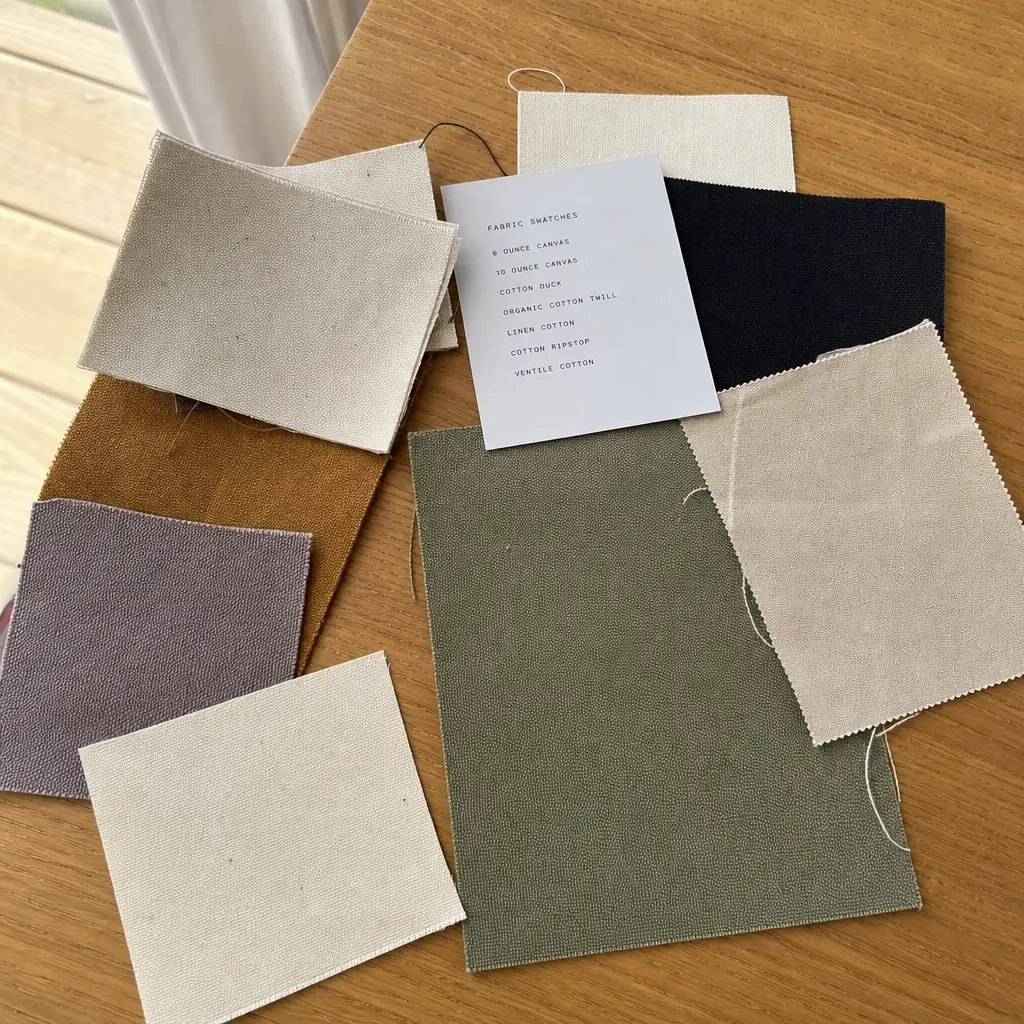
Print proofing for cotton drawstring backpacks starts with the physical bag spec, not the logo file. A grocer program may look simple on a purchasing spreadsheet, but print results change when fabric weight, surface texture, sewing sequence, and drawstring channel size change. If the factory proofs artwork on a different cotton base than the one used for bulk production, the approved color and line sharpness can be misleading.
For natural grocers, the common target is a reusable cotton drawstring backpack that feels honest and practical rather than premium fashion. Most orders sit around 6 oz to 8 oz cotton canvas, roughly 200-270 GSM, with a finished size near 34 x 42 cm or 36 x 45 cm. If the bag is expected to carry glass bottles, packaged snacks, or small produce purchases, the lower corners and drawstring exits need reinforcement. Print proofing cannot compensate for a weak bag construction.
- State finished size in centimeters or inches, not only a reference photo.
- Name the fabric weight and whether it is plain weave cotton, canvas, or twill.
- Specify natural, bleached, dyed, organic, recycled, or conventional cotton.
- Confirm whether the logo is printed before or after sewing; most front-panel screen prints are easier before final sewing.
- Define the front print area clear of seams, eyelets, folds, and drawstring channel.
Choose cotton weight with print behavior in mind
Cotton drawstring backpacks for natural grocers are often bought to communicate low-plastic, local, organic, or community values. Natural unbleached cotton supports that message, but it is not a perfect white print base. Seed flecks, yarn variation, and warm beige undertones all affect how green, orange, brown, and black inks appear. A logo that looks sharp on coated paper may look softer on natural cotton.
Fabric weight also changes ink absorption. A 4 oz promotional cotton may be inexpensive, but it can be semi-transparent, wrinkle easily, and distort more during sewing. An 8 oz canvas holds shape better and gives a more substantial retail feel, but freight weight and carton volume increase. For large grocery chain rollouts, the right decision is usually not the heaviest fabric; it is the lightest fabric that still passes carrying, print, and brand-perception requirements.
- 4-5 oz cotton: lower cost, suitable for very light giveaways, higher risk of show-through and creasing.
- 6 oz cotton: common balance for promotional backpacks and store event bags.
- 8 oz cotton canvas: better structure and reuse value, higher material and freight cost.
- 10 oz cotton canvas: durable but may be too stiff and costly for broad grocery promotions.
- Natural cotton: attractive for eco messaging but must allow visible flecks and shade movement.
Match the print method to the grocer artwork
Screen printing remains the safest method for most cotton drawstring backpack orders because grocer artwork is usually bold: store name, leaf mark, farm icon, slogan, or loyalty program badge. Screen printing gives good opacity and predictable repeatability when the artwork uses solid colors. For natural cotton, white ink underbases and light ink colors need extra attention because cotton absorbency can reduce brightness.
DTF, heat transfer, and digital methods can solve gradient or full-color artwork, but they introduce different risks. A transfer on a soft cotton backpack can feel plastic if the film is thick. It may also crease along fold lines if the bags are compressed tightly in cartons. Before using transfers for a natural grocer program, compare hand-feel, edge durability, and color consistency after rubbing and folding. Do not choose a method only because it accepts a complex file.
- Use screen print for solid logos, short slogans, and 1-4 color graphics.
- Use a water-based ink when a softer hand-feel is more important than maximum opacity.
- Use plastisol or higher-opacity systems where bold white or saturated color is required, after hand-feel approval.
- Use DTF or heat transfer only when detail or gradients justify the different surface feel.
- Avoid very fine reverse text under 1.5 mm stroke width on coarse cotton unless the factory proves it with a strike-off.
Build the proof around measurable acceptance criteria
A print proof should not be approved with comments like “looks good” or “make logo centered.” Those comments are hard for a production line to follow. Procurement teams should convert brand expectations into measurable acceptance criteria: logo width, distance from top seam, center tolerance, Pantone target, allowed pinholes, and registration tolerance between colors.
For cotton backpacks, some variation is normal because fabric is cut and sewn, not molded. The practical target is to define which variation is acceptable for retail distribution and which defects require sorting or rework. A common workable placement tolerance for a front print may be plus or minus 5 mm from the approved position, depending on bag size and print area. Multi-color registration may need a tighter tolerance if outlines are visible. The factory should confirm what it can hold before bulk printing.
- Print size: approve exact width and height, for example 220 mm wide x proportional height.
- Placement: measure from top seam or drawstring channel, not from a loose fabric fold.
- Color: reference Pantone coated or uncoated, then approve the cotton strike-off as the production master.
- Registration: define maximum visible offset for multi-color prints, often 1-2 mm depending on artwork.
- Defects: define maximum acceptable pinholes, ink smears, ghosting, stains, and broken edges per unit.
Use a three-step sample path for lower reprint risk
The safest approval flow is blank construction sample, print strike-off, then pre-production sample. The blank sample confirms body size, fabric weight, drawstring function, reinforcement, label position, and general sewing quality. The print strike-off proves ink, color, line sharpness, and hand-feel on the correct cotton surface. The pre-production sample combines both and becomes the factory reference before cutting and printing bulk fabric.
Some buyers try to save time by approving a digital mockup and moving straight to bulk. That is risky for natural cotton because the base color and texture shift the print result. It is also risky when the artwork includes small text such as store locations, QR codes, nutrition campaign language, or sponsor marks. If a barcode or QR code is required, the proof must be scanned from the printed cotton sample, not only verified in the PDF.
- Blank sample review: size, GSM, seam strength, drawstring length, channel opening, and corner reinforcement.
- Strike-off review: color, opacity, ink edge, rub resistance, and artwork detail.
- Pre-production sample review: final placement, sewing sequence, label, folding method, and packing sample if needed.
- Approval record: sign the physical sample or document it with dated photos and measured dimensions.
- Bulk release: allow production only after all artwork, fabric, and packing comments are closed.
Understand MOQ logic before splitting designs
For cotton drawstring backpacks, MOQ is not only a sewing quantity. It is affected by fabric purchase, fabric dyeing, screen setup, printing line efficiency, label production, carton marking, and inspection time. A single natural cotton base with one screen print design may have a much lower practical MOQ than five dyed fabric colors with separate regional logos.
Natural grocer programs often need store openings, seasonal campaigns, member events, or distributor-specific versions. If every version uses a different ink color or print size, the supplier may need separate screens and setup for each design. A quote that looks inexpensive at 5,000 pieces can become less attractive when split into ten designs of 500 pieces. Procurement should make the split clear in the RFQ instead of asking for only a total order quantity.
- List total quantity and quantity per artwork version.
- Separate body fabric color from print color; each can create minimums.
- State whether labels, hangtags, or UPC stickers change by region or customer.
- Request setup charges per screen, per color, and per design instead of hiding them in unit price.
- Ask whether repeat orders can reuse screens or require new setup after a storage period.
Compare quotes using cost drivers, not just unit price
A low unit price may come from lighter cotton, smaller finished size, thinner cord, fewer stitches, lower-opacity ink, or looser packing requirements. Those differences matter for grocery buyers because the bag is handled by consumers in-store, carried outside, and often reused. The quote should show the real specification behind the price so your team can compare like with like.
For landed cost, carton volume can be as important as material cost. Cotton drawstring backpacks are usually flat and efficient to pack, but heavy fabric, bulky cords, and individual polybags can increase carton size. If the program ships by air for a store opening, a heavier fabric can change the economics quickly. For ocean freight, pallet configuration and carton strength matter more. Quote data should help the logistics team calculate, not guess.
- Unit price basis: EXW, FOB port, or delivered warehouse estimate.
- Material included: fabric GSM, cord type, eyelets or reinforced corners, label, and print method.
- Setup costs: screens, films, sample fees, lab dips, dye charges, and special packing charges.
- Carton data: pieces per carton, carton size, gross weight, net weight, and CBM.
- Commercial terms: payment schedule, sample charge refund policy if any, and validity period of quote.
Set sewing and print QC thresholds before production
Cotton drawstring backpacks have two quality zones: the printed front panel that buyers notice first, and the load-bearing corners that fail first. QC must cover both. A beautiful logo on a bag with weak lower corners will still create complaints. A strong bag with off-center print will fail brand review. The factory inspection plan should include fabric, print, sewing, packing, and carton labeling checks.
For most wholesale programs, inspection can follow an AQL-style sampling approach, but the defect definitions should be product-specific. A small thread end may be minor. A broken drawstring, missing cord, badly tilted print, oil stain, mold odor, or unreadable logo is major. Critical issues include contamination, sharp metal fragments, severe mildew, or wrong brand artwork. These categories should be agreed before inspection, not negotiated after defects are found.
- Measure finished bag size flat after sewing; cutting size is not enough.
- Pull-test drawstring exits and bar tacks by hand during inline and final inspection.
- Check print adhesion by dry rub and light scratch; add damp rub if the bag may contact produce moisture.
- Inspect natural cotton for stains separately from normal seed flecks.
- Open random cartons to verify count, mixed designs, carton marks, odor, and moisture protection.
Plan packing for warehouse and store distribution
Packing decisions affect both cost and store execution. Bulk flat packing is usually enough for distributor or grocer warehouse delivery. Individual polybags add labor, material, and waste, and may conflict with a natural grocer’s plastic-reduction message. If individual presentation is required, consider paper belly bands, recyclable sleeves, or carton-level separation instead of default polybagging.
Carton quantity should balance handling efficiency and carton weight. A carton of 100 light cotton backpacks may be manageable, while 100 heavy canvas units with thick cords can exceed comfortable lifting weight. If the order includes several store allocations, inner packs and labels reduce receiving errors. The buyer should provide the exact carton mark format and any retailer compliance labels before production packing starts.
- Confirm folded size and whether the printed face touches another printed face inside the carton.
- Use carton liners or moisture protection when shipping natural cotton in humid seasons.
- Avoid over-compression that can create hard creases through large ink areas.
- Request carton dimensions and gross weight before booking freight.
- For store allocations, define inner pack quantity, SKU label, store code, and carton numbering format.
Protect the schedule with approval gates
Lead time for cotton drawstring backpacks depends on material availability, sample approvals, print complexity, order size, and packing requirements. A simple natural cotton screen-printed backpack can move faster than a dyed fabric program with multiple designs, but timing still depends on buyer approvals. The most common schedule problem is not sewing speed; it is artwork revision after screens are made or color complaints after bulk printing starts.
A realistic timeline separates factory work from buyer review time. Artwork checking, sample making, international sample shipping, buyer feedback, revised proofing, bulk fabric preparation, printing, sewing, inspection, and packing all need space. If the program is tied to a store opening or seasonal promotion, build a final artwork freeze date. After that date, changes should be treated as a cost and schedule revision, not a normal comment.
- Artwork freeze: final vector file, Pantone references, print size, and placement.
- Sample gate: blank sample and strike-off approved before pre-production sample.
- Material gate: fabric stock or dye lot confirmed before bulk cutting.
- Production gate: pre-production sample approved before mass printing and sewing.
- Shipping gate: final carton data, shipping marks, and inspection plan approved before packing completion.
Specification comparison for buyers
| Spec decision | Recommended option | When it fits | Buyer risk to check |
|---|---|---|---|
| Fabric weight for grocery promotions | 6 oz to 8 oz cotton canvas, approximately 200-270 GSM | In-store giveaways, loyalty kits, produce-themed campaigns, and light daily reuse | Too light may show contents and wrinkle badly; too heavy can push freight cost and feel stiff on the shoulder |
| Fabric color for natural grocer branding | Natural unbleached cotton with controlled shade range, or dyed cotton with lab dip approval | Eco-positioned campaigns where a natural base color supports the brand message | Natural cotton has seed flecks and lot-to-lot shade movement; do not approve color from a screen image only |
| Print method for front logo | Screen print for 1-4 solid colors; water-based or low-hand-feel plastisol depending on artwork | Most grocer logos, farm icons, store opening graphics, and simple campaign art | Fine reverse text, thin lines, and large ink coverage can lose sharpness on cotton texture |
| Print method for full-color art | DTF or heat transfer only after wash, rub, and hand-feel review | Limited runs, detailed illustrations, or artwork with gradients that cannot be separated cleanly | Transfers can feel like a patch and may crack if low-grade film or poor pressing conditions are used |
| Drawstring and corner construction | Cotton rope or braided cord with reinforced bottom corners and bar tacks | Reusable shopper backpack where buyers expect more than a one-day promo bag | Thin cord cuts into shoulders; weak corner stitching fails when consumers carry bottles or dense grocery items |
| Sample approval path | Blank size sample, print strike-off, then pre-production sample using bulk fabric | Orders with chain-store logo rules or distributor resale requirements | Skipping the strike-off may hide registration, ink absorption, or Pantone mismatch until bulk production |
| Packing format | Flat packed 50-100 pcs per export carton with carton liner and master carton marks | Warehouse receiving, palletized distribution, and store-by-store allocation | Over-compressed packing can crease heavy ink areas; mixed SKUs need clear inner labels to avoid store shortages |
| MOQ logic | MOQ by fabric availability, print color setup, and size/style combination rather than one headline number | Multi-store natural grocer programs with several logo versions or seasonal art | A low unit MOQ may still carry high screen charges, dye minimums, or split-carton handling costs |
Buyer checklist before sampling
- Lock the finished backpack size, fabric GSM, drawstring type, corner reinforcement, and seam allowance before approving artwork placement.
- State whether the cotton must be natural, bleached, dyed, organic, recycled, or conventional; do not let the supplier quote an undefined cotton base.
- Provide vector artwork, Pantone references, print size in millimeters, logo position from top and side seams, and acceptable color tolerance.
- Request a print strike-off on the same or equivalent fabric weight, not only a paper proof or digital mockup.
- Define acceptance criteria for pinholes, ink bleeding, registration, off-center placement, and hand-feel before bulk printing starts.
- Review drawstring channel width and cord diameter together; a thick cord in a narrow channel slows packing and causes poor closure.
- Confirm carton quantity, folded size, carton dimensions, gross weight, carton marks, and whether store allocation labels are needed.
- Separate one-time setup costs from unit price in the quote so future replenishment pricing is not misunderstood.
- Build approval time into the schedule: artwork confirmation, strike-off review, pre-production sample, bulk cutting, printing, sewing, inspection, and packing.
- Keep one signed or photographed approved sample and require the factory QC team to match bulk production against that reference.
Factory quote questions to send
- What cotton fabric weight, construction, and estimated GSM are included in your quoted price, and is the fabric in stock or woven to order?
- Is the quoted fabric natural cotton, bleached cotton, dyed cotton, organic cotton, recycled cotton, or conventional cotton?
- What is the finished size tolerance for the backpack body, drawstring channel, cord length, and print placement?
- Which print method are you quoting, how many colors are included, and are screen charges, film charges, or transfer setup charges separated?
- Can you provide a print strike-off on cotton fabric before the pre-production sample, and what is the sample lead time?
- What MOQ applies by fabric color, print design, size, and shipping mark if the order is split across several store regions?
- How many pieces are packed per carton, what are the estimated carton dimensions and gross weight, and can you support pallet-friendly packing?
- What inspection standard will you use for print defects, sewing defects, stains, broken drawstrings, and carton labeling errors?
- What information must be approved before bulk fabric cutting begins, and what changes would trigger a revised price or revised lead time?
- Can you quote FOB, EXW, and estimated packed CBM so our logistics team can compare landed cost accurately?
Quality-control points to confirm
- Fabric weight should be checked against the approved GSM range using a cut swatch, not judged only by hand feel.
- Finished bag dimensions should be measured flat after sewing, with separate tolerances for width, height, channel opening, and cord length.
- Print color should be compared under consistent light against Pantone or approved strike-off, allowing for cotton base influence.
- Print placement should be measured from fixed seams, not from fabric edge distortion or the operator's visual center.
- Ink adhesion should pass basic dry rub and hand scratch review; for retail programs, include wash or damp rub testing if the bag is marketed as reusable.
- Corner reinforcement and bar tacks should be pull-checked because drawstring backpacks often fail first at the lower cord exits.
- Bulk cartons should be opened during inspection to verify packing count, folding direction, odor, moisture control, and mixed-design separation.
- Random units should be checked for stains, slubs, loose threads, needle holes, broken cords, mis-threaded drawstrings, and crooked labels.