Start MOQ Negotiation From The Real Show Requirement
MOQ negotiation for wholesale cotton drawstring backpacks works best when the buyer separates the event requirement from the nice-to-have specification. A trade show exhibitor usually needs a bag that looks organized at the booth, carries printed materials without tearing, arrives before the move-in date, and stays within a campaign budget. Those needs do not always require custom dyed fabric, uncommon cord colors, multiple print locations, or retail packaging.
Before discussing quantity, write the bag job in plain buying terms: what the attendee will carry, how long the bag must last, how visible the logo must be, and where the cartons will be delivered. A factory can often lower MOQ when the construction is stable and materials are easy to source. The same factory may refuse a small MOQ if the buyer wants custom fabric dyeing, special hardware, several sponsor logos, or individual barcode stickers.
- For brochure and flyer carrying, 6 oz cotton is often enough if the bag is not oversized.
- For product samples, notebooks, or drinkware, move toward 8 oz or 10 oz with stronger corner stitching.
- For a sponsor giveaway, print clarity may matter more than fabric thickness.
- For retail resale, fabric handfeel, shrinkage, color consistency, and label compliance become more important.
- For distributor stock, choose a repeatable standard size so reorders do not need full redevelopment.
Understand What Actually Creates MOQ
Many buyers treat MOQ as a fixed number, but for cotton drawstring backpacks it is usually a bundle of smaller minimums. Fabric purchasing, dyeing, screen setup, cutting efficiency, cord sourcing, label production, and carton printing can each create a separate threshold. If one part of the spec requires 1,000 pieces and the rest can run at 300 pieces, the negotiation should focus on that one part instead of pushing the whole quote down blindly.
A factory may accept a low MOQ on natural cotton because greige or finished natural fabric is easier to buy in small rolls. A custom body color can trigger dye house minimums. A custom woven label can have its own MOQ. A four-color screen print creates more setup work than a one-color logo. When the supplier explains the MOQ driver clearly, the buyer can decide whether to change the spec, pay a surcharge, or combine several orders under one production lot.
- Fabric MOQ: usually affected by cotton weight, width, color, and whether fabric is in stock.
- Dyeing MOQ: often the largest blocker for custom body colors or exact brand shades.
- Printing MOQ: driven by screens, ink mixing, artwork complexity, and drying space.
- Sewing MOQ: linked to line setup, cutting markers, size changes, and packing style.
- Accessory MOQ: cord color, eyelets, woven labels, hangtags, and printed polybags can each change the number.
Choose Fabric Weight Before You Push Price
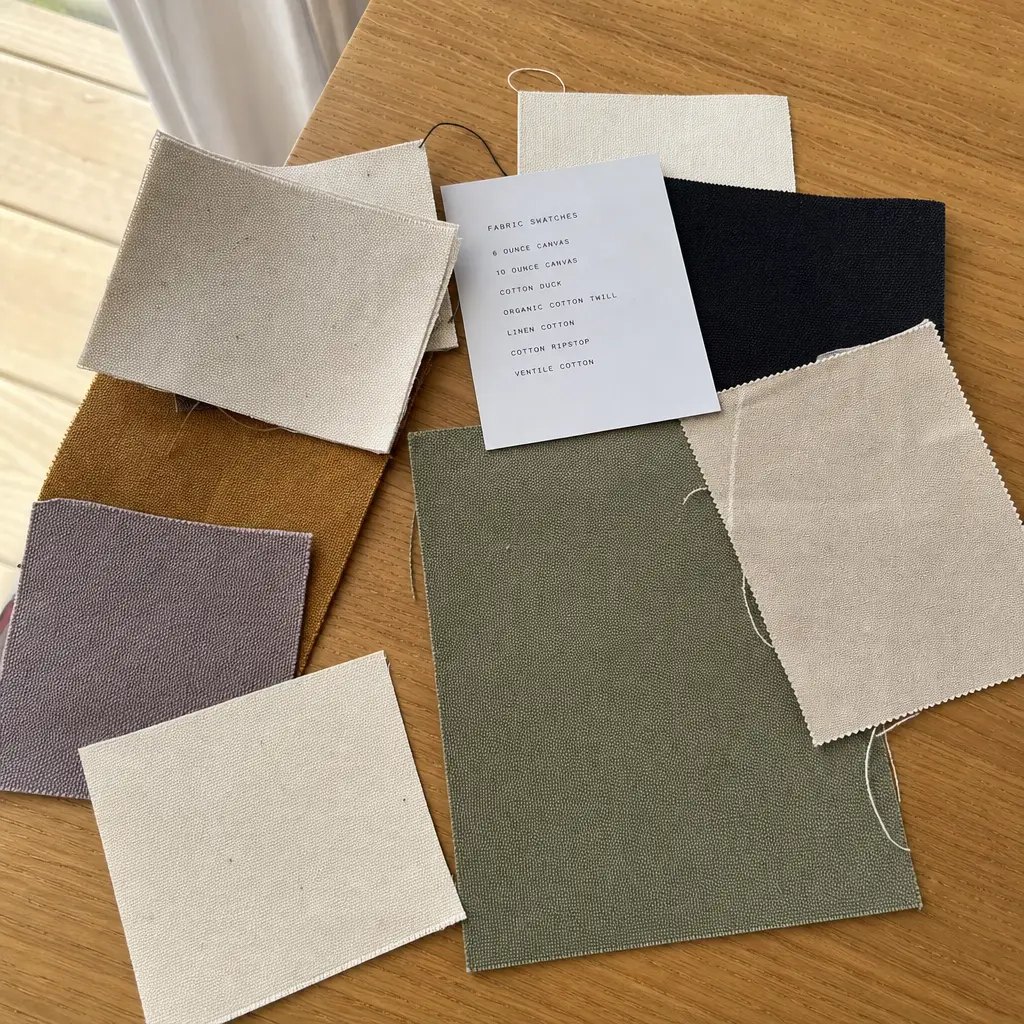
Cotton drawstring backpacks are often quoted with vague fabric descriptions such as cotton, canvas, thick cotton, or eco cotton. Those words are not enough for procurement. Put the fabric weight into the RFQ as oz or GSM. A common trade show giveaway may use 5 oz to 6 oz cotton, around 170-200 GSM. A more substantial exhibitor backpack is often 8 oz, around 270 GSM. Heavy canvas versions can reach 10 oz or 12 oz, but freight and sewing cost will rise.
The commercial trap is simple: one supplier quotes 6 oz and another quotes 8 oz, then the buyer compares the two unit prices as if they are the same product. The cheaper quote may not be cheaper after quality complaints, rework, or a bag that feels too thin for the brand. A practical RFQ states the target GSM, acceptable tolerance, fabric finish, and whether natural cotton slubs are acceptable.
- 5 oz to 6 oz cotton: light giveaway, lower freight, not ideal for heavy catalogs.
- 8 oz cotton canvas: stronger handfeel, good for most exhibitor backpacks, still manageable for bulk freight.
- 10 oz cotton canvas: better for premium kits, heavier samples, or reuse after the show.
- Natural cotton: lower MOQ potential, visible cotton seed specks may be normal unless bleached fabric is specified.
- Dyed cotton: better brand control, higher MOQ and longer approval cycle.
Control Print Method And Logo Risk
For cotton drawstring backpacks, logo decoration is not just a design choice. It affects MOQ, sample time, rejection risk, and how professional the exhibitor looks on the show floor. Screen printing is usually the practical choice for one to three solid colors. It gives good opacity on cotton, works well on flat panels, and is cost effective for bulk. Heat transfer can handle gradients, small text, or sponsor artwork with many colors, but the buyer must confirm handfeel, edge bonding, and wash resistance.
Embroidery is possible but less common for lightweight drawstring backpacks because it can pull the fabric, add cost, and create backing inside the bag. If the logo area is large, the print position must be tested on the real bag panel before bulk production. Cotton texture can break very fine lines, and natural fabric color can shift the appearance of white, yellow, or light grey ink.
- Use screen print for bold booth logos, simple sponsor marks, and strong color blocks.
- Use heat transfer when artwork has gradients, photo elements, or many small color separations.
- Avoid very small legal text on rough cotton unless the supplier proves it with a strike-off.
- State logo size in millimeters and print position from top edge or bottom edge.
- Approve print on the actual fabric weight, not on a separate paper proof.
Negotiate MOQ Without Damaging The Product
The best MOQ negotiation gives the factory room to simplify production while keeping the buyer-facing value intact. If the factory needs 1,000 pieces for a custom dyed 8 oz cotton backpack, a buyer may get to 300 or 500 pieces by accepting natural fabric, using black or natural cord, choosing a standard size, and limiting the logo to one screen print location. That is a clean negotiation because the attendee still receives a usable cotton backpack.
A poor MOQ negotiation removes hidden quality: thinner fabric, shorter drawcords, weak bottom corners, loose stitch density, or rushed print curing. Those changes are not always visible in the quotation line, but they show up at the booth. Buyers should negotiate with a value ladder: first adjust custom materials, then decoration complexity, then packing, and only last consider reducing fabric weight or construction strength.
- Good concession: use the factory standard size if it fits the show materials.
- Good concession: use natural cotton instead of custom dyed fabric.
- Good concession: combine several exhibitor designs with the same bag body and different prints.
- Risky concession: reduce fabric weight below what the bag must carry.
- Risky concession: remove reinforcement where drawcords take load.
- Risky concession: approve production without a physical print strike-off.
Read Supplier Quotes Like A Cost Engineer
A useful quote for wholesale cotton drawstring backpacks should show more than unit price. Procurement needs to know what is included, what is excluded, and which assumptions can change after sample approval. A low unit price with missing carton data, unclear fabric weight, or vague sample cost is not a clean quote. It is an unfinished quote.
Ask the factory to separate the major cost drivers. The buyer does not need the supplier's full internal costing, but enough structure is necessary to compare offers fairly. Fabric weight, logo method, number of colors, packing, carton quantity, and lead time all affect price. For trade show orders, carton data is especially important because urgent air freight or show-site handling can make a cheap FOB quote expensive.
- Quote basis: FOB port, EXW, CIF, DDP, or another Incoterm must be stated.
- Fabric: weight, color, finish, and tolerance should be written in the quote.
- Decoration: setup charge, number of screens, print size, and print location should be listed.
- Packing: pieces per carton, carton dimensions, gross weight, and inner packing method should be shown.
- Samples: sample cost, express cost, sample lead time, and approval process should be clear.
- Validity: quote validity period matters if cotton price or freight conditions are unstable.
Use Samples To Lock The Commercial Standard
The sample stage is where MOQ savings can be protected from becoming quality loss. A buyer should not approve a cotton drawstring backpack only by photo unless the order is extremely low risk. The physical sample confirms fabric handfeel, panel size, drawcord length, logo edge quality, stitch density, and whether the bag mouth opens smoothly. For cotton bags, it also shows natural slubs, wrinkles, and print absorption.
There are usually three useful sample types. A material swatch confirms fabric and cord. A print strike-off confirms artwork on the selected fabric. A pre-production sample confirms the complete bag before bulk production. For tight trade show schedules, the buyer may combine steps, but the approval record still needs written comments and photos so the factory knows what is locked.
- Measure finished width and height flat, then compare with the RFQ tolerance.
- Load the sample with the expected show contents for a practical pull test.
- Pull both drawcords several times to test channel friction and corner stress.
- Rub the printed logo lightly after curing to detect poor adhesion or under-cured ink.
- Photograph approved sample details: fabric, cord ends, print position, seams, label, and packing.
- Keep the approved sample for incoming inspection or third-party final inspection.
Packing Decisions Affect MOQ, Freight, And Presentation
Cotton drawstring backpacks for exhibitors are usually flat packed in export cartons. Some buyers require one piece per polybag for clean handling at the booth, while others avoid individual plastic and use bulk packing. Bulk packing reduces material and labor cost, but it requires clean cartons and careful compression. Individual packing improves distribution control but adds cost, packing time, and sometimes a separate MOQ for printed warning bags or barcode stickers.
Packing is also part of landed cost. A thicker 10 oz bag may look better, but carton gross weight and carton volume increase. If the order must ship by air to meet a fixed show date, the freight impact can be larger than the unit price difference between two factories. For exhibitor logistics, carton marks should include item code, quantity, gross weight, net weight, carton number, and destination reference if needed by the show warehouse.
- For direct booth distribution, consider inner bundles of 25 or 50 pieces for easier counting.
- For distributor pick-pack, barcode labels or SKU stickers may be worth the extra setup.
- For sea freight, carton strength and moisture protection matter more than minimum carton size.
- For air freight, compare chargeable weight using carton dimensions, not only gross weight.
- For printed cotton bags, avoid packing before ink is fully cured to prevent blocking or transfer marks.
Plan Lead Time Around Approval Dates, Not Order Date
Trade show orders fail when buyers count lead time from purchase order date but the factory counts from deposit, artwork confirmation, material approval, and sample sign-off. For cotton drawstring backpacks, the timeline can include fabric purchase, dyeing if required, cutting, printing, curing, sewing, trimming, inspection, packing, and cargo handover. A simple natural cotton screen printed bag may move quickly; a dyed fabric order with several logo versions will not.
The RFQ should include the required delivery point and the latest acceptable arrival date. If cartons must go to an advance warehouse, show decorator, hotel, or distributor, the deadline may be earlier than the show opening. Procurement should build a small buffer for sample courier delays, artwork revisions, inspection findings, and customs handling. MOQ negotiation is less useful if the smaller order loses production priority because dates were not locked.
- Separate sample lead time from bulk production lead time.
- Confirm whether lead time starts after deposit, artwork approval, sample approval, or material arrival.
- Build extra days for custom dyeing, lab dips, and strike-off approval.
- Reserve inspection time before cargo handover, especially for first orders.
- Avoid changing artwork after screens are made unless cost and schedule impact are accepted in writing.
Set Inspection Thresholds Before Production Starts
Cotton fabric has natural character, but that does not mean every defect is acceptable. The buyer and factory should agree on which issues are normal and which are rejectable. Small cotton seed specks on natural fabric may be acceptable. Oil stains, mildew smell, holes, broken seams, wrong print color, and severe logo misplacement are not. A written inspection standard prevents arguments when the order is already packed.
For exhibitor backpacks, functional inspection matters as much as appearance. The bag should hold the expected contents without the bottom corner opening or the drawcord channel tearing. Stitching should be secure at stress points. Logo position should be consistent enough for booth staff to distribute the bags without sorting them. If the buyer uses a third-party inspection company, the approved sample and quote specification should be shared with the inspector before the visit.
- Use AQL or another agreed sampling plan for bulk inspection if the order size justifies it.
- Classify critical defects: mold smell, safety risk, wrong logo, wrong item, broken seam under normal use.
- Classify major defects: visible stains, print cracking, severe skew, wrong size beyond tolerance, missing label.
- Classify minor defects: small loose thread, slight cotton slub, small wrinkle that can be steamed or pressed.
- Define carton shortage rules and replacement responsibility before final payment.
Specification comparison for buyers
| Spec decision | Recommended option | When it fits | Buyer risk to check |
|---|---|---|---|
| Fabric weight for exhibitor giveaways | 6 oz to 8 oz cotton canvas, approximately 200-270 GSM | Good balance for brochures, light catalogs, small gifts, and badge holders without making freight too heavy | Very low quoted prices may use thin 4 oz fabric that wrinkles, shows contents, and feels too promotional for a brand booth |
| Fabric weight for heavier event kits | 10 oz cotton canvas, approximately 330-340 GSM, with reinforced bottom corners | Useful when the bag must carry drinkware, notebooks, product samples, or retail-style merchandise | MOQ and unit cost rise because fabric consumption, sewing time, and carton weight all increase |
| MOQ negotiation route | Use greige or stock natural fabric with standard cord colors | Best path when order quantity is below normal dyeing or custom material minimums | Do not accept a low MOQ if the factory quietly changes fabric width, weight, cord quality, or seam construction |
| Logo decoration | Screen print for 1-3 solid colors; heat transfer for gradient or small detail | Screen print is usually stronger for trade show quantities and cotton texture; transfer helps complex sponsor artwork | Require a print strike-off because cotton texture, ink coverage, and logo edge sharpness change the finished look |
| Drawcord material | Cotton cord or flat cotton tape for a more natural look; polyester cord for lower cost and smoother pull | Cotton cord suits eco-positioned campaigns, retail promotions, and natural fabric colors | Cotton cord may shrink or fray more than polyester if the end finishing and washing control are weak |
| Supplier option for small runs | Factory using standard body size, natural fabric, and existing cord inventory | Suitable for pilot trade shows, distributor samples, and mixed campaign forecasts | The factory may reserve production priority for larger orders unless lead time and approval dates are written clearly |
| Supplier option for strict brand color | Factory with in-house or close partner dyeing and lab dip control | Needed when bag body, cord, or print must match a brand color system across multiple items | Custom dye lots often create higher MOQ, longer lead time, and shade variation between bulk fabric rolls |
| Packing method | Flat packed 50-100 pieces per export carton with inner polybag only if required | Works for exhibitor logistics where cartons are sent to show decorators, warehouses, or distributor pick-pack centers | Over-compressed cartons can crease cotton panels and damage print if ink curing and packing timing are not controlled |
Buyer checklist before sampling
- Define the real trade show use: brochure carrier, sponsor giveaway, retail gift with purchase, or heavy sample kit.
- State target fabric weight in GSM or oz, not only the word cotton or canvas.
- List finished bag size, drawcord type, reinforcement points, seam allowance, and tolerance range.
- Separate must-have requirements from negotiable items before discussing MOQ.
- Provide artwork size, print colors, Pantone references, print position, and expected print method if known.
- Request fabric swatch, print strike-off, and pre-production sample before releasing bulk production.
- Make the supplier quote show unit price, setup cost, sample cost, tooling cost if any, packing method, carton data, and lead time.
- Confirm whether MOQ is driven by fabric purchasing, dyeing, printing setup, sewing line efficiency, or packing material.
- Compare landed cost by carton volume and weight, not only FOB unit price.
- Lock approval deadlines, bulk production days, inspection date, and cargo handover date against the show arrival requirement.
Factory quote questions to send
- What is your normal MOQ for this cotton drawstring backpack spec, and which part of the spec creates that MOQ?
- Can you offer a lower MOQ if we use natural cotton fabric, standard size, existing drawcord colors, and screen printing?
- What fabric weight in oz and GSM are you quoting, and what is the acceptable tolerance for bulk fabric weight?
- Is the fabric in stock, greige, dyed to order, or purchased after order confirmation?
- What print method do you recommend for this artwork on cotton, and what is the maximum print area without distortion?
- What are the setup charges, screen charges, sample charges, and refund rules if bulk order is placed?
- How many days are needed for fabric preparation, sample approval, bulk sewing, printing, final inspection, and packing?
- What is the expected carton size, gross weight, net weight, and pieces per carton for the quoted packing plan?
- Can you provide photos or a short video of similar cotton drawstring backpacks from your production line, without claiming named client references?
- What inspection standard do you use for print defects, stains, loose threads, broken eyelets, seam strength, and size tolerance?
Quality-control points to confirm
- Fabric weight should match the approved swatch within the agreed tolerance, commonly plus or minus 5% for cotton canvas unless a stricter rule is written.
- Finished size should stay within the agreed tolerance, often plus or minus 1 cm for length and width on sewn cotton bags.
- Print position should be centered within the agreed tolerance, commonly plus or minus 5 mm for standard front logo placement.
- Logo color should be compared against approved strike-off under consistent light, not judged only from mobile phone photos.
- Drawcords should pull smoothly through the top channel without tearing stitches, binding, or uneven cord length.
- Bottom corner reinforcement should withstand practical loading for the intended show kit weight.
- Seams should have secure backstitching, no open seams, no skipped stitches, and no long loose thread ends on visible areas.
- Panels should be free from heavy stains, oil marks, mildew smell, fabric holes, and obvious slub clusters outside the approved fabric character.
- Printed panels should not be packed before curing is complete, especially for large solid logos or dark ink on natural cotton.
- Carton marks, quantity per carton, and packing orientation should match the final packing approval.