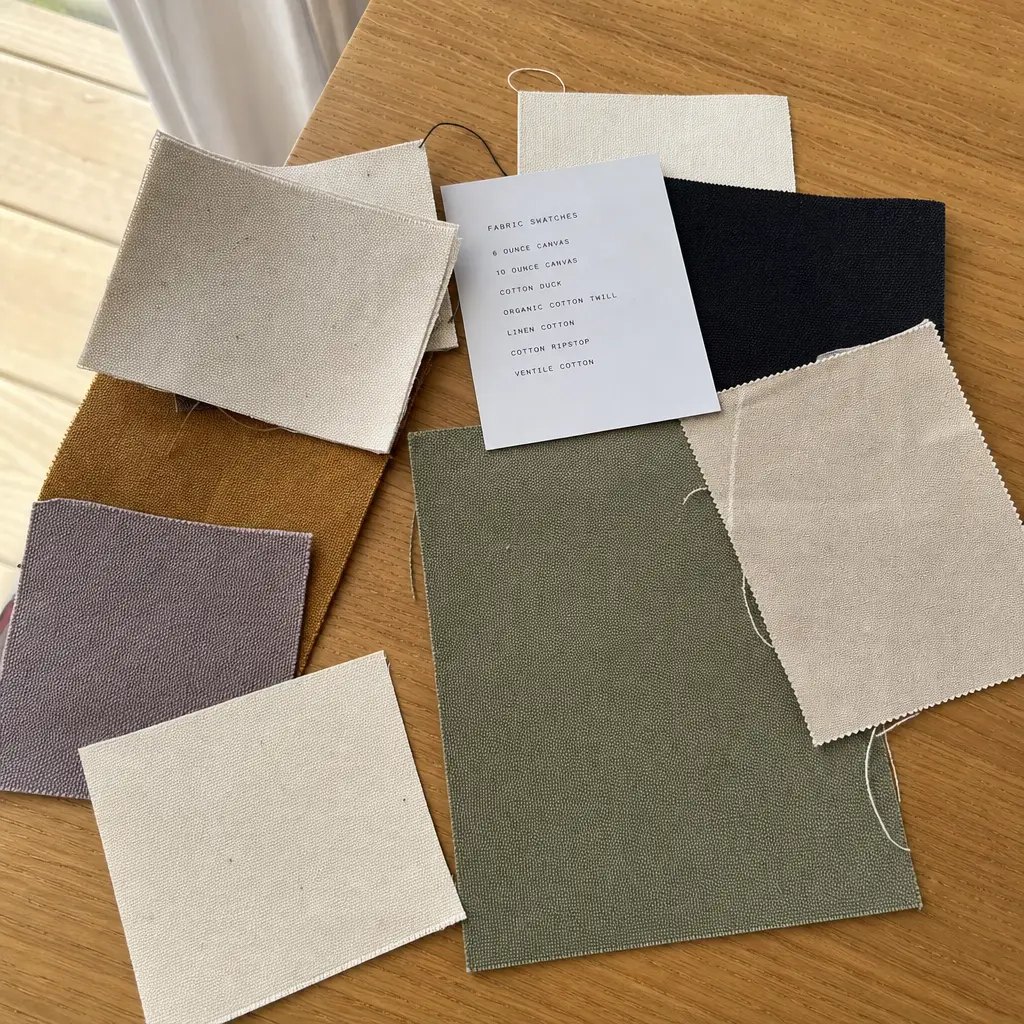
Why MOQ negotiation matters for startup buyers ordering cotton drawstring backpacks
Cotton drawstring backpacks look simple, but they become a multi-variable sourcing item the moment a buyer moves beyond a generic stock bag. A plain natural cotton bag with one print, no label, and bulk carton packing is one production route. A dyed bag with a precise logo position, custom side label, barcode sticker, insert card, and split-shipment carton marks is another. The silhouette is the same, but the factory workload is not.
That is why MOQ negotiation matters so much for tech startups. Early-stage teams often want low inventory exposure, yet they also care about launch timing, brand consistency, and unboxing quality. A supplier may agree to a low quantity to win the order, then recover margin through thinner fabric, looser stitch control, cheaper cords, or undefined packing assumptions. The result is not a smarter buy. It is a riskier buy that creates internal friction when marketing, operations, or fulfillment teams discover the gaps.
For procurement, the goal is not simply to force the smallest number. The better goal is to secure the lowest quantity that still supports stable sourcing, repeatable construction, and a realistic schedule. That means understanding what actually drives the minimum: fabric procurement thresholds, print setup work, labor for custom packing, and line efficiency. Once those drivers are visible, you can negotiate the order structure instead of arguing over units alone.
This product sits at the intersection of marketing and operations. It may be used for conferences, onboarding kits, ecommerce gift-with-purchase programs, or retail tests. In each case, the buyer must balance presentation, durability, and landed cost. MOQ discussions should therefore start with use case and specification discipline, not with an arbitrary quantity target.
- Low MOQ only helps if the supplier can keep fabric and construction consistent.
- The best negotiation lever is often lower complexity, not lower quality.
- Startup orders fail when branding requirements are added after the first quote.
- A clean first order usually creates better repeat pricing than a rushed one.
Choose the exact product specification before discussing quantity
Most MOQ problems begin when the buyer asks for pricing before defining the actual bag. Suppliers then quote their easiest assumption: stock natural fabric, a standard size, one simple print, and bulk packing. When the buyer later adds dyed fabric, a different cord, a woven label, or retail prep, the MOQ rises and the original quote becomes unusable. For cotton drawstring backpacks, specification discipline is the foundation of a useful negotiation.
Start with bag construction. Define the finished width and height, whether the top channel is single-fold or double-fold, whether the bottom corners need reinforcement, and whether the drawcord exits through stitched openings, eyelets, or reinforced loops. For a startup giveaway carrying brochures or soft goods, a simpler construction may be sufficient. For bags expected to hold chargers, water bottles, shoes, or welcome-kit hardware, reinforcement details matter much more.
Fabric selection is the next major variable. In practical buying terms, 140-160 GSM can work for light promotional use where low shipping weight matters and the bag is not expected to carry heavy loads repeatedly. The tradeoff is a softer hand feel, more wrinkling, and less resistance at stress points. In the 180-200 GSM range, the bag usually presents better, feels more substantial, and supports repeated opening and closing more reliably. That range is often a stronger fit for tech startups that want the product to feel intentional rather than disposable.
Weave also matters. Cotton canvas can create a sturdier visual impression, but it usually adds body and weight. Cotton twill often gives a smoother print surface and cleaner drape, which can help logos reproduce more neatly. Neither is automatically better; the right choice depends on branding, budget, and expected use. The key is to define it before asking for MOQ concessions.
Finally, specify what is not included. If you are not asking for individual polybags, inserts, woven labels, or hangtags, state that clearly. Buyers often lose negotiating leverage because suppliers protect themselves against undefined extras. A complete RFQ removes ambiguity and allows a more precise MOQ discussion.
- Define finished size and tolerance before any unit-price comparison.
- Choose GSM based on actual load and reuse expectations, not only on target cost.
- Clarify whether corners need reinforcement, eyelets, bartacks, or patches.
- State excluded add-ons so suppliers do not build hidden contingency into the quote.
How factories really calculate MOQ on cotton drawstring backpacks
Factories rarely set MOQ as one universal number. Instead, MOQ is built from production change points. A supplier may be comfortable sewing a few hundred plain bags if they can use stock natural fabric already on hand and run a one-color screen print on an existing line schedule. The same factory may require a much higher quantity once a buyer asks for custom-dyed fabric, multiple logo colors, a woven label, and individual barcode packing. In other words, the visible product shape is not what sets MOQ; the process burden does.
Fabric sourcing is often the first hard limit. If the factory must book a dye lot or purchase a fabric run specifically for your order, the real minimum may be tied to the mill rather than the sewing line. That matters for startups because a low-seeming sewing MOQ can still hide a larger fabric commitment. Ask whether the quoted bag uses stock greige, stock natural fabric, a newly dyed lot, or a made-to-order weave. Each route changes both flexibility and repeatability.
Print setup is the second major driver. Screen printing can be economical at volume, but small orders still carry setup work: screen preparation, color matching, test pulls, and line cleaning. A supplier may lower MOQ if you move from a two-position print to one position, or from three-color artwork to a single-color logo. This is where smart buyers gain leverage by simplifying artwork rather than pushing labor margin below a viable level.
Labels and packing also create hidden minimums. A woven side label may seem minor, but if it requires custom loom setup or outside sourcing, it can influence the workable order size. Retail-ready packing often introduces separate labor planning, barcode management, and carton assortment complexity. These are small-looking changes that can materially alter the supplier’s preferred quantity.
When comparing quotes, ask for process-level visibility. If one supplier says the MOQ is 500 and another says 2,000, the useful question is not which one is cheaper. The useful question is what assumptions sit under each number. Does the lower MOQ assume stock fabric? Does the higher MOQ include custom color and barcode packing? Without that breakdown, you are not comparing like with like.
- Fabric source can determine the real floor quantity more than sewing capacity does.
- Print setup burden increases quickly with colors, positions, and artwork revisions.
- Custom labels and retail packing often create separate minimums beyond the bag body itself.
- A low MOQ quote only helps if the supplier states what assumptions make it possible.
Negotiation strategies that lower MOQ without weakening quality
The safest way to negotiate MOQ on cotton drawstring backpacks is to remove complexity from the first order, not to squeeze the supplier into underpricing the same complexity. Procurement buyers usually get better results by asking, 'What specification changes would let you accept this quantity while keeping the same fabric and sewing quality?' That question reframes the negotiation around manufacturability instead of price pressure.
One of the strongest levers is SKU simplification. If you can move from multiple fabric colors to one core color, from front-and-back printing to a single print side, or from custom insert cards to bulk packing, the supplier may accept a smaller run because line changeovers and counting complexity fall sharply. This is especially useful for a pilot event, conference giveaway, or employee welcome pack where the primary objective is proof of concept rather than assortment depth.
Another practical strategy is to separate pilot needs from scale needs. A startup may only need 500-1,000 units for an initial event, but expect a higher repeat quantity once internal teams approve the item. In that case, buyers can negotiate a pilot order with a simplified spec and simultaneously ask for a repeat-order price ladder using the same approved construction. This gives the factory visibility into future potential without requiring the buyer to overcommit cash and inventory up front.
You can also negotiate around timing. If your ship date is flexible and the supplier can slot your order into an existing fabric or print schedule, workable MOQ may improve. That is not guaranteed, but it is a realistic discussion point. A rushed custom order usually reduces leverage; a stable spec with an early booking window often improves it.
Avoid the wrong concession. If a supplier offers to meet your MOQ only by changing to thinner fabric, lower stitch density, or weaker cords, that is not a successful negotiation. The short-term savings are often erased by a lower perceived quality, event-day failures, or internal disappointment when marketing compares the delivered goods to the approved sample.
- Simplify SKUs before asking suppliers to cut quantity.
- Trade decoration or packing complexity, not fabric strength, to gain MOQ flexibility.
- Use pilot-order plus repeat-order planning to improve first-round negotiations.
- Flexible timing can help more than aggressive price pressure.
Decoration choices: how print method and artwork affect MOQ, cost, and risk
Decoration is one of the most underestimated cost and MOQ variables in cotton drawstring backpack sourcing. Buyers often think in terms of logo only, while factories think in terms of process. The same logo can produce very different economics depending on whether it is screen printed, heat transferred, embroidered, or represented by a woven label. Each method changes setup work, line speed, visual result, and failure risk.
For most startup orders, one-color or two-color screen printing remains the most practical choice when the logo is simple and the order size is large enough to absorb setup. Screen print generally offers good unit economics, reliable color coverage, and a familiar finish for cotton bags. But buyers should still define key parameters: print size, exact location from edges or seams, ink color references where needed, and acceptable variation. A supplier cannot control alignment to your expectation if the artwork placement is described only as 'center front.'
Heat transfer can make sense for shorter runs or more complex graphics, but procurement teams should evaluate hand feel and durability honestly. Some transfers can create a stiffer patch on lighter fabrics, especially if the logo area is large or heavily inked. If the drawstring backpack is intended as a soft, natural-feel product, a large transfer may work against the desired tactile experience. That does not make the method wrong; it means the sample must be reviewed for feel as well as appearance.
Embroidery is often requested by tech brands seeking a premium look. It can work well for simple, bold artwork, but it adds stitch time, thread cost, and a real risk of puckering on lighter cotton constructions. Dense fills or small text can perform poorly. If embroidery is under consideration, ask the supplier to comment specifically on stabilizer use, expected puckering risk, and whether the chosen fabric weight supports the design cleanly.
Artwork simplification is a powerful negotiation tool. Thin lines, small reverse text, oversized solid fills, and tight registration requirements all raise production difficulty. If you simplify the logo before quoting, you often reduce both cost variability and rejection risk. In MOQ conversations, that can matter as much as the unit quantity itself.
For startup buyers, the key question is practical rather than aesthetic: what decoration method delivers the right brand impression at the first-order volume you can support? The best answer is usually the method that the factory can repeat reliably, not the one that looks most ambitious in a digital mockup.
- Specify print size and placement with measurements, not general descriptions.
- Test logo hand feel on the actual fabric, especially for transfers and large ink areas.
- Ask suppliers to flag artwork details that increase registration or puckering risk.
- Use simplified artwork on the first order to reduce both MOQ pressure and defect risk.
Samples and approvals: where startup buyers catch most avoidable problems
A serious MOQ negotiation is incomplete without a strong sample approval plan. For cotton drawstring backpacks, a digital mockup is only a brand-direction tool. It is not a production approval. Cotton texture, dye tone, seam tension, and logo feel all change in the real sample. Startup buyers who skip this step often think they are saving time, but they usually shift risk into bulk production where changes become expensive or impossible.
At minimum, ask for a pre-production sample made with the actual fabric category, actual cord, actual print method, and intended packing style. If the supplier says the sample uses substitute materials 'for reference only,' clarify exactly what differs. A substitute cord or sample-only heavier fabric can distort your expectations. The approved sample should represent what the factory can realistically repeat at your quantity and price level.
During sample review, measure key dimensions instead of relying on appearance alone. Check width, height, top channel depth, and cord length against the RFQ. Confirm that the logo sits where expected relative to seams and top opening. Open and close the bag repeatedly to test channel friction. Load the bag with a realistic weight based on end use, then inspect seam behavior at bottom corners and drawcord exit points. These checks are straightforward, but they reveal many of the issues that later become complaints.
Packaging should also be sampled when it matters. If you require polybags, barcode labels, insert cards, or destination carton marks, request them at pre-production stage. Too many buyers approve the bag only and leave packing details unresolved, then find out later that labels are misplaced, assortments are counted incorrectly, or cartons exceed 3PL handling preferences.
A disciplined approval trail helps negotiation as well. When the supplier knows the buyer will sign off against measurable criteria rather than general impressions, sample-to-bulk drift is less likely. This reduces the chance that a factory offsets a low MOQ with silent specification changes later in production.
For internal startup teams, one more rule helps: gather cross-functional approvals before production starts. Marketing may focus on logo look, operations on receiving, and HR or events teams on usability. Aligning those views at sample stage is easier than debating defects after goods arrive.
- Approve a physical pre-production sample, not a photo sample, for first orders.
- Measure size, cord length, and print location against the RFQ.
- Test bag function with realistic contents, not only visual inspection.
- Sample packing details if any 3PL, retailer, or event-fulfillment rule applies.
Packing, carton planning, and distribution requirements that can change the real buy
Packing is one of the most common blind spots in drawstring backpack sourcing. Buyers focus on unit price and ignore that many startup orders are not shipped to one simple warehouse location. They may go to a 3PL, event organizer, office manager, retailer, or multiple regional destinations. Once that happens, carton planning becomes part of the product cost structure, and in some cases part of the MOQ structure too.
Bulk packing is usually the most efficient format for the factory. It minimizes labor, reduces packaging material consumption, and often keeps carton utilization high. For buyers with internal distribution capability, this is often the right first-order choice. But if the bags need barcode labels, individual polybags, insert cards, warning labels, or specific pack counts per carton, the labor profile changes. The supplier may need separate counting, scanning, or manual sorting steps that affect both price and feasible minimum quantity.
Carton dimensions and weight should be reviewed early, not after production. Cotton drawstring backpacks may compress well, but heavier GSM fabric, thicker cords, and individual packaging can quickly increase carton cube. If your fulfillment partner has carton-size or weight preferences, include those in the RFQ. If your order may move by air, cube and weight can materially influence landed cost. A lower ex-factory price does not help if cartons become inefficient to ship or costly to repack on arrival.
Startup buyers should also think about assortment logic. If you are ordering multiple colors or multiple logo variants, define the carton pack ratio in advance. Do not assume the factory will choose a distribution-friendly mix. A supplier may optimize for sewing efficiency while your warehouse needs exact counts by SKU or destination. These details sound operational, but they affect quote clarity and post-arrival labor cost.
The same principle applies to labeling. Carton marks should match your receiving process. If your 3PL requires PO number, SKU, quantity, country of origin, or platform-specific references, put them in writing before production. Changing carton marks after bags are packed creates avoidable labor and error risk.
In MOQ negotiation, packing simplification is often an effective lever. If the supplier is reluctant on quantity, moving from retail-ready packing to bulk pack can unlock acceptance without touching the bag quality itself.
- Confirm whether the order is warehouse-ready, 3PL-ready, retail-ready, or event-ready before quoting.
- Bulk packing often improves MOQ flexibility more safely than changing materials does.
- Review carton dimensions and weight if freight method or receiving rules are strict.
- Lock assortment ratios and carton marks early to avoid costly repacking later.
Landed cost for procurement teams: compare more than ex-factory unit price
Tech startups often buy cotton drawstring backpacks for a specific program with a fixed budget, so unit price naturally gets attention. But procurement buyers should evaluate landed cost, not just ex-factory cost. The cheapest quote at the factory gate may become the most expensive option after freight, receiving, relabeling, and damage risk are considered.
Start with the first layer: the product cost itself. This includes fabric, sewing, cord, decoration, labels, and direct packaging. If a quote seems materially below the market range, identify why. Is the supplier quoting a lighter GSM? Excluding setup charges? Assuming bulk pack when you need individual barcode labels? A disciplined price comparison isolates these variables instead of treating the quote as one clean number.
The second layer is handling and packing cost. Retail-ready units, inserts, special carton markings, split destinations, or strict SKU counts add labor. Sometimes this labor is visible in the quote, but often it is folded into vague line items or omitted until later. Procurement buyers should ask suppliers to separate bag cost from packaging-add cost where possible. That makes negotiations cleaner and makes future cost-down work easier.
The third layer is logistics. Fabric weight, carton cube, and shipment timing all influence freight. A move from 140 GSM to 200 GSM may improve hand feel and reduce wrinkle complaints, but it also increases material consumption and can raise shipping cost. That increase matters differently depending on whether the order moves by sea, air, courier, or local warehousing transfer. The right spec therefore depends on route to market, not only product aesthetics.
There is also an internal cost layer: operational friction. If a cheap order arrives with weak carton labeling, mixed counts, or quality drift between sample and bulk, someone on your team pays the price in checking, recounting, repacking, or explaining delays to stakeholders. That cost rarely appears on the quote sheet, but it is very real for startups where teams are lean and time is expensive.
A useful procurement habit is to compare at least three quote scenarios side by side: a lean starter spec, a balanced brand-ready spec, and a premium spec. That exercise often shows where spending improves perception and where it simply adds complexity. It also gives negotiation clarity when suppliers propose alternatives.
- Separate product cost, packing cost, and freight effect when comparing quotes.
- Heavier GSM can be justified, but only when the use case supports the added landed cost.
- Low ex-factory pricing often hides missing assumptions about labels, packing, or setup.
- Operational cleanup after a poor shipment is a real procurement cost, even if it is not on the invoice.
What a strong RFQ should include for cotton drawstring backpacks
A strong RFQ does two things at once: it helps suppliers quote accurately and helps buyers compare those quotes fairly. For cotton drawstring backpacks, that means specifying the product in enough detail that the supplier can map one realistic production route instead of making assumptions. A one-line request such as 'Please quote 1,000 cotton drawstring bags with logo' usually produces non-comparable answers and weak negotiation outcomes.
Begin with the physical specification. State the finished size, tolerance, fabric type, target GSM, fabric color, cord material, cord color, and whether the corners need reinforcement, eyelets, or bartacks. Add any labels, such as a woven side label, care label, or hangtag. If the bag is intended to carry heavier items, say so directly. A supplier that knows the intended use can quote more responsibly on construction.
Then define decoration clearly. Include artwork files, logo dimensions, print colors, print method if already decided, and the reference points for placement. If you are open to supplier input on decoration, say that too, but ask them to quote each proposed method separately. That keeps the comparison usable.
Packing requirements belong in the RFQ, not in a later email thread. State whether units are bulk packed or individually packed, whether polybags require suffocation warnings, whether barcodes or inserts are needed, and what carton count target you prefer. If the goods will be sent to a 3PL or retailer, include carton marking rules and any known size or weight limits.
Commercial terms should be explicit as well. Ask for MOQ by color and artwork, sample charges, lead time from sample approval, payment terms, Incoterms if relevant, and validity period of the quote. If your startup is considering a pilot order with repeat potential, mention that context. Suppliers often negotiate differently when they see a credible path to replenishment.
Finally, include approval expectations. State that pricing should reflect production matching the approved pre-production sample. This creates a reference point for later discussion if the supplier tries to treat the sample as a loose visual concept rather than a production standard.
- Write the RFQ so each supplier is quoting the same bag, not their own assumption of the bag.
- Include product, decoration, packing, commercial terms, and approval method in one document.
- Mention end use when load or durability expectations are above ordinary promo use.
- Ask suppliers to separate optional add-ons so you can negotiate without re-quoting the whole order.
Quality control checkpoints before mass production and before shipment
For cotton drawstring backpacks, quality control should focus on repeatable, observable checkpoints rather than generic statements such as 'good quality required.' A startup procurement buyer needs controls that protect both brand presentation and practical usability. Because this product is soft goods rather than rigid hardware, variation can hide in fabric feel, sewing consistency, and print alignment unless inspection points are defined in advance.
Before mass production, confirm the golden sample or signed pre-production sample against measurable criteria. Check GSM tolerance, color shade against the approved standard, finished dimensions, cord function, logo size and placement, and reinforcement details. If there are labels, inserts, or barcode stickers, verify those as a complete set. This stage is the best time to catch mismatch between the quote and the actual manufacturing interpretation.
During production, in-line checks are especially useful for sewing consistency. Bottom corners and drawcord channels are common stress areas, so stitch density and bartack execution should be monitored there. Print quality should be checked for registration, coverage, and consistency from the start of the run through later lots. Early in-line correction is much cheaper than sorting defects from packed goods.
Before shipment, final inspection should cover both product quality and packing accuracy. Product checks should include fabric appearance, stains, holes, seam condition, cord movement, print defects, loose threads, and overall construction symmetry. Packing checks should include quantity per carton, SKU or color assortment accuracy, carton marks, barcode labels, and outer carton condition. If the order is split by destination, inspect that split specifically rather than only checking total quantities.
It is also useful to define practical acceptance standards with the supplier. Even if you do not write a full AQL plan internally, ask the factory what they classify as critical, major, and minor defects for this bag style. That conversation alone often reveals whether the supplier has a mature QC routine or is relying on informal judgment.
For startups with limited internal sourcing staff, one strong habit goes a long way: convert quality expectations into a short inspection checklist shared before production starts. That reduces ambiguity and makes it easier for both sides to discuss corrections using facts rather than impressions.
- Approve a measurable golden sample before bulk cutting starts.
- Use in-line checks on stress points like corners, channels, and print setup.
- Inspect packing accuracy with the same seriousness as product appearance.
- Agree defect categories early so final inspection does not become subjective.
Specification comparison for buyers
| Spec decision | Recommended option | When it fits | Buyer risk to check |
|---|---|---|---|
| Fabric weight | 160-200 GSM cotton canvas or cotton twill | Conference kits, employee onboarding, retail trial runs, and repeat-use promo bags | Below 140 GSM can feel flimsy and tear sooner at stress points; above 200 GSM raises fabric cost, carton weight, and freight |
| Finished size | Approx. 34 x 42 cm or 38 x 45 cm with ±0.5 cm tolerance | Standard giveaway and event bags | Unclear dimensions make quotes hard to compare and can change usable capacity |
| Print method | 1-color or 2-color screen print for volume; heat transfer for short runs; embroidery only for premium branding | When logo complexity and order size are known before quoting | Color count, registration, and rub durability change sharply by method |
| MOQ route | Single fabric color, one print placement, bulk carton packing | When you need the lowest viable starting quantity without changing construction | Multiple colors, mixed assortments, labels, and retail prep can raise MOQ beyond the headline number |
| Sample approach | Pre-production sample in actual fabric, cord, print method, and packing style | When logo placement, hand feel, and finish are approval criteria | Photo approval hides shade, seam tension, print registration, and cord quality |
| Cord spec | Cotton cord or cotton-blend cord, usually 5-7 mm diameter | When the bag will be reused and loaded with water bottles, shoes, or welcome-kit items | Thin cord and weak channel stitching can create wear, fraying, and customer complaints |
| Supply route | Direct factory quote with line-item breakdown and export packing terms | When you need pricing visibility and repeat-order control | Trader markup can hide the true factory MOQ, sample cost, or process limits |
| Carton strategy | Export cartons with SKU labels, carton marks, and counted pack ratios | When shipping to a 3PL, office, retailer, or split destinations | Weak cartons, vague markings, or inconsistent counts create receiving delays and disputes |
| Lead-time plan | Stable spec, approved sample, booked materials, and one shipment window | When launch dates are fixed and marketing or HR calendars are tied to delivery | Late changes to fabric, print, labels, or packing usually reset schedules |
Buyer checklist before sampling
- Confirm fabric composition, GSM, weave, finish, and whether the material is greige, bleached, dyed, or washed.
- Define finished bag size, measurement tolerance, cord diameter, cord length, and whether corners need reinforcement patches or bartacks.
- Lock artwork, print method, print size, print color count, placement reference points, and acceptable alignment tolerance before requesting pricing.
- State target MOQ by color, by artwork, and by packing format so suppliers quote the same production structure.
- Request a physical pre-production sample made with the actual fabric, actual cord, actual decoration method, and actual packing method.
- Ask suppliers to break out pricing for bag body, decoration, labels, packaging, sample charges, and setup fees.
- Request carton quantity, carton dimensions, gross and net weight, and carton mark format in the quote.
- Clarify whether packing is bulk, polybagged, barcode labeled, insert-included, or retailer-compliant, and price each add-on separately.
- Define acceptance criteria for seam allowance, stitch density, print position, shade variation, cord function, and packaging accuracy.
- Confirm production lead time from sample approval, not from deposit date alone, and ask which materials are already in stock versus newly sourced.
Factory quote questions to send
- What MOQ applies separately to fabric color, artwork, print color count, woven label, and packing format?
- What is the exact fabric specification in GSM, weave, yarn count if available, fabric width, and expected shrinkage tolerance after cutting and sewing?
- Is the quoted fabric stock material or newly sourced material, and if it is stock, how long can that exact spec realistically be repeated?
- Which decoration method is included in the quote, and what setup charges, screen fees, color-add charges, or artwork revision costs apply?
- Can you quote with the same cord, eyelets or corner reinforcement, stitch density, and side label that will be used in production rather than substitute sample trims?
- What sample stages do you provide: swatch, development sample, pre-production sample, and shipment sample, and which of those are charged?
- What changes after sample approval will trigger a new sample, new tooling, a higher MOQ, or a lead-time reset?
- How many pieces per carton, what are the carton dimensions and weight, and how are mixed-color assortments packed and labeled?
- What is the production lead time after sample approval, and which steps are fixed versus variable: fabric sourcing, cutting, printing, sewing, finishing, packing, and shipment booking?
- Which defects are considered critical, major, and minor for this bag style, and do you already use an AQL standard for textile bags?
Quality-control points to confirm
- Fabric matches the approved material in GSM range, weave appearance, handle, and shade, with no visible thinning versus the signed sample.
- Finished dimensions stay within agreed tolerance, including bag width, height, channel depth, and cord length.
- Drawcord runs smoothly through the channel without snagging, excessive friction, fraying, or visible twist defects.
- Cord ends are neatly finished and secured, and knots or end caps match the approved sample.
- Bottom corners, eyelet areas, and reinforcement patches are stitched evenly and hold under a realistic pull test.
- Top opening channel is symmetrical, seam allowance is consistent, and side seams are straight with no seam grin or seam pop.
- Stitch density, bartacks, and reinforcement points match the approved construction and do not loosen under repeated opening and closing cycles.
- Print is centered, sized correctly, aligned to the approved reference point, and matches approved artwork and fabric color contrast.
- Screen print coverage is even with no pinholes, ghosting, excessive bleed, off-tone color, or premature cracking from light rub testing.
- Embroidery, if used, is clean on front and back with no severe puckering, thread loops, or unstable backing.