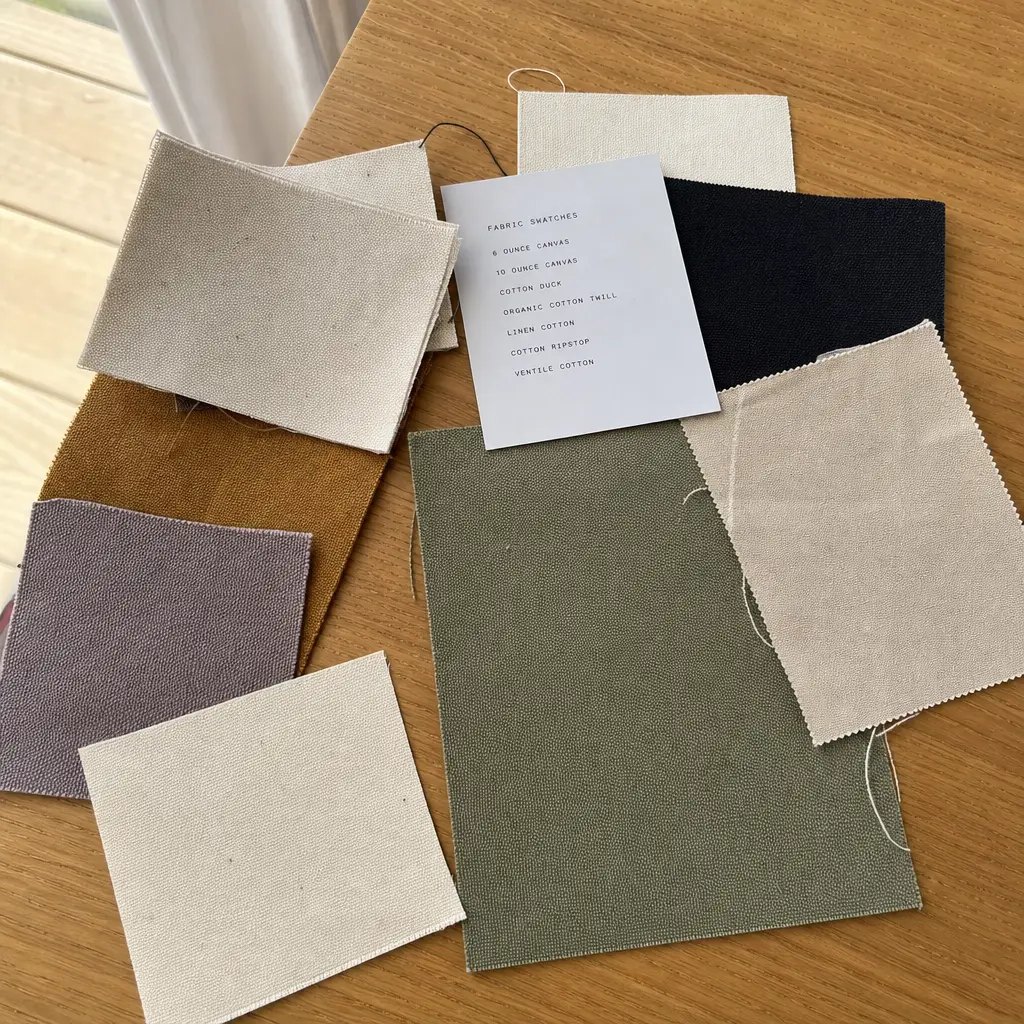
Why fabric selection matters for skincare brands
Cotton drawstring backpacks for skincare brands do more than hold product. They carry bottles, jars, sample packs, and inserts that can be light on volume but heavy on presentation. The fabric has to support shape, protect contents, and still look clean when a buyer opens the bag on a counter or in a fulfillment line. For that reason, material choice should be tied to use case first, not just unit price.
The common mistake is choosing the thinnest cotton that still looks acceptable in a photo. That often fails once the bag is filled with glass or rigid plastic containers. If the bag is intended for retail kits, launch sets, or subscription inserts, the fabric needs enough body to stand up to packing, shipping, and repeated handling without looking wrinkled or cheap.
- Use the fill weight and container shape to define the fabric spec.
- Treat print surface quality and bag structure as part of the material decision.
- Do not quote from a catalog image alone; request a sewn sample or fabric swatch.
Best fabric weights to compare
For most skincare programs, 140 to 200 gsm is the practical range. Around 140-160 gsm works for lightweight sample sets, event giveaways, and low-cost internal kits. Move toward 180-200 gsm when the bag must hold glass bottles, sheet masks in rigid cartons, or a multi-item retail bundle. Heavier fabric usually improves drape control and print appearance, but it also raises raw material cost and can increase lead time if the mill has to dye or finish a specific shade.
If the brand is positioning the bag as reusable packaging rather than a throwaway promo item, compare fabric weight alongside weave density. A tightly woven 180 gsm cotton often outperforms a looser 220 gsm option in print sharpness and surface consistency. The buyer should ask for a physical sample and not rely on a nominal gsm number alone, because finishing, wash treatment, and thread count change the final hand feel.
- 140-160 gsm: promotional kits, lighter skincare sachets, lower freight cost.
- 170-190 gsm: balanced choice for most direct-to-consumer skincare bundles.
- 200 gsm and above: premium gifting, stronger structure, better opacity.
Top sourcing routes for bulk buyers
The sourcing route affects price, control, and problem resolution more than many buyers expect. A direct factory is usually the cleanest route when you need control over fabric, stitching, and packing because the same team that cuts the material also handles sewing and final inspection. Trading layers can still work for small, mixed programs, but they make it harder to trace where a problem came from if the sample and bulk lot diverge.
For skincare brands, the best route often depends on how many variables are changing at once. If the size is fixed and only the logo changes, a direct factory is efficient. If the bag needs custom dye, special print effects, or retail-ready packing, the buyer should prioritize a supplier that can show in-house sample development and documented QC rather than just a low unit price.
- Direct factory: better for repeat orders and clear accountability.
- Trading company: useful when you need bundle sourcing across multiple SKUs.
- Hybrid sourcing: reasonable only when the factory is already named and auditable.
Supplier comparison table that actually helps pricing decisions
A quote is only useful when the sourcing route and construction method are being compared on the same basis. For this category, the biggest pricing differences usually come from fabric source, print setup, and packing labor. The comparison below helps a buyer separate a low headline price from a spec that will survive production and freight.
Use this as a quote review tool. When one supplier is cheap because they omit individual packing or use a lower gsm fabric, the total landed cost may still be worse once you include rework, damage risk, or presentation problems at retail.
- Write decisions in measurable language, not only descriptive wording.
- Ask for sample photos plus one physical approval sample for important orders.
- Keep quotation, sample approval, and inspection notes tied to the same spec version.
Print method choice and artwork limits
The print method should follow the design, not the other way around. Simple one-color logos and short brand marks usually fit screen print well because the setup is predictable and the result is durable on cotton canvas. If the artwork has small gradients, photographic detail, or a broad color block with many shades, heat transfer can be more practical for short runs, although it may feel less integrated into the fabric. Woven labels or sewn patches work better when the brand wants a more premium look and the artwork is small enough to be legible at label size.
Ask the supplier to show how the chosen print method behaves on the exact fabric weight you plan to use. Ink penetration, line crispness, and wash resistance all change when the fabric is coarse or heavily brushed. A design that looks clean on a digital proof can break down on the first strike-off if the line spacing is too tight or the logo sits too close to a seam.
- Screen print: best for simple logos, stable setup cost, strong bulk repeatability.
- Heat transfer: better for short runs and more complex art, but validate adhesion.
- Woven or sewn label: good for premium positioning and small logo use.
MOQ logic and quote structure
MOQ for cotton drawstring backpacks is usually driven by fabric color, print setup, and sewing line efficiency. A supplier may quote a low total MOQ but still require a separate minimum for each colorway or print version. That matters when a skincare brand wants multiple kit variants for different channels. The correct way to compare quotes is to break the order into fabric, branding, and packing components so you can see where the real minimum sits.
A clean quote should show the unit price at each volume step, the setup charges for print or label work, and any extra cost for special packing. If the supplier will only give one all-in price, ask for the assumptions behind it. Otherwise you may discover that the quote is based on stock natural cotton, one print color, and bulk carton packing only, which is not the same as your retail-ready requirement.
- Separate fabric MOQ from print MOQ.
- Ask whether setup charges are one-time or repeated per colorway.
- Compare unit price only after matching packing and labeling scope.
Sample approval before bulk cutting
A sample is not just a visual approval; it is the first chance to catch construction problems before the factory cuts bulk fabric. For skincare use, the sample should be loaded with the actual bottles, sachets, or kits that will ship in production. This reveals whether the opening is wide enough, whether the drawcord closes cleanly over the filled weight, and whether the bag collapses or twists when packed.
The pre-production sample should be evaluated against a short list of measurable items: finished size, stitch density, logo placement, drawcord length, and packed fit. If the supplier sends a photo-only approval, push back. A real sample is the only reliable way to verify whether the fabric weight and print method are working together on the finished article.
- Test the sample with real contents, not empty-hand only.
- Approve size, artwork, and closure performance together.
- Do not release bulk cutting until the sample matches the RFQ.
Packing, carton planning, and retail readiness
Packing is where many low-cost quotes become expensive. Bulk polybagged packs are usually the simplest and cheapest route for warehouse replenishment or internal kit assembly. Individual polybags, barcode stickers, hangtags, or fold cards make sense when the bag is going to retail shelves or direct-to-consumer fulfillment, but they add labor and carton volume. Buyers should compare the packing method as part of the quote, not after the order is placed.
Carton planning matters because cotton bags compress differently depending on fabric weight and whether the drawcord is left open or tied. Ask for carton dimensions, units per carton, and gross weight so freight can be calculated before booking. If the supplier cannot provide a plausible packing plan, that is a sign they may be guessing at the production stage as well.
- Bulk packing reduces cost but may not suit retail delivery.
- Individual packing increases labor and freight volume.
- Carton count must match the buyer's warehouse or fulfillment flow.
Lead time risk and landed-cost tradeoffs
Lead time for a cotton drawstring backpack is not just sewing time. It includes fabric readiness, dyeing if needed, strike-off approval, sample revisions, bulk cutting, sewing, finishing, packing, and shipment booking. A buyer who skips sample approval can save a week on paper and lose two weeks later when a logo sits too low or the cotton shade shifts. The safer plan is to build a buffer into the RFQ and make the supplier state which step is on the critical path.
When comparing landed cost, include not only unit price but also freight efficiency, packing density, and rework risk. A slightly heavier fabric may cost more per unit, but if it protects filled skincare products and reduces carton damage, the total cost can be lower. The right sourcing decision is the one that survives production, not the one that looks cheapest on the first spreadsheet.
- Map fabric, sample, and shipping approvals on a single timeline.
- Include freight and carton volume in landed-cost comparison.
- Treat rework risk as a real cost, not an abstract possibility.
Buyer checklist before you issue the RFQ
Use the RFQ to force clarity. State the intended contents, the target fabric weight, the print method, and the packing format in one document. That lets suppliers quote the same job instead of filling gaps with their own assumptions. For skincare brands, the common failure is a vague brief that turns into a bag too light for glass or too plain for the intended shelf presentation.
Keep the brief narrow enough that suppliers can respond cleanly. One size, one fabric family, one print route, one packing method. If you need multiple variants, separate them clearly. That makes supplier comparison more honest and usually improves the first sample rate.
- Define end use: promo, retail, gift, or internal kit.
- Lock size, fabric gsm, print method, and packing scope.
- Require sample approval before bulk production starts.
Specification comparison for buyers
| Spec decision | Recommended option | When it fits | Buyer risk to check |
|---|---|---|---|
| Fabric weight | 140-200 gsm cotton canvas | Skincare kits, retail gifting, and repeated use where the bag must feel substantial | Too-light fabric collapses around bottles; too-heavy fabric adds cost and slows drying after finishing |
| Fabric construction | Tight weave cotton canvas or brushed cotton drill | Brands that want a cleaner print surface and better shape retention | Loose weave causes print bleed, poor logo edges, and inconsistent panel width |
| Closure style | Self-fabric drawstring channel with reinforced eyelets | Most beauty sets and promo kits where the bag opens fully and closes fast | Weak stitching at the channel is the first failure point in high-fill packs |
| Print method | Screen print for simple logos, heat transfer for short color runs, woven label for premium positioning | Simple brand marks, ingredient motifs, or small logo placements | Fine detail can break on rough canvas; require strike-off approval before bulk |
| Supplier route | Direct factory with sample room and in-house cutting/sewing | Orders that need tighter control on fabric shade, branding, and packing | Trading layers hide real material origin and make QC accountability vague |
| MOQ logic | Base MOQ by fabric color and print setup, not just total unit count | When you can accept one or two stock colors with limited artwork variation | A low headline MOQ may hide separate charges for plates, screens, or multiple colorways |
| Sample path | Pre-production sample after fabric and print confirmation | Any order with new logo placement, new size, or new fabric weight | Approve a sample only after verifying seam allowance, drawcord length, and packed size |
| Packing route | Bulk polybag + carton with carton mark, or individual bag if retail-ready | Bulk replenishment, ecommerce inserts, or retail shelf delivery | Individual packing increases labor and carton volume; avoid paying for it unless needed |
| Lead time plan | Standard production plus fabric and print approval buffer | Orders tied to launch dates, trade shows, or campaign drops | Skipping approval time creates shipping pressure and rushed rework |
Buyer checklist before sampling
- Confirm finished size, gusset if any, and the target fill items before quoting.
- Specify fabric weight in gsm and state whether you want natural cotton, bleached white, dyed color, or recycled content.
- Decide the print method early and provide vector artwork with Pantone references if color match matters.
- State whether the bag is for retail presentation, gift-with-purchase, or internal kit assembly.
- Define acceptable seam finish, drawcord tip style, and reinforcements at stress points.
- Set packing instructions by channel: bulk carton, individual polybag, barcode sticker, or retail insert.
- Ask for carton dimensions, carton count, and estimated gross weight before freight booking.
- Request a pre-production sample or approved production sample before cutting bulk fabric.
Factory quote questions to send
- What cotton fabric weights do you stock, and what is your actual finished gsm after washing or finishing?
- Is the MOQ driven by fabric color, print screens, or sewing line setup, and how is it priced by option?
- What print methods do you recommend for this artwork, and what are the setup charges for each method?
- Can you show seam construction at the channel, corner, and drawcord entry points on a sample photo or video?
- What is your standard tolerance for size, stitching density, and drawcord length on bulk production?
- What packing format is included in the quote, and what are the extra costs for individual polybags or barcode labels?
- What is the realistic production schedule after sample approval, and what parts of the timeline depend on fabric or print confirmation?
- What carton size and unit count per carton do you recommend for this bag size, and how does that affect freight cost?
Quality-control points to confirm
- Fabric gsm matches the approved sample within a practical tolerance and feels consistent across panels.
- Logo placement is centered or positioned exactly per artwork spec, with no major skew, patchiness, or ink cracking.
- Drawcord runs smoothly through the channel without snagging, twisting, or uneven exit length.
- Stress seams at the top corners and channel ends hold under a standard pull test.
- Cut panels are square, with no obvious panel twisting, frayed edges, or uneven hem width.
- Color variance is acceptable across the lot and between sample and bulk cartons.
- Packing count matches the packing list, with no mixed sizes or print versions in the same carton unless approved.