Choose the fabric around the use case, not around the quote
For trade show use, the right cotton drawstring backpack is not the softest one or the cheapest one. It is the one that holds a printed logo cleanly, feels substantial at first touch, and survives being stuffed with brochures, samples, and a water bottle without distorting the print. That usually puts buyers in the 180-240 GSM zone for most branded programs. Below that, the bag can read as a giveaway item only. Above that, unit cost, fold bulk, and carton volume climb fast.
The first sourcing mistake is asking vendors for "cotton drawstring backpacks" without defining whether you mean lightweight event handouts or a more durable retail-style bag. A 150 GSM fabric can work for very light inserts and low-cost campaigns, but for most exhibitor use it will not feel convincing. A 200-240 GSM twill or canvas gives better body, better stitching stability, and more tolerance during print and packing. If the event bag must carry real weight, the fabric choice should be treated as a load-bearing decision, not a decorative one.
- 180-200 GSM: lower-cost giveaway use, lighter contents, more price-sensitive programs.
- 210-240 GSM: best balance for branded trade show handouts and repeat handling.
- 250 GSM and above: premium feel, better shape retention, higher freight and material cost.
Use the comparison point that matches your brand position
Cotton is not one material class. The weave and finish change how the bag prints, folds, and holds shape. Plain weave cotton is usually easier to spec and can be more economical, but tighter twill often gives a more premium look and a less flimsy handfeel. If your artwork is a bold one-color logo, plain weave can be enough. If you want a deeper, heavier retail appearance, twill or a dense canvas-style body is the safer choice.
Pre-shrunk or washed fabric matters more than many buyers expect. Cotton can shift after first moisture exposure or after heat during printing and packing. If your spec ignores shrinkage, the bag may arrive slightly smaller, with cords feeling too long or the logo too close to the seam. For trade show programs, those issues do not always make a bag unusable, but they do make the item look less controlled. Control starts with fabric preparation, not with the final QC table.
- Plain weave: cleaner buying price and acceptable for simple logo programs.
- Twill weave: heavier visual texture and stronger premium impression.
- Pre-shrunk or washed fabric: reduces post-production size surprises.
Select the print method before you finalize artwork
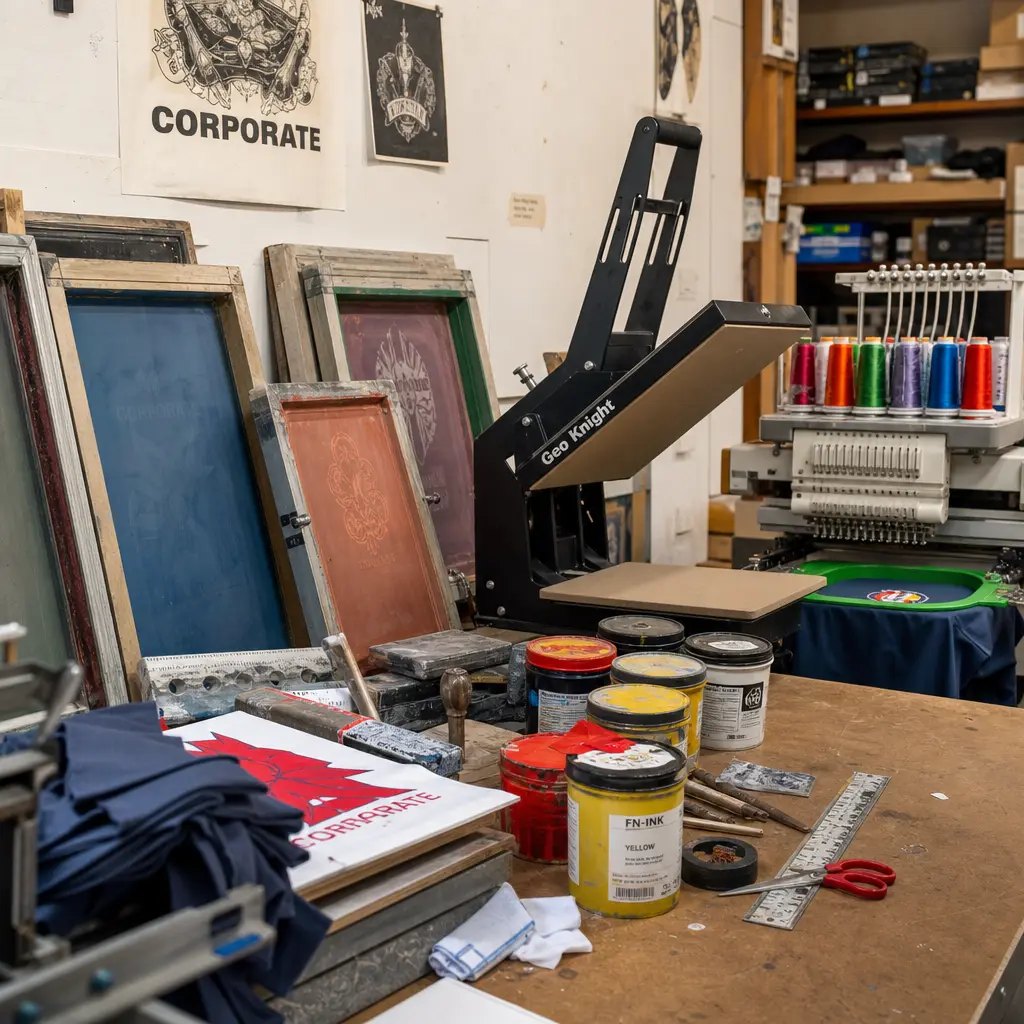
The print method should be chosen with the fabric in mind, not after the art file is already approved. Screen printing is still the most practical option for many cotton drawstring backpacks because it gives strong color density and good unit economics on medium to large runs. It handles simple logos well, especially on natural or light-colored fabric. If the logo has solid blocks of color and limited gradients, screen print is usually the first route to quote.
Heat transfer can work when the design has small text, multiple colors, or a short-run order that would otherwise carry too much setup cost. It is more sensitive to fabric texture and heat control, so the factory must show a sample on the same GSM and weave. Embroidery can be a good premium option, but it changes the bag structure and can increase distortion on lighter fabrics. If the bag is meant to be a clean event handout, embroidery is often better reserved for a higher-end retail or VIP use case.
- Screen print: best for simple logos, medium-to-large quantity, and cost control.
- Heat transfer: useful for multicolor art or smaller MOQs with tighter detail.
- Embroidery: premium look, but must be tested for fabric puckering and logo distortion.
Compare sourcing routes by risk, not just by unit price
A direct factory quote is usually the best baseline when the order is repeatable and the buyer can manage a clearer spec. You get better visibility into fabric, cord, print, and packing decisions, and there is less room for hidden substitutions. The tradeoff is that the factory will expect a sharper RFQ, because every vague line in your request becomes a production assumption that can change the price later.
A trading company or sourcing agent can help when the buyer needs mixed artwork, lower trial quantities, or coordination across packaging and documentation. The quote may be easier to obtain, but the price spread can conceal the actual fabric grade or the real print method. For cotton drawstring backpacks, the cheapest source is not the one with the lowest first quote. It is the one that can hold the same fabric, cord, print, and carton spec when the order repeats.
- Direct factory: stronger control over spec, better for repeat orders and price stability.
- Trading route: useful for smaller launches or multi-SKU coordination.
- Low quote without fabric detail: treat as incomplete until GSM, weave, and print method are named.
Set MOQ logic around color, print, and packing
MOQ for cotton drawstring backpacks is rarely driven by the bag alone. It is usually driven by fabric dye lot, print setup, cord sourcing, and carton allocation. A factory may quote one MOQ for natural cotton with a single print color and a different MOQ for dyed fabric with multiple logo colors. Buyers should not assume that a 3,000-piece MOQ means every version of the product can be mixed freely. Each extra variable raises waste and handling cost.
If your trade show program needs different regional logos or language variants, the smartest approach is often to keep the bag body identical and change only the print screen or heat-transfer art. That reduces material fragmentation and makes QC easier. If you need multiple Pantone colors in the body fabric itself, expect higher MOQ, longer lead time, and more risk of shade mismatch across cartons. For most exhibitors, one neutral cotton body with a controlled logo application is the efficient route.
- Single body color with logo variation: easiest way to manage MOQ and inventory.
- Multi-color body fabrics: higher dye complexity and more risk of lot mismatch.
- Multiple artwork versions: combine under one fabric spec whenever possible.
Write the RFQ so the factory cannot guess the spec
A strong RFQ for this product should read like a production instruction, not a brand brief. Start with the exact bag size, target GSM, fabric color, cord type, and print area. State whether the bag will hold brochures only or heavier promo goods, because the factory will use that detail to decide seam reinforcement and cord channel construction. If the expected load is not stated, the sample may look fine but fail in real event use.
Do not let the supplier replace missing detail with a generic "standard quality" line. Standard quality means different things across mills, workshops, and export agents. Specify acceptable tolerances for size, print placement, cord length, and shrinkage. If you need a logo on one side only, say so. If you need a side label or woven brand tag, specify its position and stitch method. Clarity at RFQ stage is the cheapest form of QC.
- Give the exact bag size in centimeters and state if it is measured flat or finished stuffed.
- Name the fabric GSM, weave, and finish together instead of only saying "cotton".
- State the maximum number of print colors and the required print coverage area.
Treat samples as a production control tool
The sample is not only for visual approval. It is your first check on whether the factory can actually build the bag to your spec. Ask for a pre-production sample made from the same fabric roll family, the same cord, and the same print method that will be used in bulk. A photo of a similar bag is not enough. The sample should show edge finish, seam line consistency, and print sharpness on the real textile surface.
Once the sample arrives, test it like a buyer who expects claims. Measure the final dimensions, pull the cords repeatedly, fold and reopen the bag, and inspect the print for cracking or ink sitting too close to the seam. If the bag is meant to hold brochures and a small product kit, place that actual load inside the sample. A cotton drawstring backpack can look acceptable empty and fail when packed. The sample must reflect use, not just appearance.
- Approve one physical sample before bulk, even for repeat suppliers.
- Check logo centering, print edge clarity, and cord tension on the sample.
- Load the bag with the intended event contents before final approval.
Use simple QC thresholds that catch real production failures
For this category, the most useful QC thresholds are practical rather than decorative. Measure fabric GSM, finished bag dimensions, print location, and cord length. Check for skipped stitches, loose threads at the channel, uneven top hems, and weak knots or aglets at the cord ends. If the product has an inner label or side tag, verify that it is sewn straight and does not create an uncomfortable pressure point inside the bag. Small defects matter because trade show bags are handled in public and distributed fast.
Color consistency also needs a clear acceptance standard. Cotton is naturally variable, so do not expect the same shade shift tolerance as coated synthetic material. What matters is whether the lot matches the approved standard closely enough that the printed logo still reads correctly. If the body fabric is natural unbleached cotton, the vendor should state the base color variation range in the quotation. Otherwise, one carton can look warmer or duller than the next and create inconsistent display stock.
- Set a measurable tolerance for finished size and cord length.
- Inspect for stitch density and reinforcement at stress points.
- Reject cartons with obvious print rub, oily stains, or broken cords before packing.
Plan packing around both freight and event handling
Packing affects landed cost more than many buyers budget for. A cotton drawstring backpack folds flat, which is useful, but over-compressed packing can leave deep creases across the logo panel. If the bag is intended for immediate handout at an expo, ask for a packing method that avoids hard creasing on the printed face. If the order will move through a distributor warehouse first, carton efficiency may matter more than cosmetics. The right answer depends on the route to the event, not just the factory floor.
The quotation should include pack count per polybag or master carton, carton dimensions, gross weight, and whether cartons are export-ready for palletizing. A small change in carton size can affect the container load and freight cost. Buyers often look at unit price and miss that a denser carton plan can save meaningful money on ocean or air freight. Ask the factory to quote on a landed-cost basis if the shipment will be distributed across multiple event locations.
- Request flat packing that protects the print face from hard creasing.
- Confirm carton count by market channel: direct-to-event, warehouse, or retail distribution.
- Compare unit price against carton volume and freight density, not only against bag cost.
Use landed-cost thinking to compare quotes correctly
The cheapest quote on paper can become the most expensive shipment once print setup, carton volume, and rework are included. For cotton drawstring backpacks, the meaningful cost drivers are fabric GSM, print method, cord type, reinforcement, and packing format. A factory that uses 180 GSM fabric and one-color screen print will usually beat a premium build on unit price, but the buyer must decide whether that saving aligns with the event purpose. If the bag is a premium brand touchpoint, the low-cost route can damage perception.
A practical comparison sheet should show at least these line items: fabric cost, print setup, unit print charge, cord and accessory cost, packaging cost, and inland carton cost. If two quotes differ by only a small amount per piece, but one uses a lighter fabric or less durable seam finishing, the lower price is not really comparable. Request a revised quote whenever the supplier changes GSM, weave, or print method. Do not accept "equivalent" material language without a physical sample.
- Separate fabric, print, and packaging in the quote.
- Ask for any surcharge tied to color changes, rush schedules, or split shipments.
- Use the same artwork and packaging spec across all suppliers when comparing.
Specification comparison for buyers
| Spec decision | Recommended option | When it fits | Buyer risk to check |
|---|---|---|---|
| Fabric weight | 180-240 GSM cotton canvas or heavy twill | Most trade show giveaways and mid-value branded programs | Too light and the bag feels cheap; too heavy can raise cost and fold bulk |
| Weave construction | Plain weave for clean print or tighter twill for a more premium handfeel | When the front panel must hold a sharp logo and regular folding | Loose weave can ghost under ink and show uneven coloration |
| Finish | Pre-shrunk or washed cotton | When buyers want lower shrink risk after printing and packing | Unfinished fabric can shrink, twist, or soften after first handling |
| Print method | Screen print for solid logos, heat transfer for small multicolor runs, embroidery for premium clubs | When logo coverage is moderate and brand color accuracy matters | Low-resolution art or thin strokes can break up on textured cotton |
| Cord type | Cotton rope cord or cotton-blend twisted cord | When a natural look matters and cord feel is part of the brand image | Weak knots, fraying ends, and inconsistent length create complaints |
| Closure style | Simple double-draw cord with reinforced eyelets or stitched channels | For event use where quick open-close is more important than theft resistance | Poor reinforcement can tear after repeated pulls and stuffing |
| Inner structure | Single-layer body with hemmed top or light lining for premium programs | When target cost is controlled but the bag still needs shape | Unlined bags may show print bleed-through and less body control |
| Sourcing route | Direct factory for repeat programs; trading company for small mixed SKUs | When MOQ, artwork changes, and compliance paperwork need coordination | Middlemen can hide fabric swaps, while direct factories need tighter spec control |
| Packing format | Flat packed with carton counts matched to distribution channel | When storage, freight, and event handout speed matter | Loose packing raises carton volume and can damage print during transit |
Buyer checklist before sampling
- Confirm target fabric weight in GSM and acceptable tolerance before you discuss price.
- Approve the exact fabric handfeel with a pre-production swatch, not only a digital image.
- Lock logo size, print colors, and placement with measured artwork dimensions.
- State whether the bag will carry brochures, apparel, samples, or light merchandise so the load requirement is clear.
- Set acceptable shrinkage, seam strength, and cord length tolerances in writing.
- Ask for the packing method, carton quantity, and outer carton dimensions in the quotation.
- Request one sealed pre-production sample and one photo record of bulk production before shipment.
Factory quote questions to send
- What exact fabric composition, weave, and GSM will you use, and what tolerance do you allow on GSM variance?
- Is the fabric pre-shrunk, washed, or raw, and how will that affect final size after printing and packing?
- Which print method do you recommend for my artwork, how many colors are included, and what setup charges apply?
- What is the MOQ by color and by logo variation, and what cost changes if I split the order into multiple Pantone shades?
- What reinforcement do you use at the cord channel, stress points, and eyelets or grommets?
- Can you provide a sample with the same fabric, cord, print, and packing that will be used in bulk production?
- What are the carton size, inner pack count, gross weight, and estimated container utilization for my order?
Quality-control points to confirm
- Fabric GSM matches approved range and is measured on incoming roll or cut-piece inspection.
- Logo placement is within agreed tolerance and print registration is clean on the textured cotton surface.
- Color delta is acceptable against the approved physical standard, especially for dark inks on natural cotton.
- Cord length is even left-to-right and knots or tips are secured so they do not unravel in transit.
- Top hem, channel, and side seams are straight, with no skipped stitches or puckering under tension.
- Finished bag dimensions remain within tolerance after pressing, folding, and final packing.
- Cartons are strong enough for stacking and show no crushed corners that could damage printed panels.