Start with the liquor retail job, not the bag photo
Cotton drawstring backpacks used by liquor retailers are not the same purchasing problem as light promotional sacks. The product may need to hold a glass bottle, a boxed spirit set, a bottle with tissue, a gift card, or a seasonal insert. It must look presentable at handover, protect the retailer’s brand impression, and carry enough weight for a short customer journey.
The buying mistake is to compare similar-looking bag photos without checking the construction behind them. One quote may cover light cotton for display-only use. Another may include heavier cotton canvas, stronger rope, and reinforced cord exits. The unit prices may look far apart, but the suppliers may not be quoting the same product.
Before requesting bulk pricing, define the job in practical terms. Is the bag for shelf presentation only, checkout handover, or customer carry-out? Is it expected to stand neatly around a bottle, or simply replace a paper gift bag? Will staff pack it quickly during peak store hours? These answers drive fabric weight, size, rope, reinforcement, print placement, and packing format.
A strong RFQ gives suppliers enough detail to price the same requirement. It names the packed item, target load, preferred fabric range, finished dimensions, drawstring construction, reinforcement method, print area, packing rules, and inspection standards. That reduces re-quotes and makes price comparison more useful.
- Define the retail use case before choosing GSM or decoration.
- Treat bottle weight and gift-pack shape as cost inputs.
- Separate presentation-only bags from customer carry-out bags.
- Compare quotes only after construction assumptions match.
- Ask what load and pack format the quoted bag is designed to handle.
Build a bottle-fit specification that factories can price
Size planning should begin with the actual packed item, not a generic bottle template. Liquor programs often include several formats: tall wine bottles, squat spirit bottles, boxed whisky, mixed gift sets, or bottles with tissue and neck tags. Each format changes the required width, depth allowance, and closure height.
The most important wording is finished size after sewing. Some suppliers quote cut-panel dimensions before seam allowance, top turnover, and drawstring channel construction. That can make the bag look large enough on paper while the usable interior is too tight in production. Procurement should ask for finished flat width and finished height, then confirm how the bag was measured.
Top clearance matters because the drawstring needs room to cinch. If the bottle shoulder or box corner sits too high, staff may force the closure and stress the channel. If the bag is much taller than the product, the presentation can look loose and unplanned. The best size closes smoothly while keeping the front panel clean enough for the logo to read.
If one shared bag size must cover multiple liquor SKUs, test the largest and smallest real pack before approval. A shared size can reduce MOQ, simplify stock control, and improve reorder planning, but it should not create an awkward fit for premium gift items.
- List packed-item dimensions as height x width x depth in millimeters.
- State whether the item is a loose bottle, boxed bottle, or gift set.
- Request finished size after sewing, not pattern or cut-panel size.
- Confirm top clearance for smooth cinching at checkout.
- Test the largest and smallest SKU if one size covers several programs.
Choose fabric by load, appearance, and print result
Fabric is one of the biggest price drivers, but GSM alone is not enough. Buyers should define the fabric type, construction, and target weight. Light cotton around 140-200 GSM can work for presentation-only packaging, but it may wrinkle, sag, or show poor print opacity when used around glass bottles.
Many liquor retail programs move into cotton canvas around 8 oz to 10 oz, or roughly 270-340 GSM. This range gives better body, stronger seam support, and a more stable print surface for a one-bottle gift bag or many boxed spirit programs. Heavier fabric may be useful for premium boxed sets, but it can increase cost, carton weight, and stiffness.
Natural cotton and dyed cotton need different controls. Natural cotton can support an organic retail look, but the buyer should approve the acceptable level of seed specking, slub, and shade variation. Black or dark dyed cotton can look more premium, but it raises questions about shade consistency, rubbing performance, and whether a light logo needs a white underbase.
If recycled cotton blends are considered, ask for a swatch and print strike-off before finalizing the purchase. Recycled content can change surface uniformity, lint, and shade consistency. Those details are manageable when agreed early, but they can become disputes if discovered only during final inspection.
- Use 140-200 GSM mainly for light-duty or presentation-only programs.
- Use about 270-340 GSM cotton canvas for many bottle-carry programs.
- Ask for fabric type, weave, oz, GSM, and GSM tolerance together.
- Approve natural cotton shade and seed-speck tolerance in advance.
- Check dark fabric for crocking risk and underbase print cost.
Specify rope and reinforcement before price comparison
Bottle-carry failures often happen at the drawstring path and lower cord exits, not in the middle of the fabric panel. When a loaded bag is lifted, force travels through the rope and concentrates at the lower corners. Thin cord, weak exit points, or missing bartacks can cause tearing even when the main fabric looks acceptable.
For many liquor retail cotton drawstring backpacks, cotton rope in the 8-10 mm range is a practical starting point. It looks substantial, feels more comfortable than thin cord, and matches a natural cotton bag aesthetic. Double-side pull construction usually closes faster and balances weight better than a single pull.
Reinforcement should be treated as a priced requirement, not an assumption. Bartacks, triangle patches, and reinforced inserts can all be suitable depending on the design. What matters is that the supplier states the method, shows it on the sample, and repeats it in production.
The sample should be reviewed while loaded and hanging. A flat tabletop photo will not show rope imbalance, lower-corner distortion, or channel strain. Buyers should include a simple loaded carry check in the approval file and repeat it during inspection.
- Specify cotton rope material, diameter, color, and pull layout.
- Require lower cord-exit reinforcement for glass bottle use.
- Ask whether bartacks, patches, or inserts are included in the base price.
- Check rope length balance on the loaded sample.
- Reject quotes that leave reinforcement vague.
Control print cost with measurable artwork details
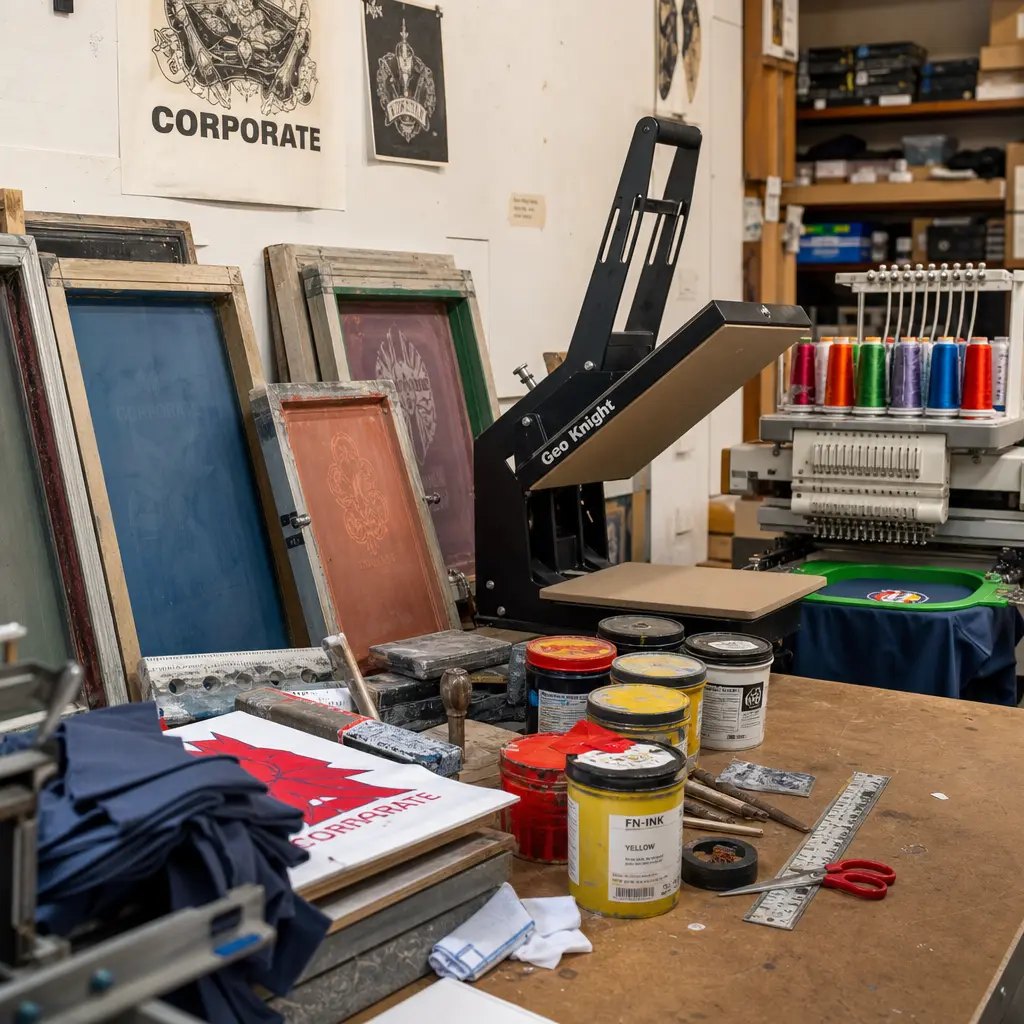
Screen printing is often the cleanest benchmark for bulk liquor retail bags with simple one-color or two-color logos. It scales well, gives predictable coverage on cotton canvas, and makes quote comparison easier. However, the quote is only useful if the artwork scope is defined.
Print cost changes with color count, print area, side count, fabric color, setup requirements, and waste rate. A small one-side logo on natural cotton is not the same cost as a large two-side logo on black canvas with a white underbase. These details should be separated in the RFQ so the buyer can see what drives the price.
Artwork should be specified in measurable terms: print width and height, placement from the top seam, side location, Pantone reference if needed, and allowed skew. If the bag will be displayed filled or cinched, review logo readability in that condition, not only on a flat empty sample.
Alternative methods such as transfer or digital print can work for detailed art or smaller programs, but the sample method should match mass production. A beautiful approval sample is not useful if the factory later switches process to meet the target price.
- Use screen print as the baseline for simple bulk logo programs.
- State print size, side count, color count, and placement tolerance.
- Confirm whether dark fabric pricing includes a white underbase.
- Review logo position on a loaded and cinched bag.
- Separate one-time screen, strike-off, and setup charges from unit price.
Use a sample pricing ladder, not one headline quote
A bulk pricing plan should show how cost changes when quantity, specification, and version count change. The figures below are not a universal market price; they are a sample RFQ framework buyers can ask suppliers to complete. The purpose is to make assumptions visible before supplier selection.
A practical ladder might request four tiers: 500 pieces for a pilot, 1,000 pieces for a first store rollout, 3,000 pieces for a campaign order, and 5,000 pieces for a larger replenishment. Each tier should use the same base spec: finished size, 8-10 oz cotton canvas, cotton rope, lower-corner reinforcement, one-side one-color screen print, counted bundle packing, and AQL inspection.
Ask suppliers to fill in ex-factory unit price, print setup, sample cost, packing upgrade cost, and estimated carton quantity for each tier. If the price drops sharply at 3,000 pieces, procurement can decide whether to consolidate programs or keep a lower pilot volume. If the price barely changes, the factory may have fixed material or labor constraints that matter more than order size.
Cost drivers should also be shown as adders. For example, custom dyed fabric, two-side print, individual polybags, woven labels, barcode cartons, and split delivery should be listed separately. This keeps negotiation focused on trade-offs rather than forcing the supplier to hide complexity inside one unit price.
- Request tiers at 500, 1,000, 3,000, and 5,000 pieces or your actual forecast levels.
- Use one identical base spec for every tier so the ladder is comparable.
- Ask for setup, sample, and packing charges outside the recurring unit price.
- List adders for custom dye, two-side print, labels, polybags, and split packing.
- Compare the cost per usable delivered bag, not only the ex-factory unit price.
Manage MOQ by standardizing the physical bag
MOQ is rarely one simple number. It can apply by fabric color, size, print design, rope color, label, or packing version. A supplier may offer a low headline MOQ for one stock fabric and one print, then raise the practical MOQ when the buyer splits the order across store programs or liquor brands.
The easiest way to control MOQ is to keep the physical bag consistent. One fabric color, one finished size, one rope, and one reinforcement method allow the factory to buy materials and cut panels more efficiently. The buyer can then vary print, hangtag, carton mark, or allocation label if store programs need separation.
Not all customizations have the same MOQ impact. A carton mark change is usually easier than a custom dyed fabric. A barcode label may be easier than a woven side label. Two artwork versions may be manageable if they use the same print setup size, while two bag sizes may require separate cutting and inspection control.
Procurement should ask the factory to state MOQ by version and by full purchase order. This prevents surprises when the buyer wants to split 3,000 pieces into six 500-piece store or brand versions.
- Ask whether MOQ applies by color, size, print, trim, or total order.
- Standardize fabric, rope, size, and reinforcement where possible.
- Use carton marks or labels for allocation instead of changing construction.
- Price multiple artwork versions separately before approval.
- Confirm whether overage and shortage tolerance applies by SKU or full order.
Approve samples through function, print, and packing stages
Sample approval should test the real use case, not just appearance. A bag can look clean while empty and fail when loaded with a real bottle. Buyers should place the actual bottle or box inside, close the drawstring, lift the bag, and check lower corners, side seams, rope balance, print visibility, and closure comfort.
A staged approval flow reduces rework. Start with fabric swatches and a blank fit sample to confirm size, GSM, rope, channel construction, and reinforcement. Then approve a print strike-off or printed pre-production sample using final artwork and final fabric color. Finally, approve packing if carton marks, barcode labels, bundle counts, or store allocation are important.
The approval record should include the loaded weight, the exact item tested, and photos of the bag flat, filled, cinched, and hanging. These files become a practical reference for inspectors, repeat orders, and internal stakeholders who were not present during sampling.
Do not approve only from a digital mockup. Mockups are useful for artwork placement, but they cannot verify fabric hand feel, cinching behavior, seam strength, or the way cotton canvas prints at scale.
- Approve fabric swatch and blank structural sample before printed PPS.
- Load the sample with the actual retail bottle or gift pack.
- Record loaded weight, accessories, and closure result.
- Photograph flat front, filled front, top closure, and hanging view.
- Approve packing format before production cartons are made.
Plan packing for warehouse receiving and store allocation
Packing affects total landed cost even when it is not part of the bag construction. Poorly sorted cartons create receiving delays, shortage disputes, relabeling work, and store allocation errors. For liquor retailers with multiple branches or seasonal campaigns, carton discipline is a procurement requirement.
Flat packing in counted inner bundles is usually a practical base format. The buyer should define bundle quantity, master carton quantity, SKU separation, carton marks, and whether mixed cartons are allowed. If the order includes several artwork versions, separate packing is often worth more than the small cost it adds.
Individual polybags are optional and should be decided deliberately. Avoiding polybags can reduce plastic and speed unpacking, but long routes, dark fabric, humidity, and heavy print coverage may justify protective packing. If no polybag is used, confirm how the factory prevents dust, abrasion, and print offset inside cartons.
Carton dimensions and gross weight should also be checked. Overfilled cartons can crush drawstring channels and crease the bags. Very heavy cartons slow warehouse handling. Buyers should set a maximum carton gross weight and request carton dimensions early if pallet planning matters.
- Set inner bundle count, carton quantity, and carton marks before ordering.
- Require SKU, color, artwork, or store-program separation where needed.
- Decide whether no polybag, bundle bag, or individual polybag is required.
- Set a maximum carton gross weight for safer handling.
- Ask for carton dimensions for pallet, racking, or distributor planning.
Compare landed value with a written QC plan
The lowest ex-factory price is not always the best procurement result. A cheaper bag can become more expensive if it arrives with weak reinforcement, inconsistent print placement, mixed cartons, or dimensions that slow store packing. For liquor retail, landed value includes construction reliability, receiving efficiency, customer presentation, and replacement risk.
Normalize the specification before comparing quotes. Fabric type, GSM, finished size, rope diameter, reinforcement, print area, packing format, and inspection criteria should be aligned. If one supplier includes 10 mm cotton rope and bartacks while another quotes thin cord and no reinforcement, the prices should not sit in the same comparison row.
A written QC plan should cover size, GSM, shade, print, seams, rope, reinforcement, load test, and packing. AQL inspection is useful only when the acceptance rules are clear. The PO or approval pack should state tolerances, defect examples, and the approved sample reference.
For landed-cost calculation, ask procurement to add ex-factory cost, one-time setup charges spread across the order, packing upgrades, inspection cost, freight, duty if applicable, receiving labor assumptions, and expected reject or rework allowance. This framework makes the bulk pricing plan more realistic than a simple unit-price comparison.
- Normalize every quote to the same fabric, size, print, rope, and reinforcement spec.
- Write QC tolerances into the PO, not only into email notes.
- Include setup, samples, packing, freight, inspection, and receiving labor in landed cost.
- Use approved loaded samples as inspection references.
- Select the supplier with clear assumptions and repeatable controls, not only the lowest price.
Specification comparison for buyers
| Cost or spec driver | Base bulk option | Higher-cost option | Procurement check |
|---|---|---|---|
| Factory setup | Cut-and-sew bag factory with patterning, sewing QC, and coordinated printing | Trader-managed split production across fabric, printing, and sewing vendors | Ask who controls fabric purchase, print approval, sewing inspection, and final packing accountability |
| Fabric weight | 8 oz cotton canvas, about 270 GSM, for most one-bottle gift programs | 10 oz canvas or heavier, about 340 GSM+, for premium boxed sets or higher load targets | Confirm GSM tolerance, hand feel, shrinkage risk, and whether fabric is stock or custom ordered |
| Size basis | One standard finished size after sewing for multiple SKUs | Two or more finished sizes for different bottle or box formats | Price each size separately and confirm MOQ applies by size, not only by total PO quantity |
| Print method | One-color screen print on one side | Two-side print, large coverage, dark fabric underbase, transfer, or digital print | Require print area, color count, placement tolerance, and one-time screen or setup charges |
| Drawstring | Natural cotton rope, 8-10 mm, double-side pull | Custom dyed rope, specialty tips, metal ends, or premium contrast cord | Check rope diameter tolerance, length balance, knot finish, and metal-free requirements for bottle contact |
| Reinforcement | Bartack plus reinforced lower cord exits included | Triangle patches, heavier inserts, or hidden internal reinforcement | Do not compare quotes until reinforcement method is named in writing |
| MOQ structure | Stock fabric color, one size, one rope, one print design | Custom dye, multiple artwork versions, woven labels, split shipping, or store-specific packs | Ask MOQ by fabric color, size, print design, trim, and carton mark version |
| Packing | Flat packed in counted bundles, export cartons by SKU | Individual polybags, barcode labels, store-ready cartons, palletization, or mixed allocation packs | Separate packing cost from unit cost so warehouse labor savings are visible |
| QC scope | Final AQL inspection with size, print, seam, rope, and packing checks | Added load testing, GSM verification, shade control, rubbing checks, and pre-shipment photo report | Put tolerances in the PO; generic inspection wording is not enough for bottle-carry use |
Buyer checklist before sampling
- Measure the packed retail item in millimeters: bottle or box height, width, depth, neck profile, tissue, tag, leaflet, and any insert card.
- State the expected loaded weight in kilograms. Many one-bottle liquor programs fall around 1.2-2.0 kg, but boxed spirits and accessories can change the requirement.
- Define the use case as presentation-only, short handover carry, or customer carry-out. Each needs a different fabric and reinforcement decision.
- Request fabric by type, oz, and GSM, for example cotton canvas, 8 oz to 10 oz, about 270-340 GSM, with an agreed tolerance.
- Confirm quoted dimensions are finished size after sewing, measured flat, with tolerance stated in centimeters.
- Specify drawstring material, diameter, color, double-side pull construction, knot finish, and whether metal tips are prohibited.
- Require lower-corner reinforcement for glass bottle carry and ask the supplier to show the exact bartack, patch, or insert method.
- Provide measurable print details: artwork size, number of colors, Pantone reference, side location, distance from top seam, and allowed placement tolerance.
- Define shade expectations for natural cotton, black cotton, or custom dyed fabric, including whether seed specking or minor cotton slub is acceptable.
- Set packing rules before quote comparison: inner bundle count, carton quantity, SKU separation, barcode labels, carton marks, and maximum carton gross weight.
Factory quote questions to send
- What exact fabric are you quoting: cotton canvas, plain weave cotton, recycled cotton blend, or another construction, and what GSM target and tolerance will you hold?
- Is the quoted size the finished size after sewing and channel folding, or the cut-panel size before sewing? Please state width and height tolerance in centimeters.
- What seam construction is included at the sides, bottom, and drawstring channel, and what stitch density or seam quality standard do you normally use?
- What rope material, nominal diameter, rope color, and double-pull construction are included in the base price?
- Does the quoted price include lower-corner bartacks, triangle reinforcement patches, reinforced inserts, or another cord-exit reinforcement method?
- Which print method is included, how many colors are priced, what is the maximum print area, and does dark fabric pricing include a white underbase if needed?
- Can you quote 500, 1,000, 3,000, and 5,000 pieces as separate tiers and list one-time charges such as screens, strike-offs, samples, labels, and courier cost?
- How does MOQ change if the order is split by fabric color, size, print design, store program, carton mark, or delivery destination?
- What sample stages do you recommend: blank fit sample, fabric swatch, print strike-off, printed pre-production sample, and packing approval?
- What packing is included in the unit price: no polybag or individual polybag, inner bundle quantity, carton quantity, carton dimensions, gross weight, barcode labels, and carton marks?
Quality-control points to confirm
- Finished size should match the approved specification within the agreed tolerance, commonly about plus or minus 0.5 cm for critical width and up to plus or minus 1.0 cm for larger height dimensions.
- Fabric should meet the agreed cotton canvas construction and GSM target. A practical buyer control range is often plus or minus 5% unless a tighter tolerance is contracted.
- Shade should be commercially uniform within one production lot. Natural cotton may show minor seed specking if approved, but obvious panel mismatch should be rejected.
- Print placement should follow the approved distance from the top seam and side reference points. Many buyers use about plus or minus 0.5 cm for placement tolerance.
- Screen print should show solid coverage, clean edges, no major pinholes, no smudging, no ghosting, and no excessive strike-through to the reverse side.
- Printed areas should resist normal dry rubbing and light handling without obvious ink transfer, cracking, or flaking under the agreed process.
- The drawstring channel must be even, with no skipped stitches, trapped rope, severe puckering, or closure points that prevent smooth cinching.
- Cotton rope length should be consistent enough that the loaded bag hangs balanced and does not concentrate load on one lower corner.
- Lower cord exits must include the approved reinforcement and show no seam popping, torn eye area, broken bartacks, or raw-cut fraying.
- Side seams and bottom construction should be secure, thread trimmed, and free from open seams that could spread during bottle carry.