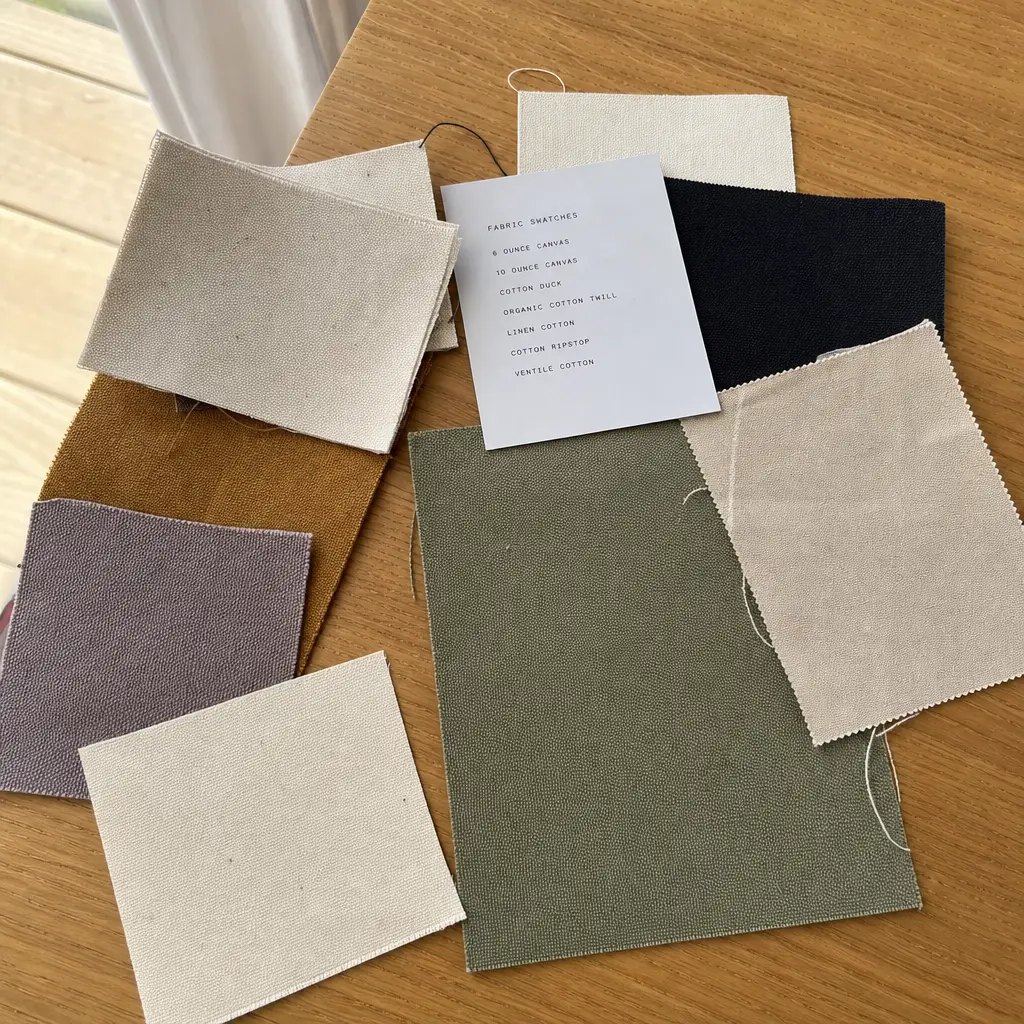
Why material choice matters more for liquor retail than for general promo bags
A cotton drawstring backpack for liquor retail is not a lightweight giveaway in normal use. The bag often carries a dense glass bottle, moves through cashier counters, may be repacked for gifting, and still needs to look presentable on shelf. That combination puts more pressure on fabric weight, seam strength, cord quality, and opening size than many buyers expect from a simple drawstring style.
The common sourcing mistake is to buy the bag as if it were a gym sack for leaflets or apparel. A cheap 140-180 GSM body fabric can look acceptable in a quote sample but fail commercially once stores load it with 750 ml bottles. Material selection should start from real use conditions: bottle weight, frequency of handling, desired shelf impression, and whether the bag is sold, gifted, or used in a promotional bundle.
- Single 750 ml bottle usually weighs around 1.2-1.5 kg once packaged
- Glass corners create concentrated stress at bottom seams and cord exits
- Retail gift programs need a cleaner surface than event giveaway bags
- Liquor store staff need a bag that opens quickly and closes without snagging
Choose fabric weight by load, retail presentation, and print expectation
For most liquor retail programs, 8 oz to 10 oz cotton canvas, roughly 270-340 GSM, is the practical starting range. This gives enough body for a better retail feel while remaining foldable and cost-efficient in cartons. At this weight, a one-color or two-color logo usually prints with good opacity on natural cotton, and the bag does not collapse too badly when displayed flat or partially filled.
If the bag is part of a premium gift-with-purchase or sold as branded merchandise, 10 oz to 12 oz canvas can be justified. The heavier fabric improves stiffness, hides minor bottle shape better, and supports larger front-panel printing. The tradeoff is clear: heavier GSM raises fabric consumption, shipment weight, and often sewing time. If your program is high volume and price-sensitive, moving from 8 oz to 12 oz just for a 'premium feel' can add cost without improving sell-through.
- 6 oz to 7 oz cotton works only for very light promotional use, not recommended for routine bottle carrying
- 8 oz to 10 oz canvas suits most one-bottle retail programs
- 10 oz to 12 oz suits premium sets or higher perceived-value merchandise
- Natural cotton usually shows print better at medium to heavy weights than very loose lightweight cloth
Natural cotton, dyed cotton, or organic cotton: what changes in purchasing terms
Natural cotton canvas is usually the easiest route for importer programs because mill availability is broader, shade consistency is manageable, and minimums are lower than custom-dyed shades. It also suits liquor retail branding well because black, deep red, gold, and dark green logos often contrast strongly against the base fabric. Buyers looking at broad store rollout usually get the best quote stability from stock natural fabric with a controlled print process.
Custom-dyed cotton becomes relevant when the bag color is part of a brand identity or seasonal promotion. In that case, MOQ and lead time often change more than buyers expect. Dye lots, color approvals, and fabric mill scheduling become part of the critical path. Organic cotton adds another commercial layer: not all suppliers have equivalent access to certified raw material and documentation, so price spreads can widen between quotes. If the retail buyer does not plan to communicate an organic claim to end customers, conventional cotton may be the better commercial choice.
- Stock natural cotton usually gives lower MOQ and faster replenishment
- Custom dyeing can trigger mill minimums per shade and longer approval cycle
- Organic cotton should only be specified when the claim matters to the retail program
- Natural cotton may include minor seed specks; define acceptable appearance in sample approval
Drawcord and reinforcement details that prevent bottle-load failures
Many bag failures blamed on 'poor fabric' are actually drawcord or reinforcement failures. For liquor retail use, an 8 mm to 10 mm braided cotton cord is a practical baseline. It feels substantial in hand, fits the cotton body aesthetically, and handles repeated cinching better than very thin cords. More important than the cord itself is the stress area where it exits the channel and where the lower corners carry the load.
If your RFQ does not explicitly call for bottom corner reinforcement or an inside patch, some factories will quote the simplest construction to keep the unit price attractive. That may be acceptable for lightweight promotional use, but not for repeated carrying of glass bottles. Reinforced corners with bar-tack stitching should be treated as a standard requirement for this product category. This is a small line-item cost compared with the expense of retail complaints or store damage caused by broken bags.
- Specify cord diameter, material, color, and whether ends are knotted or heat-cut
- Require reinforced lower corners for glass-bottle carrying programs
- Bar-tack stitching at high-stress points reduces seam pull-out risk
- Channel width must allow smooth cord movement without bunching
Print method selection: match artwork to fabric and volume
Screen printing is generally the best fit for cotton drawstring backpacks in liquor retail when artwork is clean and the order is medium to large volume. It offers a strong cost-to-durability balance, especially for one-color or two-color logos on natural canvas. On medium-weight cotton, the print sits well if the ink deposit is tuned to fabric texture. If the logo is dark and the fabric is natural, opacity matters more than many buyers realize; a weak single pass can look washed out under retail lighting.
Heat transfer may look attractive for highly detailed artwork or very small orders, but it often creates a less natural handfeel and can crack over time if the bag is folded tightly. Digital printing can work for multicolor graphics, though it is more sensitive to fabric preparation and color expectation. For most importer programs, a well-executed screen print remains the least risky route. The quote should state print size, color count, approximate placement, and whether artwork requires an underbase or special ink.
- Screen print suits solid logos and bulk orders
- Heat transfer suits detailed low-volume art but may feel less premium on cotton
- Large dark logos on natural cotton may need stronger opacity planning
- Print placement tolerance should be approved, not left to interpretation
MOQ logic: compare quotes by color, print setup, and packing split
Buyers often compare tote or backpack quotes by total quantity only, which can lead to false savings. For this product, MOQ is usually controlled by fabric sourcing route, print setup, and packing split. A quote for 5,000 units in one natural fabric color and one logo version is not directly comparable to 5,000 units split across three store groups, two print colors, and custom inner pack labels. The cheapest line-item price may become more expensive after all practical surcharges are added.
When sourcing for liquor retail chains or distributors, store allocation matters. If the factory must split the order into branch assortments, attach barcode labels, or ship mixed carton ratios, packing labor increases. That should be visible in the quote. A serious supplier will break out setup charges, fabric options, and special packing rather than hiding them in a vague all-in number. This is useful because procurement teams can then remove non-essential cost drivers instead of negotiating blindly.
- Base MOQ is often per fabric color and print version
- Custom-dyed orders usually carry higher effective minimums than natural fabric
- Split packing for retail branches can change carton efficiency and labor cost
- Setup for extra print colors should be shown separately in the quote
Sample approval should test use, not just appearance
A pre-production sample is only valuable if it represents the real bag. Some buyers approve a sales sample made from similar cloth, generic cords, or digital print output, then are surprised when the bulk run behaves differently. For liquor retail, the sample should use the intended GSM, intended cord diameter, intended print method, and the exact finished size. Otherwise the approval does not reduce production risk.
The sample review should include a simple load trial with the actual bottle type or a weight equivalent. This immediately exposes issues such as insufficient opening width, corners collapsing under load, or the logo distorting when the bag is filled. Procurement teams do not need a laboratory test for every order, but they do need a clear acceptance routine. Practical use testing catches more retail problems than a visual-only sample signoff.
- Approve sample using actual fabric weight and actual print method
- Insert the real bottle format to verify opening width and bag depth
- Review print appearance both empty and loaded
- Photograph approved placement, seam style, and reinforcement details for bulk reference
Packing decisions affect landed cost, wrinkles, and store handling
Flat packing is normally the most efficient route for cotton drawstring backpacks because it lowers carton cube and freight cost. But the exact pack method matters. If cords are tied too tightly before bagging, hard creases can set into the print area during ocean transit. If units are not grouped by clear count and assortment label, import warehouse teams may spend unnecessary time sorting before branch dispatch. A simple bag can become expensive in downstream labor if the packing spec is vague.
For liquor retail programs, practical export packing often means fixed counts per polybag, then fixed counts per carton with clear outer marks by SKU or store group. Keep carton gross weight manageable for manual handling, especially if your distribution center repacks orders by branch. If cartons are too heavy because the fabric chosen is 12 oz or above, inland warehouse handling costs can rise even if ocean freight stays acceptable.
- Use flat pack unless retail presentation requires a different format
- State units per polybag and cartons per SKU clearly
- Set a carton weight target suitable for warehouse handling
- Avoid over-compression if large printed areas may transfer or crease
Lead-time risk sits in fabric, printing, and approvals, not only sewing
Procurement teams sometimes focus on sewing capacity when asking for lead time, but cotton drawstring backpacks are usually delayed earlier in the chain. Custom fabric dyeing, lab-dip approval, print screen preparation, and pre-production sample confirmation often create more schedule risk than stitching. If the buyer needs bags aligned with a seasonal liquor campaign, these front-end steps must be mapped before PO issue, not after.
Natural stock fabric with a simple one-color screen print is usually the safest schedule route. Once you add custom shade matching, multiple print placements, or separate branch packing instructions, the chance of revision rises. A useful supplier quote should separate sample time from bulk production time and note what starts only after approval. This helps importers plan vessel booking and buffer for retest or artwork correction if needed.
- Stock fabric programs usually move faster than custom-dyed programs
- Print screens and color approvals need time before bulk starts
- Bulk lead time should run from final sample approval, not from inquiry date
- Retail campaign deadlines need buffer for packing and export document preparation
Use quote data to compare real landed cost, not just unit price
The lowest ex-factory bag price is often not the lowest landed cost once fabric weight, carton efficiency, defect risk, and repacking labor are included. For example, a light 220 GSM quote may look attractive against a 300 GSM quote, but if the lighter bag needs higher rejection at final inspection or causes more store complaints under bottle load, the apparent saving disappears. Procurement teams should compare at least three cost layers: product cost, freight impact, and post-arrival handling cost.
A practical quote sheet for this item should show fabric specification, print method, sample charges if any, packing method, carton details, and estimated production lead time. If two suppliers quote similar unit prices but one can provide stronger reinforcement, better carton utilization, and clearer QC reporting, that supplier may be the safer commercial choice. In retail, consistency matters as much as first cost because replenishment orders often follow quickly once a promotion succeeds.
- Compare cost per usable delivered unit, not only ex-factory unit price
- Heavier GSM increases freight but may reduce failure and improve shelf value
- Carton dimensions affect freight class and warehouse storage efficiency
- Transparent quote breakdowns make supplier comparison more reliable
Specification comparison for buyers
| Spec decision | Recommended option | When it fits | Buyer risk to check |
|---|---|---|---|
| Fabric weight for single-bottle gift use | 8 oz to 10 oz cotton canvas, about 270-340 GSM | Best for standard retail promotion bags carrying one bottle plus leaflet or opener | Below about 220 GSM the bag can wrinkle heavily, print may show fabric grain, and corner stress rises if bottle weight is high |
| Fabric weight for premium multi-item sets | 10 oz to 12 oz canvas, about 340-400 GSM | Useful when the bag must feel substantial on shelf or carry bottle plus boxed accessory | Heavier cloth improves structure but raises unit cost, carton weight, and drying time after printing |
| Cotton type | Conventional combed cotton canvas unless organic claim is commercially necessary | Most liquor retail programs prioritize print consistency, cost control, and repeat supply over organic positioning | Organic claims can narrow mill choices and create price spread between suppliers; verify documentary scope before printing claim on packaging |
| Drawcord material | 8 mm to 10 mm braided cotton cord | Good handfeel for gift and promotional retail bags and consistent with cotton body material | Thin cords can cut into corner channels under bottle load; mixed polyester cord may lower cost but changes visual and sustainability positioning |
| Bottom corner reinforcement | Extra inside patch or folded triangle reinforcement with bar-tack | Recommended for any bag expected to hold a 750 ml glass bottle regularly | Many quotes exclude reinforcement unless listed in RFQ; without it, failure often starts at cord exit points |
| Print method for retail logo | Screen print for solid logos; heat transfer only for detailed artwork in low volume | Screen print is cost efficient and durable on medium to heavy cotton for bulk orders | Large dark print on natural cotton may need underbase or double pass; transfer print can crack or feel plastic on folded bags |
| Closure style | Simple top cinch with full drawstring channel | Best for quick packing at retail stores and for reusable customer carry-out | A shallow channel or narrow opening slows bottle insertion and causes inconsistent top gathering |
| Packing route | Flat-packed in PE bag by fixed count, then export carton with size assortment label | Works for importer distribution into multiple retail branches and lowers cubic volume versus pre-strung display packing | If cords are pre-tied too tightly, creasing sets in transit; if not counted by size or print version, branch allocation errors increase |
| MOQ structure | Base MOQ by fabric color and print color count, not only total units | Most efficient when rolling out one design across many stores with moderate volume per color | Buyers often compare quotes on total quantity only and miss surcharge triggers for custom dyed cloth, extra screens, or split packing |
Buyer checklist before sampling
- Define bottle load clearly: one 750 ml bottle only, bottle plus gift card, or bottle plus accessory set
- State finished bag size with usable opening width, not only flat panel dimensions
- Specify fabric weight in GSM or oz and allow realistic tolerance, for example plus or minus 5 percent
- Require corner reinforcement and bar-tack stitching at drawcord stress points for glass-bottle use
- List drawcord material, diameter, color, and whether knots are factory-set or left open
- Choose print method based on artwork type, expected rub resistance, and target order volume
- Confirm whether the bag must fit over boxed bottles or bare bottles; this changes width and depth allowance
- Request pre-production sample showing actual fabric, actual cord, and actual print placement
- Set carton packing count, inner polybag count, carton gross weight target, and shipping marks format
- Include acceptable AQL or in-house QC criteria for print position, seam strength, stains, and count accuracy
Factory quote questions to send
- What fabric construction are you quoting: plain weave cotton, canvas, or cotton-poly blend, and what tested GSM range will you ship?
- Does the price include reinforced bottom corners and bar-tack stitching at both cord exits?
- What is the finished size tolerance after cutting and sewing, especially width, height, and channel depth?
- Which print method are you recommending for this artwork, and what setup charges change if the logo uses one more color?
- Is the quoted MOQ based on one fabric color, one print design, and one shipment, or can mixed store allocations be packed under the same unit price?
- Will you use stock natural fabric or custom-dyed fabric, and what surcharge or lead-time change applies to dyeing?
- What sample stages are available: digital layout, blank size sample, printed pre-production sample, and bulk production swatch?
- How are units packed per polybag and per carton, and what carton dimensions and estimated gross weight should we use for freight planning?
- What quality points do you inspect in-line and final: GSM, print registration, cord length, seam security, needle marks, stains, and carton count?
- What is the standard production lead time from sample approval and deposit, and which steps usually create delay for this product?
Quality-control points to confirm
- Fabric GSM should match approved range; random rolls or finished units should not show major thin spots or mixed shade lots
- Finished size should stay within approved tolerance, including channel depth and opening width that affects bottle insertion
- Drawcord length should be consistent pair to pair so the bag closes evenly and does not twist in store display
- Corner reinforcement patches, if specified, must be present on all units and secured with clean bar-tack stitching
- Seams at side and bottom should be straight, with no skipped stitches, loose threads, open seams, or puckering that distorts print area
- Print position, color density, and edge sharpness should match approved sample; no major smudging, ghosting, or off-center placement
- Natural cotton fabric should be free from prominent oil marks, dark seed specks beyond approved standard, mildew odor, and water stains
- Carton count and assortment labels must match packing list exactly to prevent branch allocation errors after import