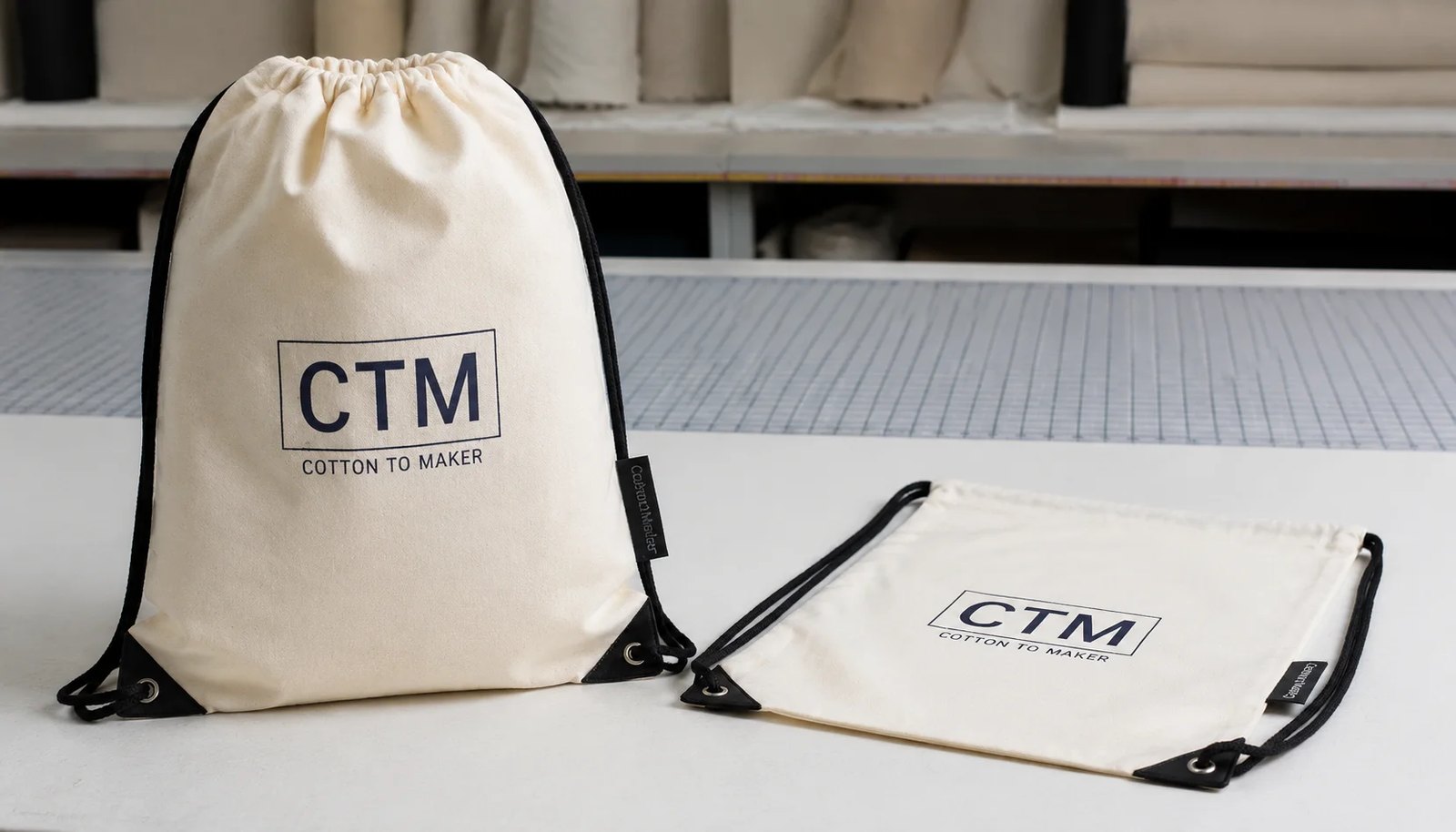
Planning Starts With the Retail Date
For liquor retailers, cotton drawstring backpacks usually support a fixed commercial date: holiday gifting, a tasting calendar, a new store opening, a loyalty club campaign, or a co-branded spirits promotion. The lead time plan should work backward from the in-store date, not forward from the day the buyer sends an inquiry. A bag that arrives two weeks after a whisky tasting weekend has lost most of its value, even if the unit price looked competitive.
A useful RFQ should state the required warehouse arrival date, the retail launch date, and whether the order ships to one DC, several distributors, or directly to stores. The factory can then separate production time from shipping time and packing complexity. Without those details, suppliers often quote a basic ex-factory lead time that excludes artwork correction, sample approval, export booking, customs clearance, and domestic distribution.
- Use the retail launch date as the fixed point, then reserve time for inbound receiving and store allocation.
- For standard cotton fabric and simple screen print, allow 45-60 days after final approval and deposit when importing by sea.
- For custom dyed fabric, multiple print colors, woven labels, or store-specific packing, plan closer to 60-75 days.
- Air freight can solve late production, but it is usually a poor match for bulky cotton backpacks unless the campaign value justifies the freight.
Define the Bag Around the Load
A liquor retail backpack is not the same as a thin trade-show giveaway. It may hold branded glassware, cocktail tools, canned mixers, recipe cards, loyalty materials, small boxed accessories, or a bundled gift set sold near the checkout area. Even when the bag is not intended to carry full bottles, shoppers may use it that way. The specification should reflect the likely abuse rather than the ideal use.
The safest starting point is a flat cotton drawstring backpack with a reinforced cord channel and bar-tacked lower cord exits. Standard sizes often sit around 34 x 42 cm or 36 x 45 cm, but the right size depends on the packed contents and display method. If the retailer wants the bag to hold a box, measure the box and add enough allowance for insertion, cord closure, and fabric thickness. A beautiful print does not compensate for an opening that slows down store staff during packing.
- For light paper inserts and coupons, 6 oz to 8 oz cotton may be acceptable.
- For glassware, cocktail kits, or premium gift presentation, 8 oz to 10 oz cotton canvas is more reliable.
- For resale or higher-value loyalty gifts, consider 10 oz to 12 oz canvas, but test cord comfort and carton volume.
- If the bag carries hard-edged packaging, specify reinforced seams and review the inside finish on the sample.
Fabric Weight and Color Decisions
Fabric weight is one of the first decisions that affects cost, lead time, and perceived quality. Many low quotes use light cotton sheeting because it is easy to source and fast to sew. That may be fine for a one-day coupon giveaway, but it can look weak beside premium spirits displays. For liquor retail promotions, 280-340 gsm cotton canvas, roughly 8 oz to 10 oz, gives a better balance of structure, print surface, and cost control.
Color also changes the schedule. Natural cotton is usually faster because mills and bag factories keep it more available. Black, navy, and common dark colors may also be available in stock, depending on the season. Custom dye requires lab dip approval, bulk dyeing, shade control, and sometimes fabric shrinkage testing before cutting. If the backpack supports a national alcohol brand guideline, build time for color review into the plan instead of treating it as decoration.
- Natural cotton: faster, good for craft, organic, or rustic retail programs, but more prone to visible stains.
- Black or navy cotton: more premium and practical for liquor retail handling, but print opacity needs testing.
- Custom dyed cotton: useful for strict brand matching, but it adds approval steps and often raises MOQ.
- Recycled cotton blends: commercially attractive for sustainability claims, but buyer should verify color consistency and fabric strength.
Print Method and Artwork Risk
Most cotton drawstring backpacks for liquor retailers use screen printing because the artwork is often a logo, campaign mark, tasting event name, or simple seasonal graphic. Screen print is cost-effective for solid colors and stable across bulk production when the artwork is clean. It also gives the buyer clear control over print size, position, and Pantone color references.
Heat transfer becomes useful when the artwork includes gradients, small photographic details, or many colors. The tradeoff is hand-feel, edge durability, and sometimes a less natural look on cotton canvas. Embroidery is possible, but it usually slows production and can pucker lighter cotton. For a drawstring backpack, large embroidery on a flexible front panel needs careful backing and sample review.
- Screen print works best for 1-3 solid colors and medium to large logo areas.
- Water-based ink can feel softer but may appear less opaque on dark fabric.
- Plastisol or thicker ink can improve opacity but may feel heavy on large print areas.
- Heat transfer should be tested for edge adhesion, flexibility, and carton compression marks.
- Artwork should be supplied as vector files with Pantone references and maximum print size clearly stated.
MOQ Logic Behind the Quote
MOQ is not only a supplier preference. It comes from fabric availability, dyeing minimums, cord purchasing, printing setup, label production, and packing labor. A factory may accept 300 pcs for a standard natural cotton backpack with one-color print, but the same factory may require 1,000 or 2,000 pcs for custom dyed fabric, custom cotton cord, woven labels, or store-specific carton sorting. The buyer should compare MOQ by specification, not by product name.
Liquor retailers often run campaigns by region or by brand partner, which can create several small logo versions. Splitting one order across many artwork versions increases setup time and inspection complexity. If the total order is 3,000 pcs but divided into six versions of 500 pcs, the supplier may price it differently from one 3,000 pc print run. The quote should show whether the MOQ applies per color, per artwork, per size, or per shipment.
- Standard fabric plus one print color usually gives the most flexible MOQ.
- Custom fabric color may require dye-lot minimums that exceed the buyer's first order quantity.
- Woven labels often have their own MOQ, separate from bag sewing MOQ.
- Multiple store packs or SKU versions increase handling time even when the bag itself is simple.
- A very low MOQ can be practical for sampling a program, but unit cost and sample charges should be separated.
Build a Sample Approval Path
The sample path should remove uncertainty before the factory cuts bulk fabric. A digital mockup is useful for logo placement, but it does not prove fabric hand-feel, cord strength, print opacity, seam quality, or packing behavior. For liquor retail buyers, the physical pre-production sample is the control point that protects the retail launch from small errors that become expensive in bulk.
A practical sample sequence is simple: approve fabric swatch, approve artwork proof, review print strike-off if color is important, then approve a complete pre-production sample. The approved sample should be sealed or clearly documented with photos, measurements, and comments. If the buyer changes artwork, bag size, fabric color, or packing after approval, the schedule must be recalculated.
- Measure finished width, height, opening width, cord length, and print position on the sample.
- Pull the cords several times to see whether the channel binds or the lower exits distort.
- Place the intended retail contents inside the sample and test closure, carrying comfort, and appearance.
- Rub the printed area with a dry white cloth and inspect for obvious ink transfer.
- Take approval photos of front, back, inside seams, cord exits, label, and packed form.
Lead Time Map for Production
A factory lead time should be broken into stages because the risk is not evenly distributed. Artwork proof may take only a day, but waiting for brand approval can take a week. Fabric may be available today, but custom dyed fabric can require lab dips, bulk dyeing, drying, finishing, and inspection before cutting. Sewing may be fast once materials are ready, while packing can become slow if the order has store allocations or individual labeling.
When comparing quotes, procurement teams should request a dated production schedule. The schedule does not need to be complicated, but it should identify the start condition for each stage. A lead time that starts after deposit is different from one that starts after final artwork, lab dip approval, or pre-production sample approval. Many disputes come from this one missing sentence.
- Artwork proof and technical review: 1-3 working days when files are clean.
- Fabric swatch or stock color confirmation: 2-5 working days for available materials.
- Lab dip and custom dye approval: often 7-14 working days before bulk dyeing begins.
- Pre-production sample: commonly 5-10 working days after materials and artwork are ready.
- Bulk cutting, printing, sewing, trimming, and packing: often 20-35 days depending on quantity and complexity.
- Inspection, carton correction, export booking, and loading: reserve several working days instead of treating them as automatic.
Packing and Distribution Details
Packing is a lead time issue, not only a carton issue. A loose bulk pack is fastest and cheapest, but it may create wrinkles, miscounts, and extra labor at the retailer's warehouse. Individual polybags protect the print and keep units clean, but they add material cost and packing time. Paper bands or belly bands can work for a more retail-facing presentation, but they require artwork approval and careful carton compression testing.
Liquor retailers often need campaign materials sent to multiple store groups or distributors. If the factory must pack by store, by region, or by mixed SKU assortment, this should be in the RFQ from the start. Store allocation added after production can delay shipment because cartons may need to be opened, re-sorted, re-labeled, and re-counted.
- State units per inner pack and units per export carton.
- Define whether bags ship flat, folded once, or folded to fit shelf displays.
- Provide carton mark format, SKU code, PO number, campaign name, and destination details.
- For multi-store programs, provide an allocation file early and freeze it before final packing.
- Review carton dimensions and gross weight because bulky cotton bags can affect freight cost more than expected.
Quote Data That Makes Comparison Fair
A useful quote for cotton drawstring backpacks should show more than a unit price. Importers and retail buyers need to compare fabric, construction, print, packing, sample cost, carton data, and lead time assumptions. A supplier quoting 8 oz cotton with one-color print and bulk pack is not comparable to another quoting 10 oz cotton, individual packing, woven label, and store sorting.
The quote should also make Incoterms clear. FOB, EXW, CIF, and DDP quotes place different responsibilities on the buyer and supplier. For liquor retail programs with fixed launch dates, the buyer should understand who controls inland trucking, export booking, customs documents, inspection timing, and final delivery. The cheapest factory price can become expensive if carton volume is high or the shipment misses the distribution window.
- Fabric weight in oz or gsm, composition, color route, and shrinkage notes if available.
- Finished size, seam type, reinforcement method, cord material, cord diameter, and cord color.
- Print method, number of colors, print area, setup cost, and artwork requirements.
- MOQ by order, by color, by artwork, and by packing version.
- Sample fee, sample lead time, whether the sample fee is refundable, and courier cost.
- Packing cost, carton quantity, carton size, gross weight, and labeling details.
- Production lead time and the exact approval event that starts the clock.
Common Schedule Mistakes
The most common mistake is treating inquiry date as the start of production. Factories cannot begin bulk production from a vague product photo and a logo file that has not been approved. Production starts when the commercial and technical details are fixed: deposit, artwork, fabric, color, sample approval, and packing instruction. Every open item is a schedule risk.
Another mistake is approving a sample that does not match the intended retail use. A backpack may look acceptable empty, then fail when packed with a cocktail kit or glassware box. The buyer should test the sample with realistic contents before approval. This is especially important for liquor retailers because display presentation and carrying strength both matter.
- Do not approve a digital mockup as if it proves bulk quality.
- Do not leave cord color, cord length, or reinforcement unspecified.
- Do not change packing instructions after sewing has started unless the schedule can absorb rework.
- Do not compare lead times without knowing whether fabric is in stock or custom dyed.
- Do not ignore carton volume; cotton backpacks can be light but bulky in freight planning.
Specification comparison for buyers
| Spec decision | Recommended option | When it fits | Buyer risk to check |
|---|---|---|---|
| Fabric weight for retail handling | 8 oz to 10 oz cotton canvas; 280-340 gsm is a practical range | Store giveaways, tasting events, loyalty gifts, and bottle accessory kits where the bag must look better than thin promo cotton | Very light 5 oz cotton can sag around boxed accessories and may feel cheap beside premium liquor brands |
| Backpack construction | Single main compartment with double drawcord closure, reinforced cord channels, and bar-tacked bottom cord exits | High-volume promotions needing fast packing, low defect risk, and easy store handling | Unreinforced cord exits can tear when shoppers carry heavier glassware, mixers, or gift items |
| Print method | Screen print for 1-3 solid colors; heat transfer only for gradients or complex artwork | Most liquor retailer logos, campaign marks, club names, and seasonal graphics | Large ink coverage on natural cotton can feel stiff; request hand-feel and wash/rub comments on the sample |
| Color route | Natural, black, navy, or dyed brand color with lab dip approval | Natural cotton for craft or sustainable positioning; darker dyed cotton for premium spirits and stain resistance | Custom dye adds approval time and shade risk; mismatched cords and body fabric are common if not specified |
| MOQ logic | 500-1,000 pcs for standard fabric and basic print; higher MOQ for custom dye, custom cord, or woven label | Regional retail chains, distributor promotions, seasonal bundle campaigns, and tasting-room replenishment | A low quoted MOQ may hide higher unit cost, limited fabric choice, or no pre-production sample allowance |
| Sampling path | Digital artwork proof, blank fabric swatch, then physical pre-production sample before bulk cutting | Any order tied to a launch date, retail display, or alcohol brand co-op budget | Skipping the physical sample can leave cord length, logo scale, and fabric hand-feel unresolved until bulk production |
| Packing method | Individual polybag or paper band by campaign; export carton with inner count label and mixed-store packing list if needed | Distribution to multiple stores, kits, event teams, or warehouse pick-and-pack operations | Loose bulk packing saves cost but increases wrinkles, miscounts, and store-level repacking labor |
| Lead time buffer | Plan 45-60 days from confirmed artwork and deposit for standard cotton; 60-75 days for custom dye or complex packing | Importers and liquor retailers working around seasonal promotions, holiday gift sets, or national campaign launches | Counting from inquiry date instead of artwork/deposit approval creates false launch confidence |
Buyer checklist before sampling
- Define the use case before quoting: bottle accessory kit, tasting event giveaway, loyalty gift, staff merch, or retail resale item.
- State target fabric weight in oz or gsm, not only 'cotton backpack'. For liquor retail, 8 oz to 10 oz cotton canvas is a safer starting point than thin cotton sheeting.
- Provide finished bag size, usable opening width, cord length, and expected load. If the backpack may carry glassware or boxed accessories, mention this in the RFQ.
- Separate body fabric color, cord color, print color, and label color in the specification so the supplier does not treat them as one general color instruction.
- Send vector artwork and note print position, maximum print area, Pantone references, and whether the logo must match a liquor brand partner's guideline.
- Request the sample path in writing: fabric swatch, strike-off or print proof, pre-production sample, and final sealed sample before bulk production.
- Require photos of bar tacks, cord exits, inside seams, print edges, and carton labels during pre-shipment inspection.
- Confirm whether the quoted lead time starts after deposit, artwork approval, fabric arrival, or sample approval.
- Specify packing count per carton, carton marks, store assortment rules, and whether individual bags need UPC stickers, paper bands, or warning labels.
- Compare quotes using landed-cost logic, including inland trucking, carton volume, inspection cost, duty basis, and the cost of missed retail launch windows.
Factory quote questions to send
- What cotton fabric weight do you recommend for a drawstring backpack that may hold glassware, mixers, small bottles, or boxed promotional items?
- Is the quoted fabric greige stock, ready-dyed stock, or custom dyed after order confirmation?
- What is the realistic MOQ for this fabric, color, cord type, print method, label, and packing combination?
- Can you quote screen print and heat transfer separately, including setup cost, maximum print area, color limits, and expected hand-feel?
- How many days are needed for artwork proof, fabric swatch, print strike-off, pre-production sample, bulk production, inspection, and export packing?
- Which approval step controls the start of mass production: deposit, final artwork, lab dip, pre-production sample, or purchase order release?
- What tolerance do you apply for finished size, fabric gsm, print placement, cord length, carton quantity, and carton gross weight?
- How are bottom cord exits reinforced, and can you provide close-up sample photos before bulk stitching?
- What packing options are available for store distribution, and how does each option change carton size, labor cost, and lead time?
- Can the final quotation show unit cost, sample cost, mold or screen cost, packing cost, inland freight to port, carton dimensions, gross weight, and production lead time as separate lines?
Quality-control points to confirm
- Fabric weight should be checked against the approved swatch with a reasonable tolerance, commonly around +/-5%, and recorded in the inspection report.
- Finished size should be measured flat after stitching, with width, height, and opening width compared against the approved sample.
- Cord length and cord diameter should match the approved sample because small changes affect wearing comfort and closure function.
- Bottom cord exits should have bar tack or reinforcement stitching, with no loose threads, skipped stitches, or fabric tearing under a moderate pull test.
- Print position should stay within the agreed tolerance, usually within a few millimeters for a simple front logo, and should not tilt visibly.
- Ink coverage should be even with no pinholes, heavy bleeding, cracked edges, or obvious color mismatch against the approved strike-off.
- Inside seams should be clean enough that cords, bottle tags, or boxed accessories do not catch on raw threads during packing.
- Carton labels should match the purchase order, SKU, color, store allocation, and quantity per carton, especially when the order supports multiple retail locations.
- Packed cartons should pass a reasonable drop and compression expectation for export handling, without crushing the bag shape or damaging labels.
- Inspection sampling should include opening and re-counting cartons, not only reviewing top-layer bags.