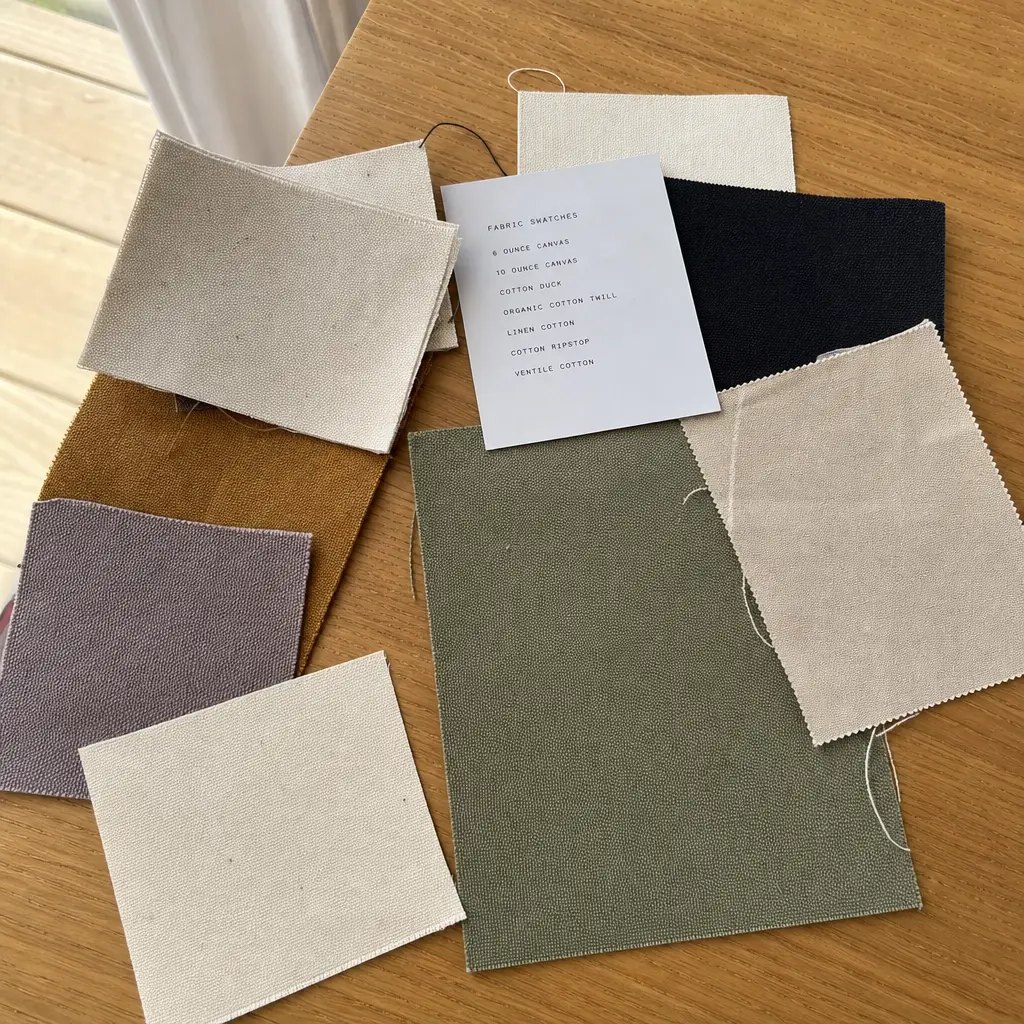
Why tech startups need a different lead-time plan for cotton drawstring backpacks
The keyword may sound narrow, but the buying problem is very specific: cotton drawstring backpacks are often ordered by tech startups for moments that cannot move easily. Think product launches, developer conferences, campus recruiting, employee onboarding, investor demo days, partner summits, or branded PR mailers. In each case, the bag is not just a commodity item. It is tied to a date, an audience, and usually a larger campaign budget that depends on timing.
That changes how procurement should approach lead time. A late shipment for a seasonal retail SKU may still be sold later. A late shipment for a launch-week event, executive offsite, or new-hire onboarding wave can lose most of its value immediately. The startup buyer therefore needs more than a generic 'production is 25 to 30 days' answer. They need a backward plan from the campaign date, with stage ownership, approval deadlines, and a fallback route if one step fails.
Another startup-specific issue is volume uncertainty. Hiring plans change. Event registration fluctuates. Marketing budgets can tighten after a funding round shifts. That makes over-ordering risky, but under-ordering can create expensive top-up orders or inconsistent reorders. The best lead-time planning guide for tech startups must therefore combine scheduling logic with MOQ strategy, budget discipline, and scenario planning.
Cotton drawstring backpacks are often chosen because they feel more brand-friendly than low-cost synthetics, present well for ESG-conscious teams, and work across many uses: laptop accessories, notebooks, chargers, T-shirts, or event collateral. But even a simple cotton bag can run into preventable delay if fabric, logo, cord style, packing, or inspection criteria are not locked early.
- Treat the order as a date-driven campaign item, not just a simple bag purchase.
- Build the timeline backward from the event, onboarding, or launch delivery date.
- Match order quantity to realistic attendance, hiring, or distribution assumptions.
- Keep one simpler fallback spec ready for rush scenarios.
The real lead-time chain: where startup orders usually slip
Buyers often ask, 'How long does production take?' Factories often answer with one number. That is exactly where planning starts to go wrong. The order does not move through one block called production. It moves through several stages, each with different risks: RFQ clarification, artwork review, sample making, material booking, fabric preparation, cutting and sewing, printing, finishing, inspection, packing, booking, and transit.
For cotton drawstring backpacks, sewing itself is usually not the longest variable. Delays more often come from pre-production ambiguity or late changes. A logo file arrives in the wrong format. A startup brand team changes event copy after legal review. A natural cotton sample feels thinner than expected, so the buyer asks to upgrade GSM midstream. Retail-style barcode labels are added after carton dimensions were already planned. None of these are unusual. But each one extends the schedule.
Internal startup processes can also create delay. The procurement contact may be waiting on approval from marketing, people operations, finance, or an executive founder. If no one owns the deadline for responses, two or three 'small' pauses can erase the freight buffer. That is why experienced B2B buyers put buyer-side approvals into the timeline instead of pretending only the factory creates delay.
A more practical way to manage the order is to split time into controllable blocks and assign each block an owner. For example, the supplier owns sample making and material booking. The buyer owns artwork approval and packing sign-off. The logistics team owns booking cutoff confirmation. Once those responsibilities are visible, startup teams can make faster decisions about whether to simplify the bag spec, split the shipment, or move to a stock-fabric option.
- Do not accept a single total lead-time number without stage breakdown.
- Track buyer response time as part of the schedule.
- Identify the non-sewing risks early: artwork, fabric confirmation, labels, and booking.
- Assign one internal owner to chase every approval deadline.
A stage-by-stage lead-time example for a tech startup launch order
Below is a realistic planning example for a mid-sized startup ordering cotton drawstring backpacks for a conference launch. The numbers are not universal promises, because factory location, season, order size, and spec complexity all matter. But this structure is what buyers should ask suppliers to provide.
Scenario: 3,000 natural cotton drawstring backpacks, 150 to 180 GSM, one-color screen print, standard bulk carton packing, no custom dyeing, target use for conference giveaways and new-hire kits.
Example stage plan: RFQ and clarification, 2 to 4 days. Sample or digital proof review, 3 to 7 days depending on whether a physical pre-production sample is required. Material booking and fabric preparation, 5 to 10 days if standard natural cotton is available through a regular mill route. Cutting, sewing, and printing, 10 to 18 days depending on line loading and print queue. In-line and final inspection, 1 to 3 days. Packing and carton mark confirmation, 2 to 4 days. Booking and cargo handoff, 3 to 7 days depending on mode and forwarder cutoff.
In practice, the buyer should also add approval buffer. If the startup brand team is still deciding between two logo placements, if legal review is pending, or if the event list may split by region, those decision days belong in the schedule. A conservative procurement manager might therefore treat a nominal 25-day factory timeline as a 35- to 45-day order window before transit is added.
Now compare that with a premium spec. If the same startup asks for custom-dyed fabric to match brand Pantone, woven labels, individual polybags, and event-specific barcode stickers, the order may add one to two weeks before bulk sewing even starts. Dyeing requires shade approval. Packing needs mockup approval. Split-labeling creates more room for carton errors. The product still looks simple, but the process is no longer simple.
- Ask suppliers to show each stage in days, not one combined promise.
- Add internal approval days to the external factory timeline.
- Treat custom dyeing, premium trims, and retail-ready packing as lead-time multipliers.
- Build extra buffer when the order supports a fixed-date event.
Specification choices that change the clock fastest
Some specifications are mostly cost decisions. Others directly change the production calendar. For cotton drawstring backpacks, the biggest timing drivers are fabric route, color route, print method, reinforcement details, and packing format.
Fabric route matters first. A standard natural cotton body in a common promotional weight is usually easier to source than custom-dyed or specialty-finished fabric. If the factory buys from a regular mill program or has stable access to stock greige or natural cotton, the lead time can be relatively short. If the startup insists on dyed body fabric, matching dyed cords, washed finish, or special hand-feel, more coordination is needed.
Print method matters next. One-color screen printing is often the most efficient route for larger promotional runs. Heat transfer can suit smaller quantities or more detailed art, but may involve different setup timing and durability expectations. Embroidery increases machine time and may need backing or stabilization review depending on fabric weight. The buyer should never treat decoration as a cosmetic detail only; it changes both schedule and defect risk.
Construction also affects timing more than many buyers expect. Adding corner reinforcement patches, inner pockets, contrast cords, metal eyelets, or premium labels may improve perceived value, but each detail can add sourcing steps or slower sewing. For startup swag, the right question is not 'What looks most premium?' but 'Which features actually matter to the audience and justify the timeline?' A bag for onboarding chargers and notebooks may not need the same finish level as a paid press kit or influencer mailer.
Packing format is another hidden driver. Bulk packing in export cartons is simple. Individual polybags, printed inserts, retailer-style labels, or office-by-office split packs all add labor and increase packing-check complexity. These additions should be visible at RFQ stage, not introduced after sample approval.
- Use standard natural cotton when speed matters more than exact color matching.
- Keep print simple for rush programs and date-critical events.
- Add premium construction details only if they change perceived value materially.
- Freeze packing rules early to avoid last-minute relabeling or repacking.
How to choose fabric weight and construction for startup use cases
The common advice to use 140 to 180 GSM cotton for drawstring bags is useful, but buyers should understand why. In many factory programs, that range is a practical middle ground for promotional and general-use bags. It usually gives enough body for decent hand-feel and print performance without creating heavy cartons or slower sewing associated with very dense canvas.
For startup procurement, the right GSM depends on the actual use case. If the bag is a conference giveaway holding brochures, stickers, a notebook, or a T-shirt, a lighter construction may be acceptable if opacity and seam integrity still meet expectations. If the bag is intended for employee onboarding with accessories, water bottle, charger, and daily commuting use, moving toward a sturdier construction may be justified. If it is part of a premium mailer or sold item, consistency of fabric appearance may matter as much as weight itself.
Buyers should also ask whether the quoted cotton is canvas, drill, or a lighter plain weave. Two fabrics with similar GSM can behave differently in print, seam stability, and hand-feel. A startup team that only approves by GSM may end up with a bag that technically matches weight but feels different from the reference they had in mind.
Construction details deserve equal attention. Side seam allowance, top channel width, cord quality, and reinforcement at stress points often determine whether the bag feels reliable in use. For very low-cost runs, factories may use minimal reinforcement or thinner cords. That may be acceptable for one-time event use, but not for onboarding kits where the bag becomes a repeat brand touchpoint. Ask the supplier what construction is standard at the quoted price and what upgrades cost.
Regional norms also matter. Some factories serving promotional markets may optimize around lower-cost, lighter constructions for volume orders, while factories focused on retail accessories may be more comfortable with heavier canvas and tidier finishing at higher MOQ. Buyers should compare suppliers within the same intended quality band, not assume all cotton bag factories are quoting the same standard.
- Ask for fabric type, not GSM alone.
- Match construction level to real use: event giveaway, onboarding, PR mailer, or retail-style merch.
- Review reinforcement, seam allowance, and cord quality before approving the sample.
- Compare suppliers serving similar market tiers so quotes are apples-to-apples.
Supplier verification beyond direct vs trading: capacity, cotton consistency, and specialization
Many sourcing guides stop at a simple choice: buy direct from a factory or work through a trader. That is useful, but not enough for B2B procurement buyers who need reliable repeatability. The better question is whether the supplier can repeatedly produce your specific type of cotton drawstring backpack at the timing and quality level your startup needs.
Start with specialization. Some factories are strongest in low-cost promotional bags with simple prints and large runs. Others are better at small-batch branded accessories with more careful stitching and packing. Ask for examples of the type of bag they handle most often: lightweight swag, heavy canvas utility, or retail-presentation accessories. A supplier may be competent overall but still not be ideal for your intended use.
Then verify capacity in a practical way. Do not just ask whether they 'can make' your quantity. Ask what monthly output they run for similar bags, whether cutting, sewing, and printing are in-house, whether peak seasons affect slot availability, and how much subcontracting they use. A supplier that normally handles 50,000 simple bags a month may still struggle with a smaller but more customized startup order if decoration and packing are not their strength.
Cotton sourcing consistency is another under-asked issue. Natural cotton can vary in tone and hand-feel. Dyed cotton can vary by lot if controls are weak. Ask whether the fabric is sourced from a regular mill program, whether the supplier keeps reference swatches by order, and how they match reorders. If your startup expects future repeat orders for onboarding or annual events, consistency matters more than the very lowest initial unit price.
Finally, ask how change management works. Startups often revise details after seeing the first sample. A dependable supplier should be able to explain what happens if logo size changes, if packing becomes split by office, or if quantity moves up after event registration closes. The answer will reveal whether the supplier actually manages projects or only issues quotes.
- Check what product band the supplier truly specializes in.
- Verify capacity by process stage, not by general assurances.
- Ask how cotton fabric consistency is controlled across lots and reorders.
- Prefer suppliers who can explain change management clearly before the PO is placed.
A better way to compare quotes: cost, timing, and risk together
A comparison table is only useful if it helps a buyer choose between commercial routes, not just between product specifications. When startup teams compare cotton drawstring backpack quotes, they should evaluate three things at once: total delivered cost, timeline reliability, and risk exposure if the order needs revision.
Start by forcing each supplier into the same quotation structure. Ask for separate lines for blank bag, decoration, labels, polybags, carton marks, sample charge, and any setup fees. Ask for lead time by stage. Ask for carton dimensions and CBM. Once the data is aligned, a lower unit price can be weighed against longer material booking, stricter MOQ, or weaker quality controls.
Then add startup-specific context. A low unit price may not be attractive if the supplier cannot support a phased order. A slightly higher quote may be worth it if the supplier can run an initial pilot, keep specs stable for reorder, and respond quickly to event changes. This matters because startup buying often values flexibility almost as much as the base price.
Freight and packing should also be considered early. If one quote assumes simple bulk cartons and another assumes individual polybags and retail labels, the comparison is not real. The same goes for lead time. A supplier promising 20 days with no mention of sample approval, inspection, or booking may look faster on paper while actually carrying more schedule risk.
A practical quote review should include one short decision summary for internal stakeholders: What are we paying for? What date confidence do we have? What goes wrong if one step slips? This helps marketing, operations, and finance make a shared decision instead of focusing on one isolated number.
- Normalize all quotes into the same cost buckets before comparison.
- Evaluate flexibility for pilots, reorders, and launch changes.
- Compare packing and freight assumptions, not just ex-factory price.
- Summarize date confidence and downside risk for internal approval.
QC in factory terms: AQL, tolerances, print expectations, and sampling method
Quality control for cotton drawstring backpacks should be specific enough that the factory and the buyer would likely reach the same conclusion when looking at the same unit. General instructions like 'good quality only' are not useful. They leave too much room for disagreement at ship time.
A workable approach is to define defect categories, measurement tolerances, print expectations, and sampling method. Many buyers use AQL-based final inspection standards; a common commercial baseline is AQL 2.5 for major defects and 4.0 for minor defects, though buyers can set different levels depending on channel and risk tolerance. Critical defects should be defined explicitly. In this category, wrong artwork, missing cords, cut fabric, severe stains, unsafe contamination, or major construction failure typically belong in that category.
Measurement tolerance should be point-based. For example, width, height, top channel depth, and cord length should each have an allowed range. The exact figures must match the approved sample and supplier capability, but the principle is simple: measure what matters most to fit, function, and appearance. If a startup team is using the bag for a standard kit insert, size drift can create downstream packing issues even when the bag looks acceptable alone.
Print quality deserves more than a visual glance. Position should be measured from fixed edges. Registration, opacity, and edge sharpness should be checked against the approved sample. For screen print or transfer, buyers should ask what rub resistance or wash expectation is reasonable for the chosen method on the chosen cotton fabric. Do not overstate performance that the process is not intended to deliver. Instead, align expectations to the use case: event merch, onboarding utility, or premium resale item.
Sampling method matters too. Inspecting only a few top cartons is weak control. Better practice is to sample across cartons, production lots, or time blocks so hidden variation can be seen. If there was a mid-run thread change, print adjustment, or fabric lot change, mixed sampling is more likely to catch it.
Finally, the approved sample should become the anchor. Keep one sealed physical sample and a marked digital spec file. This is the fastest way to resolve disputes over hand-feel, logo size, cord length, or packing details in both current and repeat orders.
- Use AQL and defect definitions that both sides understand.
- Set point-by-point measurement tolerances.
- Check print performance against realistic end use, not vague assumptions.
- Sample across lots or cartons to catch hidden variation.
Planning for startup budgets: small runs, rush orders, and phased purchasing
Tech startups often need to balance brand presentation with uncertain demand. That makes phased purchasing especially useful for cotton drawstring backpacks. Instead of forcing one large custom order too early, buyers can run a smaller pilot for an investor event, conference, or first onboarding wave, then replenish once actual usage data is clearer. This usually raises first-run unit cost, but can reduce waste and improve the second order substantially.
A pilot approach works best when the first run is treated as a controlled learning phase rather than a one-off scramble. Lock the spec carefully, inspect it well, and keep all references for reorder. If the startup later scales from 500 to 5,000 units, that documentation becomes far more valuable than squeezing the first unit price.
Rush orders need a different decision rule. The question is not only whether the factory says yes. The buyer should ask which variables must be simplified to make the rush realistic. Often the answer is stock natural cotton, one-color print, standard cord, simple export packing, and no custom-dyed elements. If the date is critical, simplify before placing the order rather than trying to preserve every branding detail and then losing the date anyway.
Budget owners should also consider the cost of lateness. Paying more for a route with higher date confidence may be rational if the order supports a high-visibility launch or recruiting event. The cheaper quote is not cheaper if the bags miss the only useful distribution window. This is especially true when logistics costs spike under time pressure and the team is forced into air shipment or local emergency sourcing.
For recurring programs such as employee onboarding, many startups benefit from planning one larger annual frame with staggered releases. That does not always mean producing everything at once. It may mean agreeing one stable specification and forecasting reorder timing so the supplier can hold material references and the buyer can avoid full re-qualification each time.
- Use pilot-plus-replenishment when demand is uncertain.
- Simplify specs aggressively for genuine rush orders.
- Consider the cost of missing the event, not only the quoted unit price.
- Create a repeatable onboarding spec if the program will continue.
A procurement workflow that keeps launch dates realistic
The most reliable cotton drawstring backpack orders usually come from an unglamorous but disciplined workflow. Start with a complete RFQ pack: intended use, target quantity, finished size, fabric type and GSM, body color, cord material, artwork file, print colors, packing method, target delivery date, and destination. This prevents the first round of quote revisions that often wastes several days.
Next, run an internal pre-approval before involving too many suppliers. Decide what can change and what cannot. If the event date is fixed but the bag color is flexible, say so. If the startup must stay within a hard budget cap, define where tradeoffs can happen: lighter GSM, simpler print, or bulk packing. Suppliers can only optimize against constraints they understand.
After quote comparison, align the milestone calendar immediately: sample due date, buyer feedback deadline, pre-production approval date, bulk production window, inspection date, and booking cutoff. Many startup teams do this informally; that is where avoidable schedule loss occurs. A simple milestone tracker often adds more value than another round of haggling over a small unit price difference.
During production, ask for one concise progress update at meaningful points rather than daily noise. Typical checkpoints are material in-house, sample approved, cutting started, printing started, finishing complete, inspection booked, and goods ready. These updates help teams react early if a date shifts.
Finally, close the loop after delivery. Record what went right, what slipped, how the quantity matched real demand, and whether the chosen construction met user expectations. For startups that will reorder for future events or onboarding, this post-order review becomes a competitive advantage. The second order should be easier, more predictable, and less dependent on urgent decisions.
- Send a complete RFQ pack the first time.
- Define internal tradeoffs before price negotiation starts.
- Use milestone tracking with owners and dates.
- Capture lessons after delivery to improve the next order.
Specification comparison for buyers
| Route or scenario | Typical fit for tech startups | Lead-time profile | Cost profile | Main risks |
|---|---|---|---|---|
| Direct factory, standard natural cotton, 1-color screen print | Best for planned onboarding kits, conference swag, campus recruiting, and repeat employee merch | Usually the most predictable once spec is frozen; fewer handoff points between sampling, production, and packing | Often strongest unit economics at moderate volume, especially when art and packing are simple | Buyer must manage clearer specs and approvals; some factories are slower in early communication |
| Trading company coordinating one or more factories | Useful when startup teams need fast quote collection across multiple bag styles or mixed swag categories | Can be quick at RFQ stage, but total timeline depends on actual factory allocation and coordination quality | May carry higher margin, but sometimes reduces internal sourcing time for small procurement teams | Responsibility can blur if sample, print, and sewing happen at different vendors |
| Rush order using in-stock natural fabric and simple print | Fits investor events, product launch drops, or surprise conference commitments with near-term deadlines | Fastest route if artwork is simple and no custom dyeing or retail packing is required | Unit cost may rise from rush fees, overtime, lower packing efficiency, or premium freight | Higher risk of approval shortcuts, limited rework window, and weaker print or packing control |
| Small pilot run followed by planned replenishment | Strong option for startups testing employer-branding demand, onboarding quantities, or event conversion before scaling | Longer overall program, but lower risk than forcing one oversized first order | Higher first-run unit cost, better learning for reorders, and cleaner budget control if demand is uncertain | Color or construction drift between pilot and reorder if references are not locked |
| Custom dyed fabric with premium trims or retail-ready packing | Fits brand-led launches where the bag is part of a paid kit, PR mailer, or design-forward campaign | Longest route because lab dips, trim confirmation, and more detailed packing add approval steps | Higher total landed cost from dyeing, extra handling, labels, inserts, and larger cartons | Shade variation, trim mismatch, missed barcode or labeling details, and schedule compression late in the process |
| Domestic or near-market fulfillment add-on after offshore production | Useful when startup teams want bulk import first, then split kits by office, event, or new-hire batch locally | Factory production timeline may be stable, but final delivery requires one more warehouse stage | Can improve delivery control for staggered use, though warehouse handling adds cost | Extra handoff can create relabeling errors, missing pieces, or delayed final-mile dispatch |
Buyer checklist before sampling
- Define the use case first: conference giveaway, employee onboarding, investor event, campus recruiting, PR mailer, or retail-style swag drop.
- Confirm finished size, body fabric type, GSM, color standard, cord material, cord length, and logo placement before requesting firm quotes.
- Ask suppliers to break lead time into sample, material booking, fabric preparation, cutting/sewing, printing, finishing, inspection, packing, and shipment booking.
- Match MOQ to launch risk: use a pilot-plus-replenishment plan if attendance, hiring volume, or campaign uptake is still uncertain.
- Request quotation lines separately for blank bag, print or embroidery, labels, hangtags, polybags, carton marks, and export carton dimensions.
- Verify whether fabric is greige, stock natural cotton, or made to order; lead time and shade consistency differ by route.
- Set buyer-side approval deadlines for artwork, samples, lab dips, and packing mockups so internal delays do not become supplier delays.
- Ask what line capacity the factory can reserve in your target week and whether your order is combined with other customers' runs.
- Confirm quality standards in writing: measurement tolerances, AQL level, print adhesion expectations, seam reinforcement points, and allowable defect definitions.
- Check freight cutoffs backward from the campaign date, including buffer for inspection failure, booking rollover, customs, and local delivery.
Factory quote questions to send
- What exact fabric are you quoting: cotton canvas, cotton drill, plain weave, blended fabric, or recycled-content cotton? Please state GSM tolerance.
- Is the body fabric from regular stock, a common mill program, or a fresh booking for this order? How does that affect lead time?
- What is your standard MOQ by size, fabric color, print color count, and packing format?
- Please break your lead time into days for sampling, material sourcing, fabric preparation, cutting/sewing, printing, inspection, packing, and booking.
- What is your current monthly capacity for cotton drawstring backpacks, and what share of that capacity is in your own facility versus subcontractors?
- Do you specialize in simple promotional bags, heavier canvas bags, or retail-quality stitched bags? Which category best matches this order?
- What stitching construction is included at side seams, corners, and cord channels? Are bartacks or reinforcement stitches included where needed?
- What print method is included in your quote, what setup charges apply, and what artwork limitations should we know before sampling?
- If we approve a pre-production sample, how do you control bulk consistency for fabric shade, logo placement, and cord length across the run?
- What inspection standard do you follow: in-line, final random inspection, AQL level, and carton sampling method?
Quality-control points to confirm
- Measure finished width, height, drawstring channel depth, hem width, and cord length against the approved spec sheet; record tolerances by point instead of using a general visual check only.
- Use an agreed AQL level for final inspection, commonly AQL 2.5 for major defects and 4.0 for minor defects unless the buyer specifies otherwise.
- Define critical defects in advance, such as wrong logo artwork, wrong fabric color, severe oil stain, cut fabric, missing cord, or unsafe needle contamination.
- Check stitch density and seam construction at side seams, top channel, corners, and any reinforcement points; skipped stitches, open seams, and weak back-tacking should be treated as major defects.
- Verify print position from fixed reference points, such as distance from top edge and side edge, not just centered by eye.
- Confirm print adhesion and cure quality with rub testing and, where relevant, a simple wash trial on approved sample fabric before bulk approval.
- Inspect fabric GSM against the approved standard with tolerance confirmation, especially if the order uses a broad natural-cotton specification where lighter substitutions are possible.
- Review shade consistency lot by lot for dyed fabric or dyed cords; natural cotton also needs review for base-tone variation if the brand presentation is sensitive.
- Check drawstring operation in use: cords should move smoothly without excessive friction, twisting, or channel tearing at the opening.
- Set acceptable tolerances clearly, for example width and height within agreed millimeters or percentages, cord length within agreed range, and print placement within agreed offset.