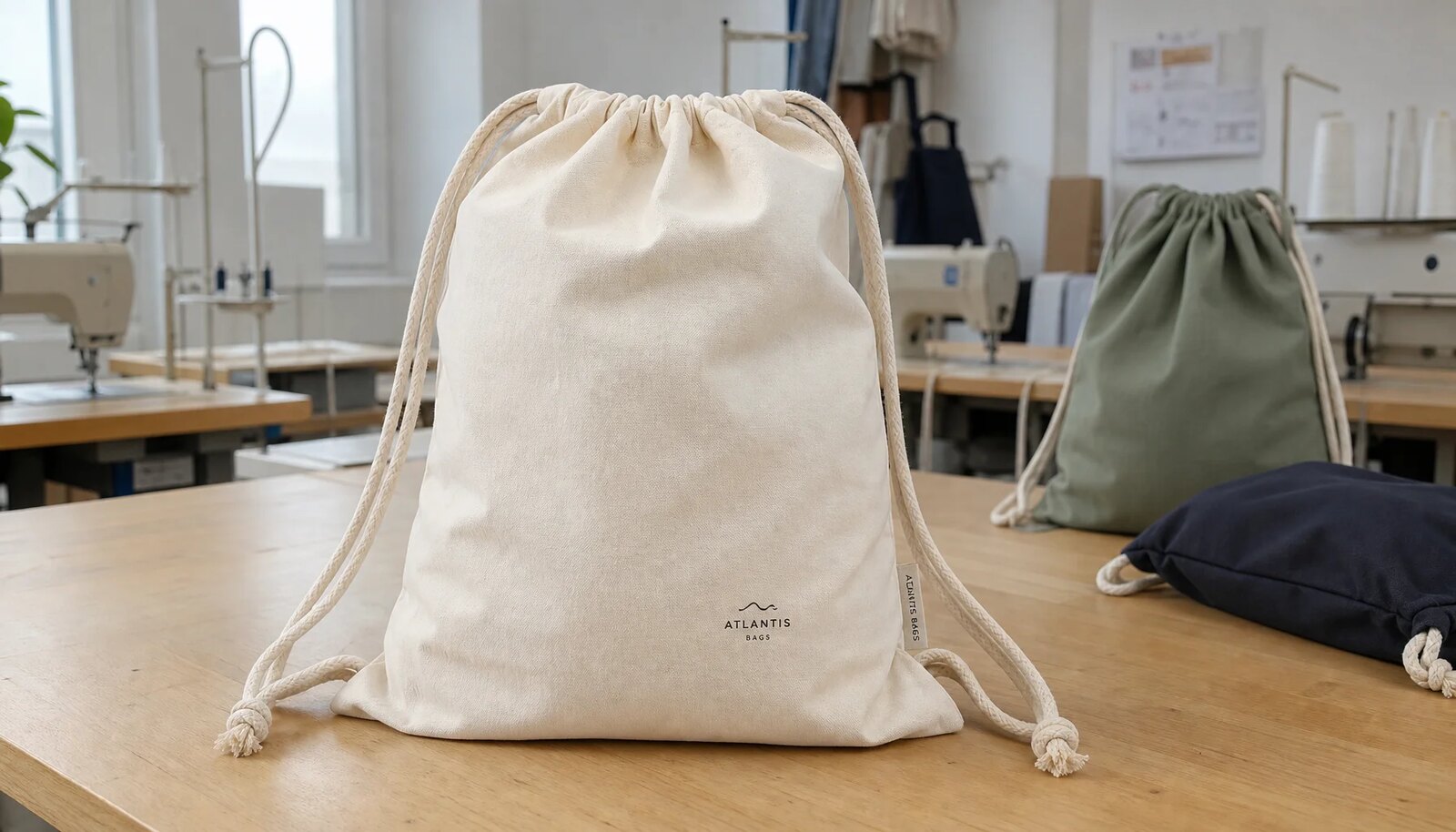
Start With the Date the Bags Must Be Usable
Event orders fail when the schedule is planned around factory completion instead of operational readiness. Cotton drawstring backpacks may be needed for registration desks, student welcome packs, race packets, staff kits, sponsor fulfillment, VIP gifting, or retail counters. In each case, the real deadline is not the day production ends. It is the day the bags are counted, accepted, sorted, staged, and ready for the event team to use.
Use three dates in the RFQ. The event date is when the program happens. The in-hand date is when cartons must arrive at the warehouse, kitting partner, hotel, convention center, campus, or venue dock. The release-to-use date is when staff can actually pull from usable inventory. If 4,000 bags arrive the night before but still need inspection, sponsor inserts, and zone allocation, the order is functionally late.
Ask suppliers to state the lead-time trigger in writing. A quote that says 20 working days may mean 20 working days after deposit, artwork approval, strike-off approval, fabric approval, or pre-production sample approval. For fixed-date events, that ambiguity is dangerous. Put the trigger in the PO and attach the approval calendar.
Receiving details belong in the first RFQ, not the final shipping email. Include destination, dock hours, appointment rules, advance warehouse labels, delivery contact, and whether goods ship to one point or multiple locations. Those details affect packing, carton marks, freight mode, and the amount of buffer needed after arrival.
- Plan from the release-to-use date, not only the event date.
- Name the lead-time trigger: deposit, artwork approval, strike-off approval, sample approval, fabric approval, or another milestone.
- Include receiving rules, delivery contacts, and shipment splits in the RFQ.
- Reserve internal time for sponsor approvals, purchasing release, sample review, counting, and kitting.
Translate Event Use Into a Factory Spec
A vague request for cotton drawstring backpacks lets every supplier quote a different product. One may price a 140 GSM stock blank, another a custom 200 GSM dyed bag, and another a smaller opening with a lower-cost cord. Procurement buyers need one spec sheet that makes quotes comparable and gives the selected factory a clear build standard.
Start with the contents. A badge, pen, flyer, and small notebook do not need the same structure as a kit with a bottle, folded shirt, catalog, and product samples. For lightweight handouts, 140-160 GSM cotton is often practical because it controls unit cost and freight weight. For reusable programs, heavier inserts, VIP kits, or retail-style presentation, 180-220 GSM is usually a better starting range.
Define working dimensions, not only nominal size. Specify body width, body height, usable opening, and whether the bag is flat or shaped at the bottom. The usable opening matters because the drawcord tunnel reduces access. Test the intended contents before bulk approval so the bag is not technically correct but awkward in use.
Fabric color changes both appearance and timing. Natural cotton can be efficient when stock cloth is available, but shade, seed flecks, and slubs vary by lot. Dyed cotton supports brand colors, staff groups, or sponsor tiers, yet it may require lab dip approval, dyeing, drying, and shade sorting. Write the acceptable shade standard before production starts.
Do not leave the drawcord to assumption. State material, diameter or width, color, single or double draw, knot style, and finished end if relevant. A weak cord or rough tunnel can make the bag feel poor even when the print looks right.
- Use one spec sheet for dimensions, GSM, fabric color, cord, print method, placement, packing, and tolerance.
- Choose GSM based on actual event contents and desired reuse, not only unit price.
- Define acceptable natural cotton flecks, slubs, and shade variation.
- Load the sample with real contents before approving bulk production.
Build the Timeline by Stage
A useful planning guide breaks lead time into visible stages. One blended number hides where delay will occur. The order may pass through RFQ clarification, quote comparison, PO release, deposit, digital proof, strike-off, pre-production sample, fabric booking, cutting, printing, sewing, trimming, inline QC, final inspection, packing, export documents, freight pickup, customs clearance, domestic delivery, receiving, and staging.
Ask how the supplier will produce the bag. Some factories print cut panels before sewing, which can give better access to the print area on a custom run. Others decorate finished blanks, which can suit smaller or stock orders but may limit placement near seams and the cord tunnel. The route affects when artwork must be final and which defects can still be corrected.
A repeat order using stock natural cotton, approved one-color art, standard cord, and bulk packing can move much faster than a first order with dyed fabric, physical samples, multi-logo artwork, individual packs, and venue-coded cartons. The better question is not only production time. Ask for working days by proofing, sampling, fabric readiness, printing, sewing, packing, inspection, and ship-ready release.
Milestones should have owners and outputs. Examples include digital proof issued, strike-off dispatched, sample approved, production fabric confirmed, cutting started, print approval photos sent, sewing progress confirmed, carton label approved, final inspection completed, and forwarder handover scheduled. These checkpoints make drift visible before the deadline becomes unrecoverable.
- Request stage-by-stage timing instead of one lead-time number.
- Confirm whether decoration happens on panels or finished bags.
- Set milestone dates with visible outputs such as proofs, samples, production photos, packing lists, and inspection reports.
- Simplify fabric, artwork, or packing before the PO if the deadline is tight.
Qualify the Supplier, Not Just the Price
For event procurement, the cheapest quote is not helpful if the supplier cannot prove material access, capacity, QC ownership, and schedule control. Supplier qualification does not need to be elaborate, but it should be concrete. Ask for evidence that relates to this exact product category and production window.
Useful signals include recent production photos of similar cotton drawstring backpacks, sample room capability, named factory location, documented daily output for cutting, printing, sewing, and packing, inspection report examples, and audit evidence if available. If the supplier is a trading company, ask who the actual factory is and who has authority to stop or correct production.
Capacity should be specific. A general claim that the factory can make many bags is weaker than a schedule showing available sewing lines, print capacity, packing labor, and the date the production slot is reserved. Ask whether the slot is held after quote, deposit, sample approval, or fabric approval. That detail often explains why a quote looks fast but later slips.
Direct factories can be strong for custom size, fixed GSM, repeat consistency, and direct feedback to production teams. Trading companies can be useful for multi-SKU event kits and consolidated shipment. Local decorators can solve rush domestic needs or late sponsor versions. Match the route to the constraint: control, consolidation, or speed close to the event.
- Ask for recent production photos, inspection examples, audit evidence if available, and documented capacity.
- Confirm who produces the bags, who performs QC, and who approves corrections.
- Verify when fabric and production capacity are reserved.
- Choose the sourcing route based on the real constraint, not only the lowest unit price.
Control Artwork Before It Controls the Schedule
Artwork delays are common because event bags often involve sponsors, committees, brand teams, and late additions. Low-resolution logos, conflicting color references, and unapproved sponsor order can consume the sampling window. Once panels are printed or finished bags are decorated, correction may require remake.
Send final vector artwork with Pantone or brand references, logo hierarchy, clear space, maximum print size, and placement measured from fixed points. Use the top edge, side seam, centerline, or cord tunnel as references. Avoid placing critical text too close to the tunnel, side seams, or bottom corners, where distortion appears when the bag is filled.
Screen printing is usually practical for one- or two-color vector artwork, larger quantities, and repeat event programs. Confirm screen charges, setup fees, repeat screen policy, registration tolerance, ink cure, opacity, and rub resistance. Fine lines and small sponsor text need extra review on cotton because the weave affects edge definition.
Digital or transfer decoration may fit full-color art, gradients, smaller quantities, or late sponsor versions. These methods require different checks: handfeel, edge durability, cracking, color behavior on cotton, and how the print looks after folding in cartons. Define the expected use of the bag so the supplier recommends a method against the right standard.
Match approval type to risk. A PDF proof confirms layout and spelling. A strike-off on actual fabric checks color, opacity, coverage, and handfeel. A pre-production sample confirms construction and decoration together. Decide the required approval level before the schedule is agreed.
- Send final vector art, brand color references, print dimensions, and placement rules with the RFQ.
- Request a strike-off on actual cotton when color, opacity, or texture matters.
- Confirm screen charges, registration tolerance, ink cure, and repeat setup rules.
- Use fixed measurement points for placement approvals.
Use Samples as Production Evidence
A sample is not only a visual preview. It is the reference for production, inspection, and dispute resolution. Review it against the spec sheet with a ruler, the approved artwork, and the intended contents. Photos help with early review, but they cannot confirm usable opening, cord function, fabric handfeel, or how the bag behaves when filled.
Check construction first. Measure body width, height, usable opening, cord tunnel, cord length, and print placement. Review side seams, bottom corners, stitch consistency, loose threads, and stress points. Pull the cord repeatedly with the bag empty and loaded. It should move smoothly without snagging, fraying, or cutting into the tunnel.
Then check material and decoration. Compare GSM, handfeel, color, and texture to the approved standard. A substitute-fabric sample may confirm size or layout, but it should not become the production reference unless that limitation is documented. For printing, check coverage, opacity, edge definition, registration, smudging, tackiness, cracking, and sponsor spelling.
Record the approval decision clearly: approved, approved with changes, or rejected. If approved with changes, list each correction and require supplier confirmation before bulk production. Scattered messages create avoidable risk; one written approval note gives the factory a clean release point.
- Measure sample dimensions, cord function, and print placement against the spec sheet.
- Test the sample with real event contents.
- Do not approve substitute fabric as the production standard unless the substitution is documented.
- Record approver, date, decision, and required corrections.
Make Packing and Carton Logic Part of the Order
Packing can add real time after sewing and printing are complete. It also determines whether receiving teams get usable inventory or a sorting problem. Bulk pack is efficient when bags will be handled by a warehouse or kitting partner. Individual polybags, insert cards, hang tags, barcodes, retail presentation, recycled or no-poly preferences, and destination-coded cartons add labor and approvals.
For one delivery point, accurate carton counts may be enough. For multiple venues, registration zones, sponsor kits, staff groups, attendee tiers, or color-coded programs, carton logic is critical. Labels may need destination, room, kit code, fabric color, print version, PO line, or release priority. Without this structure, staff may be opening cartons under deadline pressure.
Carton data affects freight. Cotton drawstring backpacks are usually light, but carton volume can drive chargeable weight for air or courier shipments. Ask for pieces per carton, carton dimensions, gross weight, net weight, and total carton count before booking freight. A packing plan that looks simple at the factory can change the freight budget.
Cotton also needs basic storage control. Damp cartons, wet floors, or strong odors can create receiving issues. Depending on the season, route, and order value, buyers may request dry cartons, reasonable desiccant use, clean storage, or shipment release photos showing packed goods and carton condition.
- Specify bulk pack, individual pack, insert cards, barcodes, carton quantity, dimensions, and carton marks.
- Use destination or kit codes when orders are split by venue, tier, sponsor, or registration zone.
- Request carton dimensions and gross weight before freight booking.
- Approve barcode and carton label data before packing begins.
Set QC Standards Before Cutting Starts
Quality control should focus on problems that affect event execution: wrong size, incorrect GSM, shade variation, crooked print, smudged ink, open seams, loose threads, cord failure, stains, odor, wrong counts, and incorrect carton labels. Defect categories should be agreed before production begins so inspection decisions are not improvised at the deadline.
Critical defects make the goods unusable, unsafe, legally risky, or unacceptable for the event. Examples include wrong artwork, wrong sponsor logo, severe stains, mildew odor, unusable drawcords, or mixed versions that cannot be allocated. Major defects are visible or functional issues likely to trigger complaints, such as open seams, print placement outside tolerance, wrong size, heavy smudging, or incorrect carton labels. Minor defects are small cosmetic issues within the agreed presentation standard.
Use measurable tolerances. Agree on size, usable opening, GSM range, print placement, print color review method, cord length, and quantity variance. Many simple event bags can work with modest dimensional and placement tolerance, but the final standard should come from the approved spec and supplier capability. Quantity tolerance matters when exact VIP, venue, or sponsor-kit counts are required.
Inspection can happen at material, inline, and final stages. Material checks review fabric shade, GSM, defects, moisture, and odor before cutting. Inline checks catch print and sewing problems while correction is still possible. Final inspection verifies finished goods, counts, packing, carton marks, and shipment release documents.
If defects are found, the correction path should be known. Sorting, reprint, remake, replacement quantity, partial shipment, credit, or buyer release all carry timing consequences. Decide release rules before the order is under freight pressure.
- Define critical, major, and minor defects before production.
- Set tolerances for size, GSM, placement, color review, cord length, and quantity variance.
- Use material, inline, and final checks when the date leaves little room for rework.
- Agree on sorting, rework, replacement, partial shipment, credit, or release rules before inspection.
Compare Quotes by Landed Cost and Schedule Risk
A low unit price is not a complete buying decision. It may exclude screen charges, setup, sample fees, special packing, carton labels, inland transport, export cartons, freight, duties, taxes, or destination handling. To compare suppliers fairly, normalize the same bag size, GSM, color, cord, print method, print size, packing, quantity, destination, approval level, and Incoterm.
Ask for cost lines that reveal tradeoffs. Separate the bag, decoration setup, screens, sample cost, special packing, barcode or label work, inner packs, export cartons, inland freight, and any freight estimate. A higher unit price may include packing support that reduces downstream labor. A lower quote may become expensive once event-specific requirements are added.
Incoterms should be reviewed by responsibility. EXW can look low because export handling and inland movement sit outside the supplier price. FOB may suit buyers with a forwarder and established import process. Delivered quotes can be convenient, but confirm whether customs clearance, duties, taxes, and final delivery are included.
Schedule clarity is quote quality. A supplier that cannot define lead-time trigger, fabric status, sample plan, capacity, packing capability, carton dimensions, and inspection evidence is carrying hidden risk. For sponsor-facing programs with fixed dates, the stronger quote is often the one with fewer unknowns, not the lowest first number.
- Normalize quotes by dimensions, GSM, print method, packing, destination, and Incoterm.
- Ask for separate setup, sample, screen, packing, label, inland handling, and freight costs.
- Compare EXW, FOB, and delivered terms by task ownership and timing risk.
- Score suppliers on product match, material certainty, capacity, QC evidence, freight clarity, and landed cost.
Protect Freight, Customs, and Receiving
Production completion is not the finish line. The backpacks still need final inspection, carton release, export paperwork, freight pickup, customs clearance, domestic delivery, receiving, and staging. These logistics milestones should sit in the same calendar as proofing, sampling, printing, and sewing.
Choose freight mode with carton data, not guesses. Request carton dimensions, gross weight, net weight, pieces per carton, and total carton count before choosing ocean, air, courier, truck, or consolidated freight. Cotton bags are light, but volume can affect chargeable weight, especially for rush shipments.
Partial shipment can protect an event when timing is compressed. A supplier may ship the minimum attendee quantity, VIP quantity, or first-location quantity by air and send the balance by slower freight. This works only when priority cartons are packed, labeled, inspected, and documented separately. Mixed cartons can create more work than they solve.
Export and import documents should match the receiving plan. Confirm commercial invoice details, packing list totals, consignee, notify party, product description, country of origin information where needed, carton count, and forwarder deadlines. Introduce the forwarder early so booking cutoffs and document requirements are not discovered after packing.
Receiving rules can decide whether goods are usable on time. Convention centers, hotels, campuses, decorators, stadiums, and advance warehouses may require appointments, dock labels, marshaling instructions, delivery windows, or paperwork. A shipment can reach the city and still miss the event if it cannot be accepted at the dock.
- Request carton dimensions, weights, pieces per carton, and total carton count before freight booking.
- Use partial air shipment only when priority cartons are separated and labeled.
- Confirm invoice, packing list, consignee, forwarder deadlines, and customs paperwork before pickup.
- Check dock hours, appointment rules, advance warehouse labels, and venue delivery requirements before shipment release.
Specification comparison for buyers
| Planning choice | Best fit | Lead-time effect | Buyer risk to verify |
|---|---|---|---|
| Stock natural cotton bag with one-color print | Simple conference handouts, campus welcome packs, volunteer kits, and cost-sensitive giveaways | Usually the fastest route when fabric, blank size, cord, and print setup are available | Confirm actual stock quantity, current fabric lot, blank dimensions, GSM range, and whether stock is reserved after quote or only after deposit |
| Custom size with stock fabric | Programs that need a specific insert fit, larger opening, stronger cord tunnel, or branded proportions | Adds cutting and sewing time but may avoid fabric dyeing or mill booking delay | Verify cutting schedule, sewing capacity, size tolerance, and whether print is applied before or after sewing |
| Dyed cotton fabric | Brand-color bags, staff group colors, sponsor tiers, or multi-location identification | Adds lab dip, dyeing, drying, shade sorting, and possible re-approval time | Require color standard, lab dip approval, shade tolerance, and production fabric photos before cutting |
| 140-160 GSM cotton | Lightweight giveaways with flyers, pens, badges, small notebooks, or simple attendee materials | Can reduce material cost and carton weight, which may help rush freight decisions | Check show-through, seam strength, shrinkage, ink bleed, and whether contents distort the bag |
| 180-220 GSM cotton | VIP kits, heavier inserts, reusable attendee bags, retail-style programs, or premium sponsor packs | May require more material planning and increases carton weight | Confirm GSM tolerance, fabric availability, cord strength, seam reinforcement, and carton weight before freight booking |
| Screen print, 1-2 colors | Vector logos, larger runs, repeat events, and simple sponsor marks | Predictable once screens, proof, and ink approvals are complete | Check screen charges, registration tolerance, ink cure, opacity, rub resistance, and placement from fixed reference points |
| Digital or transfer decoration | Full-color artwork, gradients, low quantities, or late sponsor variations | Can shorten setup for some artwork but may need more durability review | Check handfeel, cracking, edge lift, wash or rub expectations, and how folded packing affects the print |
| Bulk pack | Orders sent to a kitting partner, warehouse, or team that will sort units later | Fastest packing method and usually lowest labor burden at the factory | Confirm carton quantity, mixed-version rules, carton marks, and whether receiving staff can handle bulk inventory |
| Individual pack or coded cartons | Venue splits, retail handout, sponsor kits, registration zones, barcodes, or attendee tiers | Adds packing labor, label approval, and carton verification time | Approve barcode data, insert cards, carton labels, destination codes, and split quantities before packing starts |
Buyer checklist before sampling
- Confirm event date, in-hand date, release-to-use date, receiving address, delivery contact, dock hours, appointment rules, advance warehouse labels, and venue or decorator delivery requirements before issuing the RFQ.
- Back-plan buyer-controlled time for artwork collection, sponsor review, purchasing approval, deposit release, sample review, freight booking, customs clearance, counting, kitting, and staging.
- Create one signed spec sheet covering bag width, height, usable opening, fabric GSM, weave or finish, fabric color reference, cord type, cord color, stitch expectations, print method, print size, placement, packing, and tolerances.
- State whether fabric, blank bags, cords, labels, hang tags, and insert cards are in stock, reserved, custom-made, buyer-supplied, or still pending approval.
- Send final vector artwork with Pantone or brand color references, maximum print colors, logo order, clear space, print dimensions, and placement measured from the top edge, side seam, centerline, or cord tunnel.
- Define approval requirements: digital proof, strike-off on actual fabric, pre-production sample, production photos, inline inspection, final inspection, third-party inspection, or shipment release photos.
- Ask for supplier qualification evidence such as recent production photos, inspection report examples, audit evidence if available, documented capacity, sample room capability, and named QC responsibility.
- Confirm MOQ by fabric color, GSM, print method, packing format, destination split, and shipment priority, not only by total order quantity.
- Write overrun and underrun tolerance into the PO, especially when cartons are allocated by venue, attendee tier, sponsor kit, registration zone, or staff group.
- Specify unit and carton packing: bulk pack, individual polybag, recycled or no-poly preference, insert card, hang tag, barcode, carton quantity, carton dimensions, gross weight, net weight, and carton mark format.
Factory quote questions to send
- What exact bag dimensions, usable opening, fabric GSM, weave, finish, shrinkage expectation, fabric color, cord type, and cord color are included in this quote?
- Is the quoted fabric in stock, reserved for this order, purchased after deposit, dyed to order, or dependent on mill availability?
- Can you provide recent production photos, an inspection report example, audit evidence if available, or other documentation showing you have produced similar cotton drawstring backpacks?
- What GSM tolerance do you use for cotton fabric, and can you provide a mill certificate, fabric purchase record, or in-house GSM check for production cloth?
- Is the lead time counted from PO, deposit, artwork approval, strike-off approval, pre-production sample approval, fabric approval, or receipt of buyer-supplied labels, hang tags, or inserts?
- How many working days are required for digital proof, physical strike-off, pre-production sample, bulk cutting, printing, sewing, trimming, final QC, packing, and ship-ready release?
- What is your realistic daily capacity for printing, sewing, and packing this exact specification during the requested production window?
- Who owns QC for this order, and can you share inline production photos, final inspection photos, measurement records, and packed carton photos before shipment release?
- Does the unit price include screen charges, setup, digital proofing, strike-off, pre-production sample, standard carton marks, export cartons, and routine QC photos?
- Can the print proof or strike-off be made on the actual cotton fabric, actual GSM, and final fabric color instead of substitute cloth?
Quality-control points to confirm
- Body width, body height, usable opening, bottom corners, and cord tunnel dimensions match the approved specification within written tolerance.
- Fabric GSM is checked by a documented method, such as cutting and weighing a measured sample, with the acceptable GSM range defined before production.
- Fabric color, natural speckle level, handfeel, and visible slub variation match the approved swatch or pre-production sample within the agreed standard.
- Fabric panels are checked before and after cutting for holes, oil marks, stains, weaving defects, shade panels, mildew odor, and excessive loose fibers.
- Print position is measured from fixed reference points, such as top edge, side seam, centerline, or cord tunnel, and is recorded across randomly selected units.
- Print color is compared with the approved strike-off, Pantone target, or brand swatch while recognizing that natural cotton texture can affect perceived shade.
- Ink coverage is even, with no unacceptable banding, pinholes, cracking, set-off, smudging, heavy buildup, or tackiness after curing.
- Screen print registration remains within the agreed tolerance, especially on multi-color sponsor marks, small text, and fine-line artwork.
- Seams are straight and secure at the side seams, bottom corners, cord tunnel, bartack or reinforced areas, and any stress points created by the drawcord.
- Drawcord length, diameter, material, color, knot, and finish match the spec, and the cord pulls smoothly without snagging, fraying, or cutting into the tunnel.