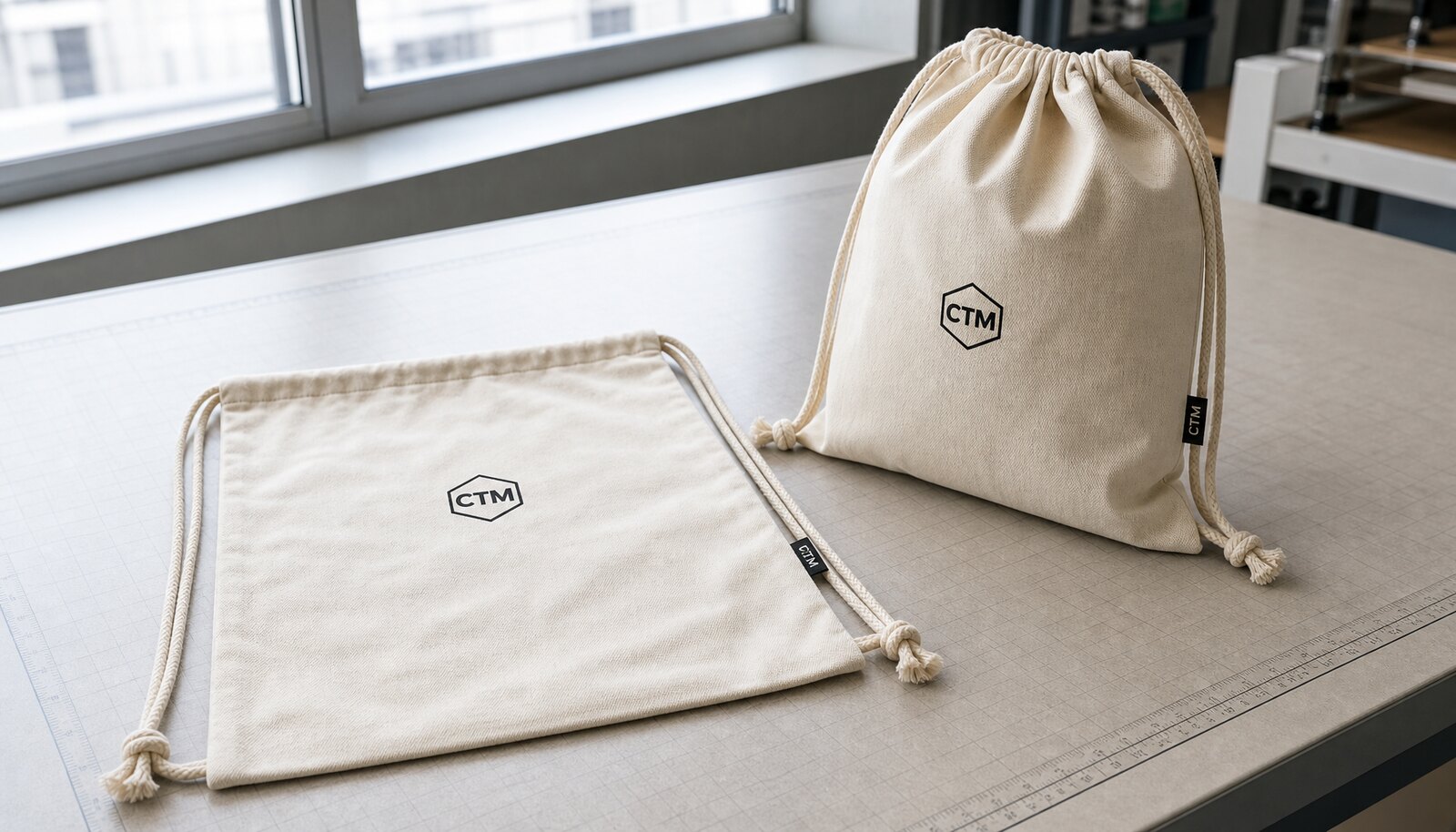
Start With the Date the Bags Must Be Usable
For corporate gifting, the real deadline is rarely the day a factory finishes sewing cotton drawstring backpacks. The real deadline is the day the bags must be usable by the event team, warehouse, kitting partner, distributor, HR team, or recipient channel. That distinction matters. Finished goods may still need final inspection, export handling, freight pickup, customs clearance, domestic delivery, receiving, sorting, kitting, or venue check-in before anyone can hand them out.
Build the plan backward from the in-hands date. A conference venue may require delivery three to five days before doors open. A kitting warehouse may need receiving time before it can assemble welcome boxes. A distributor may need appointment booking and carton labeling. Regional offices may need time to split cartons and stage gifts. Those steps are easy to miss when the RFQ only asks for “production lead time.”
Ask suppliers to break the schedule into gates: artwork proofing, sample making, sample courier, buyer approval, bulk material booking, cutting, decoration, sewing, trimming, packing, inspection, shipment booking, transit, and delivery. Also ask when the production clock starts. A quoted 20 working days may begin only after artwork approval, sample signoff, deposit, and fabric confirmation. If those approvals take two weeks, the calendar schedule is already longer than the headline number.
- Record the event date, in-hands date, warehouse receiving deadline, and latest acceptable ship date as separate milestones.
- Ask whether lead time is quoted in working days or calendar days, and whether holidays and buyer approval time are excluded.
- Build at least one spare approval window into the plan for artwork comments or sample corrections.
- For fixed-date programs, add about 20-25% calendar buffer to the supplier’s best-case timeline.
- Compare suppliers only after destination, shipment term, and freight assumption are the same.
Write the Bag Specification Before Requesting Final Pricing
Cotton drawstring backpacks can look identical in a small product photo and still perform very differently. Fabric weight, weave, cord material, reinforcement, logo size, packing method, and carton quantity all change cost and timing. An RFQ that says only “cotton drawstring backpack with logo” leaves too much open. Each supplier will fill the gaps differently, and the lowest quote may simply be based on the thinnest fabric or simplest packing.
For light event giveaways, 140-160gsm cotton can work when the bag carries brochures, badges, or small paper items. For corporate gifting, 180-200gsm cotton canvas or twill is usually a better planning baseline because the bag has more body and feels less disposable. Heavier fabric can increase cost and carton volume, so it should match the actual contents. If the gift includes a notebook, T-shirt, bottle sleeve, or boxed item, test the sample with that load before approving bulk production.
Finished size should be written in measurable terms, not described as “standard.” Common adult drawstring backpack sizes are around 34 x 42cm or 35 x 45cm. State width and height flat, whether the measurement excludes the cord, and the allowed tolerance. A commercial tolerance such as +/-1cm is often workable for sewn cotton bags, but tighter control should be discussed before pricing. Cord details also need to be specified: cotton or polyester, braided or flat, diameter, color, finished length, knot style, and bottom construction such as eyelets, sewn corners, or bartacks.
- Define the use case: conference giveaway, employee welcome kit, client gift, recruiting item, retail-style gift, or product-launch pack.
- State finished dimensions, fabric GSM, weave, color, finish, and acceptable tolerance.
- Specify whether natural cotton specks, slubs, and unbleached shade variation are acceptable.
- Confirm cord material, diameter, color, length range, knot style, and pull function.
- List construction details: stitching, cord tunnel width, bottom reinforcement, eyelets, bartacks, and side label position.
- Share intended contents and approximate load so the supplier can assess fabric and construction.
Use a Lead Time Map, Not One Production Number
A lead time map turns a loose promise into a schedule procurement can manage. For cotton drawstring backpacks, the map should include RFQ clarification, quotation, artwork proof, physical sample if required, buyer review, sample revision if required, purchase order release, deposit or payment confirmation, material reservation, cutting, decoration, sewing, trimming, packing, final inspection, shipment booking, dispatch, transit, receiving, and internal distribution.
The map should show who owns each gate. Artwork approval may sit with marketing. Budget release may sit with procurement. Delivery routing may sit with logistics. Carton labeling may depend on the warehouse. If a proof is planned for one-day approval but sits with a brand team for five working days, the factory cannot absorb that delay invisibly. The same is true on the supplier side. If embroidery, woven labels, or packing materials are outsourced, the factory should disclose that because it changes the critical path.
The map also helps when the timeline starts to tighten. If artwork is late, do not keep the same complex product and hope production will recover. Simplify while there is still time. Move from custom dyeing to stock fabric. Reduce several logo versions to one. Use a one-color screen print instead of a multi-process decoration. Choose bulk packing if the warehouse can handle presentation later. Lead time planning is useful because it makes those tradeoffs visible before the order becomes urgent.
- Create separate timeline rows for artwork, sampling, approval, production, QC, packing, freight, and receiving.
- Mark each gate with an owner: supplier, marketing, procurement, logistics, warehouse, or event team.
- Put artwork freeze, sample approval, and production-release deadlines in the order confirmation.
- Ask the factory to identify critical-path steps that cannot overlap.
- If one gate slips, simplify the product or approve expedited handling only after feasibility is confirmed.
Match Decoration to Artwork and Brand Risk
Decoration is where many corporate gifting schedules lose time. A digital mockup may look clean, but the production method determines what is actually possible on cotton. One-color screen print is usually the most predictable option for simple corporate logos with clean lines. Multi-color screen printing requires registration control. Heat transfer can reproduce detail or gradients, but buyers should check handfeel, edge adhesion, and performance on textured fabric. Embroidery, woven labels, and sewn patches can feel more premium, but they add digitizing, component production, and extra sewing steps.
Send final artwork as vector files whenever possible, such as AI, EPS, or editable PDF. Low-resolution PNG or JPEG artwork may need redrawing, which adds time and introduces brand-accuracy risk. The production file should state print size, print position measured from bag edges, color count, Pantone or brand reference, and orientation. For natural cotton, remember that ink will not look exactly like it does on coated paper or a backlit screen. The fabric base is textured, absorbent, and sometimes slightly warm in tone.
Decoration tolerance should be practical and measurable. Logo placement tolerance of about +/-5mm is a useful starting point for many cotton bag programs, but it should be confirmed with the supplier and adjusted for print size, bag construction, and branding requirements. Large prints close to seams, cord tunnels, or lower corners are harder to position consistently. If the design includes fine lines, small reversed text, gradients, metallic ink, or heavy ink coverage, ask the factory to flag risks before sample making.
- Select the decoration method before final quote comparison.
- Send vector artwork and identify which brand colors are strict and which are target references.
- Define print size, placement from top and side edges, color count, and acceptable placement tolerance.
- Avoid placing artwork too close to seams, cord channels, eyelets, or folded corners.
- Treat each logo version as a separate variable for MOQ, setup, proofing, inspection, and carton labeling.
- Review schedule impact before changing artwork after screen making, transfer production, digitizing, or label weaving begins.
Use the Physical Sample as the Approval Standard
A digital proof confirms layout. It does not confirm handfeel, fabric weight, sewing quality, cord pull, odor, ink opacity, label attachment, or packed presentation. For a fixed-date or brand-visible gift, the physical pre-production sample is the most useful risk-control step. Ideally, it should use the same fabric, cord, construction, decoration method, label, and unit packing as the final order. If the factory substitutes any component for sampling, that substitution should be stated in writing.
Sampling should be managed with the same discipline as bulk production. Define sample quantity, sample charge, courier method, reviewer, approval deadline, and decision format. Separate critical changes from preferences. “Move the logo 10mm down” may be manageable if production has not started. “Change from 150gsm natural cotton to 200gsm dyed black canvas” is a new product direction and may require new material sourcing, new sample timing, and new cost approval.
Keep the approved sample as the reference standard. If every stakeholder cannot hold a physical sample, create a signed approval file with photos and measurements. Record finished size, fabric weight, cord type, logo size, logo placement, label position, packing method, and any accepted exceptions. That file becomes the reference for final inspection and helps avoid disputes about whether the bulk goods match what was approved.
- Request a physical pre-production sample for fixed-date, high-visibility, or premium corporate gifting orders.
- Measure the sample instead of approving only by visual impression.
- Check the bag with intended contents for shape, seam stress, cord comfort, and closure function.
- Photograph the front, back, inside seams, cord exits, logo close-up, label, unit packing, and carton label if available.
- Approve, approve with required changes, or reject in writing with dated comments.
- Release bulk production only after the supplier confirms sample comments are incorporated into the production file.
Control MOQ, Variants, and Late Changes
MOQ is not just a price lever. It affects scheduling, setup, material planning, inspection, and packing control. A buyer may view 5,000 pieces as one order, while the factory sees separate lots by body color, cord color, artwork version, label version, packing format, or destination. Each split may need its own material allocation, proof, setup, inspection sampling, carton label, and packing instruction.
Corporate gifting programs often grow more complicated as stakeholders join. Sales wants one logo. HR wants another. A regional team asks for a local mark. The event team adds an insert card. These requests may be reasonable, but procurement should make their cost and timing visible. A simple variant matrix helps: list quantity, fabric color, cord color, logo file, print color, label, insert, packing method, carton mark, destination, and approval owner for each version.
Change control protects the timeline. After artwork freeze or sample approval, any change should be reviewed for cost, MOQ, sampling, production slot, packing, carton, and freight impact. Small changes can still matter. Adding individual polybags increases packing labor and may increase carton volume. Changing one-color print to two-color print adds registration and approval work. Adding a second destination may require carton relabeling and revised shipping documents.
- Ask for MOQ by body color, cord color, artwork version, print method, label version, and packing method.
- Use one body color, one cord color, one logo version, and one packing format when the delivery date is the priority.
- Create a variant matrix for any order with multiple colors, logos, inserts, or destinations.
- Confirm whether partial shipment is allowed if one variant is delayed.
- Require written cost and schedule approval for changes after proof approval or sample approval.
- Keep informal stakeholder comments from becoming production changes without procurement signoff.
Specify Packing, Cartons, and Receiving Rules Early
Packing often gets pushed to the end, but it affects labor, inspection, freight volume, warehouse receiving, and the recipient experience. Bulk packing is usually faster and lower cost. It works well when goods are going to a warehouse, event team, or kitting partner that will handle final presentation. Individual polybags, recycled paper bands, belly bands, insert cards, hangtags, and barcode labels can improve cleanliness and distribution control, but each item adds an approval point and a packing step.
Carton data is essential for landed-cost comparison. Request pieces per carton, carton dimensions, gross weight, net weight, estimated cubic meters, carton marks, and palletization requirements if needed. A quote based on 100 pieces per carton creates a different freight and storage profile than a quote based on 200 pieces per carton. Thick cords, heavier fabric, or individual packing can change carton volume after final packing is confirmed.
Receiving rules belong in the RFQ. Event venues may require appointment delivery, liftgate service, labels on multiple sides, or delivery inside a narrow window. Kitting partners may require PO number, SKU, barcode, lot code, or destination code on every carton. Retail-style distribution may require inner packs or carton sequencing. If the supplier learns these requirements in the final week, the goods may be finished but not ready to ship in the format the buyer needs.
- Choose bulk pack, individual pack, paper band, or gift-ready pack before final quote comparison.
- Provide insert, hangtag, barcode, and carton label artwork with the same approval discipline as the bag logo.
- Request pieces per carton, carton dimensions, gross weight, net weight, and estimated CBM.
- State carton mark requirements: PO number, SKU, destination, quantity, color, logo version, batch, and event name if needed.
- Confirm whether packing changes affect lead time, carton count, freight cost, or warehouse handling.
- Share venue, warehouse, or kitting-partner receiving rules before shipment booking.
Set QC Criteria With Measurable Tolerances
Quality control has to be specific enough for the supplier to inspect and for the buyer to enforce. Phrases such as “premium quality,” “good sewing,” or “standard packing” are too vague. For cotton drawstring backpacks, the QC plan should cover fabric, dimensions, stitching, reinforcement, cord function, decoration, cleanliness, odor, labels, unit packing, carton packing, and documents.
Agree tolerances before production starts. Useful starting points include finished width and height +/-1cm, logo placement +/-5mm, label placement +/-5mm, and fabric weight around +/-5% of the nominated GSM unless a different tolerance is quoted. These are not automatic standards. They should be written into the order and adjusted if the bag must fit a specific boxed gift or if the logo must align with strict brand rules.
Many import and promotional-product buyers use a sampling plan based on ISO 2859-1 with agreed AQL levels, such as AQL 2.5 for major defects and 4.0 for minor defects. Do not assume this is included unless it is written into the order. Critical defects, such as mold, unsafe sharp edges, wrong logo, severe odor, or unusable construction, are usually treated separately and may require zero tolerance. Also define who pays for reinspection if the order fails because of supplier-caused defects.
- Define size, GSM, logo placement, label placement, cord length, and carton quantity tolerances in writing.
- Classify defects as critical, major, or minor before inspection.
- Check fabric flaws, stains, odor, open seams, skipped stitches, weak reinforcements, cord function, and print adhesion.
- Use the signed sample as the visual standard for handfeel, color range, print appearance, and sewing style.
- Require packed-carton inspection, not only loose-product inspection.
- Document inspection results with photos, sample size, defect count, rework action, and shipment-release decision.
Compare Quotes by Landed Cost and Schedule Risk
A low unit price is not useful unless the specification is identical. One supplier may quote 180gsm cotton canvas, one-color screen print, individual polybag, carton marks, and FOB shipment. Another may quote 140gsm cotton, bulk pack, no setup charges, and EXW pickup. The second price may look lower, but it is not the same product or the same delivery responsibility.
Landed cost includes more than the bag. Include decoration setup, screen charges, embroidery digitizing, woven labels, patches, sample charges, courier costs, packing materials, insert cards, export cartons, inland freight, international freight if applicable, duties or taxes where relevant, customs brokerage, domestic delivery, and any kitting or venue handling cost. Lead time should also be compared under the same shipment term and destination. EXW, FOB, CIF, DAP, and delivered domestic pricing assign different responsibilities to buyer and supplier.
Risk deserves its own comparison column. A supplier with reserved fabric, clear sample timing, in-house printing, measurable QC criteria, carton data, and realistic freight assumptions may be safer than a cheaper quote with vague details. A simpler low-cost supplier can still be the right choice for a flexible, low-stakes giveaway. The selection should match the business consequence of late delivery, poor presentation, or rework.
- Normalize size, GSM, weave, color, cord, reinforcement, print method, logo size, packing, carton data, and shipment term.
- Separate unit product cost from setup, sample, packing, freight, duty, and domestic delivery costs.
- Ask every supplier to state assumptions that would change price or lead time.
- Score quote risk: fabric availability, sample accuracy, decoration complexity, variant count, QC clarity, packing readiness, and freight certainty.
- Do not approve a cheaper quote until excluded costs and schedule assumptions are documented.
- Attach the final specification sheet to the PO so the commercial agreement matches the quoted assumptions.
Build a Timeline That Can Survive Normal Friction
A workable timeline depends on order complexity, supplier capacity, and shipping route. Still, procurement can use a practical planning model. For a stock-color cotton drawstring backpack with one-color print and bulk packing, artwork proofing may take a few working days, sampling may take about one to two weeks including courier time, and bulk production may take several weeks after approval depending on quantity and capacity. Custom dyeing, complex decoration, woven labels, individual packing, and multi-destination labeling can add more approval and production time.
The safest schedule assumes ordinary friction. Artwork may need a correction. A physical sample may need one comment round. A holiday may remove factory working days. A carton label may need revision. A freight booking may move by a few days. None of these issues are unusual, but they become expensive when the timeline has no buffer. For corporate gifting, late arrival can cost more than the small saving from compressing planning time.
Close the project with one controlled order file. Include the specification sheet, approved artwork, approved sample photos, packing instructions, carton marks, inspection standard, shipment term, delivery address, required documents, and stakeholder approvals. This file reduces ambiguity for the factory and gives procurement a clean reference if delivery or quality questions arise. Lead time planning is not only about moving quickly. It is about removing avoidable uncertainty before production starts.
- Use a stock fabric color, one logo version, and bulk packing when the timeline is tight.
- Use physical samples and written approvals for high-visibility gifts or fixed event dates.
- Add buffer for buyer approvals, sample courier, holidays, packing components, inspection, and freight booking.
- Keep one controlled order file rather than separate email threads for artwork, packing, logistics, and QC.
- Hold a pre-production confirmation before cutting: final spec, approved artwork, sample comments, packing, carton marks, and ship date.
- If the schedule becomes unrealistic, simplify the product before production begins instead of relying on last-minute recovery.
Specification comparison for buyers
| Spec decision | Recommended option | When it fits | Buyer risk to check |
|---|---|---|---|
| Fabric weight | 180-200gsm cotton canvas or twill for most corporate gifting; 140-160gsm only for light event giveaways | Use 180-200gsm when the bag may carry notebooks, brochures, light apparel, drinkware sleeves, or welcome-kit inserts | Confirm GSM tolerance, often quoted around +/-5% unless tighter control is agreed; lighter fabric can feel thin, show print-through, and distort under load |
| Finished size | Common adult gift size around 34 x 42cm or 35 x 45cm, with a written tolerance such as +/-1cm | Works for conferences, employee onboarding kits, campus recruiting, and client gifts that need A4 or letter document capacity | Do not accept “standard size” without measurements; cutting and sewing variance can affect insert fit, logo position, and carton count |
| Fabric color | Natural, black, navy, or supplier stock colors where possible | Best when the in-hands date is fixed and the buyer wants fewer dye-lot and lab-dip approvals | Custom dyeing may require lab dip, bulk shade approval, higher MOQ by color, and added risk of shade variation across lots |
| Cord and closure | Cotton or polyester braided cord, typically 5-8mm depending on bag weight and target cost | Use thicker cord for a more substantial gift; use standard cord for cost-controlled conference programs | Specify cord material, diameter, color, length, knot style, and pull smoothness; unclear cord specs lead to inconsistent handfeel and function |
| Decoration method | One-color screen print for simple logos; transfer for detailed or gradient artwork; embroidery, woven label, or patch for premium branding | Choose before quotation so suppliers price the same production route | Multi-color print, large ink coverage, embroidery, patches, and sewn labels add setup, approval, inspection, and possible subcontractor time |
| MOQ strategy | Single body color, single cord color, one artwork version, one print position, one packing method | Best for event-critical orders and cleaner inspection | MOQ may apply per color, artwork, label, and pack version; splitting a 5,000-piece order into five versions can reset setup and lead time assumptions |
| Sample approval path | Physical pre-production sample using the same fabric, cord, decoration, label, and unit packing where practical | Needed when handfeel, color, size, logo placement, odor, load function, or presentation matters | Digital proofs confirm layout only; they do not verify fabric weight, sewing, cord pull, ink curing, shrinkage, or packed presentation |
| Packing method | Bulk pack for speed; individual polybag, paper band, insert card, barcode label, or gift-ready pack only when required | Bulk pack fits warehouse kitting; individual pack fits multi-location distribution or cleaner handout presentation | Packing changes affect labor, carton quantity, CBM, inspection points, receiving workflow, and environmental compliance expectations |
| QC tolerance plan | Approved sample plus measurable tolerances for size, GSM, logo placement, stitching, cord length, label position, packing, and cartons | Use for any brand-visible or event-date order | Avoid vague wording such as “good quality”; state inspection standard, defect classification, sample size, AQL if used, and corrective-action rules |
Buyer checklist before sampling
- Confirm the event date, required in-hands date, warehouse receiving deadline, latest acceptable ship date, and whether partial delivery is acceptable.
- Identify the final delivery route: event venue, central warehouse, kitting partner, distributor, regional offices, individual drops, or multi-address shipment.
- Define finished bag size in cm or mm, such as 34 x 42cm, and state size tolerance, commonly +/-1cm unless the product must fit a specific insert.
- Specify fabric composition, weave, weight in GSM, color, finish, and whether natural cotton specks, slubs, or unbleached tone variation are acceptable.
- State expected contents and approximate load, for example brochures only, notebook plus apparel, welcome-kit inserts, or lightweight merchandise.
- Confirm cord material, cord diameter, cord color, finished cord length range, knot method, and whether eyelets, bartacks, or sewn corner reinforcements are required.
- Send final artwork in vector format with print dimensions, placement from bag edges, color count, Pantone or brand reference, and minimum clear-space rules.
- Choose decoration method before comparing prices: screen print, heat transfer, embroidery, woven side label, sewn patch, hangtag, or mixed branding.
- Confirm MOQ by body color, cord color, fabric weight, artwork version, label version, print method, packing version, and destination split.
- Specify unit packing: bulk pack, individual polybag, recycled paper band, insert card, hangtag, barcode label, master carton label, or retail-ready pack.
Factory quote questions to send
- What exact fabric composition, weave, GSM, GSM tolerance, shrinkage expectation, color, and finish are included in the quote?
- Is the quoted fabric from available stock, reserved stock, or new production, and how long can the stock be held after quotation?
- For natural cotton, what shade range and cotton speck level should we expect? For dyed cotton, is a lab dip required before bulk production?
- What finished bag dimensions and dimension tolerance are included, and are measurements taken flat before or after pressing/packing?
- What cord material, diameter, color, finished length, knot style, and reinforcement method are included in the price?
- Is the price based on one-color screen print, multi-color screen print, heat transfer, embroidery, woven label, sewn patch, or another decoration method?
- What is the maximum recommended print area for the selected fabric and bag size, and are there risks with fine lines, gradients, large ink coverage, or seams?
- What artwork file format do you require, and what artwork problems commonly delay proofing or sample production?
- What is the MOQ per body color, cord color, artwork version, print method, label version, packing version, and destination split?
- What setup charges apply for screens, embroidery digitizing, woven labels, patches, hangtags, barcodes, or carton labels?
Quality-control points to confirm
- Fabric composition, weave, weight, color, and finish match the approved sample and written specification; GSM tolerance should be agreed, often about +/-5% for commercial cotton bags unless tighter control is quoted.
- Finished bag dimensions are checked flat against the specification, with a written tolerance such as +/-1cm for width and height, plus checks for cord tunnel width and corner shape.
- Fabric is free from unacceptable thin spots, holes, weaving faults, severe slubs outside the approved natural-cotton character, patchy dyeing, oil marks, mildew smell, mold, and foreign fibers.
- Cutting is straight and panels are symmetrical; front and back panels are not visibly twisted, skewed, or distorted after sewing and packing.
- Side seams, bottom seams, cord tunnels, and stress points have consistent stitch density, no skipped stitches, no seam opening, no loose thread nests, no broken threads, and no excessive puckering.
- Corner reinforcements, eyelets if used, bartacks if specified, and cord exits are secure enough for the agreed intended load and do not tear during normal pull testing.
- Cord length, cord thickness, cord color, knot security, pull smoothness, and left-right symmetry are consistent across inspected units; cord ends should not fray excessively.
- Print size, position, orientation, opacity, registration, edge sharpness, ink curing, adhesion, and color target match the signed sample within agreed tolerance, such as logo placement +/-5mm when practical.
- Heat transfers, if used, are checked for lifting edges, cracking, scorching, excessive stiffness, and adhesion after light handling or rub checks appropriate to the product.
- Embroidery, woven labels, patches, hangtags, and side labels match approved spelling, orientation, placement, thread color, attachment quality, and trimming standard.