Compliance Starts With the Retail Use
Cotton drawstring backpacks for hotel retail look simple, but the buying risk changes sharply by use case. A backpack sold in a resort boutique needs better fabric hand-feel, cleaner printing, and more controlled retail packing than a conference amenity bag placed in a guest room. The same sketch can be quoted at very different prices because one supplier assumes a thin promotional bag while another assumes a boutique-ready cotton backpack with reinforced corners, hangtag, barcode, and carton assortment control.
For procurement teams, the first compliance step is not asking for the cheapest unit price. It is defining what the backpack must survive. Hotel retail often involves guests carrying slippers, spa products, towels, swimwear, maps, water bottles, or small gifts. That means the RFQ should describe load expectation, shelf presentation, and brand exposure. Once the use is clear, supplier quotes become easier to compare and production approval becomes less subjective.
- For resale, specify retail appearance, packaging, barcode, and consistent color from carton to carton.
- For guest amenities, prioritize clean printing, odor control, safe cord construction, and reliable delivery date.
- For event merchandise, lock artwork approval early because print setup is usually the schedule risk.
- For multi-property hotel programs, build a repeatable spec sheet so each reorder matches the approved master sample.
Fabric Weight and Construction Choices
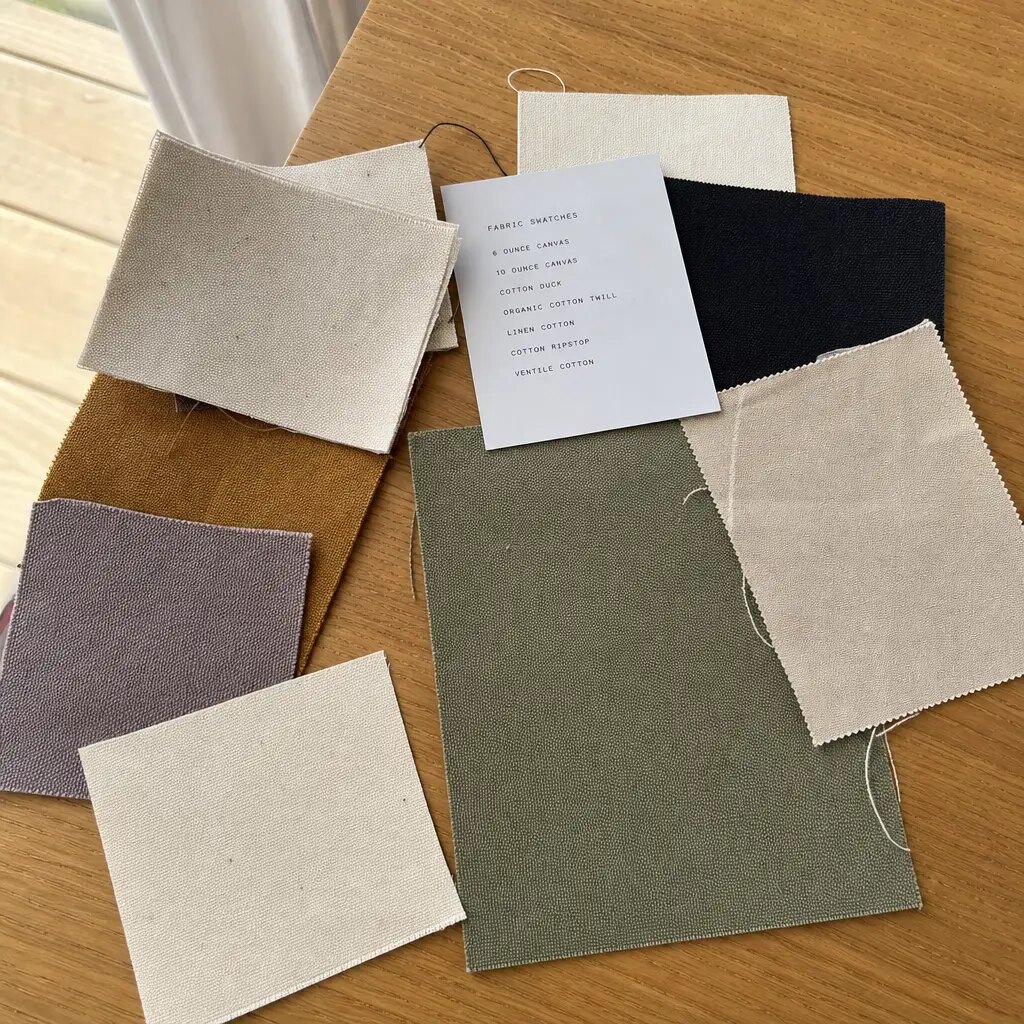
The most common mistake in cotton backpack sourcing is describing the fabric only as cotton or canvas. Suppliers may quote 5 oz, 6 oz, 8 oz, 10 oz, or heavier cotton and still believe they answered correctly. For hotel retail, 6 oz cotton can work for light amenity use, but it often feels too promotional for boutique sale. An 8 oz cotton canvas is a practical middle range for retail programs because it gives better structure without making the bag too stiff or expensive. A 10 oz canvas is stronger and more premium, but it increases cost, shipping weight, and sometimes minimum order requirements.
Fabric behavior also matters. Natural cotton may show seed flecks and slight shade variation, which can be acceptable for an eco-style hotel brand but not for a clean luxury retail look. Bleached cotton gives a cleaner print base but may show dirt faster during handling. Dyed fabric needs shade approval, crocking control, and enough lead time for lab dip or bulk dyeing. A supplier compliance checklist should treat fabric as a controlled component, not a loose description.
- 5 oz to 6 oz cotton: lower-cost amenity or promotional use, limited load capacity, less premium hand-feel.
- 8 oz cotton canvas: balanced choice for hotel boutique resale and branded guest kits.
- 10 oz cotton canvas: stronger retail feel, better durability, higher unit cost and carton weight.
- Natural cotton: visible flecks may be normal; define whether they are acceptable before production.
- Dyed cotton: require lab dip or strike-off approval and a tolerance for shade variation by lot.
Drawstring and Reinforcement Details
The drawstring system is where many low-cost backpacks fail. A cotton cord can match the fabric and feel natural, but it may fray if the ends are not knotted, taped, tipped, or stitched. Polyester cord is stronger and smoother but may look less natural next to unbleached cotton. Flat cotton tape gives a softer shoulder feel but needs a wider channel and careful sewing to prevent twisting. Each option affects cost, comfort, and how the backpack hangs when loaded.
Corner construction is just as important as the cord. Metal eyelets look neat and speed production, but on lighter cotton they can pull out if the backing is weak. Sewn fabric triangles or reinforced bottom tabs are often better for retail bags that need to carry more than a brochure. The RFQ should include reinforcement drawings or reference photos, because many suppliers will otherwise quote their standard construction and leave the buyer to discover the weakness during inspection.
- Use reinforced fabric triangles for heavier retail loads or repeated guest use.
- Use metal eyelets only with backing reinforcement and a pull test requirement.
- Define cord diameter, material, color, end finish, and exposed length after closure.
- Check that the cord channel opening is wide enough for smooth closing without fabric bunching.
- Require a simple loaded hang test using the expected product weight, not an empty visual review.
Print Method Compliance for Hotel Branding
Most hotel retail cotton drawstring backpacks use screen printing because it is cost-effective, stable, and suitable for solid logos on cotton canvas. One-color screen print is usually the cleanest option for natural cotton bags. Multi-color logos require registration control and may need higher MOQ or higher setup costs. If the artwork has gradients, fine details, or photo-style effects, digital print or heat transfer may be suggested, but these methods change the hand-feel and durability profile.
Print approval should be based on a real print proof, not only a digital mockup. Cotton texture absorbs ink differently from paper, and natural fabric flecks can affect fine logo edges. A hotel brand may approve a Pantone color on screen, then reject the same color when printed on unbleached cotton because the base fabric warms the tone. The supplier should state print size, location from seams, ink type where relevant, and tolerance for placement. For retail, a logo that is 8 mm off-center can look like a defect even if the bag is technically usable.
- Screen print: best for solid logos, good cost control, requires setup per color.
- Embroidery: premium appearance, higher cost, may pucker lighter cotton if backing is poor.
- Heat transfer: useful for detailed artwork, but hand-feel and wash durability need approval.
- Woven label: stable for repeat programs and avoids large ink coverage issues.
- Print placement tolerance should be written, commonly within plus or minus 5 mm to 10 mm depending on design.
MOQ Logic Behind Supplier Quotes
MOQ is not only a supplier preference. It is connected to fabric sourcing, dyeing, cutting efficiency, print setup, packaging, and carton handling. A supplier may accept a lower MOQ for natural cotton with standard cord and one-color print because materials are easy to source. The MOQ rises when the buyer requests custom dyed fabric, custom cord color, embroidery, special hangtags, barcode labels, or mixed hotel property assortments. Procurement teams should ask suppliers to separate these MOQ drivers instead of accepting one unexplained minimum.
For hotel retail, the best quote format shows price breaks by quantity and explains what changes at each break. A 300-piece order may be possible but carry a high print setup share and manual handling cost. A 1,000-piece order may reduce unit cost and improve fabric buying efficiency. A 3,000-piece order may justify custom dyeing or dedicated packaging. The buyer should compare total landed cost and operational risk, not only the ex-factory unit price.
- Blank natural cotton with standard cord usually supports the lowest practical MOQ.
- Custom dyed fabric may need fabric mill minimums and extra lab dip time.
- Multi-color printing increases setup cost and can raise the sensible MOQ.
- Retail packing with individual barcode labels adds labor, label control, and inspection time.
- Split shipments or many SKU assortments reduce factory efficiency and should be quoted separately.
Supplier Evidence That Matters
A supplier compliance checklist should request evidence that matches the order risk. For a standard natural cotton backpack, useful evidence includes fabric swatches, sample photos, stitching close-ups, print proof photos, carton packing examples, and export experience for similar cotton bags. For a retail claim such as organic cotton or recycled content, the evidence must go further. Documentation should connect the material claim to the actual production lot, not only show a generic certificate from a past order.
Buyers should also separate factory capability from sales presentation. A polished catalog does not prove that the supplier controls sewing quality, print placement, or packing accuracy. Ask who cuts the fabric, who sews the backpacks, who prints the logo, who performs final inspection, and who is responsible if the print shop causes delays. When several subcontractors are involved, the quote needs one accountable supplier with authority to stop shipment, rework defects, and provide clear records.
- Request fabric swatch with weight, color, weave, and supplier reference marked.
- Request sample photos showing inside seams, drawstring channel, corner reinforcement, and packed unit.
- Request print proof under normal light and close-up view of logo edges.
- Request carton mark example when multiple hotel properties or SKUs are included.
- Request material claim documents only if the claim appears on product, hangtag, website, or invoice.
Sample Approval and Acceptance Criteria
A production sample should not be treated as a souvenir. It is the control standard for bulk production. For cotton drawstring backpacks, the approved sample should include actual fabric weight, actual drawstring material, final logo method, final size, seam construction, reinforcement, label, and packing format. If any part is substituted for sampling speed, the supplier should mark it clearly and provide a second approval before bulk production.
Acceptance criteria should be measurable. Instead of writing good stitching, define no open seams, no skipped stitches longer than an agreed length, no loose threads visible after trimming, and no broken needle marks. Instead of writing correct logo, define print color reference, logo size, placement from top edge and side seam, opacity, and allowed registration tolerance. This keeps the buyer, supplier, and inspector aligned when production pressure starts.
- Approve one sealed master sample for construction and one print proof for artwork if timing requires separate approvals.
- Record finished dimensions while the bag is flat, including width, height, channel depth, and cord length.
- Weigh the sample fabric or request a GSM test report when fabric substitution risk is high.
- Photograph approved packing: fold method, individual bag or bundle, hangtag position, barcode label, and carton layout.
- Do not release bulk cutting until fabric shade, logo size, and reinforcement method are signed off.
Packing and Retail Presentation Controls
Hotel retail packing is often underestimated because the backpack itself receives most of the attention. A backpack that looks good at the factory can arrive wrinkled, dusty, or mislabeled if packing is not defined. For boutique resale, buyers may need individual polybags, recycled paper bands, hangtags, price stickers, barcode labels, or property-specific cartons. For amenity use, bulk packing may be acceptable, but the fold method still matters because deep creases can cut through the printed logo area.
Carton design also affects landed cost and damage risk. Too many units per carton can compress cords and deform eyelets. Too few units increase carton count, handling cost, and freight volume. The quote should list units per carton, carton dimensions, gross weight, net weight, carton marks, and any pallet requirement. If the buyer’s warehouse uses barcode receiving, carton labels should be tested for scan readability before shipment.
- Use individual packing when bags are sold directly to hotel guests or displayed on shelves.
- Use bundle packing when the product is back-of-house amenity stock and presentation is less critical.
- Keep printed panels protected from cord pressure, sharp hangtag pins, and carton abrasion.
- Separate SKUs by inner carton or clearly marked carton labels to reduce receiving errors.
- Include packing photos in the final inspection report before approving shipment.
Lead Time Risks and Schedule Control
A realistic lead time for cotton drawstring backpacks depends on fabric availability, sample approval speed, print complexity, packing components, and inspection booking. Standard natural cotton with a one-color screen print can move faster than custom dyed cotton with retail labels and multi-property assortments. The highest schedule risk usually sits in artwork approval, fabric dyeing, packaging printing, and late changes to SKU quantities.
Procurement teams should build the schedule backwards from the hotel retail launch date, not from the supplier’s best-case production days. Include time for sample shipment, internal brand approval, pre-production correction, bulk production, final inspection, export documents, freight, customs clearance, and warehouse receiving. If the product is for a seasonal hotel opening or resort campaign, a small specification delay can become a missed retail window.
- Freeze artwork before sample production to avoid repeated screen or proof changes.
- Approve fabric shade before bulk cutting, especially for dyed or bleached cotton.
- Book inspection before the production finish date during peak export seasons.
- Keep packaging artwork approval on the same schedule as bag approval.
- Use a written production milestone list: material ready, cutting, sewing, printing, packing, inspection, shipment release.
Quote Data Needed for Landed-Cost Comparison
Supplier quotes for cotton drawstring backpacks are only comparable when the data fields match. One quote may include one-color print, basic bulk packing, and FOB terms. Another may include individual polybags, hangtags, barcode labels, inspection support, and stronger 8 oz cotton. The cheaper quote may not be cheaper after adding the missing items. A clean RFQ reduces this confusion by forcing each supplier to quote the same construction, print, packing, and shipment basis.
Landed-cost comparison should include more than unit price. Buyers need sample charges, screen charges, packaging charges, local export costs, inspection costs, carton volume, freight estimate, duty classification support, and expected reject handling. If the order will be replenished, also ask whether the supplier can hold fabric color standards, print screens, and packing specifications for future runs. Reorder consistency is often more valuable than saving a few cents on the first purchase.
- Compare quotes under the same Incoterm, such as EXW, FOB, CIF, or DDP, before judging price.
- Request price breaks at realistic quantities, not only the buyer’s first trial order quantity.
- Separate bag cost, logo cost, packing cost, sample cost, and setup charges.
- Ask for carton dimensions and gross weight so freight and warehouse cost can be estimated.
- Record the validity period of the quote because cotton, freight, and currency changes can affect repeat orders.
Specification comparison for buyers
| Supplier option | What to verify | Commercial advantage | Buyer risk to control |
|---|---|---|---|
| Direct sewing factory | cord material proof, reinforcement close-ups, load-test photos, approved sample tag, and bulk-line first-piece record | Better sample-to-bulk control and faster production feedback | May be weaker on export paperwork or branded packing unless checked early |
| Trading company | Factory name, production photos, trim-source proof, and who owns QC decisions | Can coordinate small mixed orders and extra services | Markup can hide real factory capability and slow defect decisions |
| Specialized bag workshop | cord diameter, eyelet or reinforced channel, bottom corner reinforcement, seam allowance, bar-tack position, and load target | More practical for detailed construction, trims, and repeat programs | Capacity may be limited during peak seasons |
| Low-price general supplier | 6-10 oz cotton canvas, 210D polyester, rPET, or blended cotton with shrinkage and colorfastness expectations set before sampling | Useful for simple promotional runs with loose specs | Material downgrades, weak packing, and vague inspection scope can erase savings |
| Retail-ready supplier | fold direction, cord protection, bundle count, carton compression, moisture bag, and retail label position | Can handle labels, SKU separation, carton marks, and receiving rules | Higher unit cost must be compared against reduced warehouse work |
| Compliance-focused supplier | Fabric records, labeling review, test plan, and production traceability | Safer for retail programs and repeat brand orders | Documentation claims need evidence, not only sales language |
| Local sample room plus bulk factory | Signed sample, bulk factory handoff, first-piece photos, and deviation owner | Good for complex branding before large production | Sample room quality may not match bulk line unless handoff is controlled |
Buyer checklist before sampling
- Define the retail use before requesting price: boutique resale, guest amenity, welcome kit, event merchandise, or staff distribution.
- Specify fabric by GSM or ounce weight, not only by the word cotton; include weave, color, shrinkage tolerance, and whether natural flecks are acceptable.
- Set the finished size with tolerance, usable opening width, cord length, and whether the bag must hold slippers, a towel, minibar products, or retail gift bundles.
- Decide the drawstring construction: cotton cord, polyester cord, flat tape, metal eyelets, sewn corner channels, or reinforced fabric triangles.
- State the logo method, print size, number of colors, Pantone references, print placement tolerance, and whether the print must pass rub or wash testing.
- Request pre-production sample approval before bulk cutting when the order includes dyed fabric, custom cord color, retail packaging, or barcode labels.
- Require carton packing details including units per carton, inner packing, carton dimensions, gross weight, SKU labels, and pallet preference if applicable.
- Compare quotes using the same Incoterm, currency, sample cost, mold or screen charge, packing cost, inspection cost, and export documentation scope.
- Set QC thresholds for size, seam strength, cord pull, print defects, contamination, needle damage, odor, and carton labeling errors.
- Keep approved sample, print proof, packing photo, and final inspection report together so replenishment orders can match the first delivery.
Factory quote questions to send
- What cotton fabric weight do you recommend for a hotel retail drawstring backpack, and can you quote 6 oz, 8 oz, and 10 oz options separately?
- Is the fabric greige, bleached, dyed, or enzyme-washed, and what shrinkage tolerance should we expect after sewing or light laundering?
- What is your practical MOQ for blank stock color, custom dyed fabric, custom cord color, and retail packing with barcode label?
- Which print methods can you control for this fabric: screen print, heat transfer, digital print, embroidery, woven label, or rubber patch?
- Will the production sample be made with actual bulk fabric, actual cord, actual print ink, and actual packing components?
- What size tolerance, print placement tolerance, and cord length tolerance do you apply during inline and final inspection?
- How many units are packed per inner bundle and export carton, and what carton size and gross weight do you estimate?
- Can you provide a quote breakdown for bag cost, print setup, packaging, sample, inspection support, and freight-ready carton labeling?
- What lead time applies after artwork approval, sample approval, and deposit, and which step is usually the bottleneck?
- How do you handle rejected units found during final inspection: replacement, rework, credit note, or shipment hold until corrected?
Quality-control points to confirm
- Finished size should remain within the agreed tolerance, commonly plus or minus 5 mm to 10 mm depending on bag size and fabric behavior.
- Fabric weight should match the approved swatch; random GSM checks help prevent substitution from 8 oz cotton to a lighter 6 oz fabric.
- Seams at side, bottom, and drawstring channel should be straight, locked, and free from skipped stitches, open seams, or loose thread clusters.
- Cord pull strength should be tested by repeated opening and closing; cord ends should not unravel or slip into the channel during normal use.
- Corner reinforcement should withstand loading without tearing, especially when metal eyelets are used on lighter cotton.
- Print color, opacity, registration, hand-feel, and placement should match the approved proof under normal lighting, not only under factory inspection lamps.
- Dark prints on natural cotton should be checked for ink strike-through, cracking, and lint contamination before mass packing.
- Retail packaging should be clean, correctly labeled, scannable if barcodes are used, and consistent by SKU and hotel property.
- Cartons should pass a practical compression and handling review so drawstring cords, labels, and printed panels are not crushed or distorted.
- Final inspection should include carton count, assortment count, packing method, export marks, and photo records before balance payment or shipment release.