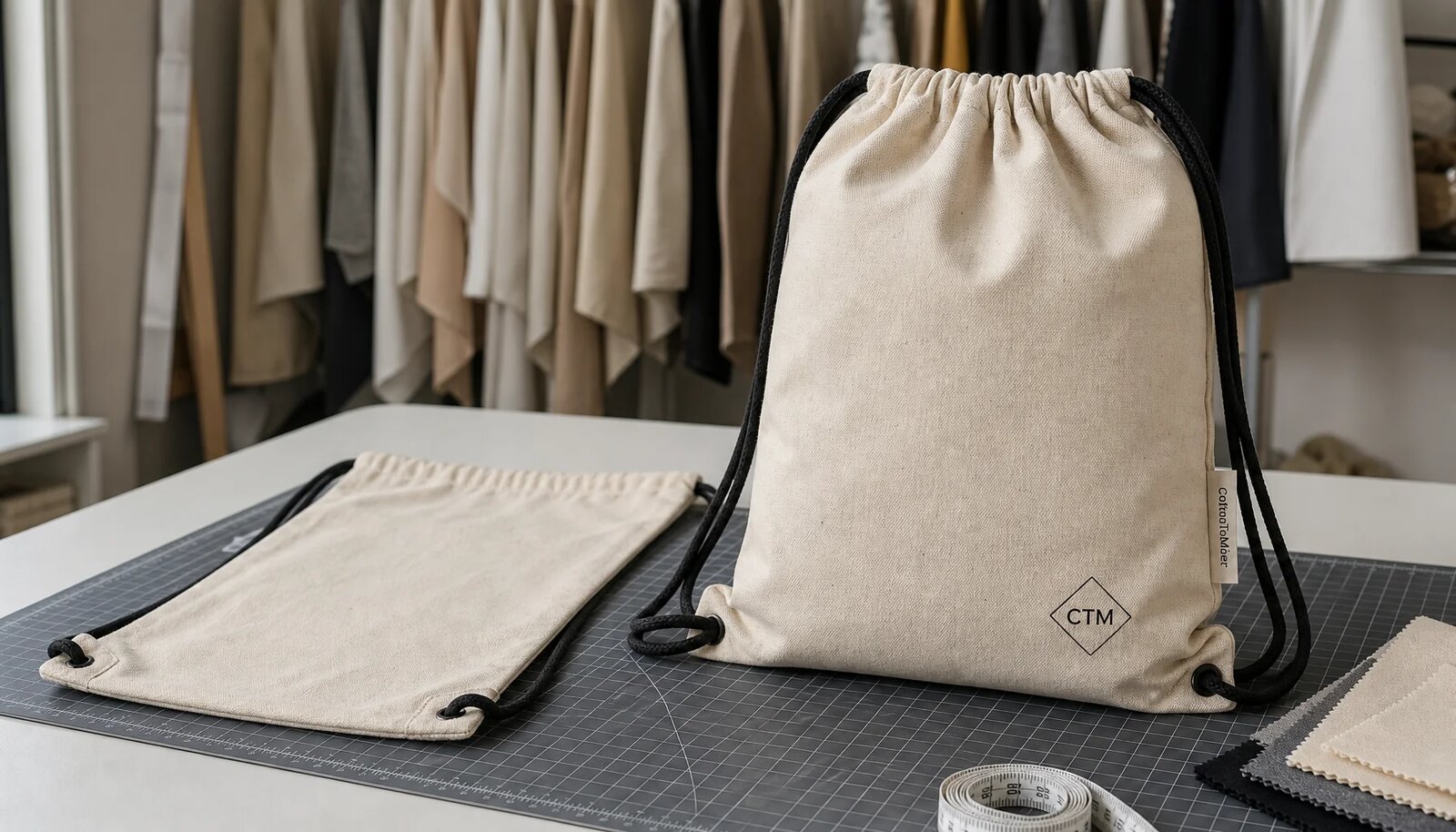
Why Hotel Retail Needs Tighter Backpack QC
Cotton drawstring backpacks for hotel retail live in an awkward but important space. They are simple sewn bags, yet guests judge them like branded accessories. A shopper may buy one in a resort boutique, receive one with a spa package, or use it for pool towels and sunscreen over several days. That is a different standard from a low-cost event giveaway. The bag has to look clean on a shelf, carry the hotel identity correctly, and survive normal guest handling after checkout.
The usual sourcing problem is not that buyers forget to ask for a cotton bag. It is that they approve a photo, compare unit prices, and leave too many construction details open. Fabric GSM, usable opening, cord path, bottom reinforcement, print curing, stitch consistency, inside finish, odor, packing cleanliness, and carton identification all affect whether the order feels retail-ready. If these details are missing from the RFQ and purchase order, a supplier can ship a product that broadly resembles the approved photo but does not meet the program need.
Hotel retail also brings operational pressure. Inventory may be split by property, spa, boutique, event, destination warehouse, or seasonal assortment. One wrong logo carton can delay a launch even if the sewing quality is acceptable. A good quality inspection checklist therefore covers three things at once: product durability, brand accuracy, and receiving accuracy.
- Retail appearance: stains, deep wrinkles, crooked labels, uneven logo placement, and loose threads reduce shelf value.
- Guest handling: cord exits and bottom corners carry load when the bag holds towels, sandals, water bottles, sunscreen, or small purchases.
- Brand control: hotel logos, spa sub-brands, property names, and destination graphics need consistent placement and clean SKU separation.
- Receiving accuracy: cartons should identify PO, SKU, color, logo version, quantity, property, carton number, and destination.
- Inspection scope: combine visual AQL checks with functional pull, load, print, odor, measurement, and packing checks.
Set Fabric GSM, Finish, and Handfeel First
For paid hotel retail, 8 oz to 10 oz cotton canvas is a practical starting range, usually about 270 to 340 GSM depending on weave, finishing, and supplier conversion. A 5 oz or 6 oz cotton bag can be fine for a light welcome amenity or conference giveaway, but it often feels too thin for a boutique shelf and may show contents through the panel. At the other end, 12 oz canvas can look premium, but it adds material cost, carton weight, sewing resistance, and stiffness around the drawstring channel.
Price comparison only works when suppliers are quoting the same fabric. Lock fabric weight, fabric width, finishing route, shrinkage allowance, and shade expectation before asking for final pricing. Cotton may be natural, greige, bleached, dyed, pigment dyed, washed, enzyme washed, or softened. Natural cotton often shows seed flecks and slubs. Some hotel brands like that honest, eco-leaning character. Others see it as a defect. Decide before bulk fabric is cut.
Handfeel deserves the same attention as GSM. A fabric can meet the target weight and still feel limp, harsh, boardy, or over-sized with finishing chemicals. Ask whether the fabric is washed, softened, calendared, or supplied in a raw natural state. For dyed cotton, confirm shade tolerance and color-fastness to rubbing, especially if the bag may contact white towels, robes, or light guest clothing. If the program makes sustainability claims, request documentation only for claims that will appear in procurement records, product labels, or marketing copy.
- Amenity range: 6 oz to 8 oz cotton can work for light-use giveaways if the buyer accepts a softer promotional feel.
- Retail range: 8 oz to 10 oz canvas gives stronger handfeel, better opacity, and more stable sewing performance.
- Premium range: 10 oz to 12 oz may suit upscale retail, but the sample must still close smoothly at the top.
- GSM control: specify an agreed tolerance such as +/-5% and verify bulk fabric before cutting.
- Natural finish: define whether seed flecks, slubs, yarn variation, and shade lots are acceptable or defective.
Define Size, Opening, Cord, and Load
A common hotel retail cotton drawstring backpack starts around 38 x 42 cm, but the right size depends on the contents. A resort shop selling swimwear, pool towels, and sandals needs a more forgiving opening than a spa counter selling slippers and skincare. If the backpack is part of a welcome kit, put the real kit contents into the pre-production sample before signing off. Do not rely on a flat measurement alone.
The written specification should include flat finished width, flat finished height, usable top opening, top channel width, cord length, and tolerances. A finished size tolerance of about +/-1 cm is often workable for cotton sewn bags, although the final number should match the design and the factory's capability. Logo placement usually needs tighter control than body size because a guest notices a crooked mark faster than a small variation in fabric length.
Cord type and cord length change the user experience immediately. Short cords may not sit comfortably over the shoulders. Overly long cords can drag, tangle, or make the product look careless. The cord should pull smoothly through the channel from both sides, and the knots should not disappear into the seam. If the design uses eyelets or grommets, add checks for setting pressure, fabric tearing, rust risk, and whether the hardware fits the hotel aesthetic.
- Finished size: record flat width and height, with tolerance stated in centimeters, not only in photos.
- Opening check: confirm the bag accepts intended hotel products without forcing, bunching, or twisting the channel.
- Cord length: measure both sides after opening and closing, then compare with the approved sample.
- Cord diameter: match cord width to channel width so the pull is smooth and not tight.
- Load check: use a defined weight and time, then inspect seam opening, cord slippage, stitch breakage, and fabric tearing.
Reinforce the Points That Actually Fail
The lower cord exit is one of the first failure points on many cotton drawstring backpacks. When a guest wears the bag over the shoulders, the load travels through the cord, top channel, side seam, and bottom corner. If that corner is only a basic seam with no reinforcement, it can tear, stretch, or open under repeated use.
Specify the reinforcement method instead of writing only 'strong quality' in the PO. Common choices include bar tacks, triangular stitching, extra seam rows, corner patches, or reinforced eyelet construction. The inspection team should check bar tack position, stitch density, thread tension, and symmetry. A reinforcement that sits too far away from the stress point may look reassuring but add little strength.
The factory should test the full cord path, not just the fabric panel. A practical buyer-level check is simple: load the bag with an agreed weight, hang or carry it for an agreed time, pull the drawcords repeatedly, and then inspect the lower corners, top channel, side seams, knots, and cord surface. Match the weight to the intended use. A spa gift kit does not need the same load assumption as a resort bag expected to carry a towel and sandals.
- Reinforcement location: inspect both lower cord exits and verify left-right symmetry.
- Bar tack quality: check stitch density, thread tension, broken stitches, skipped stitches, and needle damage.
- Seam allowance: ensure the cord exit does not sit too close to a raw edge or weak seam margin.
- Cord path: inspect top channel, side seam, bottom corner, knot, and cord surface after stress.
- Acceptance rule: no open seam, cord slippage, fabric tearing, severe distortion, or broken reinforcement after the agreed test.
Control Logo Method and Placement Tolerance
Most hotel logos on cotton drawstring backpacks are handled well by screen print, especially when the artwork uses one to three solid spot colors. Screen print gives practical coverage on cotton canvas and keeps unit cost manageable at volume. For a quieter boutique look, a woven side label or small embroidered mark can feel more retail than a large front print. Heat transfer may be possible, but buyers should review handfeel, edge lift, gloss, cracking, and compatibility with textured cotton.
Artwork approval should include logo size, Pantone or approved color reference, print position, print method, ink type if specified, and placement tolerance. A front logo that is 8 mm off center may look careless on a hotel gift-shop display, even if the bag is structurally sound. Cotton canvas is not a smooth plastic surface, so very fine lines, tiny text, gradients, and distressed effects may fill in or print unevenly.
Print QC should happen after curing and again after a basic packing simulation. Ink can look acceptable at the print table but transfer, crack, or feel tacky if packed too soon. Large ink coverage may also stiffen the front panel, especially on softer cotton. Approve logo scale and position on a physical sample whenever possible; a digital mockup does not show handfeel, fabric texture, or real placement tolerance.
- Screen print: best for solid hotel logos, resort names, destination marks, and simple seasonal graphics.
- Embroidery: useful for small premium marks but can pucker lightweight cotton and become costly for large filled areas.
- Woven label: suitable for discreet private-label branding and repeat hotel collections.
- Placement tolerance: set measured tolerance, often +/-3 mm to +/-5 mm depending on logo size and panel layout.
- Print QC: check color, registration, edge sharpness, coverage, adhesion, curing, odor, and measured placement.
Make Samples Work Like Production Standards
A development sample made with substitute fabric can help review shape, but it should not become the final approval for hotel retail. The true pre-production sample should use the quoted cotton GSM, actual cord, actual reinforcement, actual label, actual print method, actual hang tag if any, and intended packing. This sample becomes the physical reference for production, inspection, and dispute resolution.
Do not approve a retail-facing sample by photo only if the order value or brand risk is meaningful. A physical sample lets the buyer feel fabric stiffness, pull the cords, inspect inside seams, fold the printed panel, check logo scale, and judge whether the product still looks presentable after packing. If several hotel properties use different logos, approve the base construction first. Then approve each artwork, print color, label, barcode, hang tag, and carton mark separately.
Sample control becomes especially important after revisions. Buyers often adjust cord color, move the logo, change natural cotton to bleached cotton, add a barcode, or revise hang tag wording. Each revision should be recorded so the factory does not mix old artwork, old labels, or old cord stock into the final run. A sealed sample, signed sample card, and controlled photo record give both sides a realistic inspection reference.
- Keep one signed sample with the buyer and one matching sample with the factory or inspection team.
- Record GSM, size, cord length, cord color, reinforcement, logo position, label position, and packing method.
- Photograph critical areas: front logo, side seams, lower cord exits, top channel, inside seams, labels, tags, and carton marks.
- Approve each property logo separately when one base bag is used across multiple hotel locations.
- Treat sample revisions as controlled changes and remove obsolete artwork, labels, and packing instructions from production use.
Use Inspection Gates, Not One Last-Minute Check
A strong inspection plan combines appearance checks, measurements, functional tests, and packing review. For hotel retail, surface cleanliness, panel alignment, logo placement, odor, and packing condition matter almost as much as seam strength. Pull samples from different cartons, colors, logo versions, and production batches. Do not inspect only the carton that is easiest to open.
Incoming material inspection reduces the chance of finding problems after sewing. Before cutting, check fabric GSM, shade, width, surface defects, odor, moisture, and obvious weaving faults. Check cord color and diameter against the approved sample. If labels, hang tags, barcodes, or country-of-origin labels are used, verify text and SKU information before they are attached to the wrong batch.
Final inspection can use AQL sampling for visual defects, but backpack-specific points need clear acceptance criteria. Define critical, major, and minor defects before goods are packed. A wrong logo, mold smell, wet ink, needle fragment, mixed SKU carton, or missing reinforcement carries more commercial risk than a small removable thread end. Functional checks should be performed on finished goods, not only on loose line samples.
- Critical defects: wrong logo, unsafe needle fragment, mold, severe contamination, incorrect material, wrong SKU, or mixed buyer order.
- Major defects: open seam, broken stitch, failed cord pull, print beyond tolerance, heavy stain, missing label, or failed reinforcement.
- Minor defects: small removable thread, slight natural fleck variation, minor wrinkle, or tiny print texture variation within approved limits.
- Functional checks: pull cords, load the bag, fold the print, rub the print, inspect knots, and recheck cord exits after stress.
- Sampling discipline: include multiple cartons, carton layers, sewing batches, print batches, colors, and logo versions.
Write Packing Rules for Hotel Receiving
Hotel retail orders often move through distributors, warehouse partners, or property-level receiving teams. Packing must protect the product and make counting easy. Bulk packing may work for internal amenity distribution, but retail programs often need individual polybags, recyclable bags, paper bands, hang tags, barcodes, price labels, inner bundles, or SKU-separated cartons. Each component should be quoted and inspected, not treated as an afterthought.
Cotton bags pick up dust, moisture, and odor more easily than many synthetic promotional bags. Packing should happen only after the ink is fully cured and the bags are dry. Over-compression can create deep wrinkles that hotel staff may not have time to steam. If the bag will be sold in a boutique, inspect how it looks after removal from the pack: fold lines, ink transfer, dust marks, and odor all affect perceived value.
Carton rules should be as clear as product rules. Define units per inner pack, units per master carton, maximum carton weight, carton dimensions if warehouse limits matter, and whether cartons must be separated by property or mixed under an approved assortment. Carton marks should match the purchase order and packing list exactly so receiving teams can process goods without opening every carton.
- Inner packing: define fold method, pieces per bundle, individual bag type, paper band, barcode, hang tag, and price ticket.
- Carton packing: state pieces per carton, maximum carton weight, carton size if required, and carton sealing method.
- Carton marks: include PO, SKU, color, logo version, quantity, gross weight, net weight, carton number, and destination.
- Retail condition: inspect for ink transfer, trapped moisture, plastic odor, dust, deep wrinkles, and label mix-ups.
- SKU separation: do not mix property logos in one carton unless the assortment and inner labeling are approved in writing.
Plan Lead Time Around Real Production Gates
The calendar is not only sewing time. Cotton drawstring backpacks may require fabric booking, dyeing or bleaching, fabric inspection, cutting, printing, curing, sewing, trimming, pressing, individual packing, final inspection, and carton sealing. Late artwork changes can delay screen making, print approval, label printing, barcode preparation, and packing instructions.
Seasonal hotel programs need time for sample revision. A first sample may show that the logo sits too low, the cord color looks wrong against natural cotton, the fabric feels too soft for retail display, or the drawstring opening is too tight. These are normal development issues. They become expensive only when discovered after bulk fabric has been cut or printed.
Multi-property programs need extra control because every logo version or SKU split adds review time. The base bag may be approved quickly while property-specific artwork, hang tags, barcode labels, and carton allocations lag behind. Lock artwork and packing data before bulk printing begins. If the order supports a hotel opening, resort season, conference, or retail launch, include inspection and shipping buffer in the plan.
- Artwork gate: confirm logo file, color reference, placement, print size, minimum line width, and spelling.
- Sample gate: approve construction, branding, reinforcement, cord function, handfeel, labels, and packing.
- Fabric gate: confirm GSM, shade, shrinkage expectation, surface cleanliness, and fabric quantity before cutting.
- Print gate: approve first printed panels for color, registration, curing, placement, and panel handling.
- Final gate: leave time to rework loose threads, replace mixed cartons, correct labels, or resolve failed functional checks.
Compare Quotes by Specification, Not Price Alone
A factory quote for cotton drawstring backpacks should tell you more than the unit price. Buyers need to see what is included so suppliers can be compared on equal terms. A lower price may exclude screen costs, sample charges, packing labor, hang tags, barcode application, carton marks, inspection support, or inland freight. It may also be based on lighter fabric, a smaller size, thinner cord, or no reinforcement.
For hotel retail, quote comparison should include service capability as well as product specification. A supplier that can manage multiple logo versions, barcode packing, controlled samples, production photos, and final inspection support may reduce operational risk even if the unit price is slightly higher. The best RFQ gives the factory enough detail to price accurately and gives the buyer enough information to understand where cost is coming from.
MOQ is shaped by more than total quantity. Fabric color, bag size, artwork, cord color, label type, reinforcement method, and packing style can each create separate minimums. A 5,000-piece order in one natural cotton fabric with one logo is much simpler than 5,000 pieces split across ten property logos, three cord colors, and different barcode labels. Buyers can control cost by standardizing the base bag and varying only the front print or label where needed.
- Product data: size, GSM, finish, color, cord, reinforcement, logo method, logo size, print colors, labels, and packing.
- Commercial data: MOQ, price breaks, setup costs, sample costs, payment terms, Incoterm, carton size, carton weight, and lead time.
- Quality data: inspection standard, defect classification, test requirements, sample approval process, tolerances, and photo report needs.
- Program data: property count, SKU count, reorder plan, barcode rules, destination split, launch date, and retail packing requirements.
- Cost control: standardize fabric, size, cord, reinforcement, and carton pack before adding property-specific artwork.
Specification comparison for buyers
| Spec decision | Recommended option | When it fits | Buyer risk to check |
|---|---|---|---|
| Fabric weight | 8 oz to 10 oz cotton canvas, typically about 270-340 GSM; agree on a bulk tolerance such as +/-5% | Hotel boutiques, resort shops, spa retail, paid welcome-pack upgrades, poolside merchandise | 5 oz to 6 oz cotton may feel promotional, show contents, wrinkle heavily, and lower perceived retail value |
| Fabric finish | Natural, bleached, dyed, pigment dyed, or washed cotton with approved handfeel, shade standard, and shrinkage expectation | Natural eco-look retail, boutique brand colors, wellness programs, destination merchandise | Seed flecks, slubs, shade lots, washing shrinkage, and color transfer must be accepted or rejected before bulk cutting |
| Finished size | Common starting point 38 x 42 cm; define flat size tolerance, usable opening, channel width, and cord length tolerance | Towels, slippers, swimwear, sunscreen, spa kits, amenity bundles, or light resort purchases | Oversized bags increase fabric cost and carton volume; undersized openings make guest use awkward |
| Drawcord type | Cotton rope or flat cotton cord, commonly 5-8 mm depending on channel width and desired handfeel | Natural hospitality positioning, soft shoulder carry, plastic-reduction programs | Thin cord can cut into fabric, slip through knots, twist in the channel, or feel low value |
| Bottom reinforcement | Bar tack, triangular stitch, or reinforced corner construction at both lower cord exits | Retail bag expected to carry towels, sandals, robes, bottled products, or gift sets | Unreinforced cord exits are common early-failure points during pull and load testing |
| Logo method | Screen print for solid logos; woven label or small embroidery for discreet retail branding | One to three spot colors, spa sub-brands, property logos, destination artwork, seasonal graphics | Large ink coverage can crack, stiffen, bleed, or transfer if ink type and curing are not controlled |
| Logo tolerance | Measured placement from top edge, side seam, and center line; typical tolerance +/-3 mm to +/-5 mm depending on artwork size | Retail shelves where crooked or inconsistent branding is visible | Photo approval alone can miss off-center logos, registration issues, and incorrect property artwork |
| Closure and access | Two-side pull drawstring top with even cord lengths, smooth channel, and secure knots | Fast guest use, easy display, simple production control, low hardware risk | Tight channel width, twisted seams, short cords, or small knots make the bag feel defective |
| Packing style | Individual polybag, recyclable bag, paper band, or bulk bundle; then SKU-separated export cartons | Gift shops, mixed-property distribution, barcode receiving, spa retail sets, replenishment programs | Loose bulk packing can create dirt marks, deep wrinkles, counting errors, and carton sorting mistakes |
Buyer checklist before sampling
- Define finished flat size, usable top opening, size tolerance, fabric GSM, fabric finish, cotton type, shade standard, shrinkage expectation, and target handfeel before requesting price.
- State the exact use case: paid hotel retail, in-room amenity, spa gift set, welcome kit, loyalty gift, conference merchandise, poolside accessory, or destination boutique item.
- Ask every supplier to quote the same base specification so price is not distorted by lighter fabric, smaller dimensions, weaker cord, missing reinforcement, or simpler packing.
- Request a pre-production sample using the final fabric weight, final cord, final reinforcement, final logo method, final label, final hang tag if any, and final packing presentation.
- Set written tolerances in the purchase order for GSM, finished size, cord length, logo placement, print color, label position, stitch quality, carton count, and SKU separation.
- Confirm whether natural cotton flecks, slubs, yarn variation, and minor weave irregularities are acceptable retail character or classified as defects.
- Inspect drawcord channel width, cord diameter, knot security, cord length, cord shade, and two-side pulling action so the top opens and closes smoothly.
- Review reinforcement at lower cord exits, including bar tack position, stitch density, needle damage, seam allowance, fraying risk, and left-right symmetry.
- Measure logo placement from fixed reference points such as top edge, side seam, center line, and bottom edge instead of approving by eye only.
- Test print adhesion with dry rub, fold pressure, stacking simulation, and curing checks before individual packing or carton compression.
Factory quote questions to send
- What exact fabric construction, cotton type, fabric width, and GSM are included in the quote, and what GSM tolerance do you control in bulk production?
- Is the fabric natural, greige, bleached, dyed, pigment dyed, washed, organic, recycled, or BCI cotton, and can each option be quoted separately if needed?
- What shrinkage, shade variation, crocking, odor, and color-fastness risks should we expect for the selected cotton finish?
- What finished bag size tolerance do you recommend after cutting, sewing, trimming, pressing, and packing?
- What cord material, cord diameter or width, cord length, knot method, cord color, and cord-end treatment are included in the quoted price?
- Which reinforcement method is quoted at the lower cord exits: bar tack, triangular stitch, patch, eyelet, grommet, or standard seam only?
- Which logo method is quoted: screen print, heat transfer, embroidery, woven label, printed label, rubber patch, or combined branding?
- How many print colors, print positions, artwork versions, logo sizes, label types, hang tags, and barcode applications are included before extra charges apply?
- What artwork file format, Pantone reference, minimum line width, maximum print size, print location template, and proof approval process do you require?
- What is the MOQ per fabric color, per bag size, per cord color, per artwork, per label, per packing style, and per shipment destination?
Quality-control points to confirm
- Bulk fabric weight should be measured before cutting using a defined method, not copied only from the quotation, fabric mill invoice, or sales sample tag.
- Fabric shade should be compared with the approved standard under consistent light, especially for dyed cotton, natural cotton lots, cords, labels, and printed panels.
- Finished dimensions should be checked after sewing, trimming, normal pressing, and packing because cotton can shift during cutting, stitching, and handling.
- The top drawstring channel must allow smooth opening and closing without cord binding, twisted seam allowance, skipped stitches, or uneven cord tension.
- Cord exit points need reinforcement because they carry a large share of load during shoulder use and are common early-failure points.
- Cord knots should be tight, consistent, and large enough not to pull into the channel during repeated opening, closing, and shoulder carrying.
- Logo placement should follow a measured specification with tolerance from fixed reference points, not only a visual match to a photograph.
- Print surface must be dry, fully cured, and resistant to light rubbing, folding, and stacking pressure before individual packing or carton compression.
- Inside seams should be clean enough that loose threads, lint, raw edges, or thread nests do not catch guest belongings or make the bag feel unfinished.
- Stitching should be checked for skipped stitches, broken thread, seam grin, puckering, oil marks, needle holes, inconsistent stitch density, and thread color mismatch.