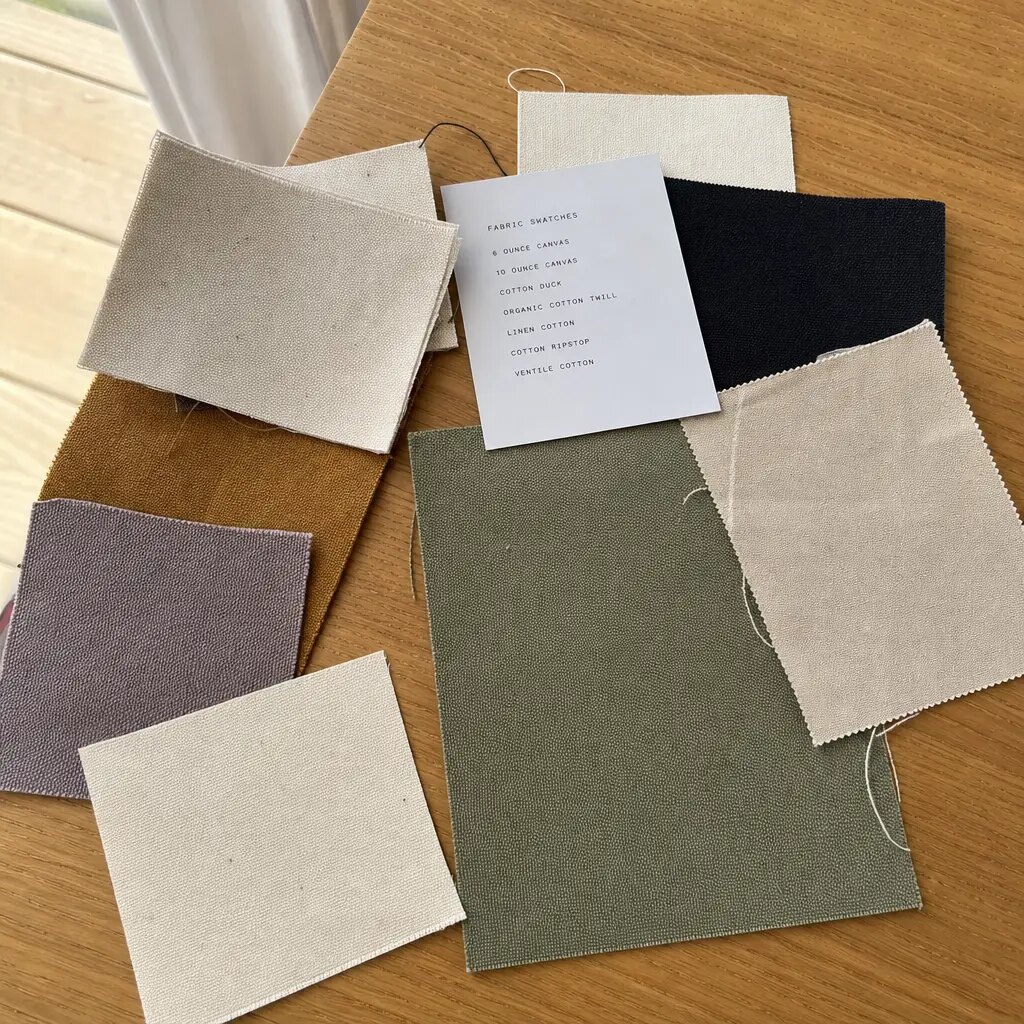
Start MOQ Talks With the Guest Use Case
A wholesale cotton drawstring backpack for hotel retail should not begin as a generic bag inquiry. Start with the guest use case. The same silhouette can be a paid resort shop item, a spa amenity, a beach club pack, a kids activity bag, a conference welcome gift, or an employee merchandise piece. Each version needs a different balance of fabric weight, cord strength, decoration, packing, and inspection. MOQ negotiation gets easier when the factory knows whether the bag must feel like paid merchandise or only support a short-term program.
Paid retail raises the bar. A guest may compare the backpack with tote bags, caps, drinkware, apparel, and destination souvenirs on the same shelf. The bag needs enough body, tidy seams, reliable cord movement, consistent logo placement, and a fold that looks intentional. A welcome amenity can be lighter if the load is low and the bag is not presented as premium stock. A pool or beach program needs more attention to abrasion, moisture exposure, dark-cord crocking, and print rubbing.
This early classification also prevents false savings. If the RFQ asks only for the lowest MOQ, a supplier may make the number work by quoting a smaller bag, thinner cotton, unreinforced cord exits, narrow cord, bulk packing, or a one-time stock fabric. If the buyer states the use case and the non-negotiables, the factory can offer cleaner compromises: stock natural cotton, a shared cord color, one print location, consolidated packing, or a smaller first run without weakening the product.
- Paid hotel shop: prioritize 10 oz/340 gsm cotton canvas, neat seams, reinforced cord exits, barcode or hangtag, and clean folding.
- Amenity or welcome gift: 6-8 oz cotton may work if contents are light and the item is not positioned as premium retail.
- Beach or pool retail: consider polyester cord, darker print colors, and dry/wet crocking checks for cords and dyed fabric.
- Kids club use: review cord length, knots, labeling, and stress-point strength with the importer’s compliance team.
- Hotel group rollout: keep one base bag across properties and customize only artwork when possible.
Turn Retail Goals Into a Production Spec
MOQ discussions move faster when the buyer separates fixed requirements from negotiable details. Fixed points usually include finished size, fabric weight, logo size, logo placement, cord diameter, lower cord reinforcement, barcode needs, and retail packing. Negotiable points may include the exact cord shade, carton quantity, belly band paper stock, or whether the first order uses one shared body color across several properties.
Use measurable language. Instead of asking for a premium cotton drawstring backpack, write the spec in production terms: finished size 35 x 45 cm; 10 oz/340 gsm natural cotton canvas; fabric-weight tolerance ±5%; 6 mm black cotton cord; double-fold top channel; reinforced lower cord exits with bar tack and patch; one-color water-based screen print at 18 x 20 cm; print centered 10 cm below the top edge; paper belly band with barcode sticker; master carton not over 15 kg gross weight unless approved. Now suppliers are pricing the same item, not their own interpretation of the word premium.
This discipline makes quote comparison fair. One supplier may quote a 35 x 45 cm, 10 oz bag with reinforced corners and retail packing. Another may quote 33 x 42 cm, 8 oz cotton with plain corner holes and bulk packing. Both can be described as cotton drawstring backpacks. Commercially, they are not the same product. Lock the base spec first, then discuss MOQ and price.
- Size: define finished dimensions after sewing and the measurement method before or after ironing.
- Fabric: state cotton type, oz/yd², GSM, tolerance, color standard, and shrinkage expectation.
- Construction: define top channel width, seam finish, reinforcement method, cord material, and cord diameter.
- Artwork: measure placement from fixed edges instead of relying on visual centering alone.
- Packing: list retail elements separately so packing MOQ and labor are visible in the quote.
Choose Fabric Weight Without Guesswork
Fabric weight drives cost, handfeel, opacity, print appearance, carton weight, and perceived value. Buyers sometimes request cotton canvas without giving the ounce weight or GSM. The quotes then look similar, but the goods may not be. A 6 oz cotton bag, 8 oz cotton bag, 10 oz canvas bag, and 12 oz canvas bag can all photograph well. In the guest’s hand, they behave differently in drape, seam strength, folding, print coverage, and retail value.
For many hotel retail programs, 10 oz/340 gsm cotton or cotton canvas is a practical starting point. It feels more substantial than a promotional giveaway while staying manageable for sewing, folding, and export packing. 8 oz/270 gsm can work for entry price points, amenity kits, or seasonal promotions where the expected load is light. 12 oz/407 gsm can support a more premium resort shop item, but it raises unit cost, sewing stress, carton weight, and sometimes MOQ when the factory does not keep that fabric in regular stock.
Natural unbleached cotton is usually the easiest MOQ path because many suppliers can source it as a standard material. Custom dyed cotton changes the conversation. Dyeing mills may require fabric minimums, lab dips, shade approvals, and extra lead time. If the hotel brand needs an exact body color, expect either a higher minimum or a dye surcharge. For a first order, a lower-risk route is often natural cotton with the brand color expressed through the logo, cord, hangtag, or side label.
- 6 oz/about 200 gsm: use for light giveaways only; not ideal for paid hotel retail unless expectations are clear.
- 8 oz/about 270 gsm: suitable for entry retail, welcome kits, and lower load use.
- 10 oz/about 340 gsm: balanced option for most paid hotel retail drawstring backpacks.
- 12 oz/about 407 gsm: stronger handfeel but higher sewing, freight, carton, and MOQ impact.
- Custom dyed fabric: require lab dip, shade tolerance, shrinkage, and crocking checks before bulk cutting.
Protect Stress Points Before Chasing Lower MOQ
The weak points on a drawstring backpack are not always obvious in photos. Problems usually appear at the lower cord exits, the top channel, the side seams, and the areas guests pull open and closed. When a supplier is trying to meet a very low MOQ or an aggressive target price, these are the first details that may be simplified: narrower cord, fewer stitches, exposed raw edges, no reinforcement, or a slightly smaller finished size.
Hotel retail backpacks do not need to perform like technical outdoor packs. Still, they should handle normal guest use: sunscreen, phone, wallet, towel, sandals, a book, a small bottle, or children’s items. The lower cord exit matters most because the cord is both closure and shoulder strap. Reinforcement can be a bar tack, triangle stitch, fabric patch, metal grommet, sewn eyelet, or a combination. Do not assume it is included; put the method in the spec.
Inside finishing also affects whether the product feels retail-ready. Guests may open the bag in the shop, pull the cords, and look inside. Loose threads, open seams, puckering, and rough raw edges can make a good front print feel like a giveaway. Before asking how low the MOQ can go, decide which construction points are not open for reduction.
- Top channel: specify double-fold construction and enough clearance for the cord to slide without binding.
- Lower cord exits: require an approved reinforcement method and inspect both sides, not only the front view.
- Cord diameter: 5-8 mm generally feels more retail than 3-4 mm promotional cord.
- Stitch density: agree on a production range such as 7-9 stitches per inch where strength and appearance matter.
- Inside seams: request clean finishing for retail products that guests may handle open.
- Cord ends: define knotting, tipping, heat sealing, or another fray-control method by cord material.
Match Decoration to Cotton Texture
Most hotel retail artwork works well with screen printing, especially one to three spot-color logos, property names, destination graphics, and simple icons. Water-based screen print is often a strong fit for natural cotton because it gives a softer handfeel and supports an understated retail look. Plastisol can improve opacity in some artwork situations, but it may feel heavier and should be checked for cracking or thick edges. Heat transfer can reproduce gradients and detailed illustrations, but buyers need to test edge lifting, flexibility, handfeel, and appearance after folding.
Artwork should be judged on the real fabric, not only on a PDF. Natural cotton has texture, seed flecks, slubs, and shade variation. These characteristics can affect fine lines, light ink, and small lettering. A thin script logo may look sharp on screen and weak on coarse canvas. White ink on unbleached cotton will not look exactly like a bright digital mockup. A physical print strike-off on bulk-equivalent fabric is therefore an approval control, not an optional extra.
Placement needs the same precision. Centered on front is not enough for bulk production. The purchase order should measure from fixed edges such as the top edge, side seam, or bottom seam. A realistic tolerance, such as ±5 mm for screen print placement on sewn cotton goods, helps both sides inspect fairly. When several property logos are included, confirm whether each artwork carries its own screen charge, setup record, placement approval, and inspection reference.
- Water-based screen print: strong default for simple hotel logos and soft natural-cotton handfeel.
- Plastisol print: useful for opacity but requires checks for thickness, cracking, and curing.
- Heat transfer: suitable for complex artwork but must be tested for edge durability and flexibility.
- Embroidery: premium look but may pucker lighter cotton and usually adds cost and lead time.
- Woven label: good for subtle branding but may have a separate label MOQ.
- Strike-off: check opacity, Pantone match, line detail, registration, rub resistance, and folding behavior.
Find the Real MOQ Driver
MOQ is rarely one universal number. For wholesale cotton drawstring backpacks, the minimum may come from fabric roll purchase, dye-lot size, cutting efficiency, sewing-line scheduling, cord purchase, screen setup, label production, retail packing material, or export carton planning. A supplier may accept a low MOQ for stock natural cotton with a one-color screen print, then require a much higher quantity for custom body color, custom woven labels, special cords, or multiple packing SKUs.
Ask the factory to name the constraint instead of negotiating only on quantity. If MOQ is driven by custom dyeing, stock natural cotton may solve the issue. If the print screen is the problem, a setup charge may be better than buying more units. If packing material is the constraint, a standard hangtag or shared belly band across properties may help. If sewing efficiency is the issue, one consolidated run with fewer SKU changes may beat several small variations.
Hotel groups often need several property logos under one program. The cleanest structure is usually one base bag: same size, fabric color, cord, reinforcement, print method, folding, packing, and carton plan. Then split only the printed artwork. This keeps fabric buying and cutting efficient while still allowing separate artwork controls at print and inspection. The buyer may still pay multiple screen charges, but the production MOQ is easier to manage.
- Lower-MOQ levers: stock natural cotton, standard cord, one body color, one print position, shared packing, and consolidated delivery.
- Higher-MOQ triggers: custom dyeing, custom cord color, woven labels, metal hardware, multiple body colors, and many barcodes.
- Artwork control: every property logo needs its own approved strike-off or at least an approved placement and color rule.
- Packing control: belly bands, hangtags, and barcode stickers may have separate material minimums.
- Negotiation prompt: ask which one spec change reduces MOQ without weakening cord exits or seams.
- Repeat strategy: start with a controlled base order, then add colors or labels after sell-through is proven.
Compare Quotes by Landed Cost
A useful B2B quote should show more than a unit price. It should include fabric weight, finished dimensions, cord specification, reinforcement method, logo method, print size, packing format, pieces per carton, carton dimensions, gross weight, net weight, CBM, sample cost, setup charge, production lead time, and Incoterm. Without those details, a lower FOB price may simply mean a smaller bag, lighter fabric, weaker cord, fewer stitches, missing reinforcement, or bulk packing.
Landed cost matters because cotton backpacks are affected by both weight and volume. A 12 oz bag may support a higher retail price, but it increases carton weight. Individual polybags, belly bands, and careful folding can increase CBM. If the buyer’s warehouse has carton handling limits, an overloaded carton can create receiving issues. Compare FOB or EXW price together with freight, duties where applicable, inspection, labels, packing materials, inland charges, and one-time setup fees.
Repeatability belongs in the quote review too. A very low first quote may depend on leftover fabric, a stock body size, or temporary material availability. Hotel retail programs often reorder for seasons, events, or new properties, so ask whether the approved fabric, cord, ink, and packing materials are regular production items. If the supplier cannot repeat the same standard, the first saving may become a shade, handfeel, or quality problem later.
- Quote on the same Incoterm, such as FOB named port or EXW factory, before comparing suppliers.
- Request carton CBM, pieces per carton, gross weight, and net weight for every packing option.
- Separate unit price from screen charges, sample fees, label costs, hangtags, belly bands, and inspection support.
- Compare fabric GSM, finished size, reinforcement, and cord diameter side by side.
- Ask whether quoted materials are regular stock, custom sourced, or one-time available.
- Review margin using landed cost and expected retail price, not factory unit price alone.
Use Samples to Reduce Bulk Risk
Samples should prove the risks that matter in bulk production. For cotton drawstring backpacks, the sample needs to confirm finished size, fabric handfeel, opacity, cord diameter, cord movement, seam finish, lower reinforcement, print size, print opacity, print placement, label accuracy, folding method, and retail packing. A digital rendering or front-view photo cannot confirm these points. If the sample uses substitute fabric or cord, mark it as a partial reference only.
A staged approval process gives procurement teams better control. First, approve a blank construction sample to lock size, fabric direction, cord path, seams, and reinforcement. Second, approve a print strike-off on actual or bulk-equivalent fabric to review color, opacity, fine detail, curing, and rubbing behavior. Third, approve a pre-production sample made with bulk fabric, final cord, final print, final labels, and final packing. If there are multiple property logos, approve the highest-risk artwork and define how all other artwork will be checked.
The approval record is as important as the sample. Keep measurement photos, close-ups of cord exits, print close-ups, packing photos, barcode scan results, and dated approval notes. The supplier, buyer, and inspector should work from the same sealed sample and spec sheet. If a spec changes to reduce MOQ, write that change into the approval record before bulk production starts.
- Construction sample: approves size, fabric handfeel, top channel, cord function, seam finish, and reinforcement.
- Print strike-off: approves ink color, opacity, line detail, curing, rub resistance, and placement rule.
- Pre-production sample: approves bulk materials, final logo, labels, folding, retail packing, and carton mark logic.
- Packed sample: important when barcode, belly band, hangtag, or shelf presentation affects retail acceptance.
- Approval file: include measurements, dated photos, signed comments, tolerances, and defect limits.
- Do not release bulk production from a mockup when fabric, print, or packing has not been physically checked.
Control Packing and Carton Receiving
Packing can change MOQ, cost, defect rate, freight volume, and shelf presentation. A backpack sold in a hotel shop may need a hangtag, barcode sticker, paper belly band, recycled polybag, tissue wrap, inner carton, or special carton marks. Each item requires sourcing, manual placement, inspection, and sometimes its own MOQ. A bulk-pack quote is not comparable with a retail-ready quote.
Retail packing should work for the guest and for hotel receiving. A belly band may look cleaner than a polybag, but it must hold the folded backpack securely without crushing the fabric or hiding the logo. A hangtag can carry brand story, SKU, and price information, but it must attach consistently and not damage the bag. A barcode label must scan in the hotel shop POS system. If different properties receive different artwork versions, carton marks should clearly show SKU, property name, artwork, quantity, PO number, and destination.
Packing timing is a quality issue. Printed cotton must be fully dried or cured before folding. If bags are packed too soon, ink can offset onto the back panel, belly band, or neighboring bag. Natural cotton can also pick up dust and table marks during manual packing, so higher-visibility retail programs may need clean packing tables, carton liners, or protective inner bags.
- Bulk pack: lowest cost and best for amenities, distributor repacking, or back-of-house use.
- Individual polybag: protects from dust and moisture but may conflict with plastic-reduction policies.
- Paper belly band: retail-friendly but requires controlled folding, band size, and barcode placement.
- Hangtag: useful for brand story, SKU, price, and POS scanning when attached consistently.
- Carton marks: include SKU, property logo, quantity, PO number, destination, gross weight, and carton count.
- Carton limits: define maximum gross weight and dimensions to match warehouse receiving rules.
Build Lead Time Around Approvals
Lead time should be counted from usable approvals, not from the first inquiry. The factory still needs final artwork, sample approval, fabric booking, cord sourcing, print setup, cutting, sewing, trimming, packing, inspection, rework if needed, and export handover. A stock natural cotton order with one print can move faster than a custom dyed order with several property logos, woven labels, and retail packing.
Hotel retail calendars are often fixed around resort openings, seasonal travel peaks, conferences, spa launches, and holiday shop resets. Separate buyer approval time from factory production time. Internal review by brand, retail, operations, and finance can take longer than sample making. Courier transit for samples and strike-offs also belongs in the schedule, especially when approvers are in different locations.
Final inspection should be planned before goods leave the factory. It is the buyer’s last chance to catch wrong artwork, weak cord exits, shade problems, print offset, barcode errors, carton mix-ups, and packing defects. If the delivery date cannot move, reduce schedule risk early by using stock fabric, fewer artwork splits, one cord color, and a simple packing format. Do not rely on rushed rework after a failed inspection.
- Artwork stage: finalize vector files, Pantone colors, print size, minimum line detail, and placement measurements.
- Sample stage: allow making time, courier transit, internal review, revisions, and written approval.
- Material stage: stock fabric is fastest; custom dyeing, special cords, and labels add lead time.
- Production stage: starts after approved pre-production sample and agreed payment milestone.
- Inspection stage: reserve time for AQL inspection, sorting, rework, and repacking if needed.
- Freight stage: align export handover with hotel launch date, warehouse slot, and property delivery plan.
Specification comparison for buyers
| Procurement decision | Recommended buyer position | Best-fit hotel retail use | MOQ and QC risk to verify |
|---|---|---|---|
| Fabric weight | Specify both oz/yd² and GSM, for example 8 oz/270 gsm, 10 oz/340 gsm, or 12 oz/407 gsm. Set a fabric-weight tolerance, often ±5%, unless the mill standard is different. | 8 oz for amenities and entry retail; 10 oz for most paid hotel shop resale; 12 oz for premium resort merchandise. | Heavier fabric can raise fabric minimums, sewing difficulty, carton weight, and CBM. Verify bulk GSM, shrinkage, opacity, handfeel, and finished bag weight. |
| Finished size | State finished dimensions after sewing, such as 35 x 45 cm or 14 x 18 in. Add a width/height tolerance, commonly ±1 cm, and a separate print-placement tolerance. | Hotel retail backpacks, spa shops, pool counters, destination souvenir programs, and compact travel merchandise. | Factories can lower cost by reducing size. Measure flat from fixed edges and confirm size before final compression or carton packing. |
| Fabric color | Use stock natural cotton for the first order when possible. Move to custom dyed cotton only when the volume, brand need, and calendar support dye-lot control. | Natural cotton suits eco-positioned resorts, spa boutiques, beach shops, and lifestyle hotel retail. | Custom dye can trigger mill MOQ and 7-14 day lab dip cycles. Require an approved lab dip, shade tolerance, colorfastness, and shrinkage result before cutting. |
| Construction style | Specify a double-fold top channel, clean inside seams, reinforced lower cord exits, and no visible loose raw edges in guest-facing areas. | Retail shelves, hang displays, welcome counters, and efficient export packing. | Low-MOQ quotes may remove reinforcement. Confirm bar tack, triangle stitch, patch, grommet, sewn eyelet, or other reinforcement in the written spec and approved sample. |
| Cord material | Use 5-8 mm cotton rope for a natural handfeel or polyester cord for stronger abrasion and moisture resistance. Define cord length and end finish. | Cotton cord for spa and boutique retail; polyester cord for beach, pool, kids activity, and high-humidity use. | Thin 3-4 mm cords feel promotional and may dig into shoulders. Pull-test cord exits, check end fray, knot security, and dark-cord crocking. |
| Logo method | Use water-based screen print for 1-3 spot colors. Consider plastisol, transfer, embroidery, or woven labels only when artwork, opacity, texture, or brand positioning requires it. | Property logos, destination graphics, resort names, spa marks, and simple retail artwork. | Approve a strike-off on bulk-equivalent fabric. Inspect opacity, registration, curing, crocking, cracking, wash response, and placement tolerance of ±5 mm where feasible. |
| SKU split | Consolidate body size, fabric, cord, packing, and carton plan. Split only printed artwork when managing several property logos. | Hotel groups ordering multiple resort, spa, or property versions under one program. | MOQ may apply per order, artwork, body color, packing SKU, barcode, or destination. Every logo needs separate print control and inspection reference. |
| MOQ structure | Negotiate by constraint: fabric booking, dye lot, cutting marker, sewing line setup, cord purchase, print screens, labels, packing materials, and carton plan. | Low-risk first orders and repeatable hotel retail programs. | A low MOQ may depend on stock fabric or substitute specs. Ask the supplier to mark which materials are standard, custom, or one-time available. |
| Sample approval | Use staged approvals: blank construction sample, print strike-off, pre-production sample, and packed sample when retail presentation matters. | Paid retail, hotel group programs, barcoded SKUs, and orders with several internal approvers. | A digital mockup cannot prove handfeel, shrinkage, seam puckering, print opacity, barcode scan, carton fit, or bulk packing appearance. |
Buyer checklist before sampling
- Define the use case first: paid hotel retail, spa shop item, beach or pool merchandise, welcome amenity, kids club pack, event gift, staff gift, or minibar add-on.
- Set the target retail price, required margin, and landed-cost ceiling before negotiating fabric weight, packing, and MOQ.
- Specify finished bag size, for example 35 x 45 cm, and include a tolerance such as ±1 cm for width and height measured flat before final carton packing.
- State fabric type and weight: natural cotton, bleached cotton, dyed cotton, or cotton canvas; oz/yd² and GSM; acceptable fabric-weight tolerance; expected handfeel; and shrinkage limit.
- Define construction details: seam allowance expectation, double-fold top channel width, inside seam finish, lower cord exit reinforcement, stitch density range, and trimming standard.
- Specify cord material, diameter, color, length, shoulder fit, knot or tipping method, and whether dark cords require crocking checks against the cotton body.
- Provide vector artwork, Pantone or brand color references, number of print colors, maximum print size, minimum line thickness, and placement measurements from fixed bag edges.
- Separate quantities by body color, artwork, property name, packing format, barcode/SKU, delivery destination, and required delivery date.
- Ask the supplier to identify which MOQ is driving the quote: fabric purchase, dye lot, cutting efficiency, sewing line scheduling, cord sourcing, print setup, labels, packing material, or carton configuration.
- Request quantity breaks at 300, 500, 1,000, 2,000, and 5,000 pieces with the same specification held constant so price differences are meaningful.
Factory quote questions to send
- What is your MOQ for this cotton drawstring backpack using stock natural cotton, one-color screen print, standard cord, reinforced lower corners, and bulk packing?
- Is the quoted MOQ per total order, per artwork, per body color, per cord color, per packing SKU, per barcode, or per delivery destination?
- Which exact specification creates the MOQ: fabric roll purchase, dye lot, cutting marker, sewing line setup, cord sourcing, print screen, label production, retail packing, or carton plan?
- Can you quote 8 oz, 10 oz, and 12 oz cotton/canvas at the same finished size, print size, cord, reinforcement, packing, and Incoterm?
- For each fabric option, what are the GSM, GSM tolerance, expected shrinkage, finished bag weight, carton quantity, carton dimensions, gross weight, net weight, and CBM?
- Is the fabric greige, natural unbleached, bleached, stock dyed, piece dyed, yarn dyed, or custom dyed, and can you provide a lab dip or approved shade standard?
- What shrinkage and colorfastness tests do you normally run for cotton fabric, and can you share results or perform buyer-required tests before bulk cutting?
- What cord material, diameter, length, color range, end treatment, and minimum purchase quantity are included in the quote?
- Which lower cord exit reinforcement is included: bar tack, triangle stitch, patch, metal grommet, sewn eyelet, or another method?
- What stitch density range do you use on side seams, bottom seam, top channel, and reinforcement points?
Quality-control points to confirm
- Measure finished size on a flat unfilled bag from fixed edges before final packing; use the agreed tolerance, such as ±1 cm for width and height, unless the design requires tighter control.
- Verify fabric weight from bulk fabric using GSM or oz/yd², not catalog wording; compare against the approved sample and tolerance, typically ±5% unless otherwise agreed.
- Check fabric shrinkage if the bag may be washed or exposed to moisture; record warp and weft shrinkage separately where testing is available.
- Compare natural cotton shade against an approved range because seed flecks, slubs, and tone variation can be normal but still need retail limits.
- For dyed cotton, check shade consistency across panels, reinforcement patches, and cords; test for dry and wet crocking where dark colors contact light garments.
- Inspect top channel width and stitching so cords slide smoothly without twisting, binding, tearing the folded edge, or causing uneven gathering.
- Inspect lower cord exits on both sides for the approved reinforcement method, stitch security, and no tearing after a practical pull check.
- Check cord diameter, material, length, color, end knot, tipping, and fray control against the approved sample; inspect dark cords for rubbing transfer.
- Inspect side seams, bottom seam, and top channel for skipped stitches, broken threads, open seams, loose raw edges, excessive puckering, and stitch tension imbalance.
- Confirm stitch density against the approved range, such as 7-9 stitches per inch if specified, so production does not reduce strength by using longer stitches.