Define the Retail Use Before Choosing Cotton
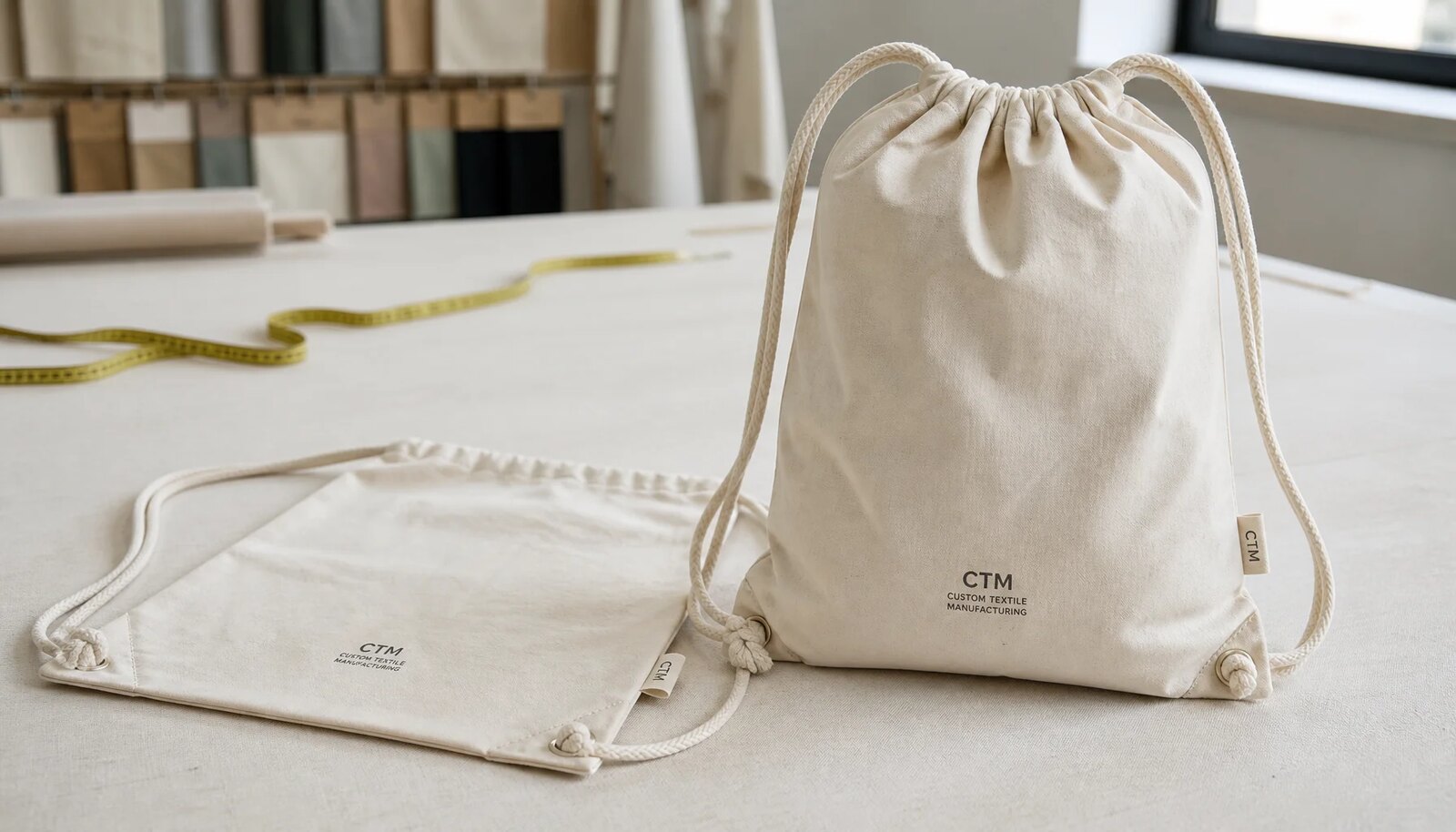
Cotton drawstring backpacks for hotel retail can be built like a light promotional bag or like a reusable travel accessory. The wrong material decision usually starts when the RFQ only says cotton drawstring backpack without explaining how the hotel will sell or use it. A resort shop selling the bag as a beach-day add-on needs stronger fabric and cords than a hotel using it as a low-cost welcome pouch for slippers and brochures.
For procurement teams, the first decision is not the logo or color. It is the expected load, shelf presentation, guest handling, and repeat-use level. A bag that carries a towel, water bottle, sunscreen, and sandals needs different reinforcement from a bag that only holds a robe card and spa voucher. The factory quote will be more accurate when the buyer describes the use case in product terms, not only in branding terms.
- For amenity or welcome use, 6-8 oz cotton can be enough if the load is light and the bag is not positioned as premium retail.
- For hotel boutique resale, 8-10 oz cotton canvas gives a better hand-feel and reduces complaints about flimsy construction.
- For beach resorts or spa retail, choose fabric and cord strength based on towel and bottle weight rather than empty-bag appearance.
- For gift-with-purchase programs, balance cost and perceived value because the bag may still represent the hotel brand after checkout.
Fabric Weight and Construction
Cotton fabric selection should be written with a weight range and construction description. Many quote gaps come from one supplier pricing plain cotton sheeting and another pricing heavier cotton canvas. Both may call the product cotton, but the finished backpack will feel completely different. For hotel retail, a practical starting range is 270-340 GSM, roughly 8-10 oz, when the buyer wants reusable quality without moving into a heavy canvas tote feel.
Lower GSM can still be valid for high-volume amenity programs where the backpack is part of a room package, not a standalone retail product. Higher GSM improves structure and perceived value, but it can also make the drawstring closure tighter, increase carton weight, and raise sea or air freight cost. The best RFQ gives the factory a target GSM range and asks for alternative pricing one level lighter and one level heavier.
- 120-180 GSM cotton is usually too light for a hotel retail backpack unless the program is clearly promotional.
- 220-260 GSM can work for budget welcome items, but reinforcement and print opacity need careful review.
- 270-340 GSM is a commercial middle range for hotel gift shops and resort boutiques.
- 360 GSM and above can look premium but may reduce packability and increase freight cost per unit.
- Natural cotton may have shade variation, slubs, and seed marks; this should be accepted or controlled before production.
Size, Shape, and Load Capacity
The most common buying mistake is approving a nice flat sample without testing it loaded. Drawstring backpacks change shape when filled, and the front print can distort if the bag is too narrow for the intended contents. A hotel retail bag often needs enough height for folded towels or retail products, but not so much fabric that it looks saggy on the shelf. Standard sizes around 35 x 45 cm are common, but the right size depends on the product bundle.
Buyers should define the maximum practical load in the RFQ. This does not require a laboratory specification; it can be a real-use statement such as designed to carry one rolled beach towel, one 500 ml bottle, sunscreen, and small accessories. That information helps the factory choose seam allowance, stitch density, reinforcement patches, cord diameter, and carton packing. It also prevents low quotes based on a bag that looks correct when empty but fails in guest use.
- Include finished dimensions after sewing, not only fabric panel dimensions.
- State whether the bag must fit folded retail packaging, towel sets, slippers, or bottle-shaped products.
- Avoid oversized bags in thin cotton because the product can look empty and weak on retail shelves.
- Request load testing on the approved sample using realistic hotel retail contents.
- Use a slightly wider bottom or reinforced lower corners if the backpack will carry heavier spa or beach items.
Cord, Channel, and Reinforcement Choices
The drawstring system is where many cotton backpacks fail. The fabric may be acceptable, but thin cords, weak bottom tabs, or a rough top channel can make the bag uncomfortable and cheap. For hotel retail, cotton cord in the 5-7 mm range is a practical baseline. It looks natural, matches cotton fabric well, and feels better on the shoulder than very thin cord. Polyester cord is stronger and cleaner in some colors, but it changes the sustainability story and appearance.
The bottom cord attachment should not be treated as a minor detail. A simple folded fabric tab may work for light contents, but retail bags that carry beach items need reinforced tabs with secure stitching. Bartack, box stitch, or a reinforced patch should be specified. If the factory quote does not describe this area, two suppliers can quote the same bag size and GSM but deliver very different durability.
- Use thicker cord for guest comfort when the bag may carry bottles, towels, or retail purchases.
- Specify whether cords are cotton, polyester, recycled polyester, or blended material.
- Set cord color by Pantone or approved swatch when brand color matching matters.
- Review the cord channel for smooth closure because heavy fabric can create too much friction.
- Require reinforcement photos or sample review at the lower cord tabs before approving bulk production.
Print Method and Logo Durability
For most cotton drawstring backpacks used in hotel retail, screen printing is the most stable and cost-effective method for solid logos and simple artwork. It gives good coverage on natural cotton and allows repeat orders to stay consistent when screens and artwork settings are controlled. For detailed multicolor designs, gradients, or photographic resort artwork, heat transfer or digital print may be considered, but the buyer should review hand-feel, wash resistance, and edge finish.
A hotel logo on natural cotton is sensitive to fabric texture. Fine lines may break across weave texture, and large ink areas can feel stiff. The RFQ should include artwork size, print position, color references, and whether the print must survive washing or only normal retail handling. The approval sample should be evaluated under real lighting, not only by a factory photo, because natural cotton and ink colors can shift depending on room light.
- Use screen print for one to three solid logo colors when cost, repeatability, and durability matter.
- Use heat transfer only after checking flexibility, edge bonding, and whether the finish looks too plastic for cotton.
- Use embroidery selectively because it adds perceived value but can pucker lighter cotton panels.
- Avoid very large ink blocks on soft cotton if the brand wants a natural hand-feel.
- Set print placement tolerance, commonly within a small agreed range from center and top reference points.
MOQ Logic and Cost Drivers
MOQ is usually driven by fabric purchasing, dyeing, print setup, sewing efficiency, and packing complexity. A buyer may think 3,000 pieces is one order, but the factory may see six small production lots if there are three fabric colors and two print designs. That split affects cutting, screen setup, line changeover, labeling, carton marks, and inspection. The cleanest hotel retail RFQ groups volume by size, material, color, and print version.
Cost should be compared by option, not by a single vague unit price. Ask for a base quote for natural cotton with one-color print, then separate adders for custom dyed fabric, extra print colors, hangtags, barcode labels, individual packing, and heavier GSM. This approach makes supplier comparison fair and prevents a quote that looks cheap because it excludes retail-ready details.
- Natural cotton usually has lower MOQ than custom dyed cotton because fabric is easier to source.
- Custom dyeing may require lab dips, shade approval, and higher fabric minimums.
- Each print color can add screen cost and production time for screen printing.
- Individual polybags, hangtags, and barcode labels increase handling cost but reduce hotel receiving work.
- Heavier fabric increases material cost and freight cost; evaluate both before choosing premium GSM.
Sample Approval Workflow
A reliable sample process for cotton drawstring backpacks should move from material evidence to finished-product approval. Start with fabric swatches if several GSM options are being compared. Then approve a prototype or pre-production sample with the selected fabric, cord, print, label, and packing method. A sealed approval sample should be kept by both buyer and factory as the reference for bulk production.
Digital proofs are useful for layout, but they do not prove fabric weight, cord comfort, stitching quality, or print opacity. For hotel retail, the sample should be loaded with the intended contents and handled the way a guest would use it. Pull the cords, wear it briefly, open and close it several times, and inspect stress points. This practical review catches more issues than measuring an empty flat sample only.
- Review fabric hand-feel and GSM before committing to full artwork sampling.
- Approve print color on the actual cotton color, not only on a paper Pantone reference.
- Check whether the cord slides smoothly after the bag is filled.
- Measure finished dimensions after the sample is sewn and pressed.
- Keep one signed or labeled approval sample for final inspection comparison.
Packing for Hotel Retail and Distribution
Packing affects landed cost and hotel receiving accuracy. For direct-to-property retail, bags may need barcode labels, hangtags, SKU separation, and clean inner packing. For distributor stock, master cartons with clear carton marks and consistent pack quantity may be more important. A factory quote that only says export carton is not enough when the final destination is a hotel shop with limited storage and small receiving teams.
Cotton bags also need protection from moisture, dust, and print transfer. If the print is heavy or dark, face-to-face packing can mark the fabric unless the ink is fully cured and packing is controlled. Individual polybags protect the item but may conflict with hotel sustainability goals. Paper bands or bulk inner bags can reduce plastic, but the buyer must accept more handling exposure. The packing choice should match the retail channel, not just the lowest unit price.
- Specify pieces per inner pack and pieces per master carton.
- Request carton dimensions, gross weight, and estimated CBM before placing the PO.
- Use SKU-separated cartons for multiple hotel properties, colors, or logo versions.
- Control print transfer risk by approving packing method after print curing review.
- Set carton weight limits that warehouse teams can safely handle.
Lead Time and Schedule Risk
Lead time should be broken into stages: artwork confirmation, lab dip if needed, sampling, material purchase, cutting, printing, sewing, inspection, packing, and shipment booking. Factories sometimes quote only bulk production days after all approvals are complete. That number is useful but incomplete. Hotel retail launches often connect to property openings, seasonal travel peaks, or brand campaigns, so missed approval dates can create expensive air freight decisions.
The schedule risk is higher when the buyer chooses custom dyed fabric, complex printing, multiple SKUs, or retail packaging. Natural cotton with one-color screen print is normally easier to schedule because fabric and process are more standard. If the program has a fixed launch date, the RFQ should ask suppliers to show the critical path and the last date for artwork approval. This makes delays visible before the purchase order is issued.
- Reserve time for lab dips when custom fabric color is required.
- Do not start the production clock until artwork, material, and packing are approved.
- Include inspection and rework buffer before vessel closing or air shipment cutoff.
- Avoid late SKU changes because they can disrupt cutting, printing, and carton labeling.
- Ask for production photos at cutting, printing, sewing, and packing stages for remote monitoring.
Quote Data for Fair Supplier Comparison
A good quote for cotton drawstring backpacks should show what is included, what is excluded, and what assumptions drive the unit price. Procurement teams should not compare suppliers only by the headline price. One quote may include 10 oz cotton, reinforced tabs, individual packing, and barcode labels, while another includes lighter fabric, basic stitching, and bulk carton packing. The cheaper offer may become more expensive once the missing retail details are added.
For landed-cost comparison, request estimated carton data and packing weight together with the unit price. Heavier GSM can improve retail value, but it also changes CBM, gross weight, and freight cost. If the buyer is importing through a distributor or consolidating shipments, carton dimensions and SKU separation can affect warehouse handling charges. Clear quote data also reduces disputes when the final invoice, packing list, and inspection report are prepared.
- Require fabric GSM, bag size, cord type, print method, packing, MOQ, sample cost, and lead time in the same quote sheet.
- Separate tooling, screen, lab dip, and artwork setup costs from the unit price.
- Ask for carton quantity, carton dimensions, gross weight, net weight, and estimated CBM.
- Compare one base specification across all suppliers before reviewing optional upgrades.
- Record Incoterms clearly because EXW, FOB, CIF, and DDP quotes cannot be compared as the same cost.
Specification comparison for buyers
| Spec decision | Recommended option | When it fits | Buyer risk to check |
|---|---|---|---|
| Fabric weight | 8-10 oz cotton canvas, roughly 270-340 GSM | Hotel gift shops, resort retail, amenity kits with moderate item weight | Below 220 GSM can feel promotional; above 380 GSM may raise freight cost and reduce drawstring closure smoothness |
| Construction | Single main compartment with folded top cord channel and reinforced bottom cord tabs | Retail backpacks carrying towels, slippers, sunscreen, spa products, or small travel items | Unreinforced cord tabs can tear during guest use; specify bartack or box stitch at stress points |
| Cord material | Natural cotton cord, 5-7 mm diameter, color matched or contrast dyed | Premium natural look, eco-positioned hotel retail, washable travel use | Thin cords cut into shoulders; dyed cords need rub test because dark colors may transfer onto light garments |
| Printing method | Screen print for solid logos; heat transfer only for detailed multicolor art | Hotel logos, resort marks, simple retail graphics, repeat replenishment orders | Ink hand-feel, cracking on heavy ink coverage, and registration tolerance should be approved on a physical sample |
| Fabric color | Natural, black, navy, or custom dyed cotton with approved lab dip | Natural for spa and beach retail; dark colors for urban hotel shops | Natural cotton shade varies by batch; custom dye requires color tolerance and usually higher MOQ |
| MOQ logic | Start from one fabric color and one print layout per MOQ tier | Distributors testing a new hotel retail SKU before rolling out to multiple properties | Too many colorways split production efficiency and push unit cost up even if total quantity looks high |
| Packing format | Flat pack in polybag or paper band by retail SKU; carton packed by color and print version | Hotel stockrooms, shop shelves, and distributor warehouses needing clean receiving | Loose mixed cartons create counting errors; retail hangtags can scuff prints if packed face-to-face |
| Sampling route | Blank material swatch, printed pre-production sample, then sealed approval sample | Buyers comparing quotes from several factories before issuing PO | Approving only a digital proof misses shrinkage, print opacity, cord feel, and closure tension |
| Lead time basis | Quote fabric preparation, sample approval, bulk production, QC, and packing as separate stages | Seasonal hotel retail launches with opening dates or resort peak season deadlines | Factories may quote production days only; buyer must include artwork approval, shipping booking, and inspection buffer |
Buyer checklist before sampling
- Define target use: souvenir retail, beach kit, spa amenity, staff gift, or in-room welcome item.
- Specify fabric by construction and weight, not only by the word cotton; include GSM or ounce range.
- Set bag dimensions with loaded-use expectations, including maximum item weight and typical contents.
- Confirm cord diameter, cord material, reinforcement method, and shoulder comfort before price comparison.
- Attach artwork files with Pantone references, print size, print position, and acceptable placement tolerance.
- Request one quote per material option so the cost impact of GSM, dyeing, and print method is visible.
- Approve a physical pre-production sample for fabric hand-feel, closure function, print opacity, and stitching.
- Require carton marks, SKU separation, inner packing method, and carton weight limits in the proforma invoice.
- Include AQL level, inspection timing, and defect definitions before production starts.
- Build schedule buffer for lab dips, artwork revision, peak-season factory capacity, and shipping booking.
Factory quote questions to send
- What cotton fabric construction and GSM are included in the quoted price, and can you provide a fabric swatch before sampling?
- Is the quoted MOQ based on one fabric color, one print design, and one size, or can multiple SKUs share the MOQ?
- Which print method is included, how many colors are priced, and what is the maximum printable area without extra charge?
- What reinforcement is used at the bottom cord tabs and top channel, and is bartacking included in the standard workmanship?
- What sample types are available, what are the sample charges, and how long does each sample stage normally take?
- How is color controlled for natural cotton, dyed fabric, and printed logos, including Pantone or lab dip approval?
- What packing is included in the unit price: individual polybag, paper band, hangtag attachment, barcode label, or master carton only?
- What are the estimated carton dimensions, pieces per carton, gross weight, and cubic meters for the quoted quantity?
- What inspection standard do you support, and can you provide in-line and final inspection photos before shipment?
- Which costs are excluded from the quote, such as mold screens, artwork setup, inland freight, export cartons, or document fees?
Quality-control points to confirm
- Fabric weight should be checked against approved swatch with reasonable tolerance, commonly plus or minus 5 percent unless otherwise agreed.
- Finished dimensions should match approved sample within agreed tolerance after sewing and pressing, not only before stitching.
- Print position should stay within the approved placement tolerance, with no visible smearing, pinholes, heavy ink ridges, or poor edge definition.
- Cord channel should open and close smoothly when loaded, without twisted cords, skipped stitches, or excessive friction.
- Bottom cord tabs and side seams should withstand a practical pull test based on the intended retail load.
- Dyed fabric and dark cords should pass basic dry and wet rub review to reduce color transfer complaints.
- Labels, hangtags, barcode stickers, and carton marks should match the purchase order SKU structure.
- Cartons should not exceed buyer warehouse handling limits and should protect the bags from moisture, print transfer, and deformation.