Start With the Retail Role
Cotton drawstring backpacks for hotel retail are not the same product as low-cost conference cinch bags. In a hotel gift shop, resort boutique, spa counter, beach club, or in-room retail program, the bag is part of the guest experience. It may sit beside towels, sunscreen, robes, slippers, swimwear, kids' items, local gifts, or welcome amenities. That setting changes the buying standard. The backpack needs enough fabric body to look intentional, clean branding that photographs well, stitching that survives normal guest use, and packing that protects shelf presentation.
Before asking factories for prices, define the role of the backpack. Is it a paid retail item, a bundled resort kit, a guest amenity, spa merchandise, a beach package, an event bag, or a standard SKU for several properties? Each use pushes the specification in a different direction. A paid retail item needs stronger fabric, neater finishing, and lower visible-defect tolerance. A guest amenity may need cost control and efficient packing. A beach kit may need better bottom corner reinforcement and cords that feel comfortable when the bag carries sandals, a towel, or bottled water.
This first decision also prevents misleading quote comparisons. One supplier may quote 150 GSM cotton sheeting with thin cord. Another may quote 260 GSM cotton canvas with reinforced tabs and individual retail packing. Both might call the item a cotton drawstring backpack, but procurement is not comparing the same product. A useful RFQ should state the sales channel, target positioning, expected light load, order quantity, destination market, launch date, branding needs, packing format, and inspection requirements.
- Paid retail: prioritize fabric body, clean print, tidy inside finish, low visible defects, and shelf-ready packing.
- Guest amenity: prioritize controlled cost, simple construction, consistent logo placement, and countable packing.
- Beach or pool kit: prioritize stronger corner reinforcement, washable-looking fabric, darker cords, and moisture-aware packing.
- Spa or boutique retail: prioritize subtle branding, soft hand feel, shade consistency, premium hangtags, and clean folding.
- Event hotel package: prioritize schedule certainty, carton sorting, and fast receiving by event date.
- Multi-property rollout: prioritize repeatable specifications, SKU coding, carton labels, and reorder shade records.
Specify Fabric by Construction and GSM
Fabric is the largest quality driver and one of the easiest places for a quote to become vague. The RFQ should identify both construction and weight: for example, plain cotton canvas at 240-260 GSM, cotton drill at a stated GSM, or washed cotton canvas at a stated GSM after processing. Ounce weight is common in bag sourcing, but GSM is easier for most buyers to compare and verify. As a practical reference, 7-8 oz cotton canvas is often around 220-270 GSM, while 9-10 oz canvas is often around 300-340 GSM, depending on supplier conversion and finishing.
For most hotel retail cotton drawstring backpacks, 220-270 GSM cotton canvas is a strong starting point. It gives more shelf presence than thin sheeting, works well for screen printing, and keeps carton weight manageable. Premium resort shops may prefer 300-340 GSM when the backpack is sold as visible branded merchandise. Lightweight 140-180 GSM cotton can work for budget amenities or giveaways, but it should not be presented internally as the same retail-grade product.
Color process matters as much as weight. Natural cotton has an easy resort and spa look, but it can show seed flecks, slubs, and shade variation. Those characteristics are not automatically defects, yet they must be approved on the reference sample. If the hotel needs white, black, navy, or a brand color, ask whether the factory is using stock dyed fabric or custom dyeing. Custom dyeing may require lab dips, dye lot minimums, and more calendar time before cutting can begin.
- 140-180 GSM: lightweight amenity or giveaway level; expect less structure and more visible wrinkling.
- 220-270 GSM: balanced hotel retail range for most cotton drawstring backpacks.
- 300-340 GSM: premium hand feel and stronger shelf presence with higher fabric and freight cost.
- Cotton canvas: textured, casual, and suitable for natural hotel retail positioning.
- Cotton drill: smoother diagonal weave when a cleaner surface is preferred.
- Washed cotton: softer relaxed look, but shade variation, shrinkage, and processing cost must be approved.
- Natural cotton: seed flecks and slubs should be approved characteristics only when shown on the sample.
Lock Size, Cord, and Corners
A drawstring backpack looks simple, but the small construction choices determine how it feels in a guest's hands. The specification should define finished size, tolerance, top channel width, cord diameter, cord length, cord material, corner reinforcement, seam finish, and back-tacking. If these details are missing, a supplier can reduce cost with thin cord, narrow channel stitching, weak seam allowance, or light corner tabs while still sending a front-facing sample photo that looks acceptable.
A common adult reference size is about 35 x 42 cm. Smaller sizes can work for spa products, kids' programs, or in-room amenity packs. Larger sizes may suit beach merchandise or resort retail, but they add fabric cost and carton volume. State finished dimensions after sewing and ironing, not only cutting dimensions. For wholesale inspection, +/- 1 cm on width and height is a practical tolerance for many cotton bags. If the hotel needs tighter control, price it before the PO because cotton cutting, sewing, and pressing all introduce variation.
Cord and bottom corners deserve extra attention. A 6-8 mm cotton rope or braided cotton cord usually feels more retail-appropriate than a very thin synthetic cord. The lower corners take stress every time the user closes the bag or wears it on the shoulder. Stitched triangular cotton tabs can perform well when the stitching is dense and back-tacked. Eyelets can also be used, but they should be backed with a patch or washer so the metal does not cut through cotton fabric under load.
- Finished size: state width, height, measurement method, and +/- tolerance after finishing.
- Top channel: specify enough width for smooth cord movement without heavy fabric bunching.
- Cord diameter: use 6-8 mm for stronger perceived value; avoid thin cords unless cost is the main priority.
- Cord length: approve on the sample for shoulder comfort, closure, and display neatness.
- Corner tabs: require back-tack or reinforced stitching at the stress point.
- Eyelets: require backing patch or washer; avoid unbacked metal eyelets on cotton.
- Seams: define overlock, French seam, or bound seam and require secure seam allowance.
- Stress points: inspect top channel ends, bottom corners, and cord attachment areas closely.
Choose the Logo Method Carefully
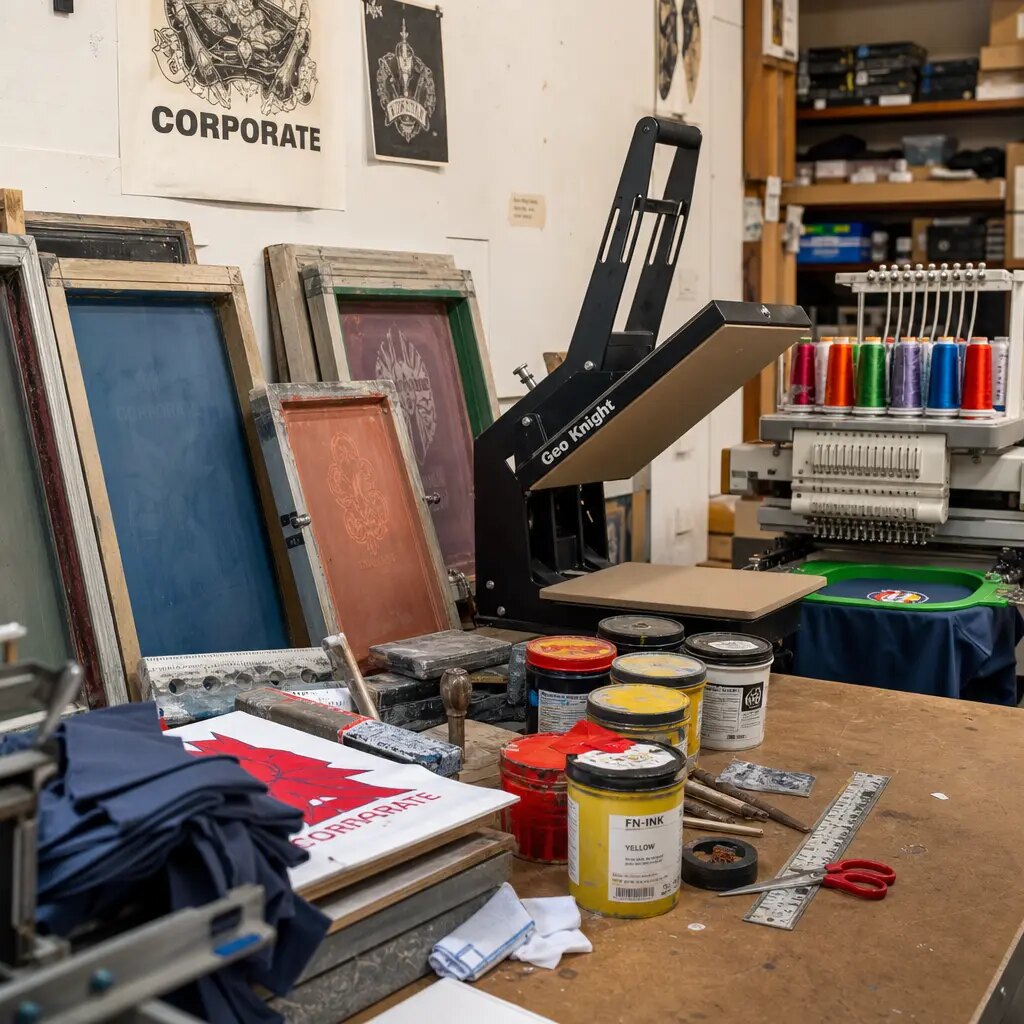
For many hotel logos, screen printing is the most practical decoration method on cotton drawstring backpacks. It handles one to three solid colors efficiently, keeps the front panel clean, and gives procurement a clear way to control logo size and placement. The quote should not simply say logo included. It should state print method, print size, number of colors, Pantone targets, placement from the top edge or center line, screen or setup charges, and whether a soft-hand finish is expected.
Water-based screen print often suits natural cotton, spa merchandise, and understated resort branding because it can feel softer than a heavy raised print. Plastisol can give stronger opacity on darker cotton, but large plastisol areas may feel stiff if ink deposit and curing are not controlled. Either method should be tested on the same fabric construction and color intended for bulk. A print that looks clean on smooth white fabric may look different on natural textured canvas.
Embroidery can be a premium choice for a small logo, monogram, woven patch, or side detail. It is less suitable for large front artwork on lighter cotton because dense stitching can pucker the panel and raise cost. Heat transfer can help with gradients, fine details, or artwork that is not practical to screen print, but the buyer should approve edge adhesion, hand feel, and heat effect on the fabric. For hotel retail, simple artwork that reproduces cleanly is often safer than a complex digital mockup.
- Screen print: best for 1-3 solid colors and medium front logos at controlled cost.
- Water-based ink: softer feel, natural look, and good fit for light cotton when opacity is approved.
- Plastisol ink: stronger opacity on darker fabric but requires curing control to prevent cracking or tackiness.
- Embroidery: suitable for small premium marks, patches, and monograms, not large dense artwork.
- Heat transfer: useful for complex art; inspect edge lift, hand feel, and durability on bulk fabric.
- Placement tolerance: set a practical logo placement tolerance, often +/- 5 mm for many flat cotton bags.
- Artwork files: provide vector art, Pantone references, print dimensions, and alignment instruction.
Understand What Drives MOQ
MOQ usually comes from material minimums and production setup, not only from factory preference. Natural stock cotton with one-color screen print may support a lower minimum than custom dyed canvas with color-matched cords, woven labels, retail hangtags, barcode stickers, and individual packing. If a supplier gives one MOQ number without explaining it, procurement cannot see which part of the specification is driving the order volume.
Ask suppliers to break MOQ down by component. Fabric color may require a dye lot minimum. A less common GSM may need special material booking. Custom cords may have their own minimum. Multi-color screen printing adds setup and registration control. Woven labels and hangtags may come from separate vendors with separate minimums. Individual packing and property sorting add labor and can affect carton planning. Once the driver is visible, the buyer can decide whether to simplify the spec or accept the higher quantity.
Cost comparison should also separate unit price from setup and pass-through charges. Sample fees, courier costs, lab dip fees, screen charges, artwork setup, barcode sticker setup, woven label tooling, hangtag printing, third-party inspection, and freight impact should be visible. A quote with a slightly higher unit price may still be better if it includes the correct GSM, reinforced construction, accurate carton data, and fewer surprise charges later.
- Fabric color: natural, white, and stock black usually support lower MOQ than custom brand colors.
- Fabric weight: uncommon GSM can increase material minimums or lead time.
- Print colors: each color adds screen setup, registration risk, and inspection focus.
- Cord customization: dyed cord, special rope, or metal tips can create separate MOQ.
- Labels: woven labels, hangtags, and care labels may have independent supplier minimums.
- Packing: individual bags, paper bands, barcodes, and property sorting add labor and materials.
- Inspection: third-party QC, tighter AQL, or special tests should be priced before PO.
- Quote validity: request validity dates because material and freight assumptions can change.
Treat Samples as Production Standards
A pre-production sample is more than a visual approval. It becomes the physical standard for fabric body, shade, sewing, cord behavior, corner strength, print appearance, label placement, folding, and packing. For hotel retail, the sample should use bulk fabric or approved bulk-quality fabric, final cord, final logo method, final label method, final dimensions, and final packing. If any substitute is used, the supplier should identify it in writing and explain what will change in mass production.
Inspect the sample the way you would inspect a small production lot. Measure width, height, top channel width, cord length, logo position, label location, and folded pack size. Pull the cords repeatedly and check whether the bag closes evenly. Load it with realistic hotel retail items such as a small towel, sandals, light apparel, or a bottle, then watch the lower corners and seam stress. After proper curing time, rub the logo surface to check for obvious transfer, tackiness, cracking, or poor adhesion.
Sample approval notes should be specific. Avoid writing approved if corrections remain open. If the print color is approved but the cord length must increase by 5 cm, record that. If the fabric is approved but the barcode label must move to the hangtag, record it with photos. Keep one approved sample with the buyer and one sealed reference sample at the factory. Final inspection should compare bulk goods against that sealed sample, not only against emails or digital mockups.
- Measure: width, height, channel width, cord length, logo position, and label position.
- Function: open and close the drawcords repeatedly to check smooth movement.
- Load: test with realistic light hotel retail contents, not only an empty bag.
- Corners: check tab stitching, eyelet backing, fabric stretch, and cord attachment.
- Print: inspect opacity, hand feel, tackiness, cracking, smearing, and placement.
- Labels: confirm woven label, care label, hangtag, barcode, and SKU information.
- Packing: approve fold direction, individual pack, inner quantity, and carton layout.
- Records: document approvals and corrections with photos and measurement notes.
Put QC Criteria in the PO
Quality control should be written before production begins. Cotton drawstring backpacks for hotel retail need checks for function, appearance, labeling, packing, and order accuracy. The most important failure points are bottom corner reinforcement, cord movement, seam security, print curing, fabric defects, and carton accuracy. A shipment can be usable in a basic sense and still be wrong for a hotel shop if it arrives stained, dusty, badly folded, mislabeled, or with inconsistent logo placement.
A practical inspection plan should include measurement checks, workmanship review, function testing, print review, label verification, barcode scanning when required, and carton count. If the order is distributed across properties, carton labels and SKU segregation become critical. A well-made backpack packed into the wrong property carton can still create receiving errors and inventory disruption.
Many cotton backpack orders do not need full laboratory testing, but they do need sensible practical checks. Inspectors should pull cords and corners by hand, check for open seams, confirm there is no sharp hardware, review print adhesion, measure a sample of units, scan barcodes, and open cartons from different parts of the packed lot. If a third-party inspection company is used, send the same QC checklist to both the supplier and inspector before inspection day.
- Critical defects: mold, heavy stains, broken needle pieces, sharp hardware, wrong logo, or mixed unrelated goods.
- Major defects: open seams, missing cords, torn corners, unreadable print, wrong size, or badly skewed logo.
- Minor defects: small thread tails, light wrinkles, or natural cotton slubs within the approved range.
- Size check: inspect against written tolerance, commonly +/- 1 cm unless otherwise agreed.
- Logo check: inspect placement, color, opacity, curing, registration, and hand feel.
- Pull check: confirm cords and corners do not detach or tear during repeated practical pulling.
- Barcode check: scan retail barcodes and verify SKU, property code, and label location.
- Carton check: confirm quantity, carton marks, gross weight, inner packs, and destination sorting.
Plan Packing for Hotel Receiving
Packing is a procurement decision, not an afterthought. It affects shelf appearance, barcode scanning, warehouse receiving, carton cube, labor cost, and landed cost. Cotton backpacks can crease deeply when over-compressed, and natural cotton can show dust, moisture marks, and carton rub more clearly than darker synthetic bags. The goal is to protect presentation without adding unnecessary material waste or freight volume.
Common options include bulk folded units, individual recycled polybags, paper bands, tissue wrap, hangtagged units, inner bundles, and property-specific cartons. Bulk folded packing is cheaper, but it creates more handling at destination and increases the risk of dust marks, counting disputes, and inconsistent display preparation. Individual packaging improves unit protection and counting, especially when barcode labels or retail price stickers are needed. Paper bands can reduce plastic, but they provide less dust and moisture protection.
Approve the fold method on the pre-production sample. Avoid placing a sharp fold through a large printed logo if it could crease the ink or distort the artwork. The PO should state how each backpack is folded, whether cords are tucked or visible, how many units go into an inner pack, how many units go into a master carton, where labels are applied, and what carton marks are required. For multi-property hotel groups, carton marks should identify property, SKU, color, PO number, quantity, and destination.
- Fold method: keep the main logo away from sharp stress folds where possible.
- Individual polybag: useful for dust control, barcode scanning, and clean receiving.
- Paper band: lower-plastic presentation when the route and warehouse conditions are clean.
- Inner quantity: set fixed bundle counts to simplify receiving and shortage checks.
- Carton weight: keep cartons practical to lift and avoid crushing lower layers.
- Desiccant: consider for ocean freight, humid production seasons, and long storage.
- Carton marks: include PO, SKU, color, property, quantity, gross weight, and net weight.
- Barcode level: specify unit, hangtag, inner carton, master carton, or all required levels.
Protect the Lead Time Calendar
Lead time for cotton drawstring backpacks is usually driven by approvals and materials more than sewing complexity. A natural cotton bag with one-color screen print and standard packing can move faster after sample approval. Custom dyed fabric, color-matched cords, woven labels, printed hangtags, barcode setup, complex artwork, third-party inspection, or property-level carton sorting can add time. The calendar should show dependencies, not just a production-day estimate.
Work backward from the hotel retail launch, resort opening, seasonal promotion, event date, or warehouse receiving deadline. Include RFQ clarification, artwork preparation, lab dip approval if needed, sample making, sample shipment, internal brand review, sample corrections, deposit payment, material booking, cutting, printing, sewing, trimming, packing, inspection, rework buffer, export booking, documents, customs clearance, and destination receiving. Many late shipments start with small approval delays that were never built into the plan.
Call out what cannot start until approval is complete. Bulk fabric dyeing cannot start before lab dip approval. Printing cannot start before artwork, Pantone references, and placement are approved. Barcode labels cannot be printed before SKU data is final. Carton marks cannot be finalized before property allocation is confirmed. If packing changes after production starts, the supplier may need new materials, new labor planning, and revised carton data.
- Artwork risk: missing vector files, Pantone targets, or placement dimensions delay print sampling.
- Lab dip risk: custom colors require shade approval before bulk fabric or cord dyeing.
- Sample risk: slow buyer review delays material booking and production start.
- Label risk: late barcode or hangtag data affects packing and carton sorting.
- Inspection risk: failed inspection needs rework time before export booking.
- Document risk: incorrect carton data or product descriptions can slow import clearance.
- Reorder risk: shade and fabric body can drift if original standards were not documented.
- Launch risk: seasonal retail and resort openings need buffer for approval and shipping delays.
Compare Quotes by Landed Cost and Risk
A wholesale buyer should not award cotton drawstring backpack production from unit price alone. The stronger comparison is landed cost plus operational risk. A low unit price can become expensive if the fabric is too light, cords are uncomfortable, cartons are oversized, labels are missing, print fails inspection, or weak corners lead to complaints. A slightly higher factory price may be safer when it includes the correct GSM, reinforced construction, accurate carton data, and a clear sample-to-production process.
Each quote should list its assumptions. At minimum, request fabric construction and GSM, finished size and tolerance, cord material and diameter, corner reinforcement, seam finish, logo method, logo size, print colors, label details, packing method, units per carton, carton dimensions, gross weight, net weight, sample charge, setup charge, production lead time, MOQ, payment terms, and trade terms. If any of those are missing, the buyer cannot compare suppliers fairly.
Freight impact matters in hotel retail buying. A 300-340 GSM backpack may increase shelf value, but it also increases carton weight. Individual packing may improve presentation but add carton cube. Larger dimensions increase fabric consumption and freight volume. Air freight caused by late approvals can erase the savings from a cheaper quote. Ask for carton data during quotation so logistics can estimate landed cost before the PO is placed.
- Compare like-for-like: same GSM, size, cord, corner reinforcement, logo method, and packing.
- Separate charges: sample, screen setup, lab dip, labels, hangtags, barcodes, and inspection.
- Check carton data: units per carton, carton dimensions, gross weight, and net weight.
- Review trade terms: EXW, FOB, CIF, DDP, payment terms, and quote validity.
- Assign responsibility: rework, shortages, rejected goods, and inspection failure should be covered in writing.
- Evaluate communication: strong suppliers explain assumptions instead of hiding them in vague quotes.
- Keep records: save approved sample photos, shade references, carton data, and quote assumptions for reorders.
Specification comparison for buyers
| Spec decision | Recommended option | When it fits | Buyer risk to check |
|---|---|---|---|
| Fabric weight | 220-270 GSM cotton canvas, often sold as about 7-8 oz, for most hotel retail; 300-340 GSM, about 9-10 oz, for premium programs | Hotel gift shops, resort boutiques, spa retail, beach merchandise, branded amenity upgrades, and guest-facing retail where the bag should be reused | Quotes that say only cotton may hide 140-180 GSM sheeting, weak body, poor shelf display, and inconsistent reorders |
| Fabric construction | Plain-weave cotton canvas or cotton drill with stated GSM, color process, shrinkage expectation, and approved shade range | Procurement teams comparing multiple suppliers, planning reorders, or matching brand standards across properties | Fabric substitutions can change weight, texture, logo opacity, shrinkage after finishing, and perceived retail value |
| Finished size | 35 x 42 cm adult reference size with +/- 1 cm finished tolerance unless tighter control is agreed and priced | Light hotel retail purchases such as sandals, swimwear, spa items, a small towel, bottled water, or kids' accessories | Oversized bags increase fabric cost and carton cube; undersized bags feel like giveaways and reduce guest usability |
| Cord specification | 6-8 mm cotton rope or braided cotton cord, with length and color approved on the pre-production sample | Hospitality retail programs that want a softer, more natural product than a synthetic promotional cinch bag | Thin 3-4 mm cords lower cost but can cut into shoulders, twist in the channel, and pull through weak corners |
| Corner reinforcement | Stitched triangular cotton tabs with back-tack, or metal eyelets with backing patch or washer | Reusable retail items, beach kits, bundled resort merchandise, and programs where guests carry light loads repeatedly | Unbacked eyelets can tear cotton; weak tab stitching is a common failure point during pull and wear checks |
| Logo method | Screen print for 1-3 solid colors; embroidery for small premium marks; heat transfer for complex artwork after adhesion approval | Screen print usually gives the best balance of cost, retail appearance, and placement control for hotel logos | Large plastisol prints can feel stiff; under-cured ink can smear, crack, or feel tacky; dense embroidery can pucker lighter cotton |
| Seam finish | 4-thread overlock with clean trimming for standard volume; French seams or binding for a premium inside finish | Overlock suits wholesale retail volume when seam allowance and stitch quality are inspected; French seams suit boutique positioning | Raw edges, skipped stitches, loose thread tails, and insufficient back-tacking make the bag look low-grade and create return risk |
| Labels and retail coding | Care label if required, woven brand label, hangtag, barcode sticker, SKU label, and carton marks specified before sampling | Hotel shops, multi-property rollouts, spa boutiques, and retail inventory systems with receiving and scanning requirements | Late barcode, hangtag, or property-code requests can change MOQ, sample timing, packing labor, carton sorting, and delivery schedule |
| Packing style | Individual recycled polybag or paper band, fixed fold method, inner quantity, export carton, and moisture control defined in the PO | Retail backroom handling, barcode scanning, cleaner shelf presentation, and easier property-level allocation | Bulk loose packing lowers cost but increases dust marks, deep creases, counting disputes, and labor at destination |
Buyer checklist before sampling
- Define the commercial use first: paid retail item, bundled resort kit, guest amenity, spa merchandise, beach package, event bag, or multi-property standard SKU.
- Specify fabric construction and weight as plain cotton canvas, cotton drill, or washed cotton with target GSM; do not accept only cotton as the fabric description.
- State whether the fabric is natural, bleached, stock dyed, custom dyed, washed, or recycled-content cotton, and record the acceptable shade variation before bulk production.
- Confirm finished size, measurement point, tolerance, top channel width, cord length, cord diameter, cord material, corner reinforcement type, and seam finish.
- Send vector artwork with logo size, Pantone references, print position, color count, preferred print method, and acceptable placement tolerance.
- Decide labels and retail data before sampling: woven label, care label, hangtag, barcode sticker, property SKU, price label, country-of-origin mark, and carton label format.
- Require a pre-production sample using bulk-quality fabric, final cord, final print method, final labels, final folding, and final packing before mass production starts.
- Write practical QC checks into the PO: size tolerance, fabric weight check, cord pull, corner reinforcement test, seam review, print adhesion, barcode scan, and packing count.
- Ask for carton quantity, carton dimensions, gross weight, net weight, inner packing, desiccant use, pallet needs, and destination sorting instructions at quote stage.
- Compare MOQ by fabric color, GSM, dyeing, cord customization, print colors, label type, packing format, and property-level sorting instead of accepting one unexplained MOQ.
Factory quote questions to send
- What exact fabric construction, GSM or ounce weight, color process, and shrinkage expectation are included in your quotation?
- Is the quoted fabric natural greige, bleached, stock dyed, custom dyed, washed, or recycled-content cotton, and what shade tolerance applies to bulk and reorders?
- What finished size tolerance can you hold after cutting, sewing, ironing, and packing, and how will measurements be taken during inspection?
- What cord material, cord diameter, cord length, color, end treatment, and channel width are included in the price?
- How are the bottom drawcord corners reinforced, and what pull check or load simulation do you use during production QC?
- Which seam construction is quoted for side seams, bottom seam, and top channel, and is back-tacking included at stress points?
- Which print method is quoted, how many colors are included, what logo size is priced, and are screen, setup, and sample charges separate?
- What placement tolerance do you recommend for the logo, label, hangtag, and barcode sticker on this cotton construction?
- Will the pre-production sample use bulk fabric or bulk-quality fabric, final cord, final ink, final labels, and final packing, or substitute materials?
- What MOQ applies by fabric color, fabric weight, dye lot, logo color count, cord customization, woven label, hangtag, barcode sticker, and individual packing?
Quality-control points to confirm
- Finished backpack size should match the PO tolerance, commonly +/- 1 cm for width and height unless a tighter retail standard is agreed and priced.
- Fabric weight should match the approved sample and quoted GSM, with no unapproved downgrade to lighter cotton, different weave, or lower fabric body.
- Fabric shade should stay within the approved shade range; natural slubs, seed flecks, and minor shade variation are acceptable only if approved on the reference sample.
- Drawcords should be the approved material, diameter, length, and color, and should pull smoothly through the top channel without snagging, twisting, or uneven closure.
- Corner tabs, backed eyelets, or reinforced bottom points should withstand repeated hand pulling without seam slippage, fabric tearing, loose hardware, or cord detachment.
- Logo print should match approved size, placement, Pantone target, opacity, hand feel, and curing condition, with no pinholes, smears, off-register edges, cracking, or tackiness.
- Logo placement should be inspected against written tolerance, commonly within +/- 5 mm for placement and with no obvious skew when the bag is laid flat.
- Seams should be straight, secure, and back-tacked at stress points, with no open seams, skipped stitches, broken threads, raw fraying edges, or weak top channel stitching.
- Thread trimming should be retail-ready around the logo area, label area, top channel, inside seams, and bottom corners, with no long visible tails.
- Labels, hangtags, barcodes, care labels, and property SKU stickers should match the PO, sit in the approved position, and scan correctly where barcode use is required.