What wellness studios actually need from a drawstring backpack
For wellness studios, a cotton drawstring backpack is usually part retail item, part utility bag, and part brand touchpoint. It may hold class socks, skincare samples, towels, a bottle, or a small purchase from the front desk. That means buyers should evaluate it like a light-use consumer product, not just a promotional giveaway. If it will sit beside mats, bottles, and premium studio merch, the bag needs to look tidy on the shelf and still perform when a customer actually loads it.
That use case creates a few non-negotiables. The bag should hang neatly, close smoothly, and keep its shape when partially filled. Thin cotton often looks acceptable in a mockup but collapses when packed, wrinkles badly in transit, and exposes weak seams or loose cord tunnels. In a studio setting, that can make a branded gift look inexpensive even when the logo itself is printed well.
A sourcing brief should start with the customer scenario. Is the bag for a one-time event handout, a membership welcome pack, or a paid retail item? Each path changes the acceptable fabric weight, finishing level, packing, and inspection depth. Procurement teams save time when they lock that use case early, because it narrows the field of suppliers who can realistically meet the spec.
The most useful first question is simple: what must the bag hold, and how often will it be reused? A bag for a folded shirt and skincare sample is a different product from a bag that will carry a water bottle and towel every day. If the supplier cannot discuss that difference in concrete terms, the quote is not ready for comparison.
- Treat the bag as a light-use consumer product, not only a promo item.
- Match the spec to the real load: towel, bottle, retail bundle, or handout kit.
- Judge both shelf appearance and in-use performance, especially seam and cord behavior.
Material choices that change structure, print quality, and perceived value
For cotton drawstring backpacks for wellness studios, the safest starting point is a medium-weight cotton twill or canvas-style cotton. In practice, buyers often work around the 140-180 GSM range, but that should be treated as a typical sourcing band rather than a guarantee. The point is not the number by itself. It is whether the fabric gives enough body for the bag to hang cleanly, carry a modest load, and accept print without looking flimsy.
Weave is just as important as weight. Twill-faced cotton usually gives a smoother outer surface and slightly better visual discipline, which helps logos read cleanly. A tighter canvas-style weave can feel more substantial, especially for retail resale, but it may add fold bulk. Loose plain weave is acceptable in some budget programs, yet it is easier to distort in sewing, more likely to show print variation, and less forgiving when the bag is packed into cartons.
The right choice depends on what the buyer values most. If the studio wants a soft natural look at a modest price, a lighter twill can work. If the product should feel more like retail merch than a freebie, buyers usually lean toward a denser cotton with firmer structure. The mistake to avoid is choosing by category name alone. “Canvas” and “twill” can both be used loosely by suppliers, so buyers should ask for photos of the actual fabric face and a swatch from the intended production lot.
Natural cotton also has presentation advantages, especially for wellness brands. It pairs well with minimal branding, neutral colors, and simple hangtag layouts. But that same minimalism makes fabric quality more visible. When the product is plain, buyers are really buying the cut, the stitch quality, the hand feel, and the way the bag falls when empty. That is why a generic “eco-friendly” description is not enough for procurement.
- Use fabric weight as a starting point, not the whole decision.
- Twill usually prints cleaner; tighter canvas usually feels sturdier.
- Ask for the actual fabric face and swatch from the production lot, not a generic sample.
- Expect plain natural cotton to make stitching and finishing more visible.
Buyer comparison table: tradeoffs that matter in real sourcing decisions
Use the table as a quote filter. If a supplier’s suggested spec lands in the wrong column for the planned channel, the quote may still be cheap but not commercially right. For example, a bag built for event handouts can be perfectly acceptable for a one-day launch and still be the wrong choice for a retail wall display. A good sourcing team separates those cases instead of trying to force one spec to do both jobs.
The table also helps procurement push back on over-optimized quotes. A very low number may simply mean lighter fabric, less reinforcement, simplified packing, or a weaker QC plan. If the supplier can explain the tradeoff and the buyer accepts it, that is fine. If not, the quote is missing the commercial context needed for a fair comparison.
Specs that should be locked in the purchase order
A useful PO should read like a manufacturing instruction, not a marketing note. For a cotton drawstring backpack, lock the finished dimensions, any gusset depth, cord length, fabric composition, weave, and logo placement. If the bag will hold a bottle or towel, say so. If it is only for a membership welcome kit, say that too. The factory should not have to guess the intended load or presentation standard.
Write tolerances in measurable form. Buyers often use a practical tolerance band on sewn goods, but the exact number should be agreed with the supplier and tied to the material and construction. Larger dimensions can usually tolerate a little more variance than smaller ones, but a procurement team should confirm what the factory can actually hold before final approval. The goal is to avoid a vague phrase like “standard size” that means different things to different vendors.
If the bag needs a gusset, top tunnel reinforcement, or bartacks, specify it clearly. Do not assume the factory will add those details by default. Ask where reinforcements are placed, how many stitches are used, and whether the cord tunnel is folded and reinforced before the cord is inserted. Those details matter because the highest strain usually appears where the cord exits the body and where the bag opens and closes repeatedly.
Finally, write the logo rules into the PO. State the artwork version, print method, print position, ink color reference, and any restrictions on minimum line thickness or small type. If the supplier cannot reproduce the logo cleanly at the approved size, it is better to know before production than to receive a lot of fuzzy branding that the studio cannot use confidently.
- Lock size, gusset, cord length, fabric, and logo position in writing.
- Use agreed tolerances instead of vague language like standard or normal.
- Specify reinforcement details for tunnel, seams, and high-stress points.
- Tie artwork version and print rules to the final PO approval.
Print and decoration choices: how they change cost and defect risk
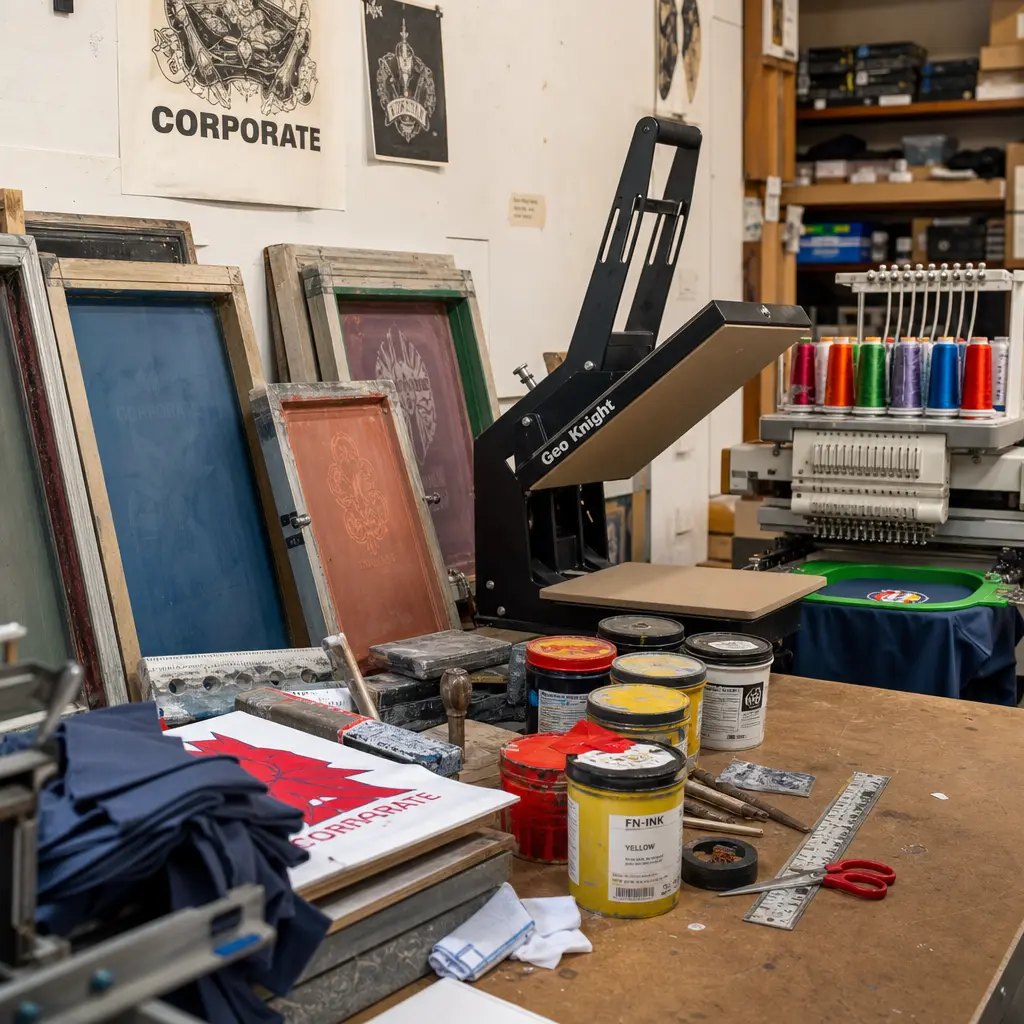
Decoration method can change the quote structure almost as much as fabric choice. Screen print is usually the first option to review because it works well for simple studio logos, solid fills, and repeat orders. On cotton, a good screen print can look crisp and durable if the ink is properly matched to the cloth and cured correctly. For buyers who need a clean logo at a controlled cost, it often gives the best balance of appearance and scalability.
Embroidery and transfers have their place, but the tradeoffs should be explicit. Embroidery gives a premium feel and is useful for small badge-style marks, yet it can pull lighter fabric panels out of shape and adds stitch-count complexity. Heat transfer or similar methods can preserve small text and multi-color artwork better than screen printing, but the surface feel can be less integrated with the cotton and durability depends on the transfer quality. None of these methods is automatically better; each one changes the risk profile.
Procurement teams should ask the supplier to quote decoration in a way that makes comparison possible. Is the setup charged per position? Does the artwork include one color or multiple colors? Is the supplier quoting a spot-match standard or a visual approximation? Does the sample reflect the exact base cloth or a substitute swatch? Those questions matter because a logo that looks simple in an email thread can become expensive once the factory counts colors, passes, or stitch density.
A strong buyer also asks about line thickness and detail limits. Cotton texture can swallow small type, hairline rules, and tight registration. If the design depends on delicate detail, ask the factory to flag the minimum readable size before approving the artwork. That is more useful than learning after production that the logo had to be simplified or thickened on the fly.
- Screen print is usually the cleanest baseline for simple logos on cotton.
- Embroidery can look premium, but it may distort lighter fabric or raise stitch-cost risk.
- Transfers help with complex art, but ask about feel and long-term wear.
- Confirm setup charges, print positions, and color-count rules before comparing suppliers.
- Ask the factory to state minimum line thickness and readable type size.
Supplier routes and what each one hides or reveals
Direct factory sourcing is usually the best path for repeatable programs. It gives the buyer more leverage on fabric choice, seam detail, cord construction, and packing format. It also makes reorders easier because the same production line and material sources can be used again. For wellness studios with multi-location programs or seasonal replenishment, that continuity is often worth more than a marginally lower initial quote.
Trading companies and stock-led suppliers are not automatically worse. They can be useful when the timeline is tight, the order is small, or the buyer is combining several items into one shipment. The tradeoff is transparency. If the quote does not clearly identify the mill, factory, or finishing line, the buyer may not know whether the next lot will match the first one. That creates risk on color, stitch quality, and even the feel of the cotton.
One practical procurement check is simple: ask who actually cuts and sews the bag, who prints it, and who handles final packing. If the supplier is answering only at a high level, the buyer may not have enough visibility to control quality. On the other hand, if the factory can show production photos, line layout, and a basic QC flow, that is a stronger sign that the quoted spec is real rather than assembled from mixed sources.
For any route, ask what changes between sample and bulk order. Some suppliers quote a nicer sample spec than what they intend to produce at volume. That can be legitimate if it is disclosed; it is a problem if it is not. Buyers should make sure the sample, the quote, and the final PO all describe the same build, not three different versions of the same bag.
- Direct factory sourcing usually gives the best repeatability.
- Trading or stock-led sourcing can work, but source transparency is essential.
- Ask who cuts, prints, and packs the bags, not just who sends the quote.
- Confirm the sample spec matches the bulk spec before approval.
MOQ, cost drivers, and how to compare quotes without false savings
MOQ is rarely arbitrary. It usually reflects fabric consumption, dye lot planning, print setup, labor batching, and packing efficiency. When a supplier offers a lower MOQ on a cotton drawstring backpack, the buyer should ask what makes that possible. The answer is often stock fabric, fewer decoration options, or simpler packing. That can be perfectly fine, but the tradeoff should be visible in the quote.
The biggest mistake is comparing unit prices without comparing the included scope. One supplier may include drawcords, label insertion, individual polybags, and carton marking, while another may quote only the sewn bag. Those are not the same product. A procurement team should normalize quotes by fabric spec, decoration method, packing format, and freight-relevant carton count before judging price.
For wellness studios, MOQ decisions should also follow the selling plan. If the bag will be sold as retail merch or added to a membership package across multiple locations, a slightly larger order may make more sense because it locks consistency and avoids a second round of approvals. If the bag is for a pilot program or a single-event launch, a lower MOQ can be wiser even if the unit price is a little higher. The right answer depends on how quickly the first batch will move through the channel.
Keep the language in the RFQ specific. Ask for MOQ by color, by artwork version, and by decoration method. Ask whether the quoted MOQ assumes stock material or custom sourcing. Ask whether the supplier can hold the same spec on a reorder. Those questions make the commercial risk clearer than a single MOQ number on its own.
- Lower MOQ usually comes from stock fabric, simpler decoration, or simpler packing.
- Compare quotes only after normalizing scope and included items.
- Pilot launches and multi-location retail programs have different MOQ logic.
- Ask for MOQ by color, artwork version, and decoration method.
Sample approval and verification steps before bulk production
A digital mockup is not enough to approve this product. The physical sample should show how the fabric feels, how the bag hangs, how the cords run through the tunnel, and how the logo looks on actual cotton texture. For a wellness studio buyer, it should also look tidy when folded and displayed, because presentation is part of the product value. A good sample is the only reliable way to see whether the bag feels premium enough for retail or welcome-kit use.
The approval process should be structured. First, confirm the sewn dimensions against the spec sheet. Then review the print strike-off or decorated sample under normal light, not only on a screen. Check whether the fabric distorts under the logo, whether the print bleeds into the weave, and whether the edges stay crisp. If embroidery is used, inspect the back side as well, because loose thread buildup or stiff backing can make a bag feel rough and cheap in use.
Verification should not stop at appearance. Pull-test the cord, check the seam stress points, and open and close the bag several times. Confirm that the drawcord moves smoothly and that the tunnel does not twist or bunch. If the factory says the sample is representative of the production lot, the buyer should make sure the same fabric, thread, and decoration method are listed on the sample tag or approval record. That protects the team when reorders or disputes happen later.
If revisions are needed, number them clearly. The approval trail should show which sample version is signed off and which artwork file it corresponds to. A bag marked only as approved by email is hard to defend when the line production team needs a physical reference. The more ordinary the product looks, the more important it is to control the approval record carefully.
- Approve a physical sewn sample, not only a mockup.
- Review a print strike-off or decorated sample under normal light.
- Pull-test the cord and cycle the closure several times before sign-off.
- Tie the sample tag to the final artwork file and fabric spec.
- Keep one reference sample with the buyer and one with the supplier.
Packing choices, carton data, and receiving readiness
Packing is not a minor afterthought. It affects cost, appearance, and receiving efficiency. Wholesale studio orders are often best packed by SKU or color in bulk cartons, which keeps labor down and makes warehouse intake easier. Retail or distributor programs may need individual polybags, barcode stickers, or hangtags, but those details should be included in the RFQ because they change labor time and carton count.
Cotton bags crease easily, so packing needs to balance protection with space efficiency. Overly tight cartons can leave permanent fold marks, while loose cartons allow shifting, scuffing, and product mix-ups. Buyers should ask for carton dimensions, gross weight, net weight, and estimated CBM before booking freight. That information helps both the logistics team and the receiving warehouse plan storage and handling.
If the bags will be handed out in a studio environment, neatness still matters after transit. Receiving teams do not want to sort mixed colors, unmarked cartons, or poorly packed units. Ask whether cartons are labeled with SKU, color, and quantity, and whether any overrun or short-pack practice is allowed. A small, documented overrun can help with damage replacement or store allocation, but it should be agreed before production rather than discovered at the dock.
If your channel requires retail-ready presentation, confirm when insert cards, barcodes, or hangtags are applied. Some factories attach these before polybagging; others do it after. The sequence affects both appearance and defect risk, so it should be written into the packing spec. For procurement, the goal is simple: make the bags easy to receive, count, and distribute without rework.
- Bulk pack is usually best for wholesale and internal studio distribution.
- Ask for carton size, gross/net weight, and CBM before freight booking.
- Require SKU, color, and quantity labels on cartons.
- Define whether overrun, exact count, or short-pack rules apply.
- Specify when barcodes or hangtags are applied in the packing flow.
Lead time, inspection timing, and realistic schedule risk
Lead time depends on more than sewing capacity. Stock fabric, print complexity, label requirements, cord sourcing, and sample approval all affect the schedule. A simple printed bag on ready fabric may move quickly, while a custom-dyed or embroidered run can extend the calendar because the supplier has to coordinate more steps. The buyer should treat any quoted lead time as conditional on timely approvals and material availability.
The best way to reduce schedule risk is to map the production path before the PO is released. Ask the supplier which steps are on the critical path: artwork confirmation, sample approval, material purchase, cutting, decoration, sewing, packing, and final inspection. That tells the buyer where delays are most likely to occur. In many cases, the delay is not the factory floor but waiting for a buyer-side decision.
For a wellness studio launch, work backward from the in-store date, not from the order date. Allow time for sampling, comments, revisions, and freight booking. If a supplier gives the same generic lead time for a simple print run and a more complex custom order, the buyer should ask for a step-by-step schedule. That usually reveals whether the number is based on experience or copied from a template.
Inspection timing should also be planned. If the buyer wants a pre-shipment inspection, the factory needs enough time to correct issues before the vessel or truck departs. That inspection window should be stated in the order so it does not become a last-minute dispute. For procurement teams, a realistic schedule is more valuable than an aggressive one that only works if nothing changes.
- Lead time depends on stock fabric, decoration method, and approval speed.
- Ask which steps are on the critical path before you commit to a launch date.
- Work backward from the in-store or campaign date.
- Reserve time for pre-shipment inspection and possible corrective actions.
Specification comparison for buyers
| Spec decision | Recommended option | When it fits | Buyer risk to check |
|---|---|---|---|
| Fabric weight | 140-180 GSM cotton twill or canvas-style cotton | Retail programs, yoga studios, membership kits, recurring merch drops | Below 140 GSM can show through, collapse when filled, and wrinkle badly in transit |
| Fabric type | Twill-faced cotton or tightly woven canvas rather than loose plain weave | Brands needing a cleaner, more structured presentation | Loose weave can fray at cut edges, absorb print unevenly, and feel less stable |
| Closure build | Double drawcord with reinforced eyelets or a top-hem tunnel with bartacks | Daily studio use and repeated opening/closing | Single-cord or weak tunnel construction can twist, cut into the fabric, or fail at stress points |
| Print method | Screen print for simple logos; embroidery or transfer only when artwork requires it | Most studio orders with 1-3 logo positions | Fine detail may blur on textured cotton; embroidery can pucker lighter fabrics |
| Supplier route | Direct factory for repeat bulk orders; trading company only if source transparency is confirmed | Brands with stable specs or multi-item consolidation | Trading quotes can hide fabric substitutions, markup, or weak QC control |
| MOQ logic | 1,000-3,000 pcs per color/spec for standard custom runs; lower only with stock fabric and clear terms | Pilot drops, regional launches, seasonal testing | Low MOQ often raises unit price and limits customization, packing, or finish options |
| Packing format | Bulk packed by SKU/color with carton labels; individual polybag only if retail requires it | Wholesale, studio resale, and distributor orders | Overpacking raises cost and plastic; underpacking increases soil, creasing, and mix-ups |
| Lead time | 15-25 days for stock-fabric printed runs; 25-40 days for custom fabric, woven label, or embroidery | Planned launches with approved artwork and samples | Artwork revisions, shade approval, and accessory sourcing can move the ship date |
| Quote comparison | Compare on fabric GSM, finished size, print coverage, packing, and carton count, not just unit price | When suppliers quote similar-looking bags | Low price can exclude sampling, testing, overrun allowance, or proper packing |
Buyer checklist before sampling
- Confirm the end use before quoting: retail resale, membership kit, event handout, or bundled product insert.
- Write the finished size, gusset depth, cord length, and target fill weight into the RFQ or PO.
- State fabric composition, weave, GSM, shrinkage expectation, and shade tolerance in measurable terms.
- Send vector artwork and define logo size, print position, Pantone target, and minimum line thickness.
- Request base-fabric photos, print strike-offs, and one physical pre-production sample before bulk approval.
- Agree packing method, carton markings, barcode or hangtag needs, and any overrun allowance before production.
- Set inspection checkpoints for stitching, print adhesion, stains, cord finish, carton count, and shade consistency.
- Keep an approved sample sealed on both buyer and supplier sides for reorder and dispute reference.
Factory quote questions to send
- What is the exact fabric composition, weave, and GSM you are quoting, and can you show a photo of the actual base fabric?
- Does the unit price include drawcord, eyelets, label, print, polybag, and carton marking, or are any items extra?
- What is the MOQ by color and by print method, and what changes if we add a second artwork position or embroidery?
- How many samples do you provide, what is the sample charge, and is that charge deductible from bulk order value?
- What are your standard tolerances for finished size, GSM variance, color shade, stitch count, and logo placement?
- What lead time do you quote after sample approval, and which approval steps most often delay shipment?
- Can you share carton pack-out, carton size, gross weight, and estimated CBM for the quoted quantity?
- What inspection step do you use before shipment, and can you provide photos or a pre-shipment report?
Quality-control points to confirm
- Finished size matches the approved spec for height, width, gusset depth, and cord length after closing.
- Fabric GSM is within the agreed tolerance and consistent across panels, not only at a single swatch point.
- Print registration is aligned, ink coverage is even, and there is no cracking, smearing, or show-through on light fabric.
- Stitching is straight, seams are secure, and bartacks hold at cord tunnel, stress points, and side joins.
- Eyelets, labels, cord ends, and knots are secure, with no sharp edges, fraying, or exposed metal burrs.
- No visible oil marks, dirt, cutting debris, or major shade mismatch appears across cartons.
- Cartons are marked with SKU, color, quantity, and gross/net weight so receiving teams can count accurately.
- Production output does not drift materially from the approved sample in fabric body, logo position, or closure action.