Start With the Bookstore Use Case
Cotton drawstring backpacks for university bookstores sit between promotional merchandise and daily carry gear. They may be sold at checkout, bundled into orientation kits, used by departments, or stocked as a low-price campus-branded item. That mixed use is why procurement teams need a durability testing checklist instead of a simple logo-bag quote. A bag that is acceptable for a one-day event may disappoint when it is sold as bookstore merchandise and used for a semester.
The most common buying mistake is treating the shape as generic. The weak points are not generic at all: cord tunnels stretch, bottom corners tear, cotton panels distort under weight, and prints crack where the bag folds. A procurement-ready RFQ should define how the bag will be used before it asks for price. If the product must carry notebooks, a hoodie, a tumbler, and small tech accessories, the fabric, cord, and stitch standard should be different from a lightweight welcome-kit bag.
University buyers also have calendar pressure. Move-in week, homecoming, orientation, and semester starts leave little room for a late sample revision. The specification should remove ambiguity early, so the supplier can quote the same construction that will be inspected later. That is the practical value of a cotton drawstring backpacks for university bookstores durability testing checklist: it connects the RFQ, sample approval, QC inspection, and receiving audit into one buying process.
- Separate retail resale, welcome kit, department event, and alumni merchandise before requesting quotes.
- Define what the bag must carry: A4 folders, notebooks, hoodie, bottle, tablet sleeve, or light apparel only.
- Treat cord tunnels, lower corners, and decoration as functional risk points, not minor details.
Lock Fabric GSM Before Artwork
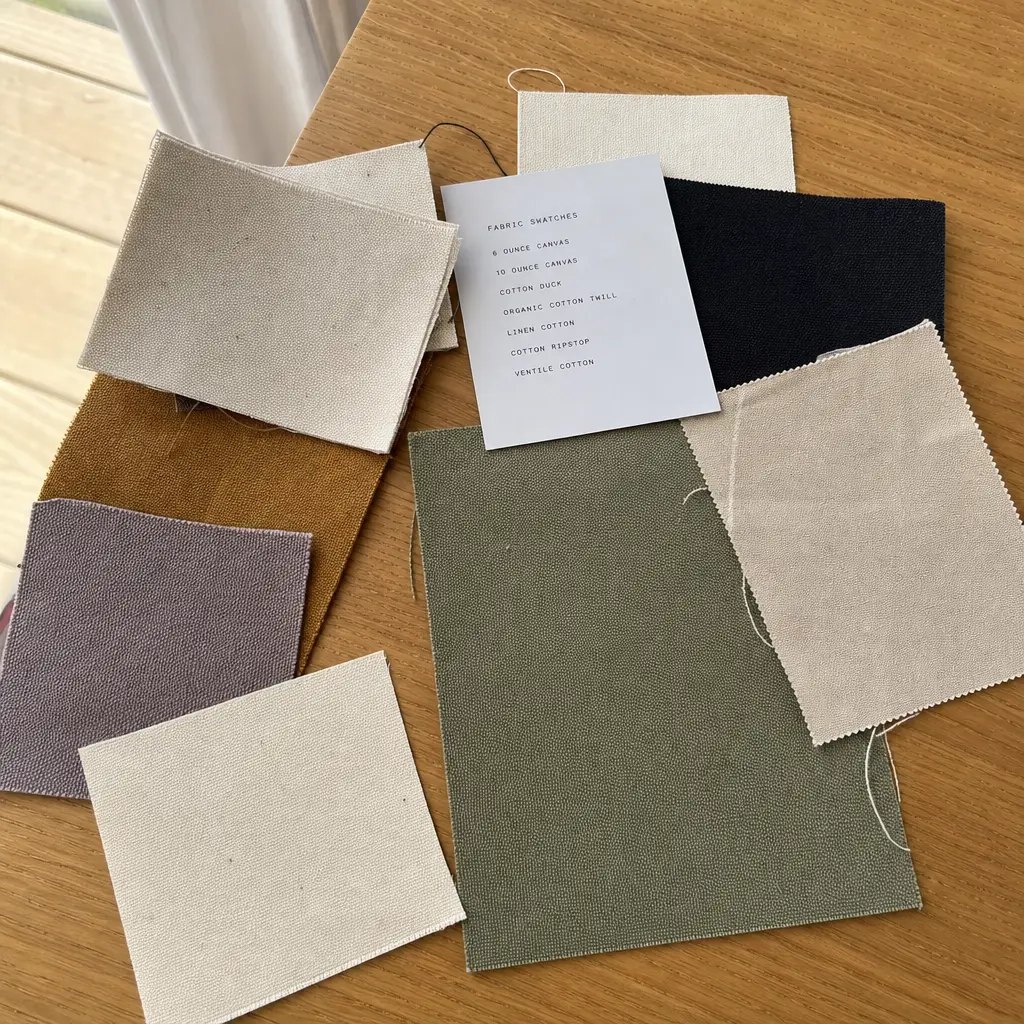
Fabric weight drives hand feel, strength, print behavior, freight weight, and perceived retail value. For university bookstore cotton drawstring backpacks, the practical range is often 8 oz to 10 oz cotton canvas. In metric terms, 8 oz is commonly around 240-270 GSM, while 10 oz often lands around 340-360 GSM depending on weave and finish. These numbers should be written into the RFQ because supplier quotes can drift quickly when one seller prices a light cotton and another prices denser canvas.
An 8 oz bag can be useful when the budget is tight, the order is promotional, or the bag is meant to carry light items. It should still be tested because light cotton can stretch at the cord tunnel and tear at the lower corners when students overload it. A 10 oz bag usually gives a better retail hand feel and stronger shelf presentation. It is more appropriate when the bookstore expects repeat use or wants the item to sit beside apparel, notebooks, and campus accessories without feeling disposable.
GSM should not be accepted as a sales claim only. Ask how the factory checks incoming fabric and what tolerance it allows. A practical buyer tolerance might be plus or minus 5 percent unless the supplier can support tighter control. Also ask whether the fabric is natural, bleached, dyed, enzyme washed, or finished. Natural cotton can show specks and shade variation; dyed cotton needs color control; washed cotton may shrink differently. Each choice changes cost, appearance, and inspection criteria.
- 8 oz / 240-270 GSM: acceptable for light-duty giveaways, lower-price programs, and short-term event bags.
- 10 oz / 340-360 GSM: stronger choice for bookstore resale, repeat use, and better shelf presentation.
- Ask for GSM tolerance, fabric finish, color control, and incoming fabric inspection evidence before approving the quote.
Build the Bag Around Load Points
The drawstring backpack construction is simple, but the load path is unforgiving. Weight pulls from the cords through the top tunnel and into the lower corners. If the tunnel stitching is loose, the cord can deform the channel. If the bottom corners are not reinforced, books and bottles create concentrated stress where the cord exits or anchors. A clean sample photo will not reveal this; a loaded test will.
Stitching should be specified in practical terms. For cotton canvas drawstring bags, a buyer-side target of 8-10 stitches per inch is a useful benchmark to discuss with suppliers, especially on side seams, bottom seams, tunnel seams, and bar-tack areas. The exact construction can vary by factory, but the goal is consistent stitches with no skipped sections, loose threads, or open seam ends. Reinforcement should be visible at the lower corners and cord tunnel exits, and it should match the approved sample.
Cord choice matters as much as fabric. Cotton cord gives a natural look and fits the product story, but it can fray or absorb moisture. Polyester cord is often stronger and cleaner in use, but it may feel less aligned with a cotton merchandise program. Polycotton can be a middle ground. Ask for cord material, diameter, colorfastness risk, and whether the cord ends are knotted, tipped, or sewn into the seam. A 5 mm cord may feel more substantial than a thin 3 mm cord, but the tunnel must be sized for smooth opening and closing.
- Specify stitch density expectations, not just a general request for good sewing.
- Check reinforcement at lower corners, tunnel exits, and side seam stress points.
- Confirm cord material, diameter, tunnel fit, end treatment, and colorfastness risk.
Use Practical Pass-Fail Durability Tests
Durability advice becomes more useful when it has pass-fail language. These checks do not need to be presented as universal industry standards; they are buyer-side screening methods that make supplier discussions clearer. The aim is to catch realistic failure modes before bulk packing: seam opening, tunnel tearing, cord slippage, print cracking, shrink distortion, and carton damage.
For a bookstore retail bag, test a preproduction sample with 5 kg of realistic contents for 30 minutes. Use books, notebooks, and a filled bottle if that matches actual use. After the hold test, carry the bag by both cords, open and close it repeatedly, and inspect bottom corners, side seams, and the top tunnel. A sample should fail buyer review if stitches pop, a seam opens, a cord pulls out, or the tunnel visibly tears. For lighter giveaway specs, the buyer may choose a lower load, but the pass criteria should still be written down.
Add a short drop check because students do not handle bags gently. A practical screen is three drops from about 80 cm onto a clean hard surface with the same test load. The bag does not need to look untouched, but it should not split, expose contents, or lose cord function. For opening and closing, run 50 cycles and check whether the cord abrades the tunnel or catches in the channel. These simple tests make approval more concrete than a supplier statement that the bag is strong.
- Load test: 5 kg for 30 minutes for retail-oriented specs; reject seam opening, tunnel tearing, or cord pull-out.
- Drop test: three loaded drops from about 80 cm; reject split seams or loss of function.
- Open-close test: 50 cycles; reject cord jamming, tunnel abrasion, or severe puckering.
Test Decoration Like It Will Be Used
Decoration is often where a bookstore bag looks approved in the office but fails in the field. Screen printing is usually the most efficient method for one-color or two-color university logos. It can be durable on cotton canvas when the ink deposit, curing, and fabric surface are controlled. The print should be tested after folding and compression because drawstring backpacks are usually packed flat or bundled, then handled repeatedly by students.
A practical print rub screen is useful for comparing suppliers. On the approved sample, run 50 dry rubs with a clean white cotton cloth and 20 wet rubs with a lightly damp cloth. The buyer should reject severe color lift, smearing, cracking, or a logo that becomes visibly distorted. If the print is large or sits across a fold line, fold the bag sharply through the print area ten times and inspect for cracking. For screen print, ask how the supplier controls curing. For heat transfer, pay special attention to edge lift and cracking. For woven labels or patches, inspect edge fray, stitch density, and placement.
Wash claims should be handled carefully. Cotton drawstring backpacks may not be marketed as washable unless the supplier supports it, but students may still wash them. If wash durability matters, run one cold gentle wash and air dry on the sample. Check shrinkage, color bleeding, print cracking, label distortion, and cord behavior. Do not accept a vague claim that the print is washable without a sample-based check tied to your artwork and fabric.
- Screen print: check curing, rub resistance, fold cracking, and color match on the final cotton color.
- Heat transfer: check edge lift, cracking, and adhesion after folding and light wash screening.
- Woven label or patch: check stitch security, edge fray, placement consistency, and abrasion at label corners.
Compare Suppliers With Procurement Criteria
Supplier type affects control. A trading company may be a good route for quick campus reorders, low MOQ trials, or mixed merchandise programs. The buyer should verify whether the trader has access to factory inspection records, production photos, carton details, and fabric lot information. Without those details, the trader may only be passing along a stock item with limited control over future consistency.
A direct factory is usually stronger for repeat bookstore programs because the buyer can control material booking, sample approval, inline inspection, and retained samples. That control is valuable when the bag will be reordered across semesters or sold across multiple campuses. The tradeoff is that MOQs can be higher, especially when fabric color, decoration, labels, or packing are custom. Direct factory sourcing should include verification steps: ask who owns cutting, sewing, decoration, and packing; request photos of similar production; and confirm whether a third-party inspection is allowed.
Regional decorators can be useful when a bookstore needs local speed or late artwork changes. The main risk is that the decorator may not control the base blank construction. In that case, ask for the blank supplier, fabric GSM, current stock lot, and whether future blanks will match the sample. A decorator can control logo quality while the bag itself changes underneath. That distinction belongs in the quote review.
- For traders, request factory-level photos, lot details, inspection records, and clear responsibility for defects.
- For direct factories, verify production ownership, material control, sample-to-bulk process, and inspection access.
- For regional decorators, verify blank bag consistency, stock lot, reorder source, and decoration-only limitations.
Make MOQ and Landed Cost Visible
MOQ is not one number. It can be driven by fabric roll quantity, dye lot, print setup, cord color, woven label minimums, carton printing, or the number of logo versions. A quote that says 500 pieces may mean 500 per color, 500 per artwork, or 500 total with a surcharge for splits. University bookstore buyers should ask this directly because campus programs often involve multiple departments, colors, or logo placements.
Landed cost should be calculated before the PO, not after goods are packed. The unit price is only one line. Add sample fees, screen charges, transfer setup, woven label costs, barcode labels, inner packing, carton upgrades, inspection fees, freight, duty, customs brokerage, and domestic delivery to the bookstore warehouse. A supplier with a higher unit price may still be cheaper if the carton plan is better, defects are lower, and rework is less likely.
Inventory fragmentation is another hidden cost. Splitting 2,000 bags across four colors and five department logos can create small lots, higher decoration setup, slower production, and leftovers that do not sell evenly. If the bookstore wants variety, consider one stronger base spec with fewer colors, or one shared bag with a sewn label and separate hangtag. The purchasing decision should balance retail assortment with production efficiency.
- Ask whether MOQ is per order, per fabric color, per cord color, per print design, or per label version.
- Build landed cost with sample, setup, packing, inspection, freight, duty, brokerage, and domestic delivery included.
- Watch for small artwork splits that raise cost and create slow-moving campus inventory.
Control Samples Before Bulk Production
The approved sample should be a production rehearsal, not a showroom piece. It needs to use the intended fabric, bulk cord, final decoration method, real label, and intended packing. If the supplier says the sample uses substitute fabric or temporary cord, record that clearly and require a corrected preproduction sample before bulk production. Many disputes begin when the buyer approves a sample that cannot be matched at scale.
Sample-to-bulk control should include a retained sample system. Keep one signed preproduction sample with the buyer. Ask the factory to keep one sealed sample on the production floor. After the first bulk pieces come off the line, request a production sample photo or physical sample for comparison. The comparison should check GSM feel, dimensions, cord length, stitch placement, logo position, print color, label attachment, and packing fold.
Approval should also include measurement points. Measure width, height, tunnel width, cord length, print placement from top and side edges, and label position. A practical finished dimension tolerance might be plus or minus 2 percent unless the buyer needs tighter sizing for retail fixtures or packaging. Logo placement should have its own tolerance because a bag can be functional but look sloppy on shelf if the print drifts.
- Require a preproduction sample made with bulk materials and final decoration.
- Measure bag size, tunnel width, cord length, logo placement, and label position before signing approval.
- Keep approved, production, and shipment samples for future reorder comparison.
Inspect in Stages, Not Only at the End
Final inspection matters, but it cannot catch every problem economically. A staged QC plan gives the buyer more control without turning the order into a laboratory project. Start with incoming fabric inspection. The factory should check GSM, shade, stains, holes, uneven weave, odor, and obvious roll defects before cutting. If thin fabric or shade variation enters cutting, it becomes much harder to isolate later.
Inline inspection should happen after sewing begins and before the entire order is decorated or packed. This stage should focus on stitch density, seam security, cord tunnel construction, bar-tacks, loose threads, and size consistency. Decoration inspection should verify print placement, curing, rub performance, label sewing, and color consistency. Pre-shipment inspection should sample finished packed goods and classify defects as major or minor. For formal inspections, many buyers use AQL 2.5 for major defects and AQL 4.0 for minor defects, but the PO should define the acceptance plan instead of assuming the supplier will choose one.
A barcode and carton audit deserves its own line. University bookstores often receive through central warehouses or shared systems, so carton marks and barcode labels must match the PO. Check SKU, color, quantity, PO number, carton count, barcode scan, and inner packing. A perfect bag can still create receiving delays if cartons are mislabeled or mixed.
- Incoming fabric check: GSM, shade, defects, odor, weave consistency, and roll identification.
- Inline inspection: stitching, tunnel construction, reinforcement, dimensions, loose threads, and cord function.
- Pre-shipment and carton audit: AQL sampling, barcode scan, carton marks, quantity, packing, and retained shipment sample.
Specify Packing and Lead Time Early
Packing is part of durability. Cotton drawstring backpacks compress easily, and poor cartons can create wrinkled panels, dirty corners, distorted prints, or crushed retail presentation. The RFQ should ask for pieces per inner bundle, pieces per master carton, carton dimensions, gross weight, and carton strength. For heavier cartons, ask whether the supplier uses 5-ply export cartons or can state burst strength or ECT values. If cartons exceed roughly 15 kg, carton strength and handling become more important.
A simple carton drop screen is practical before shipment: drop a packed carton from about 60 cm on corners and sides, then check whether the carton collapses, opens, or soils the bags. This is not a substitute for formal transit testing, but it catches weak packing before a campus warehouse receives damaged goods. If bags are shelf-ready, individual polybags with barcode stickers may protect appearance and speed receiving. If the order is for bulk distribution, inner bundles may be more efficient, provided the bags stay clean and flat.
Lead time should be quoted by stage. Ask for material booking, PP sample, buyer approval, cutting, sewing, decoration, finishing, packing, inspection, and dispatch. The supplier should identify outside dependencies such as fabric dyeing, cord supply, woven labels, transfer printing, or export booking. A single promise such as 30 days after deposit is not enough for a campus calendar. The buyer needs to know which stage can slip and how much buffer is available before move-in, semester start, or a bookstore promotion.
- Define inner packing, master carton quantity, carton dimensions, gross weight, carton marks, and barcode placement.
- Use 5-ply cartons or stated burst/ECT guidance for heavy export cartons where handling risk is higher.
- Request lead time by stage and identify outside-vendor dependencies before issuing the PO.
Specification comparison for buyers
| Supplier or spec route | Typical MOQ impact | Lead time profile | QC control | Cost risk |
|---|---|---|---|---|
| Blank stock from a trading company | Usually lowest opening MOQ because goods may already exist, but color and fabric choices are limited | Fastest when stock is verified; risk increases if the seller has to switch stock lots | Moderate to low unless the trader can share factory-level inspection photos and lot details | Low initial price can hide inconsistent GSM, cord quality, carton strength, and reorder variation |
| Direct factory cut-and-sew order | Higher MOQ, often driven by fabric roll minimums, dye lot, logo setup, and cutting efficiency | Longer first order because material booking, sample approval, production, and packing are separate stages | Highest when the buyer controls PP sample approval, inline checks, pre-shipment inspection, and retained samples | Better unit economics at scale, but wrong specs can create expensive bulk defects |
| Regional decorator using imported blanks | Lower MOQ for decoration, but blank bag options may be narrow and base cost may be higher | Short for decoration if blanks are available; uncertain if blanks need restocking | Good logo control, weaker control over original fabric, cord tunnel, and sewing construction | Higher landed unit cost can still be acceptable if replenishment speed prevents stockouts |
| 8 oz / 240-270 GSM cotton canvas | Lower MOQ and easier stock availability in common natural or black colors | Often shorter because fabric is easier to source | Needs closer load, seam, and tunnel checks because lighter fabric shows stress earlier | Attractive unit price can become costly if the bag is sold as retail and returns increase |
| 10 oz / 340-360 GSM cotton canvas | May raise MOQ if a specific color or finish must be booked by roll | Slightly longer if fabric is custom dyed or not in stock | Better baseline for inspection because the fabric has more structure and tolerates handling better | Higher unit price, but fewer weak-hand-feel complaints and less distortion risk |
| Screen print branding | MOQ affected by color count, print size, and setup; efficient for repeat art | Stable once screens and ink are approved; curing time must be included | Good when the factory can show curing, rub, fold, and wash checks on cotton | Cheap prints fail through poor curing, heavy ink deposits, or color shift on natural cotton |
| Woven side label or sewn patch | MOQ affected by label production minimums and sewing labor | Adds label sampling and attachment time, especially on custom woven labels | Strong if stitch density, label edge fray, and placement are inspected before bulk packing | Costs more than a simple print but can reduce large-logo cracking risk |
| Heat transfer decoration | Can support lower runs and variable artwork, but each design version may carry setup cost | Quick for small batches if transfers are ready; slower if artwork needs proofing and revision | Requires strict edge-lift, cracking, rub, and wash checks because failure can appear after folding | Looks efficient at sample stage but can carry high rejection risk if the transfer is not matched to cotton texture |
Buyer checklist before sampling
- Define the channel first: bookstore retail, student welcome kit, department event, alumni shop, or resale bulk pack.
- Set the finished bag size and confirm whether it must fit A4 folders, notebooks, a hoodie, a standard water bottle, or a textbook stack.
- Lock fabric weight in both ounces and GSM, including tolerance, before comparing quotes.
- Specify weave, color, dye or natural finish, shrinkage expectation, and whether the fabric must be washed or unwashed.
- Choose decoration by expected handling: screen print, woven label, sewn patch, or heat transfer, with test requirements for each.
- Require cord type, cord diameter, cord color, and reinforcement details at lower corners and tunnel exits.
- Ask for a preproduction sample made with bulk fabric, bulk cord, final print or label, and intended packing method.
- Run a practical durability check before approval: load, pull, open-close, rub, wash, fold, and short drop.
- Set buyer-side pass criteria for stitch consistency, print rub, seam opening, dimensional tolerance, and cord slippage.
- Request MOQ by color, artwork version, fabric weight, and packing style so inventory cost is visible.
Factory quote questions to send
- What is the exact fabric weight in GSM and ounces, and what tolerance will you accept in production?
- What is the weave type, yarn count if available, fabric finish, shrinkage expectation, and color control method?
- Can you provide fabric traceability evidence such as roll tags, incoming fabric photos, or internal material inspection records?
- Are the cords cotton, polycotton, or polyester, and what is the cord diameter in millimeters?
- Where are the stress points reinforced: lower corners, cord tunnel ends, side seams, or all three?
- What stitch type and target stitches per inch will be used on side seams, bottom seams, tunnel seams, and bar-tacks?
- Which decoration method is included in the quote, and what ink, transfer, label, or patch construction is being priced?
- What practical print checks do you run after decoration: dry rub, wet rub, fold cracking, wash, tape pull, or visual color check?
- Can the preproduction sample be made with bulk fabric, bulk cords, final decoration, final label, and final packing?
- Will you send production photos at fabric cutting, sewing, decoration, packing, and carton sealing stages?
Quality-control points to confirm
- Incoming fabric check should verify GSM, color, weave consistency, stains, holes, slubs, odor, and obvious thin-center roll sections before cutting.
- Fabric GSM should remain within the buyer-approved tolerance, commonly plus or minus 5 percent for practical purchasing unless a tighter tolerance is agreed.
- Finished dimensions should be measured on a flat bag and kept within the agreed tolerance, commonly plus or minus 2 percent for width and height unless the PO states otherwise.
- Side seams and bottom seams should show consistent stitch density; a buyer-side target of 8-10 stitches per inch is a useful practical benchmark for cotton canvas drawstring bags.
- Cord tunnel stitching should be straight and secure, with no skipped stitches, open ends, puckering, or pulled fabric at the tunnel exits.
- Bar-tacks or reinforcement stitches should be present at lower stress points and should not unravel after repeated cord pulling.
- A practical cord pull check should apply firm tension at the normal carrying angle; reject samples that show cord slippage, tunnel tearing, or stitch popping.
- A practical load check should hold 5 kg for 30 minutes and include short carry handling; reject samples with seam opening, corner tearing, or tunnel deformation.
- A practical drop check should use a loaded bag dropped from about 80 cm onto a clean hard surface three times; reject if seams open or cords pull out.
- Print rub resistance should be checked with repeated dry rubs and wet rubs; for buyer-side screening, 50 dry rubs and 20 wet rubs should not cause severe color lift or logo distortion.