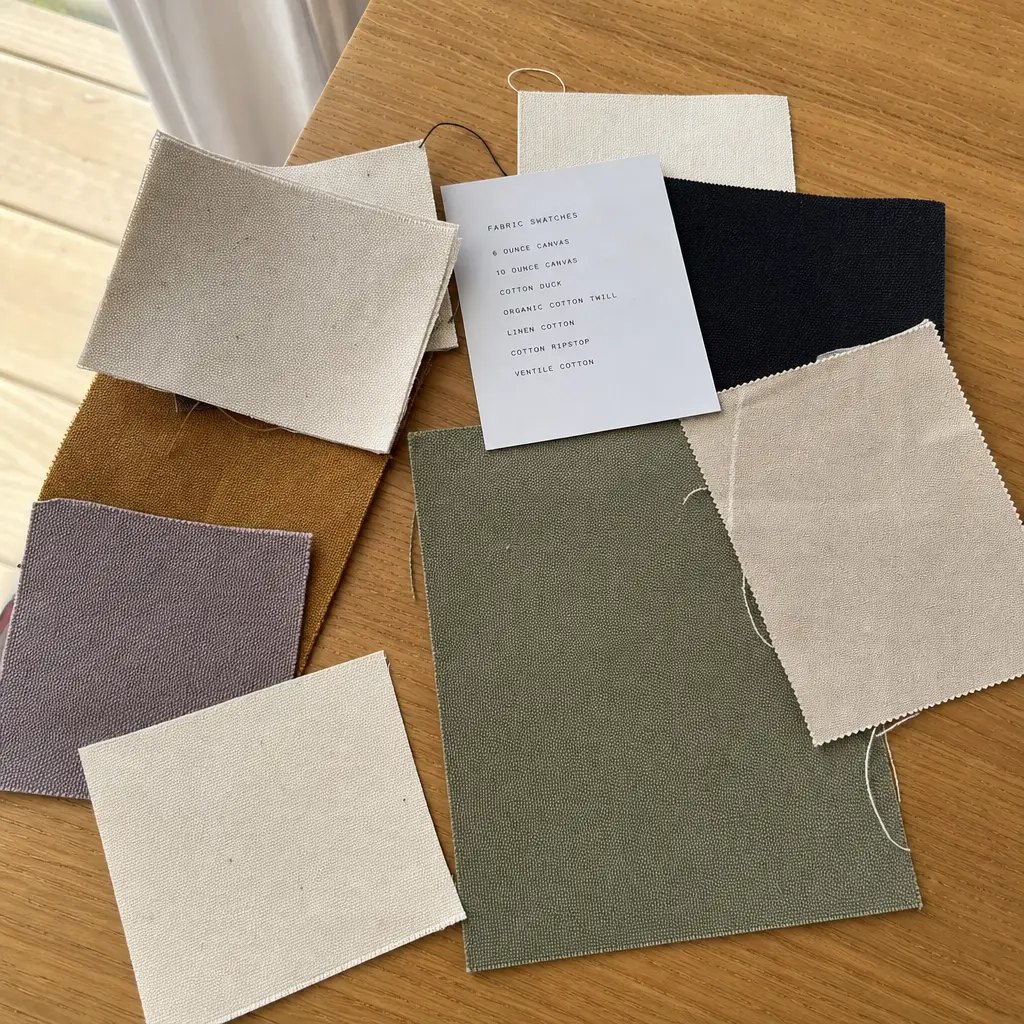
Why Fabric Weight Decides Whether the Bag Sells or Sits
For cotton drawstring backpacks for artisan bakeries, fabric weight is not a cosmetic detail; it changes perceived value, logo sharpness, handling, and how the bag performs after several uses. A light 100–120 GSM cotton can lower cost and fold neatly in storage, but it often looks too soft for a retail-ready merch item. It can also telegraph the contents underneath the fabric, especially on lighter colors or larger print areas. For most bakery programs, the practical lower end is around 140 GSM if you want a cleaner shape, more predictable print results, and a bag that feels intentionally made rather than promotional.
At the other end, 220 GSM and above creates a more structured canvas with a stronger hand feel. That can make sense when the bag will carry sourdough, pastries, ceramic mugs, or multi-item bakery orders. Heavier material can also better support a premium price point if the bag is sold in-store or used as branded retail merch. The trade-off is that each step up in GSM usually increases fabric cost, sewing difficulty, carton weight, and freight cost. Procurement teams should think in terms of the lightest fabric that still passes use-case testing, not the thickest fabric available.
For artisan bakery buyers, fabric weight also affects brand fit. A rustic bakery usually wants a natural, tactile, and dependable look—not a shiny promotional texture. Canvas-like cotton in the 140–180 GSM range often gives that balance. It has enough body to hold print well, but it still feels authentic, soft, and aligned with handmade food branding. That is why fabric weight should be treated as a buying decision, not a design afterthought.
- Use 140–180 GSM for branded bakery merch, event retail, and moderate daily carry.
- Use 220 GSM or above when the bag must hold heavier product or tolerate longer reuse.
- Ask the supplier to quote the same design in two GSM options so you can compare landed cost and perceived value.
- Treat any spec below 140 GSM as a value-risk option unless the bag is truly a light giveaway.
- Check whether the listed GSM includes fabric after finishing or only raw fabric weight.
Select the Fabric by Use Case, Not by Habit
A bakery should start with the buying scenario before choosing the fabric. If the bag is a paid retail item on shelf, the fabric needs enough structure to photograph well, stand upright, and make the logo readable from a few feet away. If the bag is a premium gift pack or membership reward, the finish should feel substantial and stable in the hand. If the bag will be handed out with multiple loaves, pastries, or boxed treats, the bottom corners, cord channel, and top edge become more important than the front graphic alone.
The weave matters as much as the GSM. A tightly woven cotton canvas at 160 GSM can outperform a looser 180 GSM fabric in logo definition, seam consistency, and perceived quality. Buyers often compare only the number on the spec sheet and miss the construction. A denser weave gives cleaner print edges, less show-through for dark ink, and a better base for repeat orders. Ask for swatches under natural light and warehouse light, because the same fabric can look different under each condition.
You should also decide how the bag will be handled after delivery. If the bag is intended to be folded into a gift box or included in a pastry order, softness and packability matter. If it is expected to be reused as a daily carry bag, the fabric needs more abrasion resistance. A good RFQ should state the load expectation, whether the bag will carry food only or mixed merchandise, and whether the bag is expected to be machine washed, spot cleaned, or not washed at all.
- For simple one-color bakery logos, a tighter weave matters more than chasing maximum GSM.
- If the bag is light-colored, require a fabric swatch under daylight and under warehouse lighting.
- If the backpack will be used as a gift carry bag, insist on a sample loaded with product weight.
- Ask for a loaded-use sample that reflects the actual bakery order mix, not just a blank bag.
- Confirm whether the fabric has been pre-shrunk or whether dimensional change should be expected after washing.
Print Method: What Survives Cotton Texture and Reorders
Screen print remains the default for many cotton drawstring backpacks because it is cost-efficient at scale and works well for simple bakery logos. It performs best when the artwork uses limited colors, clear line thickness, and a fabric surface that is not overly fuzzy. On mid-weight cotton canvas, it can produce a clean, durable look if the supplier controls ink viscosity, mesh selection, flash curing, and final curing temperature. For procurement buyers, the key point is that the same art can print very differently on 140 GSM versus 220 GSM cloth, so the proof must be done on the exact fabric weight you plan to buy.
Heat transfer and DTF can be useful when the artwork has gradients, small text, or multiple colors that would be costly to separate for screen print. They can also support short seasonal runs, launch tests, and fast reorder cycles. The risk is tactile feel and durability. Some transfer films sit on top of the fabric in a way that feels less premium, especially on a natural cotton backpack that is supposed to communicate warmth and authenticity. Buyers should ask for a rub test, fold test, and light wash test if the bags are intended for repeated use.
A practical rule: use the simplest method that still gives the logo the quality level your channel requires. For wholesale bakery merch, a one- or two-color screen print often gives the best balance of cost and durability. For promotional runs, complex retail graphics, or limited-edition collaborations, transfer methods can be efficient. The important part is that the supplier proves the method on the final fabric, not a generic sample cloth.
- Use screen print for stable logos, medium to high volumes, and lower unit cost.
- Use transfer methods for short runs, complex graphics, or frequent design rotation.
- Request the same artwork on the final fabric weight before approving mass production.
- Ask whether the print is cured for light washing, dry cleaning, or no-wash use only.
- If the logo includes fine text, require a close-up photo of a cured sample under magnification.
MOQ Logic: How to Avoid Paying for the Wrong Mix
MOQ for cotton drawstring backpacks is usually driven by fabric sourcing, print setup, and the number of variables in the order. Standard stock canvas with one logo and one colorway can often support a lower MOQ. Once you add custom colors, multiple print positions, woven labels, or mixed sizes, the batch becomes less efficient to cut and sew. That means the quoted MOQ should be read as a production constraint, not a sales tactic. Buyers need to know which part of the order creates the bottleneck.
Procurement teams should compare MOQ in a structured way. A quote that looks inexpensive at 1,000 units can become expensive if it includes separate setup charges for each colorway or if the factory raises the unit price for mixed sizes. The useful comparison is total first-order cost for a sellable SKU: bag unit price, setup or plate charges, sample charges, packing additions, overage allowance, and any change in freight carton density. If you do not compare all of those together, you risk choosing the lowest headline price and the highest landed cost.
If you are planning multiple bakery locations or seasonal drops, tiered MOQ can be valuable. For example, one colorway may be needed for a flagship store and another for a holiday campaign. In that case, ask whether the factory can keep the same cut size and construction while swapping print color or label only. That can reduce spec fragmentation and make future reorders easier. The more you standardize the bag body, the easier it becomes to reorder without requalifying the whole product.
- Ask for MOQ separately by fabric, color, print side, and logo version.
- Compare the price at your target order size and one lower size to see the true break point.
- Avoid mixing too many variables in the first order unless the factory has already proven the same build.
- Clarify whether MOQ changes when you choose woven labels, hang tags, or retail packaging.
- Request a total setup cost summary so hidden first-order charges do not distort the unit price.
Comparison of Sourcing Routes for Bakery Backpack Programs
For a bakery program, the sourcing route changes risk almost as much as the specification does. A direct factory usually offers better control over stitching, print placement, and packing, but only if the supplier actually runs the production line. That route is strongest when you need repeat orders, consistent sizing, or tighter control over quality checkpoints. The trade-off is that direct factories may be less flexible at very low MOQ unless the build uses standard materials.
A trading company can be useful when speed and breadth matter more than factory transparency on day one. It may be able to source multiple fabric options quickly, collect samples from different mills, and help you compare construction styles. The buyer’s task is to manage spec drift carefully. If one quote is from one subcontractor and the next from another, even small differences in weave density, cord quality, or print finish can make the comparison misleading. Insist on one technical sheet per option and the same measurement method across all samples.
A hybrid approach is often effective. Many buyers first sample through a sourcing partner to understand which fabric weight and print route fits the brand, then move the approved spec to a direct factory for scale production. This preserves speed during exploration while reducing risk once the program is defined. For recurring bakery merchandise, that progression usually gives better control over reorder consistency, carton packing, and defect handling.
- Direct factory: better for repeat orders, tighter QC, and lower risk of hidden subcontracting.
- Trading company: useful for broad sampling, but require a line-by-line technical sheet.
- Hybrid approach: sample with a trading source, then move the final approved build to a factory.
- Confirm who owns the fabric and print procurement, because that affects lead time and substitution risk.
- Ask whether the sewing line is dedicated or shared with unrelated products, since that affects consistency.
Quote Data Buyers Should Compare Line by Line
A useful quote for cotton drawstring backpacks should break out fabric GSM, cut size, cord length, print method, packing format, and expected overage. Without those details, buyers cannot compare suppliers fairly, and one quote often hides a weaker spec behind a lower headline price. If one supplier is quoting 140 GSM and another is silently using 120 GSM, the cheaper number is not a real comparison. The same issue appears when one quote includes a woven label or retail insert and another leaves those items out.
Landed-cost thinking matters even for a relatively small bag. A slightly heavier canvas can raise the ex-factory price, but it can also reduce claims, improve retail presentation, and lower the risk of rejected samples. The right comparison is what the bag costs at your warehouse after cartonization, overrun allowance, and realistic freight—not just the factory price. If you buy through a distributor or multiple stores, also compare how much shelf-ready value the packaging creates. A cheaper bag that arrives wrinkled or poorly packed can cost more in handling and downstream rework.
For procurement teams, the best practice is to request a quote matrix. Put each supplier’s spec side by side and make them confirm the same variables: fabric composition, GSM, dimensions, cord type, print method, label method, pack quantity, master carton dimensions, and sample lead time. That lets you see where each quote is strong or weak. It also shortens negotiations because vague pricing can be challenged with specific spec differences instead of broad claims.
- Compare exact fabric GSM, not language like 'standard cotton'.
- Separate setup charges from unit price so you can see true first-order cost.
- Include carton size and gross weight in every quote comparison.
- Ask suppliers to quote the same production standard and note any deviations clearly.
- Request a cost split for bag, print, label, and packaging if the item will be sold retail.
Sample Approval: The Stage That Saves the Most Money
The first sample should prove the build, not just the look. For these backpacks, that means the fabric weight, print clarity, cord movement, seam quality, and label attachment all need to match the intended bulk order. A sales sample made from different cloth or a lighter cord is not a safe approval reference. It may look acceptable in a photo, but it can still create issues after deposit, when changing the spec becomes expensive and time-consuming.
Use at least two sample checkpoints. The development sample is for design decisions: size, color tone, logo placement, and cord style. The pre-production sample is the control sample and should be made from final materials, final methods, and final packaging. That sample becomes the golden reference for in-line and final inspection. If the factory does not operate this way, buyers should treat that as a process risk rather than a minor inconvenience.
During sample review, test the bag the way it will be used. Load it with bakery items, check the opening and closing motion, pull on the cords, and inspect the corners after a few minutes of use. Review print coverage against the approved artwork, not against a memory of the design. Also check whether the sample shows the right amount of body when empty. For artisan bakery branding, a bag that collapses too much can look underbuilt even if the fabric weight is technically acceptable.
- Approve only samples made from final fabric, final cord, and final print method.
- Store one sealed golden sample for in-line and final inspection reference.
- Reject samples with inconsistent drawcord length, weak seam finish, or muddy logo edges.
- Test the sample loaded with actual bakery products or equivalent weight.
- Confirm that the approved sample records the exact fabric lot, print method, and date.
Packing, Carton Planning, and Freight Reality
Backpacks look simple, but packing decisions affect landed cost and product condition. Bulk packing lowers carton count and freight cost, which is often the right move for wholesalers, distributors, and bakery groups placing repeat orders. Individual polybags with insert cards can make sense for retail programs, but only if the packaging improves shelf readiness enough to justify the extra labor, film, and dimensional weight. Buyers should not accept a default packing method without asking how it changes cube, carton count, and visible finish.
Cotton compresses well, yet overpacking can wrinkle the print area and distort the cord channel. If the cartons are too full, the bag edges can leave permanent fold marks, especially on lighter fabric. Ask for a pack-out method that states unit quantity per carton, inner bundle count if any, carton dimensions, and gross weight. You should also ask for pack photos and, ideally, one pre-shipment carton sample so the forwarder can confirm dimensions before booking freight. That avoids a common problem: factory and freight measurements differ enough to disrupt the shipping plan.
For artisan bakery buyers, packing should also protect cleanliness. Natural cotton can pick up dust, oils, and warehouse marks quickly. If the bags are going directly to a retail channel, ask for simple protective packaging or a controlled packing environment. If the bags are being inserted into bakery orders, make sure the packing method does not add too much handling time for the store team. The best pack plan is the one that protects the bag without slowing down fulfillment.
- Choose bulk pack for wholesale channels unless shelf presentation requires retail packaging.
- Keep carton fill tight but not compressed enough to crease the logo area.
- Ask for one pack-out photo and one master carton measurement before production release.
- Confirm whether polybags are required for cleanliness, moisture control, or retail presentation.
- Make sure the master carton size supports the actual freight booking method you will use.
Lead Time Risk: Where Delays Usually Start
Lead time on cotton drawstring backpacks usually slips for reasons that look small at first: late artwork approval, fabric re-dye, cord substitution, or a print screen correction. If your design uses a custom color or a heavier canvas, the critical path starts earlier because the mill and sewing line both need to lock materials before cutting begins. This is why procurement teams should ask for a step-by-step timeline rather than a single promised ship date. A one-line schedule hides where the true risk sits.
The safest planning method is to build time around approval gates. Ask for separate dates for sample development, sample sign-off, material booking, production start, in-line inspection, final inspection, and packing. That lets you see whether the schedule is realistic or only optimistic. It also helps with internal planning because your marketing, retail, or store teams can see exactly when artwork or packaging changes become dangerous. If you wait until production is already underway, even a small correction can cause rework.
A good supplier will tell you what event starts production: deposit, fabric arrival, screen approval, or full sample sign-off. You should also ask whether holiday periods, mill shutdowns, or fabric shortages can extend the schedule. For bakery programs tied to launches, seasonal promotions, or store openings, a realistic lead time is more valuable than a fast but vague estimate. Protecting launch dates is often worth more than saving a few cents per unit.
- Separate sample lead time from bulk lead time.
- Ask what event starts production: deposit, fabric arrival, or sample sign-off.
- Build a buffer for artwork fixes and packing changes.
- Request milestone dates for each manufacturing step, not just a shipping promise.
- Confirm whether fabric or print approvals are needed before the cutting date is locked.
Quality-Control Checklist for Procurement Teams
A strong QC plan should mirror the real failure modes of cotton drawstring backpacks. The most common issues are not dramatic defects; they are small inconsistencies that become visible in retail or repeated use. Examples include loose stitching near the cord channel, print misregistration, uneven cord length, flimsy reinforcement at the top edge, and inconsistent fabric feel from one lot to the next. Buyers should define what they will inspect, how they will measure it, and what result is unacceptable before production starts.
A useful inspection routine begins with fabric verification. Confirm GSM on the bulk lot, not just the development swatch, and compare color and weave against the approved standard. Then inspect sewing quality, especially around the cord tunnel, seam intersections, and bottom corners. Load test the bag with representative product weight and check for tearing, twisting, or deformation. Finally, assess pack quality: carton count, bundle consistency, cleanliness, and carton integrity. For food-adjacent brands, appearance and cleanliness matter almost as much as structural durability.
If you work with a third-party inspector or in-house QC team, give them a short acceptance sheet. It should state the approved sample, acceptable variation, the inspection points, and the reject criteria. That makes the inspection repeatable and easier to enforce across future reorders. For repeat bakery programs, the goal is not just to catch defects; it is to keep the product stable from one batch to the next.
- Verify bulk GSM against the approved sample before cutting starts.
- Inspect stitching at the cord channel, corners, and stress points.
- Check for print alignment, color consistency, and clean curing.
- Require a load test using the actual intended product weight or an agreed equivalent.
- Confirm carton counts, bundle counts, and master carton integrity before shipment.
Specification comparison for buyers
| Spec decision | Recommended option | When it fits | Buyer risk to check |
|---|---|---|---|
| Fabric weight | 140–180 GSM cotton canvas | Best balance for retail-ready giveaways, bakery merch, and repeat use | Too light can show weave, shrink more, and feel cheap in print areas |
| Fabric weight | 220–280 GSM cotton canvas | When the bag carries heavier loaves, ceramic merch, or multi-item bakery orders | Higher cost, more carton weight, and slower sewing around thick seams |
| Print route | 1–2 color screen print | Simple logo programs with stable art and larger volume | Fine lines can fill in; proof on the exact fabric weight matters |
| Print route | Heat transfer or DTF | Short runs, multi-color artwork, or fast seasonal drops | Can feel less premium and may crack if wash tests are ignored |
| Supplier route | Direct factory with sample room | When you need controlled QC, custom specs, and better freight packing | Must verify factory capacity, not just sales-office claims |
| Supplier route | Trading company with multiple mills | Useful if you need faster sourcing across many fabrics or backup options | Spec drift between quotes is common; insist on identical technical sheets |
| MOQ approach | Tiered MOQ by fabric and print count | Works when you want price breaks without overbuying one color or one size | Watch hidden costs in setup, plates, labels, and carton changes |
| Packing route | Bulk packed with size-optimized inner bundles | For wholesale distribution and lower freight cost per unit | Compression can wrinkle printed fabric if cartons are overfilled |
| Approval method | Pre-production sample plus golden seal sample | For repeat programs and retail buyers needing stable reorders | Without a sealed standard, later batches can drift in color and cord length |
Buyer checklist before sampling
- Confirm target fabric weight in GSM, not just 'thick' or 'premium'.
- Define bag size, cord length, and whether the backpack needs a reinforced base.
- State print area, number of colors, and whether artwork must survive light washing.
- Request the exact carton count, master carton size, and gross weight before pricing.
- Ask for a pre-production sample made from the final fabric, cord, and print method.
- Set acceptance limits for stitching, color variation, and drawcord smoothness.
- Request a fabric swatch set that includes the final GSM and any alternate options.
- Confirm whether shrinkage allowances are already built into cut size and pattern dimensions.
- Specify if the bag will be used for retail resale, event gifting, or food carry use.
- Ask for a pack-out photo and measured carton sample before bulk release.
Factory quote questions to send
- What exact fabric composition, weave, and GSM are you quoting, and can you show the measured spec on the sample?
- Is the quoted price based on one or two colors, one side or both sides, and does it include plate/setup charges?
- What is the MOQ per color and per print design, and do mixed-color orders change the unit price?
- What is included in packing: individual polybag, insert card, bulk bundle, or master carton only?
- Can you confirm cord type, cord diameter, metal eyelet use, and reinforcement at stress points?
- What sample stages do you provide, and how many days after approval do you need for production?
- Which checks are done in-line and before carton sealing, and what defect level triggers rework?
- What freight-ready carton dimensions do you expect for the final packed goods?
- Do you have a standard tolerance for fabric GSM, cut size, and cord length?
- If the requested fabric is not in stock, what substitute approval process do you follow?
Quality-control points to confirm
- Fabric GSM should be within the agreed tolerance, ideally verified on the final bulk fabric lot before cutting.
- Stitch density at stress points should be even, with no skipped stitches, seam puckering, or loose thread tails.
- Cord action should run smoothly through the channel without snagging, fraying, or uneven lock length.
- Print registration should stay aligned to the approved sample, with no major shade shift on the final bulk run.
- Top edge and corner reinforcement should hold shape after basic load testing and repeated opening.
- Carton count and packed dimensions must match the shipping plan so freight quotes stay valid.
- Smell, surface contamination, and visible oil marks should be absent from packed goods, especially on light-colored cotton.
- Bag mouth should open and close cleanly without twisting the drawcord tunnels.
- Tension points around the cord exits should not tear when the bag is loaded and lifted repeatedly.
- Labels, hang tags, and care instructions should be aligned, readable, and securely attached.